From Naples to Papua New Guinea: 25 Unforgettable Portraits (26 photos)
Every year, The Artist Gallery portrait photography contest draws submissions from all across the globe—and time and again proves that a single frame can tell a story better than a thousand words. For 2026, the judges sifted through thousands of entries to select the top 25, spanning from a sacred festival in Bengal to an elderly man with a tattooed chest in Naples. Here is a look at the winning shots and why these portraits linger in the memory long after. 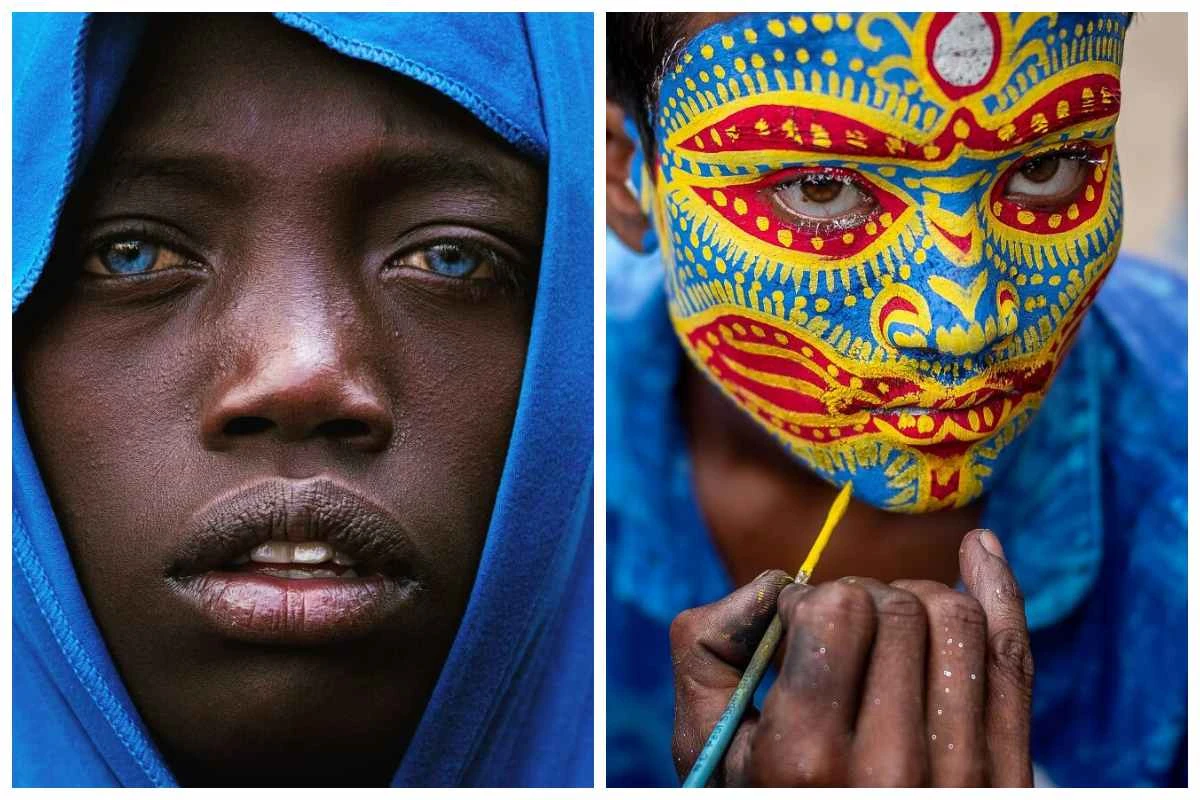
“Face Painting at Gajan” — Saurabh Sirohiya
Gajan is an ancient Hindu festival celebrated in the state of West Bengal in honor of Lord Shiva. It takes place at the end of the month of Chaitra in the Bengali calendar, roughly corresponding to March or April. Participants, known as “Gajan Sannyasis,” undergo weeks of fasting, prayer, and sleeping on hard floors, culminating in grueling rituals of devotion. Face painting is one of the ways they express their spiritual readiness and self-surrender. 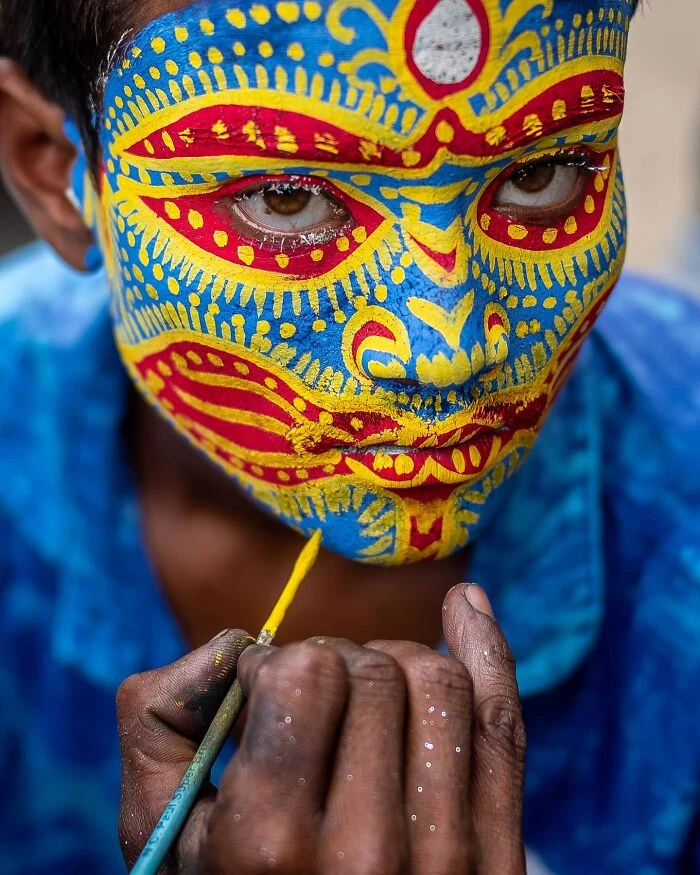
The paint is applied in the final hours before the rituals begin, as the artist works with a delicate brush.
Photographer Saurabh Sirohiya captured the moment mid-process: the artist’s hand guiding the brush, vivid blue paint contrasting with the subject’s yellow-painted face. The portrait earned a well-deserved place among the competition’s standout entries.
“Everything Passes” — Laurin Strele
Antonio is far more than just a charismatic local from Naples. On the beach, strangers kept approaching him to snap photos and share a smile. “I’m famous for some reason,” he’d laugh. Photographer Laurin Strele spent an entire day with him, eventually ending up at his home enjoyed over coffee, gelato, and cigarettes—a classic taste of Southern Italian hospitality. 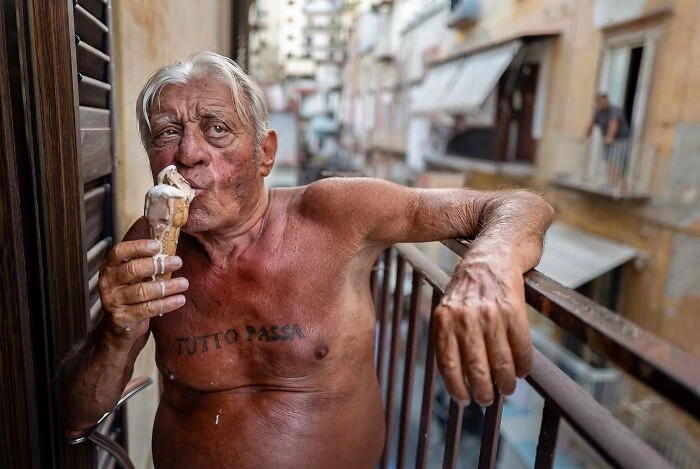
Etched across Antonio’s chest is the tattoo “Tutto passa” (“Everything passes”), inked after he lost his wife and son.
Antonio opened up about his late wife and son, pointing to the words tattooed on his chest: “Tutto passa”—everything passes. Well into his 80s, he continues to embrace life the Neapolitan way: soaking up the sun, enjoying the sea, good food, and warm conversation with friends. The image earned second place in the Portrait category.
“The Farewell” — Juan de Santa Anna
Juan de Santa Anna shot this portrait on a medium-format Mamiya 645 film camera using Ilford HP5 film—a choice that reflects his raw approach to storytelling. No digital retouching, no post-processing tricks. Just a woman and her dog, forehead to forehead. 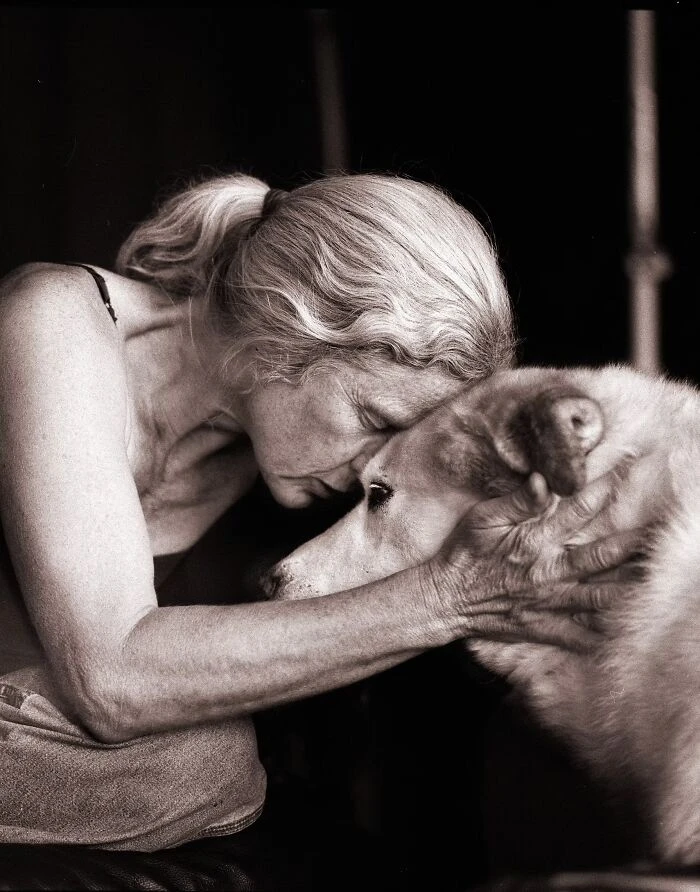
Shot on film using a Mamiya 645 and Ilford HP5. The photographer confessed he had never wept so deeply.
Shortly after the photograph was taken, the dog passed away. In his submission notes, Santa Anna wrote, “I have never cried as hard as I did then.” The judges recognized the image as one of the standout portraits of the competition.
“Cool Shades” — Jelisa Peterson
Jelisa Peterson works exclusively with natural light, possessing an innate knack for uncovering quiet magic where others see nothing out of the ordinary. A young boy wearing oversized sunglasses stands in a doorway—and that is all it takes. No elaborate staging, no artificial effects; the light carries the entire scene. 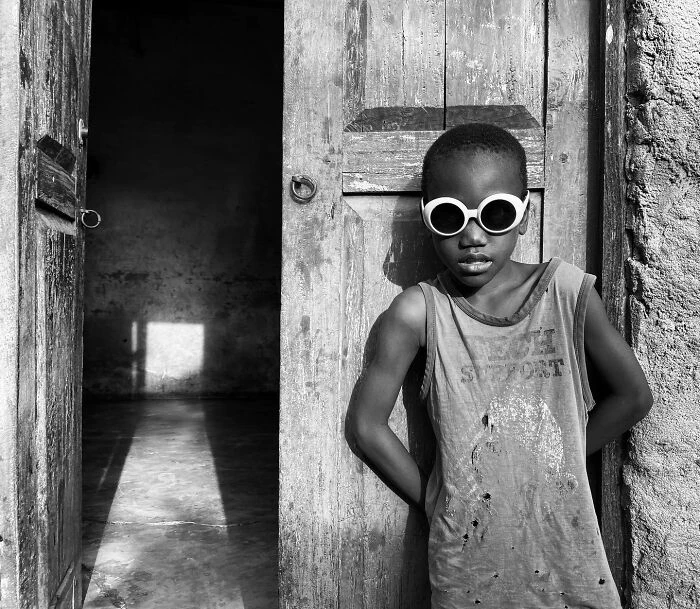
Sunlight streams straight through the doorway. The boy’s sunglasses are clearly built for an adult, borrowed from someone else.
Peterson also submitted a companion piece featuring a young girl standing in a doorway (number 17 in our roundup). Both images revolve around a shared motif: figures lingering on the threshold, taking in the world outside.
“Proud Moustache” — Saurabh Sirohiya
Holi is one of India’s most iconic festivals. Marking the end of winter, people hurl colorful powders and splash water on each other, setting aside age and social divides. Saurabh Sirohiya captured an elderly Rajasthani man in a quintessential posture: covered head-to-toe in pigment and wearing a traditional turban, leisurely twirling his moustache. 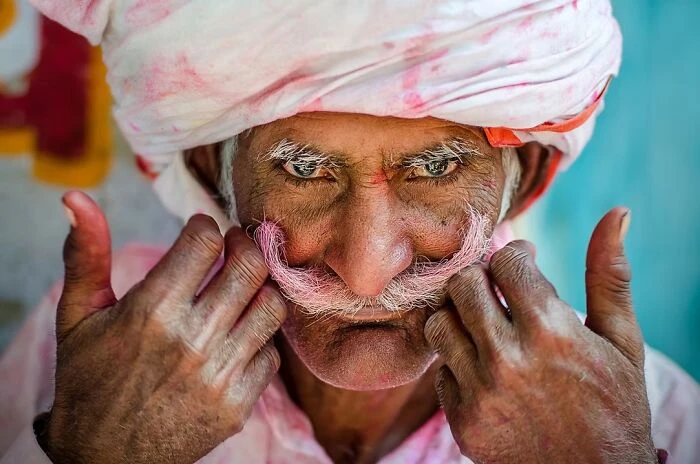
Holi is the Hindu festival of colors celebrated at winter’s end. The dye splattered across his face and turban marks his active participation in the festivities.
In Rajasthan, a moustache is a point of immense pride—grown long, dyed, and meticulously groomed. Twirling one’s moustache is a local gesture akin to standing tall with head held high. The photographer captured more than just a man; he distilled an entire culture into a single motion.
“Abushe — Unexpected Blue” — Aníbal Bueno
Aníbal Bueno reflected on this portrait: “There are gazes that seem not to belong to the place where they were born—as if a piece of the sky accidentally fell into eyes meant to be a different shade.” Abushe didn’t choose his piercing blue eyes; they are simply part of who he is, ensuring he catches double-takes wherever he goes. 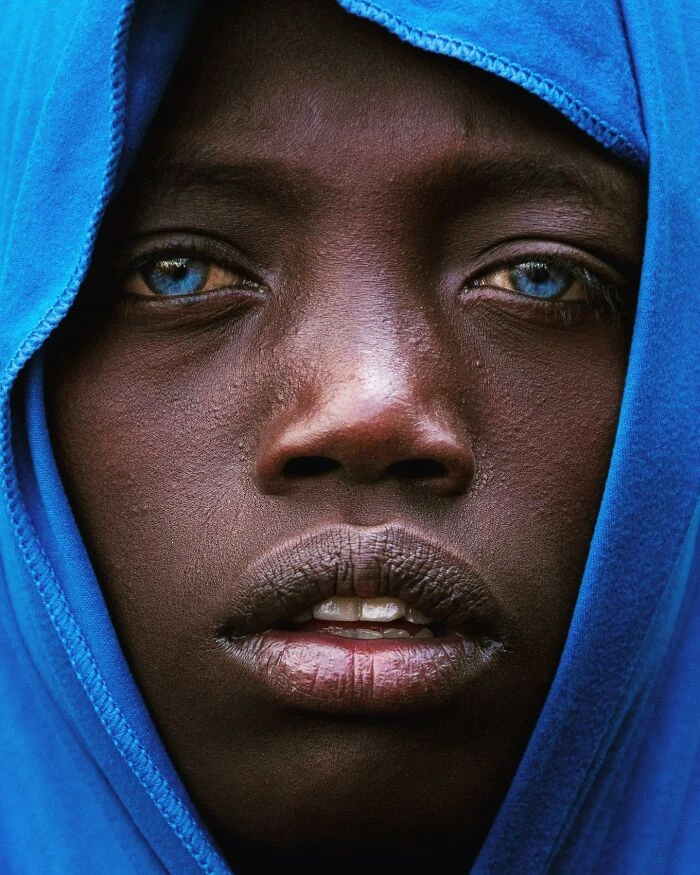
Abushe represents a rare sight: striking blue eyes on dark skin, a genetic trait linked to mutations in the OCA2 gene.
Blue eyes in dark-skinned individuals are a rare genetic phenomenon found in select regions of Africa and Melanesia. It stems from a variation in the OCA2 gene, which regulates pigmentation. It is completely benign—just an extraordinary touch of natural beauty.
“Between Us” — Karen Moffatt-McLeod
Securing third place in the Portrait category, Karen Moffatt-McLeod captioned her image with just six simple words: “The connection and love between twins.” That was all that needed to be said. Two curly-haired boys embrace as if the rest of the world has melted away. The black-and-white framing strips away distractions, leaving pure emotion. 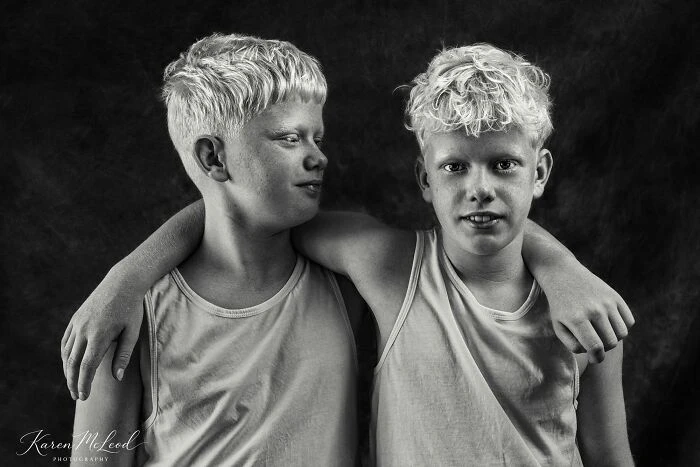
Twins. Karen Moffatt-McLeod specializes in capturing human connection, from family bonds to intimate friendships.
Moffatt-McLeod also submitted a second entry to the competition, titled “Membrane” (number 20 in our collection), which strikes a starkly different tone: a face pressed against thin plastic, evoking struggle and vulnerability. Together, the two works showcase opposing spectrums of human experience.
“The Nomad’s Veil” — Héctor Ruiz
The Tuareg are nomadic pastoralists of the Sahara, inhabiting parts of Algeria, Mali, Niger, Libya, and Burkina Faso. Often dubbed the “blue people of the desert,” their traditional indigo-dyed garments leach pigment onto their skin over time. Unlike most cultures in the Islamic world, it is the Tuareg men who wear face veils rather than the women. The tagelmust veil serves as their defining cultural symbol. 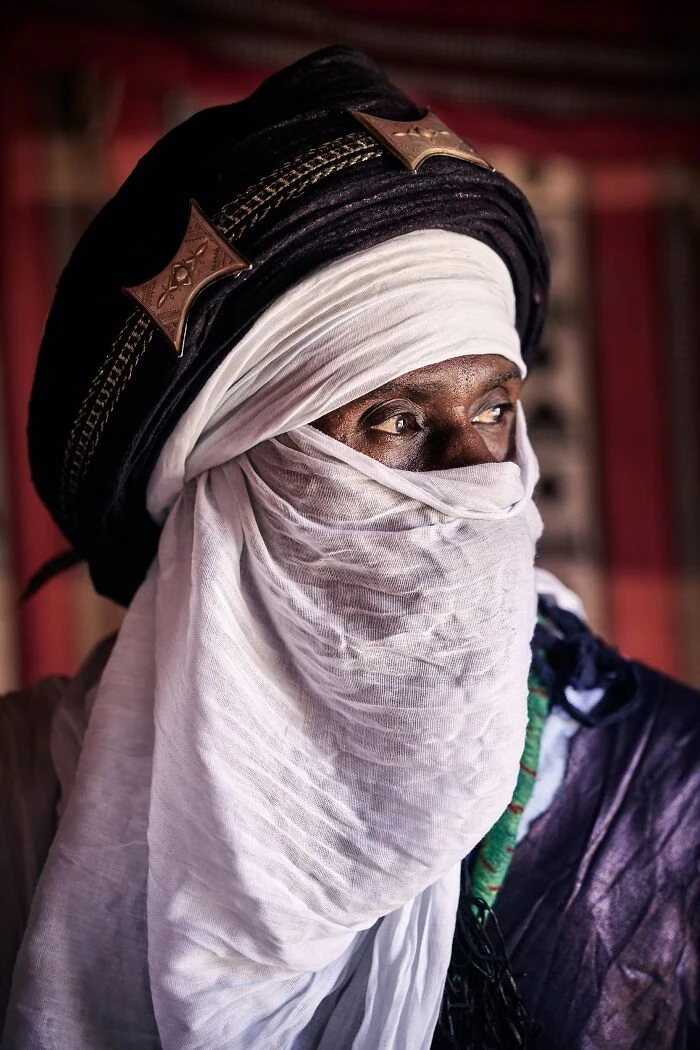
The tagelmust is a deep indigo cotton veil-turban worn by Tuareg men from adolescence. Algeria, 2025.
Héctor Ruiz photographed two Tuareg individuals in Algeria in 2025, both featured in this selection. This image captures a man in profile, clad in a deep indigo tagelmust, his gaze cast off-camera.
“Saharan Gaze” — Héctor Ruiz (1st Place)
Winner of 1st Place in the Portrait category. Taken during the same trip to Algeria by the same photographer, this image strikes a completely different mood. A young Tuareg woman wears a dark head covering framed by traditional silver jewelry. Against a dark backdrop, her eyes look subtly aside. 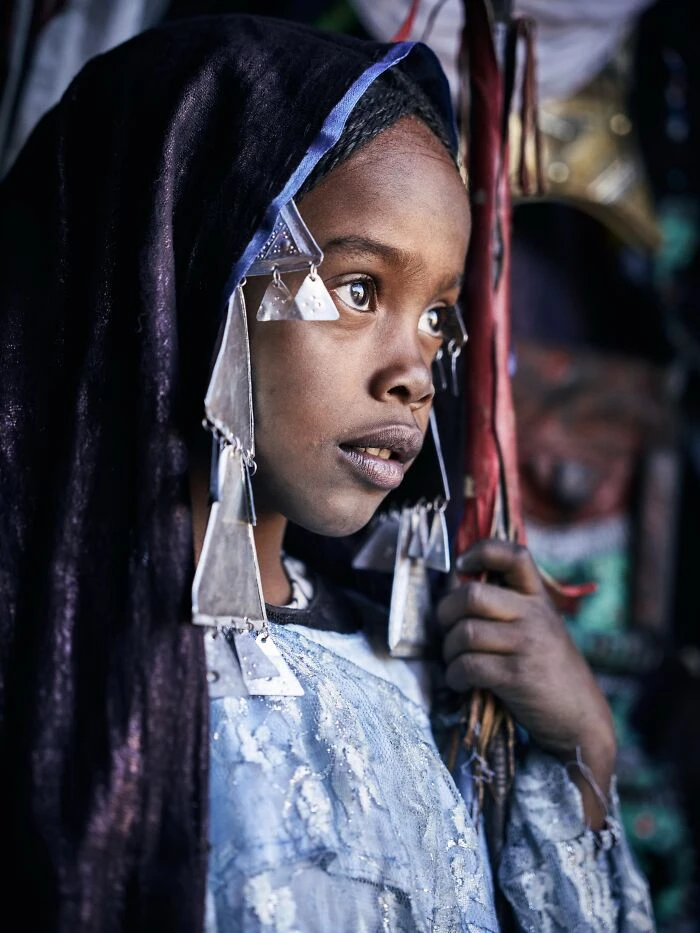
The grand winner. Traditional Tuareg silver jewelry is not merely decorative, but an essential part of their heritage. Algeria, 2025.
Ruiz offered no lengthy explanation of how he captured the shot, and the jury needed none. The portrait speaks powerfully for itself, striking a balance between mystery and intimate presence characteristic of masterwork portraiture.
“Elderly Woman” — David Swainson
David Swainson photographed an elderly cleaner during a brief pause from her work. The deep lines on her face are more than signs of aging; they form a living record of her story. Swainson noted: “Decades of hard labor have etched themselves into her skin.” The black-and-white rendering keeps the viewer focused solely on her humanity. 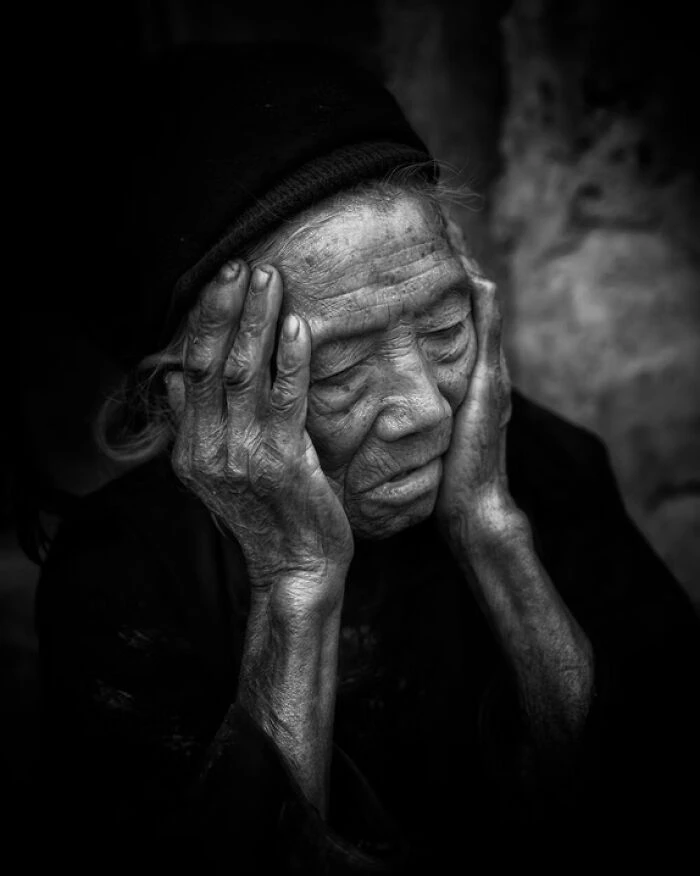
David Swainson caught this woman taking a breather between shifts. Her face tells the story of years of hard work.
The portrait received an Honorable Mention from the jury. Quiet images like this—devoid of exoticism, flashy effects, or staged drama—are often the hardest to notice in photography contests, yet they are frequently the ones that linger longest in our minds.
“Bearer of Blessings” — Dev Kumar
Sadhu are Hindu ascetics who renounce worldly possessions to pursue a spiritual calling. They can be seen near temples across India and Nepal, smeared with sacred ash, clad in saffron robes, carrying prayer beads and Shiva’s trident. This sadhu’s headdress is a virtual personal archive, decorated with photos, symbols, and sacred relics collected over decades of wandering. 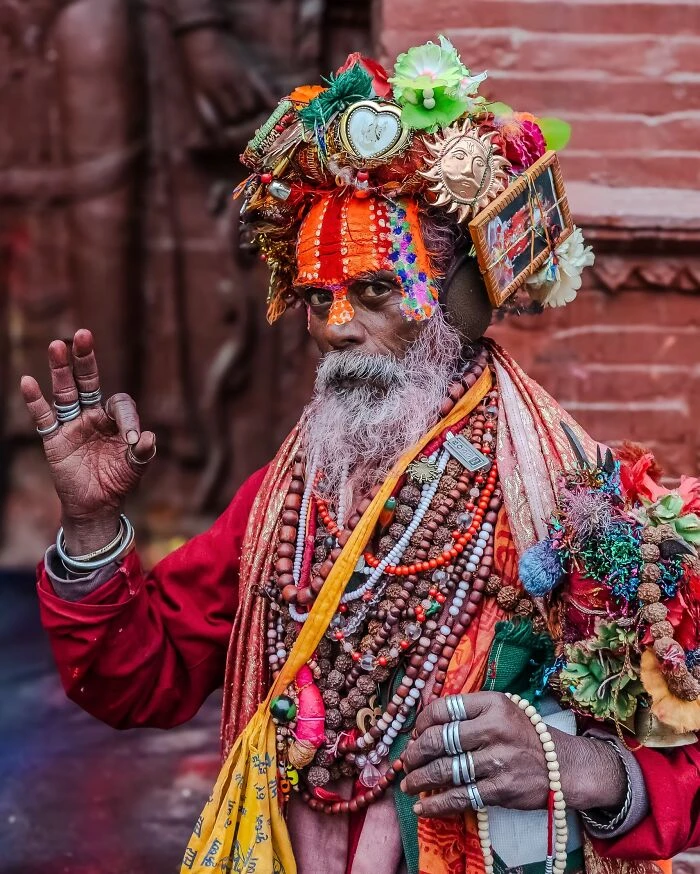
A sadhu pictured outside a temple in Kathmandu. His elaborate headwear is layered with religious emblems, photos, and holy keepsakes.
Dev Kumar captured him outside a temple in Kathmandu as he paused to impart a blessing. Beneath his serene gaze and ornate attire lies a lifetime dedicated to strict devotion.
“The Door and the Apple” — Salvatore Montemagno
Salvatore Montemagno created one of the few staged portraits in the lineup. A woman in a black dress holds two objects behind her back: a blue mask and a red apple. The mask represents the facade we present to the world, while the apple evokes temptation, secrecy, and original sin. 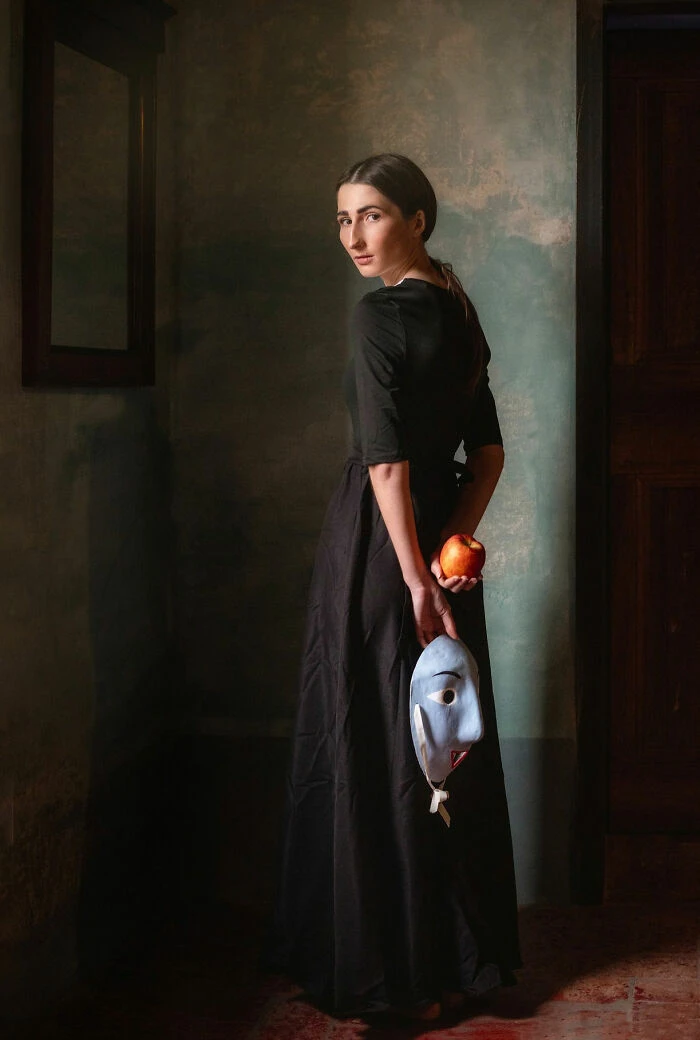
The apple and the mask serve as motifs of desire and disguise, left open to individual interpretation.
The artist speaks of exploring the “tension between outward appearance and inner identity”—the gap between how we present ourselves and who we truly are. This is not documentary work, but a fine-art portrait of a psychological state.
“Holding On” — Mikel Zusmer
Mikel Zusmer photographs women who safeguard their family heritage in communities where such traditions are fading fast. “Every woman is the keeper of her family’s legacy, a living link to a disappearing culture. Now on her own, she holds tightly to her memories.” 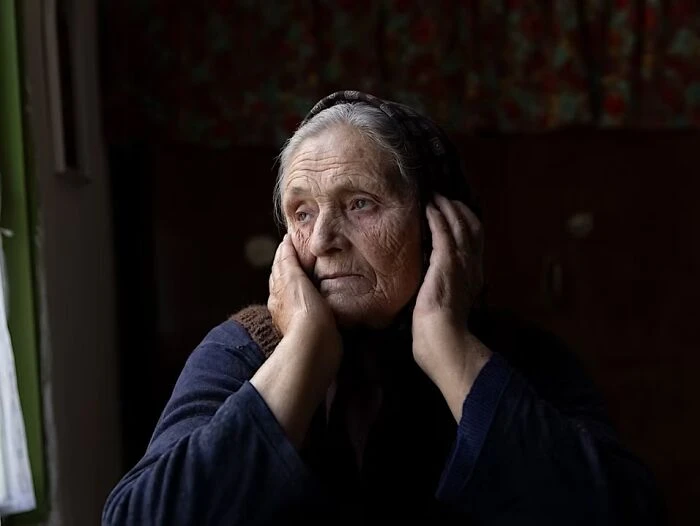
From Mikel Zusmer’s series documenting women as custodians of fading cultural memory and heritage.
The woman gazes out a window. Precisely what catches her eye matters less than what the viewer beholds: a lifetime of quiet resilience embodied in a single figure.
“Tanzanian Beauty” — Konstantin Gustov
Photographer Konstantin Gustov’s contribution is among the most direct portraits in the collection. A woman locks eyes with the camera without hesitation or pretense. Her patterned blue headscarf frames her face nicely, yet it is her piercing gaze that truly commands the viewer's attention. 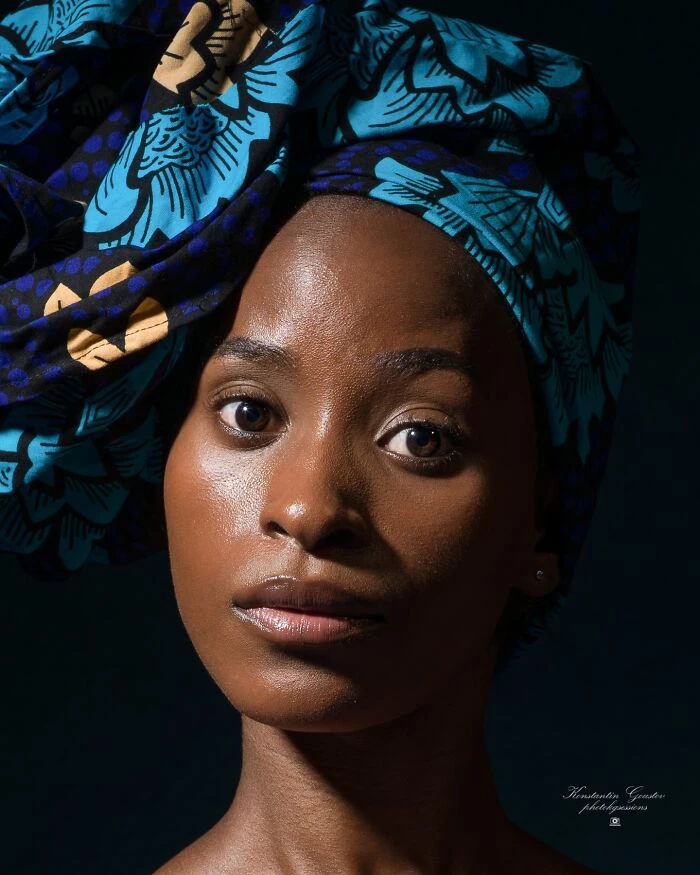
Konstantin Gustov captures daily life across Africa. Featured here: Tanzania, highlighted by an ornate blue turban and an intense stare.
Gustov provided no elaborate backstory for the image; none was needed.
“Man of Golden Fibers” — Azim Khan
Azim Khan photographed laborers at a jute processing plant. Each worker carries a bundle weighing roughly 50 kilograms (110 lbs), with raw plant fibers blanketing their bodies until only their faces peek through. Khan observed: “The workers look as though they’re wearing massive golden wigs.” That witty observation elevates a candid documentary shot into a striking, surreal, and deeply respectful portrait of manual labor. 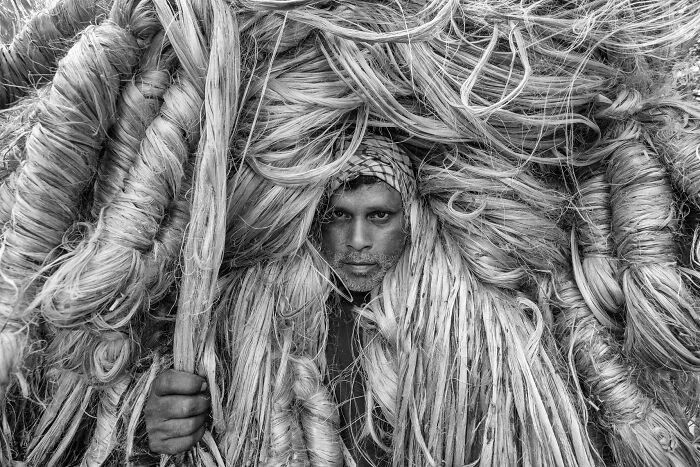
Each jute bale weighs roughly 50 kilograms. The raw fiber enfolds the worker's body, leaving only his face exposed.
Jute is a natural plant fiber harvested primarily in Bangladesh and India, widely used to weave burlap, rope, and coarse textiles.
“Reflections” — Hillary Green-Pay
Grand Central Market in downtown Los Angeles is one of the city's oldest public landmarks, continuously operating since 1917. Popular with locals and tourists alike, it served as the backdrop for street photographer Hillary Green-Pay, who captured this candid moment of an elderly blonde woman sipping coffee and lost in thought. 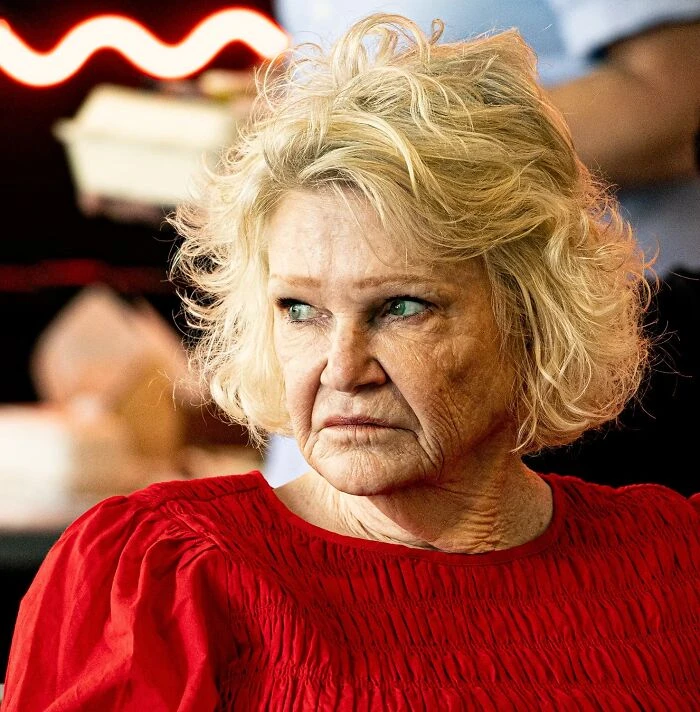
Grand Central Market in downtown Los Angeles, a historic food hall open since 1917 where Hillary Green-Pay shoots street portraiture.
“Perhaps she is reflecting on her life,” the photographer noted. We can only guess her thoughts, and that mystery is precisely what makes the photograph feel so alive.
“Door 54” — Jelisa Peterson
Jelisa Peterson’s second entry serves as a narrative companion to her first. Where the former featured a young boy, this one shows a young girl; where he wore sunglasses, her eyes are completely open. Both stand on domestic thresholds, gazing at something beyond the frame. 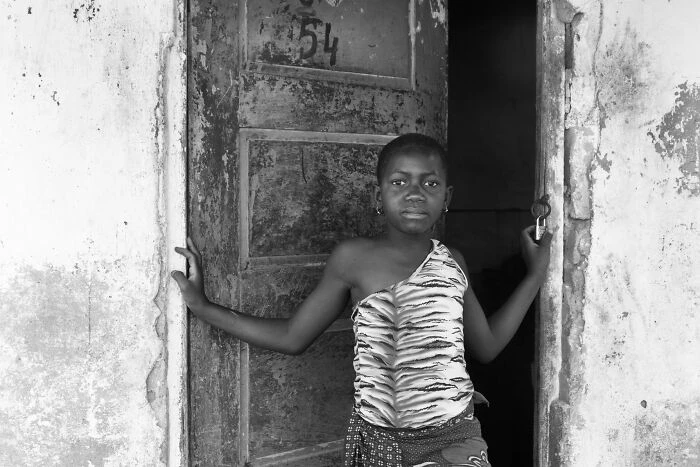
Jelisa Peterson, “Door 54.” A young girl lingers in a doorway, watching the world outside.
Specializing in documentary photography, Peterson has a talent for drawing universal resonance out of everyday scenes. The doorstep remains one of the oldest metaphors in human storytelling.
“Brechje” — Suzanne Middelberg
Suzanne Middelberg works in a classic studio style: soft lighting, a neutral backdrop, and no distracting environmental context. Just the subject. A young woman named Brechje, wearing a fur collar, looks gently downward in a composition reminiscent of Dutch Golden Age portraiture reimagined for the modern era. 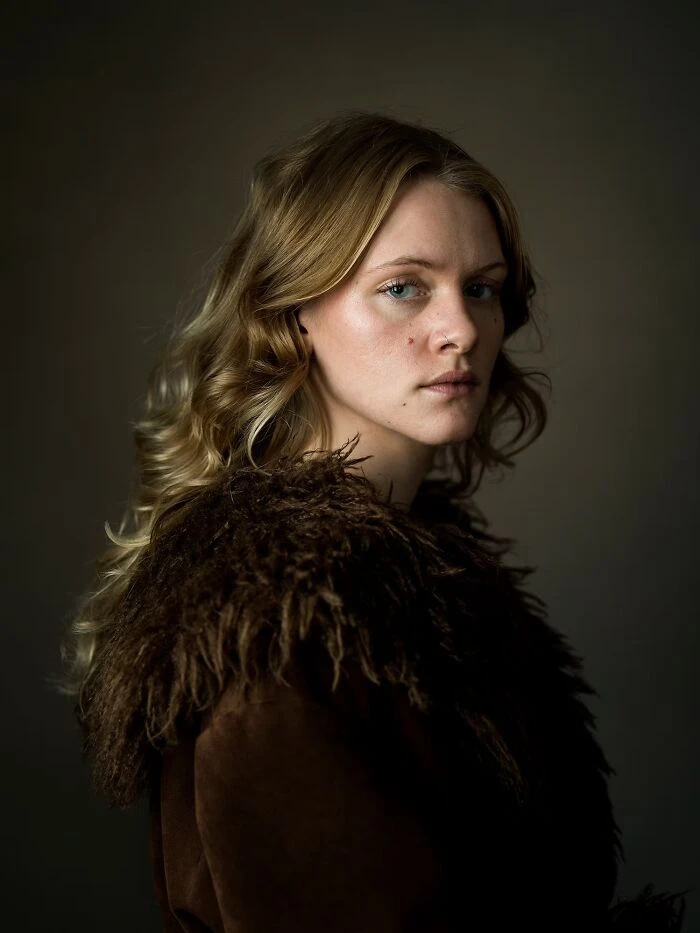
Brechje is the subject’s name. Suzanne Middelberg utilizes traditional studio lighting and rich organic textures.
Middelberg offered no caption for the photo—the subtle lighting and delicate pose say everything.
“Perrine” — Michael Potts
In a collection filled with solemn, introspective portraits, this shot stands out as a burst of pure energy. A woman named Perrine beams a broad smile straight into the lens, crowned by a vibrant rainbow headscarf. Unadulterated joy without pretense. 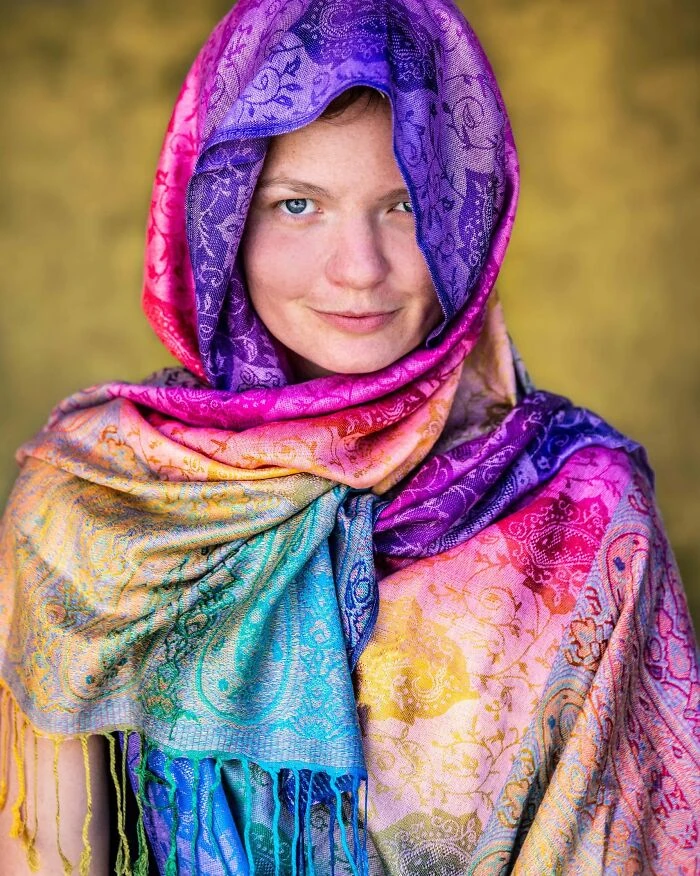
Perrine. Michael Potts captures a close-up portrait highlighted by a rainbow scarf and a radiant smile.
Potts relies on bold color and genuine emotion, and here both elements hit the mark perfectly.
“Membrane” — Karen Moffatt-McLeod
Karen Moffatt-McLeod submitted two strikingly contrasting pieces to the contest. While “Between Us” radiates warmth and intimacy, “Membrane” explores the exact opposite. A face gazes upward through a sheet of sheer plastic. The photographer noted: “The image emphasizes the physical texture of plastic, capturing a living, breathing struggle against a flimsy barrier.” 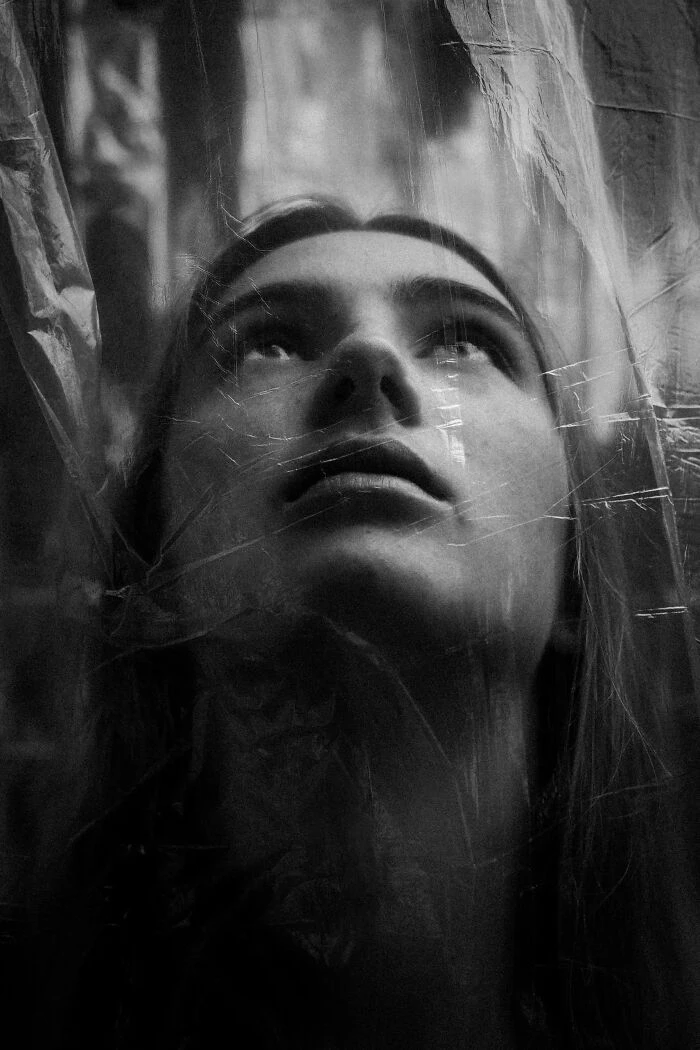
Karen Moffatt-McLeod. The plastic sheet highlights vulnerability—a fragile boundary separating the individual from her environment.
It is an exploration of vulnerability and the thin line separating us from the outside world. Stark monochrome strips away clutter, leaving only the face and the barrier.
“Grace of Age and Ancient Rituals” — Maria Teresa Bellomu
Maria Teresa Bellomu photographed this portrait in a traditional Bajawa village on the Indonesian island of Flores. An elderly woman holds a tool for preparing betel nut—a mixture of betel leaf, areca nut, and slaked lime. Betel chewing is a centuries-old custom across Southeast Asia, serving as a social ritual, traditional remedy, and staple of daily life. 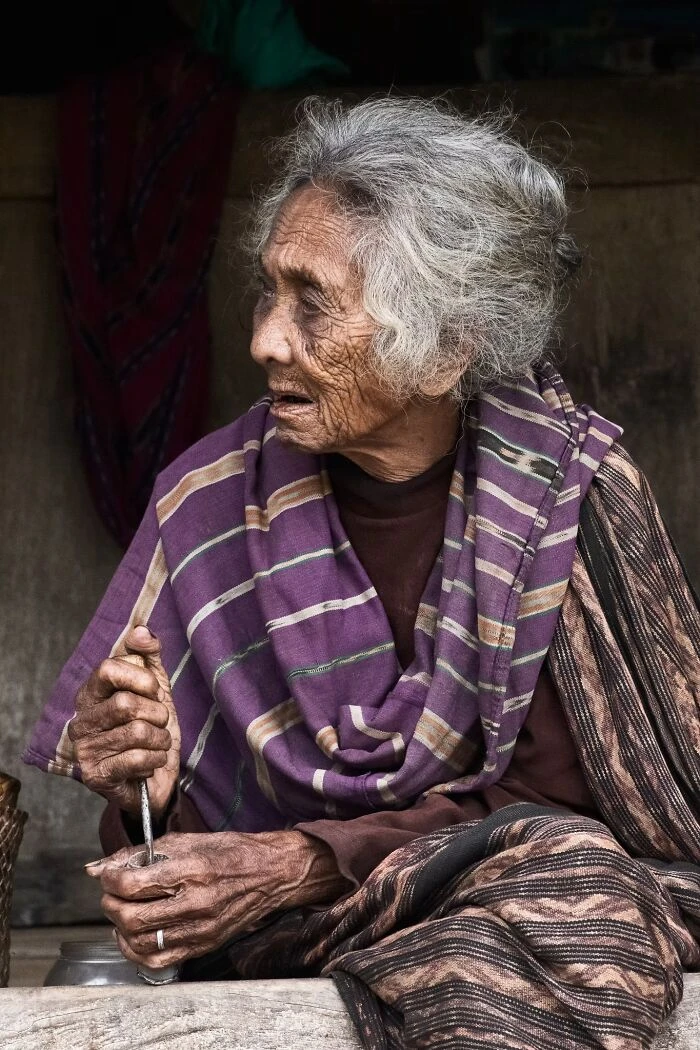
Bajawa village, Flores Island, Indonesia. Betel chewing is an ancient social custom in Southeast Asia.
She wears handwoven ikat cloth. In the villages of Flores, the art of ikat weaving is passed down through generations as a cherished living heritage.
“Boy with Harmonica, Papua New Guinea” — Karen Seifert
Karen Seifert photographed this young boy in Papua New Guinea, capturing a subtle detail easily overlooked: a map of the nation printed across his shirt. A small citizen of a vast island, he holds a harmonica, wearing a makeshift woven hat. 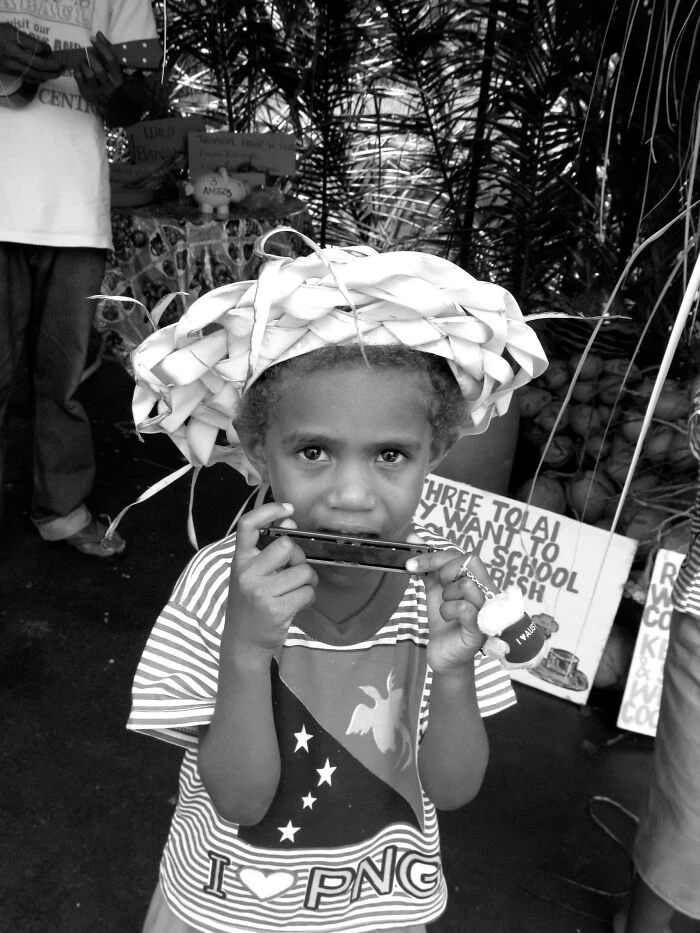
A boy wearing a woven hat and a shirt featuring a map of Papua New Guinea plays the harmonica.
The monochrome palette eliminates distance, leaving a pure, timeless moment: a child, his music, and his expression.
“Yellow” — René Kuipers
René Kuipers titled his piece “Yellow,” though vibrant color is conspicuously absent. A woman named Maura stands in soft shadow, framed by a sliver of warm backlight. The rim lighting imparts a painterly, almost cinematic atmosphere to the portrait. 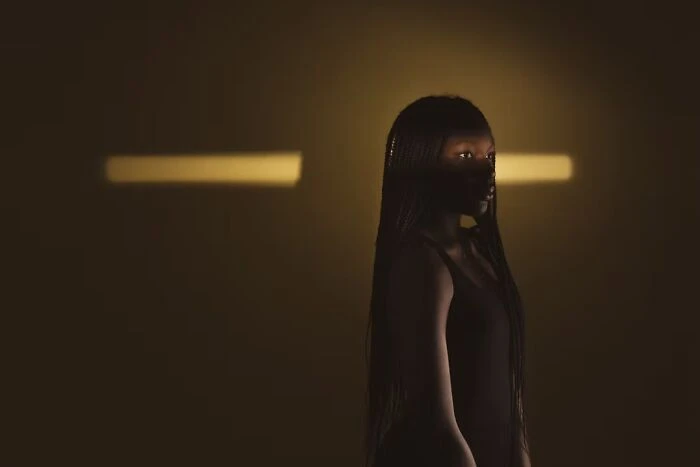
Maura. René Kuipers plays with light, using a warm beam behind his subject to create a painterly rim effect.
Minimalism is a strength here; Kuipers knows exactly when a composition is complete.
“The Inward Gaze” — Ivelina Stoyanova
Kumbh Mela is the largest religious pilgrimage on Earth. Tens of millions of Hindu pilgrims gather at the sacred confluence of the Ganges, Yamuna, and mythical Saraswati rivers for ritual bathing. Inscribed on UNESCO’s Intangible Cultural Heritage list in 2017, the gathering is renowned for its sadhus—ascetics covered in sacred ash (vibhuti). 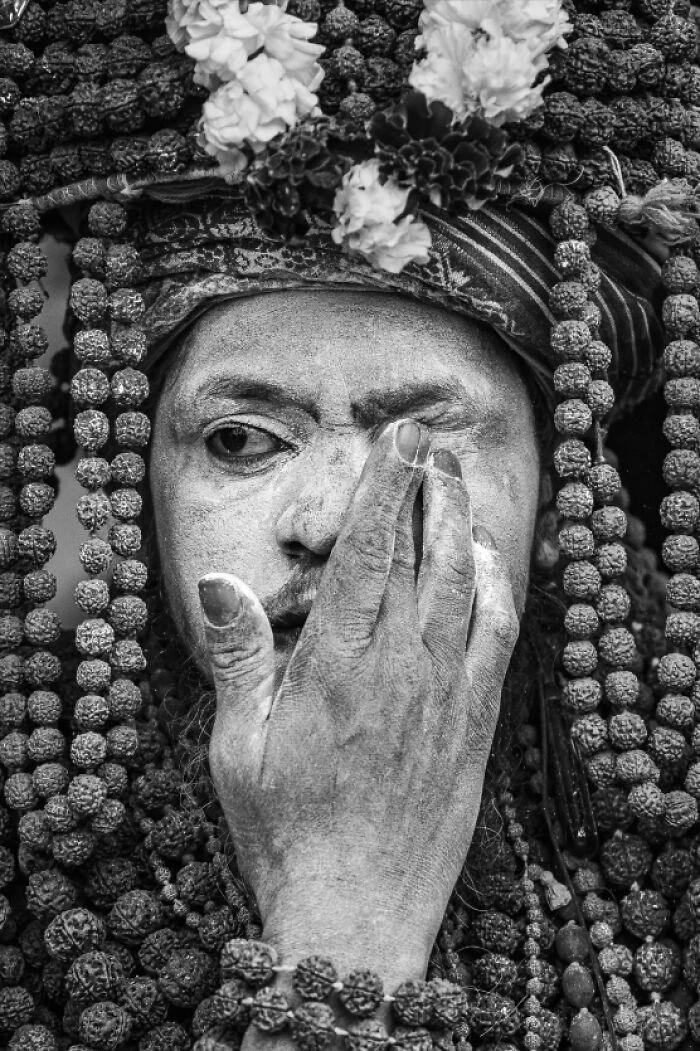
Kumbh Mela is the world's largest religious gathering, where sadhus coat their bodies in sacred ash (vibhuti).
Ivelina Stoyanova photographed this sadhu during a moment of quiet introspection. With a hand raised before his face and one eye closed, she described it as “a moment of turning inward amid the rituals of Kumbh Mela.” The ash-dusted skin and closed eye are not a performance, but a devotion.
“David, Born 1989” — Olivia Dréchou
The final entry in our roundup is also one of its quietest. Olivia Dréchou created it as part of her series “Une cité en-visagée” (“A City Envisioned”), capturing residents of social housing in Brussels' Watermael-Boitsfort district across all generations, from newborns to centenarians. David was born in 1989. 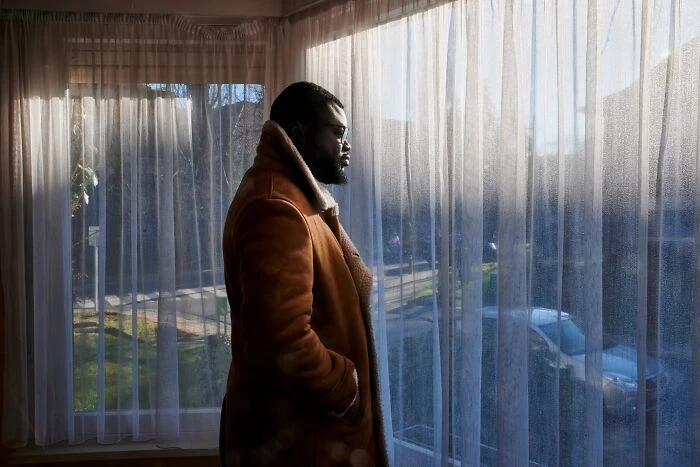
David, born 1989. From the series “Une cité en-visagée” (“A City Envisioned”), chronicling residents of public housing in Boitsfort, Brussels.
He stands by a window behind sheer curtains, gazing outward—or perhaps looking within. The image is intentionally ambiguous, which is precisely what makes great portraiture compelling: it raises questions rather than providing neat answers.
Which of these portraits resonated with you the most, and why? Share your thoughts in the comments below.