Margaret Hamilton Dies at 90: The Story of the Moon Mission's Unsung Heroine Hidden for Decades (6 Photos)
In major endeavors, glory goes to a select few while hundreds of others remain in the shadows. Ask who was the first person to walk on the Moon, and you'll immediately hear Neil Armstrong's name. But the name Margaret Hamilton likely won't ring a bell. Yet at MIT, she led the team that developed the onboard software for NASA's lunar spacecraft. On September 30, 2026, Hamilton passed away at the age of 90. Here is her extraordinary journey—from predicting the weather to receiving the Presidential Medal of Freedom. 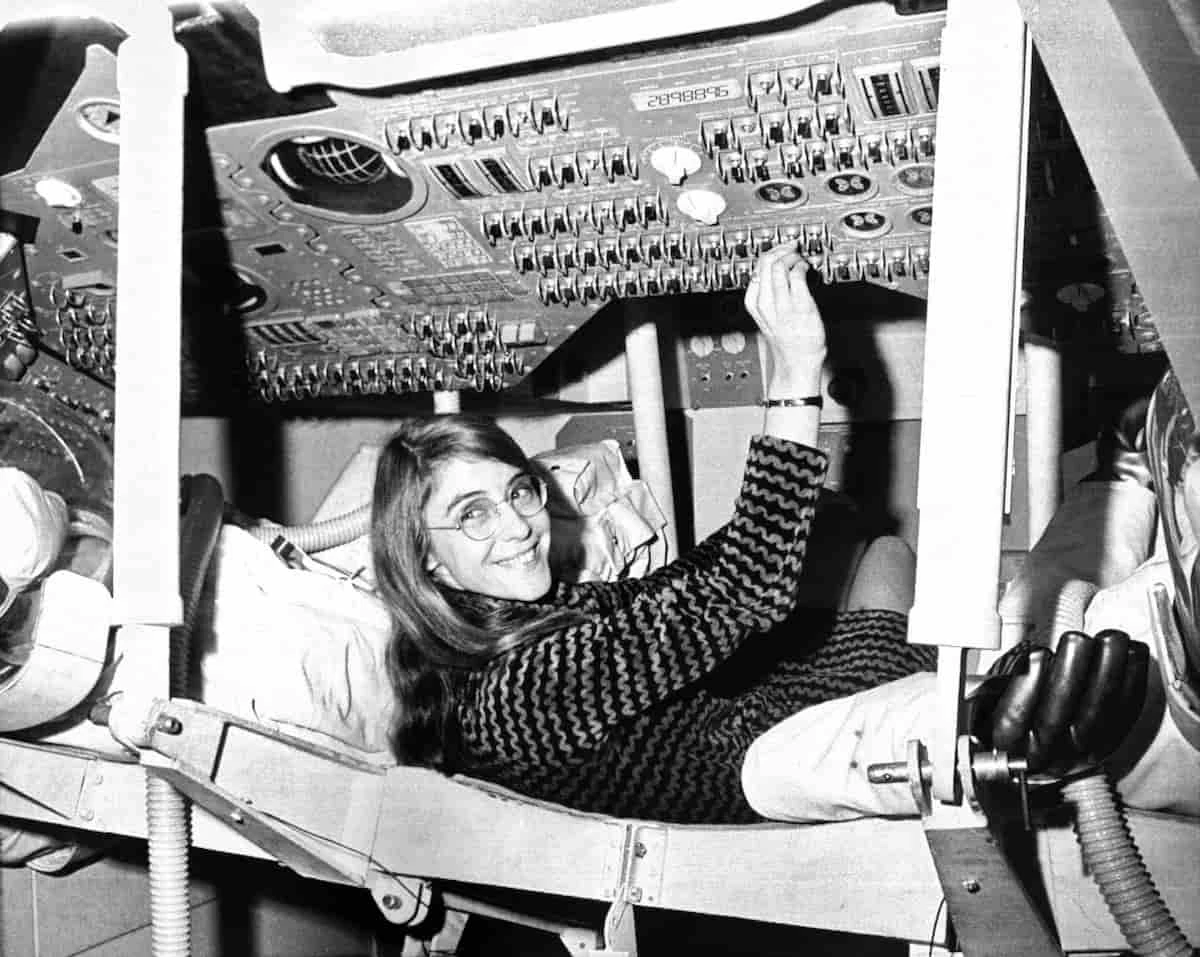
The Unassuming Girl in Glasses
It was this unassuming young woman in glasses who helped make mankind's leap to Earth's satellite possible. On July 20, 1969, at 20:17 UTC, Apollo 11's lunar module carrying Neil Armstrong and Buzz Aldrin touched down on the Moon, ushering in a new era for human civilization. 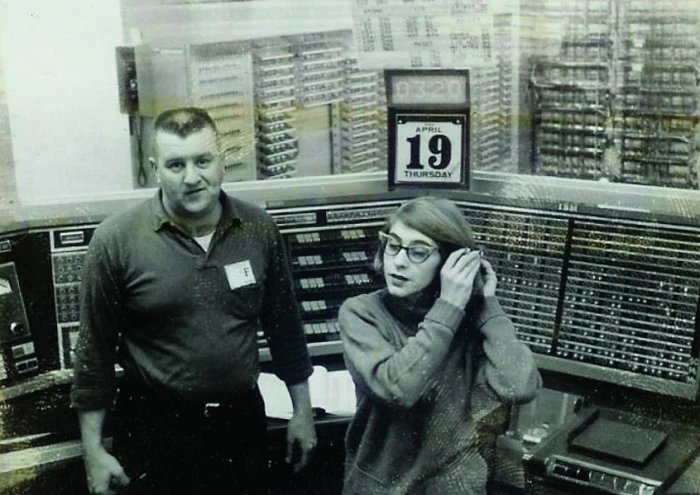
Hamilton (right) with a colleague at MIT. In the early 1960s, computer programming was still in its infancy.
Born in Indiana in 1936, Margaret earned a mathematics degree before joining MIT in 1959, where she initially developed weather forecasting software. In 1965, she joined the lab recruiting software engineers for the moon mission. By 1968, more than 400 people were working on the Apollo code under her leadership.
A Stack of Code as Tall as She Was
Though the flight and landing were not without hurdles, their ultimate success was thanks to the Apollo software created by Hamilton's team.
This is what a complete printout of the lunar program's code looked like.
“In this photo, I’m standing next to the source code for the Apollo Guidance Computer (AGC). To be clear, this stack is strictly code—it doesn't even include bug reports or logs.” 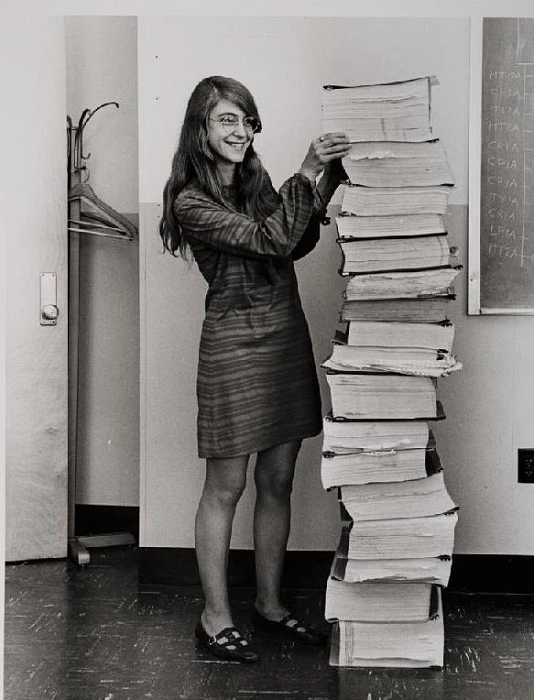
The Apollo code printout stood almost as tall as Hamilton herself. Photo taken at MIT in 1969.
Code was written by hand, transferred to punch cards, and printed out. The finished software was then "woven" into memory at the Raytheon factory, where female workers manually threaded wires through magnetic cores. Engineers dubbed it "LOL memory"—short for "little old ladies memory." The computer had just 72 kilobytes of read-only memory.
A Job No One Took Seriously
In the 1960s, programming wasn't regarded as a prestigious discipline. Hardware engineers were seen as the real heroes.
“My job didn't command much respect back then. Everyone thought programming was trivial—something akin to typing up notes. The real engineering was assumed to be hardware development.” 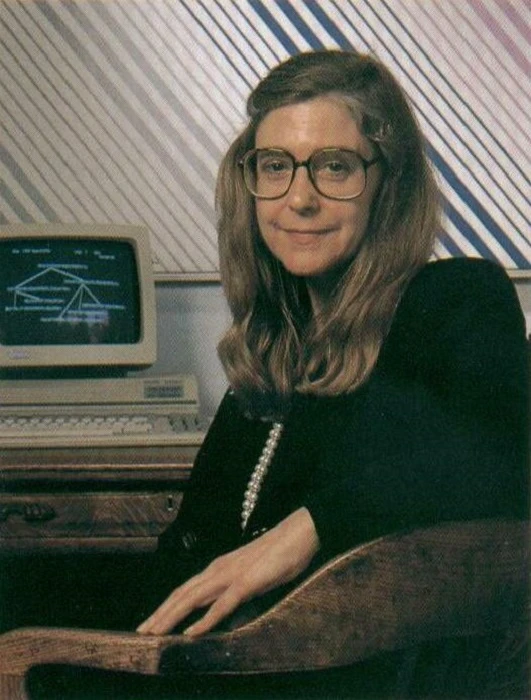
Hamilton in 1989. She championed the idea that software developers were just as much engineers as hardware designers.
Hamilton set out to change that perception. She began referring to her work as "software engineering." While colleagues initially laughed at the title, they eventually conceded she was right, and the term stuck permanently.
The women on the team didn't just write code—they frequently offered valuable insights to their male colleagues on how to improve the hardware itself.
An Alarm 3 Minutes Before Touchdown
Just as Armstrong and Aldrin were nearing the lunar surface, a 1202 alarm flashed on the display: the onboard computer was overloaded. The rendezvous radar was flooding the system with data unnecessary for landing.
Fortunately, Hamilton's team had anticipated such overloads and built priority scheduling into the software. The computer automatically dropped low-priority tasks to focus on what mattered most: controlling the descent. It recovered autonomously, requiring no pilot intervention. 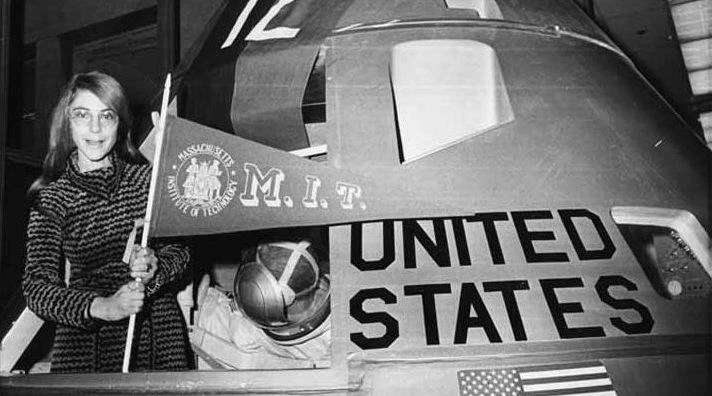
Hamilton holding an MIT pennant beside a command module mockup. Her software ran on both the command and lunar modules.
In Houston, decisions had to be made in seconds. Flight controller Jack Garman knew that as long as the alarm wasn't continuous, the computer was managing fine. The mission proceeded, and the astronauts made history. As Hamilton later noted, without this built-in error recovery, the moon landing likely would have been aborted.
From Punch Cards to the Medal of Freedom
In 1976, Hamilton co-founded Higher Order Software, and in 1986, she launched Hamilton Technologies. Both companies were based in Cambridge, Massachusetts. 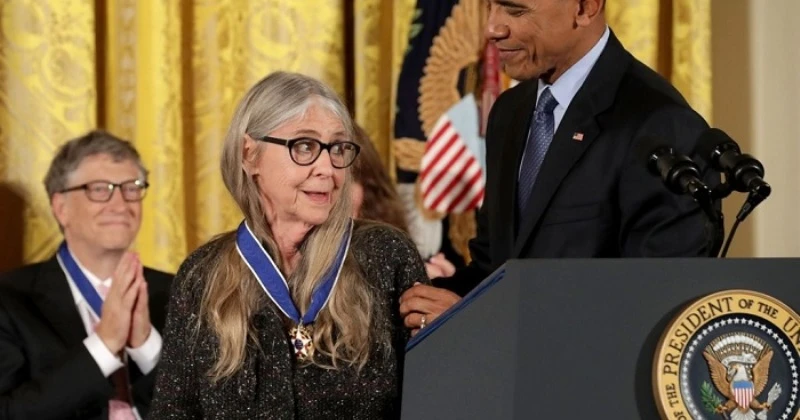
America's highest civilian honor: President Barack Obama presented Hamilton with the Presidential Medal of Freedom on November 22, 2016.
In 2003, NASA awarded her $37,200—the largest financial award given to an individual in the agency's history up to that time. Hamilton passed away in Cambridge, Massachusetts, on September 30, 2026, at the age of 90. No cause of death was disclosed.
This remarkable woman's contributions to space exploration are undeniable, even if she long remained in the shadow of astronauts and rocket scientists. “There was no second chance. We knew that,” Hamilton recalled in 2009. What other unsung heroes behind monumental human achievements do you know of? Share your thoughts in the comments.