Beyond Excalibur: The 10 Most Famous Swords of the Middle Ages (13 photos)
In the Middle Ages, carrying a sword was standard practice—stepping outside unarmed was not just ill-advised, but downright dangerous. Across most of medieval Europe, a blade was the mark of a free man, though a vast chasm separated the sword of a merchant from that of a hero or a king. Here are ten of the most famous swords in medieval history. 
Durandal
One of the most legendary swords in history is Durandal, wielded by Roland, the paladin celebrated across French chivalric folklore, ballads, and epics. According to legend, its hilt held sacred relics: a tooth of Saint Peter, hair from Saint Denis of Paris, a fragment of the Virgin Mary's cloak, and the blood of Saint Basil. 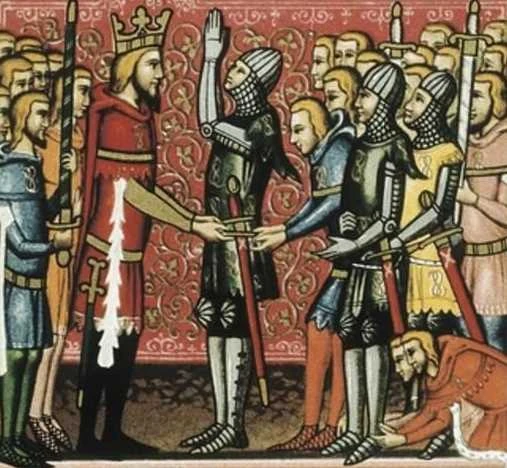
Roland receiving Durandal from Charlemagne
These holy artifacts supposedly made Durandal indestructible and sharper than any other blade. With it, Roland famously held off an entire Saracen army single-handedly and performed countless legendary feats. The valiant knight received the blade directly from Charlemagne upon swearing his allegiance. 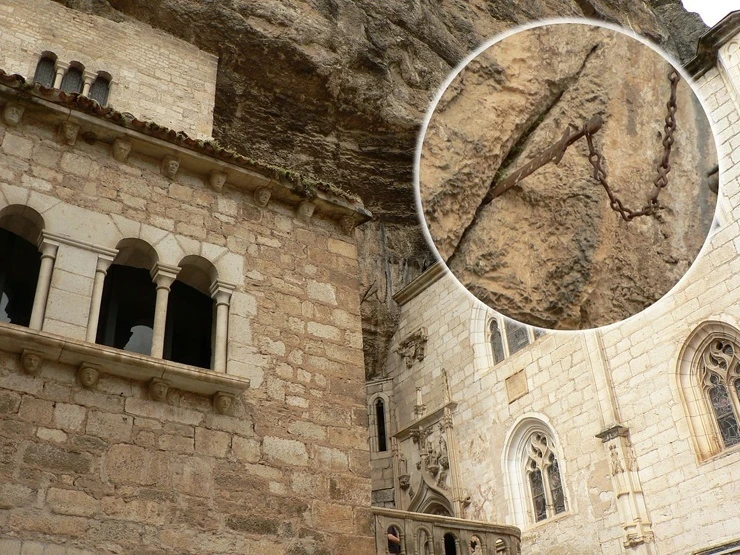
The world's sharpest blade hasn't aged particularly well
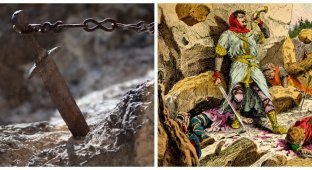
The weapon was forged from the same iron ingot as the king's own blade, Joyeuse. In medieval French romance, Durandal was treated as feminine, with Roland addressing the sword as a lady. A 12th-century legend claims that as Roland lay dying, he hurled the sword into a cliffside to keep it out of enemy hands, where it lodged firmly into the rock.
Another tradition holds that after Roland fell, only Charlemagne was able to retrieve the weapon; he kept the hilt and cast the blade into a lake. Still, locals in the southwestern French village of Rocamadour long insisted that an ancient, rusted sword embedded in a cliff near their sanctuary was the real Durandal. Mysteriously, the artifact vanished in the summer of 2024, stolen by unknown culprits.
The theft stunned locals, given that the sword was embedded 30 feet up a sheer rock face in a protected area. According to local folklore, its disappearance is a dark omen.
“On an accursed night, the holy sword shall be stolen, igniting grand wars. Golden idols will be cast into the dust alongside the blood of the rich, and staircases shall be washed with the blood of the poor.”
Zulfiqar
Relatively little is known for certain about Zulfiqar, the iconic sword of the Prophet Muhammad. Originally belonging to Munabbih ibn Hajjaj of Mecca, the blade was acquired by Muhammad as battle spoils. It accompanied him through his campaigns before passing to Ali ibn Abi Talib, one of the Rashidun Caliphs. 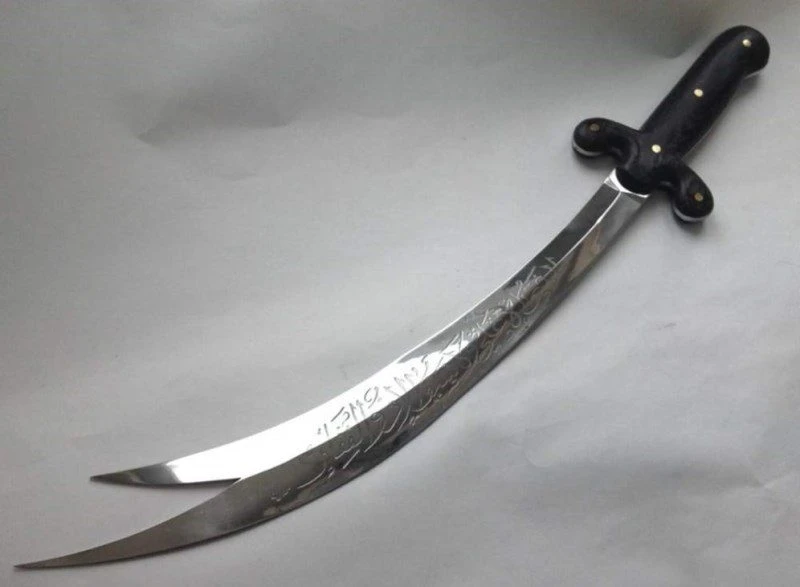
A modern replica of Zulfiqar crafted by master bladesmiths
Islamic folklore attributes miraculous properties to Zulfiqar, even claiming it required no scabbard and could float in midair when not in use. Accounts of its current whereabouts vary; one popular legend claims it was acquired by the Ottoman sultans and kept hidden for centuries in Istanbul's Topkapi Palace.
Hrunting and Naegling
Hrunting is the legendary sword lent to the hero Beowulf at the court of the Danish king Hrothgar for his battle against Grendel’s Mother. Derived from Old English, its name implies "piercer." Expectations were high, yet the blade proved useless against the creature's spellbound hide, forcing Beowulf to defeat the monster with his bare hands and a giant's blade. 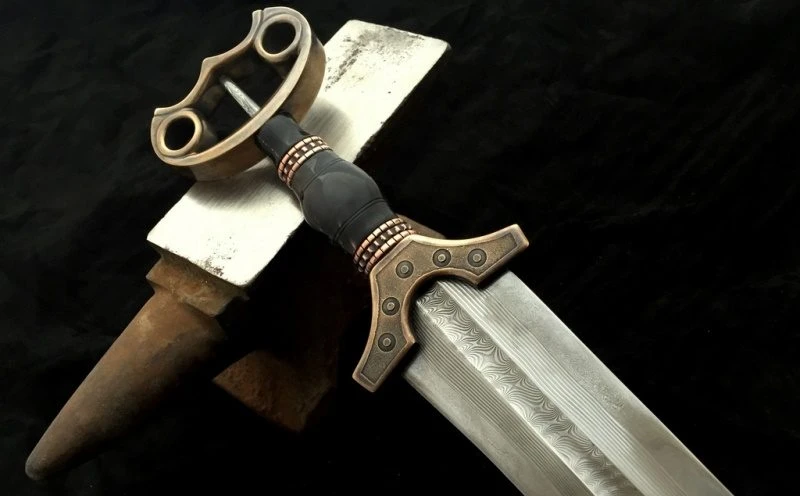
Modern Nordic blacksmiths' interpretation of Hrunting
Naegling was Beowulf's second legendary weapon, carried into his final battle against a fire-breathing dragon. Much like Hrunting, Naegling failed the hero: the blade snapped in two under his immense strength. Both the dragon and Beowulf perished in the deadly encounter.
Legbiter
Legbiter was the prized sword of King Magnus III of Norway, known as Magnus Barefoot, who ruled from 1093 to 1103. Unlike mythic weapons, Legbiter was not credited with magic; its fame stemmed entirely from its restless owner, who spent his reign waging campaigns against neighboring lands and crushing rebellions. 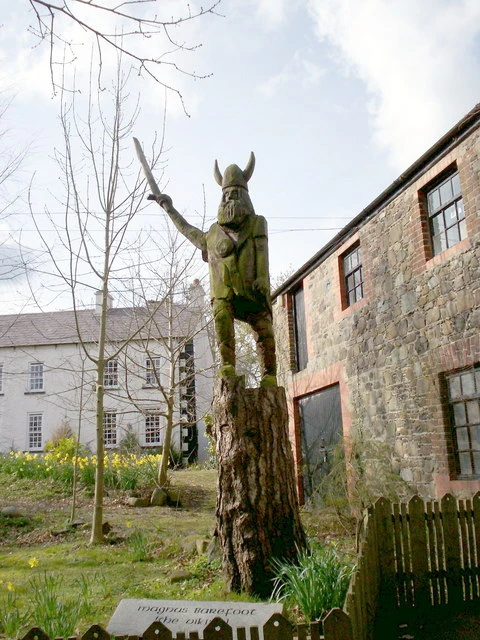
How Northern Ireland remembered the restless Magnus III and his sword
Magnus and Legbiter seemed invincible until his raid on Ireland, where the king and his men were ambushed and killed by local cattle farmers after a dispute over livestock turned violent. The fate of Legbiter remains unknown to this day.
Skofnung
Skofnung was the legendary blade of the Danish king Hrolf Kraki, forged by his own hands. According to saga lore, the king bound the spirits of his twelve elite berserkers who fell in battle into the sword itself. It was also known as Kenning, meaning "Blood River." 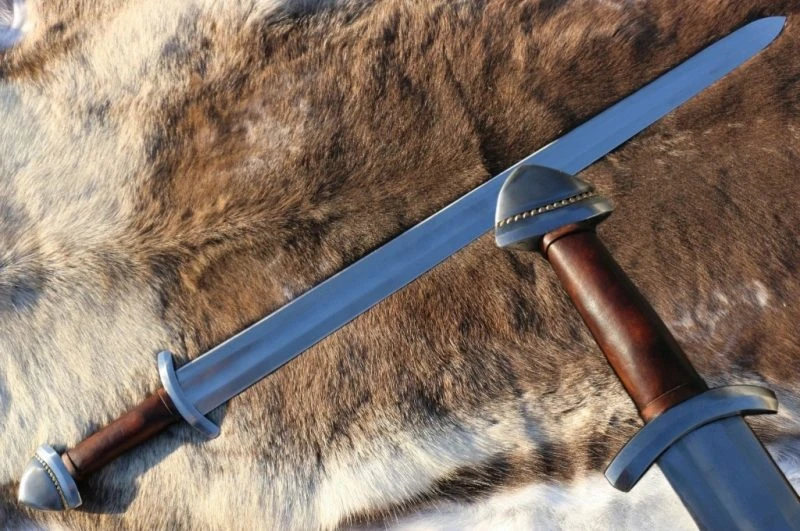
Scandinavian swords from the era of Hrolf Kraki looked roughly like this
True to Norse mythology, Skofnung passed through the hands of numerous heroes, was lost at sea, buried in grave mounds, and repeatedly retrieved, only to meet an absurd end. One saga hero drew Skofnung in the presence of women—violating a strict taboo surrounding the blade. Angered by the disrespect, the spirits of the berserkers dissolved the sword and struck down the offender.
Tizona and Colada
These twin legendary blades belonged to Rodrigo Díaz de Vivar, the national hero of Spain better known as El Cid. Immortalized in the epic poem *Cantar de mio Cid*, Tizona was won by El Cid as a trophy of war after defeating the Moorish King Bucar. 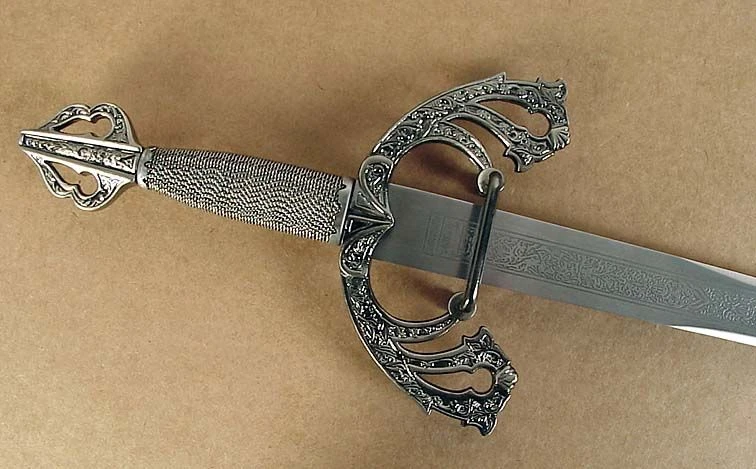
The original Tizona sword
Colada was El Cid's second sword—less famous than Tizona, but deeply revered in Spain. A blade claimed to be Colada has long been held by the noble Falces family, though metallurgical testing suggests it is a later replica. 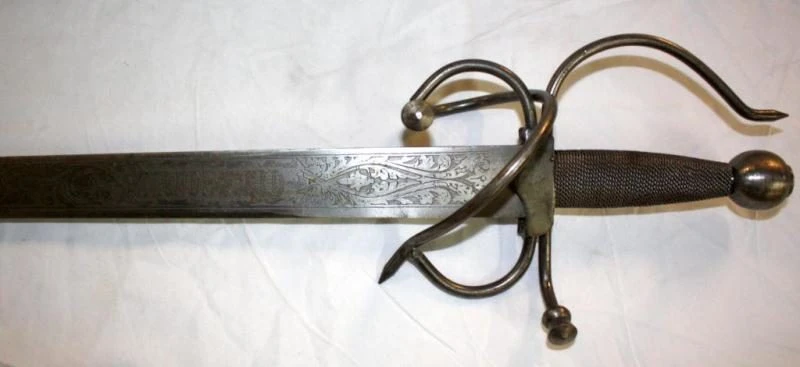
The highly dubious Colada blade
As for Tizona, it can be viewed at the Cathedral of Burgos near El Cid’s tomb. Metallurgical analysis revealed that its blade was forged in the 11th century, making it very likely to be the authentic sword of Rodrigo Díaz de Vivar.
The Wallace Sword
This massive sword belonged to Sir William Wallace, the knight who led Scottish resistance against English invasion in the late 13th century. Wallace wielded the weapon in landmark engagements, including the Battle of Stirling Bridge in 1297 and the Battle of Falkirk in 1298. 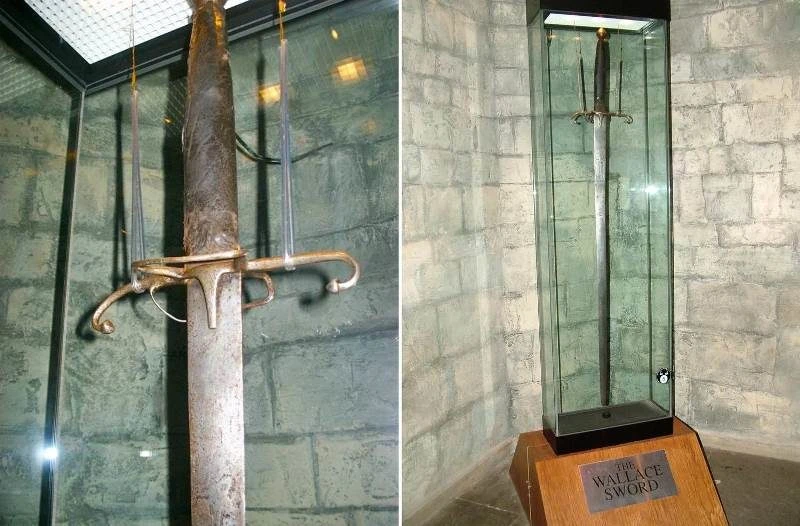
The William Wallace Sword: a treasured Scottish relic
Macabre legends claim its scabbard was crafted from the skin of Hugh de Cressingham, an extortionate English tax collector slain at Stirling. Following Wallace’s execution, the sword passed to Sir John de Menteith, governor of Dumbarton Castle, and centuries later resurfaced in the collection of the Tower of London. Today, the weapon—whose historical authenticity remains unconfirmed—is displayed at the Wallace Monument.
The Sword of Mercy (Curtana)
Curtana, also known as the Sword of Mercy, plays a central role in the coronation ceremony of British monarchs. Believed to date back to the 11th century and linked to King Edward the Confessor, the blade gets its name from its blunt, squared-off tip. "Curtana" derives from the Latin word *curtus*, meaning shortened. 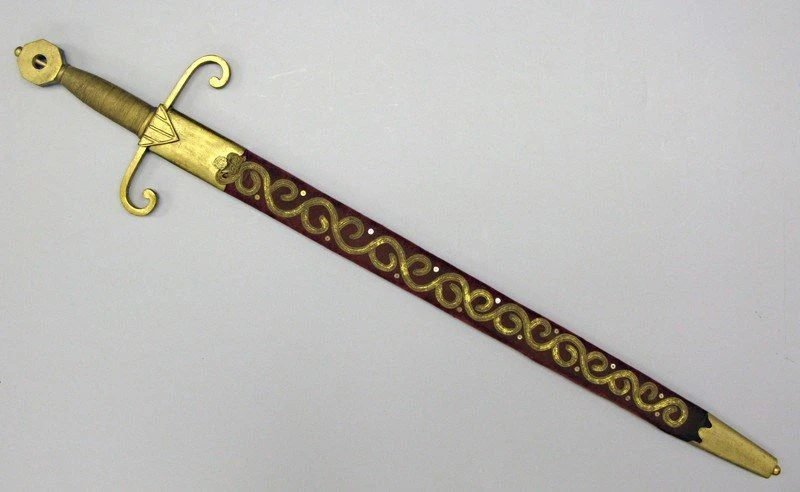
The Sword of Mercy: even a broken weapon can become legendary
Several legends account for its missing tip. One attributes it to Tristan, the legendary hero who snapped the point inside the skull of the giant Morholt. Another myth claims an angel broke the tip off to prevent a senseless act of slaughter.
Joyeuse
Joyeuse was the personal sword of Charlemagne, used in French coronation ceremonies starting in the 13th century. According to medieval legend, the blade incorporated the head of the Holy Lance that pierced Christ on the cross, brought back from Palestine during the First Crusade. 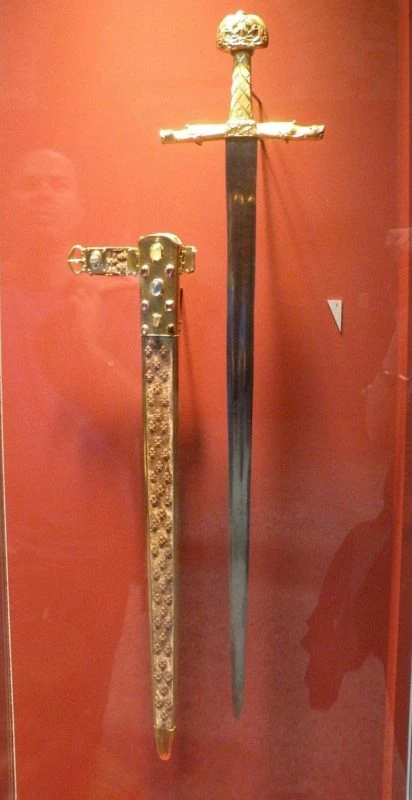
Joyeuse on display at the Louvre
Historians continue to debate its authenticity, as decorative elements on the blade date back to the 13th century, whereas Joyeuse was traditionally forged in the 9th. Last used at the coronation of Charles X in 1824, this sacred artifact is now housed in the Louvre Museum.
Excalibur
Excalibur is the magical sword of King Arthur, famously drawn from a stone to prove his rightful claim to the throne. In alternate traditions of Arthurian legend, however, Excalibur is distinct from the Sword in the Stone; in those tales, Arthur receives the blade from the Lady of the Lake, whose arm emerges from the water to hand it to him. 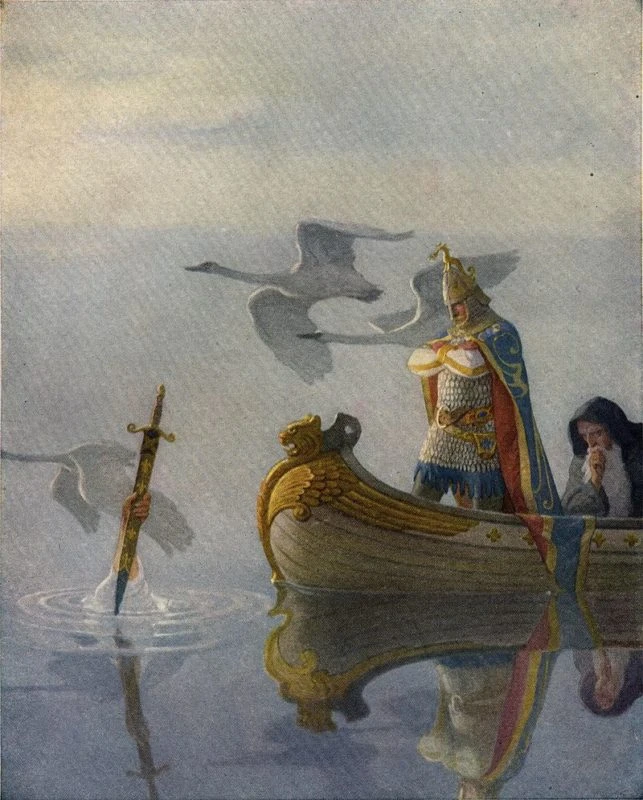
King Arthur hesitating before accepting the mysterious gift
According to legend, sensing his death was near, King Arthur commanded Sir Bedivere, the last surviving Knight of the Round Table, to return Excalibur to its rightful owner by throwing it into the lake. Only after seeing the hand of the Lady of the Lake catch the sword did the king peacefully pass away.