Absinthe: Genius for the untalented, but death to true genius (31 photos)
Absinthe was indisputably the drink of choice for intellectuals, artists, and poets. In the 19th century, it was said that absinthe gave genius to the mediocre, but brought death to true genius. By the 1880s, the mere mention of the word struck fear into the hearts of respectable Europeans, who firmly linked the spirit to madness. In France, it was dubbed "madness in a bottle," and the phrase "Absinthe drives you insane" became the rallying cry of temperance campaigns. Where and when did absinthe originate? Why was it banned in France and Switzerland? Was it a "Green Fairy" or a "Green Witch"? 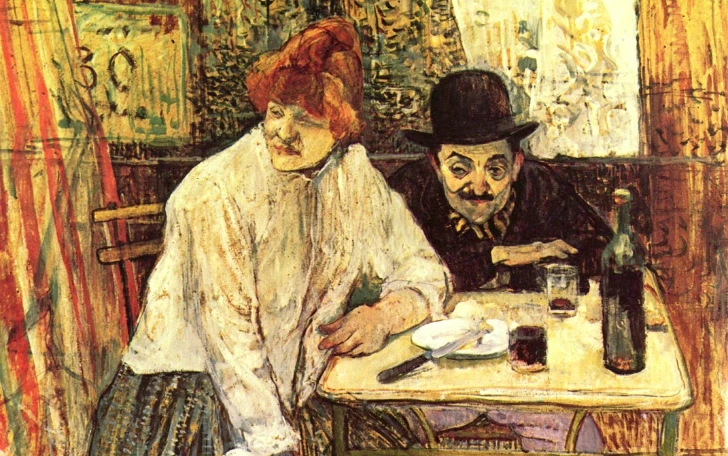
Absinthe is believed to have originated in the late 18th century, created by Dr. Pierre Ordinaire, a physician living in the Swiss village of Couvet. According to legend, he discovered wild wormwood there and formulated a unique elixir that quickly gained local fame. By the time Dr. Ordinaire passed away in 1821, absinthe had firmly earned its moniker "The Green Fairy" along with a reputation as a health tonic. Other sources suggest that the Henriod sisters, living in the same Swiss village, were making absinthe before Dr. Ordinaire's arrival and were actually the ones who sold the recipe to a certain Major Dubied. 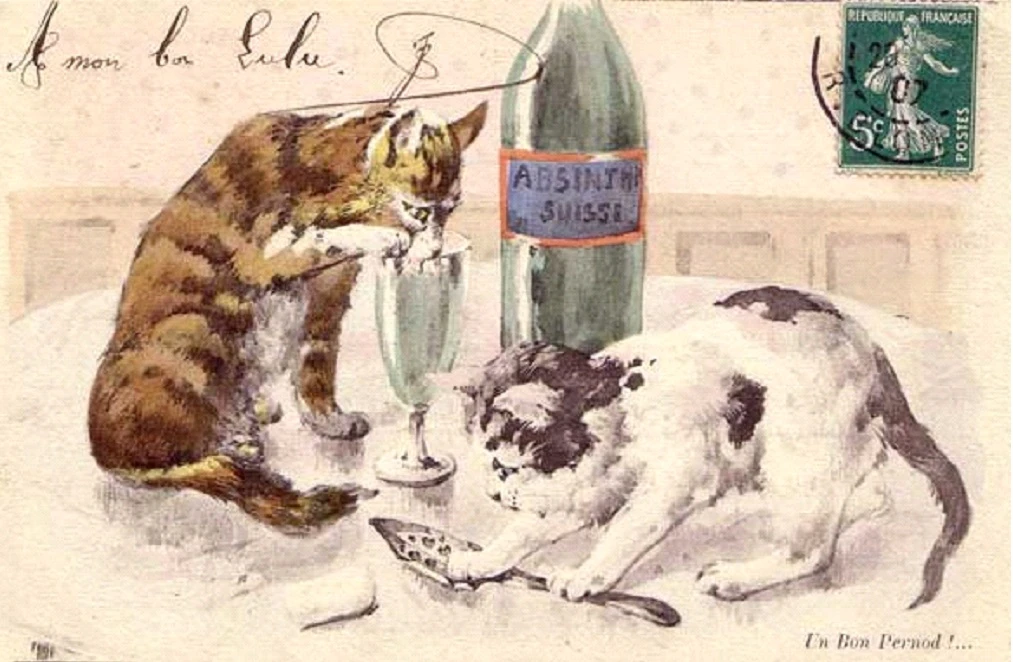
Regardless of its exact origin, once Major Dubied sampled absinthe, he found it cured indigestion, stimulated the appetite, and relieved fever and chills. Impressed by its properties, Dubied bought the recipe and began commercial production. In 1797, his daughter married Henri-Louis Pernod, launching the Pernod dynasty and giving birth to the famous brand. 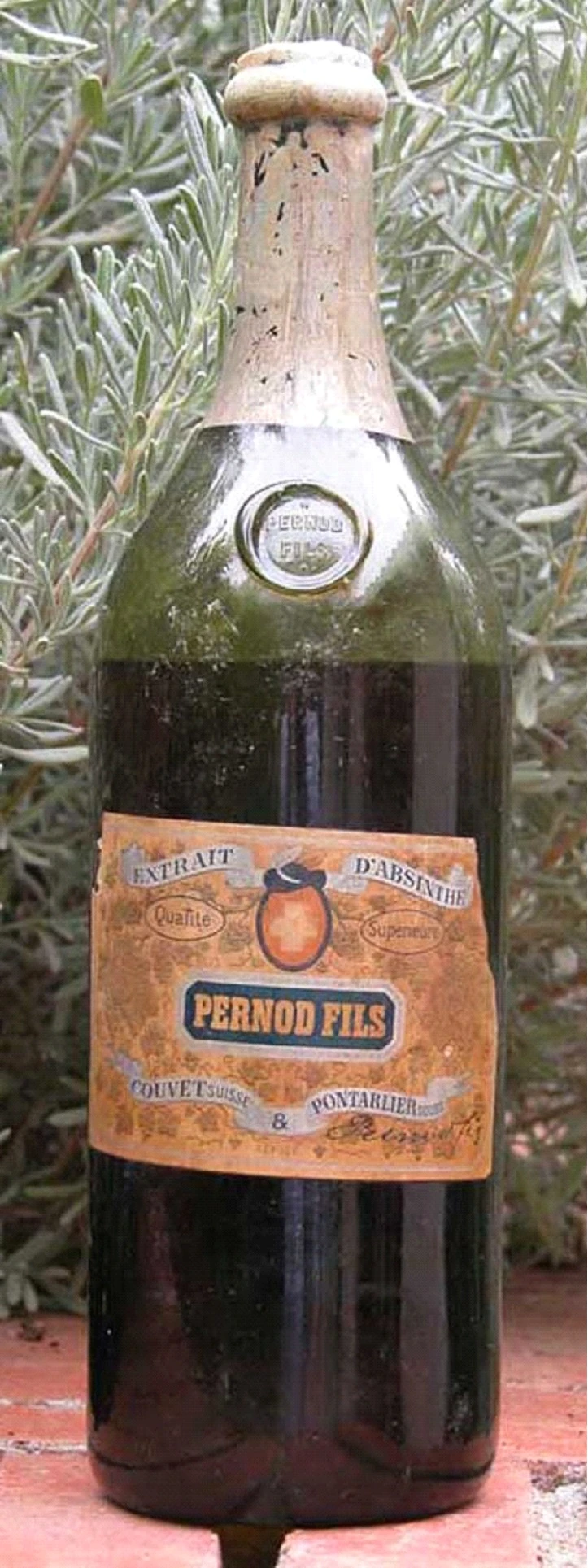
The Pernod distillery was a model of efficiency and hygiene. By 1896, it was churning out an astonishing 125,000 liters of absinthe per day. Everything ran smoothly until August 11, 1901, when lightning struck the facility. The sheer volume of alcohol stored on-site meant the blaze raged for days. The disaster might have been even worse had an alert worker not emptied massive vats of absinthe into a nearby river. The river turned a yellowish-green hue, and the alcoholic fumes wafted from the water, smelling like a drunkard’s breath for miles around. 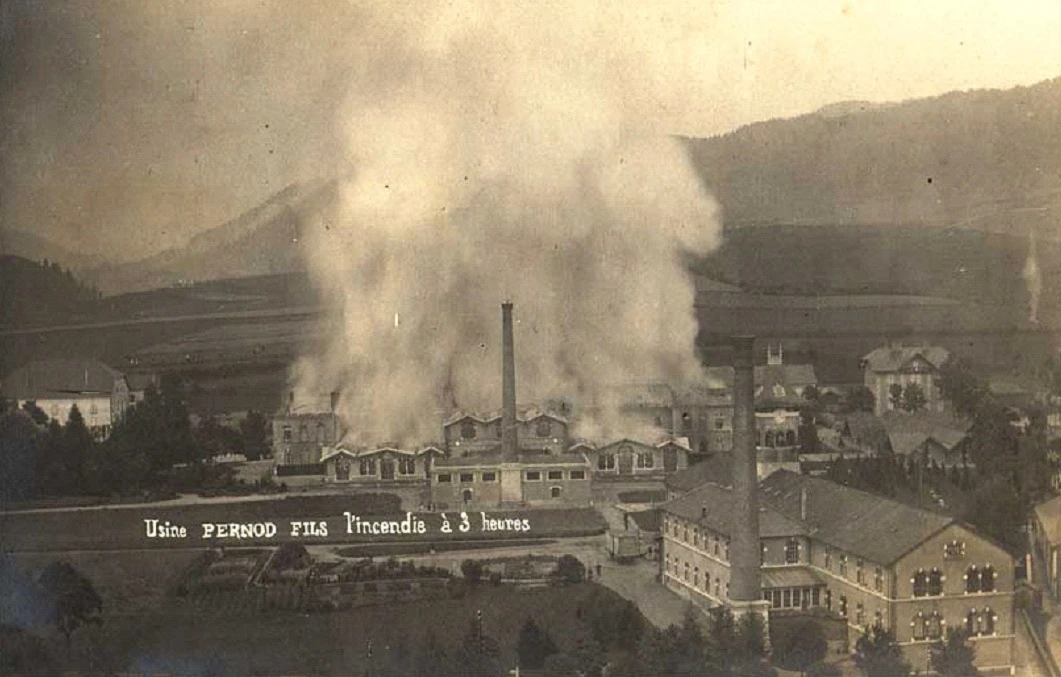
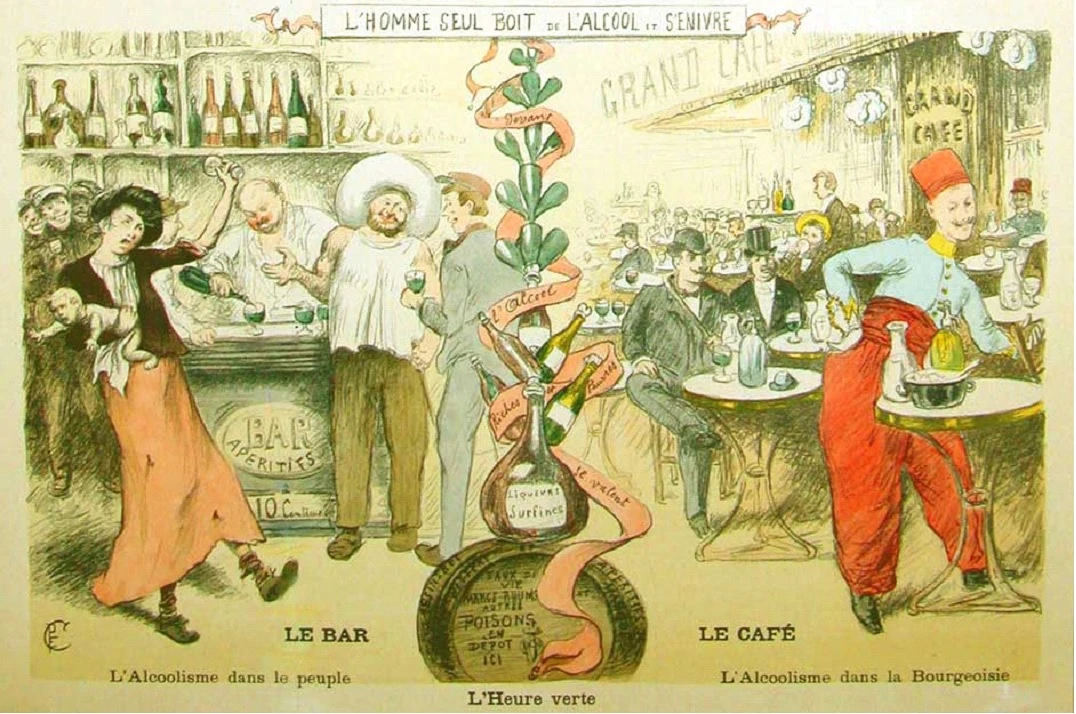
Drinking absinthe became a hallmark of Parisian social life during the reign of Napoleon III (1852–1870)—a respectable bourgeois ritual. The hours between 5:00 PM and 7:00 PM were known as "l'heure verte" (the green hour), when the herbal aroma of absinthe hung thick over Paris boulevards. It was believed to stimulate the appetite before dinner, and the strict timeframe devoted to drinking it helped keep overindulgence somewhat in check. 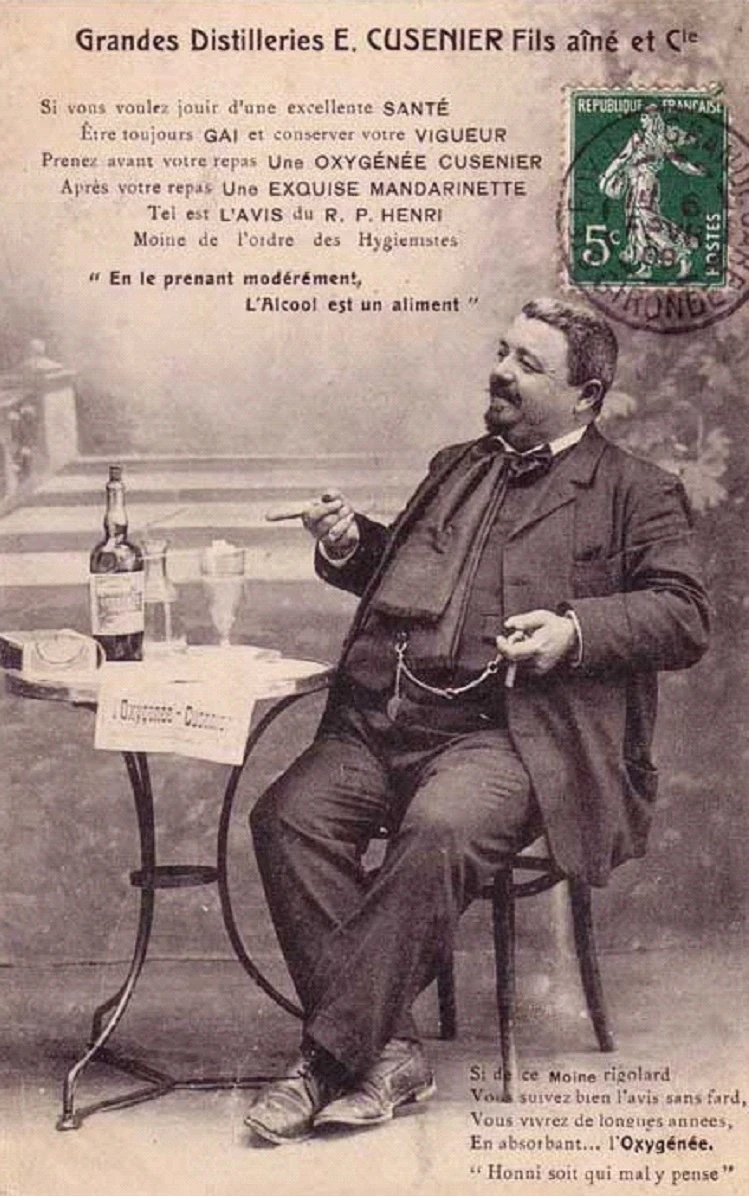
Given absinthe's high proof—the revered Pernod brand was 60% ABV—custom dictated having no more than a single glass. One might enjoy a drink before dinner or even lunch, but anyone daring to drink through the night drew open contempt from waiters. However, as people developed a taste for the spirit, the risk of abuse grew. More respectable drinkers, ashamed to indulge heavily in public, soon mastered the art of café-hopping. 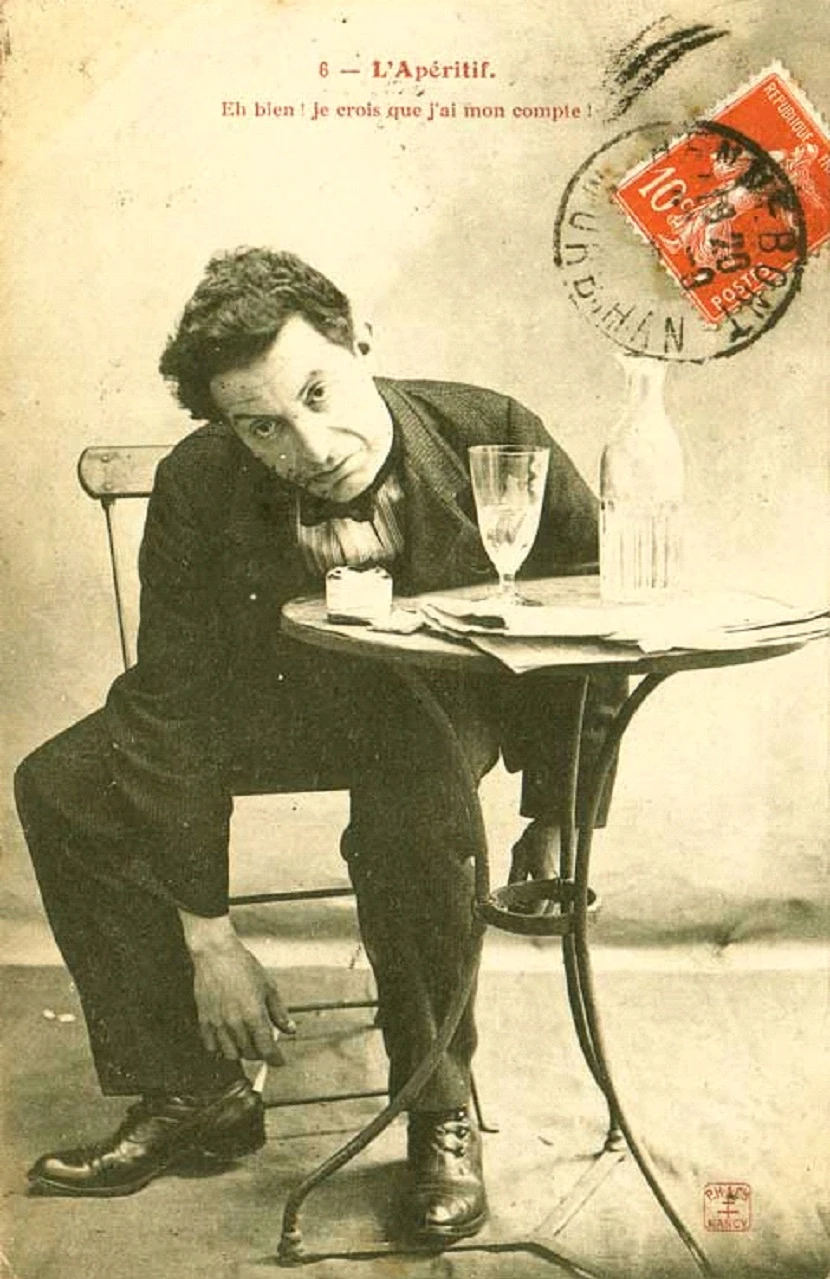
Alcoholics were quick to recognize absinthe's potency, and the drink soon captivated a broader audience: bohemians, women, and the working class. In Émile Zola's novel
L'Assommoir
(
The Drinking Den
), a carpenter "stripped stark naked on Rue Saint-Martin and died dancing the polka. He had been drinking absinthe." 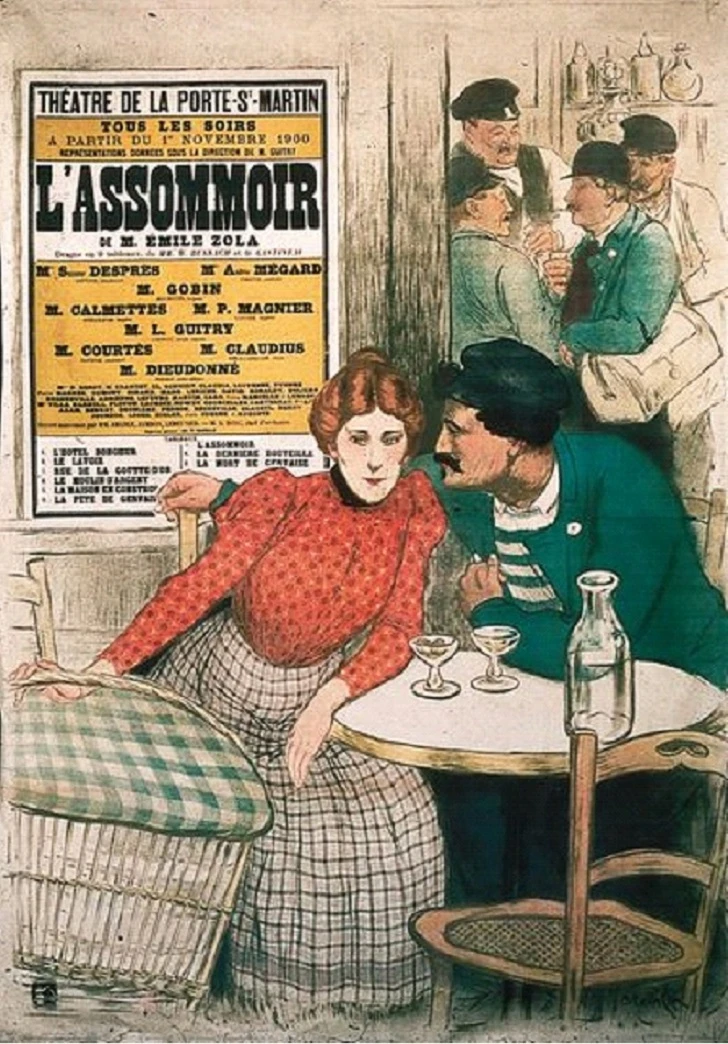
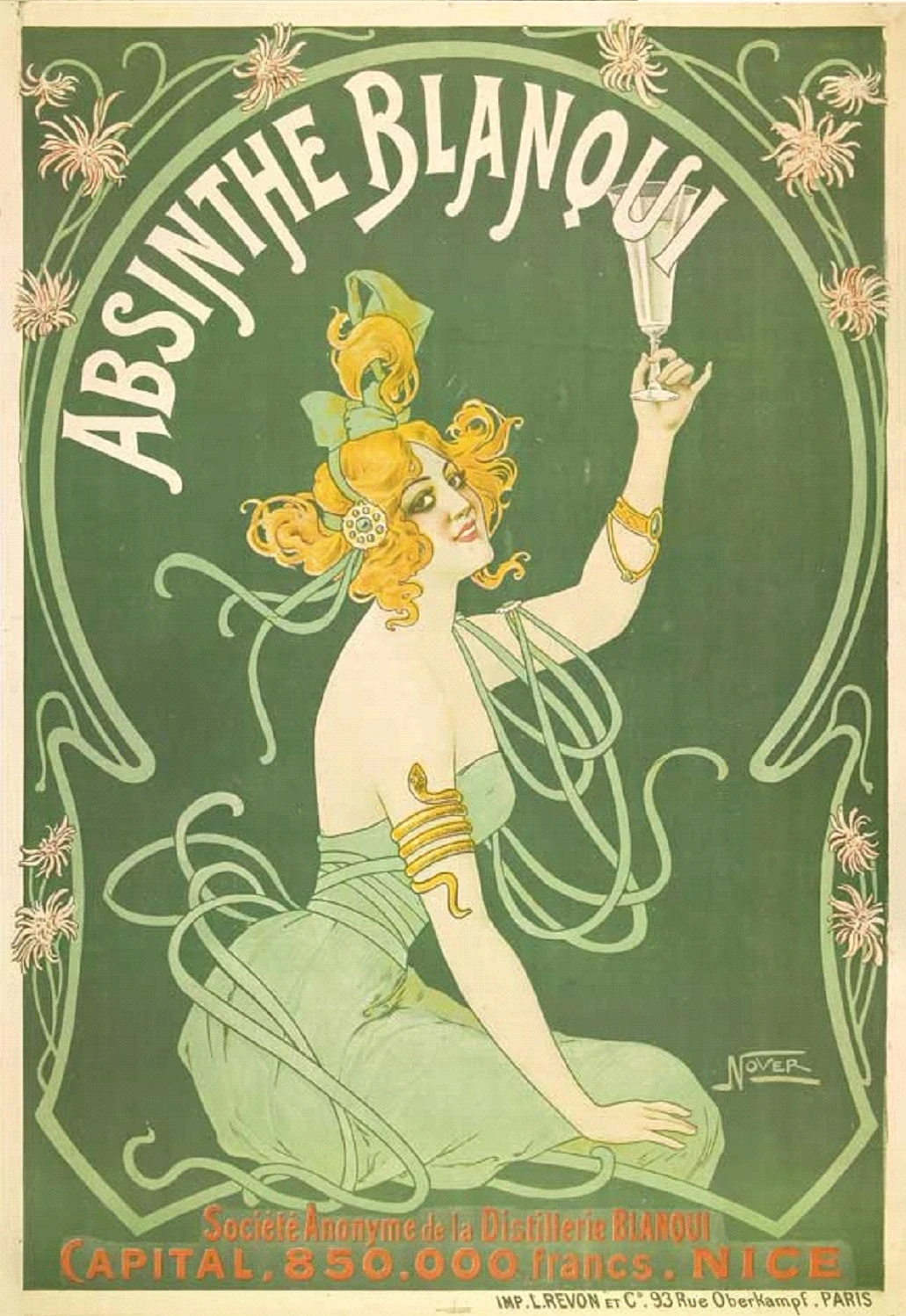
As social norms shifted, women began drinking absinthe in cafés as well. Many female drinkers refused to dilute the spirit with water, claiming they didn't want to swallow too much liquid while wearing tight corsets. Posters increasingly depicted emancipated women sipping absinthe and even smoking. 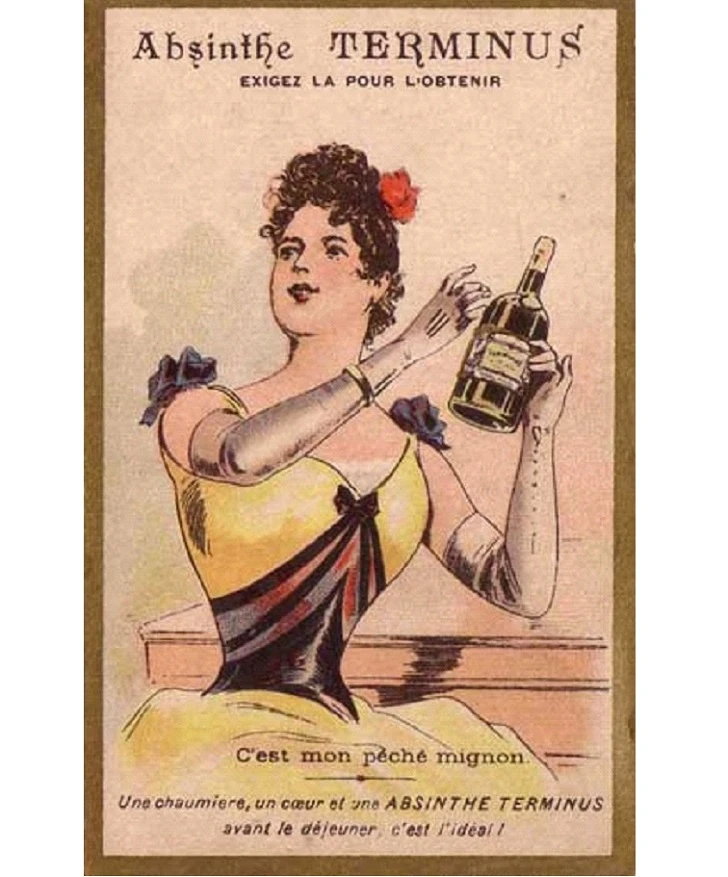
Paintings from that era, however, often told a grimmer story—one of gaunt women staring blankly into space over a glass. Illustration:
The Absinthe Drinker
by Félicien Rops. 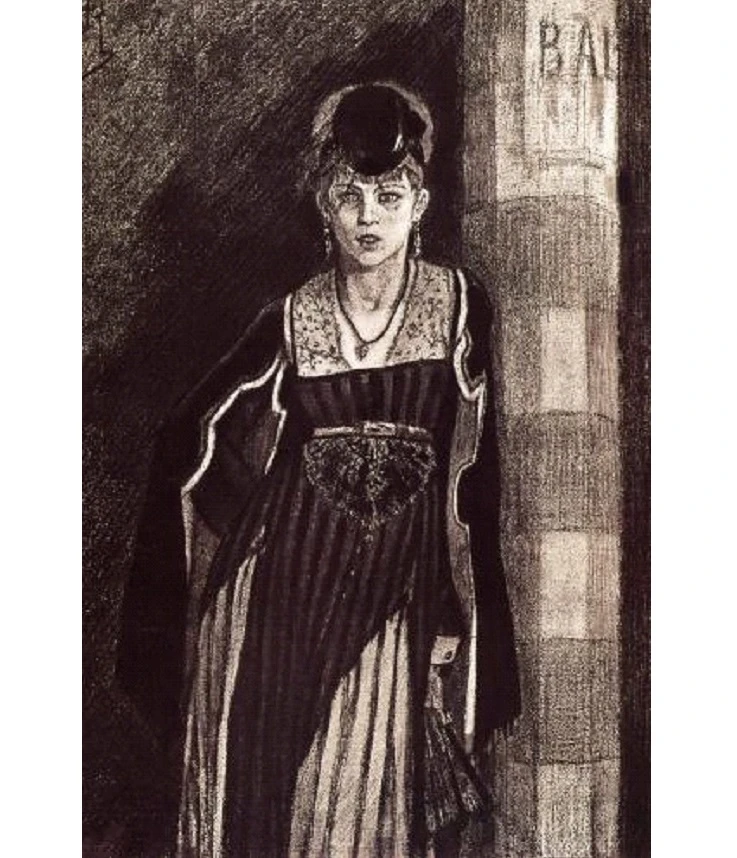
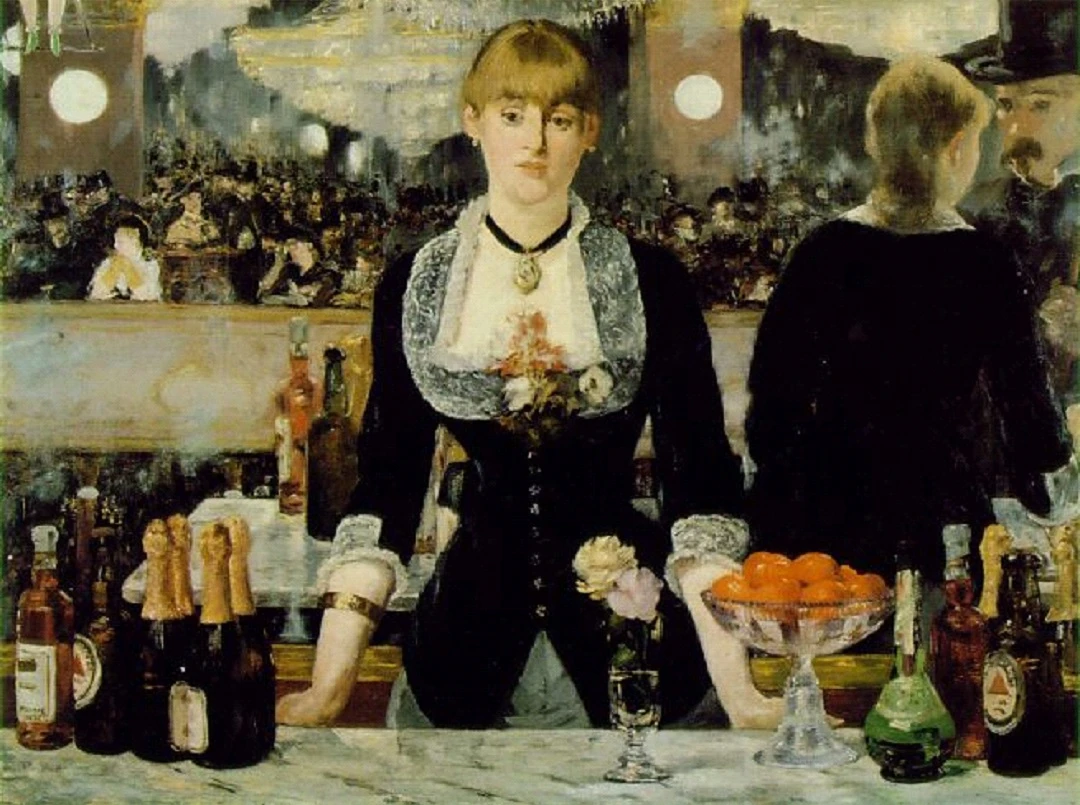
An intense affinity developed almost immediately between Parisian bohemians and absinthe, seen as the ultimate intellectual spirit. The drink holds a special place in the history of French art. Illustration: Édouard Manet,
A Bar at the Folies-Bergère
. 
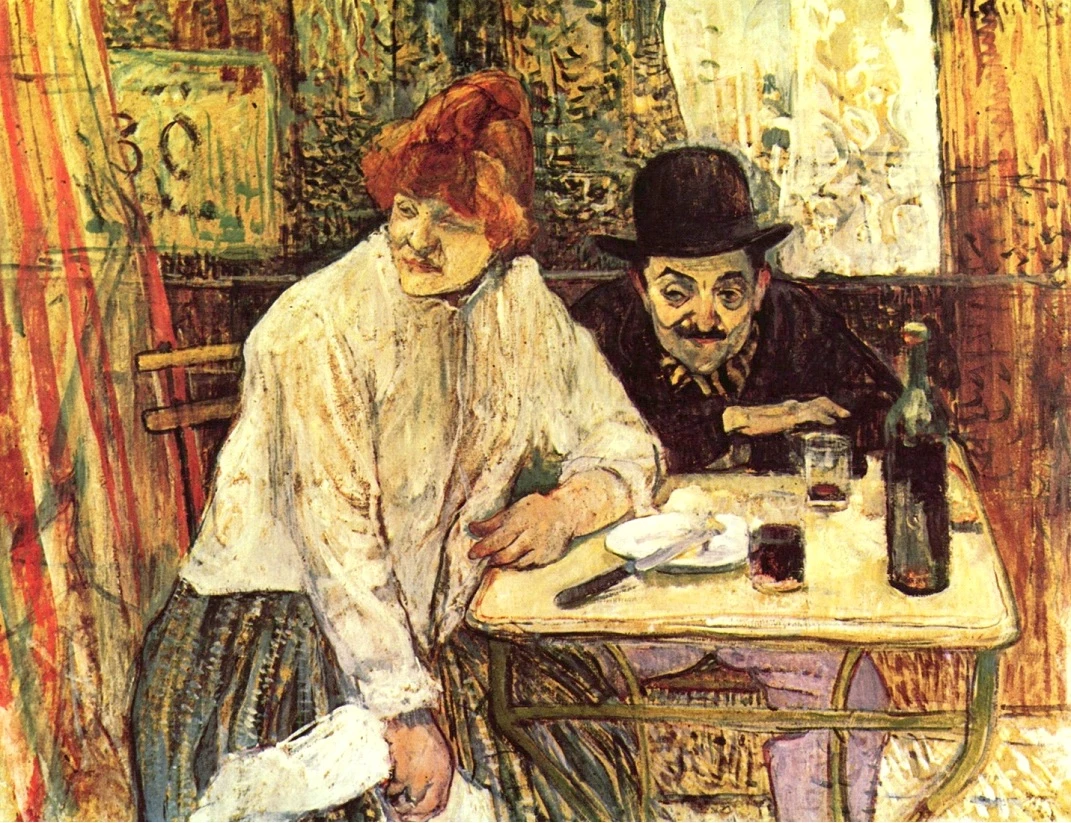
It is sometimes said of Henri de Toulouse-Lautrec that his paintings were painted entirely with absinthe. His heavy drinking was legendary; his favorite cocktail was the "Earthquake," a lethal mix of brandy and absinthe. "You must drink a little, but often," the artist maintained. To keep to his schedule, he carried a custom walking stick containing a half-liter flask of absinthe and a small glass. Illustration: Henri de Toulouse-Lautrec,
At the Café La Mie
. 
"I assure you, Madam, I can drink without fear of falling. I'm practically on the floor already," Toulouse-Lautrec once quipped, poking fun at his short stature (just over five feet tall). Regrettably, relentless drinking and poor nutrition took a heavy toll. He eventually reached the final stages of alcoholism, becoming intoxicated on tiny amounts. To make matters worse, severe paranoia set in. 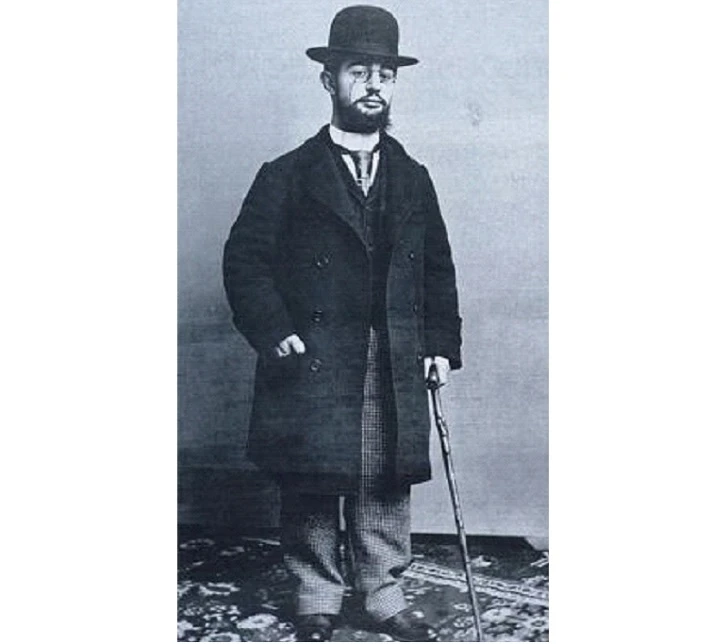
Toulouse-Lautrec suffered terrifying hallucinations, convinced that the giant elephant statue in the courtyard of the Moulin Rouge was following him everywhere. On March 1, 1899, a friend received a letter with grim news from Paris: "You will be sad to hear that Toulouse-Lautrec was put in an asylum yesterday." Pictured: The elephant statue in the courtyard of Paris's famous Moulin Rouge, which stood until 1906. 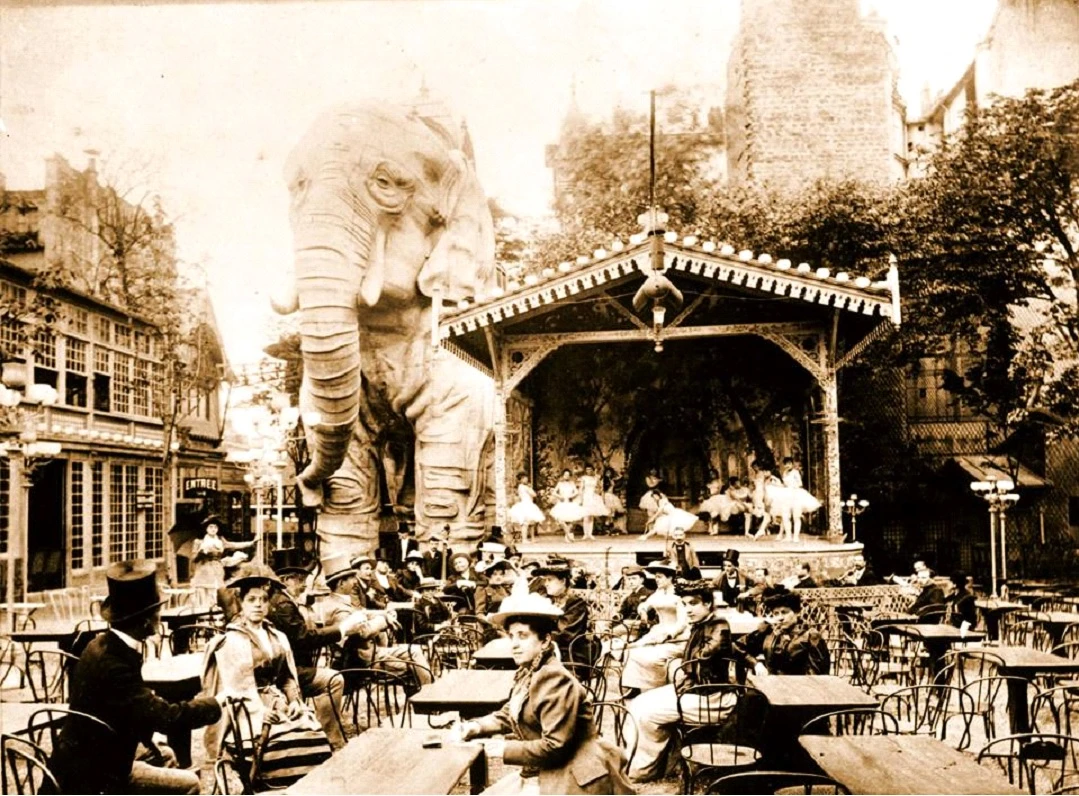
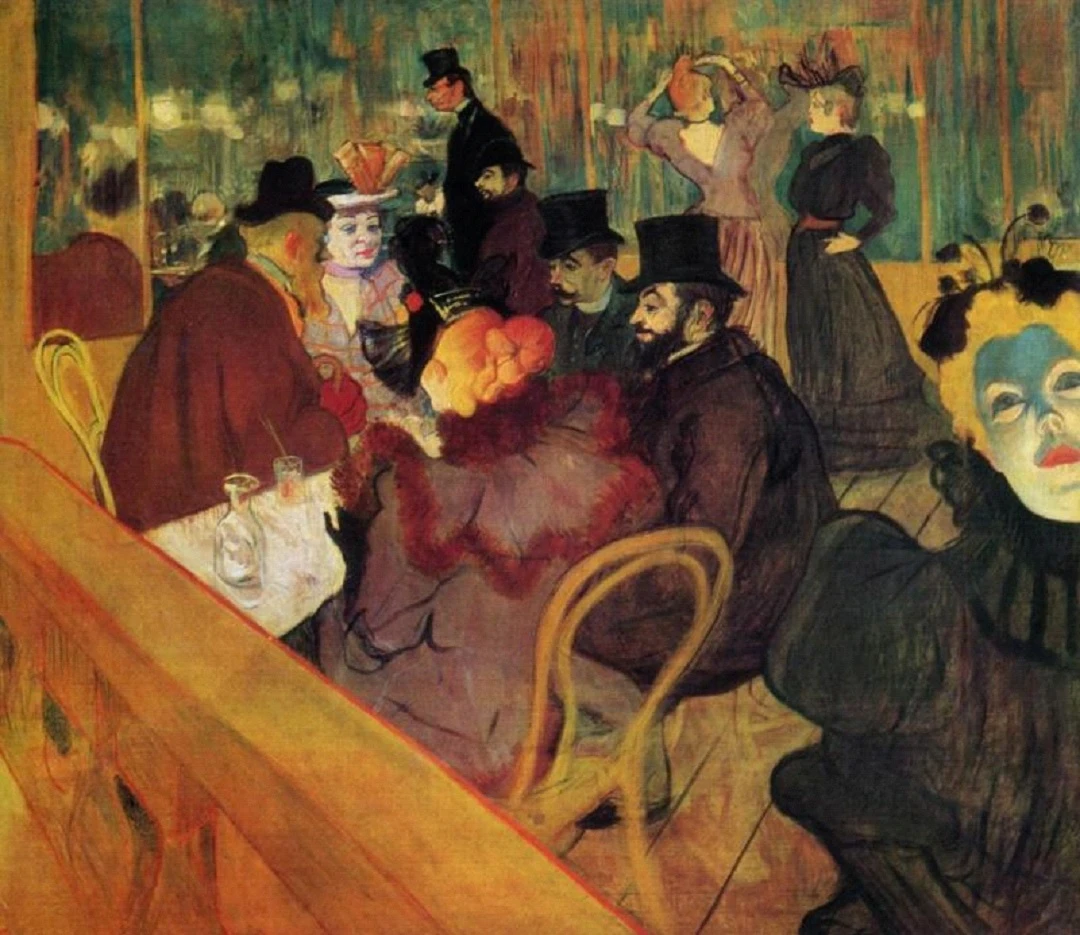
Accounts of what transpired differ. Some claimed he suffered an acute bout of paranoia on the street, while others said orderlies dragged him off to a mental institution at his mother's request. Whatever the truth, upon his release, Toulouse-Lautrec resumed drinking—moderately at first, relying once again on his "absinthe cane," but soon spiraling out of control. Illustration: Henri de Toulouse-Lautrec,
At the Moulin Rouge
. 
In 1887, Toulouse-Lautrec painted a portrait of Vincent van Gogh sitting with a glass of absinthe on the table before him. Rumor has it that Toulouse-Lautrec was the one who introduced Van Gogh to the drink. 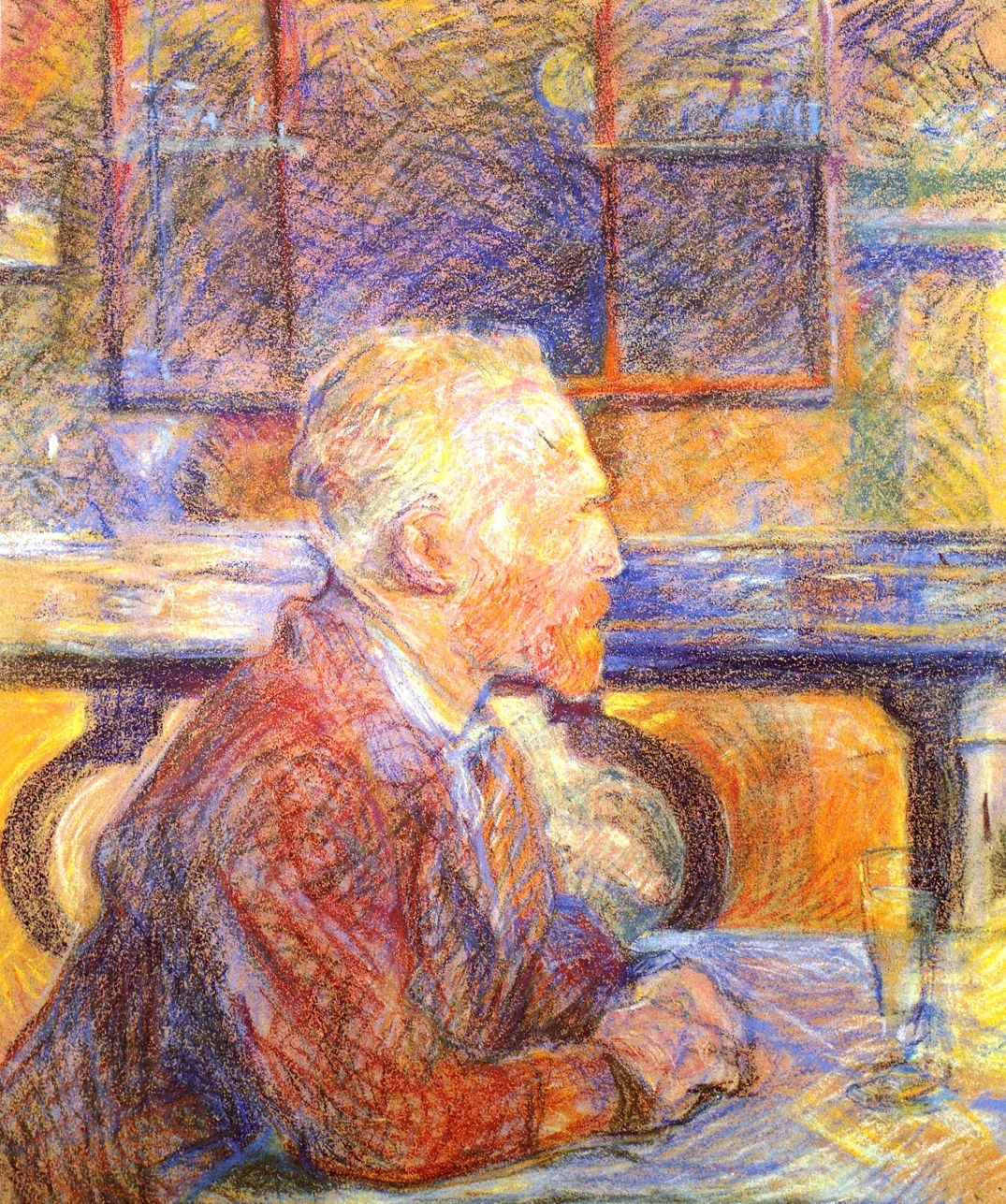
That same year, Van Gogh painted a still life featuring a glass of absinthe and a water carafe. The painter's well-documented psychiatric struggles have led art historians to delve deep into clinical theories, with some directly attributing his mental illness to heavy absinthe abuse. 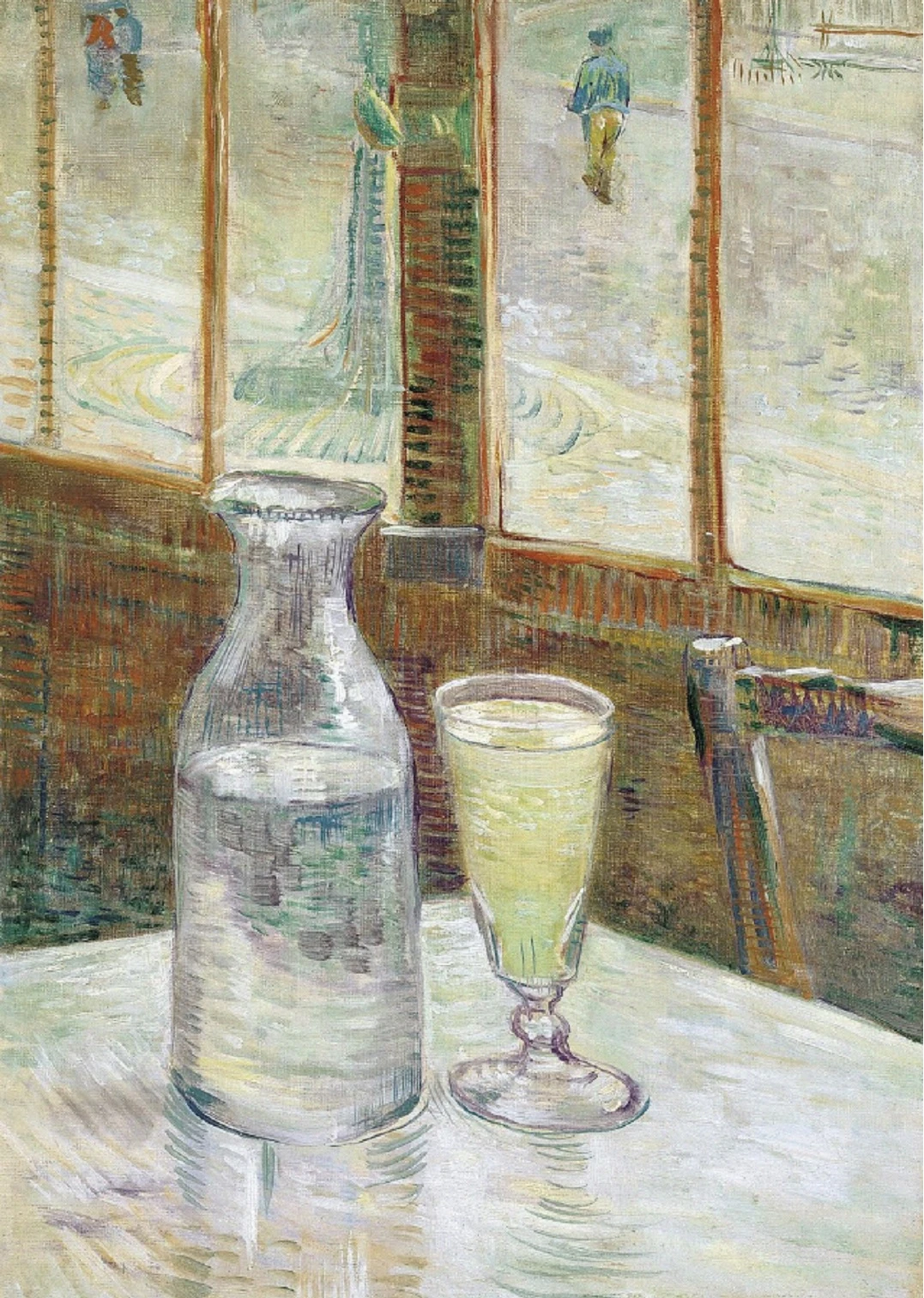
In 1859, Édouard Manet completed his first major canvas, titled
The Absinthe Drinker
, marking an awkward start to his artistic career. The model was a ragpicker and alcoholic acquaintance often seen near the Louvre. Manet saw a strange dignity, almost an aristocratic air, in the man. When completed, Manet showed the canvas to his teacher, who reacted with disgust: "An absinthe drinker! Why paint such abominations? My poor friend, you are the absinthe drinker. You are the one who has lost all morality!" The painting continued to shock and alienate nearly everyone who laid eyes on it. 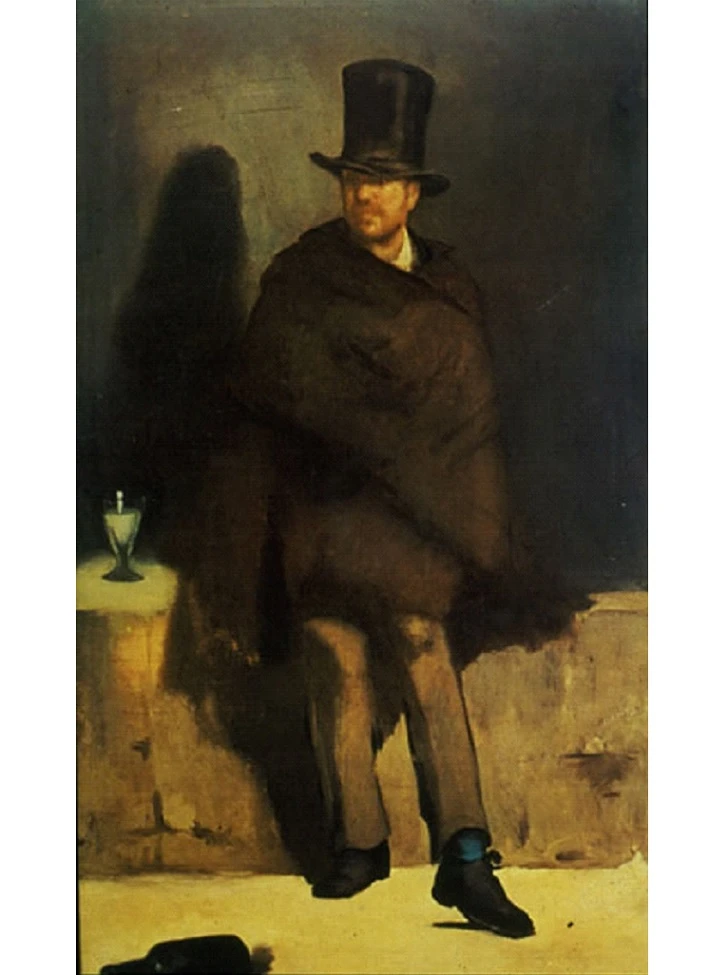
Edgar Degas's famous 1876 painting
L'Absinthe
, originally titled
In a Café
, met an even harsher public reception than Manet's work. "No person who values dignity and beauty could ever call
L'Absinthe
a work of art," one critic sneered. Some suggested the figure portrayed was the poet Paul Verlaine, infamous for leading a squalid life soaked in absinthe. 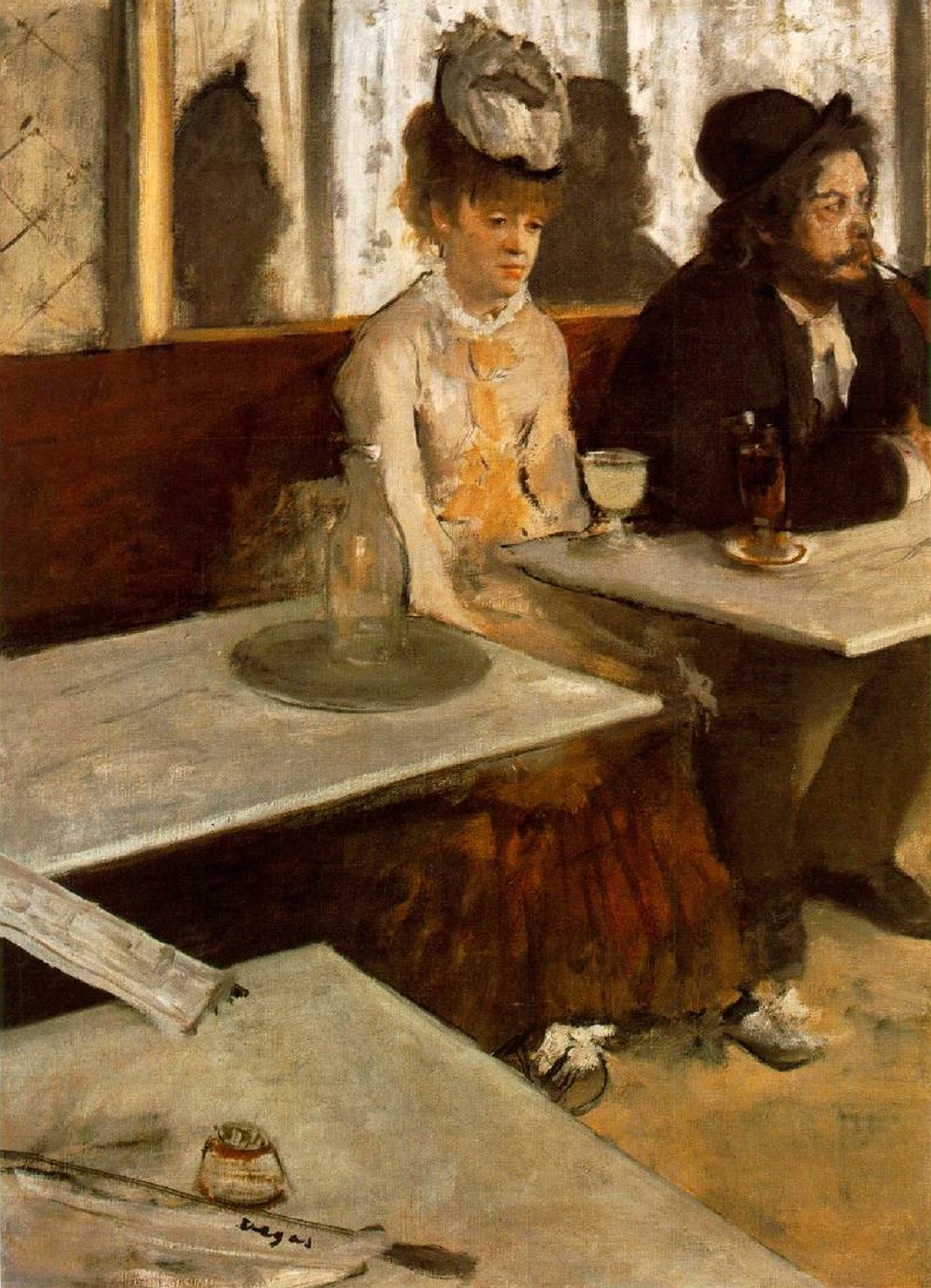
Paul Verlaine fell into heavy drinking at an early age. The successive deaths of his father, beloved aunt, and cousin pushed him deeper into alcoholism: "I threw myself into absinthe," he wrote. He later married and appeared to settle down, but marital bliss was shattered when he met the young poet Arthur Rimbaud. Verlaine became obsessively captivated by Rimbaud; when Rimbaud tried to end the affair, a distraught Verlaine fired three shots at him, wounding his former lover in the wrist. Photo: Verlaine on the left, Rimbaud on the right. 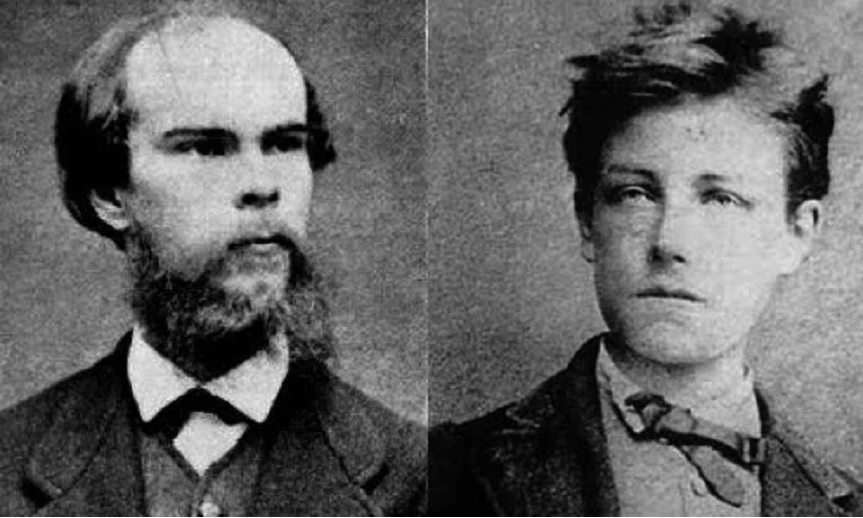
From that moment on, Verlaine abandoned all hope of a respectable life. He was even jailed for a month after threatening his mother at knifepoint, despite her pleas to drop the charges. Following the incident, Verlaine immersed himself entirely in café life, becoming a fixture of the Latin Quarter. Yet his poetic reputation was so formidable that police were under orders to leave him undisturbed, no matter what he did. 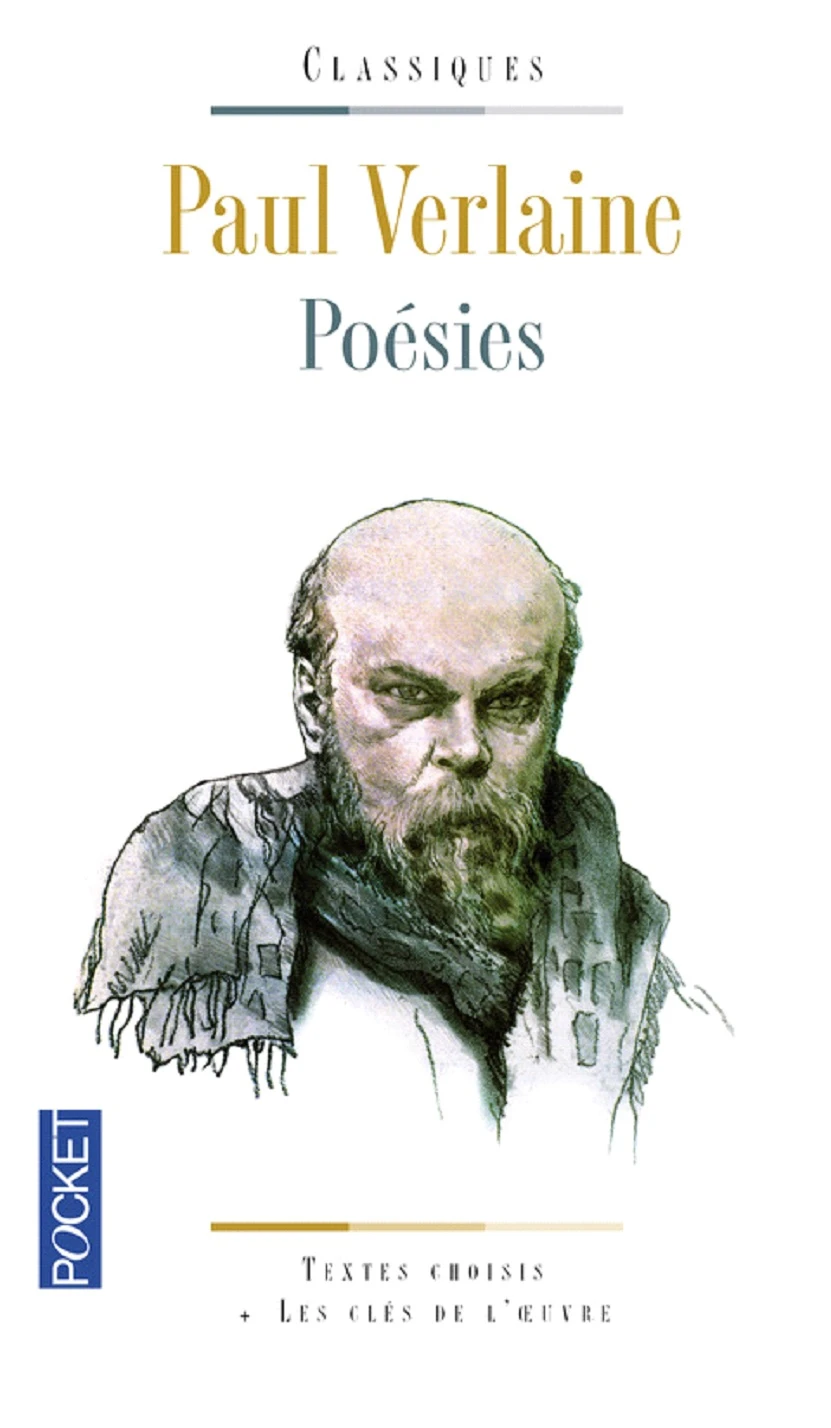
In his 1895 work
Confessions
, Verlaine lamented his addiction: "Absinthe! How dreadful to think back on those days, and even more recent times... A single sip of that horrible witch—what fool called her a fairy or a green muse?—a single sip enthralled me, but then my drunkenness led to terrible consequences." Photo: Paul Verlaine seated in a Paris café. 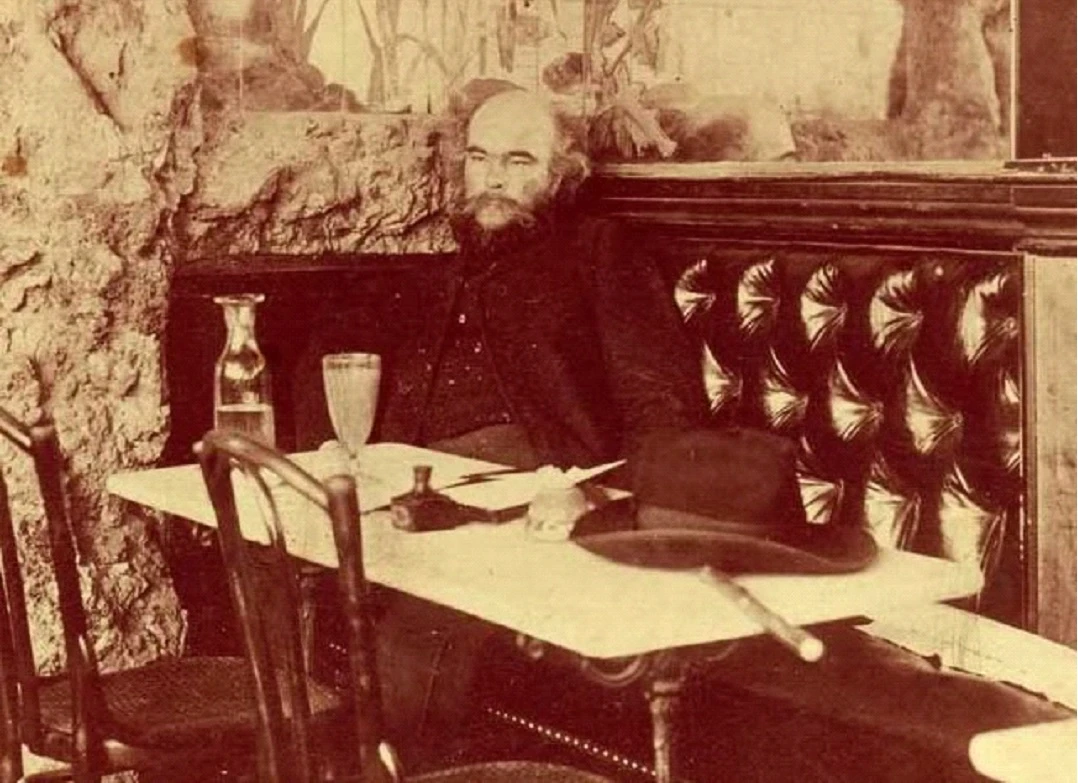
In August 1905, Swiss newspapers reported a horrific tragedy: Jean Lanfray, a 30-year-old laborer, drank two glasses of absinthe and shot his pregnant wife in the head before murdering his daughters, four-year-old Rose and two-year-old Blanche. Lanfray then attempted suicide but survived. Staggering into the courtyard, he collapsed asleep, clutching the body of his youngest daughter. Public outrage was overwhelming, but outrage was directed not at Lanfray's chronic alcoholism—he routinely drank up to five liters of wine a day—but at absinthe itself. Illustration: "Absinthe is Death." 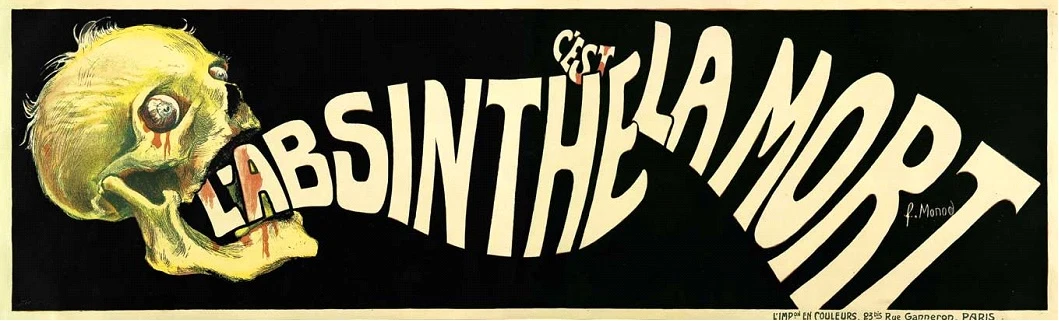
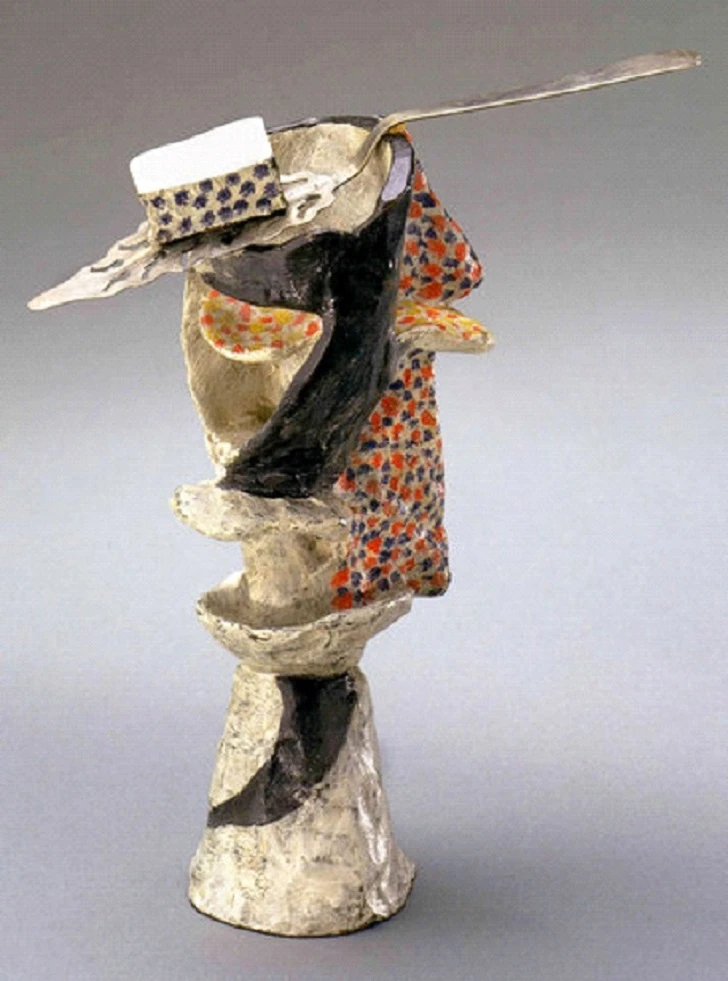
Weeks after the tragedy, 82,450 residents from neighboring towns and villages signed a petition demanding a ban on absinthe in Switzerland, leading to its prohibition in 1906. France followed suit in 1915 amid growing concerns over national alcoholism and military readiness for World War I. Notably, the last major artistic tribute to absinthe before the ban was Pablo Picasso's 1914 Cubist sculpture
Glass of Absinthe
. 
Following the ban, absinthe survived in Spain, Eastern Europe, and Cuba. Ernest Hemingway wrote nostalgically about the spirit; living in Florida after the French prohibition, he continued to drink absinthe shipped from Cuba. In Hemingway's novel
For Whom the Bell Tolls
, absinthe is one of the protagonist's few comforts, evoking memories of the carefree Parisian life the American guerrilla left behind. 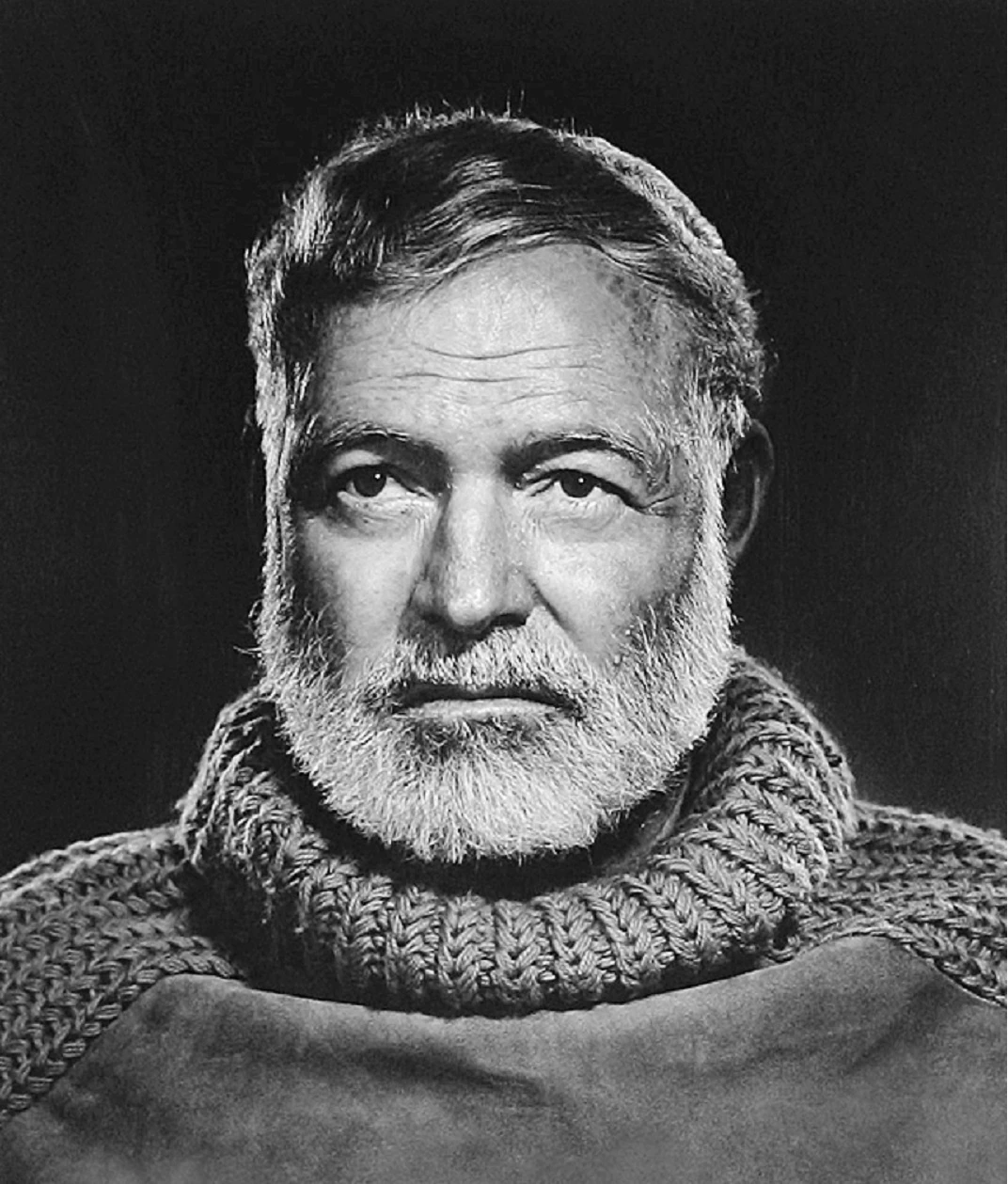
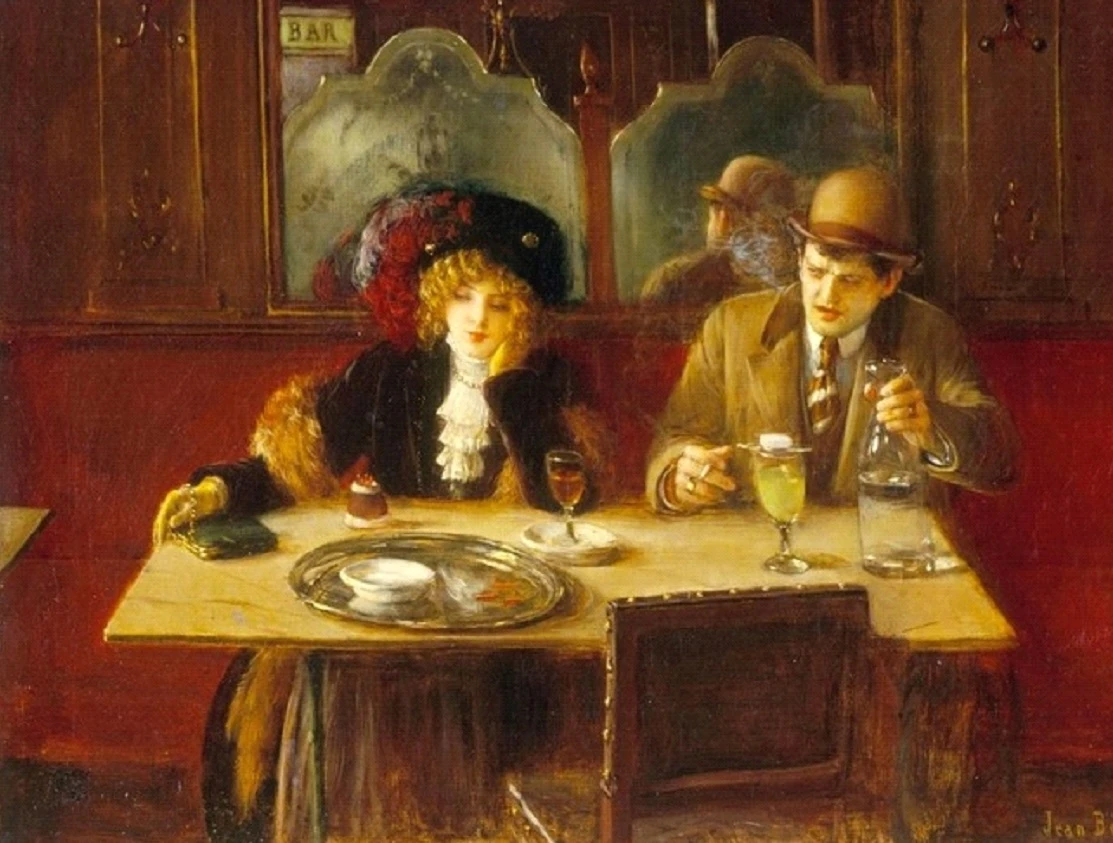
"One glass of it took the place of all the evening papers, of all the evenings spent in Paris cafes, of all the chestnut trees that would be in bloom now... of all the things he had enjoyed and forgotten and that came back to him when he sipped that opaque, bitter, tongue-numbing, brain-warming, stomach-warming, idea-changing liquid alchemy." And again: "There's nothing like absinthe," Hemingway wrote in
For Whom the Bell Tolls
. Illustration: Jean Béraud,
In the Café
. 
Absinthe made a comeback relatively recently: in 1990, production resumed in the Czech Republic, reintroducing the spirit to international markets under the Hill's brand. 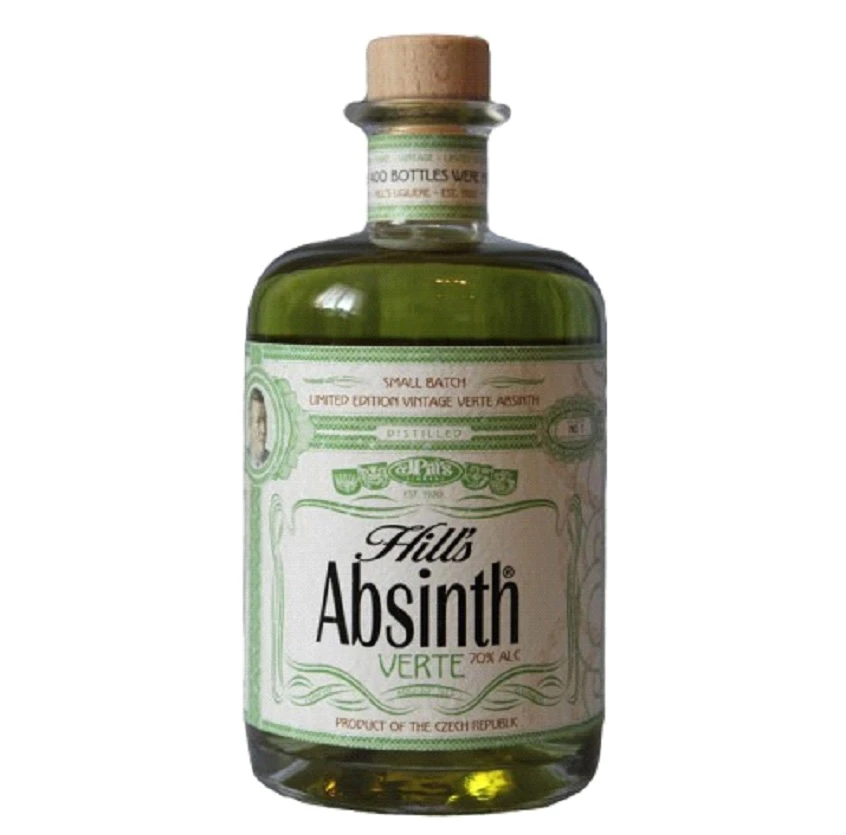
The French and Swiss were unimpressed by this revival: "It's disgusting foreign swill. If Baudelaire or Rimbaud were offered this Czech slop, they'd turn in their graves." 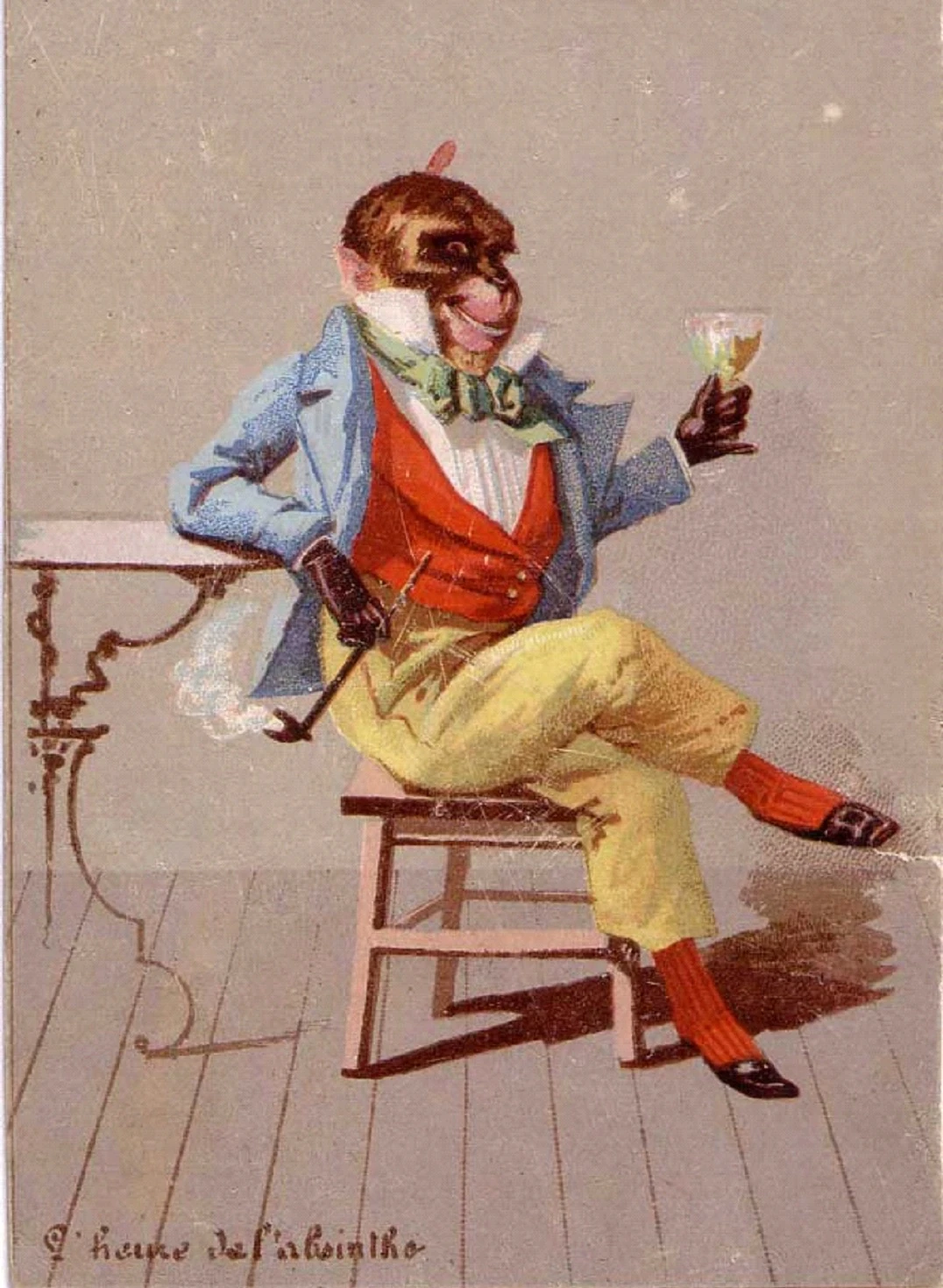
One of the fiercest critics of the Czech spirit was Marie-Claude Delahaye, France's leading absinthe authority, who opened a museum dedicated to the drink in 1994 at Auvers-sur-Oise—the village where Vincent van Gogh is buried. In 2000, with Delahaye's guidance, a new French-style absinthe brand was launched: La Fée ("The Fairy"). 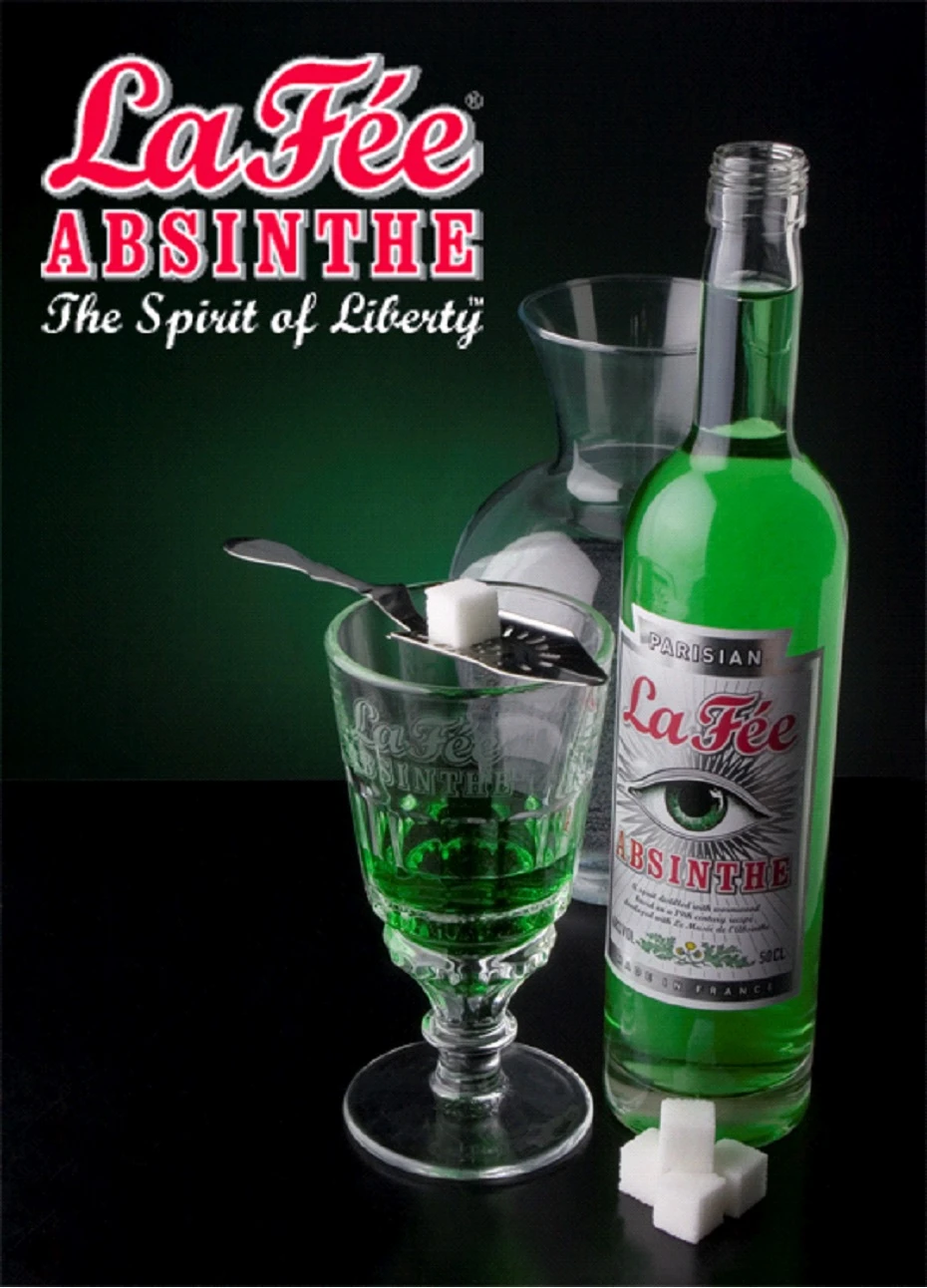
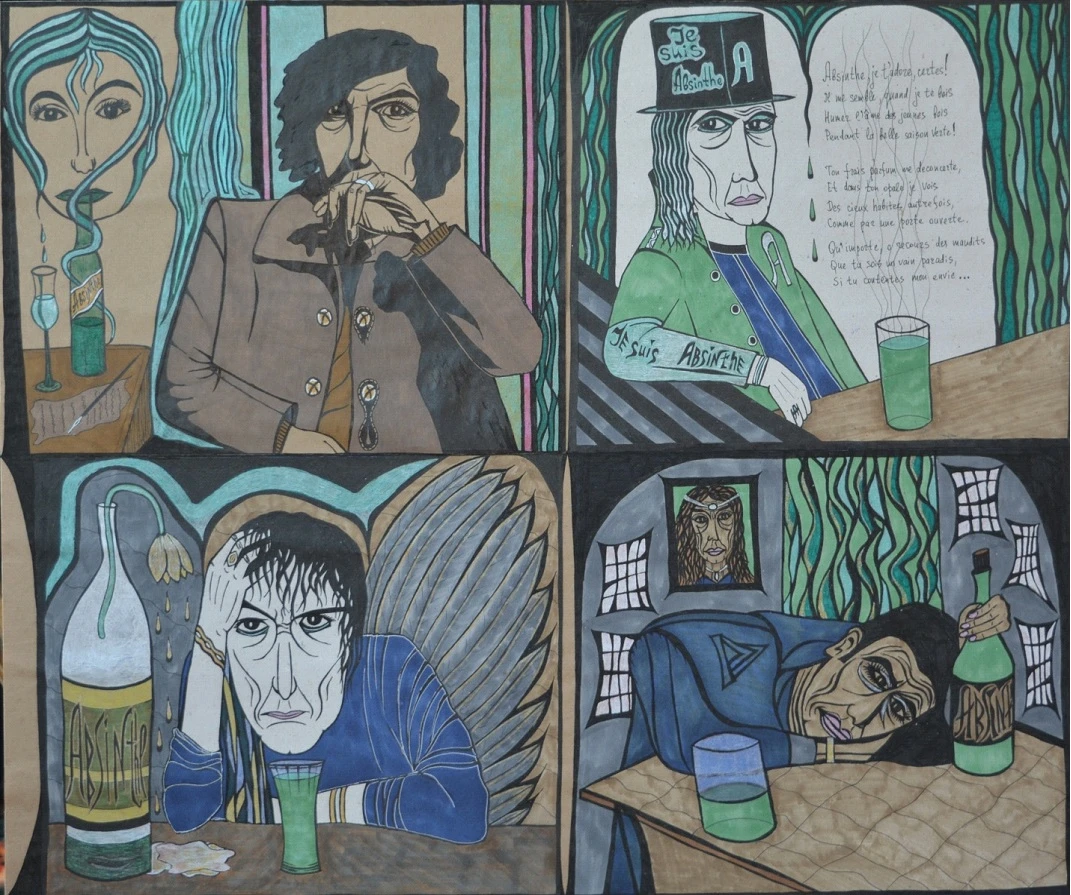
Inspired by tales of legendary absinthe drinkers, contemporary artists continue to create works dedicated to the spirit. Illustration: Elena Khotuleva,
Absinthe
. 
The resurrected Green Fairy stirs the appetite and ignites the imagination once more, awakening a cultural memory of the mysterious, agonizing, and iconic drink of the decadent
fin de siècle
. 
This article was produced with the support of Daria Evseeva and the Center for the Promotion and Development of Creative Work by People with Mental Disorders.