No Viewfinder: How a Primitive Box Camera Conquered the World (18 photos)
Twenty-five dollars, 100 snapshots, and zero viewfinders—this was history’s very first mass-market camera. George Eastman secured a patent for it on September 4, 1888, registering the Kodak trademark on the exact same day. Here is a look at how this revolutionary device worked, along with photographs taken by its first owners over 130 years ago. 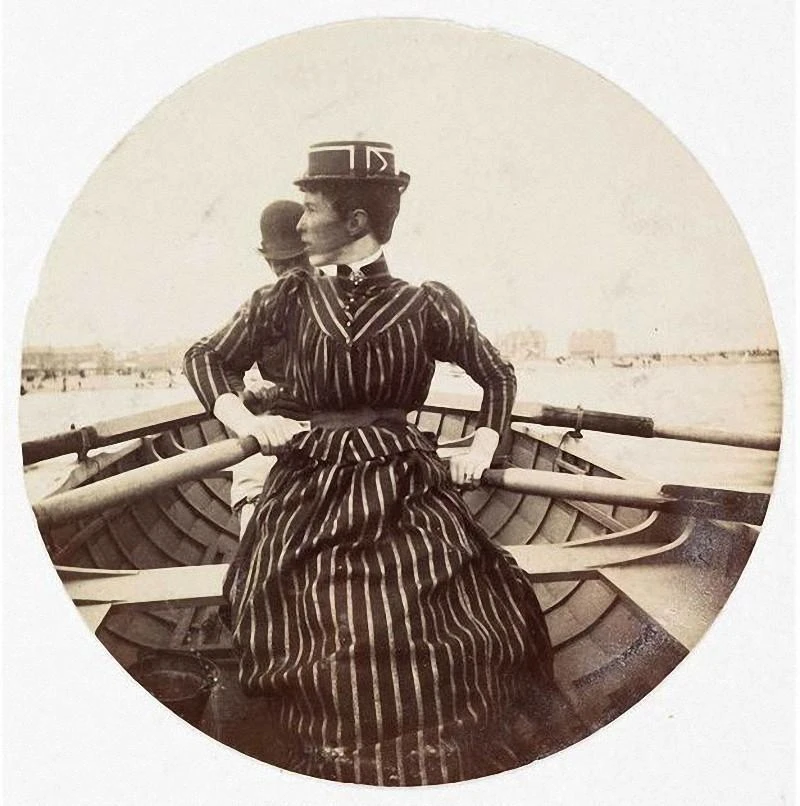
The Patent That Changed Photography Forever
Before 1888, photography was reserved for the privileged few. Heavy wooden cameras, fragile glass plates, and harsh chemicals demanded not only deep pockets but specialized technical skills. An ordinary person couldn't just pick up a camera and snap a keepsake photo.
George Eastman (1854–1932), a bank clerk from Rochester, set out to rewrite those rules. Back in 1884, he patented flexible paper-backed roll film, and a year later, a dedicated film holder. Three years later, on September 4, 1888, the inventor secured Patent No. 388,850 for a compact handheld camera designed for this film, registering the Kodak trademark on the same day. 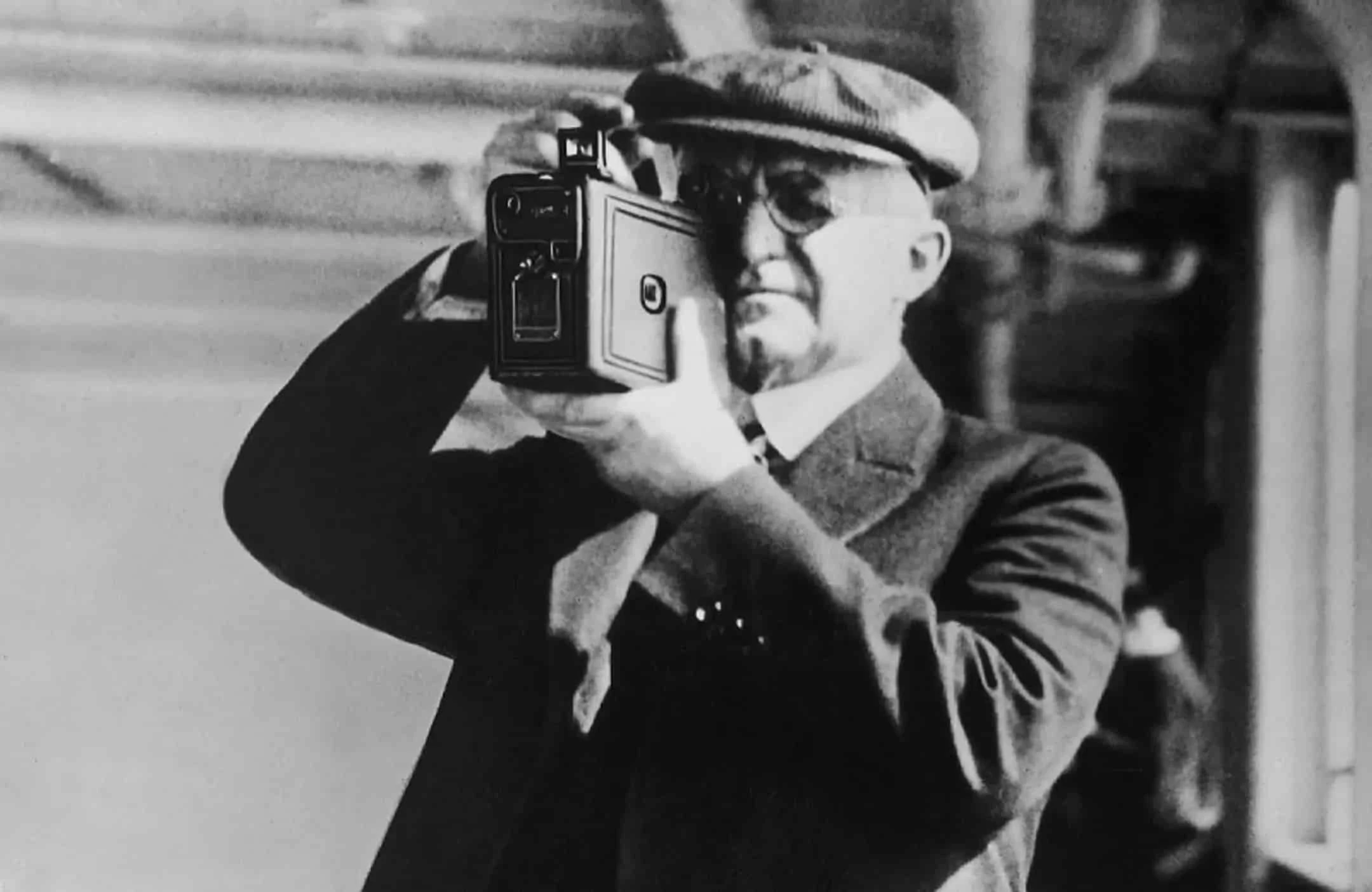
George Eastman spent nearly two decades striving to ensure photography was no longer exclusive to professionals.
Eastman coined the word Kodak himself. He loved the letter "K"—finding it sharp and decisive—so he experimented with combinations that began and ended with it. The slogan for the new camera was elegantly simple: "You press the button, we do the rest." In its very first year, the company sold over five thousand units.
A $25 Wooden Box That Astonished the World
The new camera looked deceptively simple—a wooden box about the size of a large book, clad in smooth black leather. Weighing under two pounds, its fixed-focus lens required no adjustments whatsoever. There was no viewfinder at all; to aim, the photographer relied on two subtle lines embossed into the leather on top of the case. 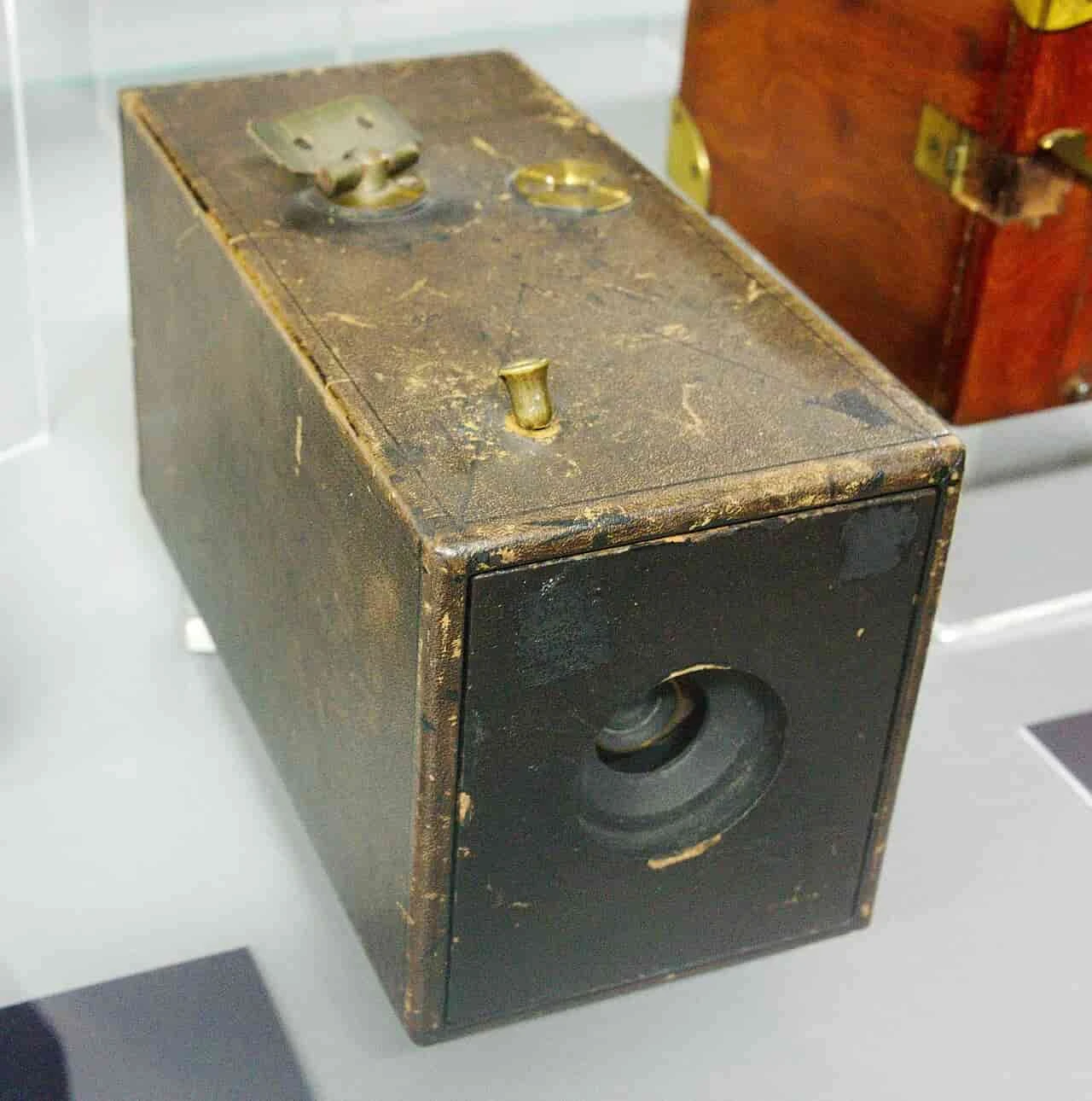
A wooden box stripped of all unnecessary details—an entire revolution packaged into the size of a small book.
Operating the camera took just three steps. First, the photographer turned a key on the top panel to advance the film, then pulled a string to cock the shutter, and finally pressed a button on the side. The camera came pre-loaded with enough film for 100 exposures and cost $25—roughly $700 in today's money, about the price of a solid smartphone.
From Exposure to Print: How the Kodak System Worked
When the film ran out, owners didn't develop it themselves. Instead, they shipped the entire camera back to Eastman’s factory in Rochester (or to Harrow, England, for European customers). There, technicians developed the film, printed 100 circular photos, and reloaded the camera with a fresh roll. 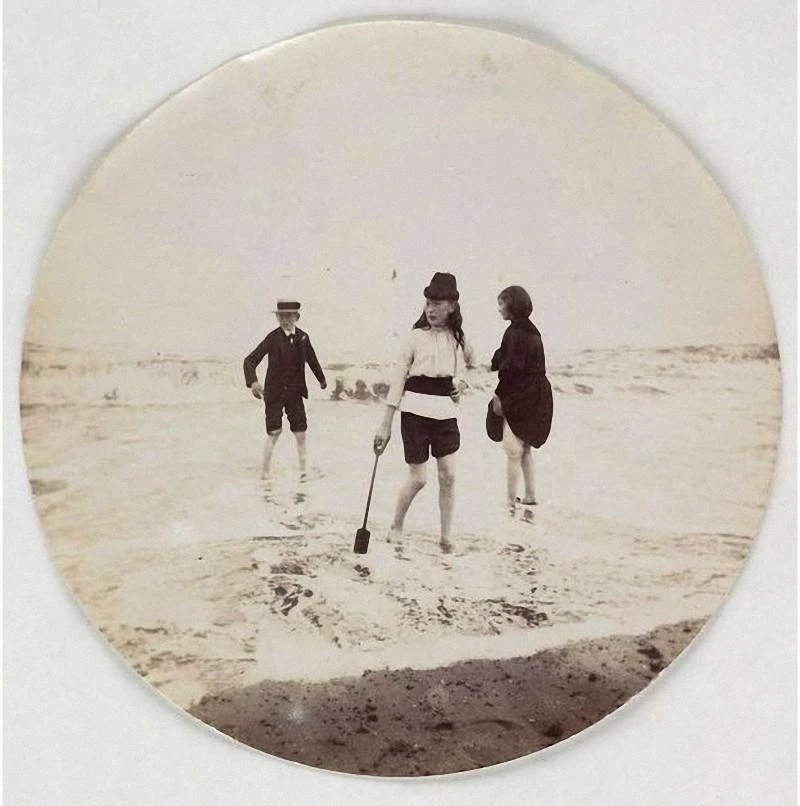
Beach snapshots—once captured exclusively in professional studios—turned into everyday family album keepsakes thanks to Kodak.
Eastman charged $10 for processing and reloading—around $275 today. Customers unwilling to wait weeks for return mail could buy spare film separately for $2 and reload the camera themselves by following the instruction manual. 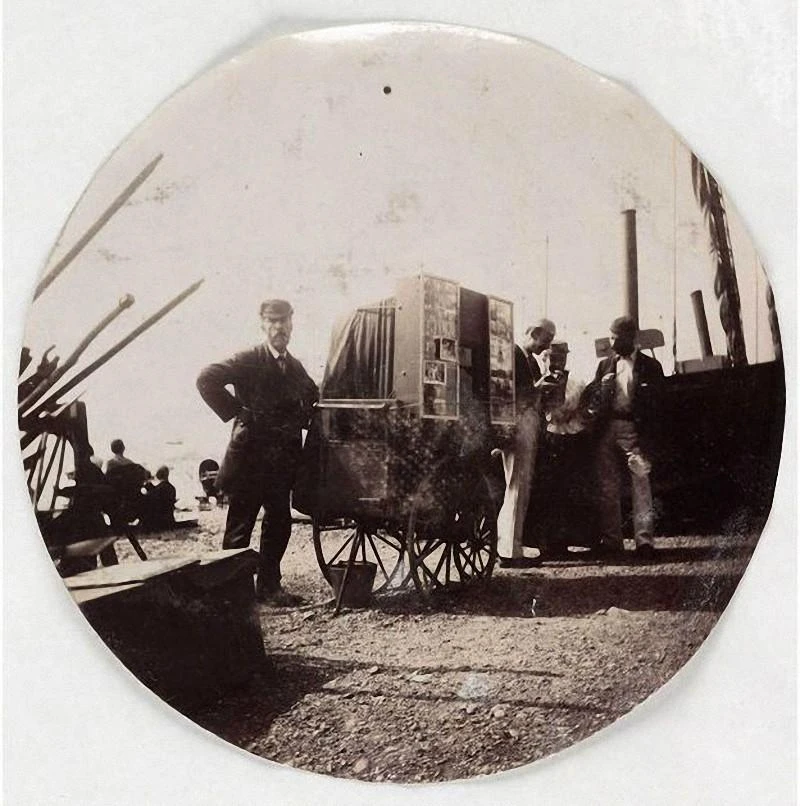
Travel scenes that previously existed only in people's memories were now permanently preserved on film.
While people back then waited weeks to see their pictures, today photos appear on smartphone screens in a fraction of a second. Yet it was that slow-moving mail chain—camera, factory, prints—that first brought photography to the general public.
A World Candidly Captured in the Round
The finished prints were circular rather than rectangular, measuring 2.5 inches (6.4 cm) in diameter. This shape was created not by the lens itself, but by a circular mask placed in front of the film. This unique feature makes original Kodak prints instantly recognizable among period photography. 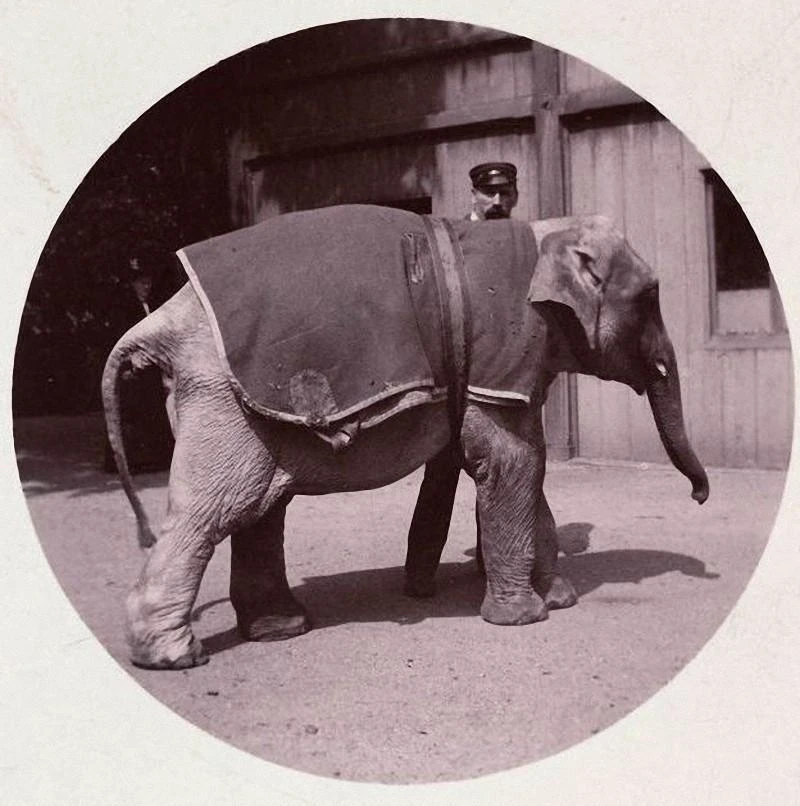
Elephants at zoos and fairs frequently became stars in early amateur photographs.
While professional photographers had clients pose motionless in studios, Kodak owners captured life on the go. Boat trips, kids swimming, family outings to the countryside—moments that previously passed too quickly for a camera were suddenly captured forever. 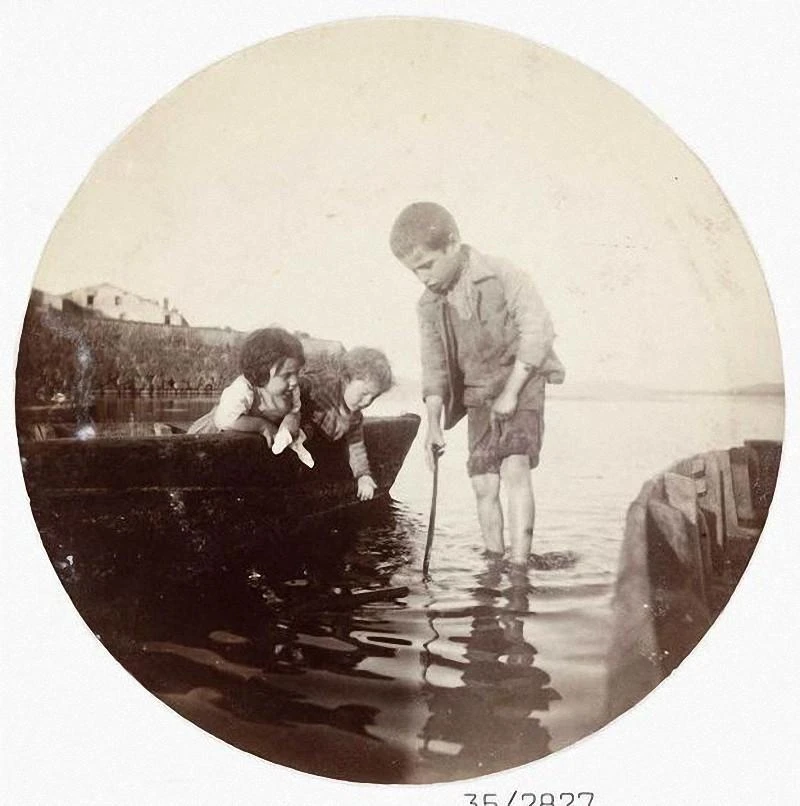
While adults posed for formal portraits, children in Kodak snapshots were usually caught mid-play.
Boating trips were another crowd favorite among early photography enthusiasts. 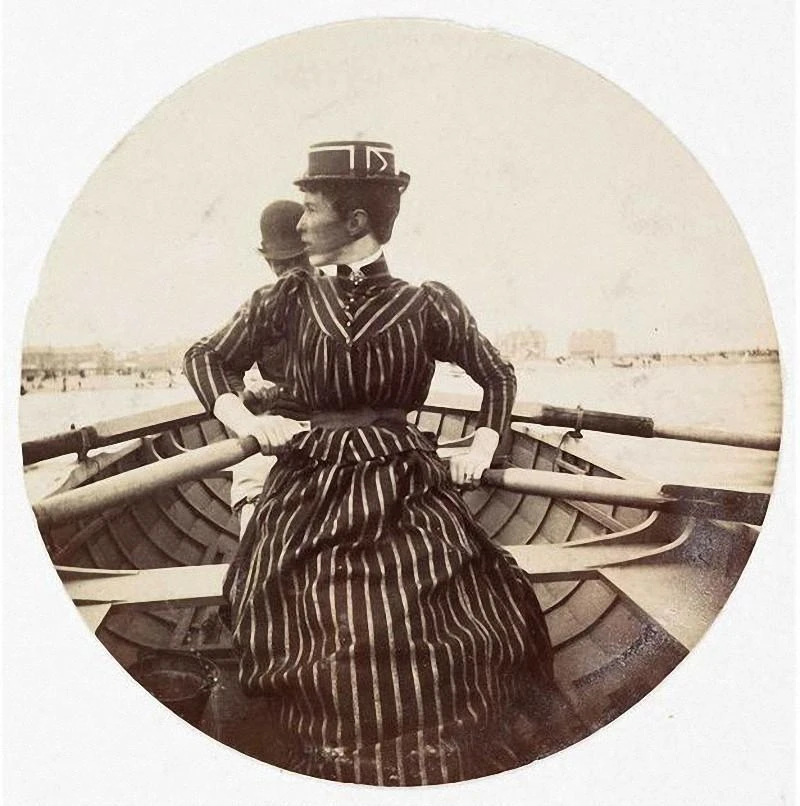
Leisurely boat rides were ideally suited to the slow shutter speed of the early camera.
All these images share one thing in common: authenticity. Nobody prepared for the shot, leaving Kodak prints filled with genuine emotion rather than the stiff, rehearsed poses of photo studios.
A Generation Captured Through an Amateur Lens
On ship decks, another favorite prop of the era frequently popped up: binoculars. Ocean travel was just becoming fashionable among the middle class, and passengers eagerly photographed one another posing with field glasses. 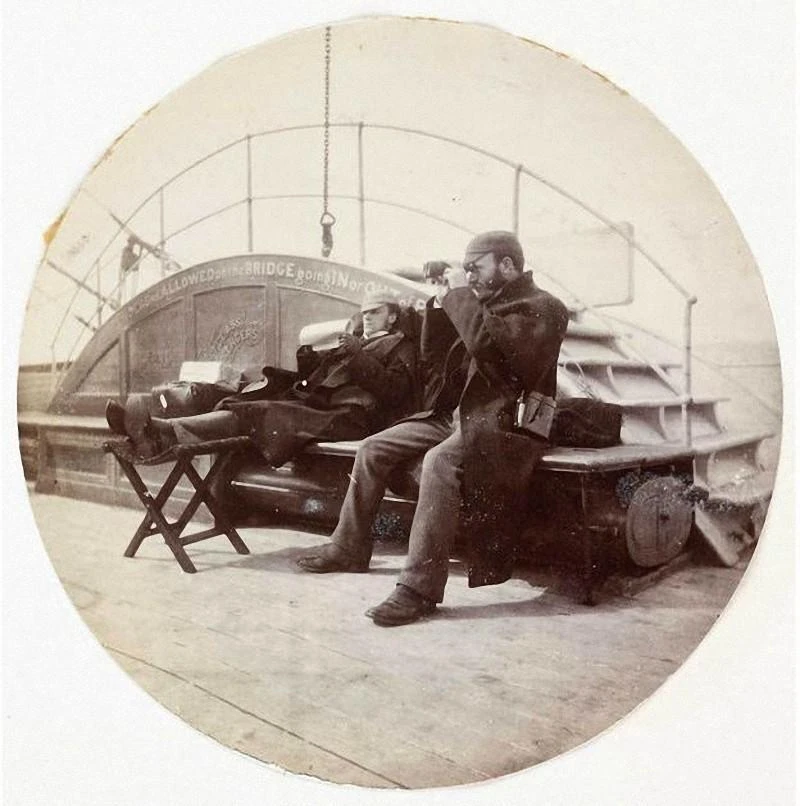
By the late 19th century, sea travel had become a pastime for the middle class, not just the wealthy elite.
Similar scenes played out along the coast, where groups strolled along the water's edge with sailboat masts swaying in the background. 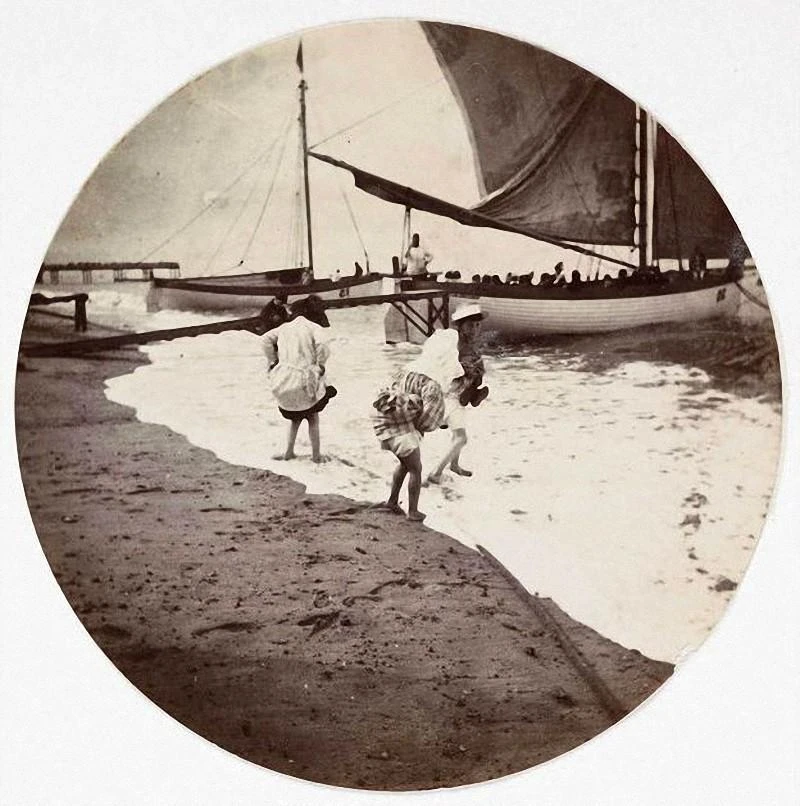
A stroll along the shoreline—a scene so simple that no one before would have bothered to shoot it.
Everyday scenes made the cut as well: someone playing with rocks and a bucket on the beach, preparing for fishing or perhaps just tidying up. 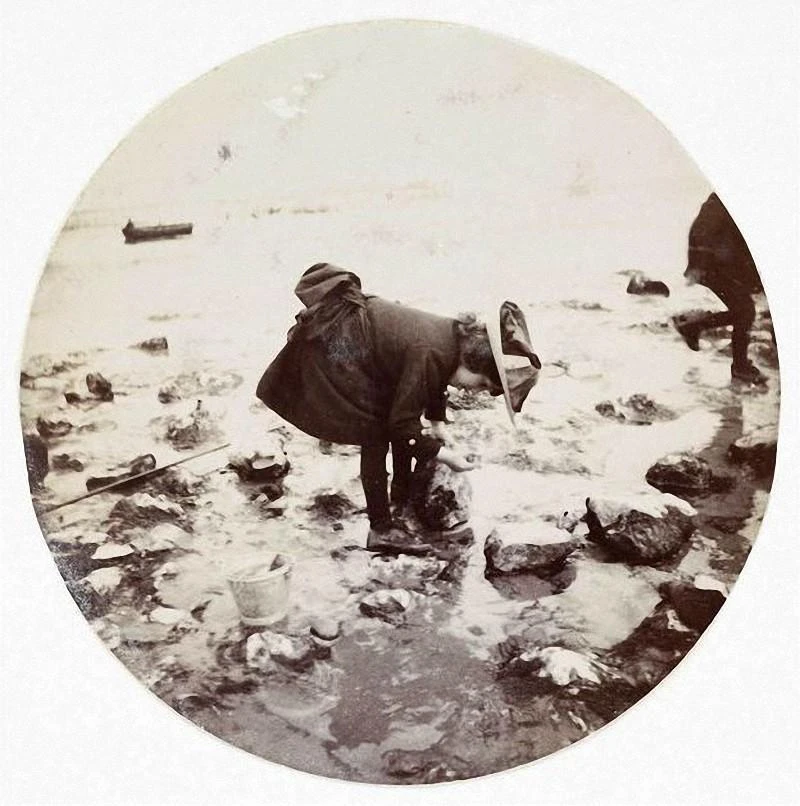
Even mundane moments like these proved worthy of a photo—previously, there was neither film nor cause to capture them.
None of these people could have imagined that their casual gestures would outlive their era by nearly a century and a half, eventually appearing on a computer screen across the world.
Everyday Life Brought to Light
Markets and train stations were once considered far too mundane for photography—they were never shot in studios or on commission. Kodak changed all that, as people began taking their cameras along on everyday walks. 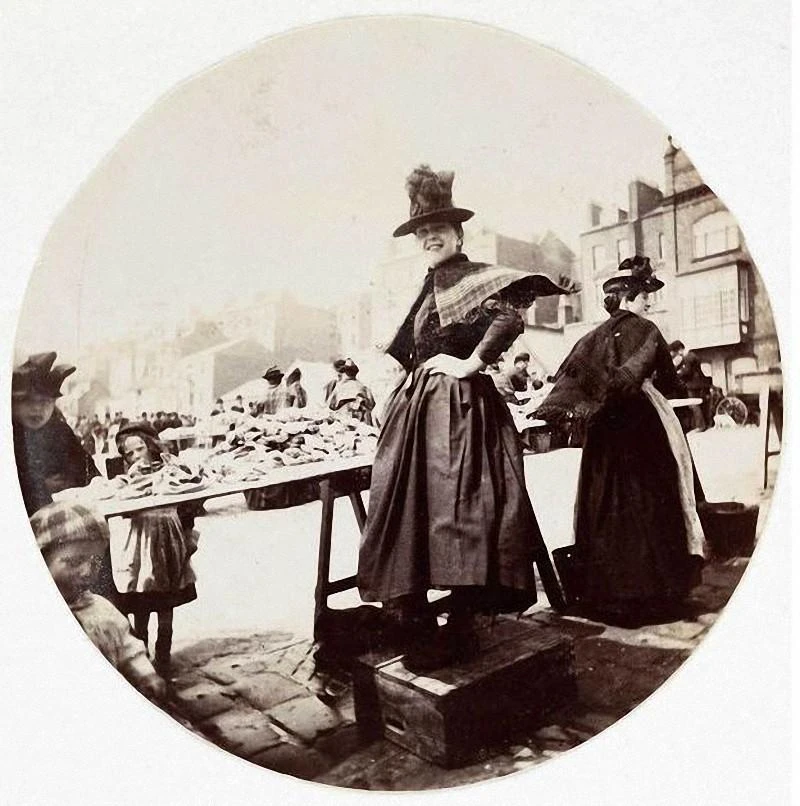
A market stall—another scene that simply went uncaptured before Kodak arrived.
On train platforms, amateur photographers caught passengers in bowler hats waiting for their ride—a snapshot of late Victorian fashion immortalized in every frame. 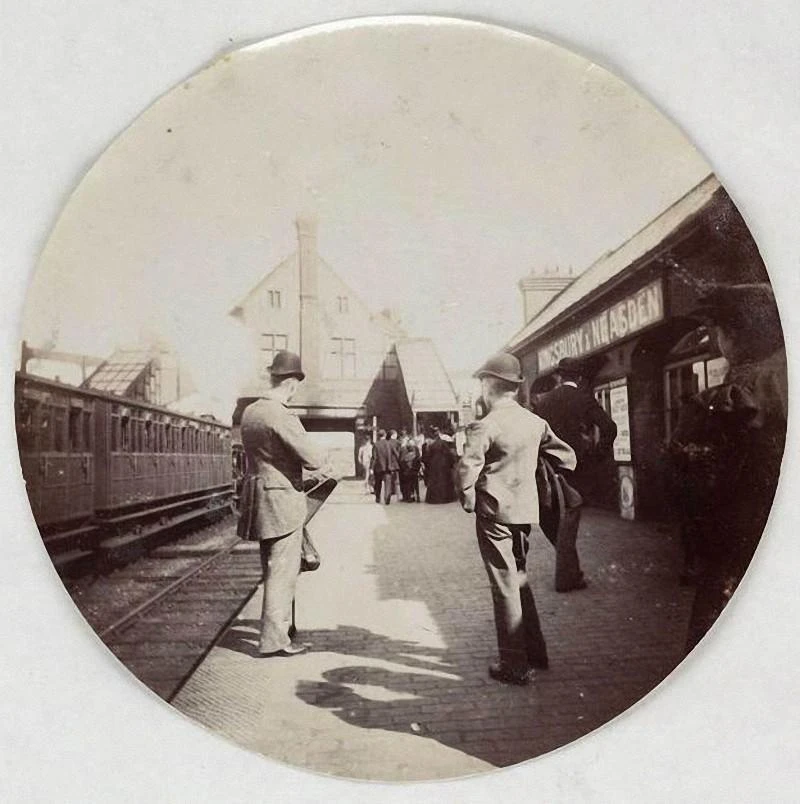
A bowler hat and a walking stick on the platform—the standard attire for a late 19th-century traveler.
Even the most ordinary moment—like wheeling a cart down a country road—became a reason to click the shutter. 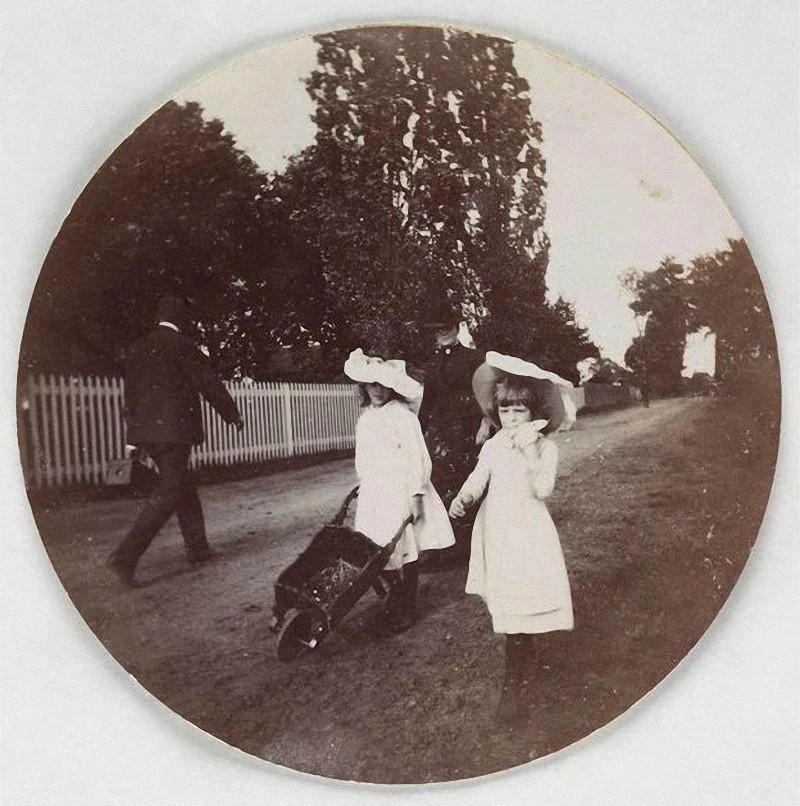
An ordinary stroll with a cart—a subject once deemed far too trivial to photograph.
Thus, photography transformed from a rare ritual into a way to document daily life, no matter how unremarkable it seemed.
Domestic Moments and the Legacy of the Kodak No. 1
A great many Kodak snapshots captured domestic life. A woman reading a book, a toddler with a pram, children lounging on a sofa—fleeting scenes that were previously ignored because studio photography required preparation and posing. 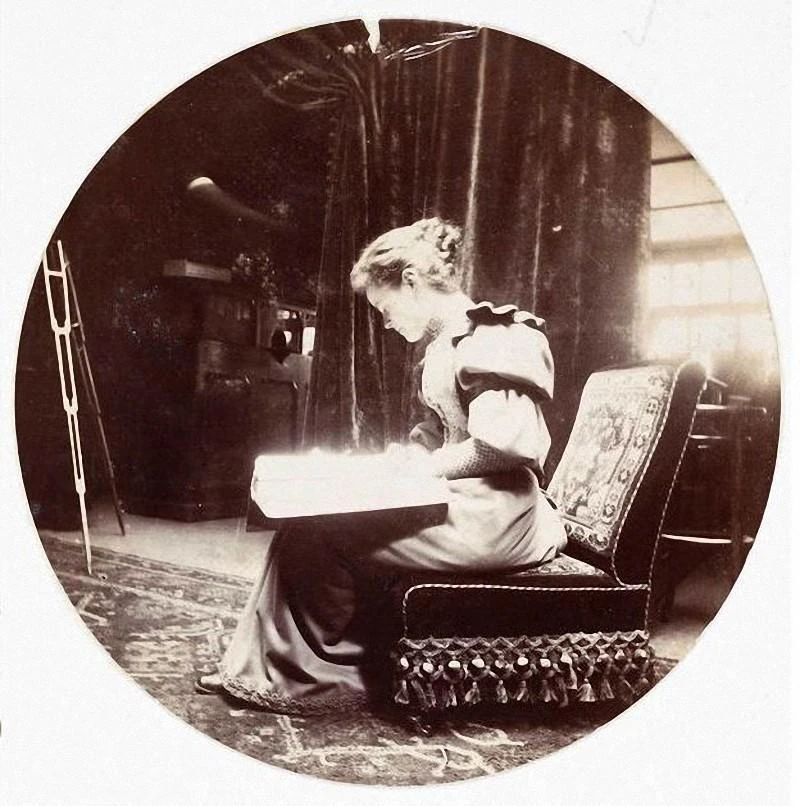
Reading a book—a moment so intimate that no one would have commissioned a photo of it in the past.
A mother with a stroller, children peering curiously into the lens—these scenes remain instantly relatable today, looking less like relics of the late 19th century and more like phone snaps taken yesterday. 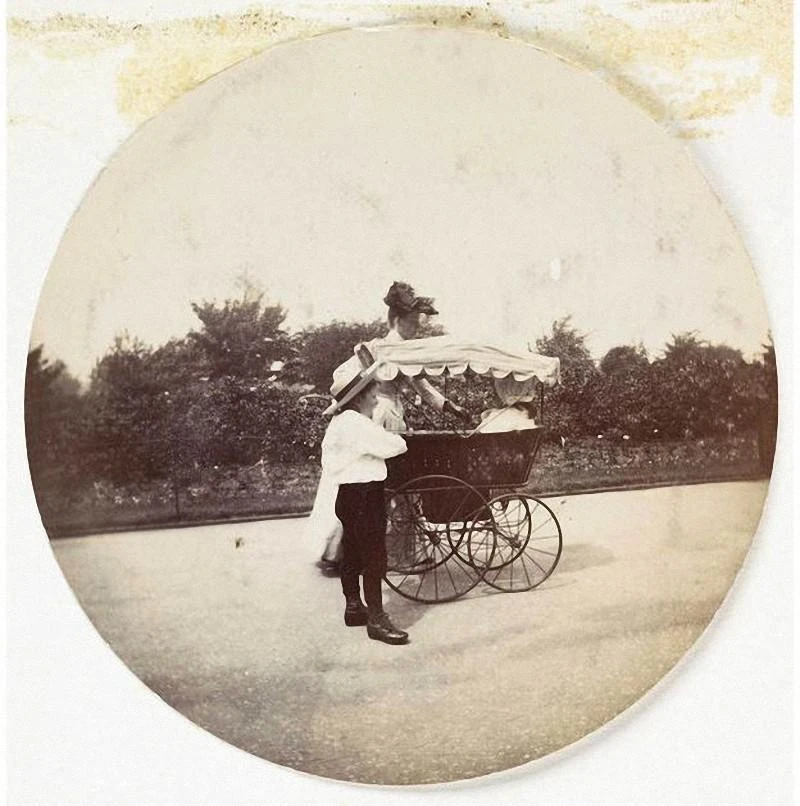
A stroll with a stroller—a scene familiar to parents in any era.
Another feature of the era was the direct gaze into the lens. While professional portraiture demanded a solemn expression, Kodak’s young subjects simply looked at the novel contraption with genuine curiosity. 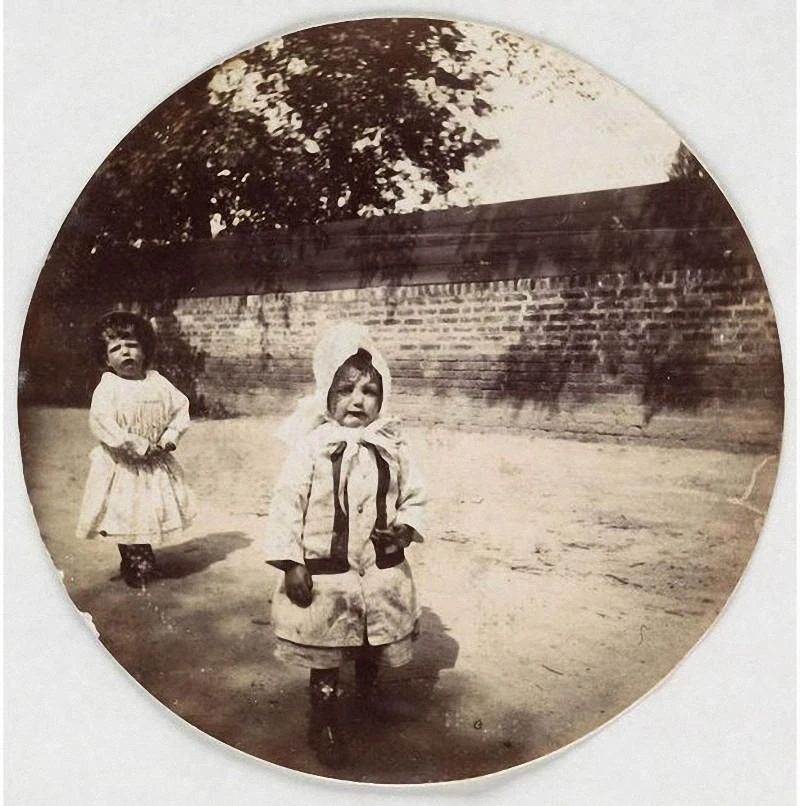
Looking straight into the camera—a rarity in formal portraits of the era, but second nature in amateur snapshots.
And cozy scenes of kids sitting on a sofa serve as a reminder that even over 130 years ago, people loved capturing life's casual, lighthearted moments. 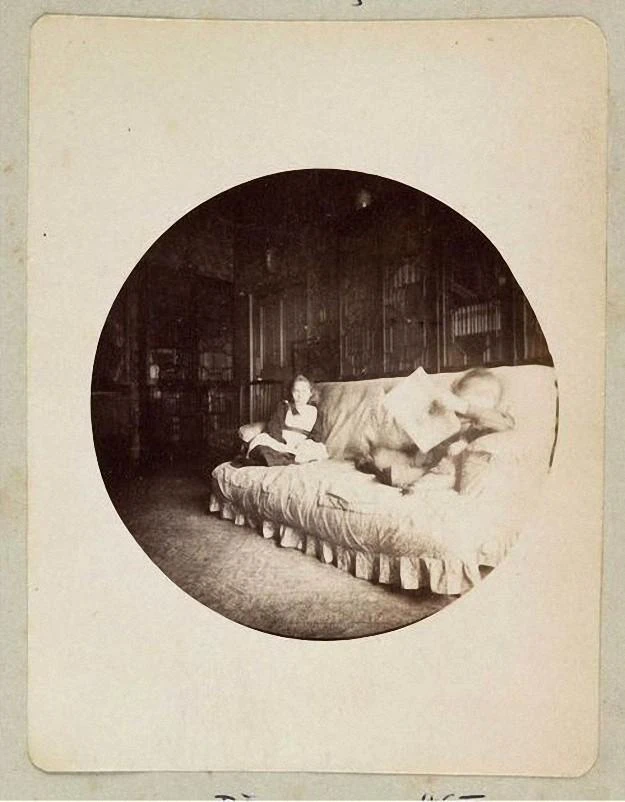
The family sofa—a backdrop where a candid picture felt far more alive than any studio portrait.
Eastman’s original camera was known simply as the "Kodak"; the name "Kodak No. 1" was adopted a year later when a refined model with a simpler, more reliable shutter joined the lineup. Yet it was that original $25 wooden box that established the core principle of modern photography: capture what you see, and let technology handle the rest.
If you had a roll of film with only 100 exposures, what would you photograph first?