Salma Hayek in Her 20s, 30s, 40s, 50s, and 60s: The Evolution of Hollywood’s Most Stunning Mexican Actress (15 photos)
From arriving in Hollywood as an undocumented immigrant to beating out Madonna for the role of a lifetime and making Oscar history, Salma Hayek has done it all. As she celebrates her 60th birthday on September 2, 2026, we look back at her incredible journey from a children's theater stage in Coatzacoalcos to the Marvel Cinematic Universe—and how she has evolved over six decades. 
Salma Valgarma Hayek Jiménez was born on September 2, 1966, in Coatzacoalcos, a port town on the Gulf of Mexico. Her father, Sami Hayek, an oil company executive of Lebanese descent, raised her alongside her mother, Diana Jiménez Medina, an opera singer of Spanish heritage. Growing up in a wealthy, devoutly Catholic household, Sundays meant morning Mass followed by a trip to the local cinema. It was there, in the quiet darkness of the theater, that young Salma decided she belonged on the screen. 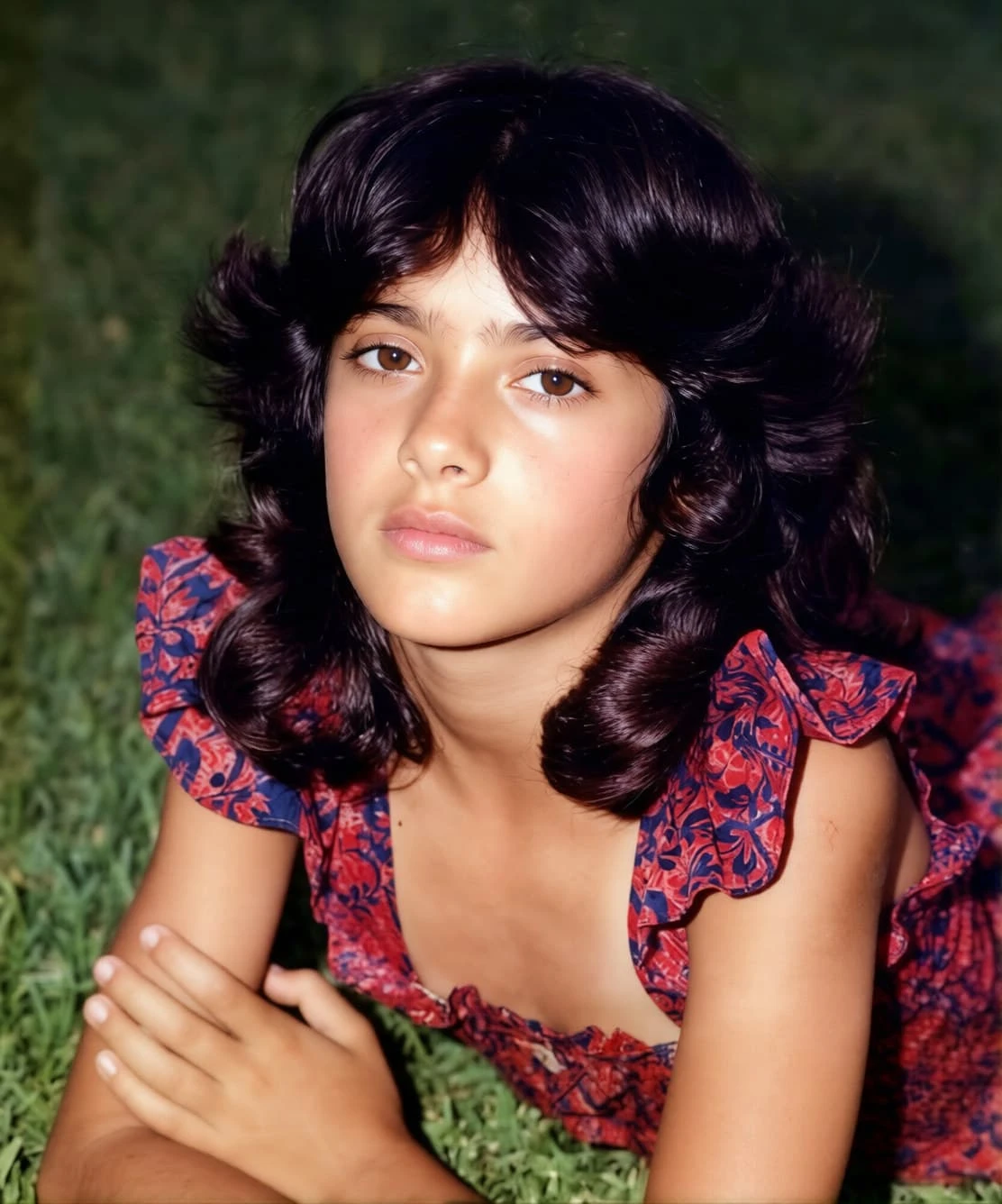
Coatzacoalcos, Veracruz. Salma fell in love with movies at her hometown's only cinema, where her father took the children on weekends.
At age 12, Hayek was sent to a Catholic boarding school in Louisiana, where she was diagnosed with dyslexia. Undeterred, she excelled at gymnastics and acted in school plays. Two years later, she returned to Mexico and secretly began taking acting lessons behind her parents' backs. 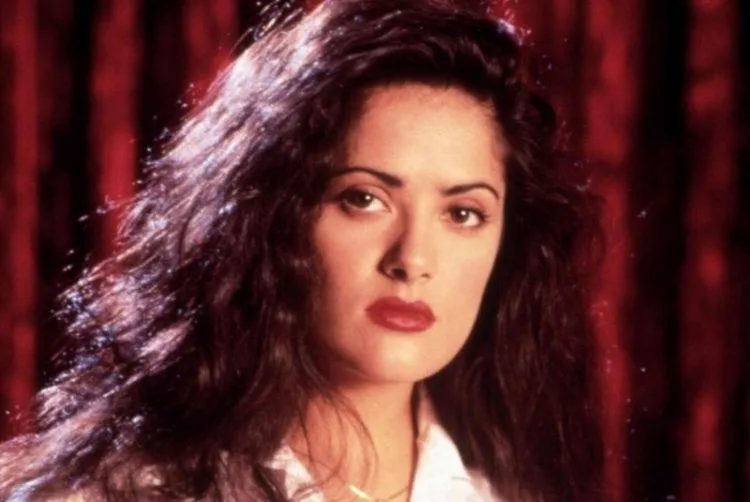
A Mexican producer spotted her while she was performing in a children's stage production of Aladdin, offering her her first television role.
Her big break came unexpectedly. While performing in a children's stage production of Aladdin, a producer scouted her and offered her a TV role. After landing a small part in the 1988 series Un Nuevo Amanecer, she scored the titular role in the 1989 telenovela Teresa. At just 22, the hit drama turned Salma into one of Mexico's biggest household names. 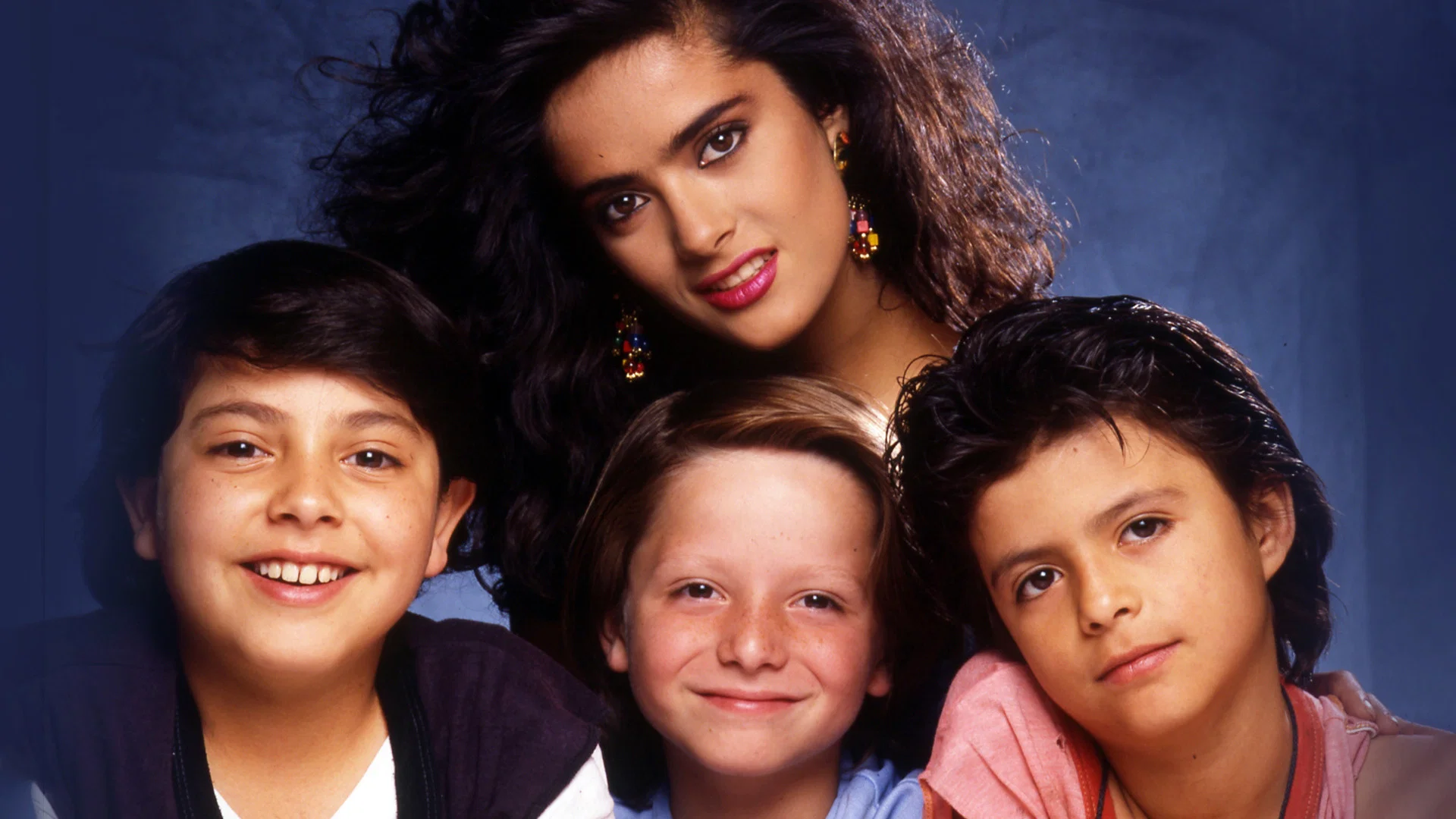
Teresa (1989) made her a national superstar, but at the height of her fame, she risked it all to move to the U.S.
In 1991, at the peak of her popularity in Mexico, Hayek packed her bags for Los Angeles—arriving, as she later revealed, as an undocumented immigrant. Struggling with limited English and dyslexia, she enrolled at the prestigious Stella Adler Studio of Acting on Hollywood Boulevard. The legendary acting school, known for its Stanislavski-based method, had previously trained icons like Marlon Brando, Robert De Niro, and Benicio del Toro. 
Robert Rodriguez's Desperado (1995) marked her Hollywood breakout, catching the eye of Quentin Tarantino.
Director Robert Rodriguez cast her alongside Antonio Banderas in Desperado (1995). The role caught Quentin Tarantino's attention, leading him to write a part for her in From Dusk Till Dawn. Originally named "Death Blonde" in the script, Tarantino renamed the character Santanico Pandemonium after a Mexican horror movie once Hayek was cast. Initially, Hayek balked at the role because it required dancing with a live python—a terrifying prospect given her intense fear of snakes. But Tarantino refused to recast, prompting Hayek to undergo two months of hypnotherapy to conquer her phobia. 
Her iconic snake dance in From Dusk Till Dawn (1996) was completely improvised—there was no choreographer and not a single day of dance rehearsal.
Her screen time as Santanico Pandemonium, the vampire queen and stripper, was brief but unforgettable. The hypnotic dance was unchoreographed; she simply felt the music after months of overcoming her terror. Released in 1996, the film quickly achieved cult status, making it impossible for Hollywood to ignore her any longer. 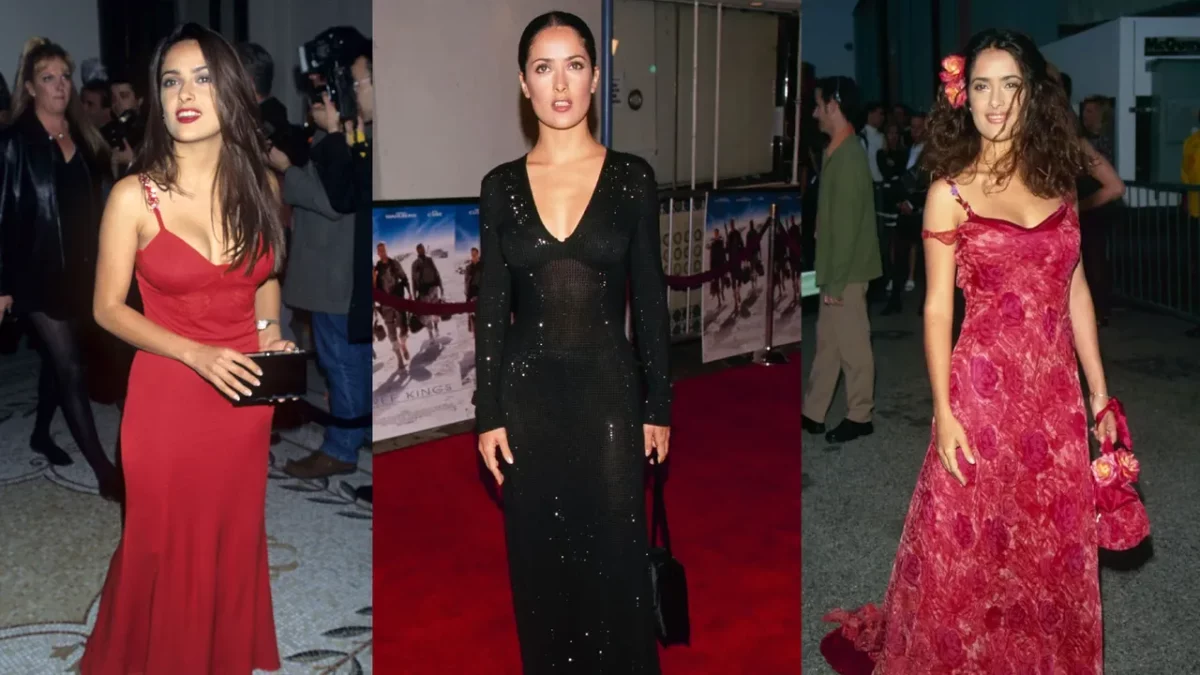
Late 1990s: Projects like The Faculty, Wild Wild West, and Dogma brought steady work, but Hollywood kept her in supporting roles. She decided to take matters into her own hands.
Throughout the late 1990s, Hayek worked constantly, but executives insisted a Mexican actress couldn't lead a major studio film. Refusing to accept those limits, she turned to producing. Around 2000, she launched her production company, Ventanarosa, aimed at championing Latinx stories and talent in Hollywood. Her debut project, an adaptation of Gabriel García Márquez's No One Writes to the Colonel, became Mexico's official submission for Best Foreign Language Film at the Academy Awards. 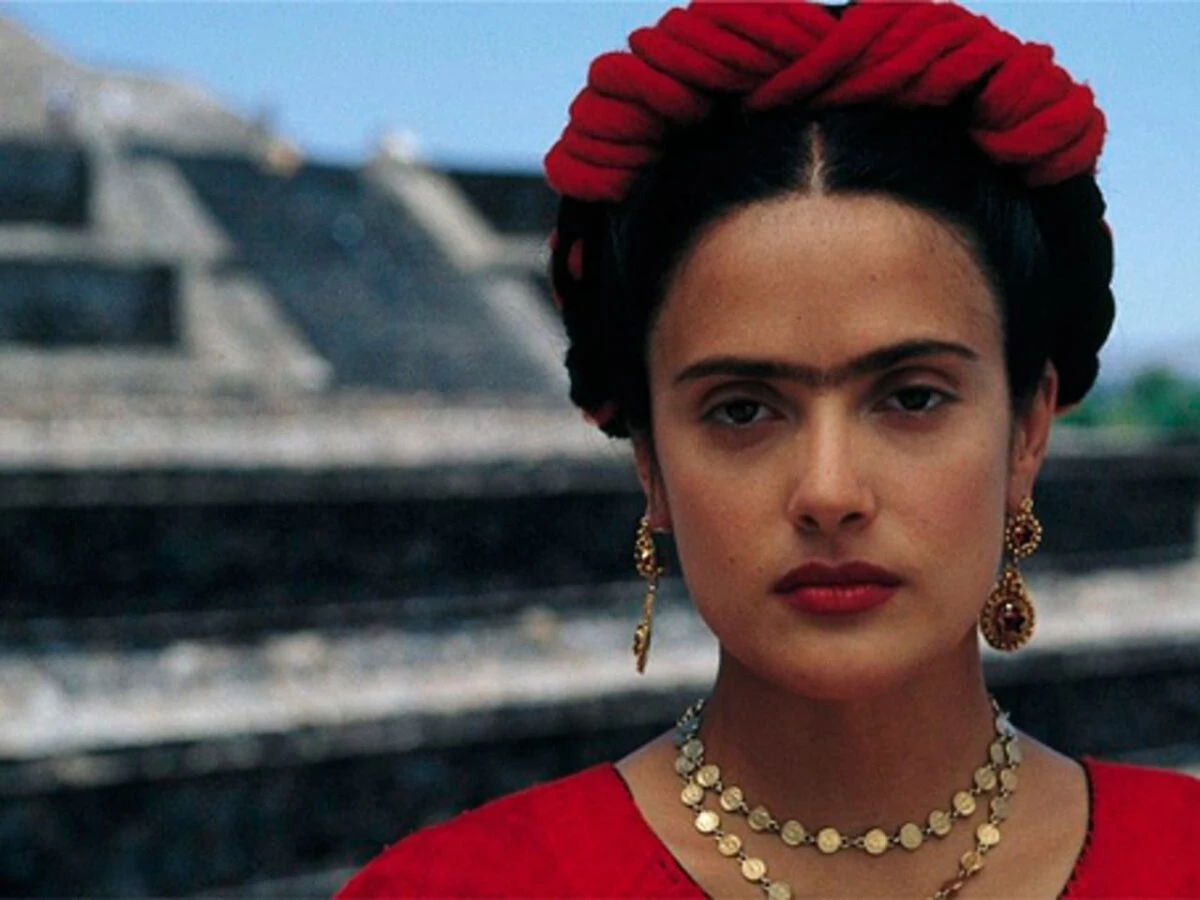
Frida (2002): Hayek grew out real facial hair to portray the iconic artist. Weinstein infamously screamed at her, claiming he hadn't hired her to look ugly.
Frida proved to be the crowning achievement of her career—and her hardest battle. Passionate about bringing painter Frida Kahlo's story to life, Hayek competed against Madonna, a long-time Kahlo admirer, and ultimately won the role while also serving as producer. Production was fraught with severe pressure from executive producer Harvey Weinstein, who demanded gratuitous nudity and explicit scenes. When she stood her ground, he threatened to shut down the film. Released in 2002, Frida defied the odds, winning two Academy Awards for Best Makeup and Best Original Score. 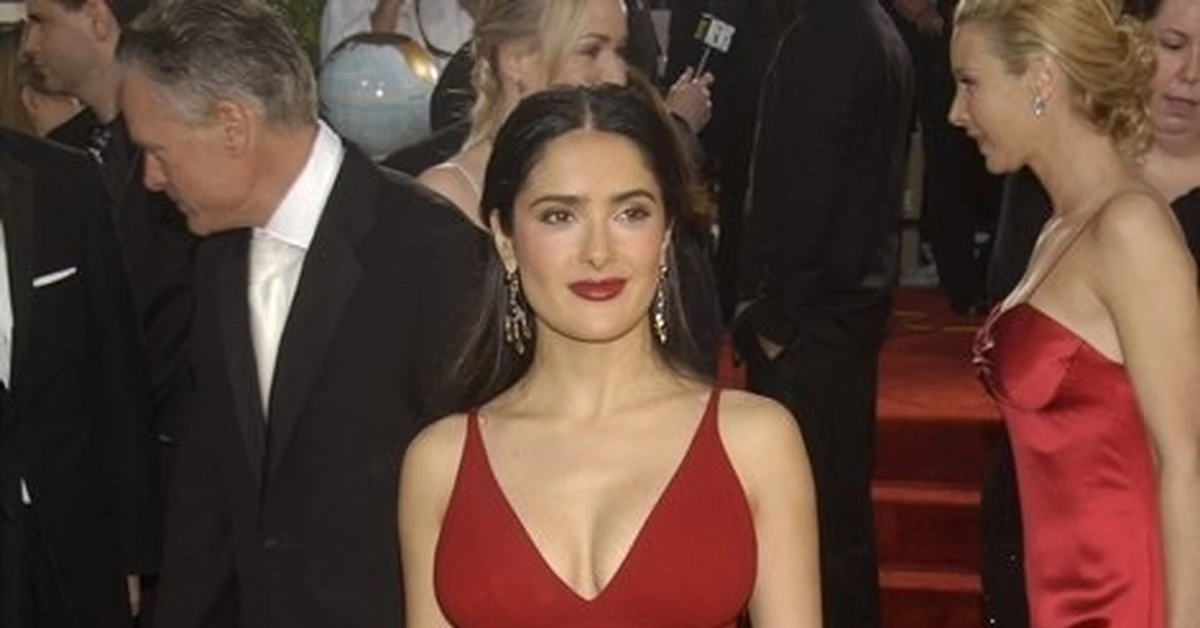
2003 Academy Awards: Hayek made history as the first Mexican actress ever nominated for Best Actress in a Leading Role.
Her 2003 nomination was historic: Salma Hayek became the first Mexican actress ever nominated for the Academy Award for Best Actress. Frida Kahlo's niece was so moved by her performance that she gifted Hayek a necklace that had belonged to Kahlo herself. To faithfully depict the painter, Hayek grew out real facial hair and a unibrow. Enraged by her commitment to authenticity, Harvey Weinstein called the set screaming:
"Why do you have a unibrow and a mustache? I didn't hire you to look ugly!" 
Ugly Betty (2006–2010): Hayek served as executive producer and guest-starred in the hit series, earning an Emmy nomination as a producer.
Following Frida, Hayek solidified her reputation as a formidable producer and star. In September 2006, she executive produced Ugly Betty, an adaptation that ran for four seasons, achieved international success, and earned her an Emmy nomination. That same year, mutual friends introduced her to French billionaire François-Henri Pinault, CEO of luxury group Kering (which owns Gucci, Yves Saint Laurent, and Balenciaga). Salma later admitted she didn't even realize their first meeting was a blind date. 
Valentina Paloma Pinault was born on September 21, 2007. Hayek was 41 at the time, later sharing that she was grateful to have become a mother at a more mature stage in her life.
In March 2007, Hayek announced her engagement and pregnancy. On September 21, 2007, the couple welcomed their daughter, Valentina Paloma Pinault. Hayek, who was 41, reflected that becoming a mother later in life made her a better parent. Pinault proposed to her twice, and she turned him down both times before finally saying yes on his third attempt. 
On February 14, 2009, they officially married in Paris, followed by a lavish ceremony at Venice's historic La Fenice opera house in April. Venice has remained a special retreat for the family ever since.
The couple tied the knot on Valentine's Day 2009 at the 6th Arrondissement City Hall in Paris. Two months later, they celebrated with a star-studded wedding at La Fenice in Venice, one of the world's most breathtaking opera houses. Following their marriage, Hayek relocated to Europe, and attending the Venice Biennale has since become a family tradition. 
On December 12, 2017, her New York Times op-ed detailed her harrowing experiences with Weinstein. Her words—"For years, he was my monster"—echoed worldwide.
On December 12, 2017, The New York Times published Hayek's powerful essay detailing her experiences with Harvey Weinstein.
"Harvey Weinstein was a passionate cinephile, a risk taker, a patron of talent in film, a loving father and a monster. For years, he was my monster," she wrote.
Hayek laid bare the harassment and threats she endured while making Frida, becoming a pivotal voice in the #MeToo movement that exposed systemic abuse by powerful men in Hollywood. 
Eternals (2021): In the original Marvel comics, Ajak was male. Marvel gender-swapped the character for Hayek, making her the leader of the immortal team.
In 2021, Hayek entered new territory by joining the Marvel Cinematic Universe. Directed by Oscar winner Chloé Zhao (Nomadland), Eternals featured Hayek as Ajak, the wise leader of an ancient superhero team. In Jack Kirby's original 1976 comic books, Ajak was male, but Marvel gender-swapped the role specifically for her.
"At 54—finally! I get to be a superhero," she quipped in an interview with Total Film magazine. 
Into her late 50s and beyond, with Marvel blockbusters, red-carpet appearances alongside her family, and timeless grace, her story is still being written.
As she marks her 60th milestone, Salma Hayek is far more than an actress—she is an accomplished producer, director, and entrepreneur. Her legacy spans iconic roles with Rodriguez and Tarantino, a trailblazing Oscar nomination, a successful production venture, a family life with one of Europe's top business leaders, and a coveted spot in the Marvel universe. Her rise from a local theater stage in Mexico to Hollywood took under a decade; staying at the top has taken a brilliant 30 more.
Which of Salma Hayek's iconic roles stands out most to you—Frida Kahlo or Santanico Pandemonium?