The Mystery of Yamashita's Gold: Where to Look for Asia's Most Famous Treasure (9 photos)
World War II left behind many mysteries, and one of the most famous is the mystery of the "Reich Gold." The fate of the treasures looted by the Nazis in Europe intrigues not only enthusiasts but also governments around the world. Few know that a similar hoard, known as "Yamashita's Gold," exists in Asia. This treasure was plundered by the Japanese occupiers. 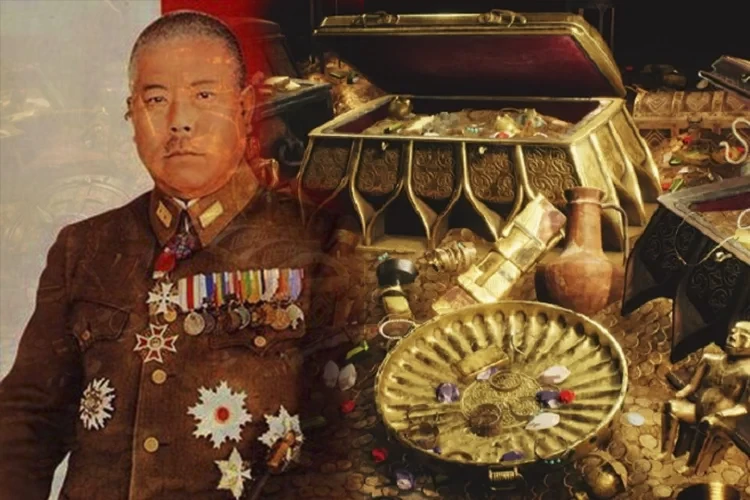
In January 1971, a group of treasure hunters led by Rogelio Roxas, a mechanic from Baguio City, discovered the treasure in the forests of the Philippines. The find was hidden in a cave with a concrete entrance, 250 kilometers from Manila, the country's capital. The site consisted of a large underground chamber filled with crates.
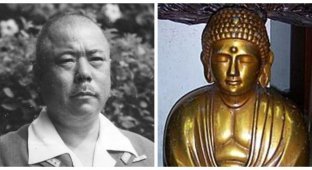
In the center of the chamber stood a golden Buddha statue, which a group of men had been unable to move. According to Rojas, it weighed up to a ton. The statue's head was removable, and inside were parchment bags containing rough diamonds. Smaller statues of gold and silver were also scattered around. However, Rogelio Rojas's account is the only evidence of the existence of the cache, which could have been part of the vast hoard known as "Yamashita's gold."
Japanese Trophies
By the spring of 1942, Japan had reached the pinnacle of its success in the Asia-Pacific region. She managed to occupy Hong Kong, Indonesia, French Indochina, Burma, and New Guinea. In February, Singapore, long considered an impregnable fortress, fell. 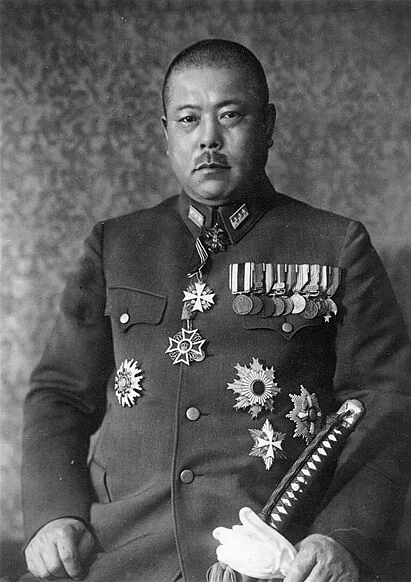
General Tomoyuki Yamashita
The Japanese army captured 130,000 soldiers from Great Britain, India, and Australia. A key figure in this victory was the commander of the 25th Army, Lieutenant General Tomoyuki Yamashita of the Imperial Japanese Army, nicknamed the "Tiger of Malaya." He was an intelligent, calculating, and extremely cruel man with enormous ambitions.
However, Japan's dominance in the region was short-lived. After the Battle of Midway, in which the Imperial Navy lost four aircraft carriers, it became clear that the tide had turned against the Japanese. By the end of 1942, the Allies' strategic superiority was evident, and Japan's defeat was only a matter of time. 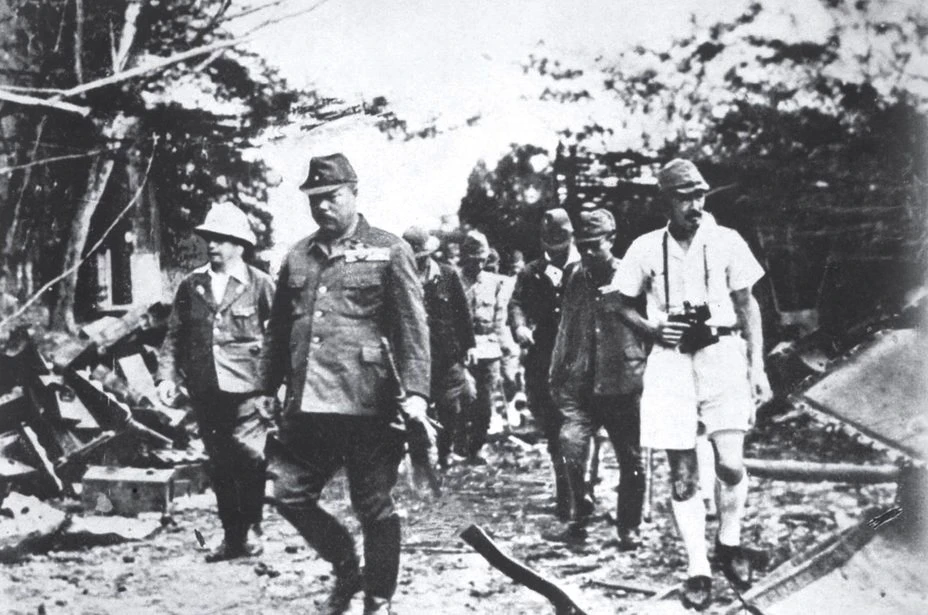
General Yamashita surveys the ruins in Singapore
But even in this situation, the Japanese had no intention of surrendering and planned to resist to the last. They still had plenty of resources, and a significant portion of these resources consisted of valuables plundered from occupied countries. The Japanese expropriated everything they could from the captured lands. Valuables were confiscated from banks, museums, temples, and even private homes. No one knows the exact amount of "trophies." It is only estimated that the occupiers took approximately 100,000 pieces of art treasure from Korea alone.
General Yamashita
The Japanese were able to plunder Korea slowly and methodically, as it had been captured long before the start of World War II. But in Southeast Asia, things were different: the Japanese sensed that the time to flee was approaching. They managed to transport only a small portion of their loot to Japan. The bulk of the money, gold, jewelry, and works of art remained in warehouses in the occupied territories.
General Yamashita was transferred to the Philippines in 1944, when things were looking bad there. Thanks to the efforts of the new commander, the situation improved. The Japanese defense in this region proved to be the most effective, holding out on the islands until September 2, 1945, when Japan surrendered. However, individual Japanese soldiers continued to resist in the Philippines for many years. One of them, Hiroo Onoda, surrendered to authorities only in 1974. 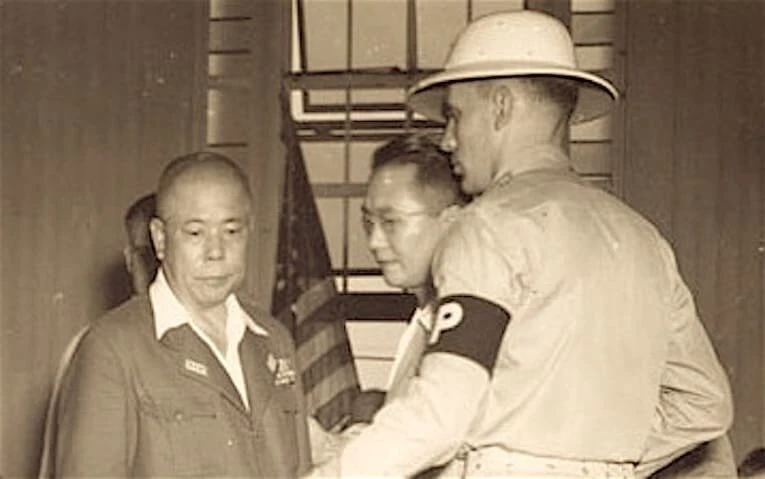
General Yamashita in an American court
According to unconfirmed reports, it was General Yamashita who was entrusted by the high command with the fate of the treasures looted during the war. He received this task shortly before the surrender and, by all appearances, handled it admirably. Subsequent events unfolded in a very strange way. On September 2, 1945, the general was captured, quickly tried, and hanged for war crimes on February 27, 1946. This seems too simple for a man who knew all about the missing gold.
Lucky Rogelio Rojas
Since then, passions have raged over the treasure hidden by General Yamashita. Of all the treasure hunters who claimed to have found the cache, the most convincing was the aforementioned Rogelio Rojas, a locksmith from Baguio, Philippines. In April 1971, this 28-year-old man reported to police that officers from the National Bureau of Investigation had broken into his home. 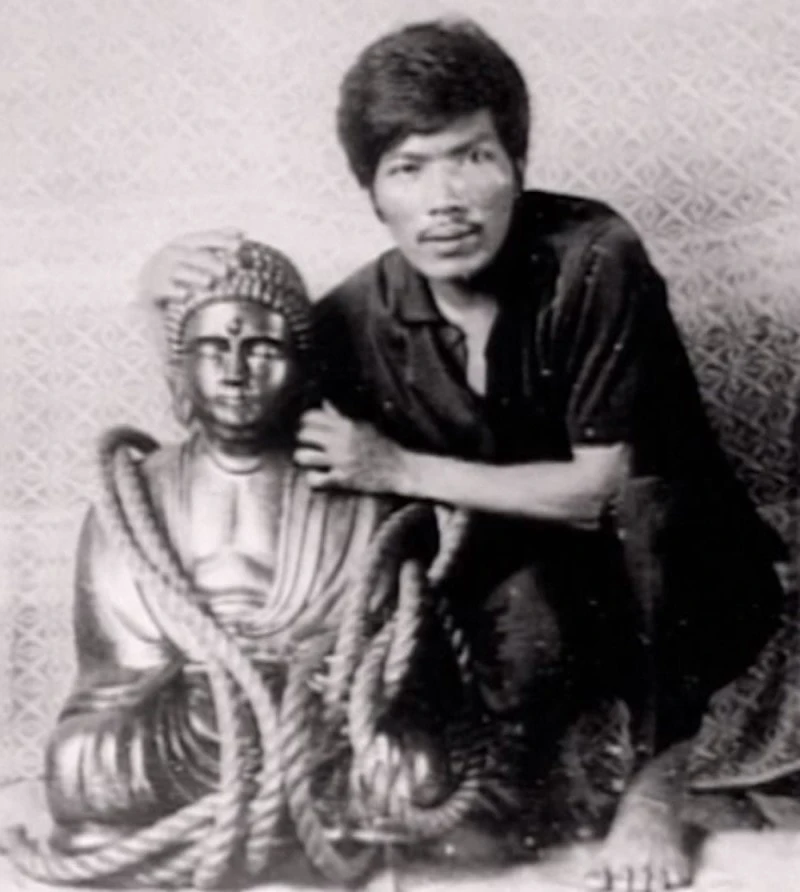
Rogelio Rojas with a golden Buddha
According to him, the special agents behaved aggressively and threatened him with guns. They stole from Rojas's home a meter-long, pure gold Buddha statue, 17 gold bars, and several diamonds. Rojas later claimed that the robbery was carried out on the orders of Philippine President Ferdinand Marcos.
Rojas, a victim of the robbery, said that the stolen items were a small portion of the "Yamashita gold." He said he had been searching for the treasure since 1961. He managed to speak with people who were involved in transporting the valuables. They showed him a rough map of the location of the caves containing the treasure. 
Ferdinand Marcos ruled the country from 1965 to 1986.
For some unknown reason, Rogelio Rojas only set out to find the treasure 10 years later, in 1970. He and several companions wandered through the jungle for seven months until they found what they were looking for. They discovered several tunnels, one of which had a concrete entrance. After digging through, the treasure hunters discovered skeletons dressed in Japanese soldier uniforms and work clothes. Yamashita likely wanted to eliminate any unnecessary witnesses by burying them along with the gold.
A Stash of Gold
Roxas claimed the dungeon was filled with boxes of gold and works of art. However, he and his companions managed to carry off only one box containing 24 gold bars and a massive Buddha made of the precious metal. After accusing President Marcos of being guilty of treason, the treasure hunter was imprisoned for several months. 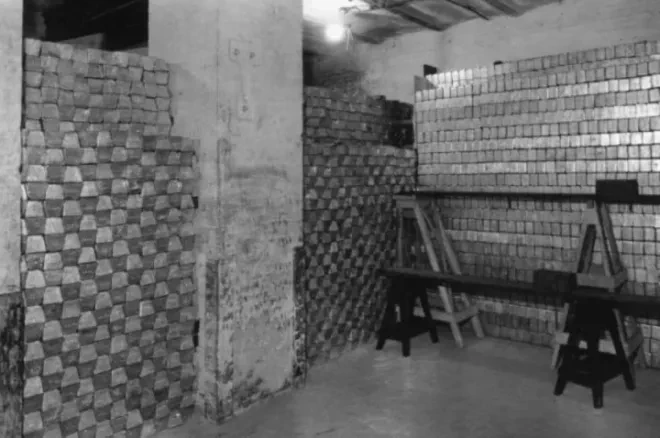
Gold Looted by the Japanese in Asia
After his release, Roxas kept a low profile until 1986, when the regime of Ferdinand Marcos fell. Corazon Aquino became president. Marcos and his family fled the country and settled in Hawaii, then a US territory. There, in 1988, he was hit with a lawsuit from Rojas.
ё
Rogelio accused the former president of robbery and demanded compensation. The case was handled by a slow-moving American court, so in 1993, the plaintiff died before a decision was reached. However, in 1996, Rojas was recognized as the discoverer of the Japanese general's treasure. The presidential heirs were ordered to pay a staggering $22 billion in compensation. 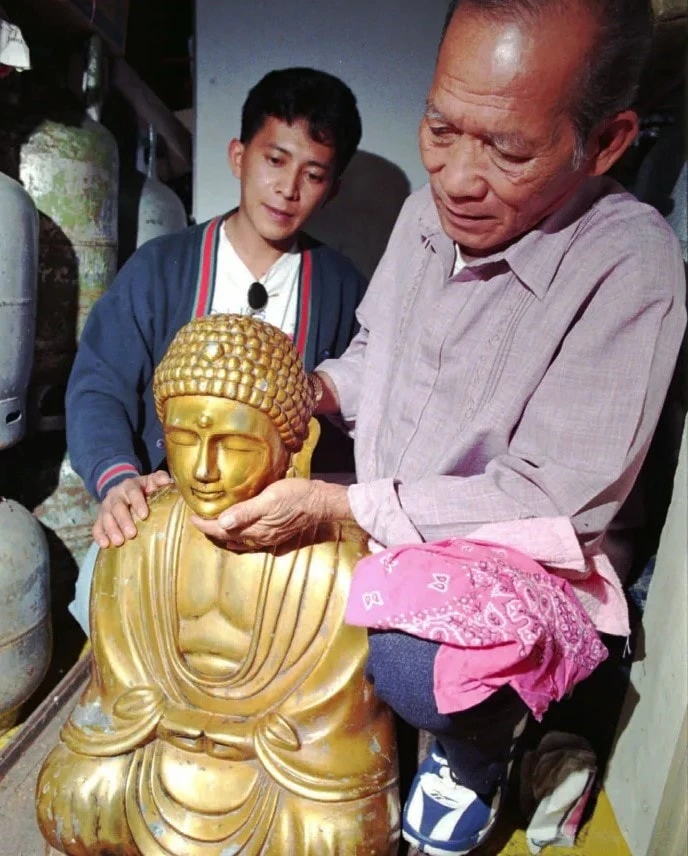
However, the widow of the defendant, Imelda Marcos, who died in 1989, said she did not intend to pay. She vehemently denied her late husband's involvement in the treasure. This contradicted the testimony of witnesses who saw the stolen Buddha in the president's house and heard Imelda boast that it was made of "Yamashita's gold."
Too early to call it a day?
The court hearings continued, and with each one, the compensation amount significantly decreased. In the early 2000s, Rojas's heirs received $1.4 million in this case and immediately filed new lawsuits. The most recent was filed in 2019. The defendant in this case, Imelda Marcos, was 92 years old at the time. 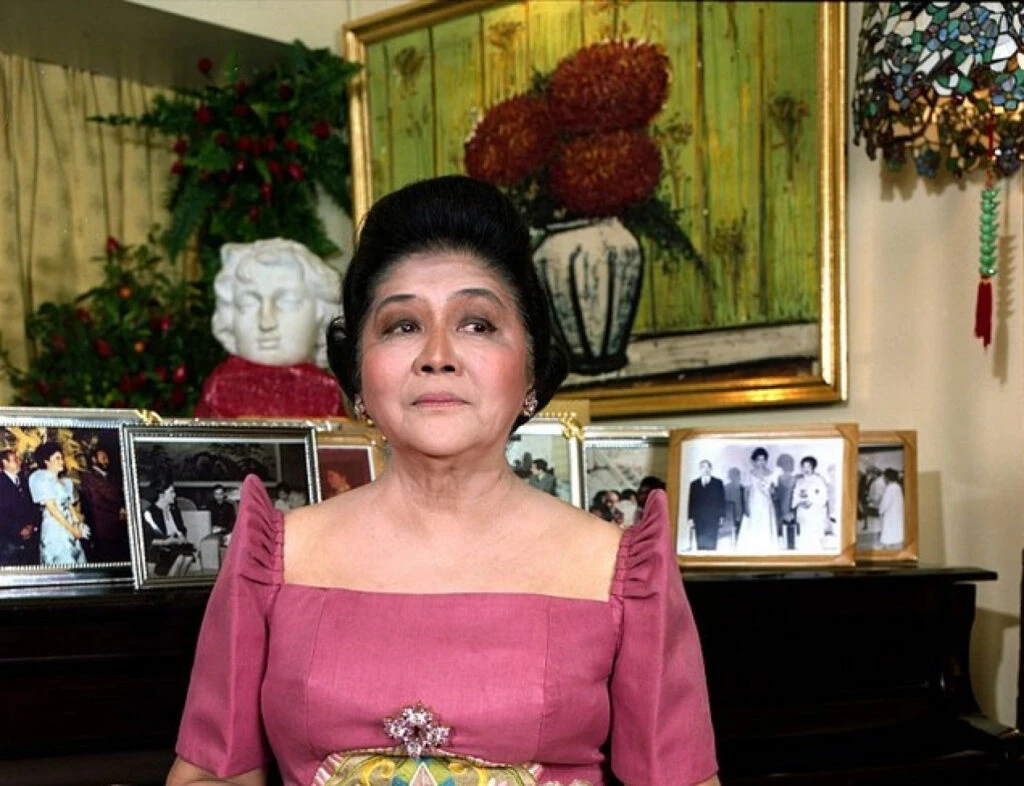
Imelda Marcos
It's likely too early to put an end to this case. The main defendants in this mysterious case have passed away, leaving behind many mysteries. It remains unknown what happened to the remaining treasures in the jungle tunnels. Did Rojas return there again, or did the dishonest President Marcos discover his secret? Perhaps we'll find out.
Many doubt the existence of "Yamashita's gold" at all. Skeptics claim that Filipinos are simply obsessed with treasure hunting. Besides the treasure of the Japanese general, the islands have been unsuccessfully searched for decades for the treasure of the 16th-century Chinese pirate Limahong and the 18th-century Filipino revolutionary Francisco Dagohoy. There are also countless stories of treasures discovered during the war with the United States from 1899 to 1902.