How a London dandy dresses..., or What we know about metrosexuals of the past (9 photos)
Few people understand the phrase from Pushkin's "Eugene Onegin" about London dandies. This is not surprising, as the word "dandy" wasn't very common in our country, and such a lifestyle was frowned upon by the Soviet government for decades. But in Europe, and especially in Great Britain, the phenomenon of dandyism is well known. So who were the dandies and how did they differ from everyone else? 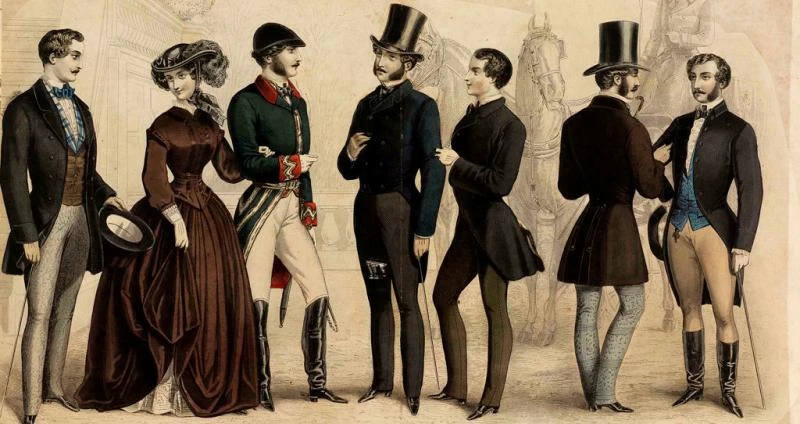
For a long time, there has been a widespread belief that a real man should be brutal, while manicures and hairstyles are the domain of women. But not everyone believed this. Throughout history, there have been men who meticulously took care of their appearance. In ancient Rome, it was patricians; in medieval Europe, it was Spanish grandees and French lords; and in modern times, it was a motley crew of dandies in pomaded wigs. And in the 21st century, such men are called metrosexuals. 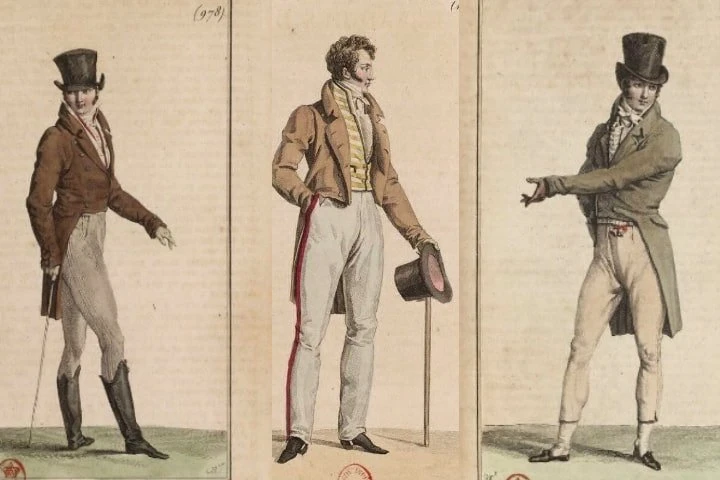
English dandies deserve special mention. They weren't ridiculed, like modern metrosexuals. They were admired, imitated, and their opinions were listened to. But the dandies themselves cared little about all this—they were preoccupied exclusively with themselves.
The emergence of the phenomenon of dandyism was facilitated by the revolutionary upheavals of the late 18th century. In England, a flour shortage led to a tax on wig powder. Gold-embroidered waistcoats were considered a sign of pride and bad taste. Short men's haircuts became fashionable. 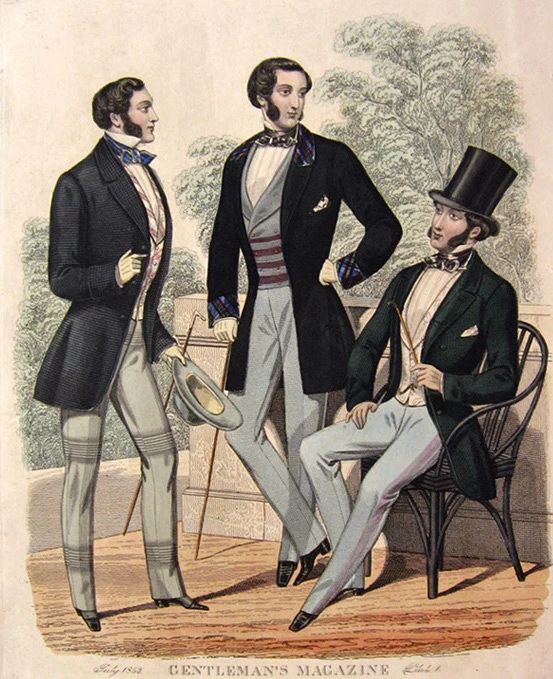
A self-respecting dandy never parted with a cane and top hat.
The boundaries between social classes blurred, and the image of the aristocrat, characteristic of the 18th century, became a thing of the past. But dandies chose aristocracy as their way of life. They adhered to it in everything, from their manner of dress to their attitude toward others.
The First Dandy and His Rules of Life
George Bryan "Beau" Brummell is considered the founder of dandyism. His contemporaries called him the "Prime Minister of Elegance." George's biography was exemplary. He received a prestigious diploma from Eton, was an officer in the Royal Regiment, and even managed to befriend the future monarch, George IV. All of England knew him and passionately envied his success. 
George Brummell
George Brummell was handsome, well-read, educated, and wealthy. But there were many like him in England. This dandy's main talents were his ability to find the right people and present himself effectively in high society. With those less fortunate, Brummell behaved arrogantly, yet with exaggerated politeness. He was also renowned for his cynicism and sarcasm.
The dandies, choosing this peculiar fellow as a model, strictly followed his fundamental rules of life. They were never surprised by anything, always maintained a dispassionate demeanor, acted unexpectedly and assertively, and quickly lost interest in the object of their impression. And they certainly knew how to present themselves, and they spent considerable money, effort, and time on it. 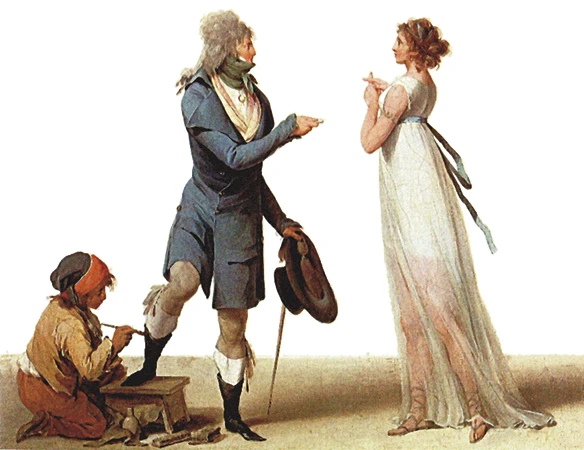
The London Dandy and the Lady
Brummell himself liked to say that he spent five hours a day getting dressed. Naturally, his followers tried to match him and preened just as meticulously. Cleanliness and neatness were elevated to the status of a religion among dandies. None of them could afford to appear in public in clothes of dubious cleanliness, poorly shaved, or in a wrinkled frock coat.
Dandy Fashion
To always look their best, a dandy had to change clothes several times a day. Dozens of white shirts and gloves were stored in dandy wardrobes. For these guys, shaking hands with a lady with a stale cuff was an indelible disgrace. But despite their passion for sophistication and order, dandies didn't strive to stand out from the crowd. 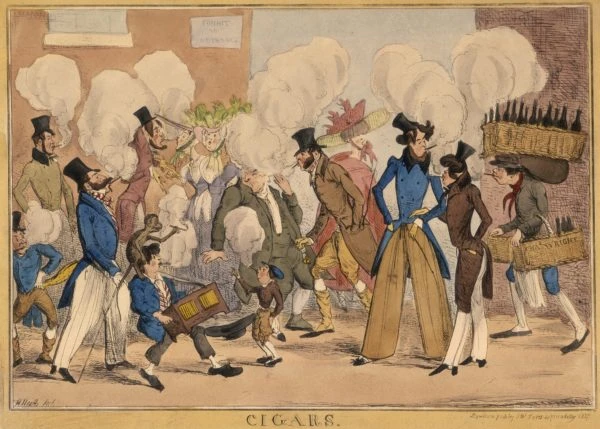
Caricature from 1827, satirizing the dandies' craze for cigars
In the 18th century, men tried to outshine their ladies with elaborate attire, but by the early 19th century, this was a thing of the past. The dandy's appearance might seem modest—suits and coats of a strict, classic cut, subdued colors. However, this simplicity concealed much that was interesting.
All the clothes of these adherents of aristocracy were made by the finest tailors from the most expensive fabrics. Even the coat lining was impeccable, and their boots shone just as they should, neither duller nor brighter. It was believed that white gloves should be reflected in the shoes, and this rule was observed.
Particular attention was paid to the vest. A special fabric with a meticulously studied pattern was chosen for this garment. The vest was the only striking item in a true dandy's wardrobe, and one of the most important.
The Cult of the Neck Scarf
The cult of neck scarves also reigned among these dandies. In the 19th century, they often replaced ties, and tying them correctly was considered a true art. 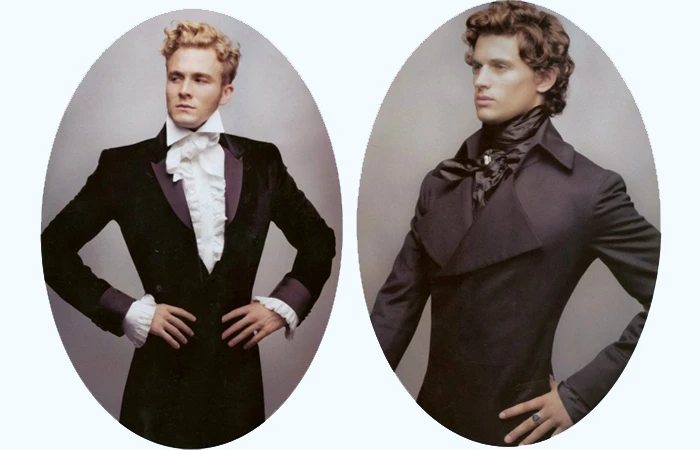
Never again did the art of tying scarves and ties flourish so much.
There were many different types of neck scarf knots. British bookshops were filled with entire shelves of handkerchief-tying manuals and treatises. Toward the mid-19th century, the so-called "Byron tie" came into fashion. It was a bright coral color and tied so as not to constrict the neck. It required a large, loose knot measuring four inches.
Dandies were indifferent to accessories. A true representative of this subculture was expected to carry a cane, a tie pin, and a pocket watch. Naturally, all these details of the look had to be the finest and impeccable in appearance. Dandies disdained jewelry. They believed that jewelry could not enhance an already dignified gentleman.
The Dandy's Value System
Followers of dandyism stood out not only for their stylish clothing and manners, but also for their worldview. The dandy's value system was based on a rather complex system of philosophical and political views. Dandies strove to create the impression of carefree, idle people for whom nothing was more important than attending clubs and balls. 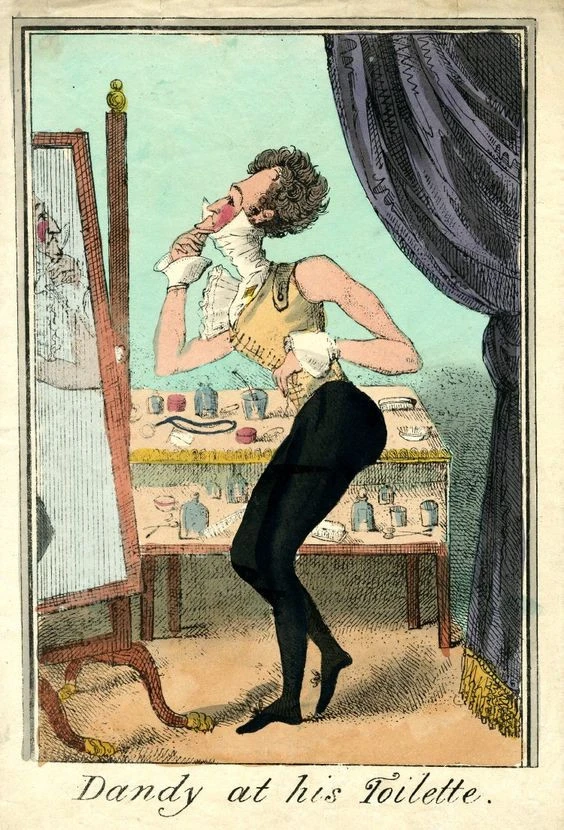
19th-century caricature showing a dandy at his morning toilet
They were regulars at theaters and expensive restaurants, well-versed in literature, and avid art collectors. Dandies also indulged in gambling. In public, these men behaved freely and casually, as if ignoring their impeccable appearance. Yet, their behavior was structured in such a way that others could not ignore the image they had created.
It must be said that maintaining this image was costly for dandies. Brummell's own fate is illustrative. At a young age, he inherited 20,000 pounds from his father, a substantial sum for the time. For 17 years, George lived the dandy lifestyle, but then a dark streak began. His money ran out, and creditors began to lay siege to his home. 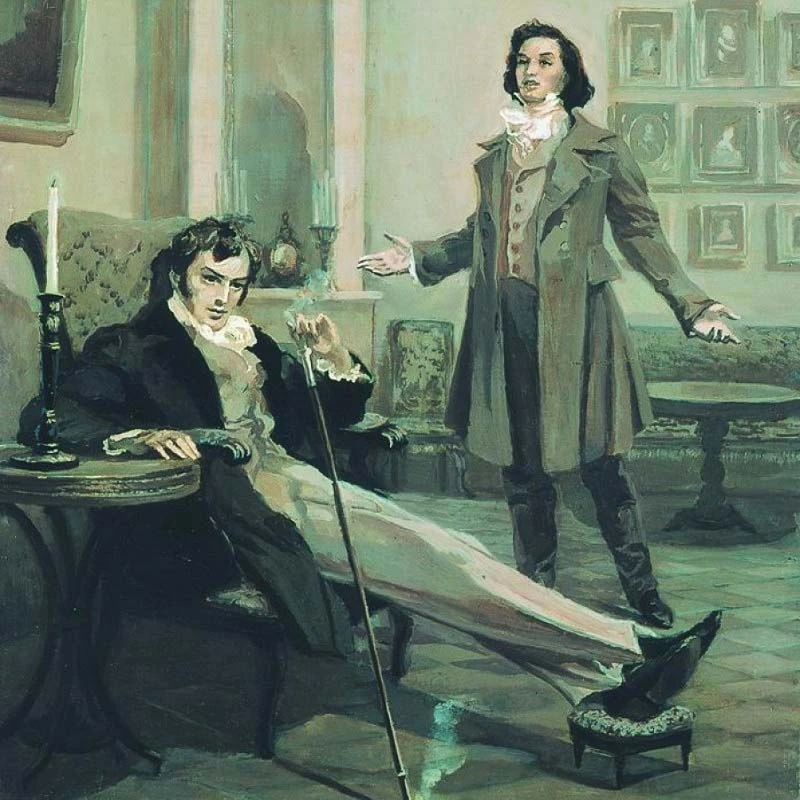
Ultimately, the first dandy ended up behind bars due to debt. After his release from prison, Brummell hastened to France, where his reputation was less well-known. The "Prime Minister of Elegance" ended his life in disrepute. He died of complications from syphilis at the age of 61 in a psychiatric hospital. In his final years, the once-brilliant London dandy was in dire need of money.