What does the word "abracadabra" mean and why are we using it incorrectly (3 photos)
The funny word "abracadabra" is familiar to everyone. We use it in conversation with friends, when communicating with colleagues at work, and when playing with children. It's also used as a magic spell by circus illusionists. Dahl's dictionary states that "abracadabra is nonsense, an incomprehensible set of symbols." But here the literary scholar is wrong—this word has an ancient history and a very serious purpose. 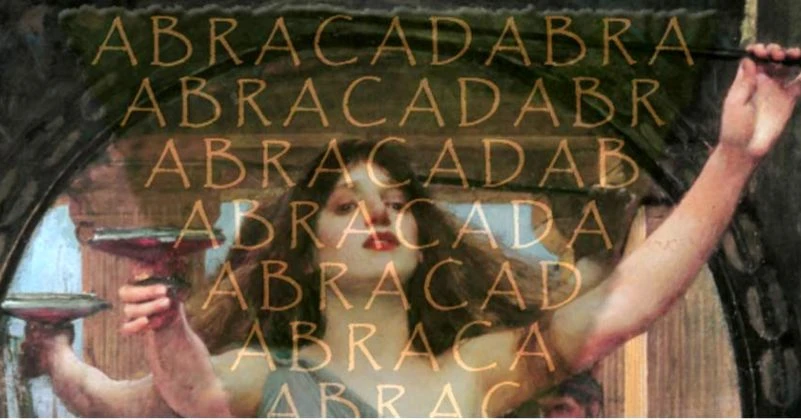
"Abracadabra" was first mentioned in written sources in the 2nd century AD. The Roman physician Simmonicus, who served under Emperor Septimius Severus, described it in his treatise. Aesculapius recommended writing this word in a column on a clay tablet 11 times, removing a letter from each line. This created an inverted isosceles triangle. Simmonicus recommended wearing the resulting amulet around the neck to help ward off fever. 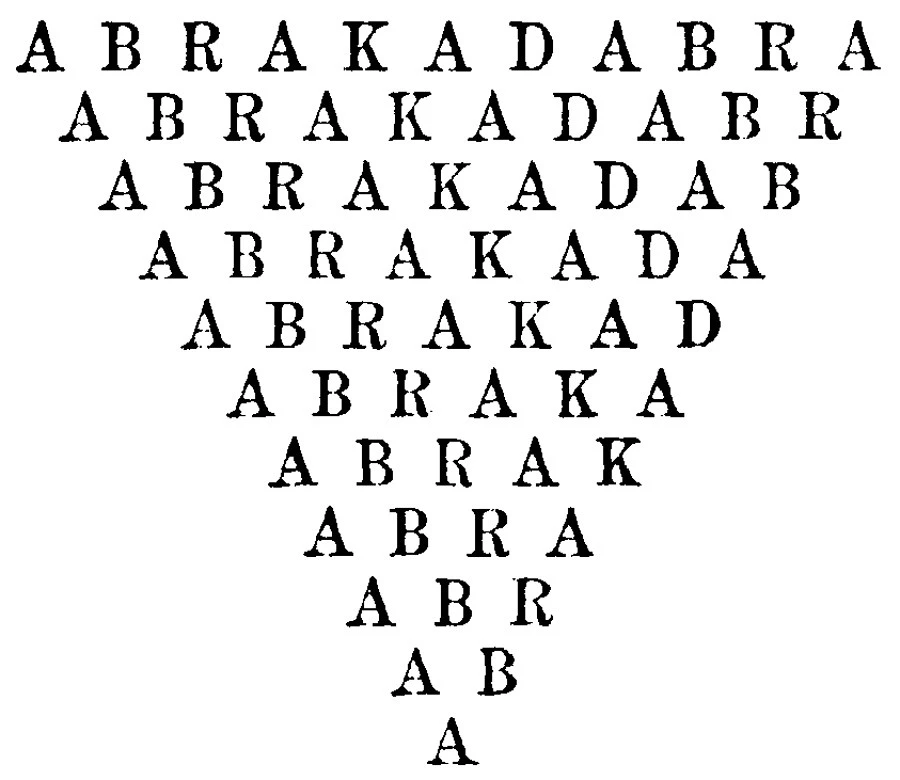
It's unlikely that this magical preventative method was invented by a Roman physician. The Jews attempted to treat blindness this way, which they described in detail in the holy book, the Talmud. A recipe written long before the rise of Rome recommends depicting the word "shabriri," meaning "blindness," in the form of a pyramid. Something like this: shabriri-briri-riri-iri-ri. If the exercise was performed correctly, and most importantly, with great faith in God, the amulet was supposed to restore vision.
Is there meaning in a magic word?
The occultist Papus wrote in the late 19th century that the magical power of the word "abracadabra" lies in numbers. A triangle has only 66 letters, and if you add two 6s together, you get 12. This is an important number in Kabbalah, associated with the squaring of the circle. There are other numerological interpretations made in different eras. 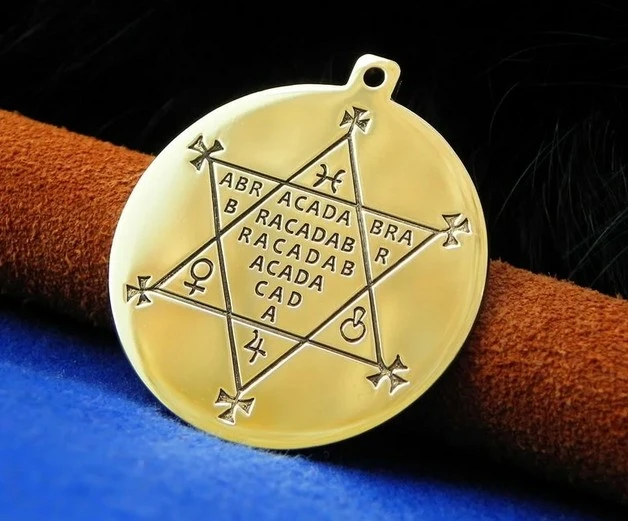
Regarding the effectiveness of "abracadabra" talismans, there is no information anywhere about their success or failure. Nor is there any information about the origin of the magical word. Some claim it comes from Hebrew, others see its roots in Celtic languages.
Perhaps it's time to look into this word and find out why it was used as a fever cure. British scientists, known for their bold experiments, could study the effect of "abracadabra" on malaria incidence in tropical countries.