Just think about it for a second: if your child asks how snakes or butterflies produce babies, what would you answer? We suddenly realize that, after living for more than two or three decades, long since graduating from school and forgetting biology lessons, we still don't understand how some animals manage to reproduce without suffering any obvious harm (in the case of crocodiles and hedgehogs). And what happens to those animals that, at first glance, seem to have nothing with which to reproduce?
So, after this post, you'll be able to calmly explain to a child, just as well as Nikolai Drozdov, how, for example, starfish at the bottom of the deep blue sea manage to reproduce and multiply. 
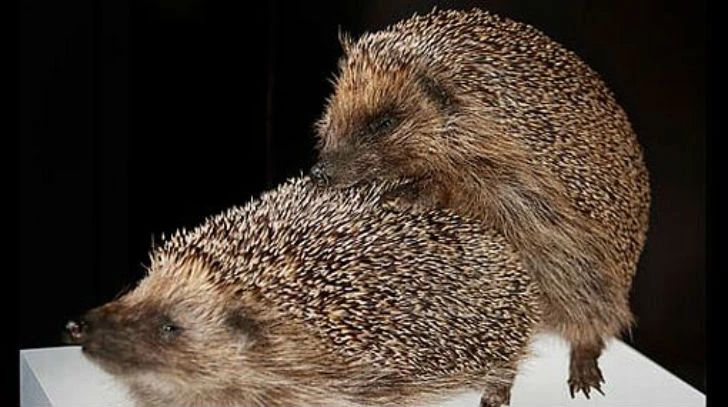
Despite the fact that we're used to thinking of hedgehogs as cute animals, during mating season, males fight fiercely for their mates. They bite, snort—in short, they make an incredible noise. As for the actual mating of these prickly lovers, nature has thought of everything. The female carefully smooths her spines and arches her back. The male doesn't have to mount her completely, as the female hedgehog's reproductive organs are located at the end of her body, while the male's are in the middle. 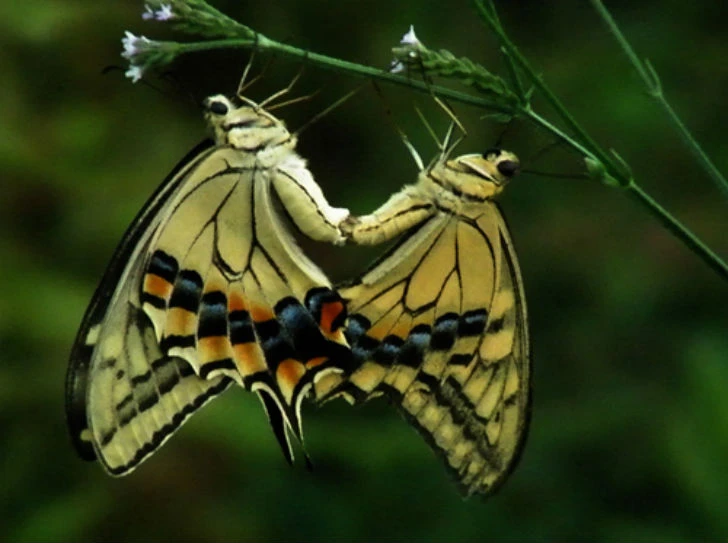
With butterflies, everything is airy and light. Pheromones, wing shape, and complex mating games play a significant role in the mutual attraction of partners. Incidentally, butterflies have such a strong desire to reproduce that it even suppresses their instinct for self-preservation. Mating occurs either on the ground or on a plant; the process itself takes from 20 minutes to several hours, with both the male and female remaining motionless during this time. So, when you see butterflies locked in passionate intercourse on a leaf in the summer, don't disturb them. 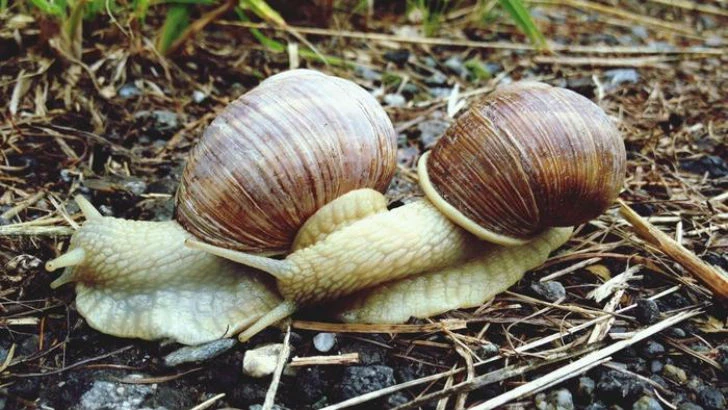
The giant Achatina snail is a hermaphrodite, but self-fertilization rarely occurs in nature. Love and its continuation occur between two sexually mature individuals, and the role of the female goes to the larger one, as egg development requires a lot of energy. Incidentally, the snail can store sperm for two years after mating, using it to fertilize maturing eggs.
Mating in grape snails is quite a spectacular process. They touch their soles and shoot love darts at each other—lime needles stored in a special sac. They are expelled by muscular force from the genital opening and pierce the body of the partner. These darts stimulate the production of reproductive products in both snails. The genital opening is located behind the second pair of horns on the right side and appears as a white spot. 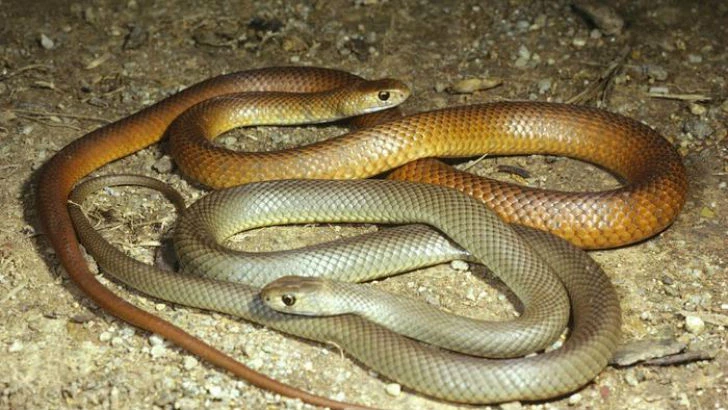
It can be said that the snakes are well prepared for such an important task as procreation. Most snakes reproduce sexually (yes, snakes have reproductive organs), some are capable of parthenogenesis (snakelets hatch from unfertilized eggs without the participation of a male), and some are even hermaphrodites.
Due to their obvious external characteristics, snakes have a very simple courtship behavior. The male, having sensed the scent of a female, follows her trail, catches up, and, as with other reptiles, attempts to stop her. Unlike lizards, male snakes do not use harsh bites to achieve this, but try to block the path of their chosen one. Males of some species nod their heads excitedly during this behavior. Snakes even exhibit something resembling caresses: the male presses himself against the female's body and crawls with her, following the curves of her body; in some species, he even strokes the female with his head. 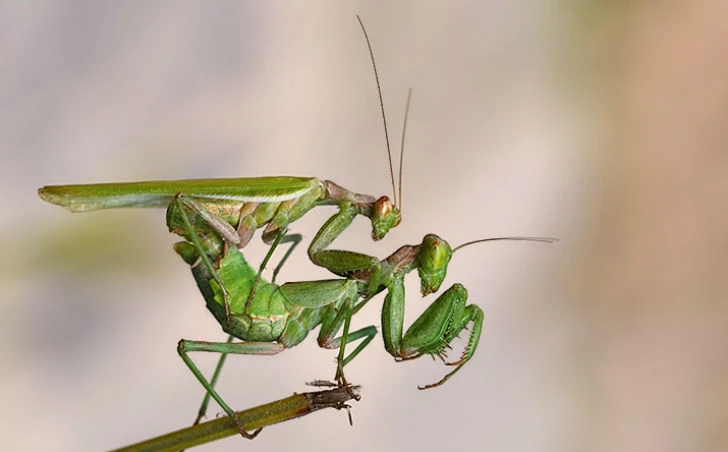
We all know the horrific story of how a female praying mantis treats a male as soon as she gets what she wants. In fact, when exposed to sex hormones, a female becomes so aggressive that she can devour her mate, not just the male.
We've stumbled upon another terrifying fact about the deadly passion of praying mantises: according to some scientists, the male praying mantis is incapable of copulation while he still has a head, so intercourse begins with the female tearing off the male's head. We hope this isn't true, that the male praying mantis has at least a little joy in life, and that the female actually eats the male due to her high protein requirements during the early stages of egg development. 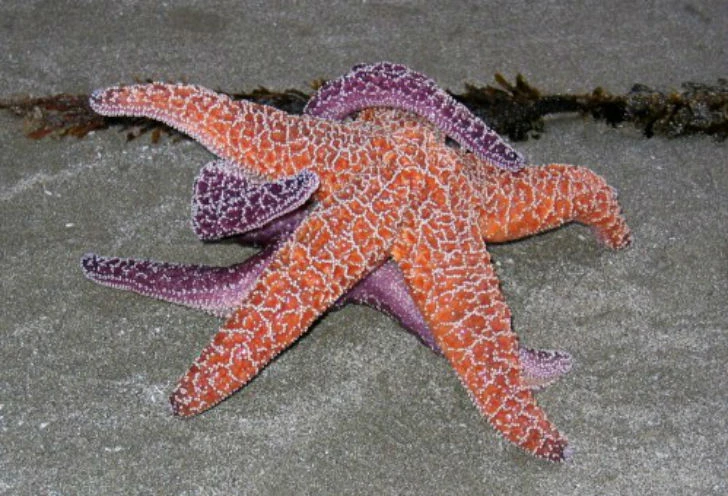
Sea stars are predominantly dioecious, but some species possess both male and female reproductive glands. For example, the ophidiaster starfish does not require a male to lay eggs.
The reproductive glands of sea stars are located in pairs at the base of each arm. During mating, males and females join their arms and release sperm and eggs into the water. 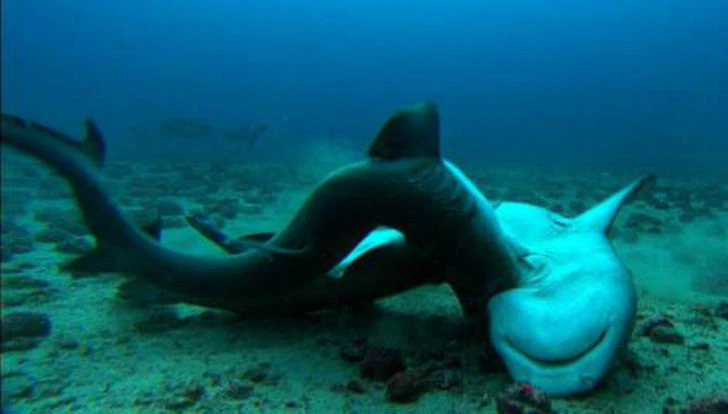
All sharks reproduce by internal fertilization, meaning the female requires a male to produce offspring. However, the reproductive process varies: 30% of sharks lay eggs, with the sleeper shark laying up to 500 eggs the size of goose eggs. Some species carry their young and give birth. To fertilize, the male roughly grabs the female with his teeth and holds her during the process.
Apparently, one penis isn't enough for sharks—they have two. Only one is used at a time, leading scientists to believe the second possibly serves as a backup, in case of "malfunctions." 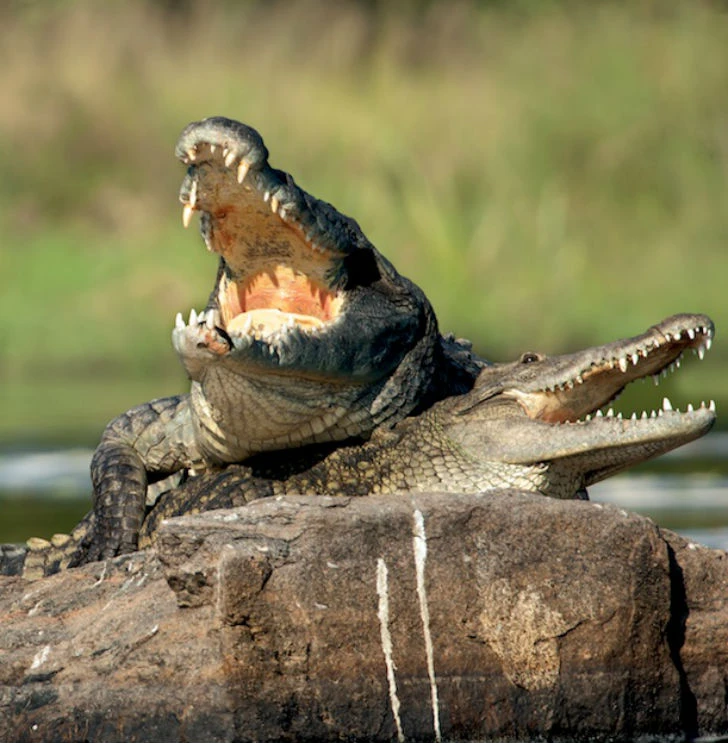
The crocodile is the largest reptile in the world and, admittedly, one of the most terrifying in appearance. But even these animals give birth to young. This is preceded by a long mating process in the water, lasting several months, during which the female may have several partners. 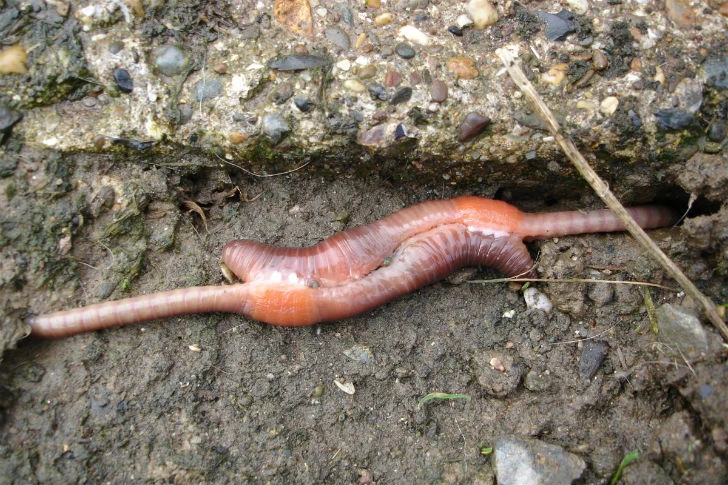
Earthworms reproduce sexually and are hermaphrodites, meaning each mature individual has both a female and a male reproductive system. Cross-fertilization occurs. Reproduction occurs through a band, within which the eggs are fertilized and develop. The band occupies several anterior segments of the worm, standing out from the rest of the body. 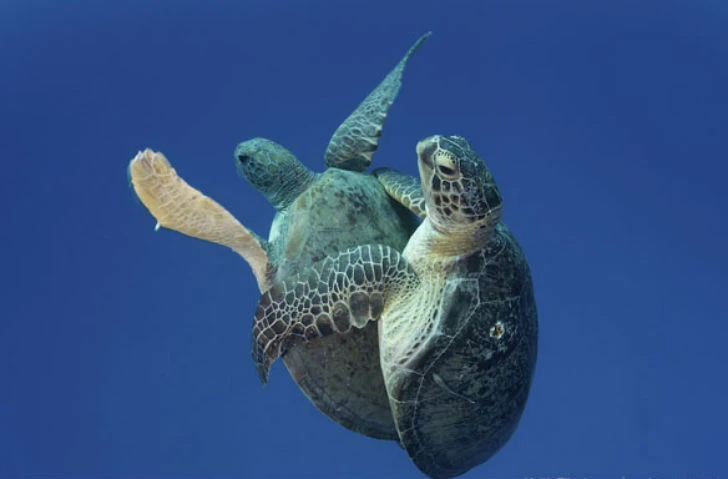
It turns out turtles aren't so cute during mating season. Males engage in a fierce battle for the attention of a female, and after winning, they focus all their attention on courting the female. Incidentally, some turtle species can "sing" during mating season—producing a few simple sounds. The process itself is quite crude in some species, and the sooner the female submits to the male, the better off she will be.
Add your comment
You might be interested in:













A young Ukrainian itishnik became the owner of the McLaren

30 photos with the main cat weapon - claws (31 photos)

The main disadvantage of houses by the sea (2 photos)

Your package is on the way

Atmospheric and beautiful abandoned places (20 photos)

The first shots of Timothée Chalamet as Willy Wonka (once

Atmospheric abandoned places (20 photos)

The neural network generated a photo of a spectacular

14 proofs that nature can surprise (15 photos)

Persistence in achieving a goal

A biker prevented a hit-and-run driver from escaping

17 Photos That Will Stop You in Your Tracks (18 Photos)

Not everyone is having fun on the amusement ride

The cutest lunch delivery ever

Stunning Views of the Martian Horizon from 400 Kilometers

A book titled "A Guide to Rebuilding

Young women, Dancing and George Michael: nothing superfluous

An apology delivered with a running start
