Mysterious tree circles in Japan are the result of a 50-year experiment (8 photos)
Several years ago, photographs of bizarre tree circles in a forest in Japan's Miyazaki Prefecture appeared online. The images were taken from a bird's eye view, and their reality was hard to believe. The trees weren't just growing in concentric circles. They were also arranged in rows like rays, from the center of the circle to its edge. Internet users offered many theories about this mysterious phenomenon. Some claimed it was the work of skilled Photoshoppers, while others suspected aliens, as with crop circles. But it turned out to be much simpler. 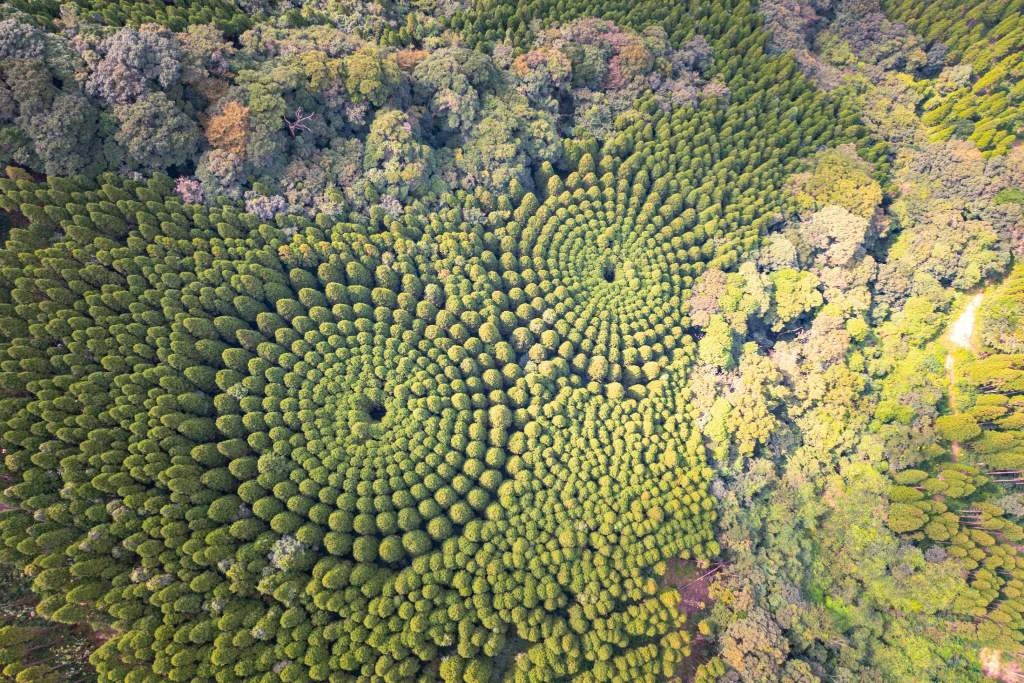
The cedar forest in Miyazaki Prefecture, part of which grows in perfect circles, is the result of an experiment. And not a secret one conducted by intelligence agencies, but a very ordinary one. It was conducted by biologists commissioned by the Japanese Ministry of Agriculture, Forestry, and Fisheries. 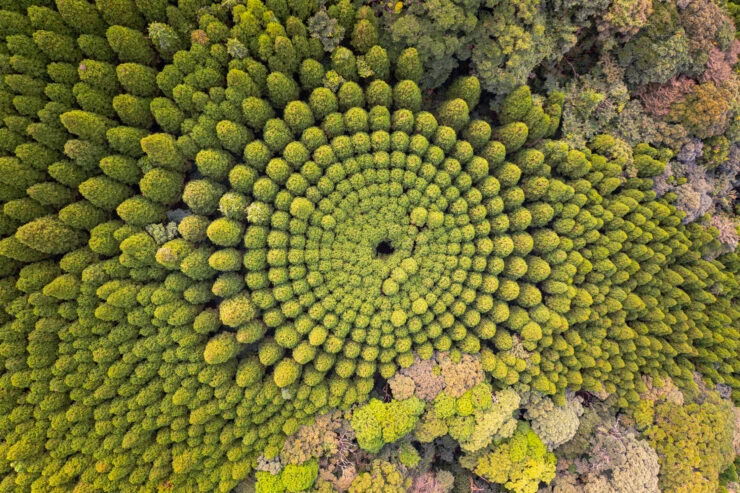
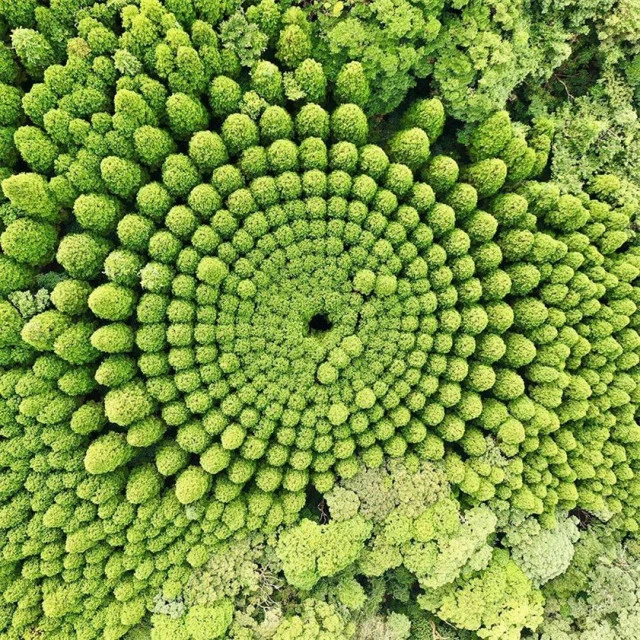
Back in 1973, a plot of land near the city of Nichinan was allocated for scientific research. It was an experimental forestry studying an important problem. Biologists wanted to determine how the distance between trees affects their growth. Cedars were planted at intervals of ten degrees. These trees ultimately formed ten concentric circles. The distance between plants decreases toward the center of the circle. 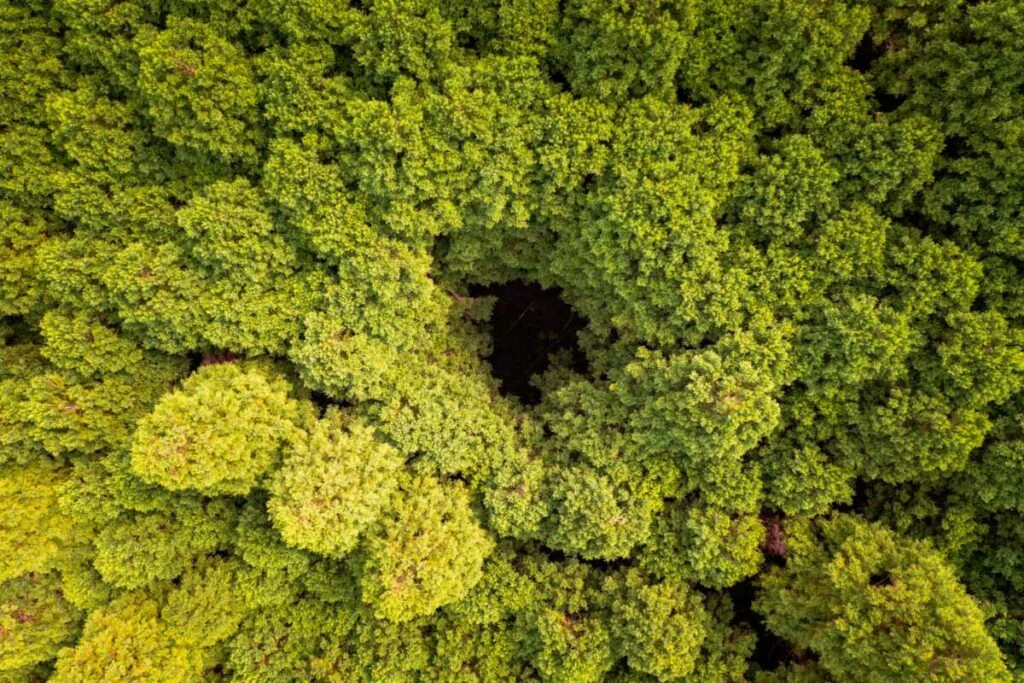
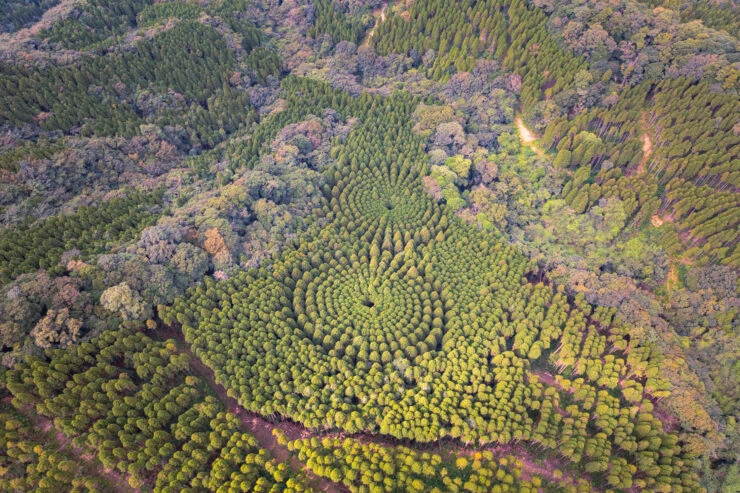
As the conifers grew, the distance between them decreased. The radial rows became increasingly compact. Now, 50 years later, it's clear that distance does indeed influence tree growth. The cedars planted closer to the center grew smaller. The tallest and most spreading trees were found in the outer circles. 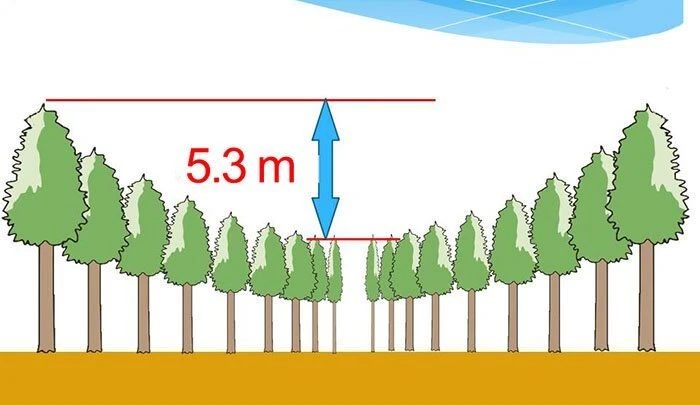
Crowded, but not offended?
Measurements taken after the experiment revealed impressive results. The trees growing in close proximity were shorter than their counterparts by an average of 5 meters. The cedars, spaced further apart, received sufficient resources for vigorous growth. Trees planted closer to the center were forced to compete with each other for sunlight, moisture, and nutrients. 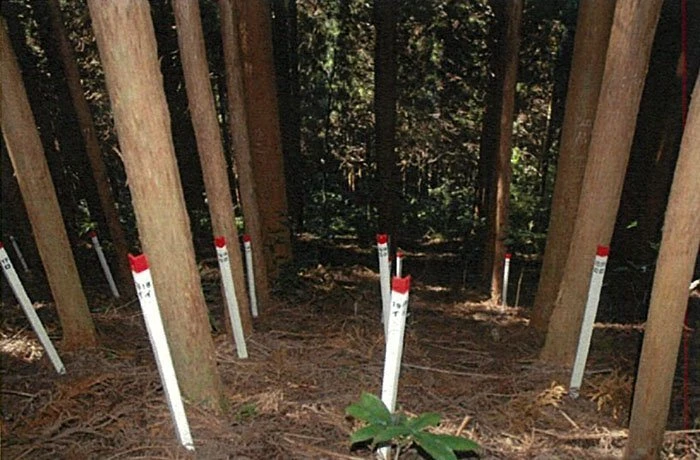
The half-century-long experiment has come to an end. Initially, forestry workers planned to cut down the experimental cedars by 2023. But after some discussion, they decided to leave them. The popularity of the intriguing photos online played a significant role in saving the trees. 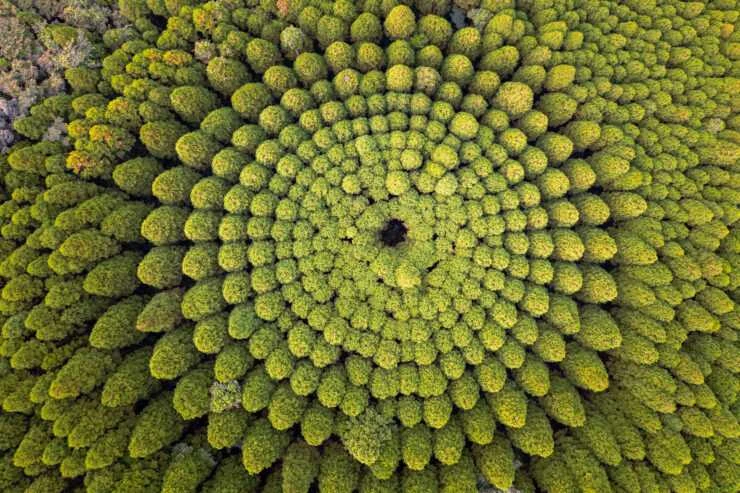
After intriguing photos of the unusual forest leaked online in 2016 and the experiment generated a lot of buzz, it was decided to preserve the unusual forest as a tourist destination.