The Sentinelese: the world's most isolated tribe that destroys outsiders (17 photos)
While the rest of the world was inventing diplomacy, visas, and international forums, these guys chose a more reliable security system: bows, arrows, and no negotiations. 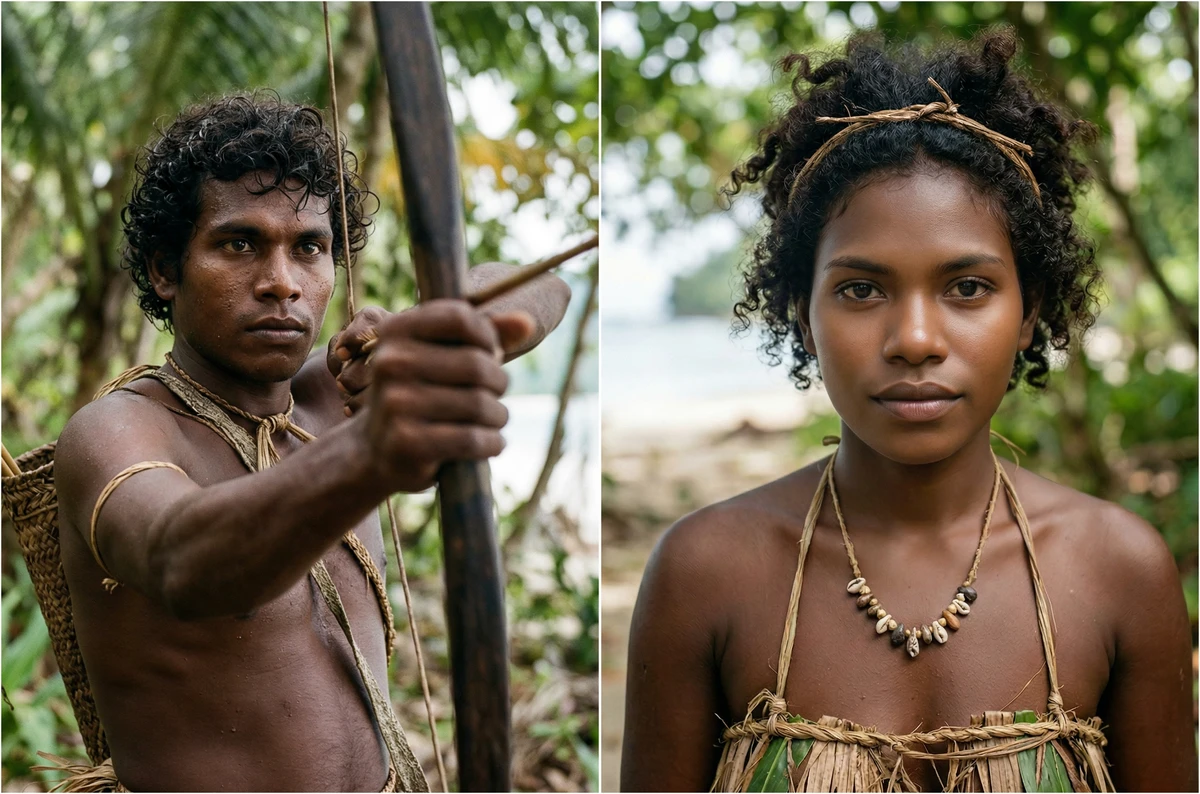
We're talking about the Sentinelese—one of the most isolated tribes on the planet, who live on the tiny island of North Sentinel in the Bay of Bengal and have pretended for tens of thousands of years that other humanity doesn't exist.
With them, no "we're in peace," no "we have gifts," no "we're just scientists" will work. Actually, the last part worked a bit, but I won't get ahead of myself. 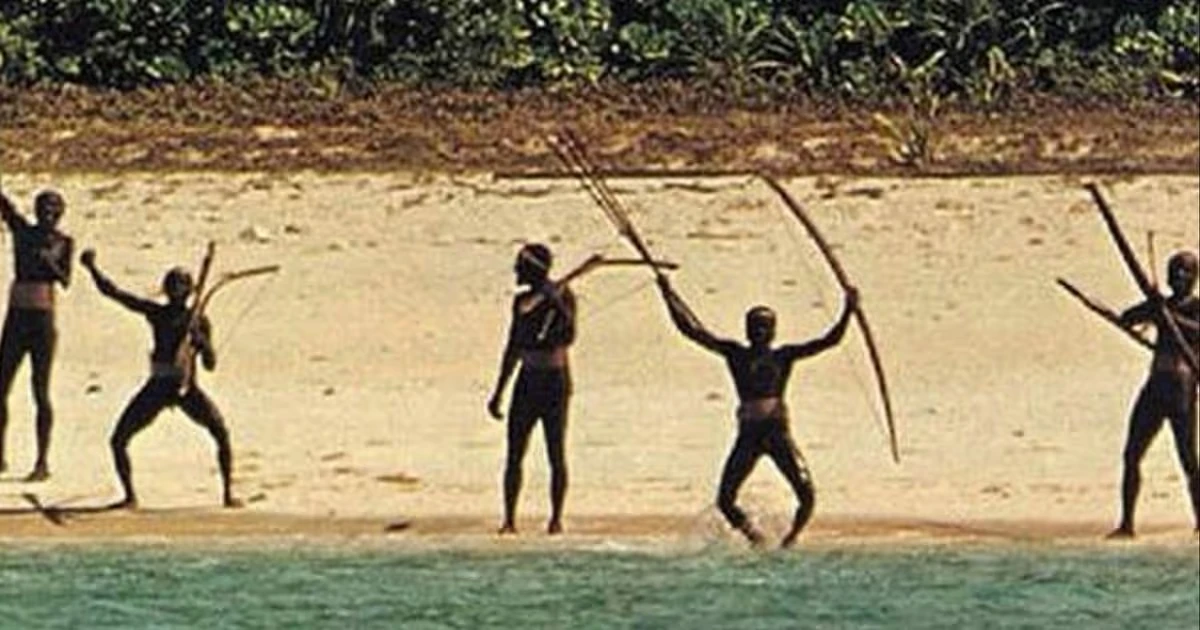
The Sentinelese are generally not fans of surprises. For them, any unexpected guest isn't "Oh, we'll meet you," but "Well, here we go again."
The worst part is, they seem to be right.
The island is the size of the Petrogradsky District
North Sentinel Island is located approximately 64 kilometers west of Port Blair, the capital of the Andaman and Nicobar Islands. The islands are located in India in the Bay of Bengal.
The island's area is 59 square kilometers. Americans like to compare it to Manhattan in size. 
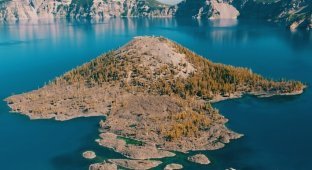
Sentinel Island is home to impenetrable tropical jungle, obscuring the island from view from the air due to the dense treetops.
There are, of course, no embankments—instead, coral reefs stretching for a kilometer and a half from the shore, turning any attempt to land into a high-risk adventure.
There are no natural harbors on the island. Not a single one.
It's funny how this natural fortress has turned out to be such a treasured natural wonder—it's as if nature helps the locals maintain the isolation they cherish so much. 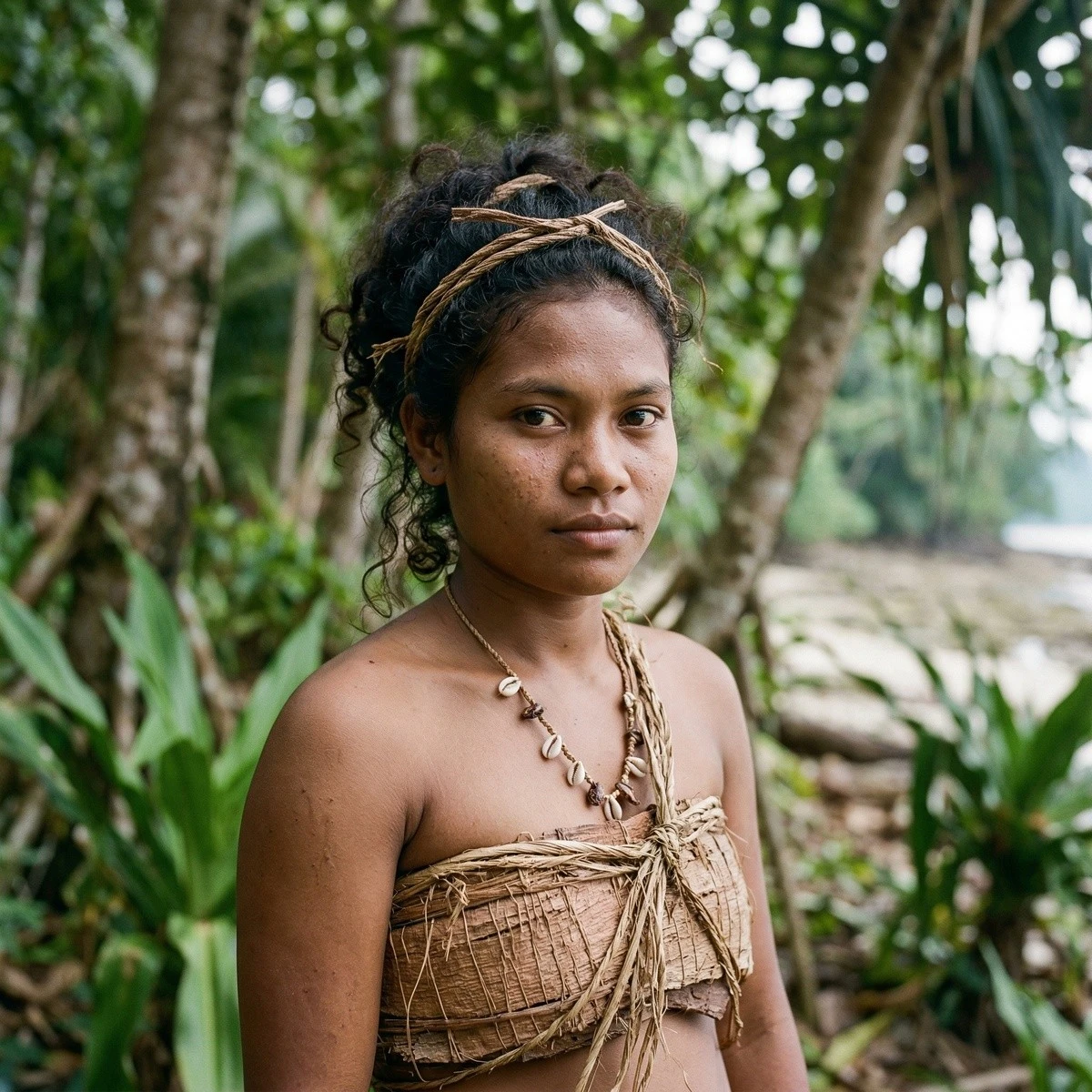
The Sentinelese live on North Sentinel Island, part of the Andaman Archipelago. Clear photos of them are few and far between, so I'll include some from other local islands—they're almost genetically identical.
Ships attempting to approach the shore repeatedly ripped their bottoms apart on the reefs. The climate is monsoonal: calm seas are only found from December to April. The remaining eight months are swept by storms.
The interior of the island has remained unexplored by outsiders. Expeditions have found settlements only on the coast. What lies hidden behind the strip of coconut palms and dense undergrowth with visibility of five to ten meters is unknown.
Their ancestors predate civilizations
The Sentinelese tribe is one of the oldest continuous human populations on Earth.
Genetic analysis of the neighboring Andamanese peoples, from whom the Sentinelese descend, indicates that their ancestors arrived on the islands between 26,000 and 60,000 years ago. This occurred as part of the first wave of human migration out of Africa. 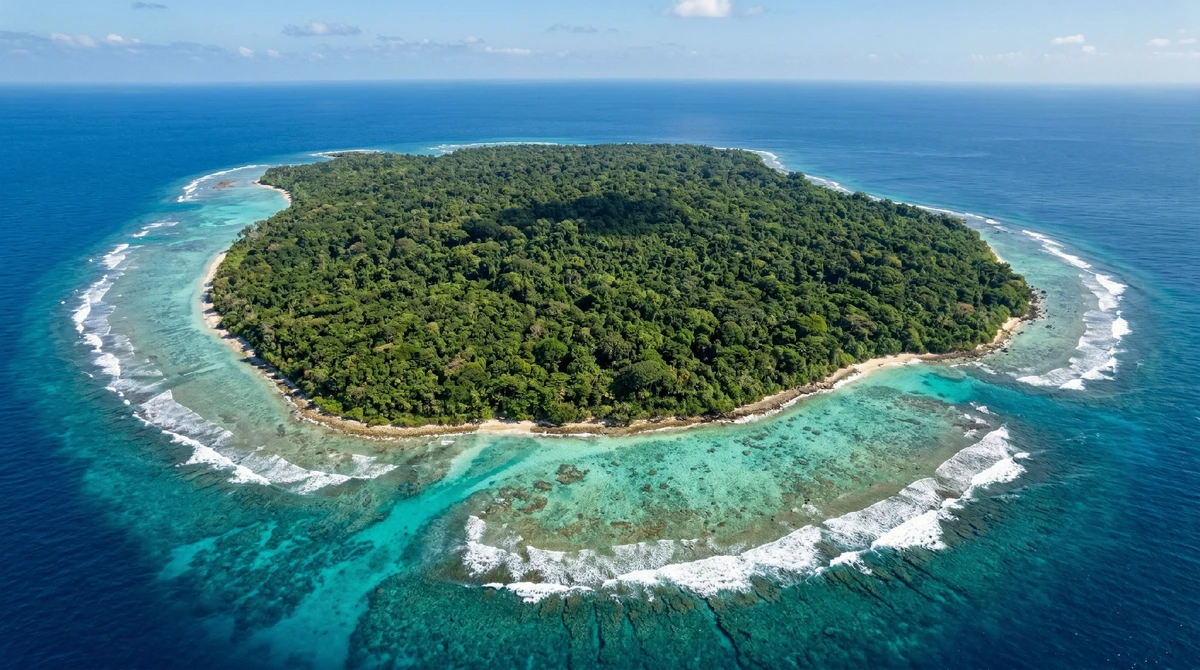
The first Sumerian cities and Egyptian pyramids were still tens of thousands of years away. At this time, the first Sentinelese were already living on these islands.
That's why they are of such interest to scientists. Imagine – these people were isolated and developed long before the emergence of human civilizations and all the achievements of our culture.
Genetically, the Andamanese peoples are closest to the Papuans, Melanesians, and Australian Aborigines.
The Sentinelese are a branch of humanity that developed independently for many thousands of years – with their own language, technology, and value system.
And in their culture, the rule of "keeping strangers out" is paramount.
The Briton Who Stole the Elderly
The first documented record of human presence on the island dates back to 1771: a British East India Company ship passed by at night and noticed numerous fires along the shore. The captain decided not to investigate. Wisely. 
Serious attempts to establish contact began under the British colonial administration. The British were always trying to get involved – to establish control, to collect "tribute" (Indians still mourn the billions of dollars' worth of gold they stole from their country during British rule).
In 1880, officer Maurice Vidal Portman set out for the island with an armed detachment, Indian prisoners, and representatives of the already captured Andamanese tribes from neighboring islands. Incidentally, curiously enough, despite their genetic kinship, the Sentinelese language is completely incomprehensible to their neighbors. It has changed dramatically over thousands of years of isolation.
The Sentinelese disappeared into the jungle whenever strangers appeared. 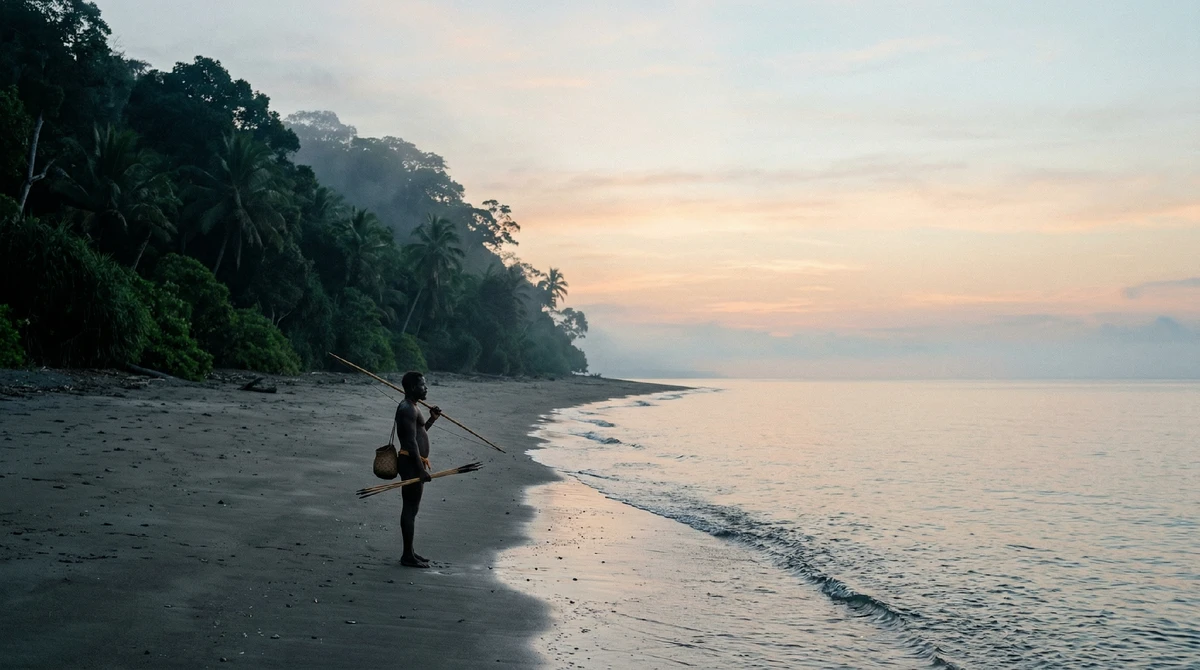
Portman decided to take radical action: his men seized two elderly Sentinelese and four children on the shore and took them to Port Blair.
Both elderly men died of disease within weeks—they had no immunity to anything the colonizers carried. The children were eventually returned to the island with gifts. No one had calculated what exactly they might have brought back to their community after their stay in the city. Anthropologists later suggested that it was perhaps then that the pathogens that triggered the epidemics arrived on the island. This could have killed people and firmly ingrained in the Sentinelese cultural memory a simple equation: aliens = death.
Portman himself described the appearance of captured Sentinelese in words that are now impossible to read without a feeling of deep discomfort for the entire British Enlightenment. 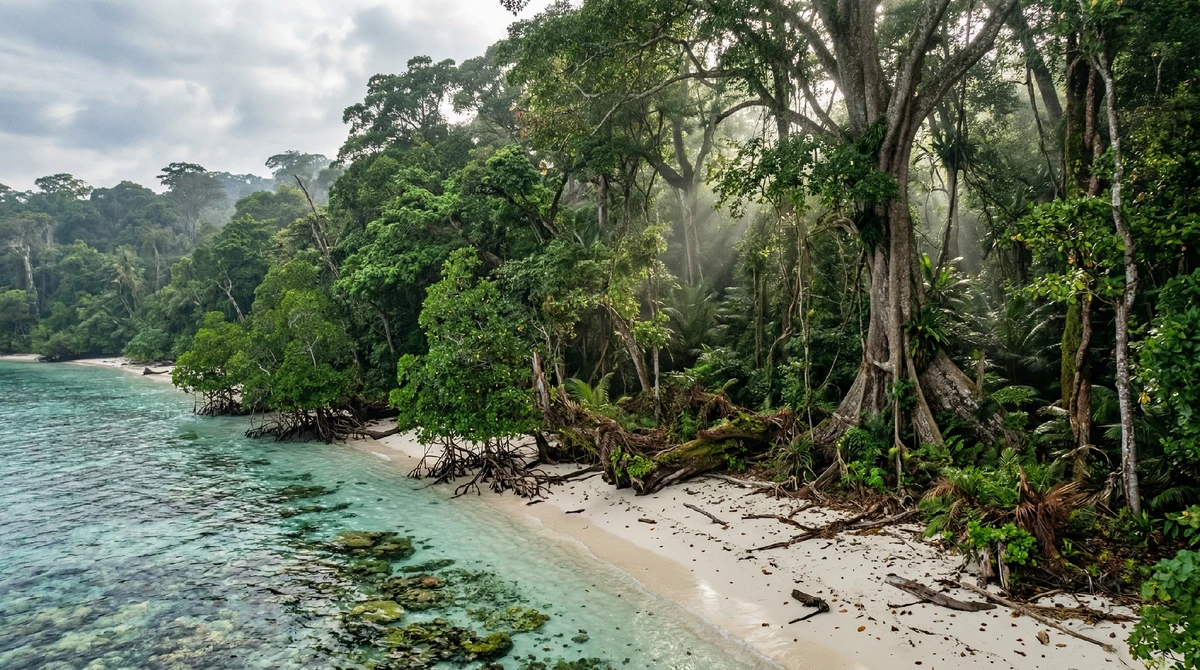
His expedition achieved exactly one thing: after it, the Sentinelese began shooting without warning.
While previously the Sentinelese had rarely attacked and tried to disappear, after the violent contacts of the 19th century, and especially after the traumatic experience with the colonizers, the Sentinelese began to firmly reject any approach by outsiders.
The ship became a weapons factory
In 1867, the Indian merchant ship Nineveh ran aground on the reefs of North Sentinel Island. There were 106 people on board—passengers and crew. When they reached shore, the Sentinelese attacked them with bows and arrows. The survivors fought back and were evacuated two days later by a British warship. 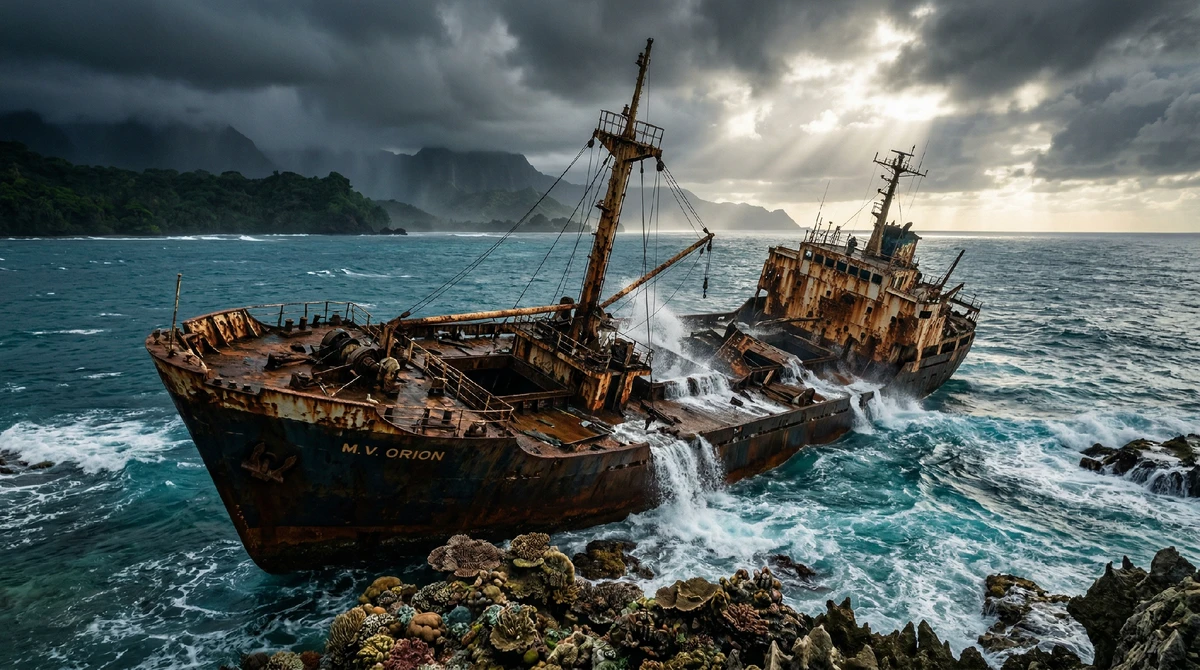
Witnesses recorded a detail that didn't fit the "Stone Age" image: the Sentinelese arrows were already tipped with iron. Where did the iron come from? The tribe did not mine ore and had no knowledge of metallurgy.
The only hypothesis is that the locals took metal from ships that regularly crashed on the reefs and reforged it.
History repeated itself in 1981. The Panamanian cargo ship Primrose ran aground off the island's coast during a monsoon storm.
Armed men with spears and bows emerged from the jungle and attacked the ship. The crew locked themselves in the steel hull. The captain sent out an urgent radio request for an airdrop: "savages with spears" were on the island. An Indian naval helicopter evacuated the crew before any casualties were reported.
The Primrose remained adrift on the reefs. It's still there—its rusted hull is clearly visible on satellite images in the southern part of the island, at coordinates approximately 11.56° N, 92.27° E. 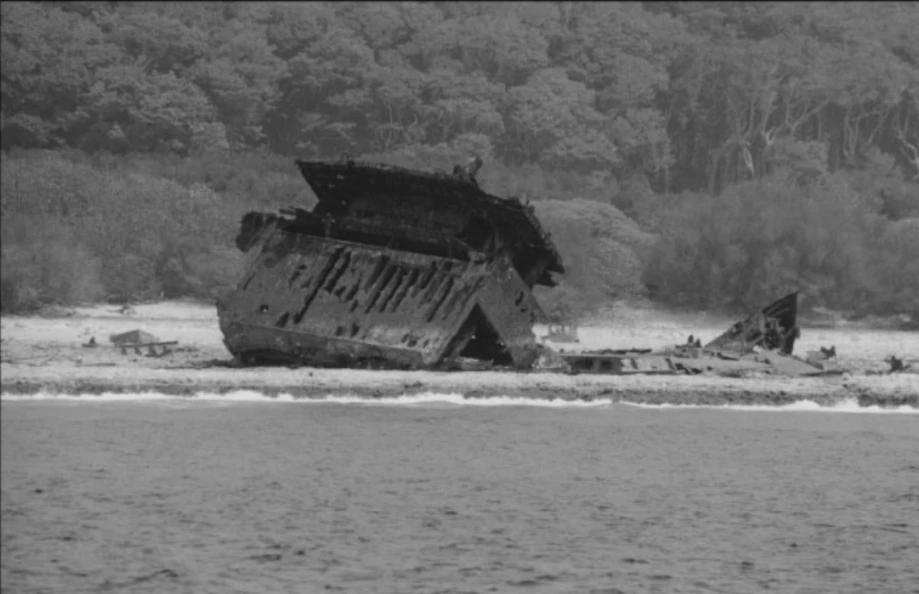
Anthropologists have been trying to establish contact for 20 years…
The Sentinelese have been trying to establish distance for 20,000 years.
First Peaceful Contact
The most astonishing episode in the history of the Sentinelese's relationship with the outside world occurred on January 4, 1991.
Anthropologist Madhumala Chattopadhyay landed on the island as part of an expedition led by Triloknath Pandit, a researcher who had dedicated over twenty years of his life to contact with the Sentinelese. And then something incredible happened: the Sentinelese approached the boat unarmed. 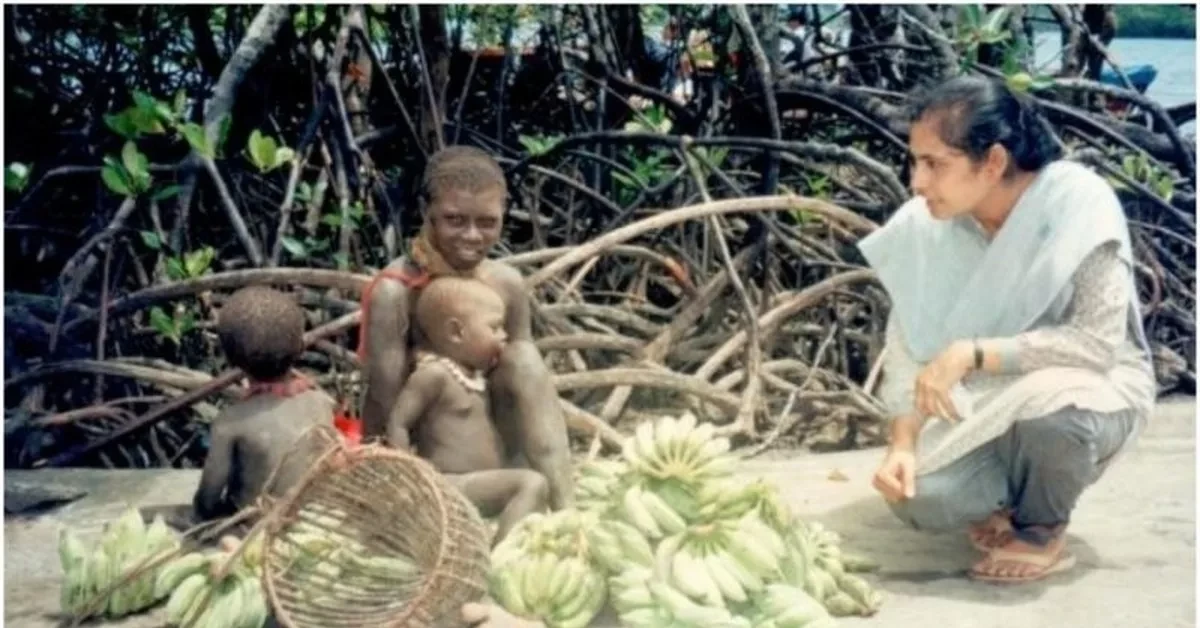
The researchers threw coconuts and fruit into the water. The Sentinelese picked them up, held them aloft—an obvious gesture of gratitude—and immediately broke them and ate them right there in the water, showing no signs of fear of poisoning. Several young men approached the boat. There was direct skin-to-skin contact—the first time in recorded history. According to Chattopadhyay's recollection, one of the Sentinelese men gently touched her hair and smiled.
The children kept a slight distance, but showed no fear. They imitated the adults: reaching for fruit and eyeing the strangers with undisguised curiosity. The presence of a woman on the expedition, according to anthropologists, played a key role: when one of the Sentinelese men finally aimed an arrow at the visitors, a woman from his group immediately pushed his bow down. 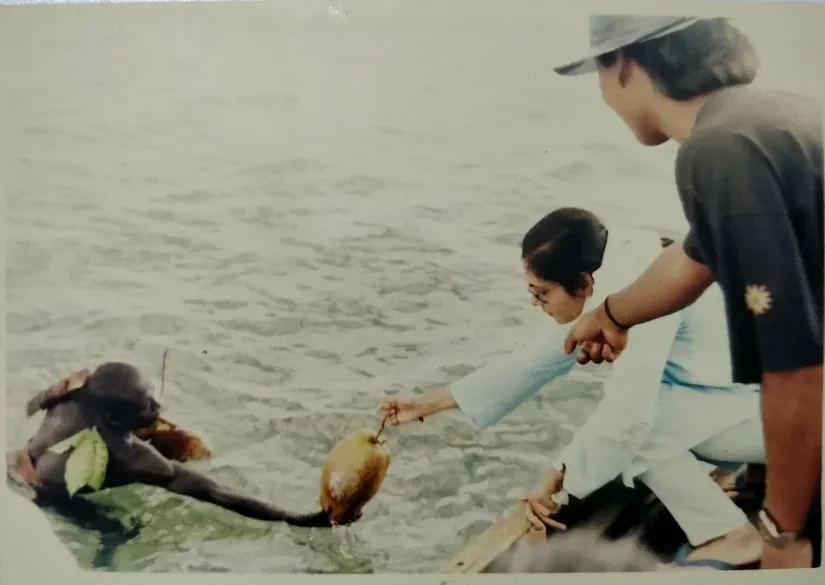
There was disagreement within the community about whether to trust the visitors.
Contact continued intermittently until 1997. Gradually, the Sentinelese became less tense and accepted rice, fruit, and tools. But in 1997, the Indian government decided to end all official expeditions. 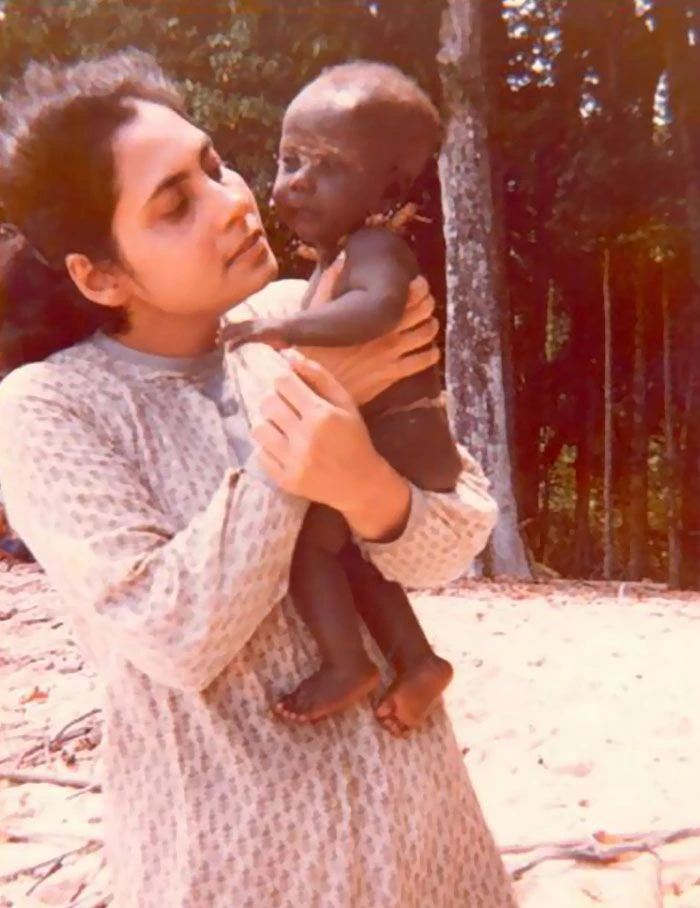
The logic was simple: peaceful contact proved that these were not "cannibalistic savages," but rather a completely rational people. Further contact carried the risk of epidemics and irreversible cultural destruction—precisely what had wiped out neighboring tribes. The best thing to do for the Sentinelese was to leave them alone.
However, the Indian expedition proved an exception. Further experiments invariably provoked aggression.
Perhaps it's a matter of appearance, skin color? Indian anthropologists are dark-skinned. But the Sentinelese attack whites. Perhaps they have a story going back to ancient times, of how whites took those four Sentinelese, returned two, and infected the entire tribe with an unknown disease.
The arrow hit the Bible directly 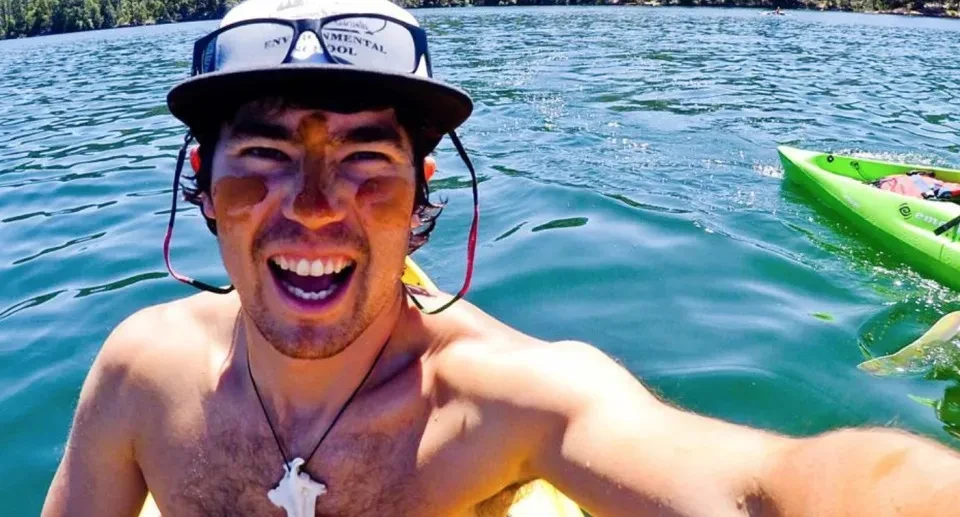
In November 2018, 26-year-old American John Allen Chau died on the island. A missionary with a degree in sports medicine, he had spent several years preparing for an expedition with the sole purpose of converting the Sentinelese to Christianity. He took survival courses, studied linguistics and anthropology, and received thirteen vaccinations. In his journal, he even planned for the possibility of martyrdom.
On November 14, Chau kayaked to shore. During their first approach, the young Sentinelese fired an arrow—it pierced the waterproof Bible Chau was holding.
He went ashore. The fishermen who had hired him retreated behind the reef. The next day, the fishermen saw the body.
Pandit, the anthropologist, commented on the incident without sentimentality:
"He should have been wary when he was shot. He should have been patient and returned. He did neither."
How They Live
Their diet consists primarily of hunting, fishing, and gathering. Wild boar, fish, crabs, mollusks, coconuts, wild fruits, and tubers. A 1967 expedition discovered burnt shells in the settlements—evidence of the systematic harvesting of marine invertebrates. 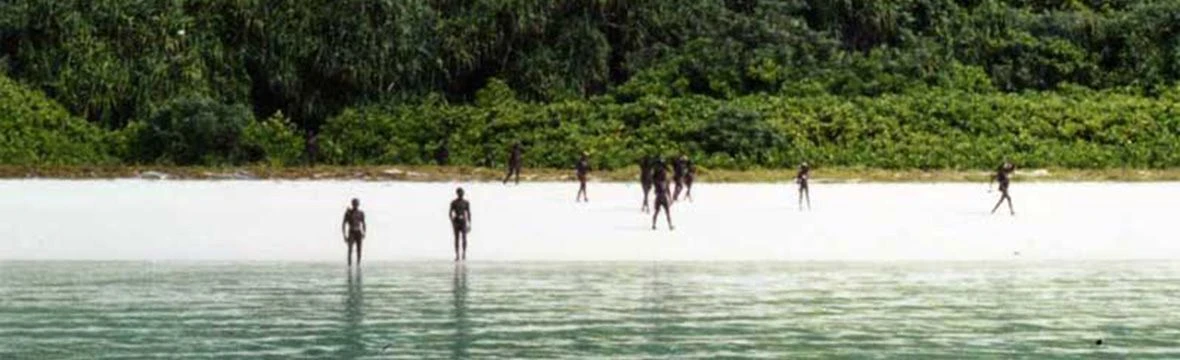
Fish are caught with specialized arrows with multi-pronged tips—these tips don't cut through the flesh, but rather hold the fish.
The hunters shoot with remarkable accuracy: hits have been documented at ranges of 80–100 meters. They likely practice a lot.
The dwellings are huts on four poles, one and a half to two meters high, with palm roofs sloping at a 45-degree angle. This angle was chosen deliberately—it's optimal for deflecting tropical downpours. There are no walls, or almost none: in the tropics, ventilation is more important than insulation. Inside were clay pots, arrowheads, bone fishhooks, and woven fiber for jewelry. The expedition found no drawings or symbols on the walls.
The Sentinelese keep fire in clay vessels filled with smoldering coals—portable heat storage devices that eliminate the need to relight the fire each time. Ornaments include threads of plant fiber around the waist, neck, and head; men also wear a short dagger on their belt. The metal arrowheads, forged from scrap ship hulls, are noticeably larger and heavier than those of neighboring tribes: the Sentinelese didn't simply copy others—they optimized them for their own purposes. 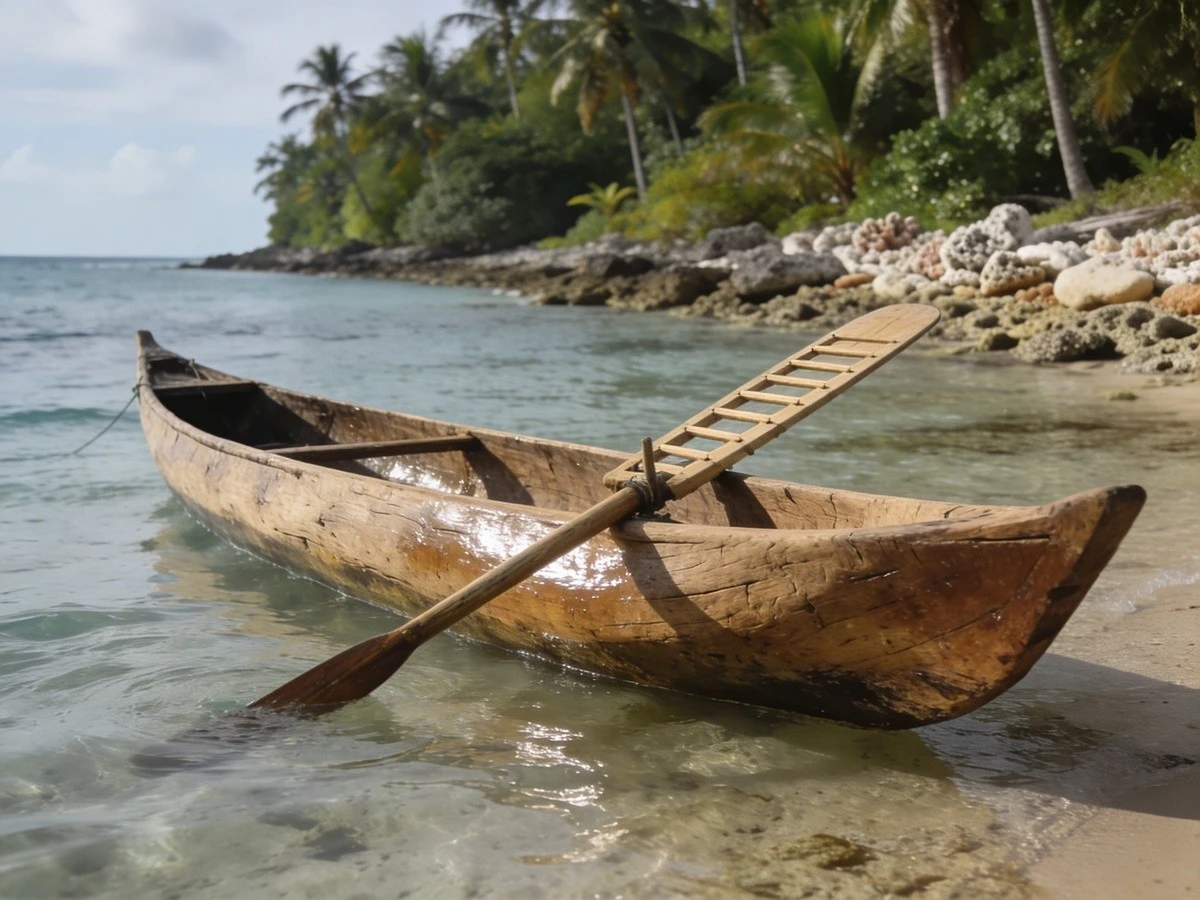
The boats are narrow, outrigger canoes designed for shallow water, steered by poles.
The tsunami that left them untouched
On December 26, 2004, an undersea earthquake off the coast of Sumatra generated a tsunami that killed approximately 225,000 people across the Indian Ocean. The Andaman Islands were severely damaged. North Sentinel Island was directly in the wave's path.
When an Indian Coast Guard helicopter flew over the island a few days later to assess the damage and determine if assistance was needed, the pilot was shot with an arrow from the shore. The whole world saw the photo: a Sentinelese man with a bow looking up at the sky. It wasn't anger—it was a message: "We're alive. Go away." 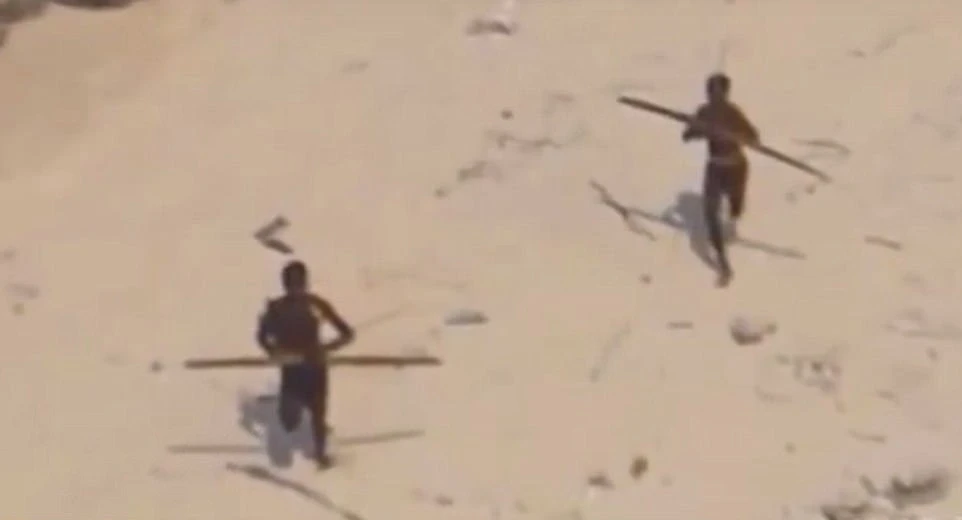
The Sentinelese survived without a single documented casualty. How? They probably know how to read the sea. The rapid receding of the waters before a tsunami is a signal that lives in their cultural memory for generations.
The neighboring Jarawa tribe also recognized the danger early and fled to high ground. Knowledge accumulated over thousands of years of observations proved more effective than the early warning systems that failed in many regions that day.
The tsunami changed the island's topography: tectonic uplift raised the seabed by approximately one and a half meters, exposing reefs and destroying shallow lagoons—the island's primary fishing grounds.
The most accurate thing that can be said about the Sentinelese is that they are the only people on the planet who have fully exercised their right to self-determination. Without constitutions, declarations, or international tribunals. Simply with a bow and arrow.
Indian coast guard patrol vessels continue to patrol the island. Not to keep the Sentinelese isolated, but to ensure that isolation is not violated.
The most astonishing thing:
In a world where everyone wants to be heard…
These are the only people who have perfectly configured the "do not disturb" mode.