How the Cubitt Staircase—the ancestor of modern exercise machines—appeared in a 19th-century prison (8 photos)
Can't explain your aversion to exercise? Perhaps you experienced fitness torture in past lives! In the late 19th century, a device appeared in Victorian prisons that became a true punishment for inmates. They were forced to walk to nowhere while simultaneously contributing to society. 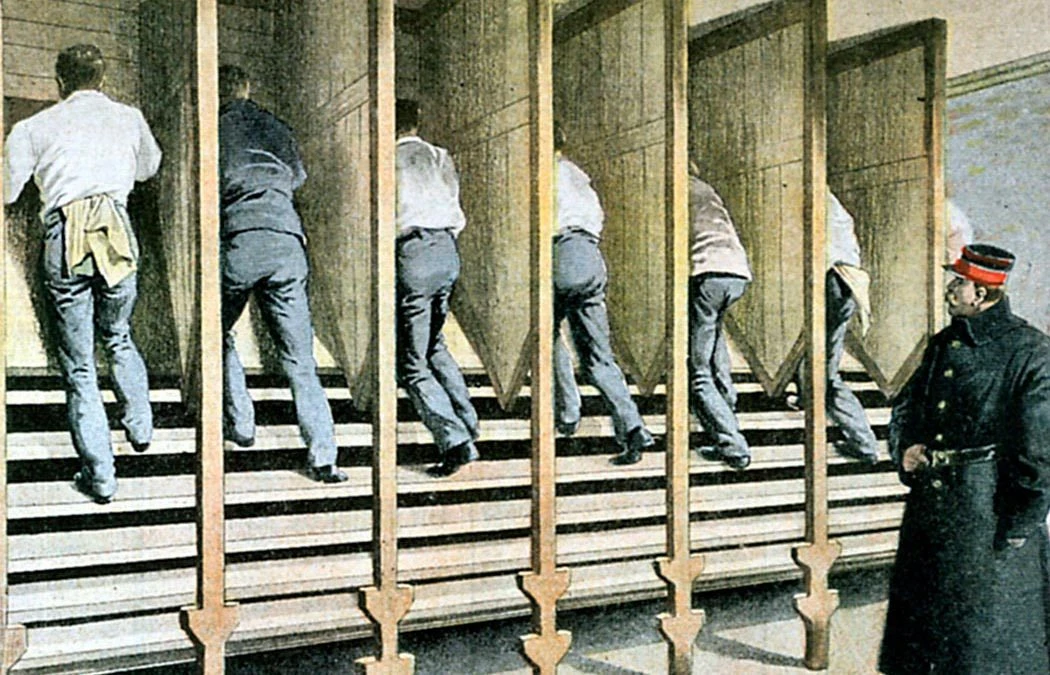
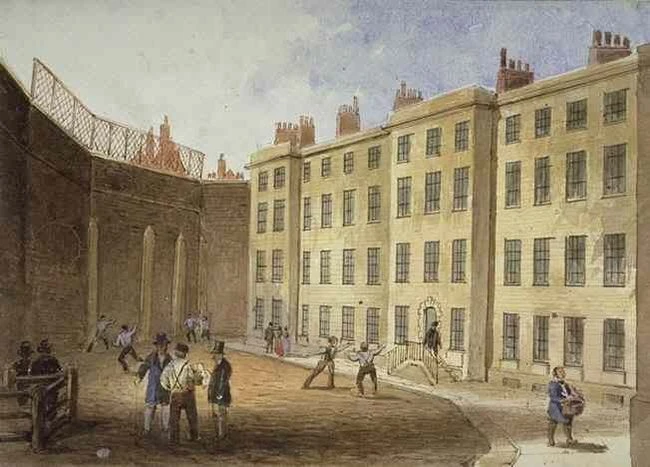
A 19th-century prison on Fleet Street in London. It looks more like a cheap sanatorium.
One warm, sunny day in 1818, a little-known and not yet very successful English inventor, William Cubitt, had the pleasure of visiting the prison in the town of Bury St. Edmunds. What exactly he did there is unknown, but he did manage to observe the behavior of the prisoners there in their natural habitat. 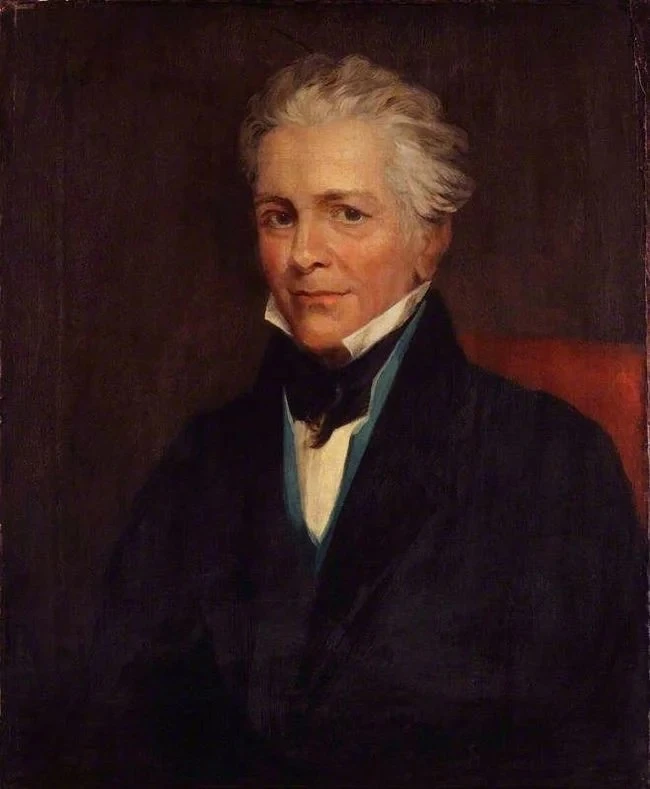
Sir William Cubitt (October 9, 1785 – October 13, 1861)
The Victorian gentleman was shocked and outraged by the conditions that reigned here. Delinquents, criminals, and (the most disgusting of all) tax evaders strolled leisurely through the prison and generally looked quite cheerful. They were relaxing here! 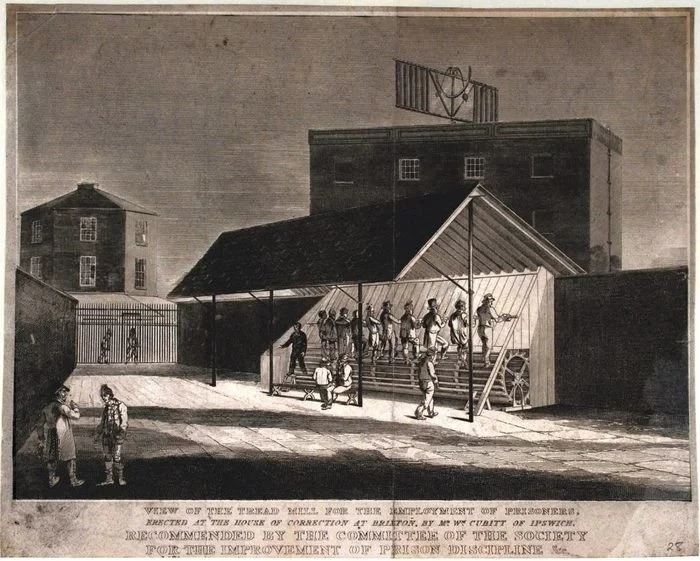
William quickly corrected this misunderstanding and, in that same year of 1818, provided several British prisons with his most famous invention, the "step mill." We now know his invention as the "treadmill" (or treadwheel), but back then it was a slightly different device. 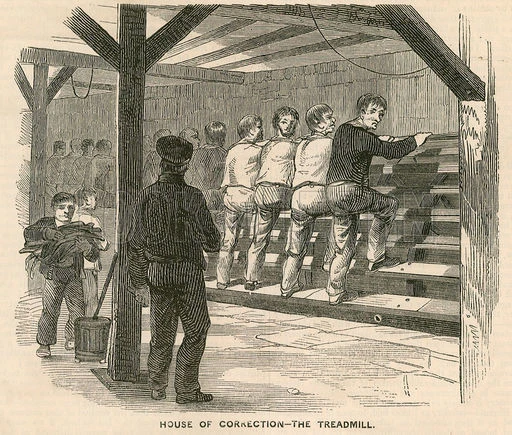
No, Mr. Cubitt had no intention of torturing and tormenting the "inmates." Like any enlightened gentleman, he preached reform through work: he invented the treadmill for the purpose of, for example, grinding grain, never considering that this machine could be used as a means of punishment. But the road is paved with good intentions, and not the running one, of course. 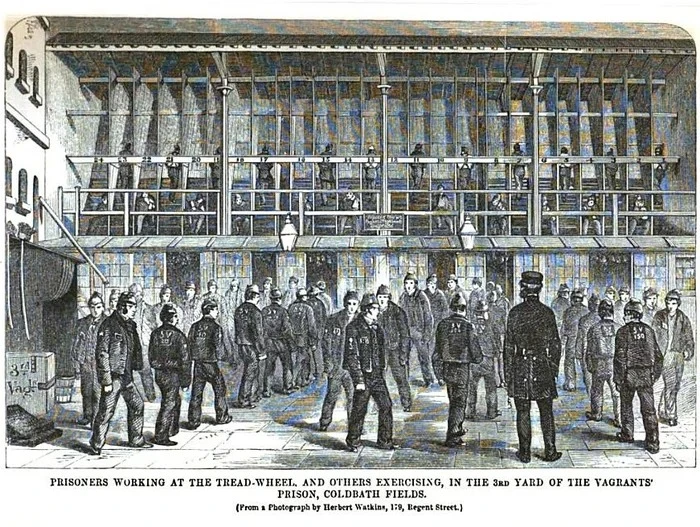
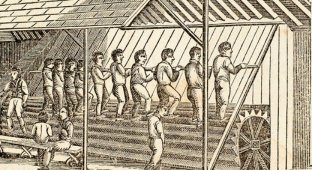
The design was supposed to transform lazybones from prisons living off the necks of honest taxpayers into useful members of British society. The plan was to correct misguided minds and vicious hearts using a two-meter wheel with 24 paddles acting as steps. A group of prisoners would rotate it, stepping in lockstep up an endless imaginary hill.
At first, the Cubitt Stepper was used only as a punishment for disobedient convicts. A convict was required to "climb" 1,000-1,500 meters of stairs. It was more exhausting than working in a mine. 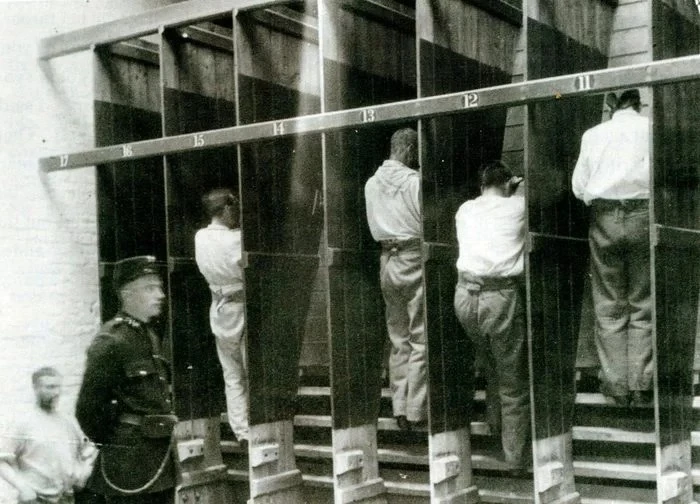
Within a couple of years, 40 prisons in Britain were equipped with Cubitt torture devices. How many of these existed worldwide is unknown, but they certainly existed in colonies like Jamaica.
Over time, the expression "dancing on a stepping mill" emerged, meaning serving a sentence in a penal servitude camp. The Encyclopedia Britannica describes the typical standard as 16,630 feet (5,069 meters, more than half the height of Everest), which had to be "walked" in 6-10 hours. Given that the convicts were given almost no rest, the work was hellish and incredibly grueling. 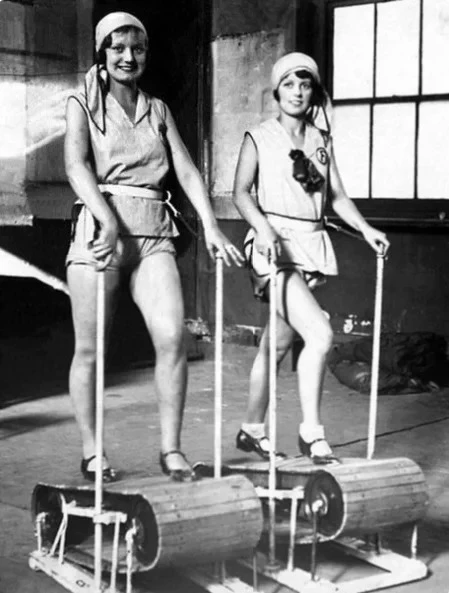
One of those who "danced" on the "step mill" was the famous writer Oscar Wilde. He spent half a year of his two years in prison daily "climbing" stairs leading to nowhere. However, in 1902, the use of "step mills" was deemed a completely inhumane form of punishment for criminals and was abolished.
Just 11 years later, Claude Hagen's "training machine" was invented, an improved "endless staircase."