Personal photos of the Rolling Stones from the late 60s (11 photos)
Michael Cooper photographed the Rolling Stones from 1963 onward—not as a hired photographer, but as a close friend. He lived with Keith Richards and Anita Pallenberg and traveled with the band to Ireland, Morocco, and California. When Cooper died in 1973 at the age of 31, he left behind one of the most honest photo archives of the rock 'n' roll era. For Mick Jagger's 83rd birthday, we've pulled personal images from this archive from the late 1960s—a time of scandal, drugs, and great music. 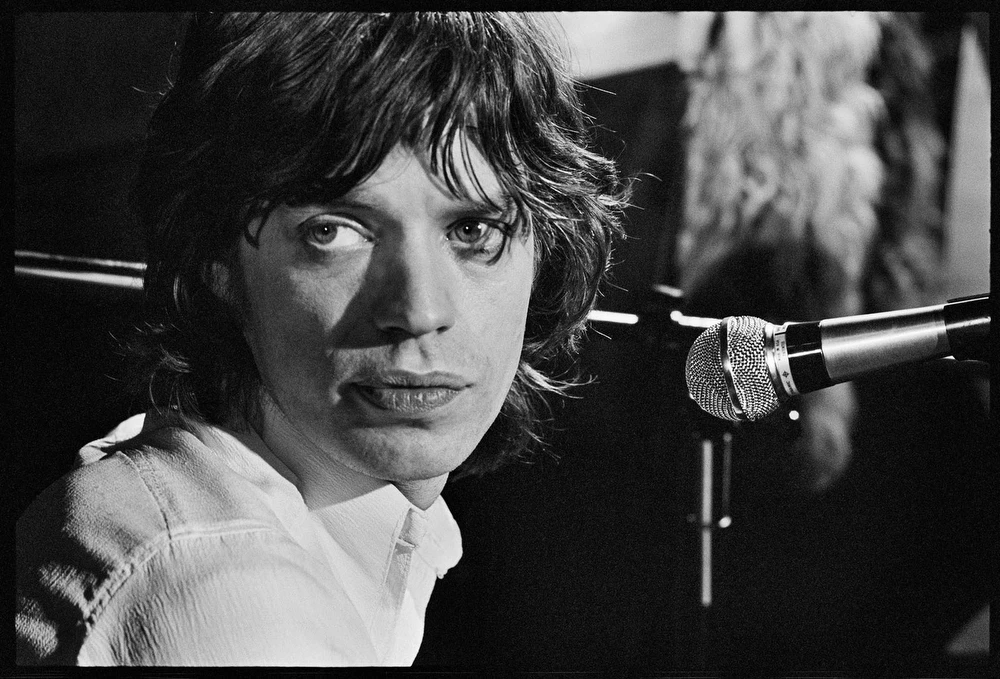
Rock 'n' Roll's Court Photographer
Michael Cooper was born in 1941. In 1964, he met London art dealer Robert Fraser—and through him, he found himself at the very center of British cultural life in the 1960s. This brought Cooper into contact with The Rolling Stones, The Beatles, Eric Clapton, and Andy Warhol. But his closest association with the Stones was with Keith Richards, and especially with him, with whom he lived for a time.
Keith Richards recalled that Cooper had a camera sticking out of his chest—as if he were a mutant with a lens instead of a heart. It was this inseparability from the camera that made his photographs so vivid: the people in the frame simply forgot they were being photographed. 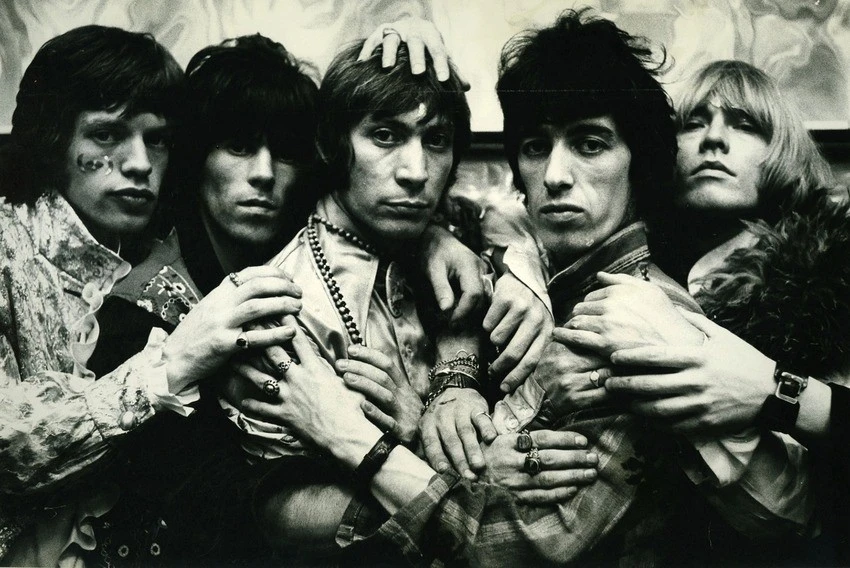
The Rolling Stones, 1967—the year of drug arrests and the release of the album Their Satanic Majesties Request. Cooper also shot the cover.
In 1967, Cooper shot the cover of The Rolling Stones' album Their Satanic Majesties Request—a three-dimensional lenticular photograph for which the band flew to New York specifically. That same summer, he photographed the session for the Beatles' Sgt. Pepper's Lonely Hearts Club Band. Two of the most famous rock albums of 1967 were released with covers by the same person.
1967: A Year of Arrests and Psychedelia
In February 1967, police raided a party at Keith Richards's Redlands country house. A search, an arrest, and a trial. Mick Jagger and Richards spent several days in custody pending appeal. Brian Jones was hit separately. The album Their Satanic Majesties Request was recorded between court hearings: often only two or three of the five musicians showed up to the studio, the rest busy with legal proceedings. 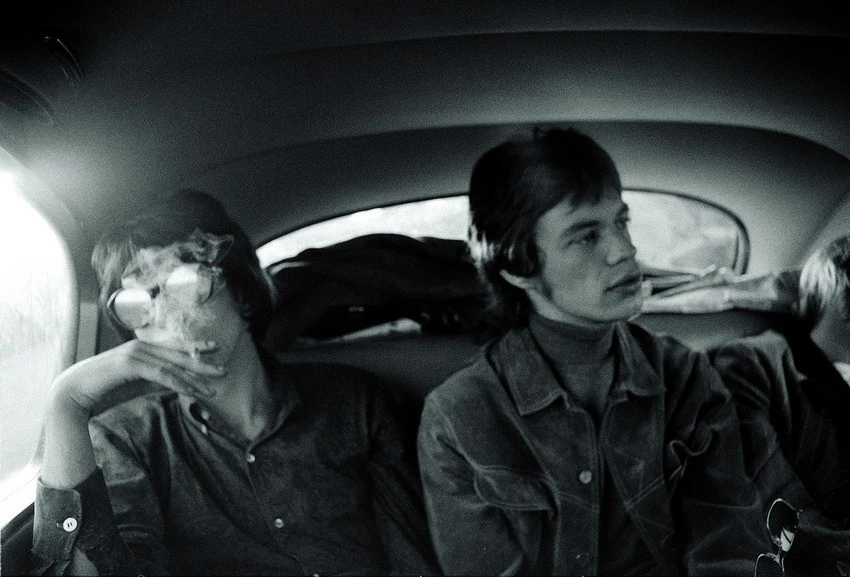
The Glimmer Twins – Jagger and Richards – in the back of a limousine, London, 1967.
The Glimmer Twins – "The Glimmer Twins" – was the pseudonym under which Jagger and Richards signed their joint albums. Cooper photographed them not at concerts or press conferences, but like this: in a car, in a hallway, backstage. Where they didn't need to play any role for the audience.
Anita, Brian, and Keith 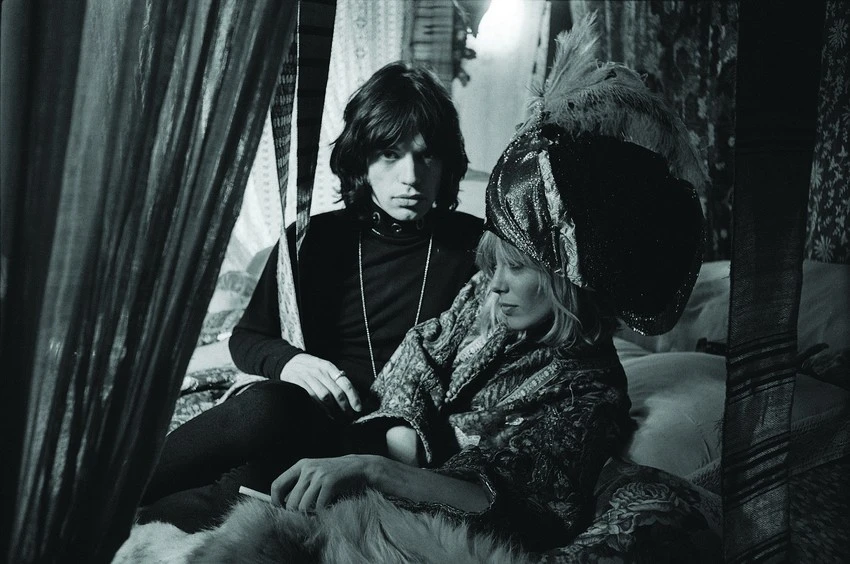
Mick Jagger and Anita Pallenberg, 1968. The Italian-German actress was considered the muse of the entire band.
Anita Pallenberg, an Italian-German actress, model, and style icon, met the Rolling Stones in 1965 in Munich. She was initially with Brian Jones. In 1967, after Jones hit her during a trip to Morocco, Keith Richards took her to London—and they remained together until 1980. Pallenberg had three children with Richards: son Marlon (1969), daughter Angela (1972), and son Tara (1976), who died in infancy.
Cooper lived with Richards and Pallenberg for a time—that's why his photographs have such a homey feel. There's no posing. There's life.
Stonehenge, cloaks, and the fashion of 1967 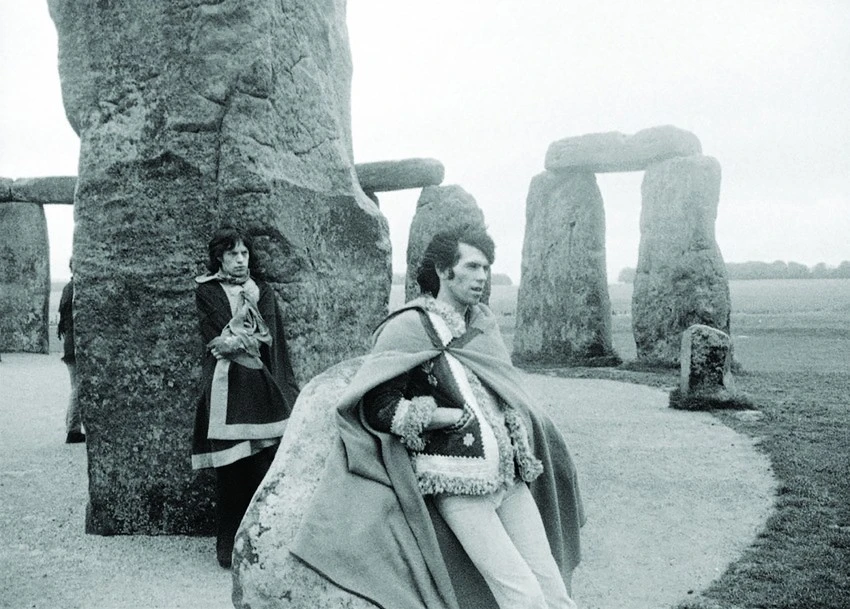
Keith Richards and Mick Jagger at Stonehenge, 1967. Long hooded cloaks were a serious fashion statement of the time.
The photo shows Keith and Mick in long cloaks near the stones of Stonehenge. In 1967, such an outfit was quite common: the hippie era made it part of everyday wardrobe, not a fancy dress costume. Cooper traveled everywhere with the band, including to Ireland for acid trips and to the California desert to look for UFOs. His photos aren't photo shoots, but rather travelogues in pictures.
California: Gram Parsons and the Joshua Tree Desert 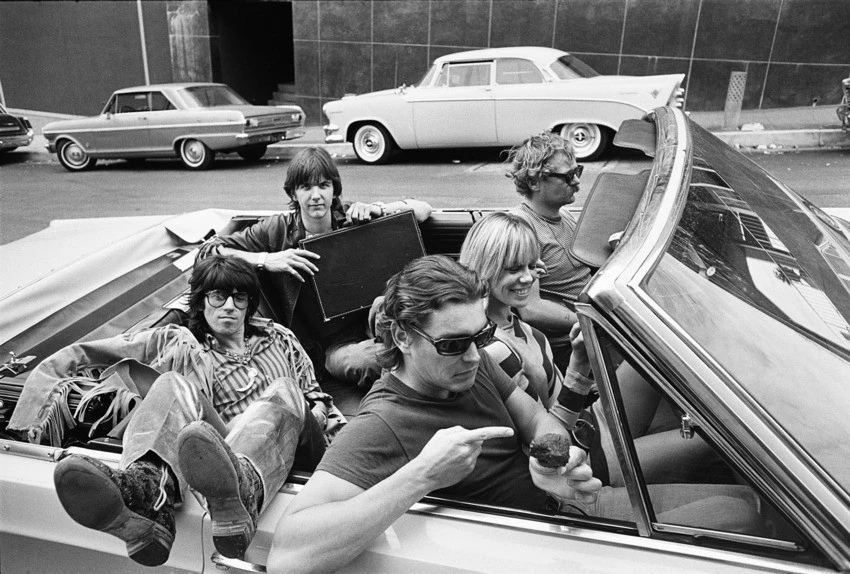
Keith Richards and Gram Parsons in Los Angeles, 1969 – at the height of their close friendship.
Gram Parsons is an American musician, often called the father of country rock. They met Richards in London in 1968. Parsons was on tour with The Byrds at the time and refused to go with them to South Africa because of apartheid, so he simply stayed with Keith. They spent hours listening to country records. This influenced the Stones' sound, as heard in "Dead Flowers," "Sweet Virginia," and "Wild Horses." 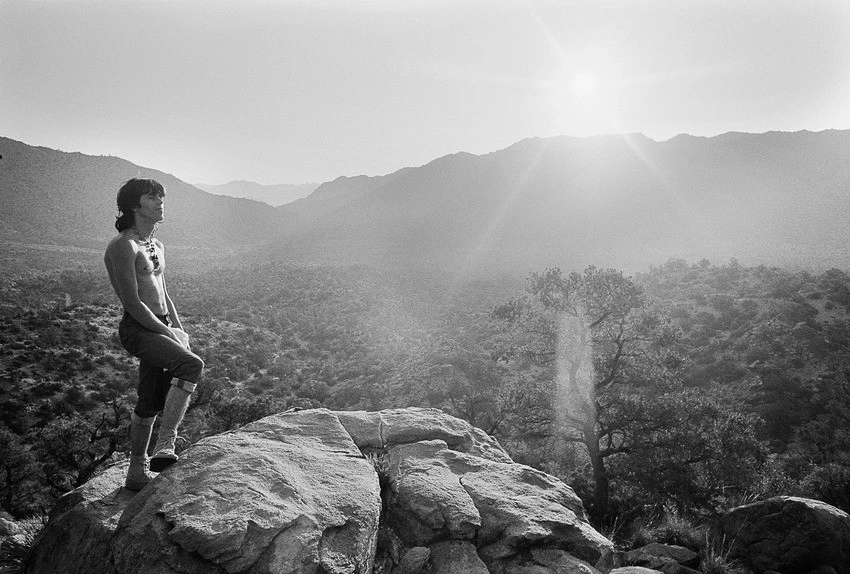
Keith Richards in Joshua Tree National Park, California, 1969.
In the summer of 1969, Richards, Parsons, and Pallenberg came to California together—the Stones were recording the album Let It Bleed. Parsons loved the Joshua Tree desert: he came there to look for UFOs, or simply to sit and listen to the silence. In September 1973, he died there of a morphine and alcohol overdose at the age of 26. His friends stole his body from the airport and cremated it right in the desert near Cap Rock—just as Graham had wished. 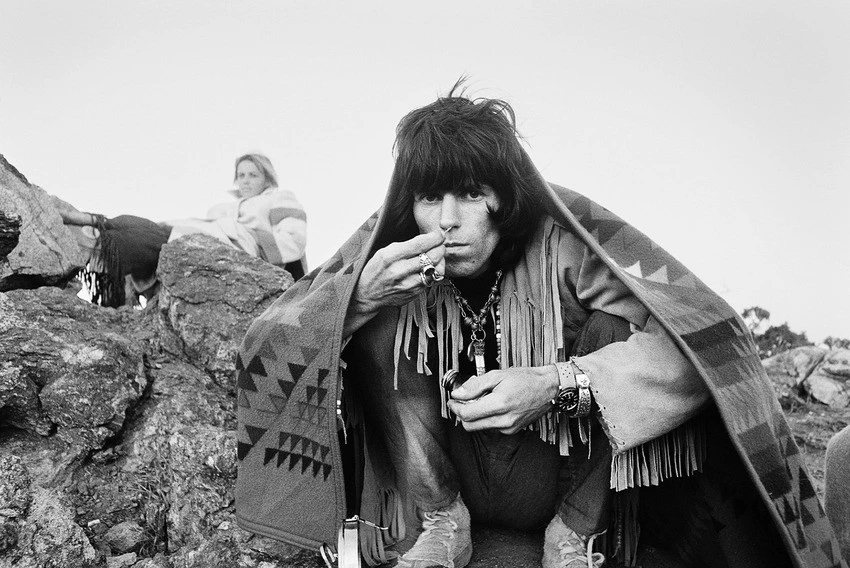
Keith Richards in California, 1969. On the same trip were Anita Pallenberg and Gram Parsons.
Mick Jagger in 1967: The Face of an Era 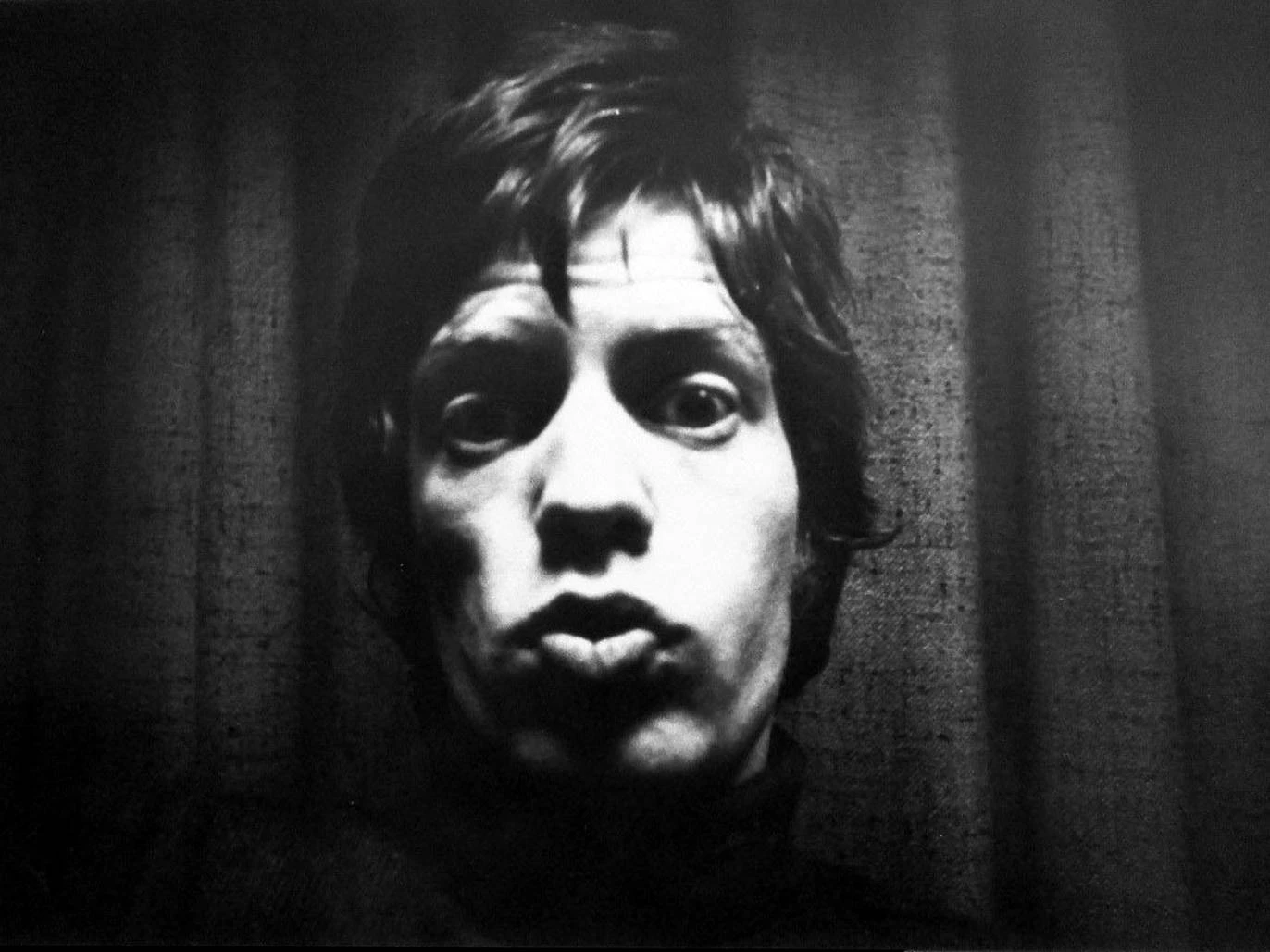
Mick Jagger, 1967 – Arrest, Trial, and One of the Strangest Albums in the Band's History.
1967 was a trying year for Jagger. An arrest after a raid in Redlands, several days in Brixton Prison – and the recording of Their Satanic Majesties Request. Jagger wrote some of the lyrics to the album while serving time in Lewes Prison. The album was released in December 1967, reaching number three in the UK charts and number two in the US, but was panned by critics as an attempt to copy the Beatles. Jagger himself subsequently disowned him repeatedly.
Cooper captured him at this very moment – between the trial, the studio, and concerts. The photo doesn't show the star from the posters. It shows a young man, 24, who is experiencing everything at once.
Keith in Hyde Park and Brian's last photo 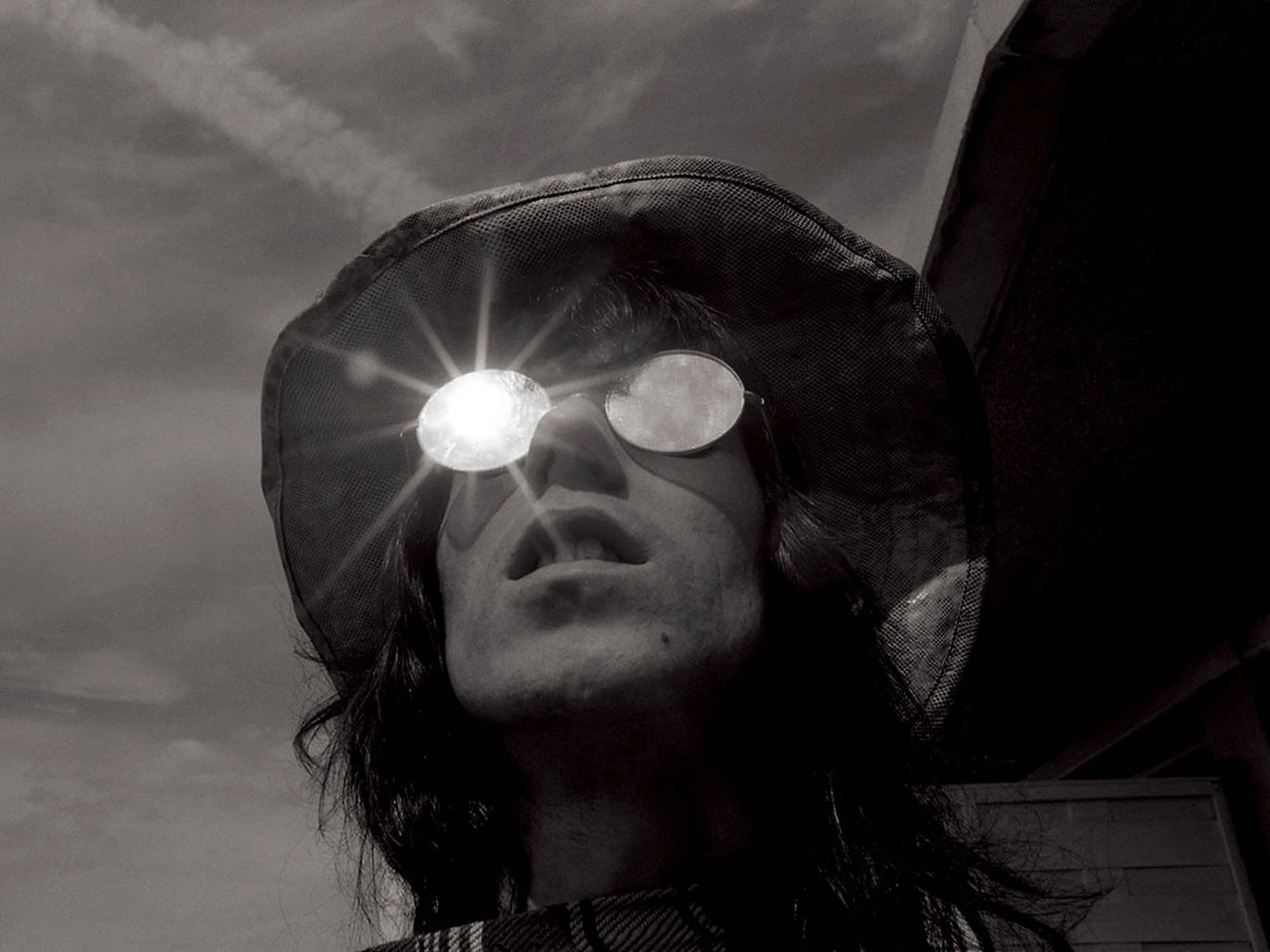
Keith Richards in Hyde Park, London, 1969 – shortly before a massive free concert.
On July 5, 1969, The Rolling Stones gave a free concert in Hyde Park – their first in over two years. Between 250,000 and 500,000 people attended. The concert was planned as the debut of new guitarist Mick Taylor, but Brian Jones died two days before. Mick Jagger appeared on stage in a white coat-dress and recited verses from Percy Bysshe Shelley's poem "Adonais" in memory of Jones. Several hundred white butterflies were then released into the crowd. 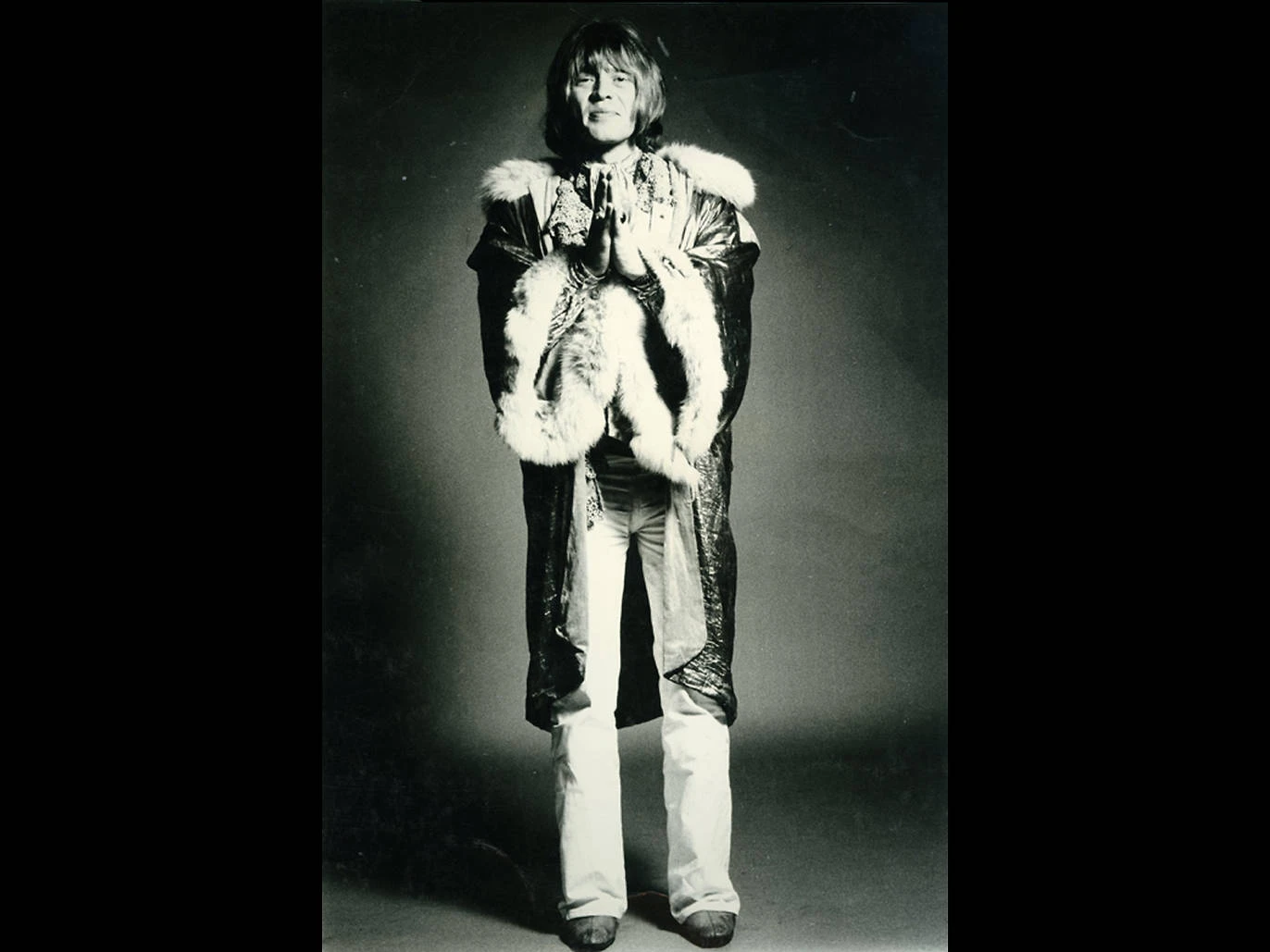
Brian Jones at Chelsea Manor Studios, London, 1969 – one of the last portraits of the band's founder.
Brian Jones founded the Rolling Stones in 1962. But by 1969, his role in the band had been reduced to a minimum: alcohol, drugs, and conflicts. In June 1969, he was fired. On the night of July 2–3, 1969, Jones drowned in the swimming pool at his country home, Cotchford Farm, in East Sussex. He was 27 years old. The official cause of death was "accident."
Michael Cooper outlived Jones by only four years. In 1973, he committed suicide after battling depression and heroin addiction. He was 31. After his death, his son Adam collected the entire archive and began organizing exhibitions. In 1990, the book Blinds & Shutters was published—over 600 photographs by Cooper and memoirs by 93 authors, including three Beatles and all the Stones.
"He had a good eye and got some great shots" – Mick Jagger on Michael Cooper