These edible fruits aren't often eaten even in the places where they grow, let alone tasted by us. But it's still interesting to know about them—you might find yourself in a place where they grow in abundance, try them, and boast about eating something most of the world's population has never tasted or even seen. 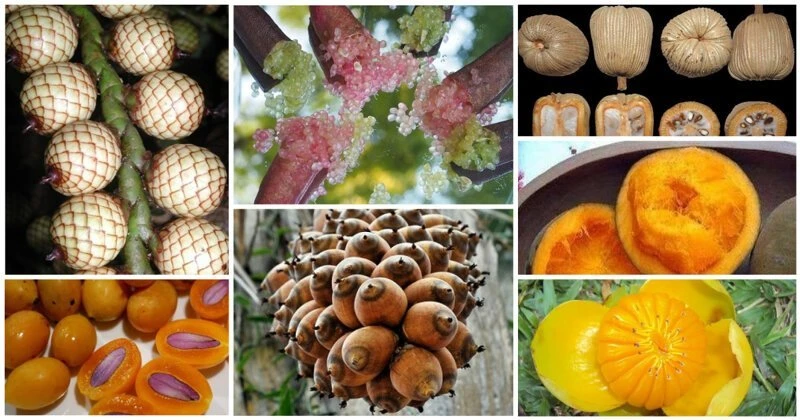
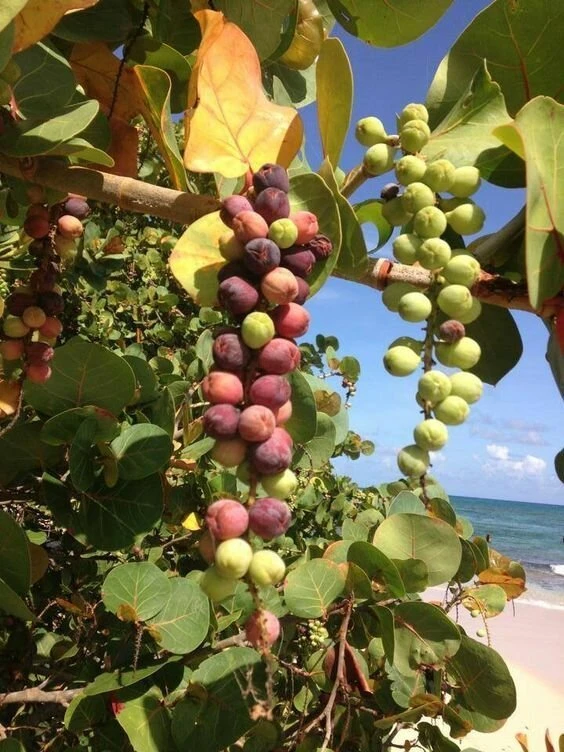
Coccoloba uvifera - Sea Grapes
This seaside ornamental plant is native to Florida, Mexico, Central America, western South America, and the Caribbean. Edible - The ripe, tart to sweet, purple-red fruits are edible raw and can also be made into jelly or wine. Each fruit contains a single hard seed. 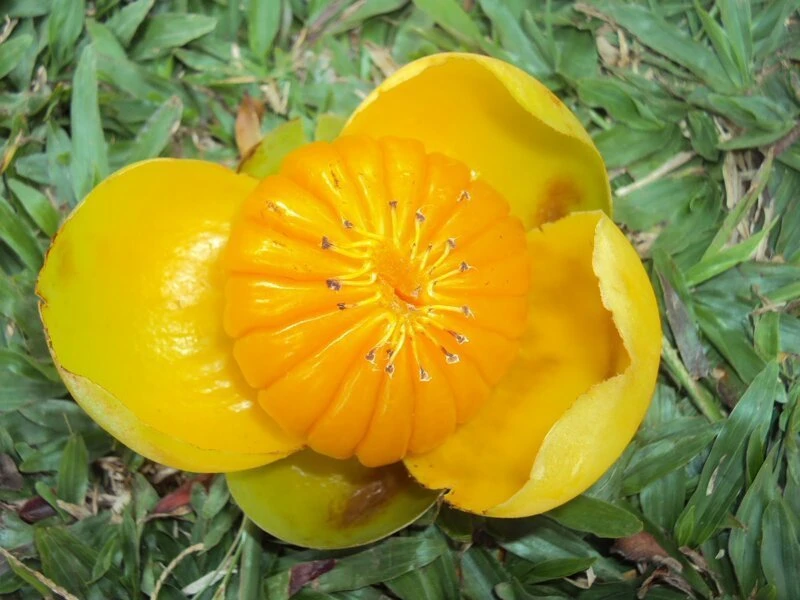
Dillenia serrata Dengen fruit
The plant grows in northeastern South Sulawesi, Central Sulawesi, and Indonesia. The fruit resembles an orange. The fruit tastes sour and is delicious when eaten with salt. 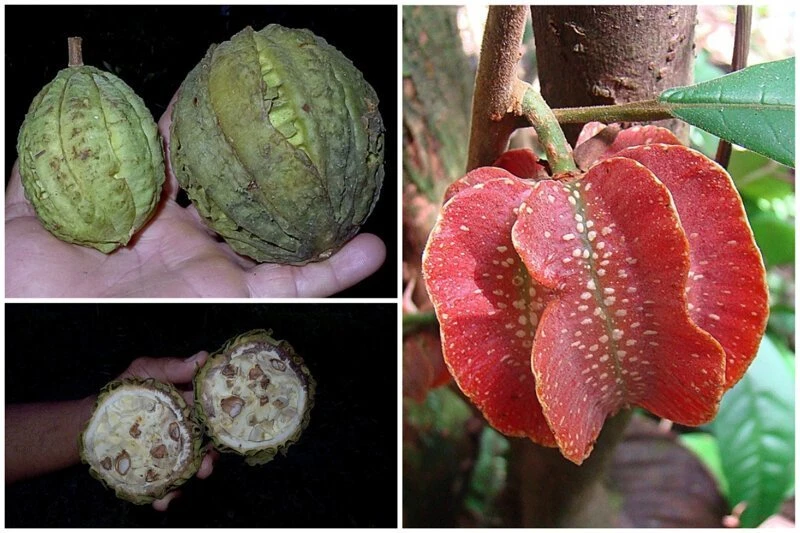
Carpotroche brasiliensis
Carpotroche brasiliensis is a genus of shrubs and trees in the family Achariaceae. The flesh is white, sweet, and slightly astringent. 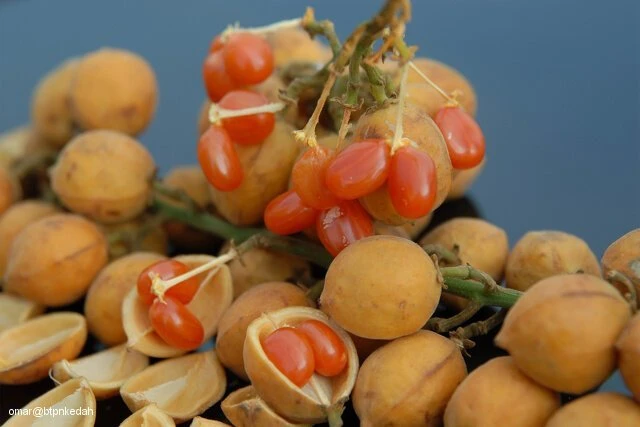
Baccaurea polyneura and Baccaurea hookeri (wiggler)
Origin: Sumatra, Kalimantan (Borneo), and Malaysia. The fruit capsule opens in a very unusual way: when you flick the capsule, it "explodes," revealing juicy red or white seeds. 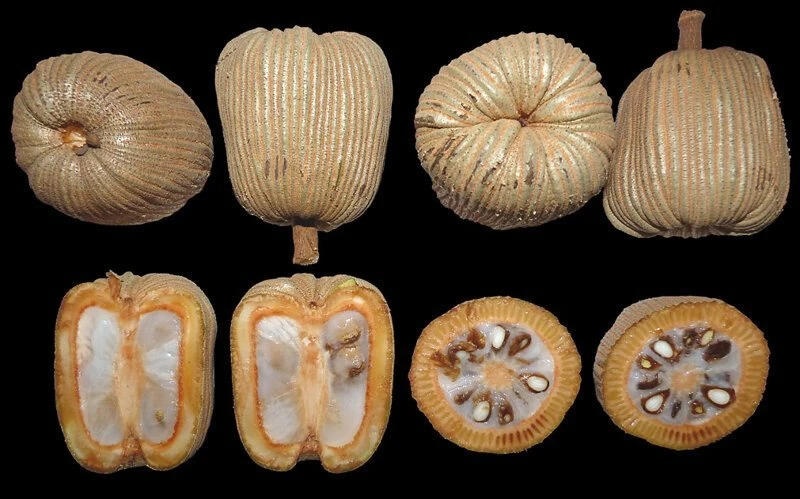
Moela-de-Mutum, Scientific name: Lacunaria jenmanii (Oliv.) Ducke
A medium-sized, dioecious fruit tree that can reach 15 meters in height at maturity. The berries are cylindrical; only the pulp around the seeds is edible. They have a juicy texture and a sweet yet tart flavor. 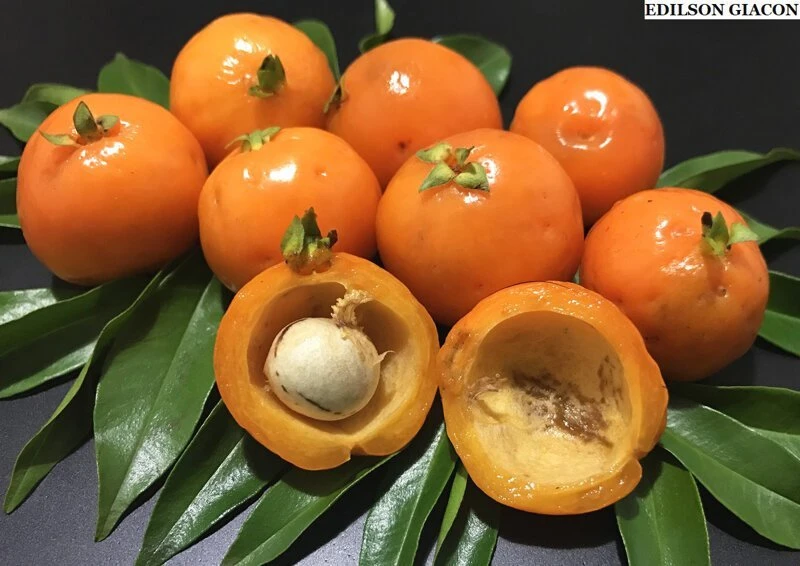
Ubaia Amarela
This ornamental shrub, no more than 3 meters tall, produces large quantities of delicious yellowish-orange fruits, slightly sweet and without acidity. It can be consumed in its natural form or as a soft drink. 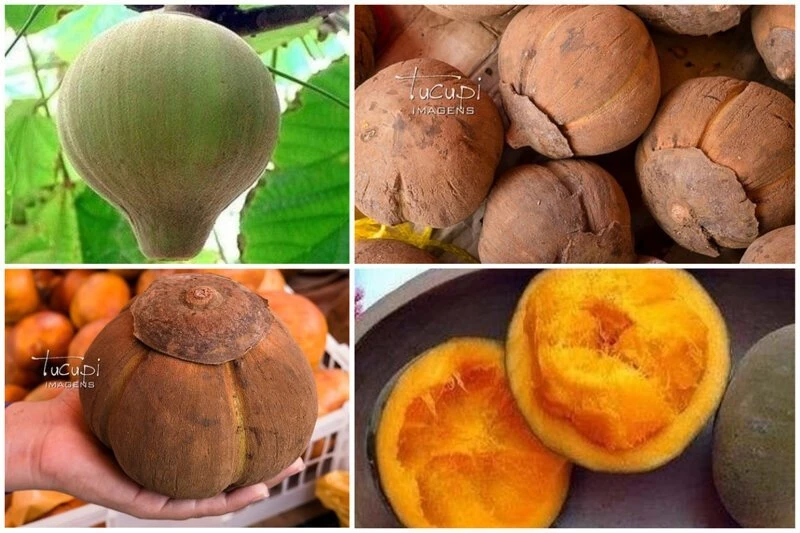
Sapota do Solimões
Sapota do Solimões, one of the most luxuriant plants in the Amazon, produces a large fruit with dark bark and yellow flesh. The fruit is firm, with yellow, juicy, and sweet flesh inside. 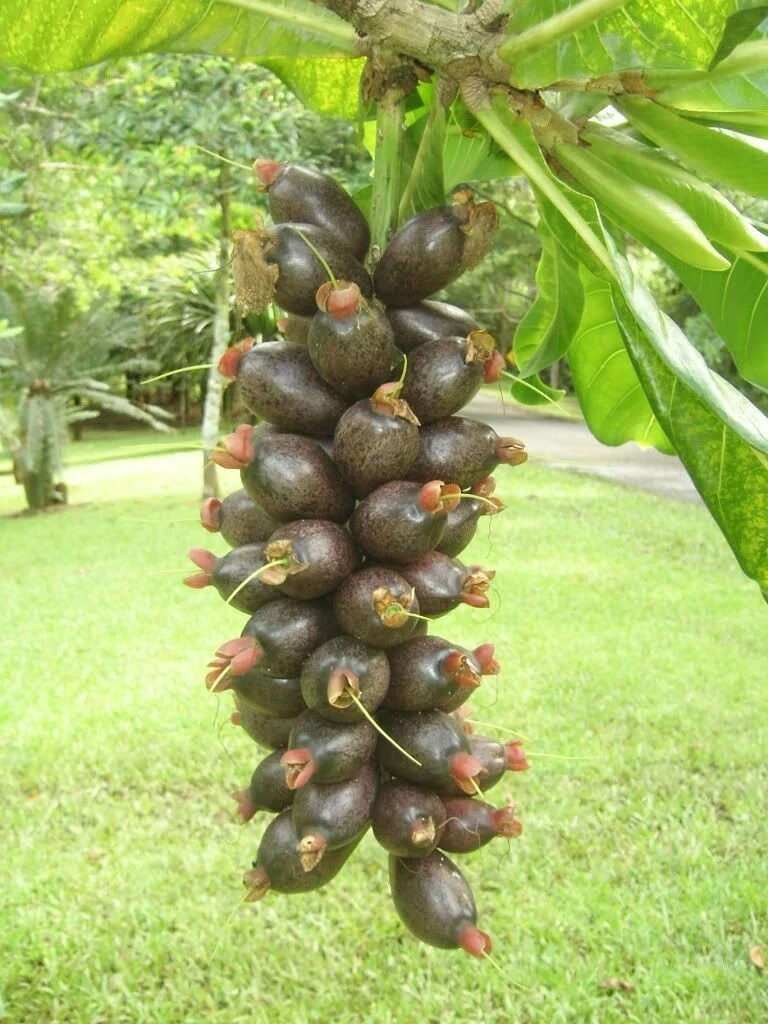
Barringtonia edulis
This is a large, low-growing fruiting tree found throughout Melanesia. Barringtonia edulis is cultivated in villages, gardens, and along trails and roads. The tree grows wild from fruits that have fallen to the ground or been dispersed by bats. Barringtonia edulis fruit is rare. It is mainly eaten raw or cooked; it is a good source of energy. 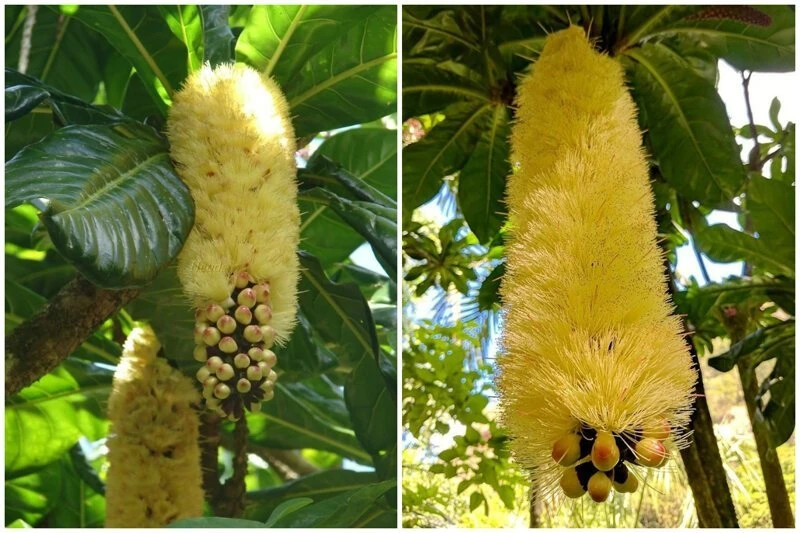
Look at its beautiful flowers. It blooms several times a year. It is also called the Yum-Yum Tree, the Tasty Tree, or the Heart Tree. 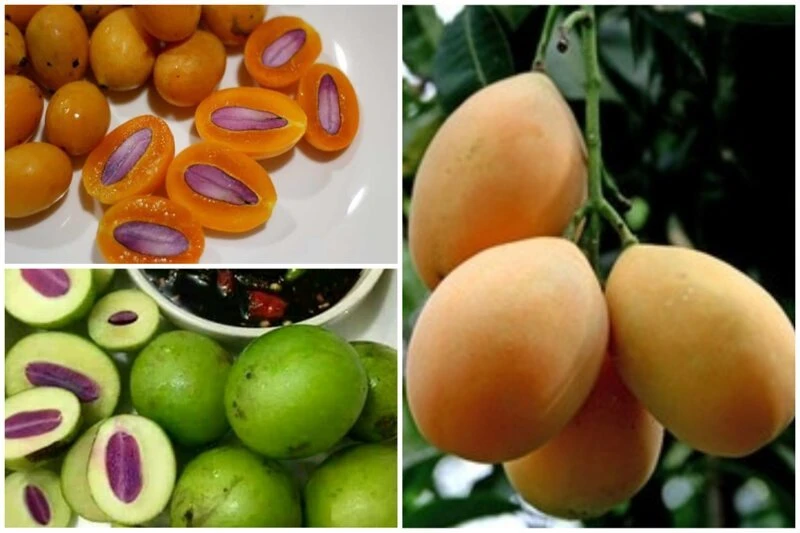
Bouea macrophylla, Gandaria, or Mariana Plum (Latin: Bouea macrophylla)
The Mariana Plum is an evergreen tree up to 25 m tall with leathery, dark green, lanceolate-elliptical leaves 13-45 cm long and 5-7 cm wide. The fruits are round or slightly elongated drupes 2-5 cm in diameter. Initially green, they turn yellow or orange when ripe. Unripe fruits contain a sticky milky juice. The taste of the pulp can range from sour to sweet. It has a slight turpentine smell. The fruit contains a single, large, smooth, reddish-brown seed with an edible kernel.
The seed kernels, although edible, have a bitter taste. The fruits are edible fresh and are also used to make compotes and marinades. 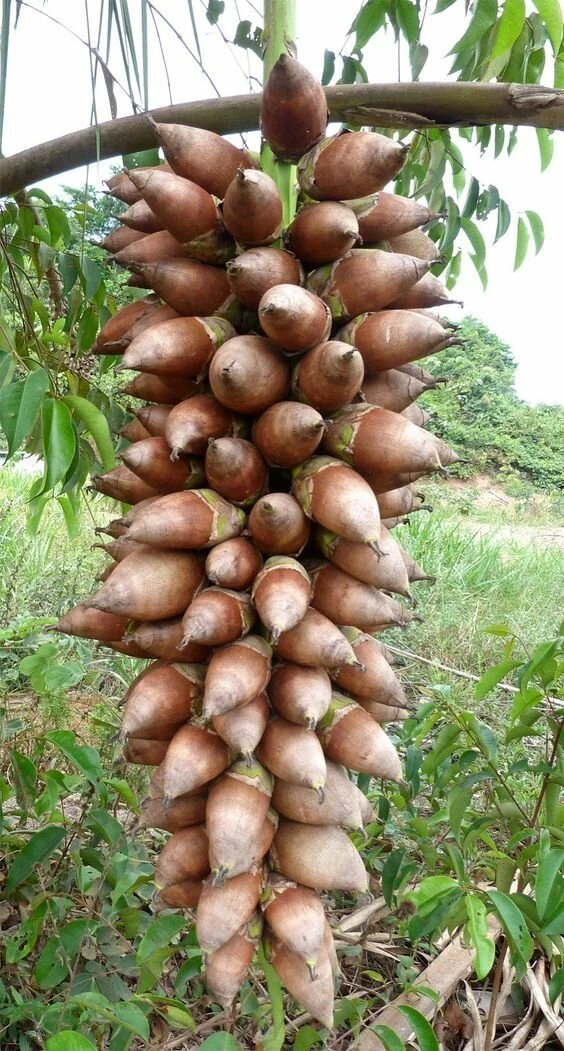
Babassu
Babassu is a palm tree closely related to the coconut. Almonds are very oily, white, dense, and abundant, and can be consumed in their natural form by humans or pets. However, they are also used to produce a highly beneficial oil, which is gaining a niche in the food and cosmetic industries. Oils extracted from almonds have great potential for use in biodiesel. 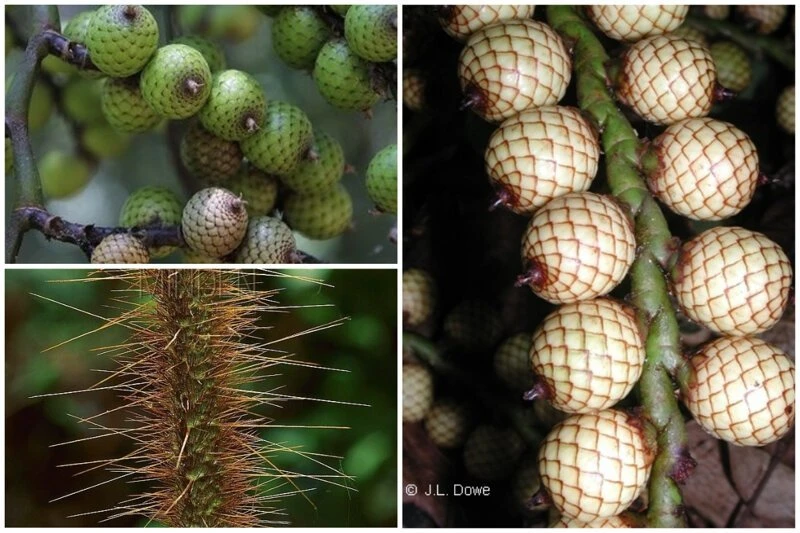
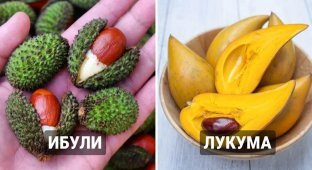
Yantok (Calamus manillensis)
Yantok is a vine native to Australia (a type of rattan) whose trunk is completely covered in needles. This exotic fruit was once found only in jungle areas, but is now grown on small plantations for commercial sale. It is one of the sweetest fruits in the world. 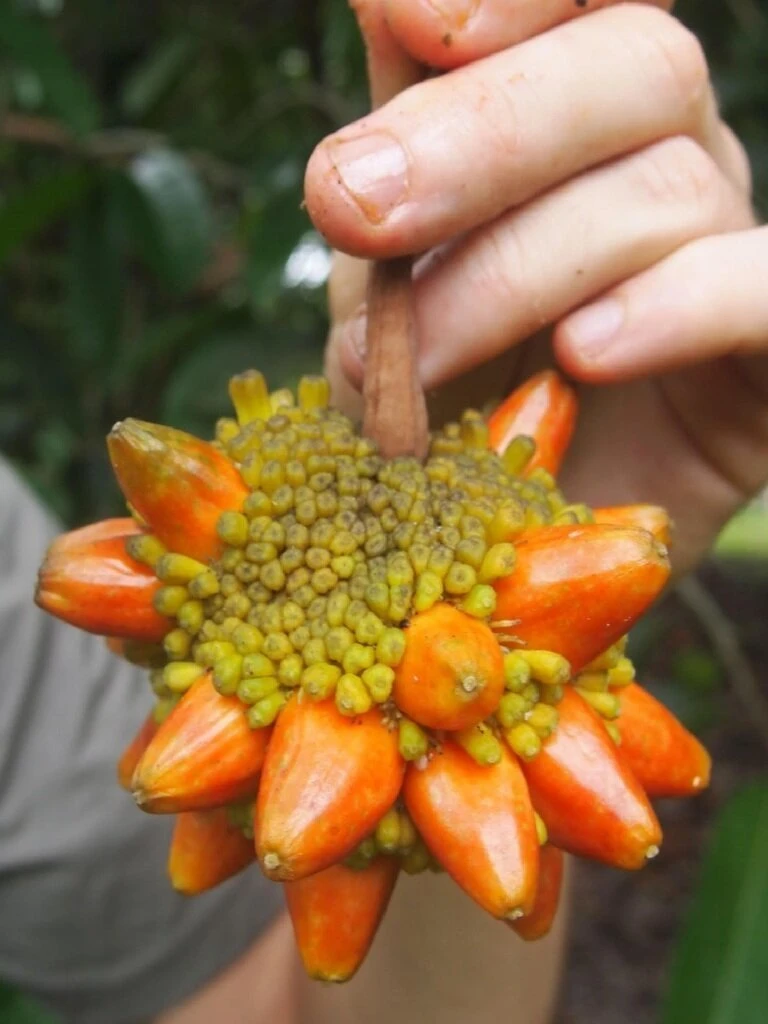
Kesusu
Kesusu is the strangest, yet most delicious, fruit of Borneo. It belongs to the jackfruit family (Anacardiaceae). Its scientific name is Prainea limpato. The edible part is the protruding orange seeds. The seeds are soft and loosely embedded in the fruit, making them easy to remove. The surface of the seeds is oily. The pulp has a sweet, slightly acidic taste. 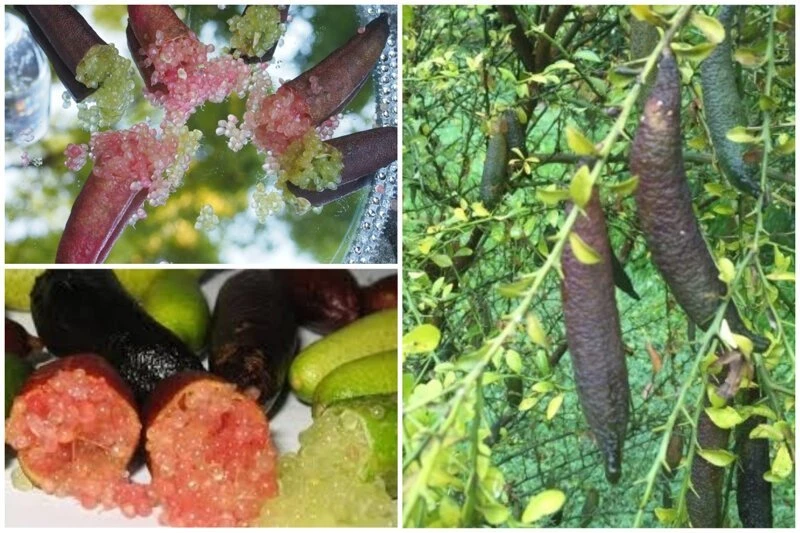
Australian Finger Lime
The flesh of the finger lime resembles fish eggs or seedless pomegranate seeds. Ripe fruits have a tart flavor, a bright citrus aroma, and hints of pine; unripe ones are bitter.
The surface color of the fruit can vary: red, green, yellowish, pink, and crimson. The flesh color does not always match the peel color. One of the rich red varieties has been given the name "bloody lime." 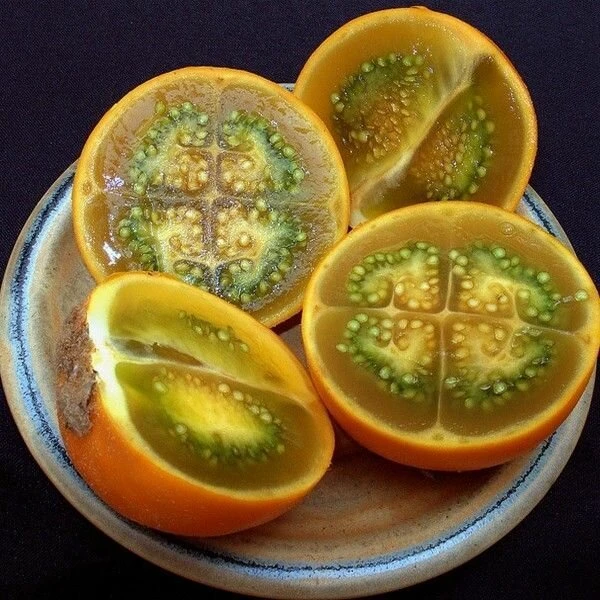
Naranzilla nightshade
A fruit-bearing ornamental herbaceous shrub in the Solanaceae family. It grows 1.5–2 meters in height. The fruits are orange, round-elliptical, up to 6 cm in diameter, covered with easily removable white hairs. The taste is sweet and sour—a mixture of pineapple, passion fruit, and strawberry. 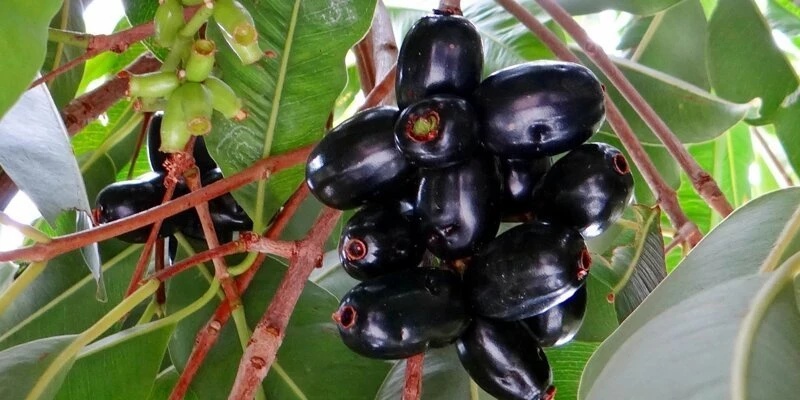
Jambolan, or yambolan, or Syzygium cumini (Latin: Syzygium cumini)
Jambolan is an evergreen, fast-growing tree in the Myrtle family, growing up to 30 meters tall with a trunk diameter of 60-90 cm and oblong-oval leaves 5-25 cm long and 2.5-10 cm wide. The leaves have a distinct turpentine scent. The flowers are pink with a funnel-shaped calyx, 4-5 fused petals, and numerous stamens.
The fruit is a glossy, dark purple, almost black, drupe with a thin skin, 1.25-5 cm in diameter. The pulp is purple or white, very juicy, aromatic, with an astringent, sometimes bitter taste, and contains one or more green or brown seeds. 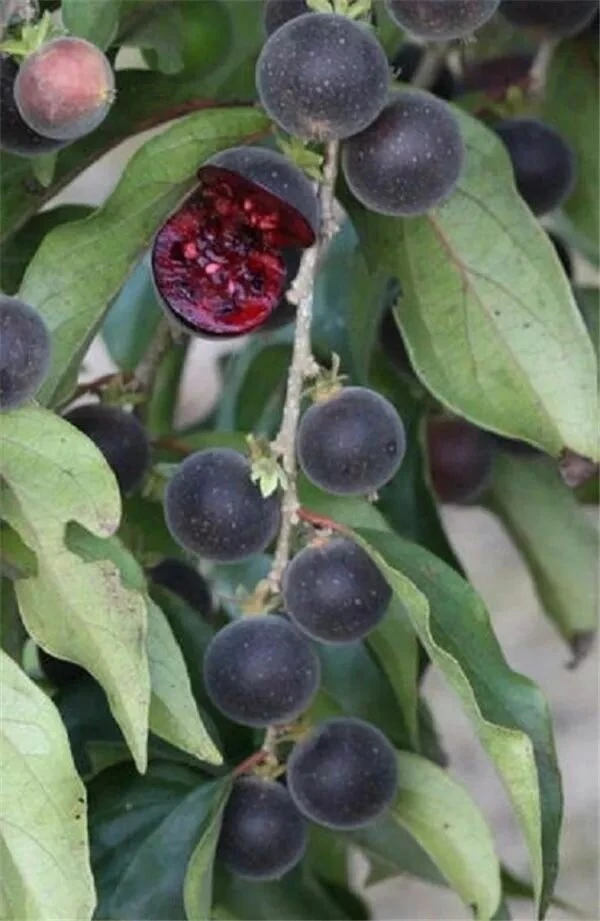
Ceylon gooseberry, or ketambilla (lat. Dovyalis hebecarpa)
Ketambilla is a small deciduous tree in the Willow family, 4.5-6 m tall, with oval, finely velvety, gray-green leaves. The fruit is spherical, 1.25-2.5 cm in diameter, with a thin, tough, velvety skin, ranging in color from orange (when unripe) to dark purple when ripe. Inside the fruit is a juicy, tart, purple-red pulp. Ketembilla fruits are primarily used to make jellies and jams.
The ketambila is native to Sri Lanka. It is currently cultivated in South Florida, Hawaii, Puerto Rico, Cuba, and the Philippines. 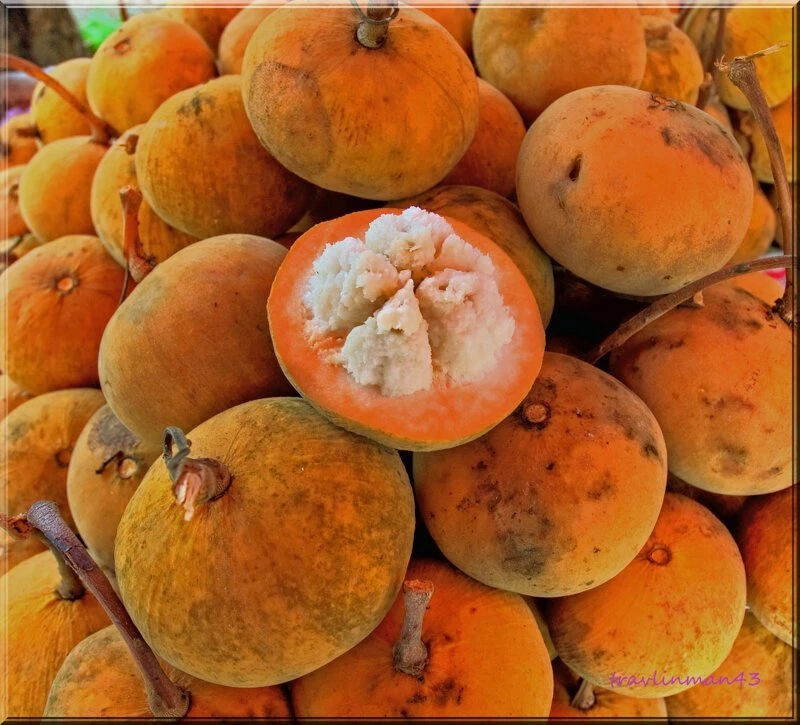
Santol (Latin: Sandoricum koetjape)
Santol is an evergreen, fast-growing fruit tree, a species of the genus Sandoricum in the family Meliaceae, native to Southeast Asia. The tree itself and its fruits have different names in different languages, for example, graton (กระท้อน) in Thailand. The tree grows to a height of 15-45 m with oblong or elliptical leaves 15-30 cm long. The fruit is spherical, 4-7.5 cm in diameter. There are two varieties of santol fruit, previously considered distinct species: one with a yellowish, velvety skin and the other with a red, latex-containing skin. Both types contain a white, translucent, juicy, sweet pulp with 3-5 large, brown, inedible seeds.
The santol fruit is edible raw. It is also used to make jams, jellies, marmalades, and alcoholic beverages. The santol seeds are inedible and can cause intestinal upset. 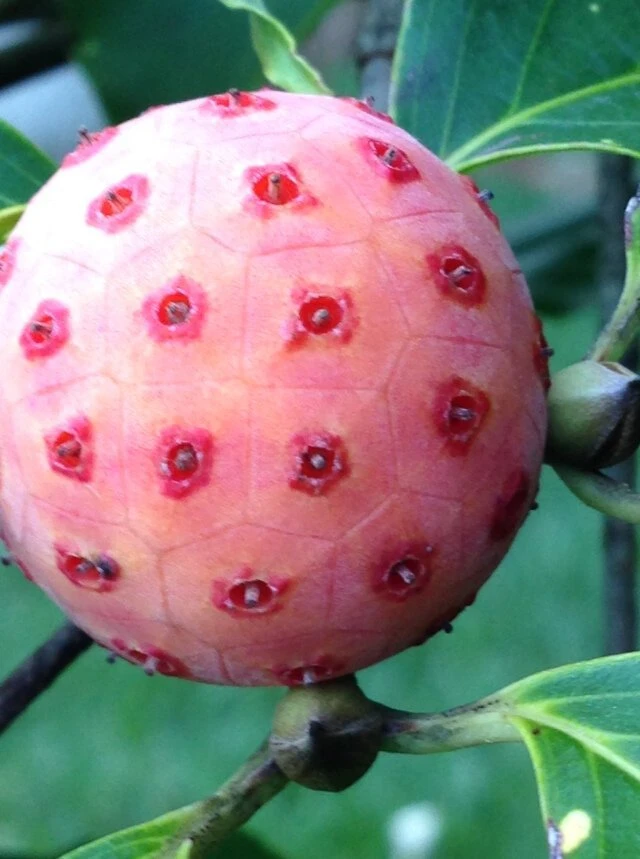
Cornus kousa
This plant is native to East Asia, including Korea, China, and Japan. It is a small deciduous tree growing 8-12 m tall in the Cornaceae family. Common names include kousa, kousa dogwood, Chinese dogwood, Korean dogwood, and Japanese dogwood. The fruit is a spherical berry 2-3 cm in diameter. It is an edible, sweet, and tasty addition to the tree's ornamental value. The fruit is sometimes used to make wine. 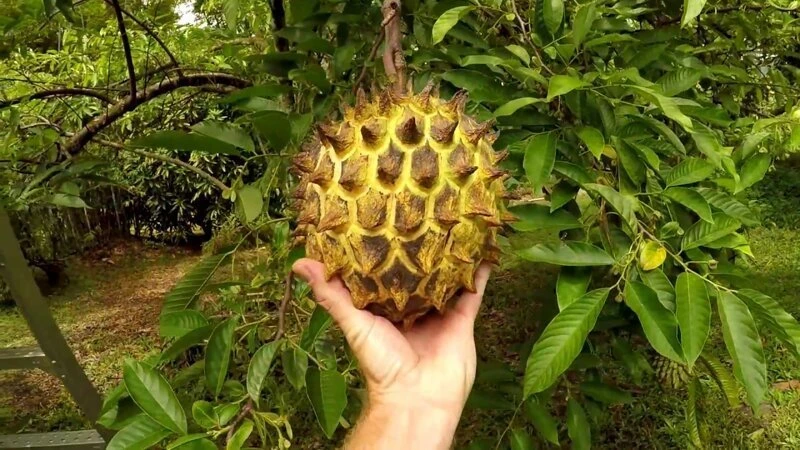
Rollinia mucosa, or Biriba (lat. Rollinia mucosa)
Rollinia is a fast-growing deciduous fruit tree in the Annonaceae family, growing from 4 to 15 m in height. The fruit is conical-cordate, 15 cm in diameter. Inside the fruit is a white, translucent, juicy pulp with numerous black-brown elliptical seeds.
Biriba grows wild across a vast area from northern Argentina, Brazil, Paraguay, and Peru in the south to Guyana, Venezuela, Colombia, southern Mexico, and the Antilles in the north.
The pulp of the Biriba fruit is eaten fresh or fermented into wine. 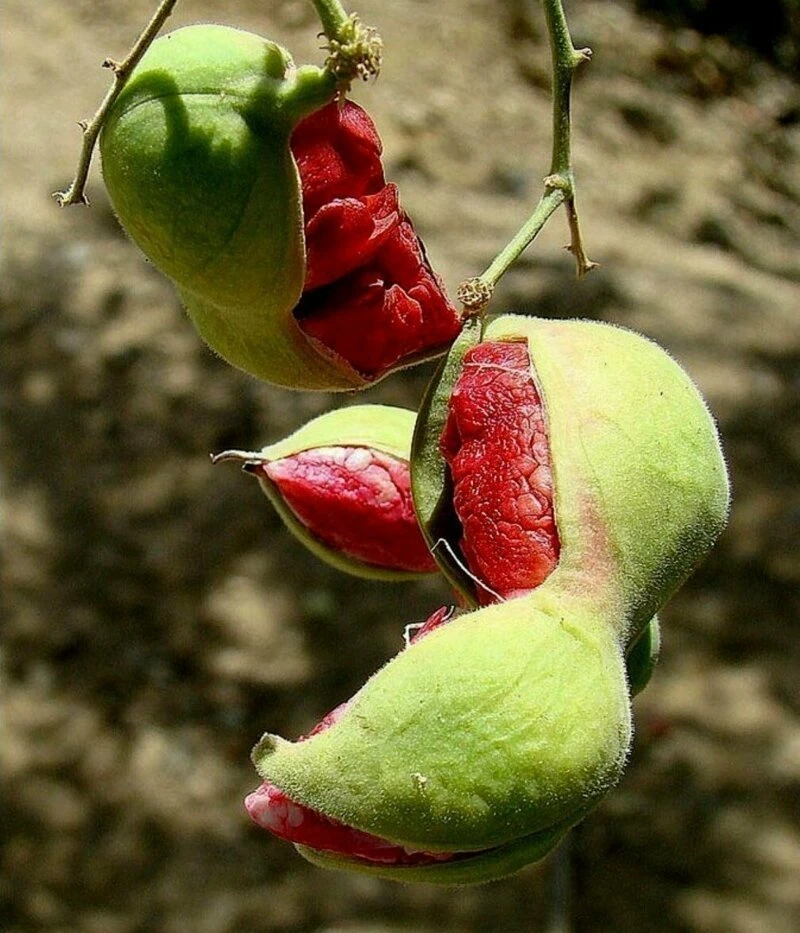
Pithecellobium dulce, or Manila tamarind (Latin: Pithecellobium dulce)
A small evergreen tree in the legume family, 5–8 m tall, with oval-oblong leaves 2–4 cm long. The fruit is a legume with edible pulp and black seeds. The seeds are dispersed by birds that feed on the sweet fruits. The fruit pulp, quite sweet, can be eaten raw and used to make refreshing drinks.
Add your comment
You might be interested in:













How to start a 102-liter engine

Protective film Removing it with a power screwdriver

How metal buckets are made in Pakistan

When a child plays hide-and-seek at a professional level

Man sets up bedroom camera and discovers the reason for his

Super dads who swoop in to save the day

Athlete in Bavarian dress flies over a lake on a hydrofoil

Precision carpentry

Looks like it's time to buy WinRAR
