A woman on a bicycle in the 1890s—it was a scandal. Artists turned it into a masterpiece (31 photos)
The first bicycle was invented by a German in 1817. But the word "bicycle" was coined by the French—and it was they who turned it into a cult classic in the late 19th century. Advertising posters for Peugeot, Clément, Gladiator, and Sirius are true masterpieces of Art Nouveau: goddesses flying across a starry sky, knights riding two-wheeled steeds, winged muses over Paris. Take a look at 30 bicycle posters from the 1890s and see: they are more beautiful than most modern advertising. 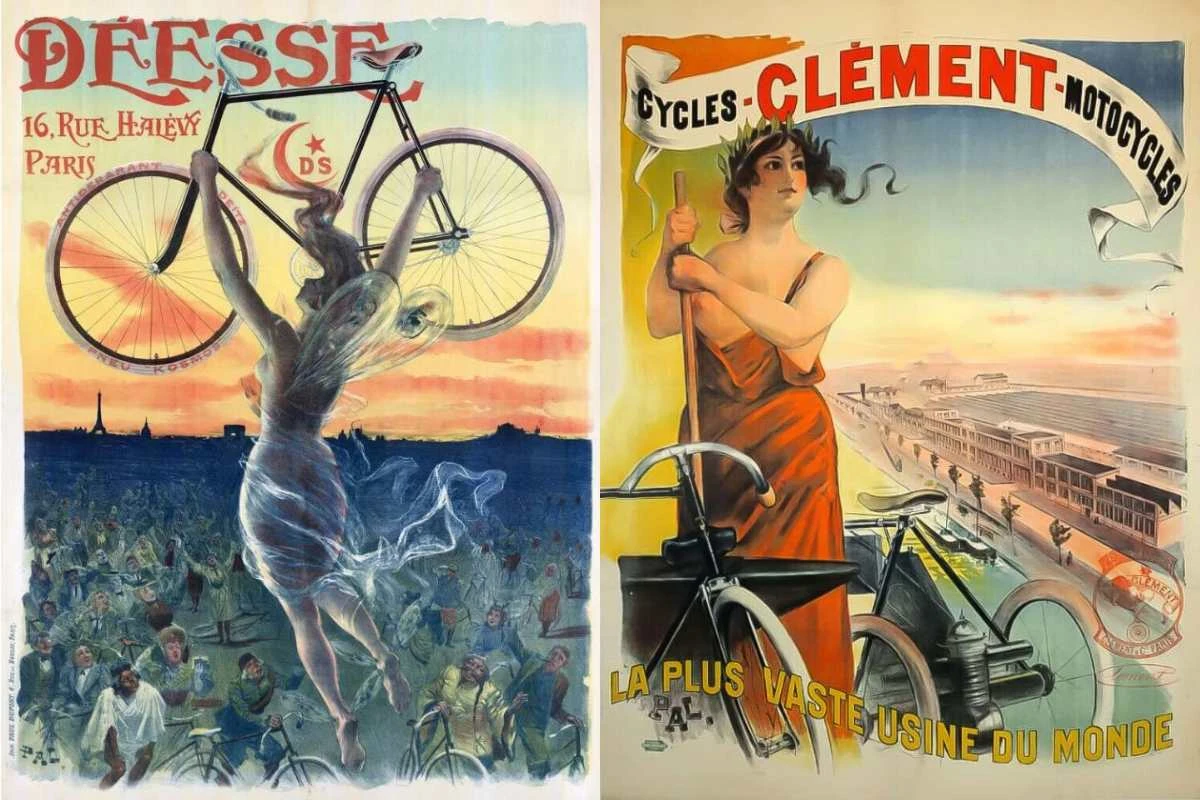
Bicycle Boom: Why France Went Crazy for Two-Wheeled Transport
In the 1890s, France was experiencing a veritable bicycle craze. Chain drives and pneumatic tires made bicycles comfortable. Two equal wheels replaced the huge front one. The saddle became soft, and the handlebars became more controllable. Within a few years, the price dropped. Bicycles became affordable for the middle class. 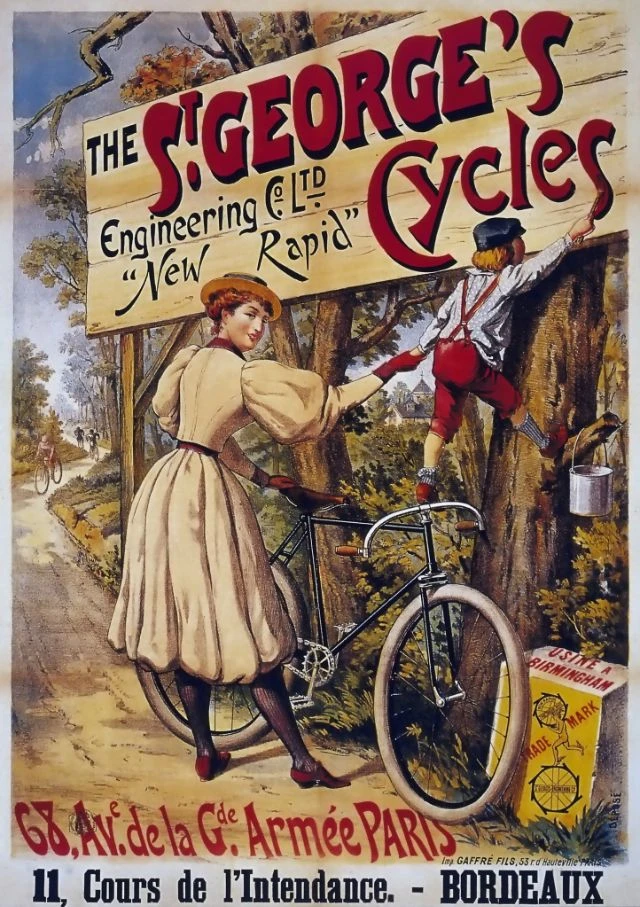
A poster for Cycles St. George's, circa 1890, depicts an idyllic country scene with a bicycle at its center.
French factories were working at full capacity. In 1895, there were over a hundred manufacturers in Paris and the surrounding area alone. Among them were Peugeot, Clément, Gladiator, Terrot, and Decauville. Many of these names would later move into automobile manufacturing. The bicycle became the springboard for an entire industrial era. 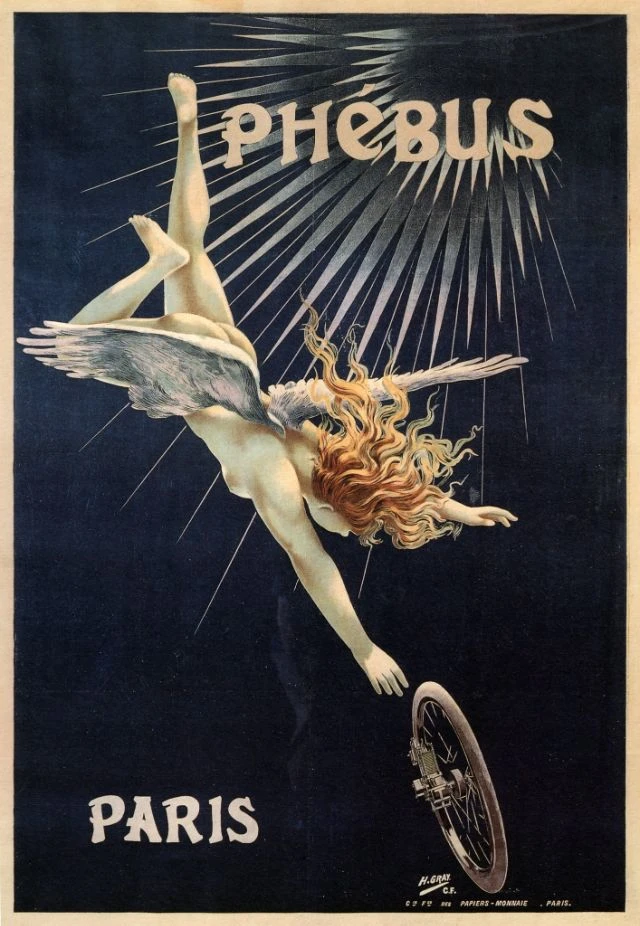
Phebus Paris, circa 1890: a winged maiden flies toward a bicycle wheel—speed as the new deity.
Competition was fierce. Stamps competed not only on price and quality, but also on posters. Lithographic printing made it possible to replicate large, vibrant images. Artists gained a new platform. And they took full advantage of it.
Goddesses, Knights, and Winged Muses: Symbolism in Bicycle Advertising
Artists of the 1890s didn't simply draw a bicycle. They created an image. Most posters feature a woman. An allegorical figure, a goddess, or a winged muse. The bicycle next to her is an attribute of freedom and victory. 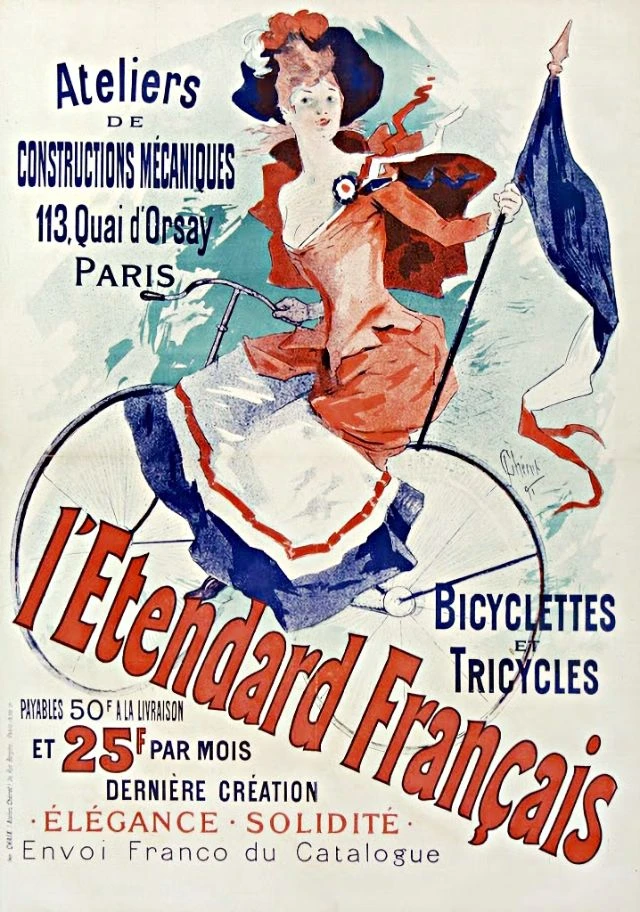
Cycles l'Etendard Français, 1891: a woman with a French flag—the bicycle as national pride.
Motifs were drawn from antiquity and Romanticism. Wings are a symbol of speed. A laurel wreath signifies victory. Goddesses against a starry backdrop—the bicycle as a path to the future. The armored knight at Cycles La Française spoke of reliability. It all appealed to emotion: buy a bicycle and become part of something big. 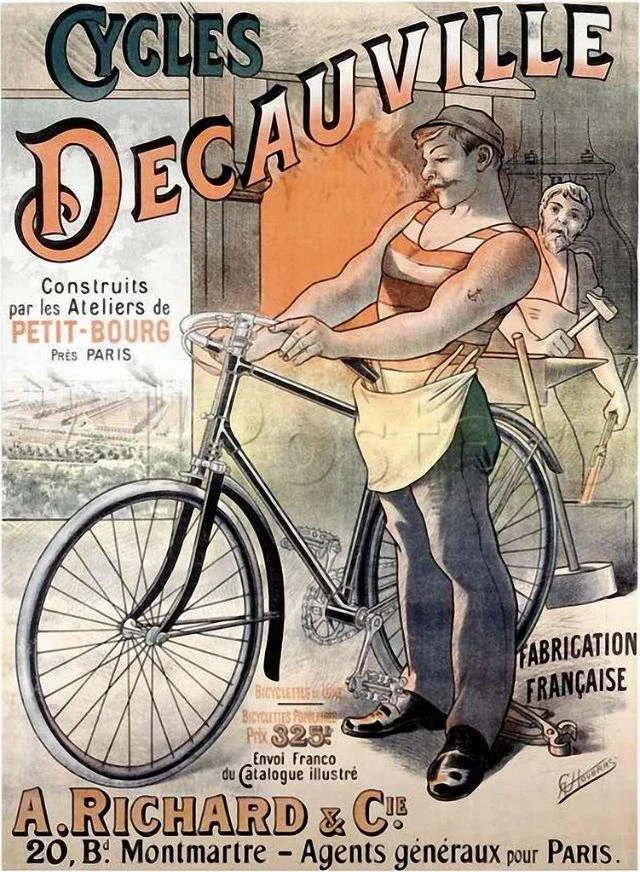
Cycles Decauville, 1892: Factory workers—a rare realistic motif among the symbolist images of the era.
Men rarely appeared in posters, almost always in the context of racing or production. Women were a universal image of desire and attraction. The winged ladies of Cycles Gladiator and Cycles Sirius flew across the starry sky. Bicycle advertising became poetry. 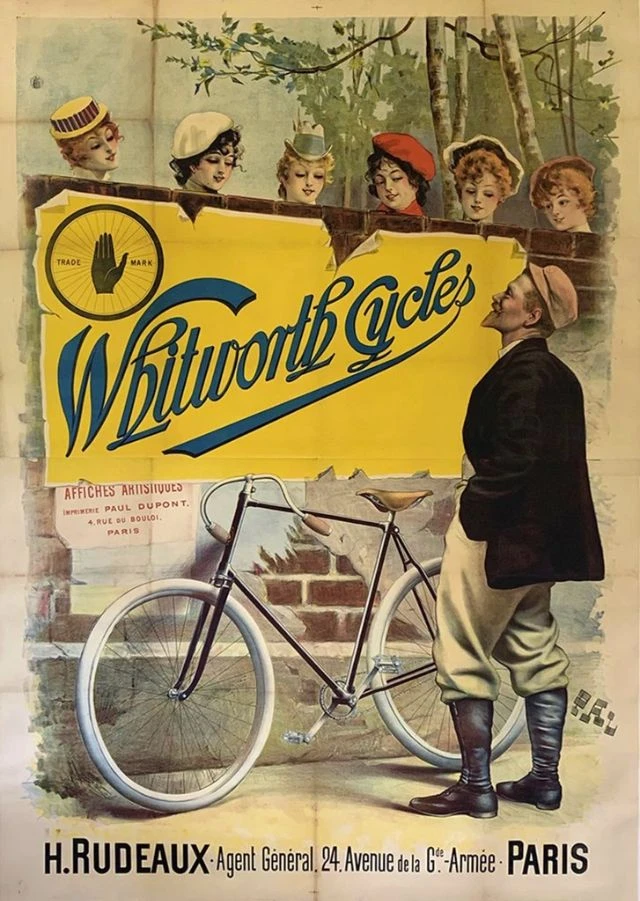
Cycles Whitworth, 1894: The very moment of looking at a poster on the street became the subject of a poster.
Woman on a Bicycle: Scandal and Progress in the Same Saddle
In the 1890s, a woman on a bicycle was more than just advertising. It was a social provocation. The church condemned the bicycle. Doctors wrote warnings about its dangers to women's health. The conservative press was outraged by the short attire required for cycling. 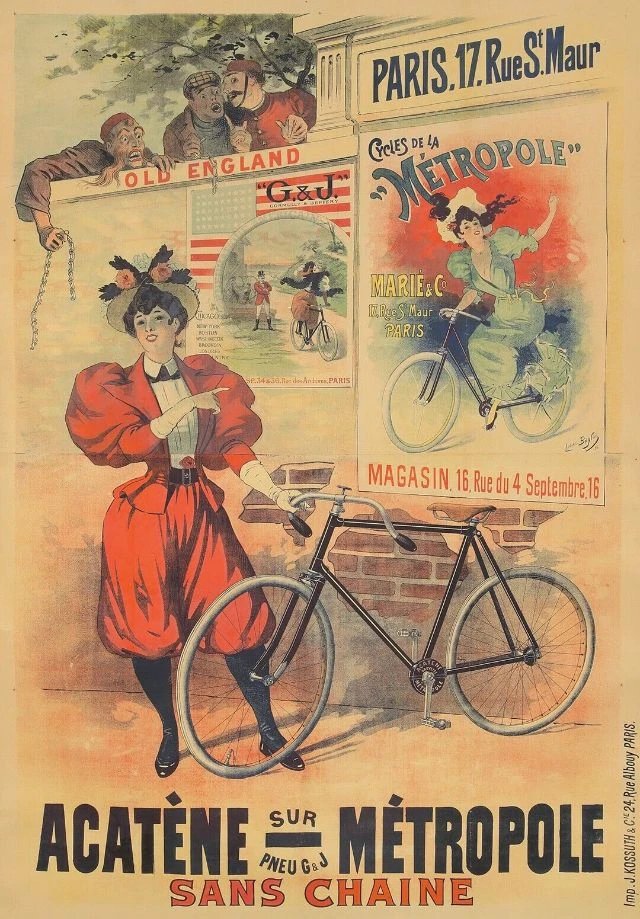
Acetene Metropole, 1895: Advertisement for acetylene bicycle lights – technological progress in elegant packaging.
Feminists saw the bicycle as a tool of liberation. American suffragist Susan B. Anthony said in 1896: "The bicycle has done more for women's liberation than anything else." It was the same in France. The bicycle allowed women to ride unaccompanied. It was a revolution in everyday life. 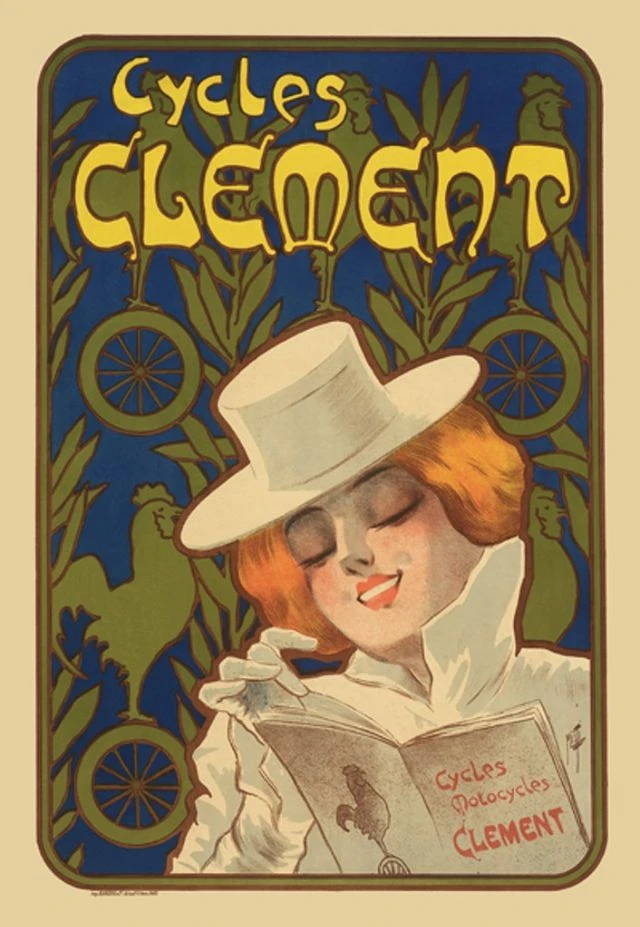
Cycles Clément, 1898: A book in a cyclist's hand—the image of a modern, educated woman.
Manufacturers sensed this. They portrayed women on bicycles not as scandalous, but as normal—even chic. Elegant ladies in feathered hats. Fashionable suits. Casual poses. Advertising acted as a mirror of the desired reality. 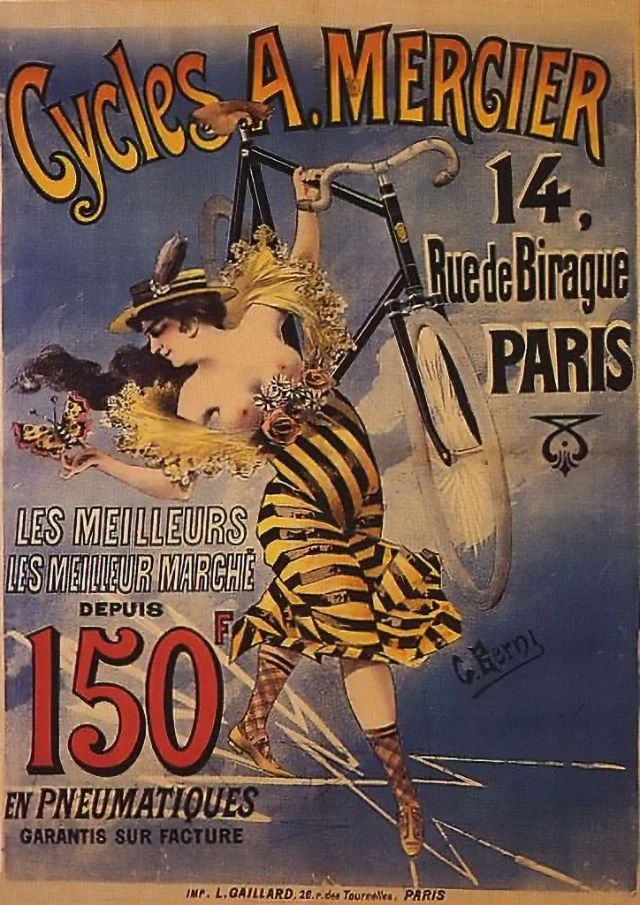
Cycles by A. Mercier, circa 1895: a butterfly and a casually raised bicycle—an image of lightness and freedom.
Artists and Brands: Who Created These Posters
Bicycle posters of the 1890s are part of the heyday of French poster art. It was then that Toulouse-Lautrec, Alphonse Mucha, and Théophile Steinlen transformed the street into a gallery. Bicycle brands hired the same artists, or worked in the same spirit. 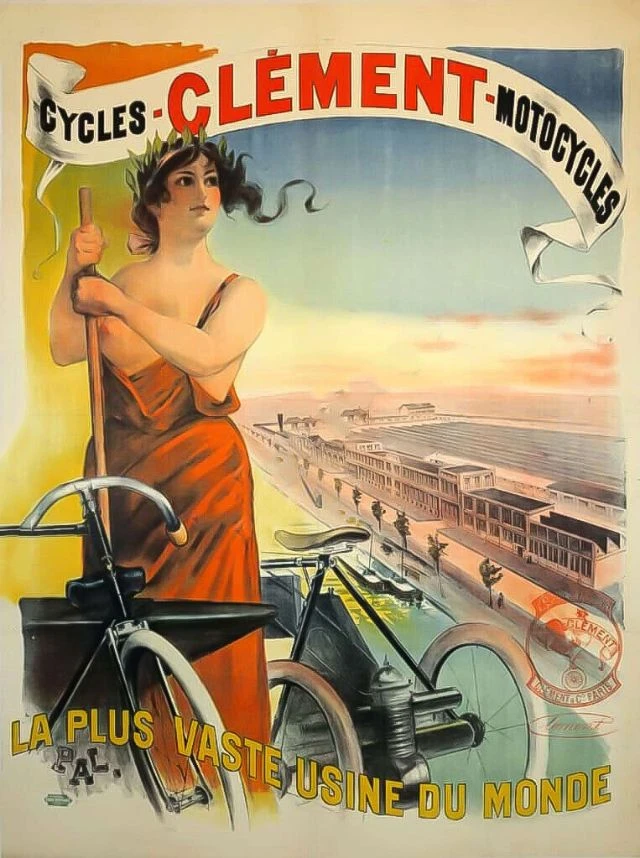
Cycles Clément, 1895: a laurel wreath and a factory behind him—victory and production in a single frame.
Lithography was experiencing a golden age. Printing conveyed nuances of color. Posters were large—often over a meter tall. They were hung on poster boards all over Paris. They didn't last long: a week or two, then new ones were glued on top. The surviving copies are now kept in museums. At auction, they fetch thousands of euros. 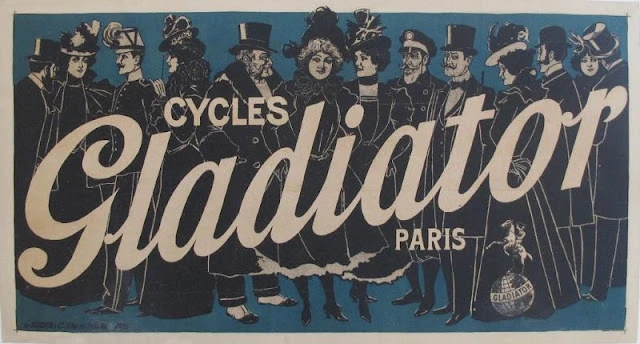
Cycles Gladiator Paris, 1895: smartly dressed Parisians in front of a poster—the bicycle as part of urban life.
The artists' names haven't always been preserved. Many worked anonymously. But the style unmistakably reveals the era. Smooth lines, rich colors, and ornamentation—the hallmarks of Art Nouveau, which was then conquering French culture. 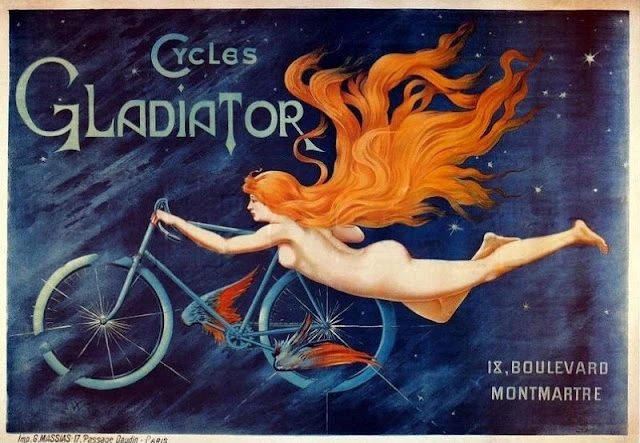
Cycles Gladiator, 1895: A bicycle carries a goddess through the night sky – speed as magic. 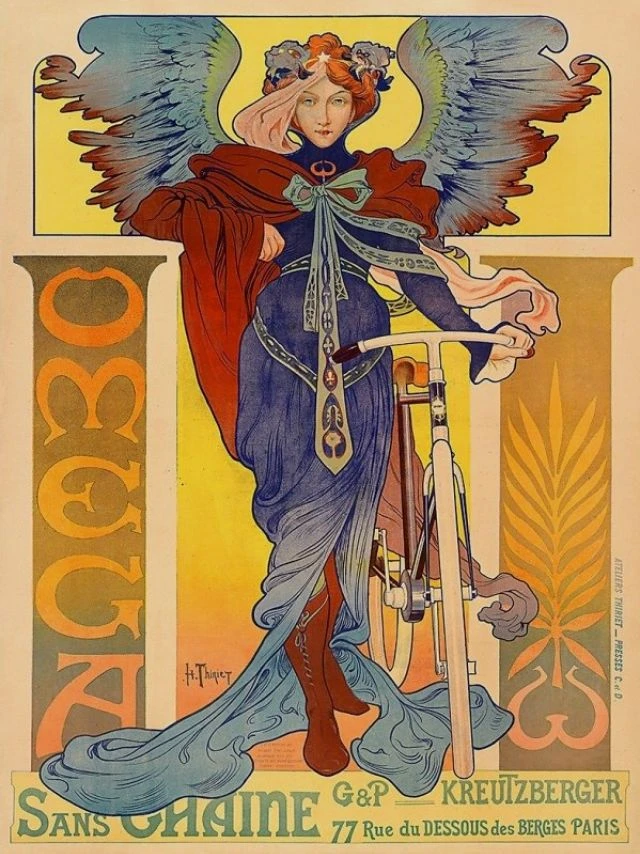
Cycles Omega, 1895: Wings and antique columns – an old image in a new advertisement.
Space, Knights, and Peugeot: Images from 1896–1899
By the end of the decade, posters became bolder. Artists sent cyclists into space and the days of chivalry. Rouxel & Dubois in 1895 placed a tandem bicycle with two riders right among the planets. Cycles Sirius in 1899 depicted a naked goddess among the constellations. 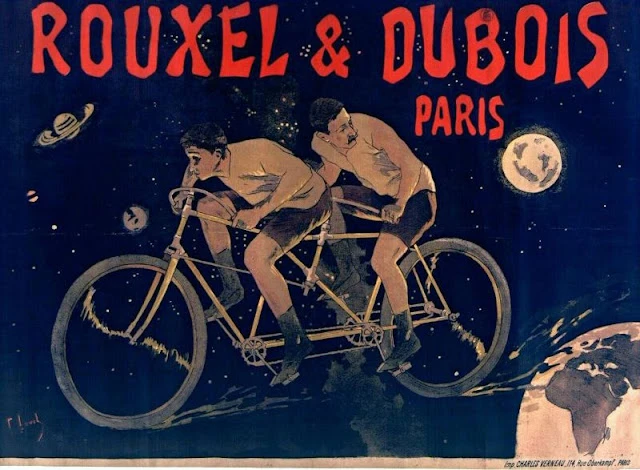
Rouxel & Dubois, 1895: A Tandem in Outer Space – The Bicycle as a Machine Conquering Space. 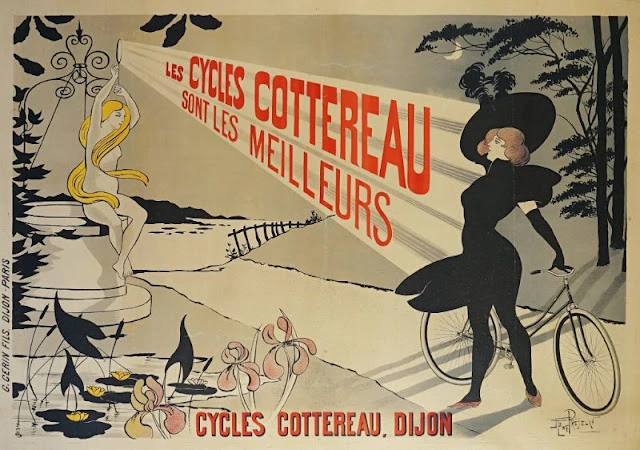
Cycles Cottereau, 1896: An elegant city woman next to an antique statue—eternity meets modernity.
By this time, Peugeot was already a major player. The company was founded in 1810 as a blacksmith's shop. In 1882, it began producing bicycles. The 1898 poster with a globe and sun already embodies the corporate style. Confident and ambitious. 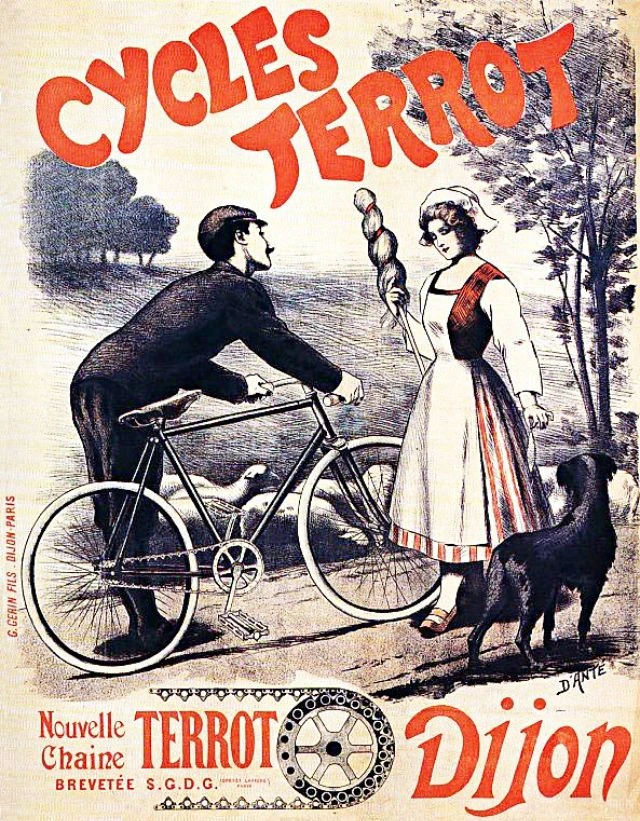
Cycles Terrot — Dijon, 1896: A provincial scene—the bicycle is already integrated into everyday life. 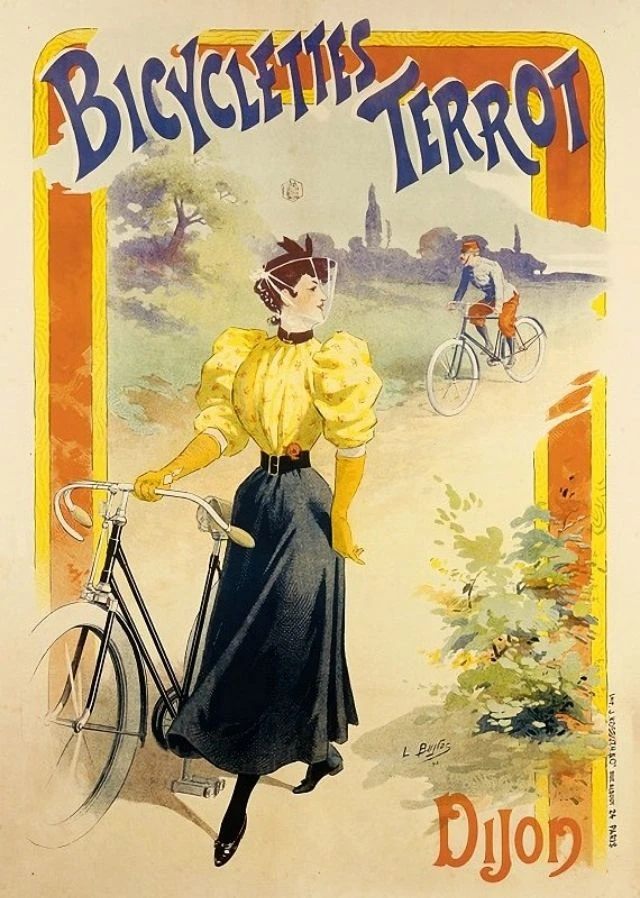
Cycles Terrot — Dijon, 1896: A second poster by the same brand—a different audience, a different image. 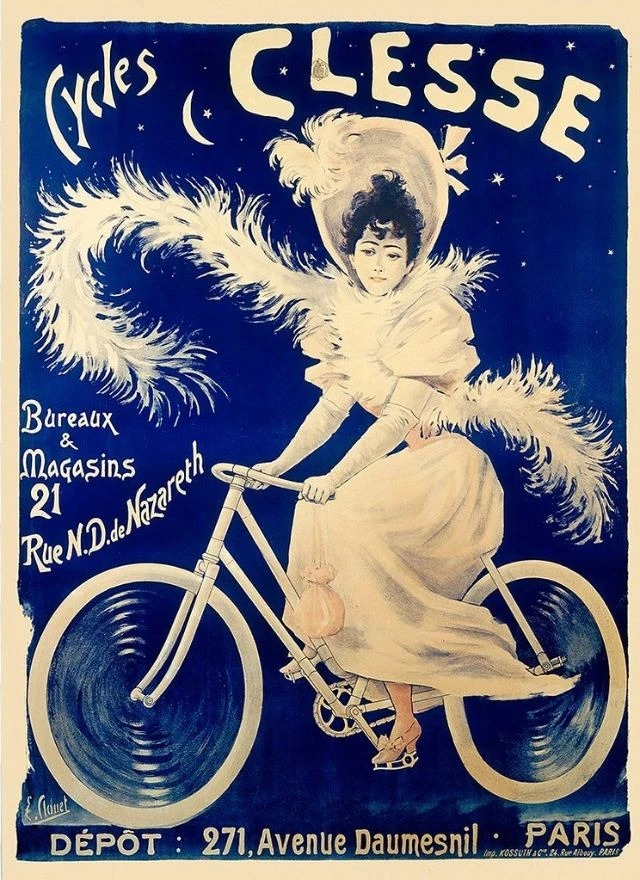
Cycles Clesse, 1897: The night sky behind a cyclist is a dream accessible to everyone. 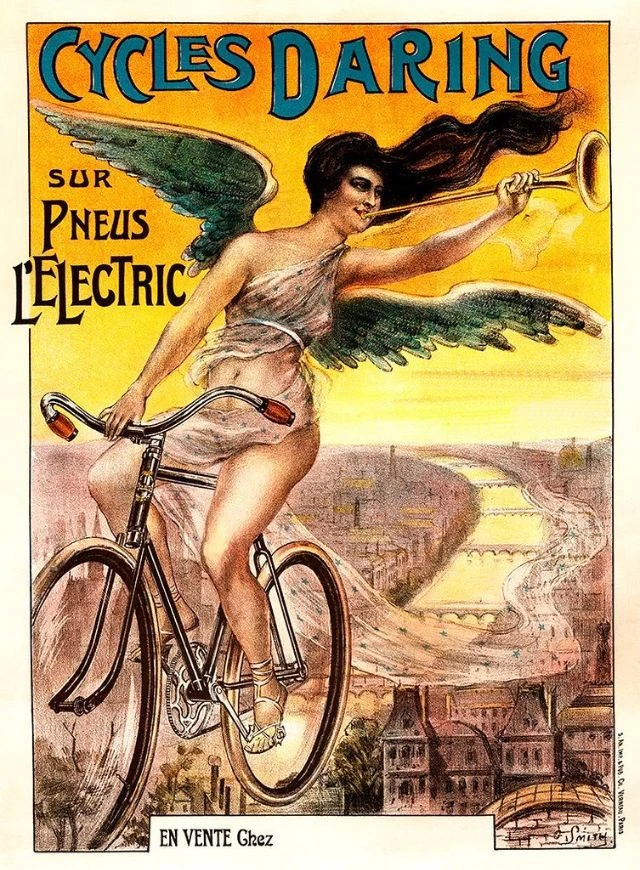
Cycles Daring, 1897: A winged muse with a trumpet over the city is a sign of a new era. 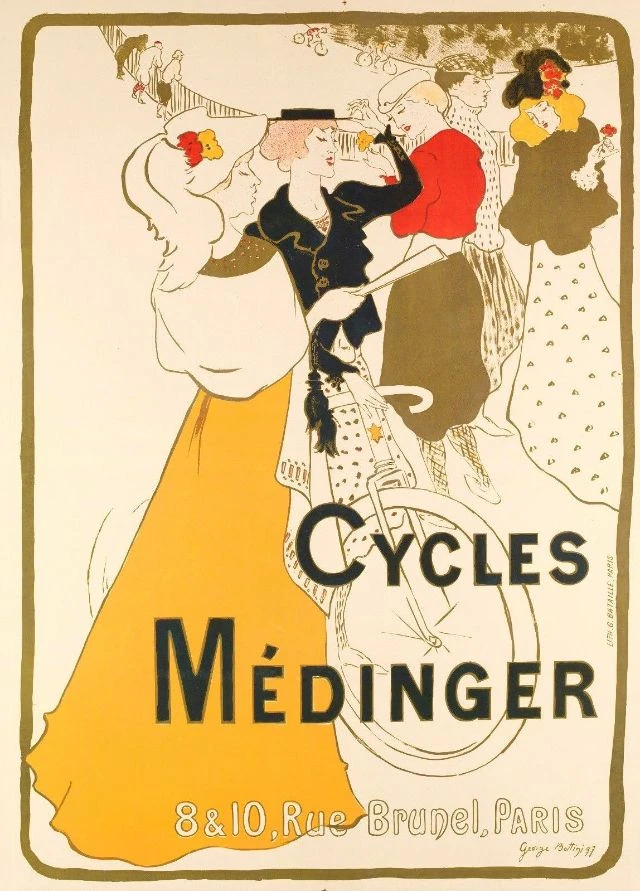
Cycles Médinger, 1897: A social scene on the street—the bicycle is embedded in the world of fashion and good taste. 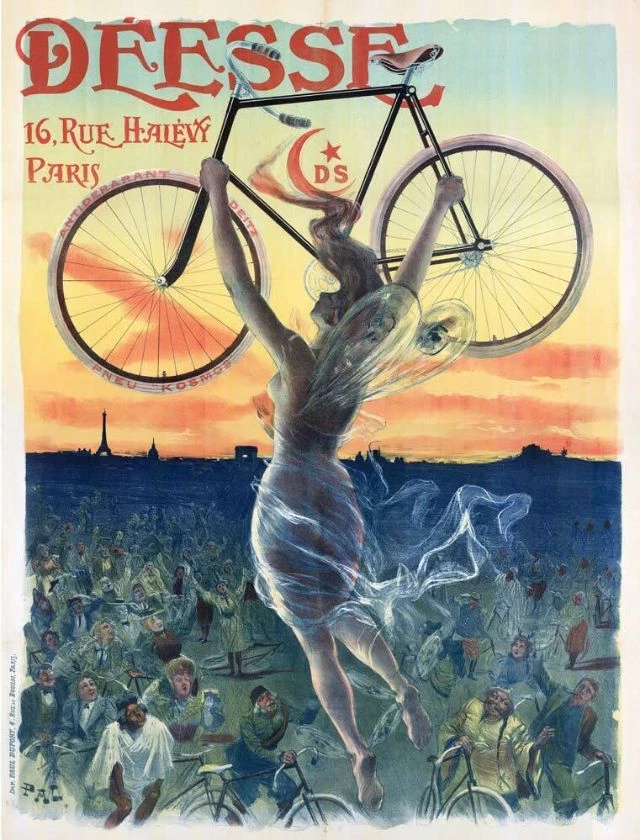
Deesse, 1897: A goddess over Paris holds a bicycle instead of a torch—a deliberate reference to the Statue of Liberty. 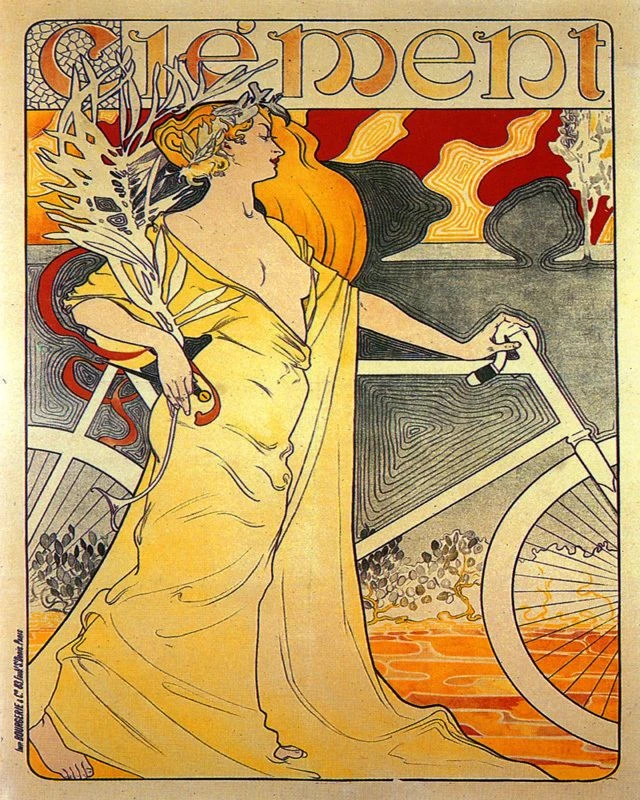
Clément, circa 1898: A laurel wreath is the invariable sign of a winner in the race for progress. 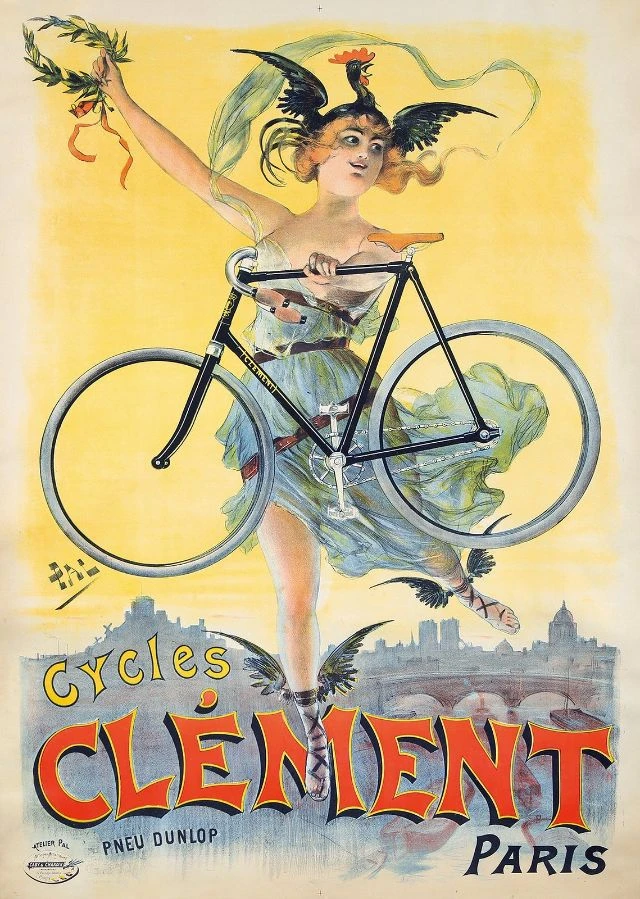
Cycles Clément — Paris, 1898: A Gallic rooster on a goddess's head—French patriotism in bicycle advertising. 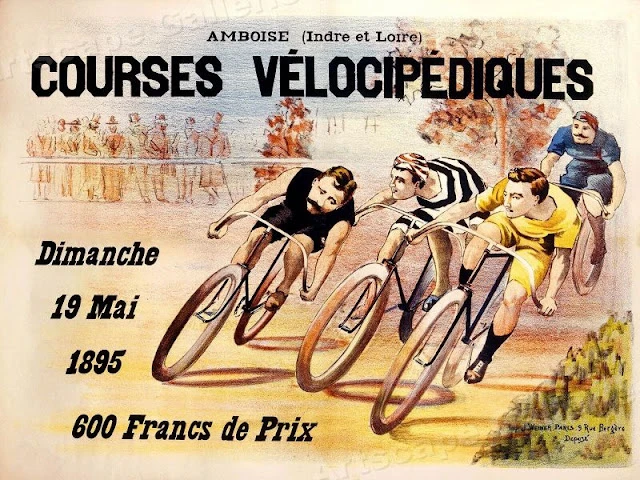
Courses Vélocipédiques, 1895: Cycling races attracted huge audiences—the sport became part of urban culture.
End of an Era: What Happened to the Bicycle Boom
By 1900, the first wave of vélomania—bicycle mania—was waning. The market was saturated. Prices fell. A new temptation arose—the automobile. Many bicycle factories closed or changed their focus. Peugeot and Clément switched to motors and survived. 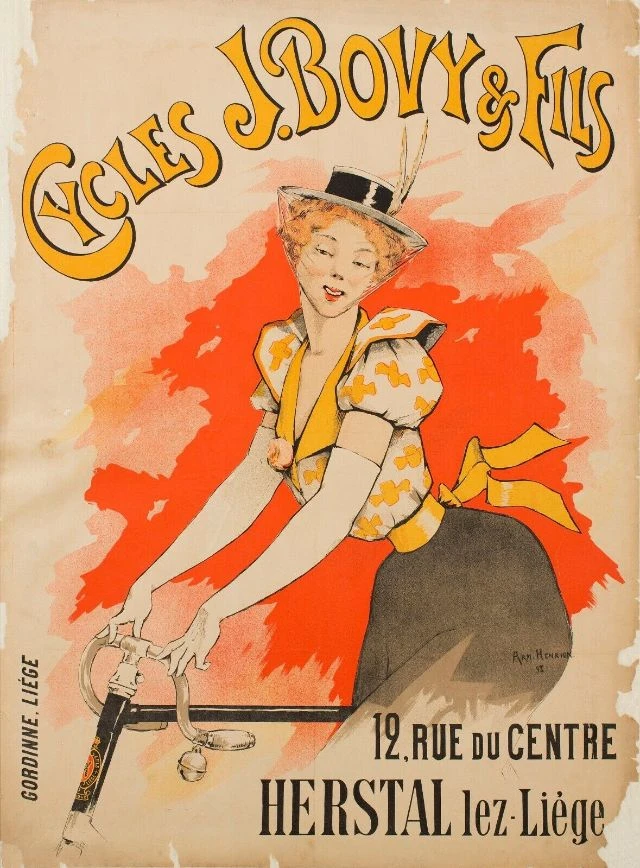
Cycles J. Bovy & Fils, 1898: red background and a sweeping pose—one of the most laconic posters of the era. 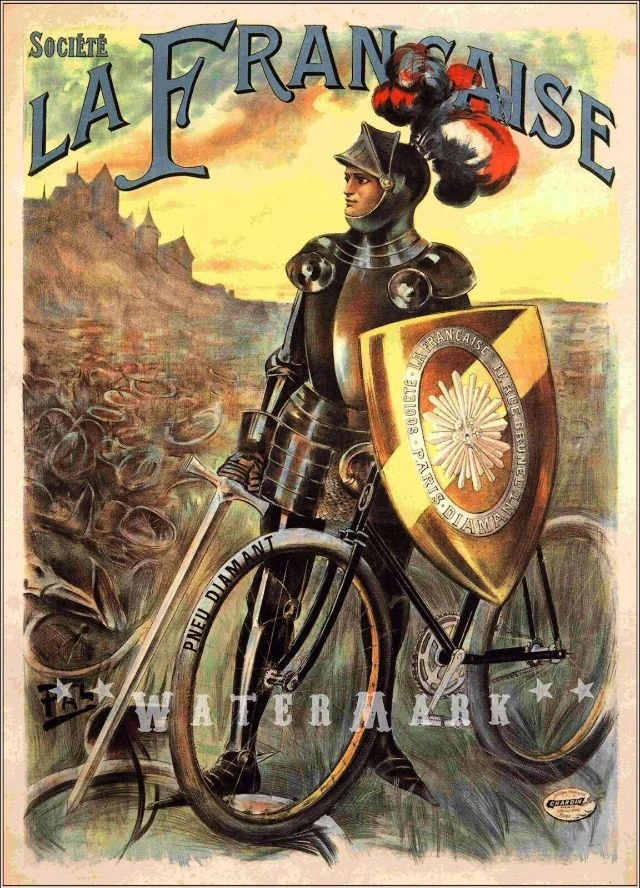
Cycles La Française, 1898: The knight guarding the bicycle is an image of reliability and French honor. 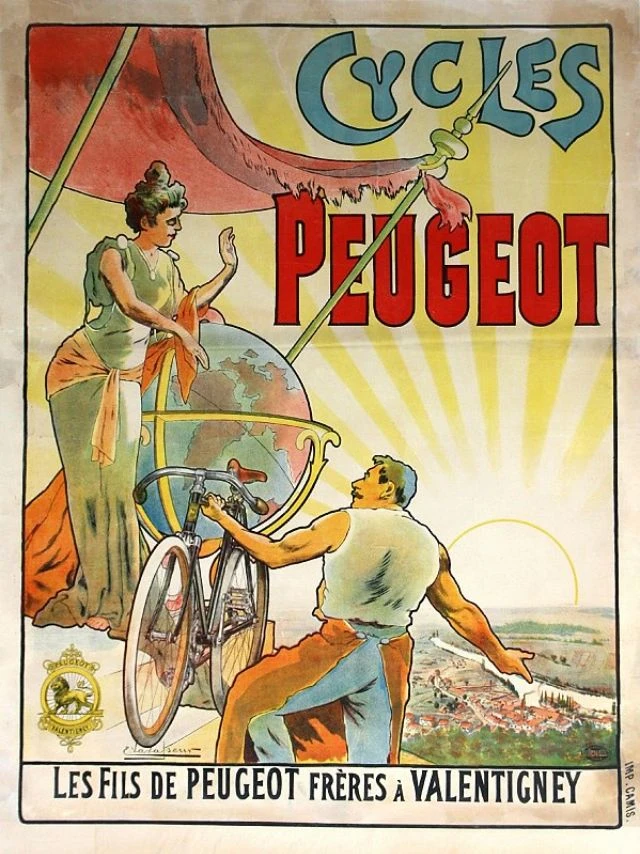
Cycles Peugeot, 1898: Globe and sun – Peugeot was already thinking globally. 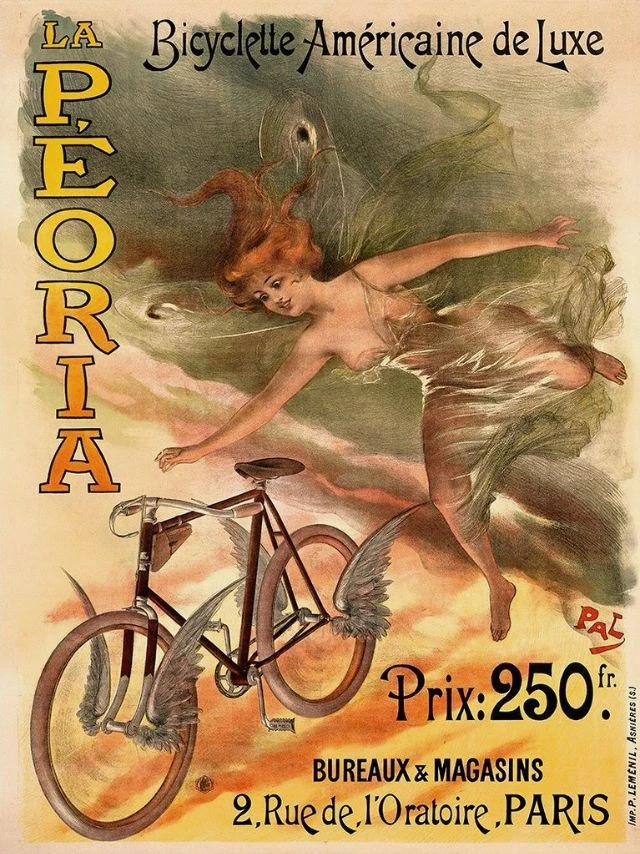
La Peoria — Bicyclette Américaine de Luxe, circa 1898: The American bicycle was sold through French aesthetics.
Posters from the 1890s have outlived their patrons, brands, and an entire era. Today, they bear witness to the moment when humanity first fell in love with speed. Before the automobile. Before the airplane. Before everything—there was the bicycle. And the artists sensed it. 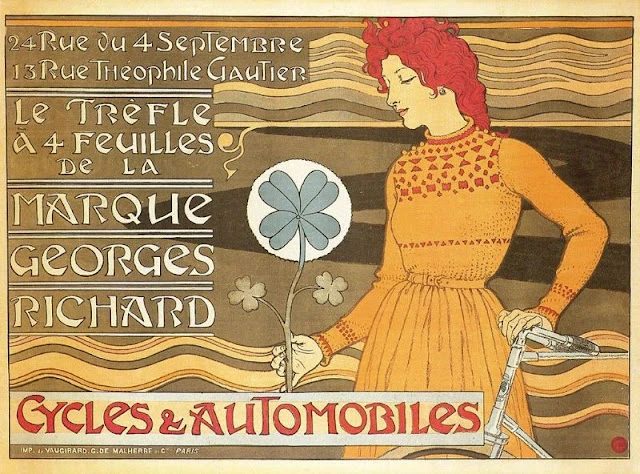
Cycles & Automobiles Georges Richard, 1899: the title already contains both words—bicycles and automobiles. 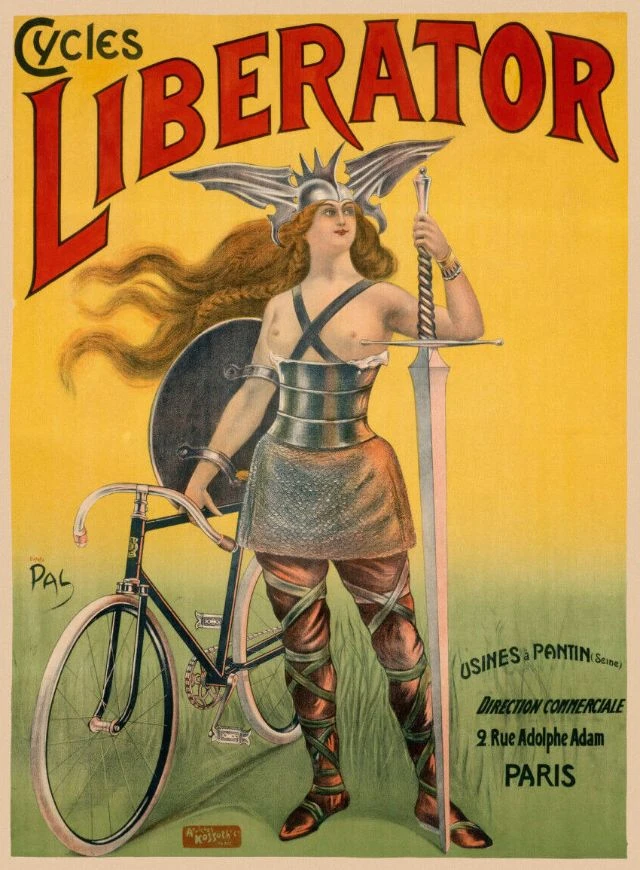
Cycles Liberator, 1899: a warrior with a sword and wings—the bicycle as a liberator from the old world. 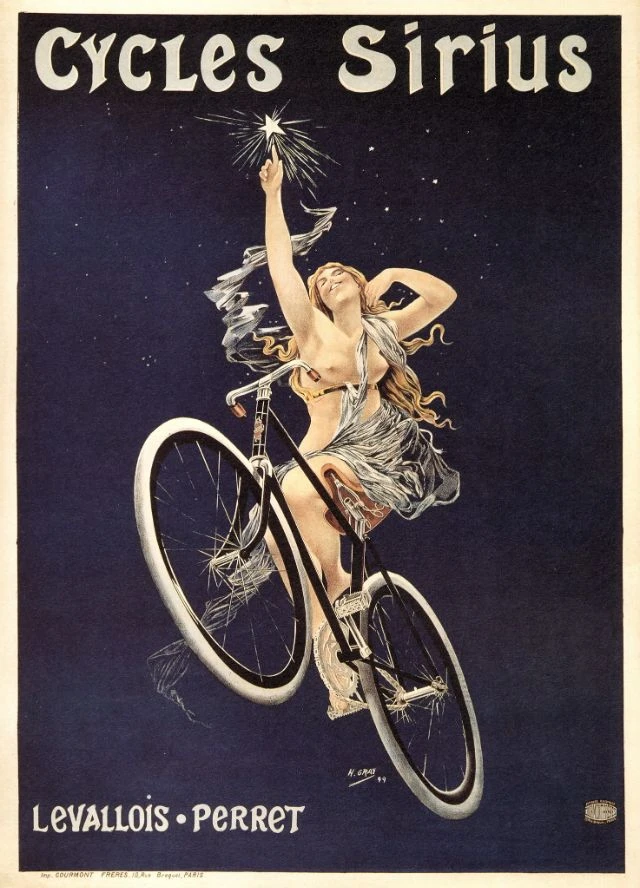
Cycles Sirius, 1899: A goddess among the stars—the final image of an era where the bicycle equaled freedom.
French bicycle posters of the 1890s are more than just advertising. They represent society's collective dream of moving forward. Which of these images do you find most expressive?