Gharial: Why does the river monster have a creepy growth on its face? (10 photos)
An armored body several meters long. A vicious muzzle, hundreds of teeth, and a terrifying growth on the tip of the upper jaw. This carcass seems capable of devouring any animal it desires. This is the image of the Lord of the Ganges, one to be feared! There's only one exception—the grim exterior somehow clashes with the cute content... 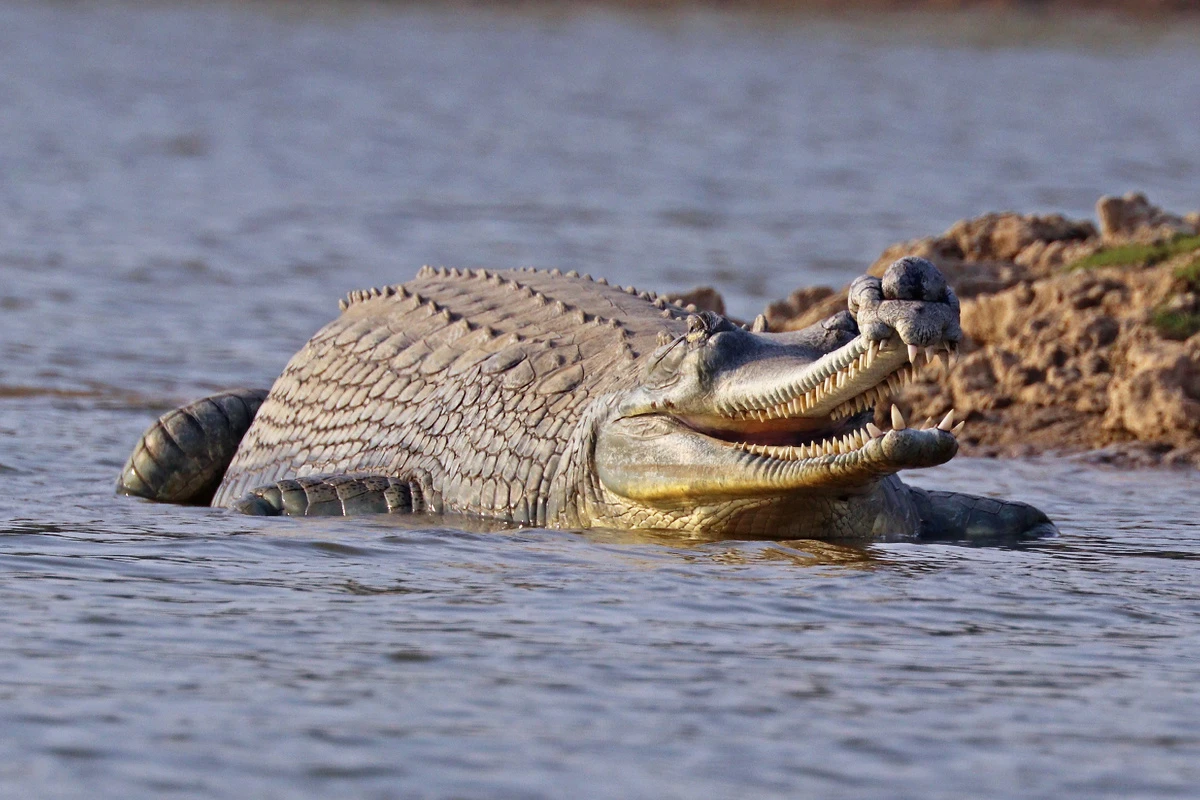
— Guys, something funny is about to happen.
After all, gharials are surprisingly peaceful creatures. Of course, like any crocodile, they're capable of biting a person so hard that their bones crack, but these reptiles prefer not to. And, oddly enough, their terrifying jaw is to blame for this. 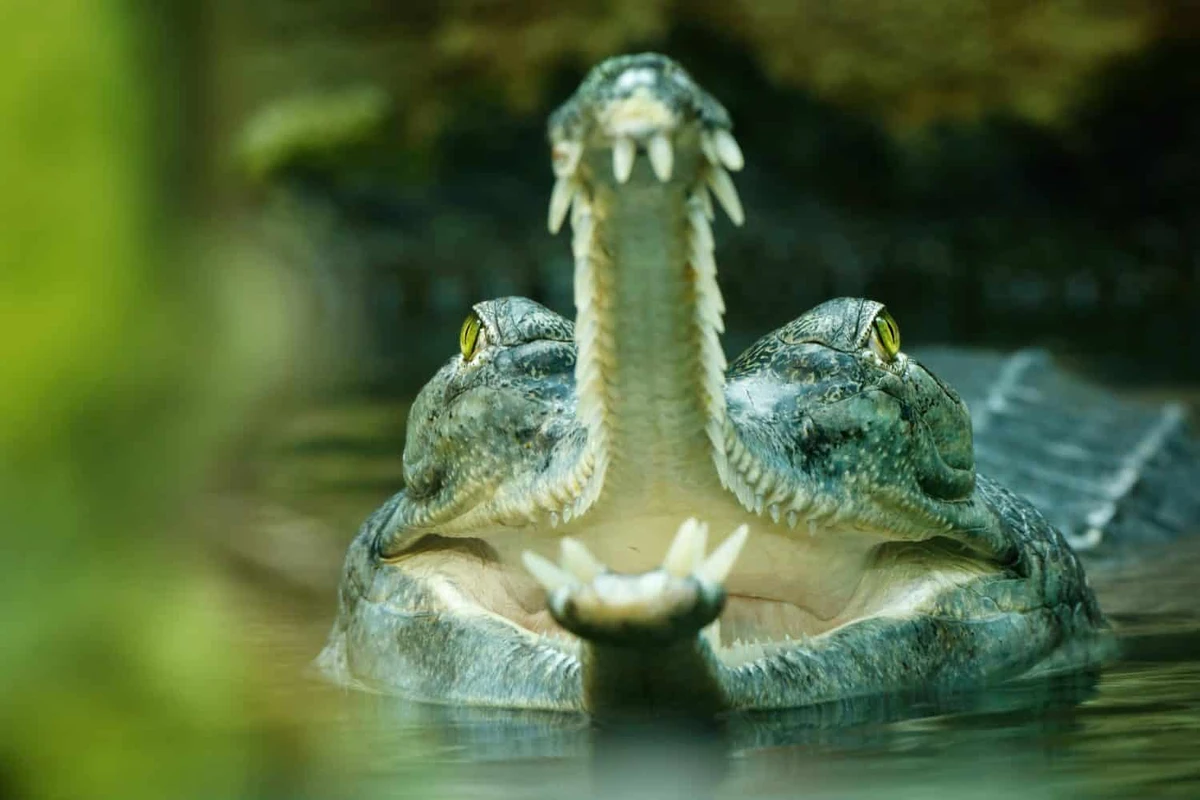
The beak gaped.
While the jaw may appear more dangerous than the alligator's blunt, wide snout, it actually severely limits the animal's diet. While the clawed tweezers won't hold onto large prey, they're very useful for targeting small prey, ensuring it won't escape—110 sharp teeth ensure that. Therefore, gharials tend to ignore large mammals, including humans, even though they weigh nearly 300 kg and measure 6 meters in length. 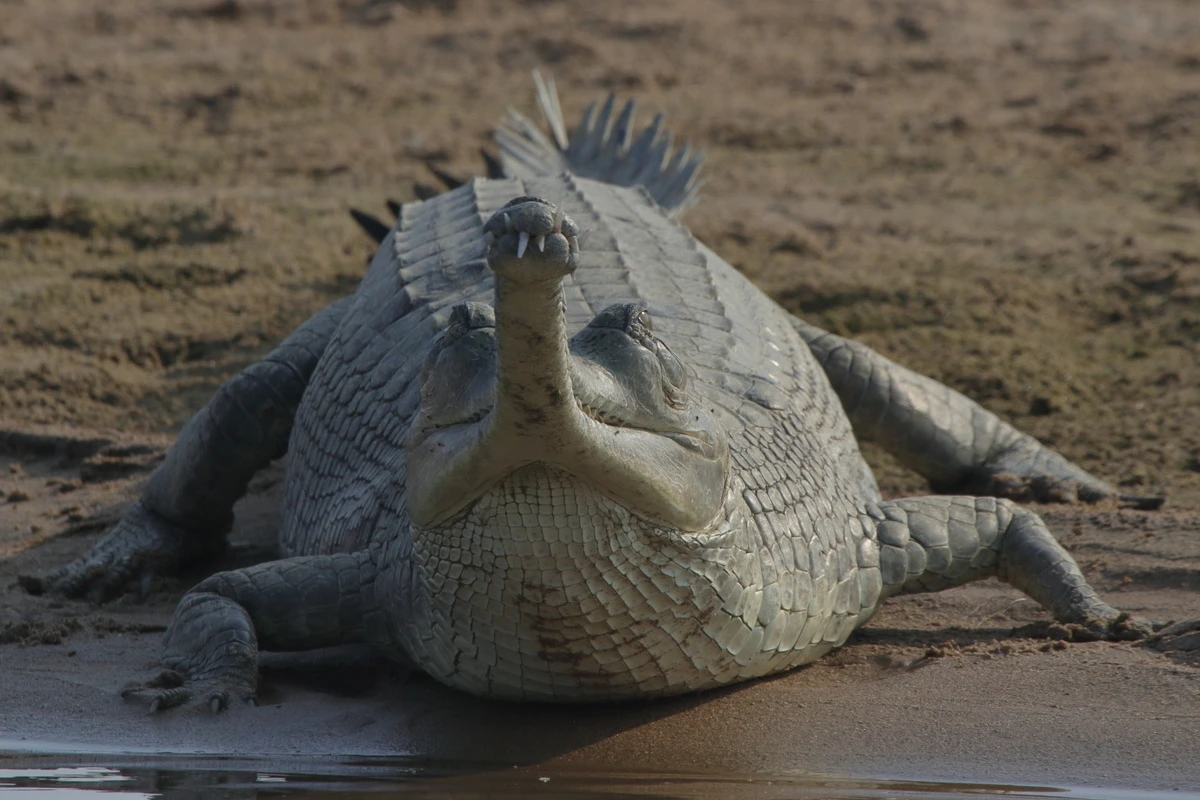
If you look at a crocodile directly, its snout is surprisingly thin.
However, their diet varies greatly depending on the reptile's age. The delicate olive-colored babies, which hatch in early July, will eat fry, tadpoles, and aquatic insects. Yearling green gharials feed on amphibians and young fish, while dark green juveniles actively hunt medium-sized fish. Black gharials, however, which are over 20 years old, are capable of attacking not only the largest river fish but also turtles, whose bodies are protected by strong shells. 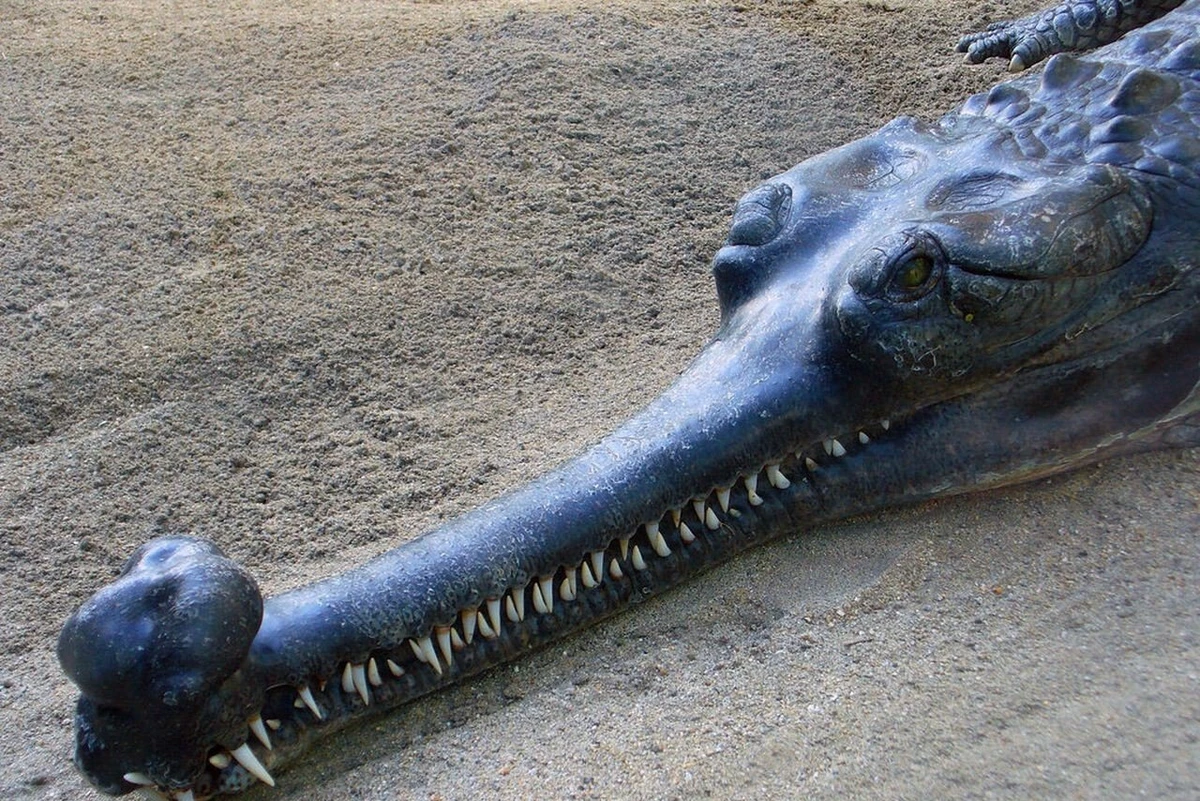
Unlike other crocodiles, whose coloration remains virtually unchanged throughout their lives, gharials darken with age. 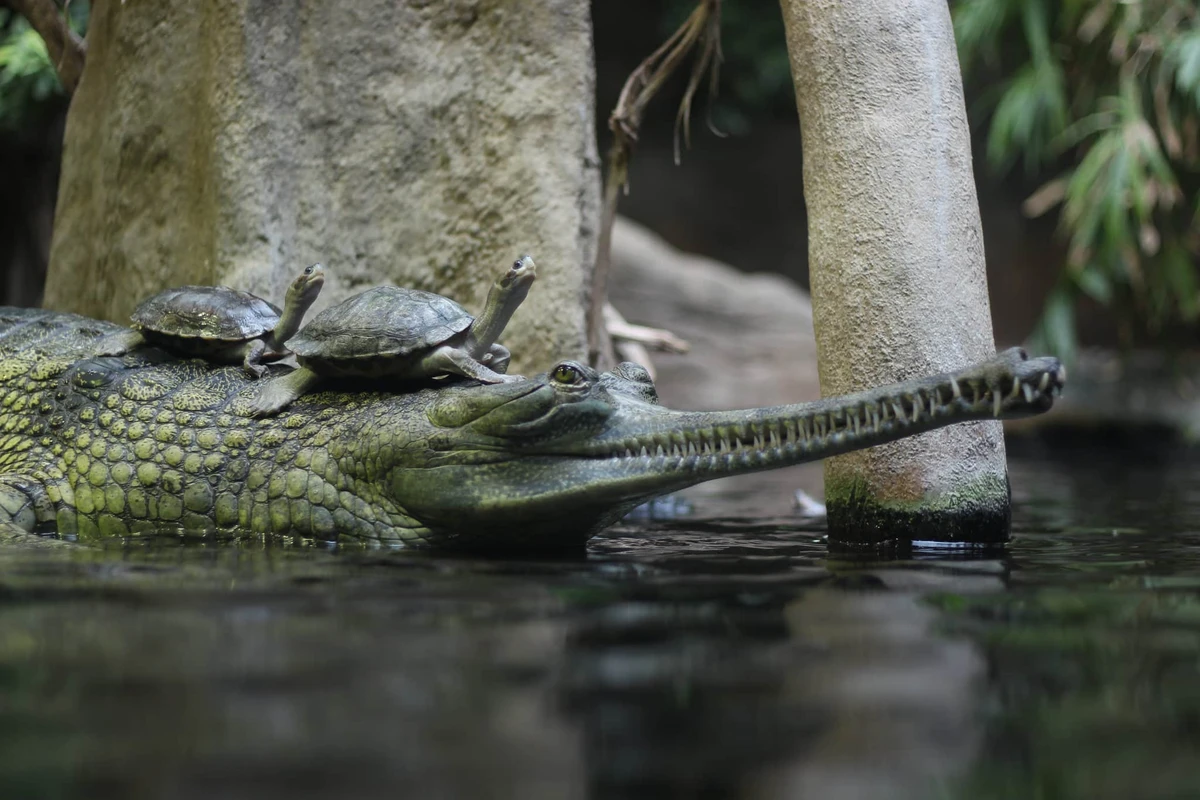
— You won't eat us? — No, come back in about 5 years!
This distribution of prey allows crocodiles of different ages to live alongside each other without resorting to cannibalism or competing for food. And in general, the babies are completely independent from the first day of their lives and ready to conquer this world. This, however, doesn't stop their mother from displaying some serious maternal instincts! 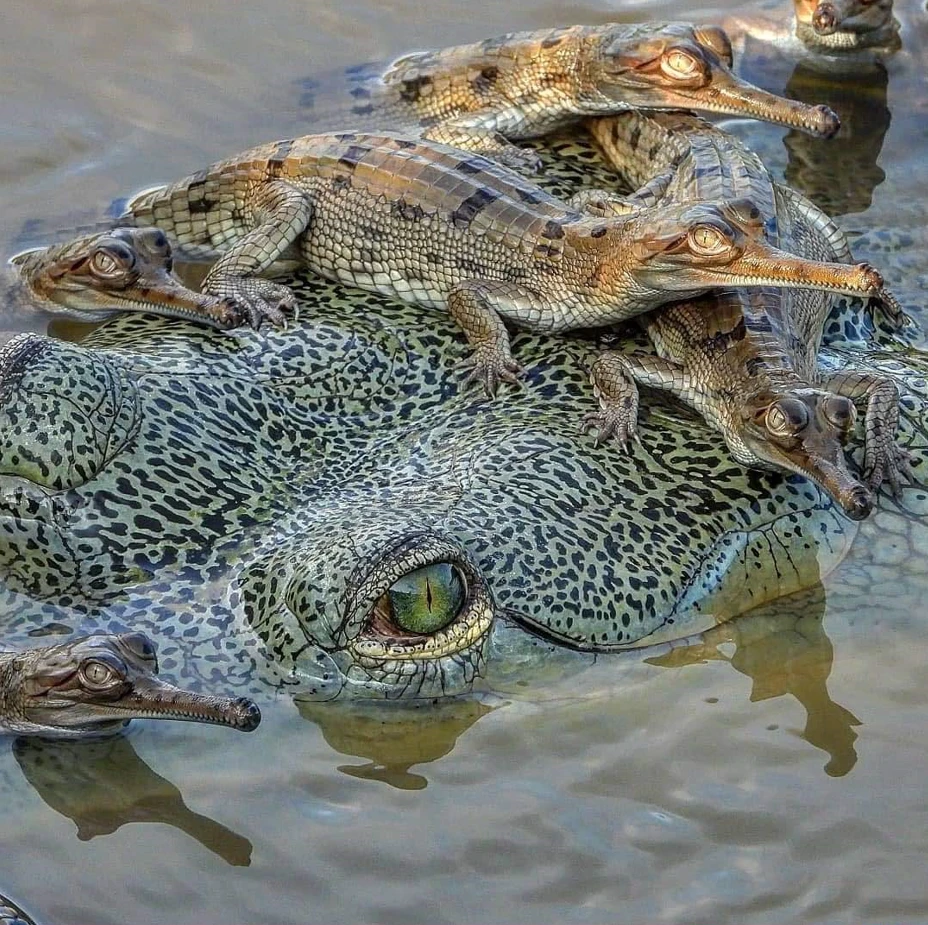
Go on, sell Mommy the stroller for half price!!!
Her care for her offspring begins with choosing the right father – the female chooses the noisiest one. Around 10-12 years old, male gharials begin to develop a strange and unsightly patch on the tip of their noses, which largely determines their reproductive success. After all, it's what males use to hiss! And they hiss very loudly; even in the noise of the forest, the human ear can hear the mating call of a gharial from 80 meters away. And female gharials can hear it even farther! Moreover, the louder the male hisses, the more females he will attract to his territory. 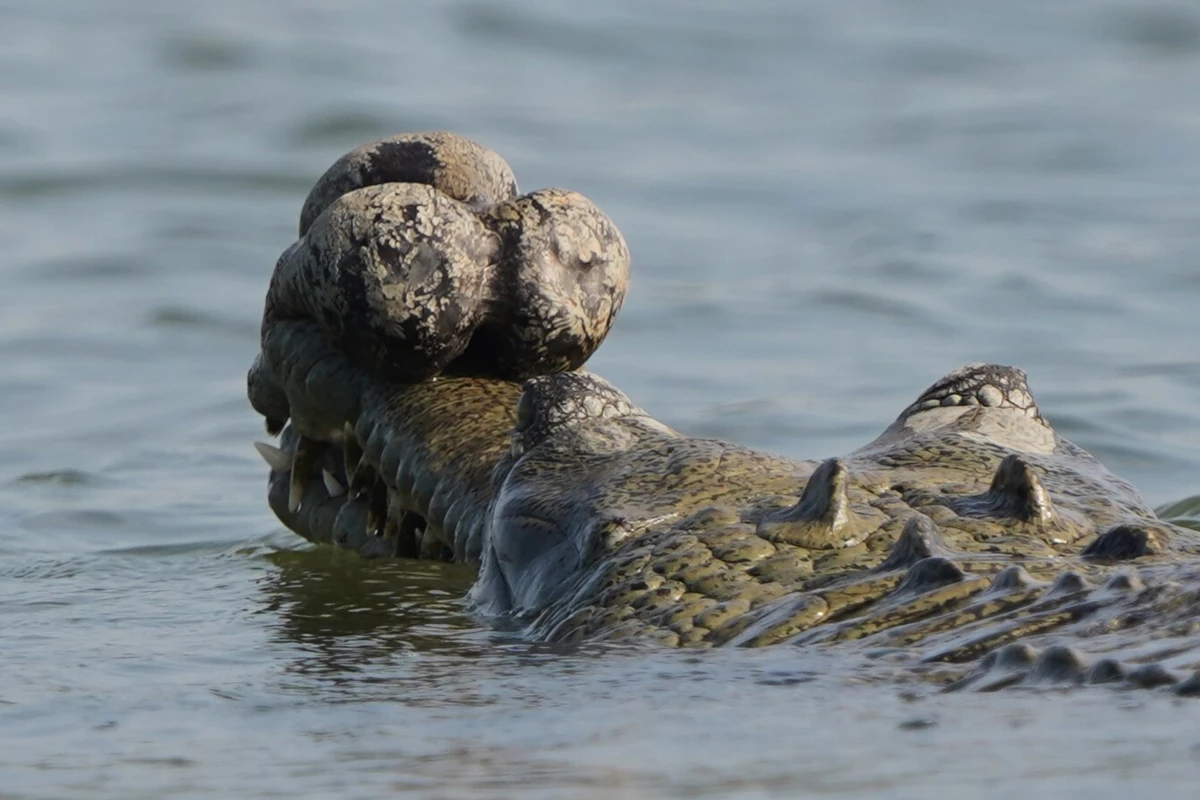
The hissing instrument and its owner.
After the act of love, the female begins to look for a place to dig a nesting hole. This is not an easy task. She needs to choose a location that will protect the clutch from being flooded, and a depth that will prevent the eggs from cooling and hard-boiled. If she succeeds, in three months the eggs will hatch into chirping little gharials, calling for their mother to dig them out of the sandy pit. 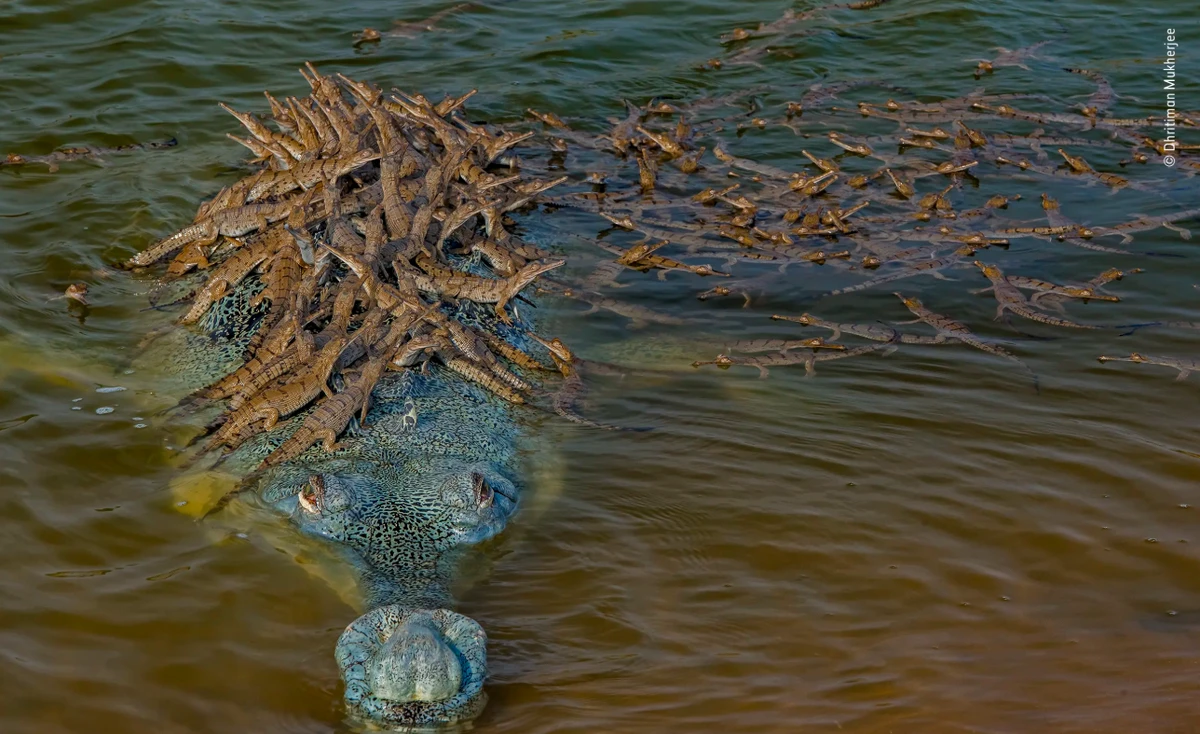
Pupupu, I've definitely changed my mind this year.
And with that, her parental duties are complete – the babies are born knowing how to forage for food, so they won't go to waste on their own. But Mom strives to exceed her plan: she stays with the babies until they're 3 months old, protecting them from predators and giving them piggyback rides! 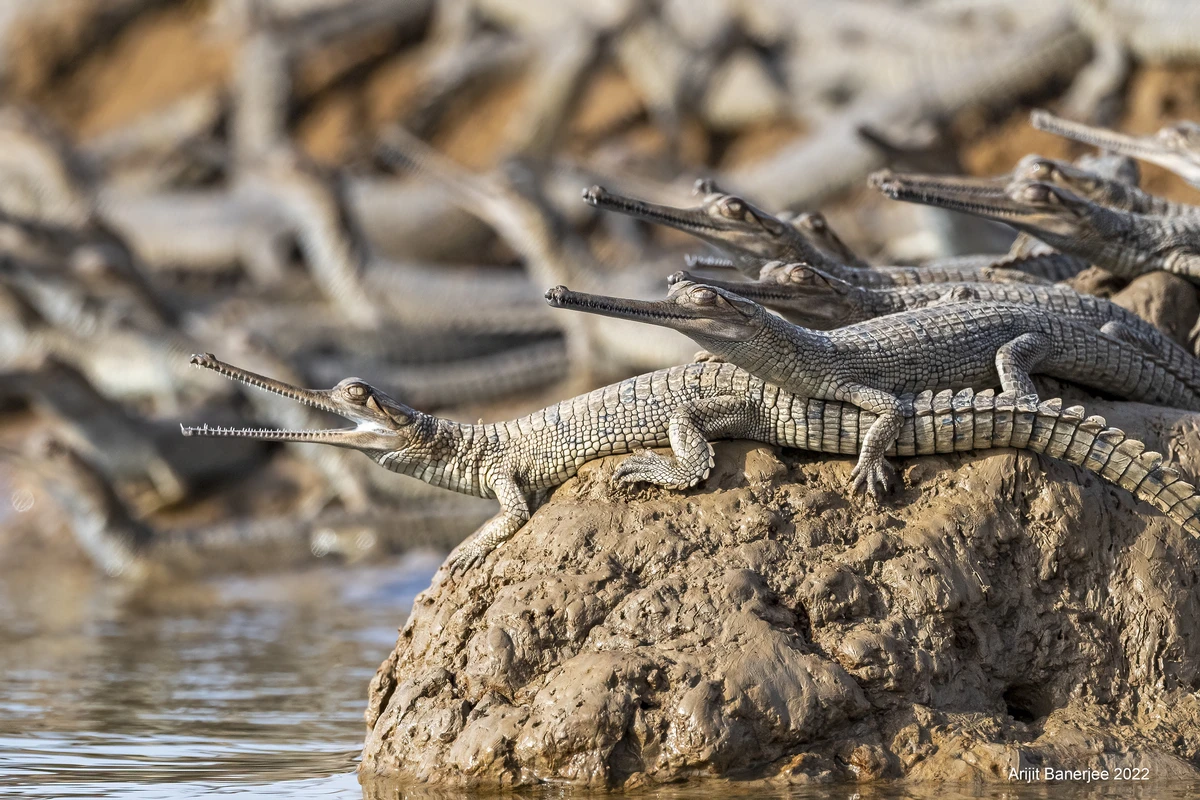
Hooray, Mom's coming home from the store!
This is how the image of terrifying predators is destroyed. They show no aggression or thirst for human blood. Despite their appearance, they are cautious hunters and excellent parents, making good neighbors! 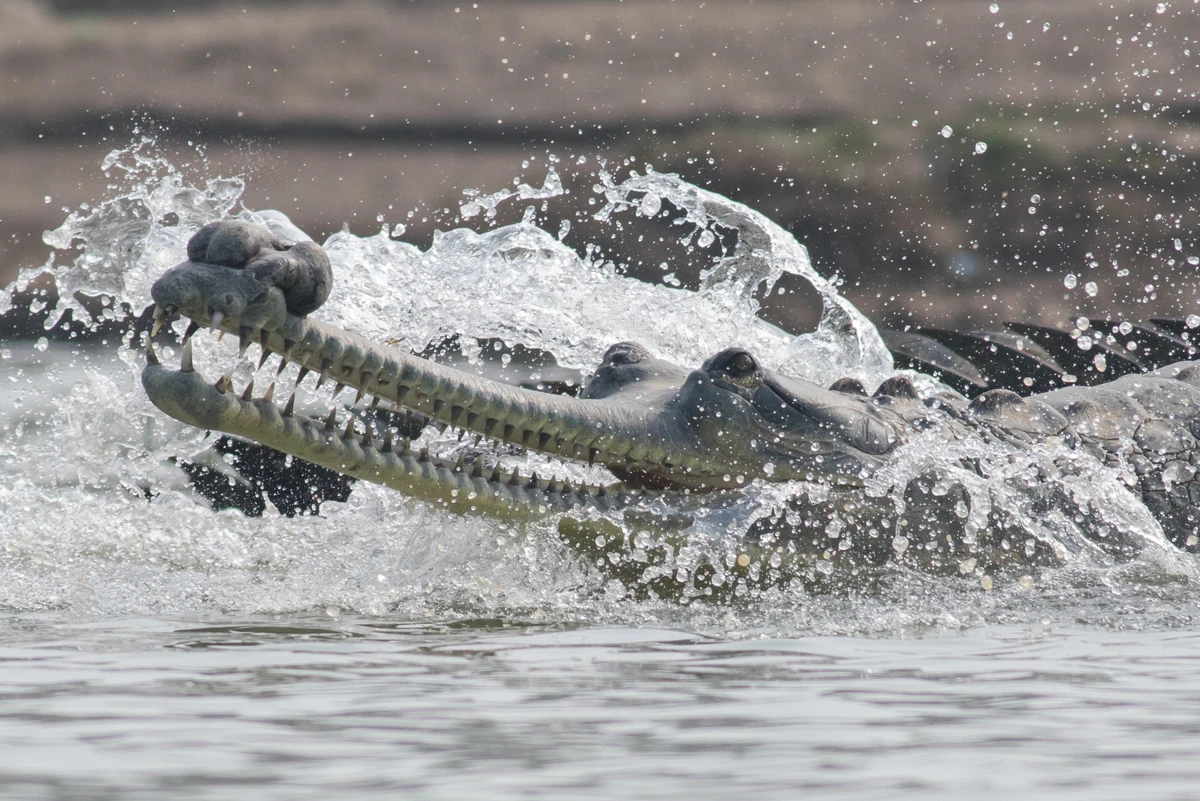
What happiness on that scaly face! He's just like a dog!
It's just a shame people disagree. Gharials have lost 98% of their habitat today, all due to habitat destruction and mass poaching. Unfortunately, animal welfare and environmental protection in general are extremely poor in India. Currently, only about 650 individuals remain in local rivers, and the chances of this remarkable, truly harmless crocodile disappearing from the face of the Earth forever are extremely high.