The Village of "Bound Feet" is home to the last few Chinese women suffering from an ancient, cruel tradition (13 photos)
The "Bound Feet" women's village in China is home to over 100 women who suffer the consequences of an ancient custom in which girls' feet were broken and bound as children. This practice is believed to have originated in China in the early 10th century. For about a thousand years, small feet were a sign of wealth and high status in the country. In the early 20th century, society deemed this tradition outdated and banned it, but it didn't disappear immediately.
Warning! This material contains shocking images. Sensitive and nervous individuals are advised to refrain from viewing. Instead, consider sand cats, which look like kittens their entire lives. 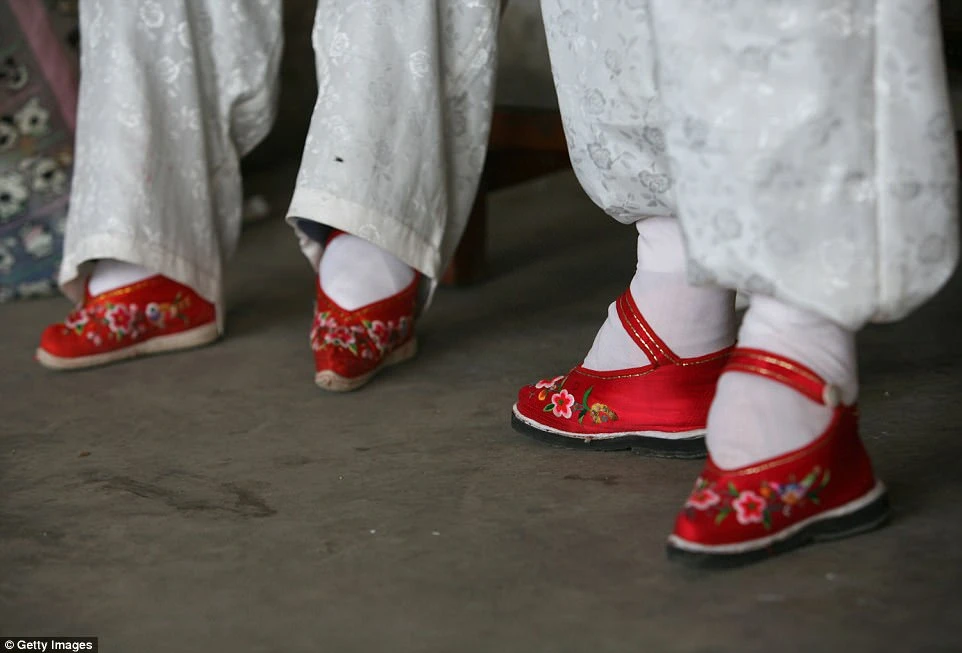
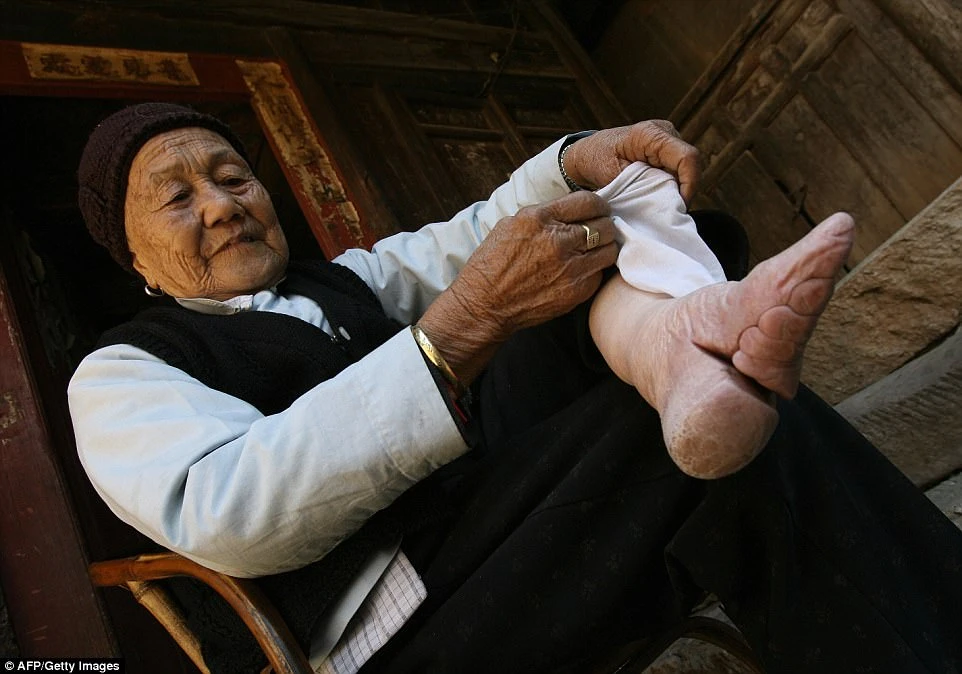
Lüyi Village in Yunnan Province is also known as the Village of Bound Feet. It is home to over 100 women over 70 years old whose feet were tightly bound as children. Girls had all but the big toe tightly bound to their feet to alter their shape. This practice was popular among wealthy families, where heirs did not have to work and, as a result, there was no need to use their feet. These mutilated feet were known locally as "golden lotuses." 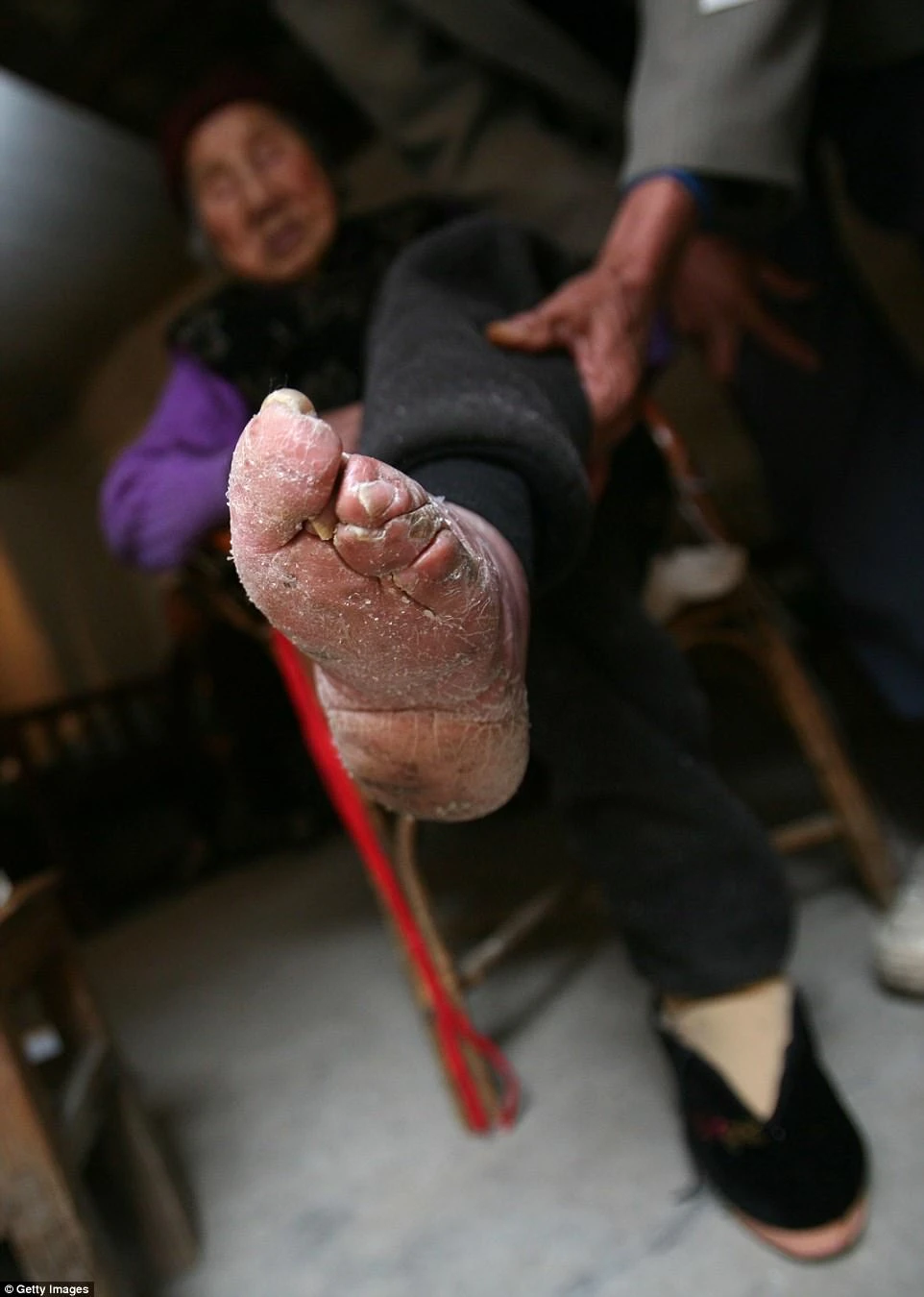
The feet of girls aged four to nine were bound. This was done in winter to dull the pain and reduce the risk of infection due to the cold temperatures. During the procedure, the girls' nails were cut as short as possible, then the foot was bent so hard that the toes were pressed into the sole of the foot and broke, and then a bandage was applied. 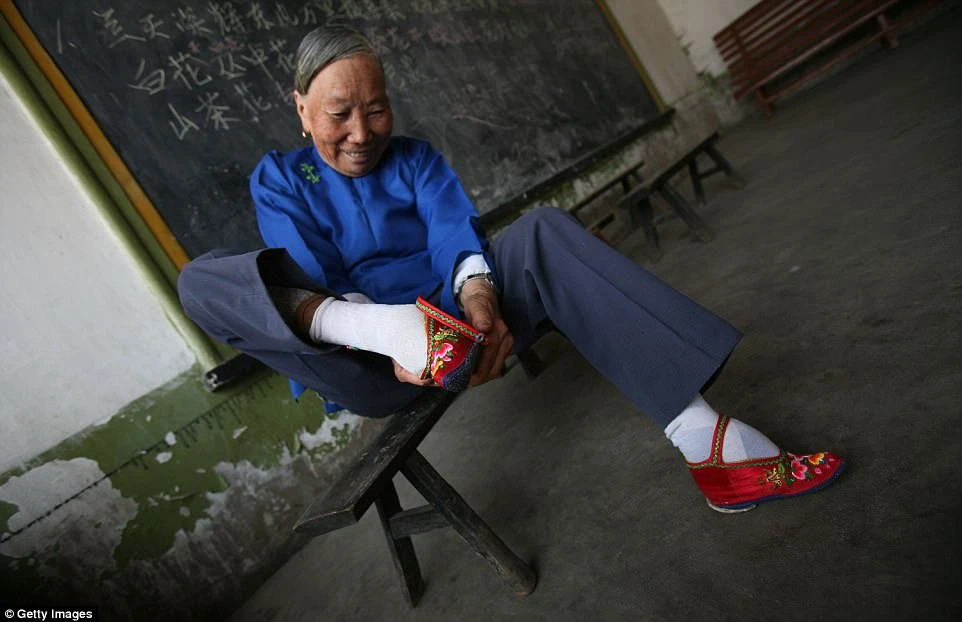
A woman's tiny, bound feet were a symbol of her husband's wealth, as he could afford to keep his wife idle. For girls from poor families, foot binding was a chance to marry well, and their parents agreed to it despite their pity for their daughters. It was believed that mothers should not perform this procedure, as they would be too compassionate to tighten the bandage tightly enough. There was even a saying: "A mother cannot love both her daughter and her foot." 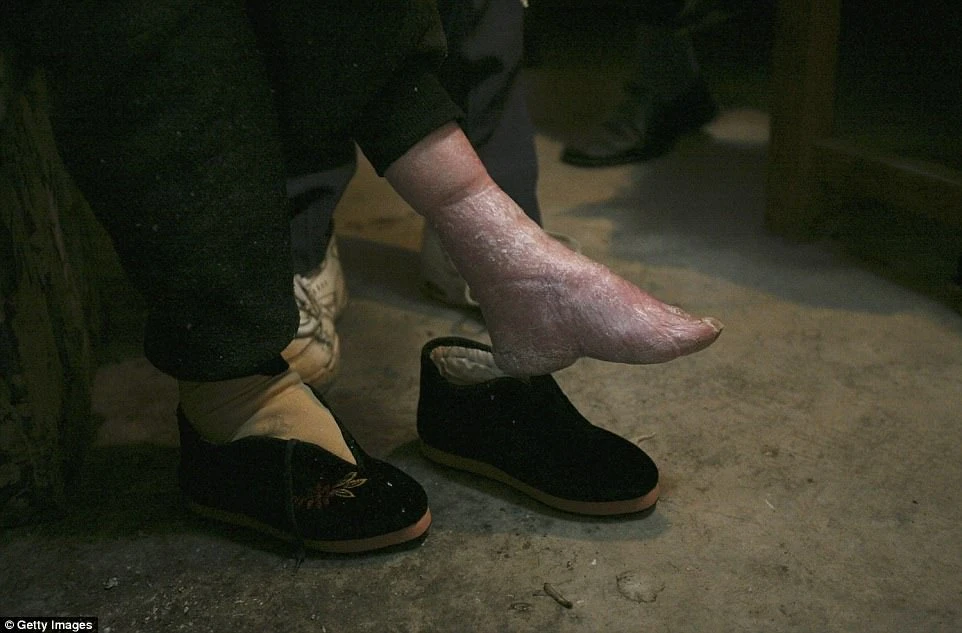
Now these women's feet are permanently deformed, their toes are pressed together, and the skin is dry and cracked. 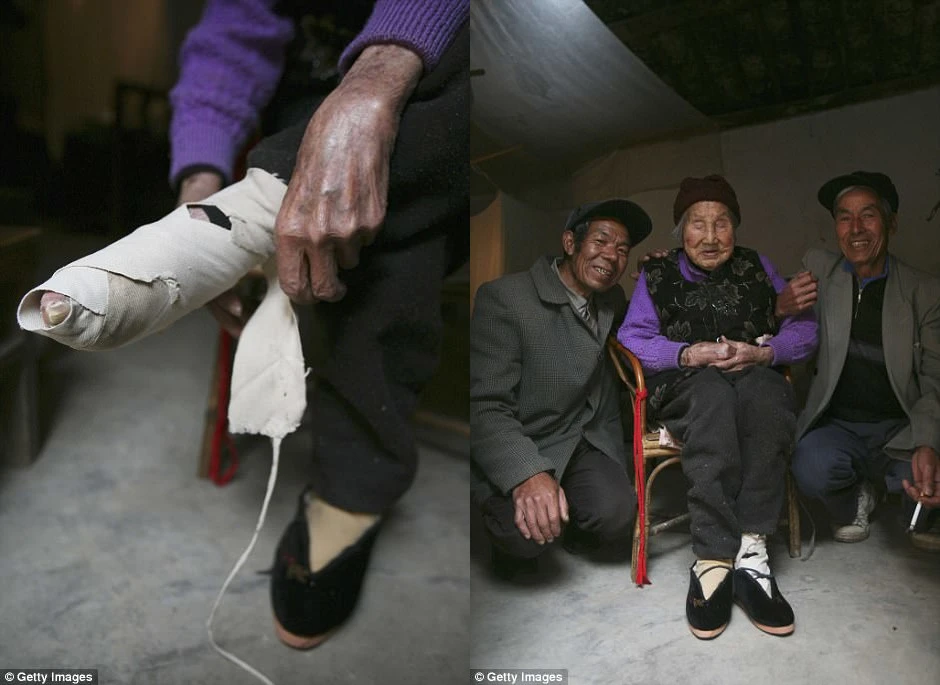
100-year-old Luo Pu, who lives in a village, shows off her feet. 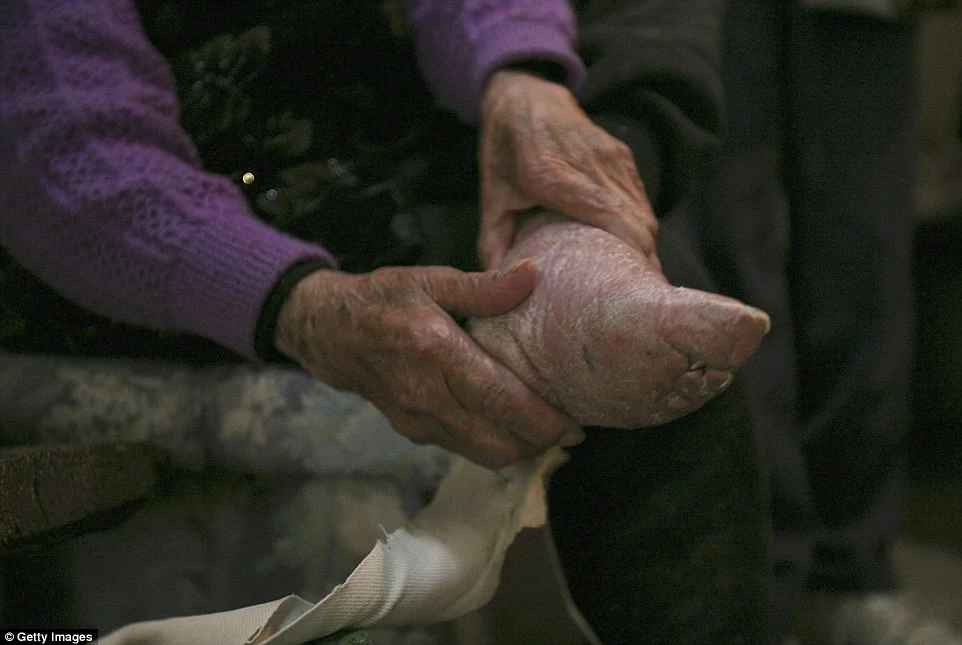
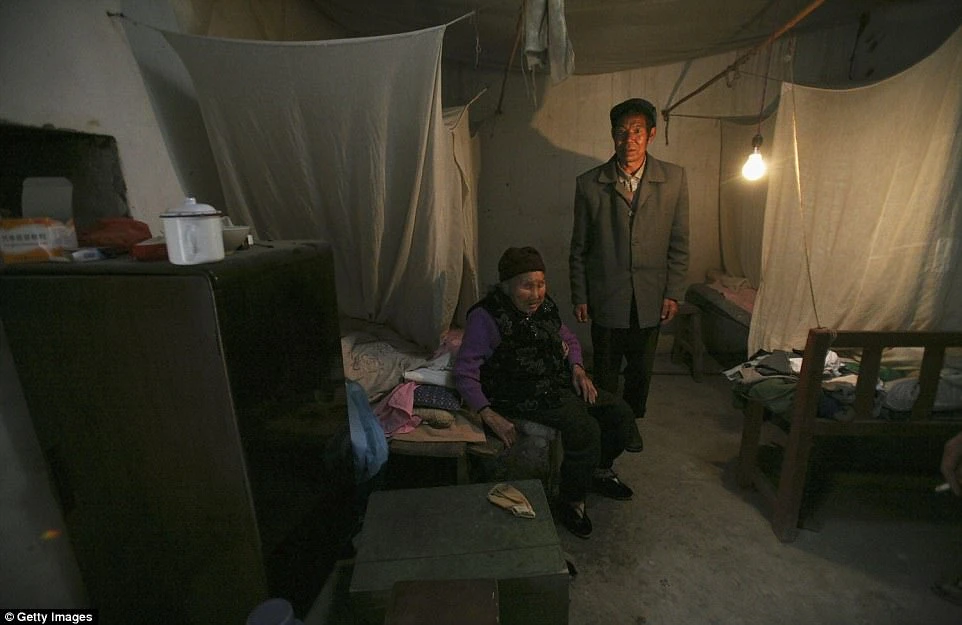
Luo Pu with his son. 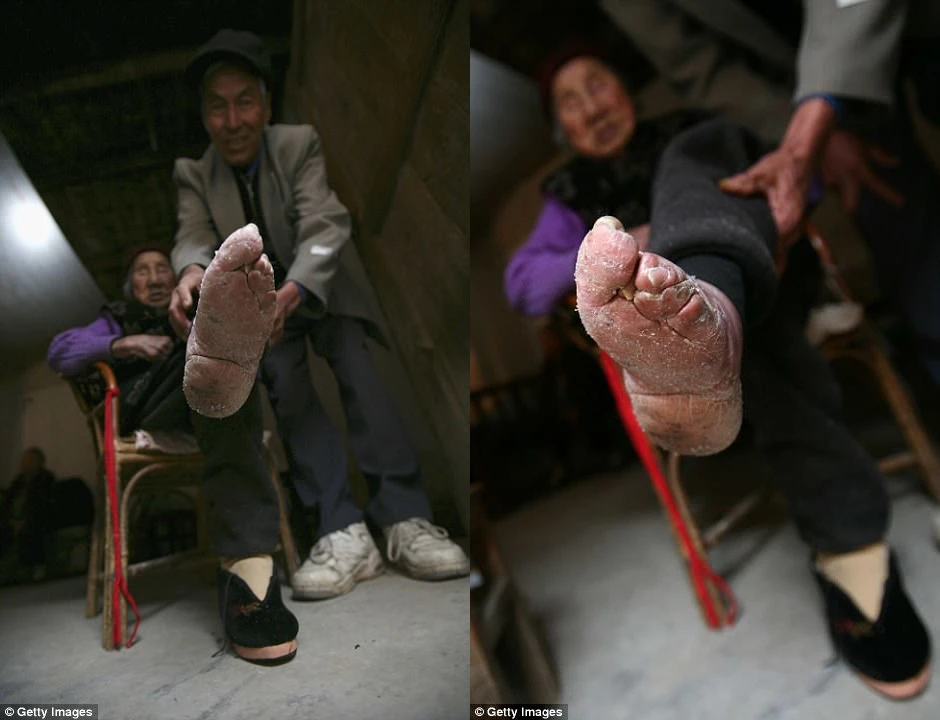
There are several legends about how the tradition of footbinding began. According to one version, there was a Chinese emperor who fell in love with a dancer whose feet were bound in silk. Another legend says that the emperor's favorite concubine was clubfooted and asked him to make footbinding mandatory for all girls in the country so that her own feet would not be considered ugly. 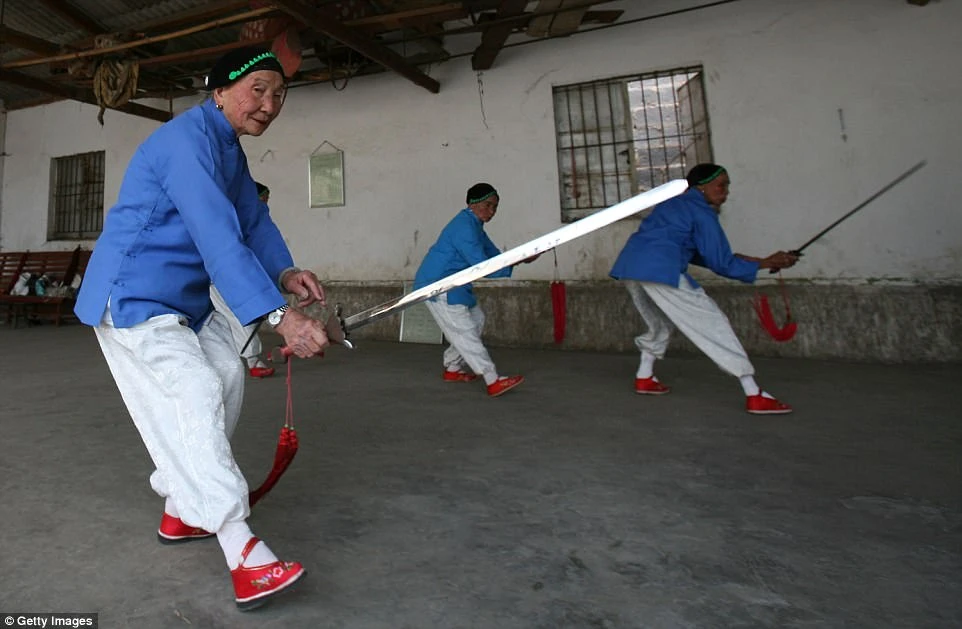
Many versions of the ritual's origins are linked to dance. Therefore, women in Luyi continue to dance and practice martial arts; the village even has a dance team.
Special shoes for practice are decorated with golden lotuses. 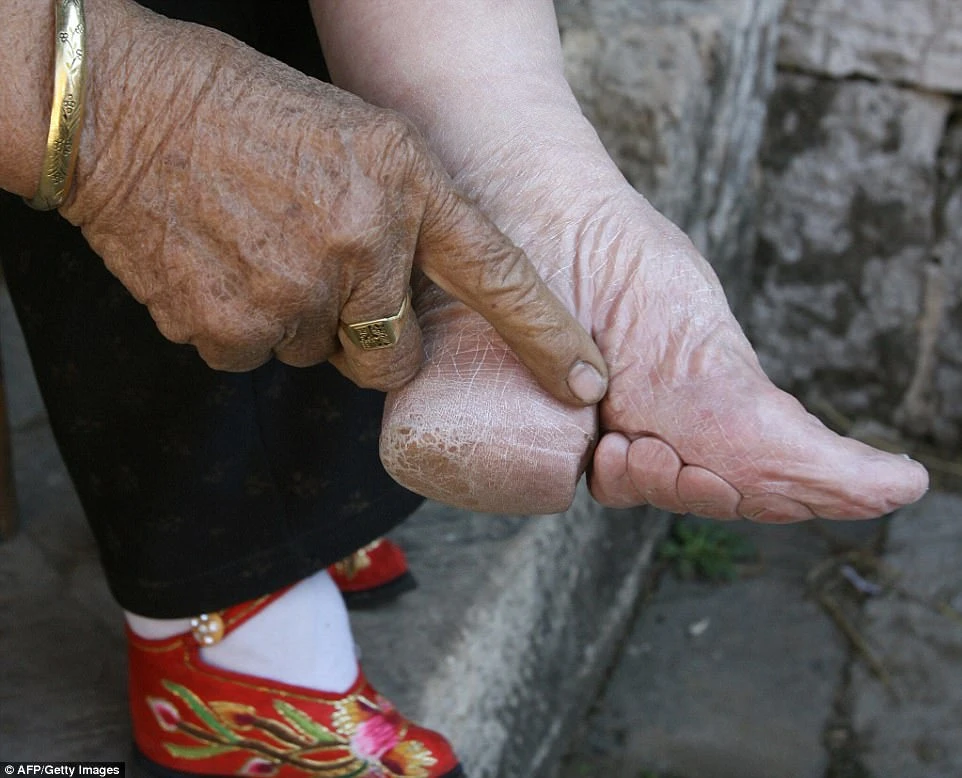
86-year-old Zhou Guichen shows off her deformed foot. The bones of all her toes, except the big toe, were broken and pressed into her foot, then "grew" into it over a long period of time under the weight of her body. 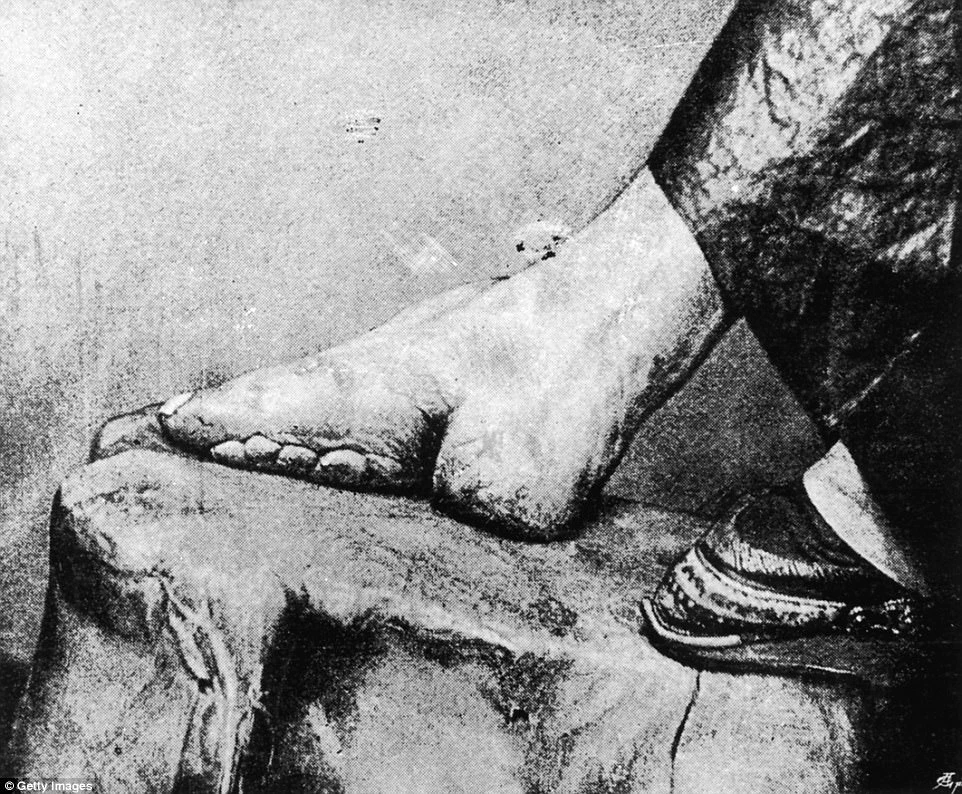
The foot of a Chinese aristocrat. 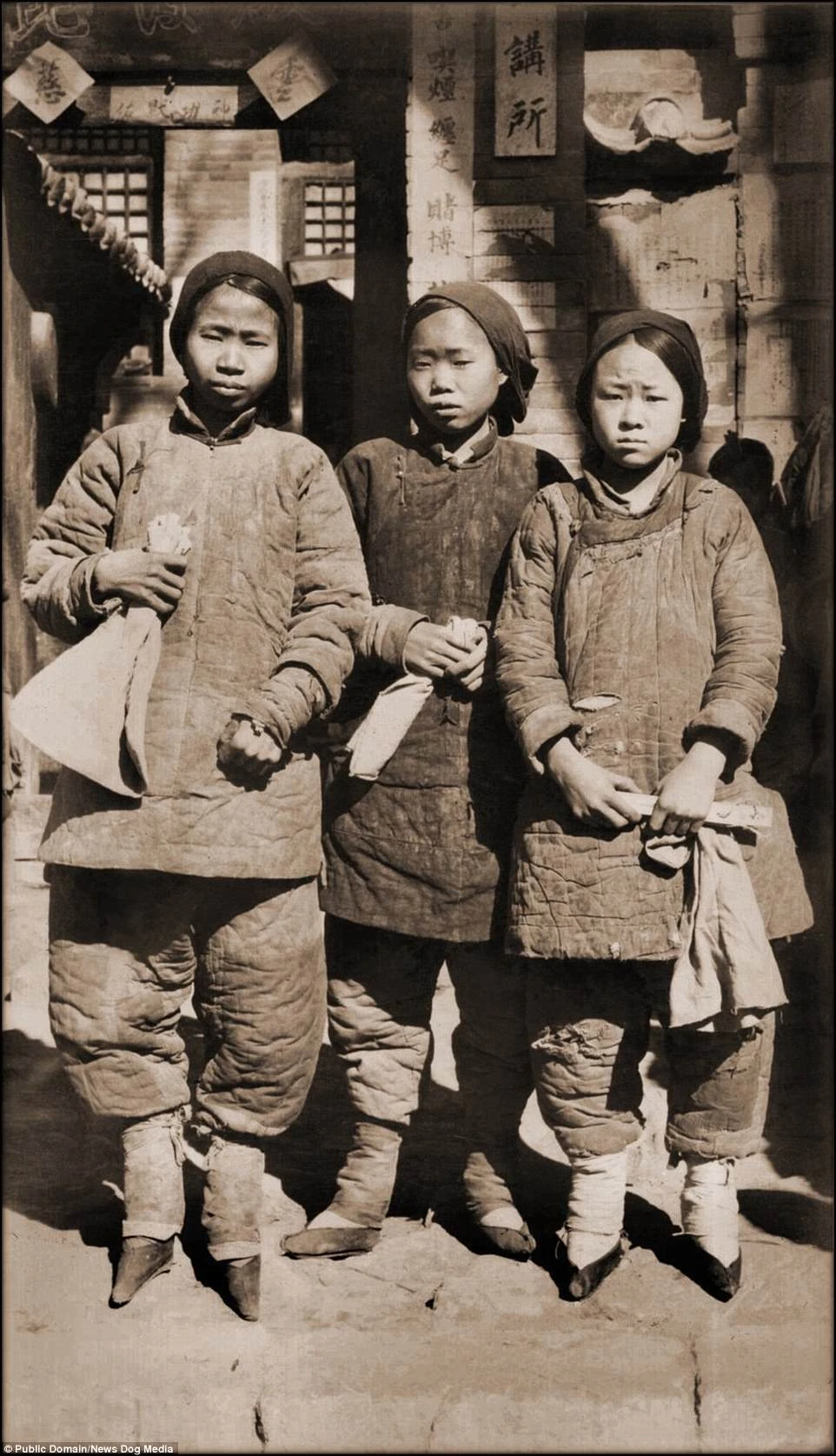
Three girls with deformed feet. The photo was taken shortly before foot binding was officially banned. Several attempts were made, but the tradition persisted for a long time: in 1902, the Qing Dynasty emperor issued a decree to this effect, and in 1921, the new government did the same.
When the Communists came to power in China in 1949, they managed to stigmatize the custom and achieve its abolition even in remote rural areas. The last known case of bandaging occurred in 1957.