Why is the Pope's ring called the "Ring of the Fisherman" and what is its secret (6 photos)
The "Fisherman's Ring" is an essential attribute of papal vestments, no less important than the tiara. It is not passed down from one pontiff to the next, but is made individually for each pope. What secrets does this symbol of the papacy conceal, and why is it called the "Fisherman's Ring" and not something else? 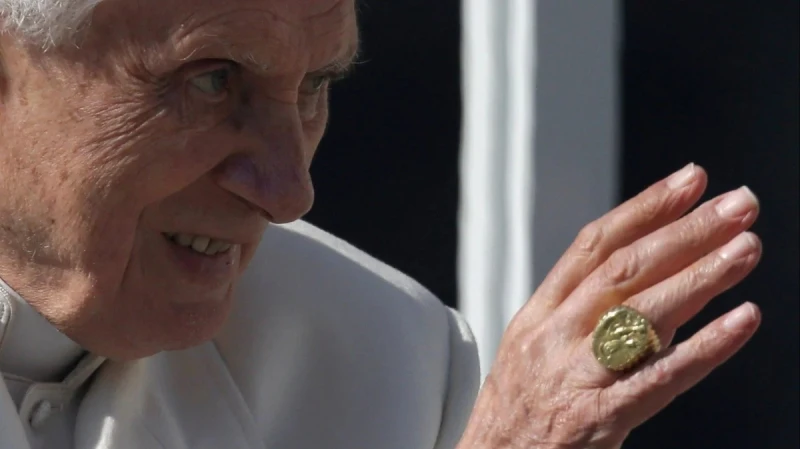
The head of the Catholic Church is considered the successor of the Apostle Peter, one of Christ's most faithful disciples. Before his baptism, he was a simple fisherman, and the name of this profession was later applied to him as a metaphor. In Christianity, the apostle is considered a "fisher of souls," who gathers sinners and guides them onto the true path. 
As a follower of Peter, the Pope also fishes for human souls, preventing them from sinking into the abomination of sin. This is why the papal ring is called the "Fisherman's Ring." It is adorned with an image of the cross and the Apostle Peter casting a net into the sea. However, each pope's ring is unique. It is made for the new pontiff and adorned with his initials. 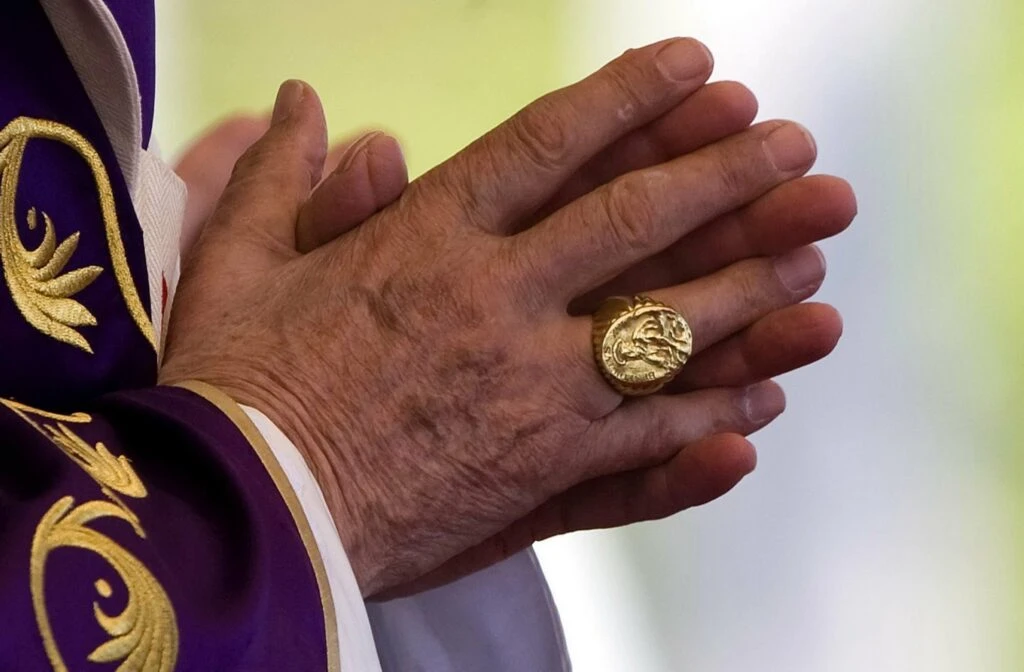
Until 1842, the papal ring bearing his name served as a seal, authenticating letters and important documents. The "Fisherman's Ring" was made of pure gold and is presented to the newly elected pope by the Dean of the College of Cardinals during the coronation ceremony. The head of the Catholic Church must reverently kiss the relic, a sign of humility and respect for the great mission of continuing the work of the Apostle Peter. 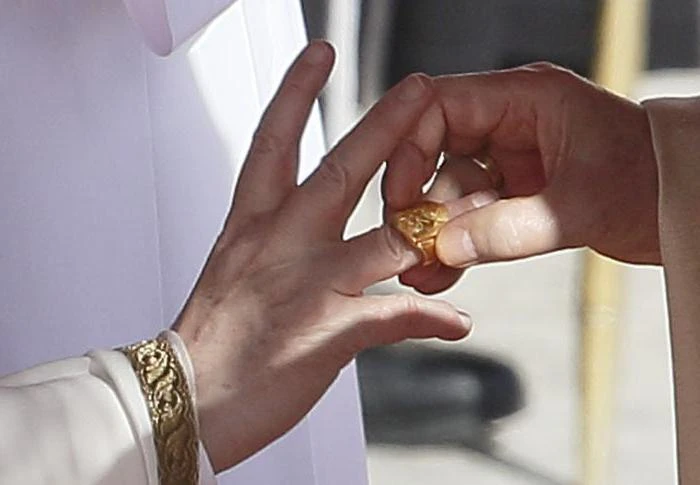
After the death or abdication of a pope, his ring is destroyed. This was previously done to prevent cardinals from forging seals on documents. Nowadays, when rings are no longer used to authenticate documents, it is simply an important tradition. The custom of destroying the ring and then remaking it later gave rise to the nickname "phoenix ring."
Interesting facts about the papal ring
The "Fisherman's Ring" was first mentioned in a letter by Pope Clement IV in 1265. Since then, the reverent attitude toward the ring among high-ranking Vatican officials has remained unchanged. However, something interesting has happened. In 2013, Pope Francis, upon his ordination, requested that the ring not be made of gold. 
Pope Francis
For this pontiff, the ring was cast in silver and gold-plated. This was done not for any special reasons, but simply to save money. But whatever the material used, the "Ring of the Fisherman" is priceless as one of the symbols of the papacy. 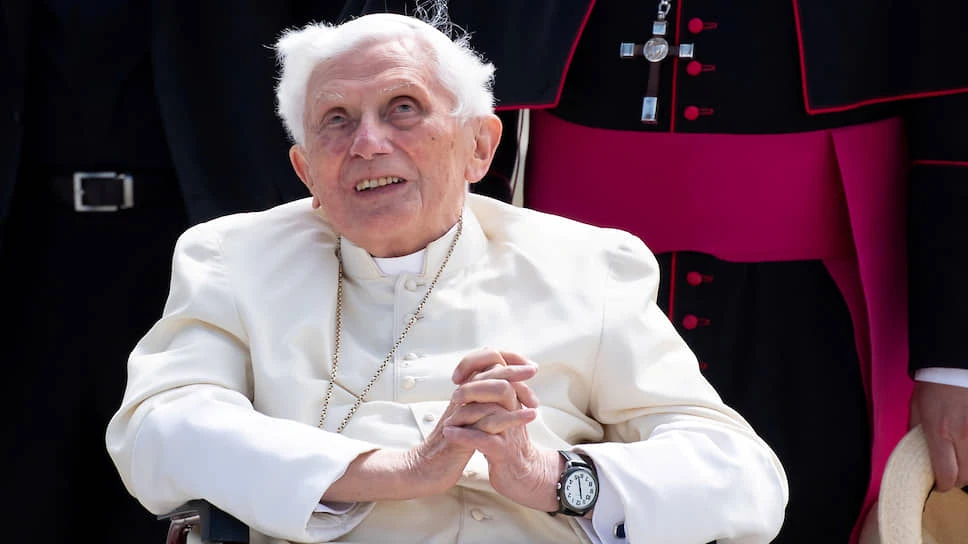
Pope Benedict XVI
In 2006, Pope Benedict XVI nearly lost a relic twice in one day. This happened in the Italian city of Verona during a meeting with the faithful on a football field. The ring slipped off the pontiff's finger twice while shaking hands with Catholics. Each time, the ring was returned to its owner.