Nights of the Long Knives: The 4 Bloodiest Massacres in Modern and Contemporary History (5 photos)
Human history is replete with bloody wars and merciless massacres. Night was often chosen for the extermination of enemies or dissidents, as an enemy sleepy or disoriented in the dark could not be expected to mount an effective defense. Thus, the nighttime massacre became known as the "Night of the Long Knives" in honor of the massacre of political opponents by Hitler and his comrades on the night of June 30, 1934. 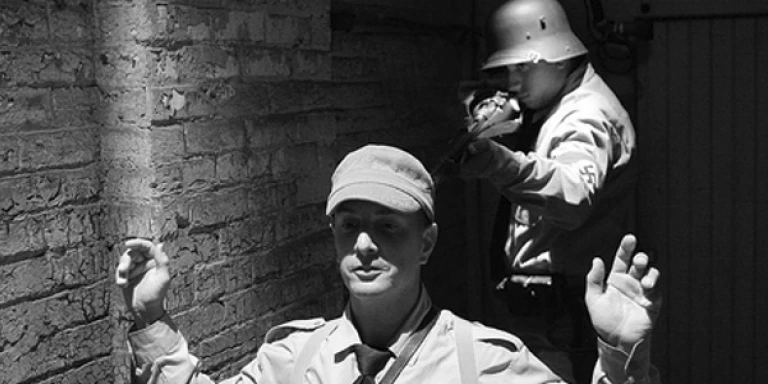
It's difficult to list all the massacres that have occurred even in our era, so we've decided to highlight the most horrific ones that have occurred over the past 500 years. Although in reality there were many more, as every war, religious, or ethnic conflict was accompanied by massacres.
1. "The Night of Sorrows"
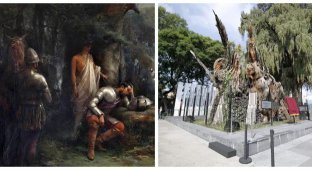
Historians consider the night of June 30 to July 1, 1520, to be the turning point in the Spanish conquistador Hernán Cortés's campaign against Tenochtitlan, the Aztec city-state located on the site of modern-day Mexico City. The Spanish were unable to subjugate the city's inhabitants, and their detachment suffered heavy losses almost daily in skirmishes on the city streets. 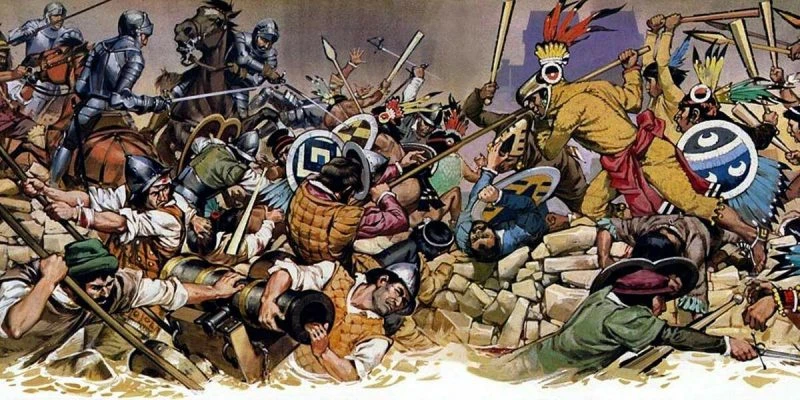
Soon, Cortés decided to break out of Tenochtitlan, but the Aztecs destroyed four of the eight dams connecting the city to the mainland. The Spaniards were forced to build temporary bridges from logs and scrap materials to cross the canals. While attempting to do so, the conquistadors and their Tlaxcalan allies were attacked by the Aztecs from land and from canoes that had entered the canals.
Cortes later wrote to King Charles V that his force's losses amounted to 150 Spaniards and 2,000 Tlaxcalans. Meanwhile, the Spaniard's confessor, Francisco López de Gómara, noted for his meticulous records, stated that 450 Spaniards and 4,000 Tlaxcalans lost their lives that night. The priest was always well informed, despite never having left Europe.
2. The St. Bartholomew's Day Massacre
On the eve of St. Bartholomew's Day, on the night of August 23–24, 1572, the most famous religiously motivated massacre in history occurred. That night, Catholics in Paris took to the streets of their home city to kill Protestants, who were accused of pressuring the royal family, plotting a state conspiracy, and perverting the true faith.
[thumb]https://cn22.nevsedoma.com.ua/p/29/2950/337_files/La_masacre_de_San_Bartolom%25C3%25A9_por_Fran%25C3%25A7ois_Dubois-80.webp[/thumb]
The massacre, fueled by the ruling French Valois dynasty, engulfed one of the largest cities in Europe at the time. Pogromists broke into the homes of Protestants and killed everyone they found there. Many seized the opportunity to settle old grievances, as it was difficult to discern what was happening in the chaos of the night's carnage.
The "St. Bartholomew's Day Massacre" claimed the lives of over 2,000 Parisians, most of whom were Protestants. Among the murdered were men and women, the elderly and infants—the religious fanatics showed no mercy. Their homes and shops were looted and burned, and corpses littered the streets and squares of the French capital.
3. Kristallnacht
This horrific and disgusting event is today considered the prologue to the Holocaust, as it marked the first powerful outbreak of anti-Semitism in Nazi Germany. On the night of November 9-10, 1938, the Nazis organized pogroms against Jews in dozens of German cities. 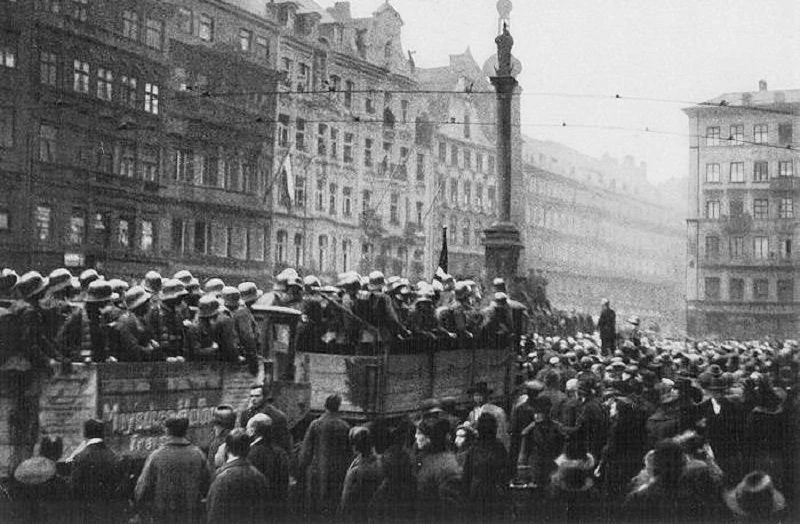
Crowds of Germans broke into Jewish homes, shops, and synagogues, beating anyone who looked Jewish with fists, sticks, stones, and iron bars. The night got its name from the fact that the pogromists smashed the windows of their victims' shops.
Historians claim that the total number of people killed in the Reich was 90, and the number of wounded numbered in the thousands. A third of the victims were Jews from Nuremberg. The consequences of Kristallnacht were no less horrific—the Nazis sent approximately 30,000 Jews to concentration camps. Needless to say, most of these people died or were murdered.
4. "The Night of the Long Knives"
The event, whose colloquial name has become a household word worldwide, occurred on the night of June 30–July 1, 1934. However, witnesses to the massacre claim that the slaughter lasted until the evening of July 2. The instigator of this mass murder, linked to a power struggle, as with Kristallnacht, was Hitler and his associates, who decided to eliminate their only rival for power—Ernst Röhm and the stormtroopers who supported him. 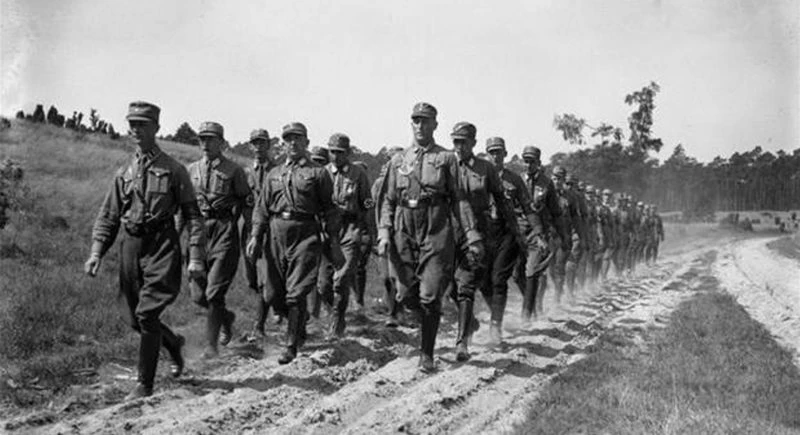
The future Führer's comrades were tasked with eliminating as many SA members and all their leaders as possible, including Röhm himself. As usual, opponents were accused of treason and demanded to surrender voluntarily. Some complied, while others resisted.
Arrests weren't the only measure – approximately 1,070 people were detained and executed on the spot or after being transported to prison. Hitler personally participated in the arrest of his main opponent, Ernst Röhm. Rather than execute the opposition politician, a pistol with one bullet was brought to his cell, and he shot himself.