Three Generations of Trumps: From a German Village to the US Presidency (12 Photos)
Every family has its own stories, passed down from one generation to the next. Some remember a hard-working grandfather, while others remember a grandmother who lived through difficult times. But sometimes, family stories become part of national history. Their dynasties resemble a gripping novel with many chapters: poverty and rise, struggle and scandal, power and influence. The Trump family is a prime example. The path from a Bavarian village to the White House surpasses any fictional scenario. 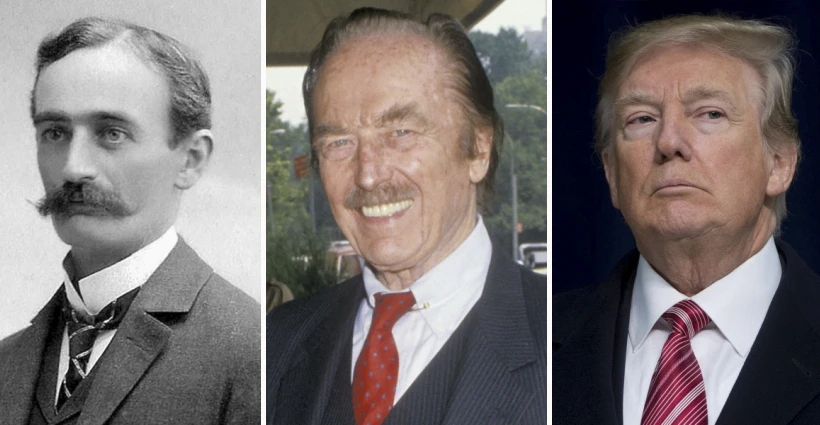
Friedrich Trump's Gold Mine
It all began back in 1885, when 16-year-old Friedrich Trump left his native village of Kallstadt in Bavaria. Life in the German hinterland didn't promise much prospects, and young Friedrich understood this perfectly well. Besides, he wasn't particularly keen on serving in the army. So he decided to seek a better life in the New World. Leaving a note for his mother, the young man boarded the transatlantic liner SS Eider, which soon departed for America. 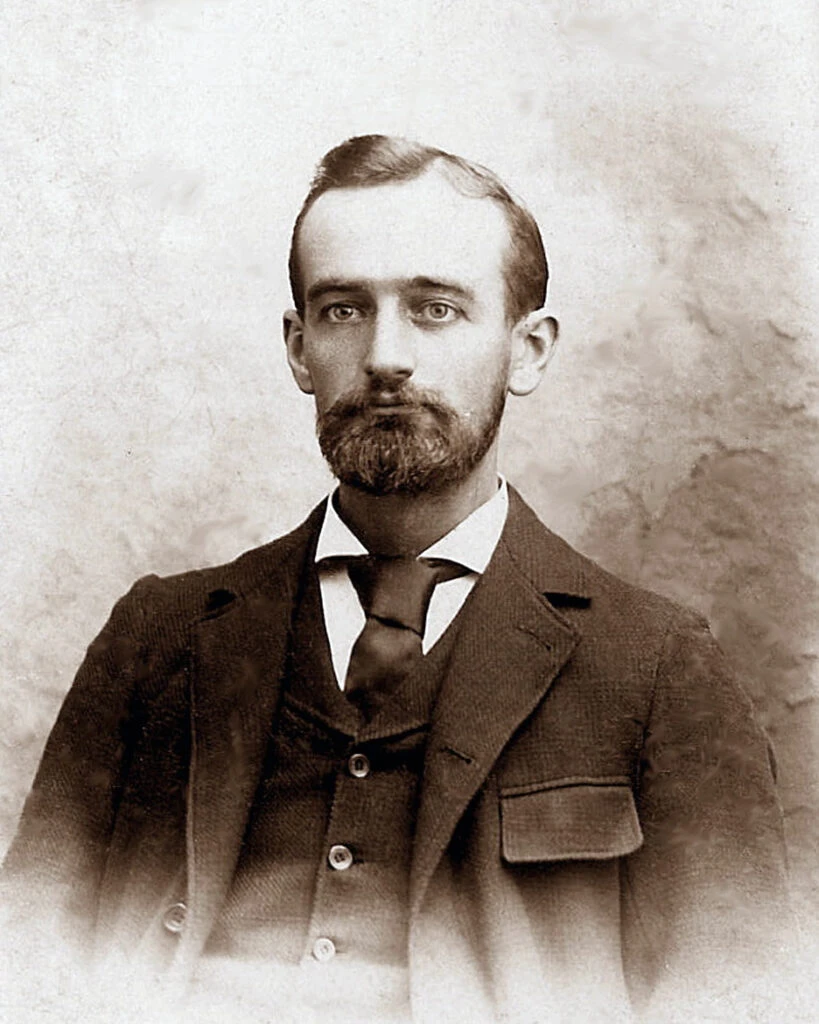
Friedrich Trump
Twelve days later, Friedrich Trump landed on American soil in the harbor of New York. He had only a few marks in his pocket, but his heart was filled with a burning desire to become rich. He was determined to succeed at any cost. He was willing to move mountains to achieve it. His first years in America were difficult. Friedrich worked as a barber in New York, but soon realized that the real money wasn't in haircuts.
When the Alaska gold rush began, the enterprising German headed to the Klondike. He wasn't looking for gold in the ground, but in the pockets of prospectors. Friedrich Trump understood perfectly well that newcomers needed a place to stay. So he built a small hotel, which quickly became popular. Soon, the gold rush swept across the Western United States, and demand for hotels began to soar.
Friedrich Trump moved to the town of Bennett, a major hub for adventurers. There, he opened a hotel and restaurant, which, thanks to the gold miners, paid for itself in a matter of days. However, the young entrepreneur soon noticed a worrying sign: plans were underway to build a railroad in a small village nearby. This threatened to deprive his establishment of all its customers. 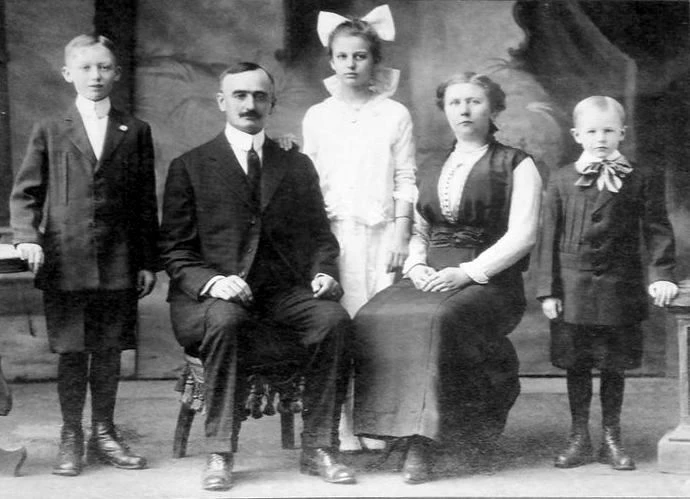
The Trump family in 1915. Fred Trump on the far left
Then Friedrich decided on a bold move. He dismantled his hotel, loaded it onto a barge, and transported it downriver to where a train station was being built. When the first train arrived, Friedrich's hotel was already welcoming guests. Weary prospectors could rest, eat, drink, and... have fun with the girls. Business flourished, and soon Trump had earned enough to return with his family to New York. There, he married Elizabeth Christ and went into real estate, laying the foundation for the future family empire.
The Great Depression – A Great Start
Next in this story was Fred Trump, Donald's father, born in 1905 in New York. He inherited his father's business acumen. When Frederick died of Spanish flu in 1918, 13-year-old Fred was already helping his mother manage the family business. 
Some buildings constructed by Fred Trump's company are protected by the state as architectural monuments.
Fred Trump proved to be a worthy son to his father. As early as the 1920s, as a teenager, he began building houses in Brooklyn and Queens. He not only managed to preserve the family business, but also transformed it into a veritable construction empire. True, Fred often had to resort to deception. In the early 1930s, his construction company experienced all the "joys" of the Great Depression. Companies in the United States went bankrupt and closed one after another. But where others saw only decline and despair, Fred Trump saw opportunity.
In 1934, the large construction company Lehrenkraus & Co. declared bankruptcy. Fred Trump attended a court hearing related to the case. His attention was drawn to a special asset of the company—the mortgage servicing department. During the crisis, this department repossessed properties from those who could not repay their loans.
Fred Trump decided to resort to cunning. In court, he posed as a prominent Brooklyn real estate broker, embellished his accomplishments, and took credit for others' work. Thanks to his confident demeanor and persuasiveness, he managed to get what he wanted. The mortgage servicing department, along with the authority to foreclose on homes in bankruptcy, was transferred to him. 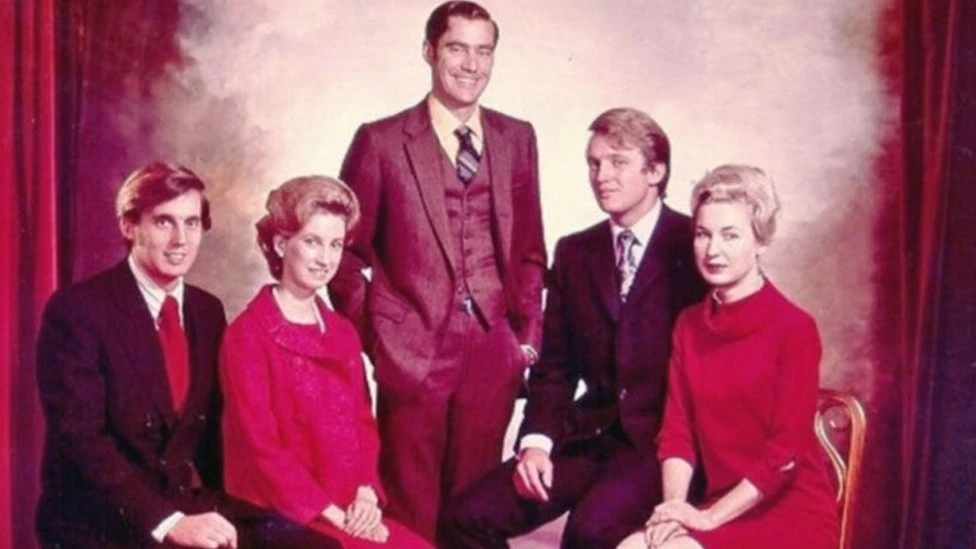
Fred Trump's Family
Fred proved to be an innovator. He was one of the first to recognize that supermarkets were the future of retail and began developing commercial real estate. His company, Elizabeth Trump & Son, grew rapidly, and by the mid-20th century, Fred owned thousands of residential properties in New York City. He not only built houses but also created entire neighborhoods that still shape the skyline of Brooklyn and Queens.
But Fred Trump's greatest achievement was his appointment to public office. He was appointed head of the Federal Housing Administration, created by Franklin Roosevelt in the 1930s. This organization was created specifically to provide housing for the American middle class. The administration distributed funds to the country's largest developers, who worked in various states. 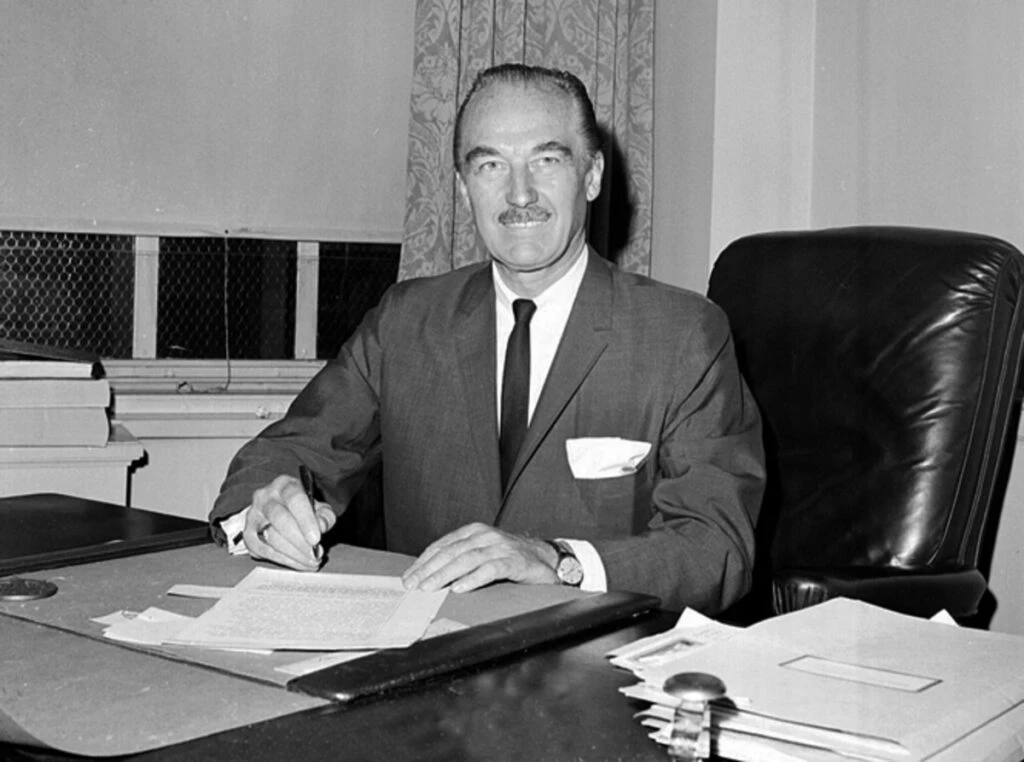
Fred Trump. 1965
It's not hard to guess which company received the best funding. But Fred Trump deserves credit – his firm always delivered top-quality work and always left clients satisfied. Thus began the family business empire, which Donald Trump, a third-generation American, inherited.
Donald's Childhood: Austerity Instead of Luxury
Donald Trump, born in 1946, aspired to great goals from an early age. He wasn't content to simply continue his father's work—he transformed the Trump family name into a global brand. The future billionaire spent his childhood in a luxurious mansion in the prestigious New York suburb of Jamaica Estates. His father ran a company that handled millions, and the family home was striking in its splendor. The colonnaded mansion with its refined interiors boasted 23 rooms, and the spacious basement housed a huge garage. 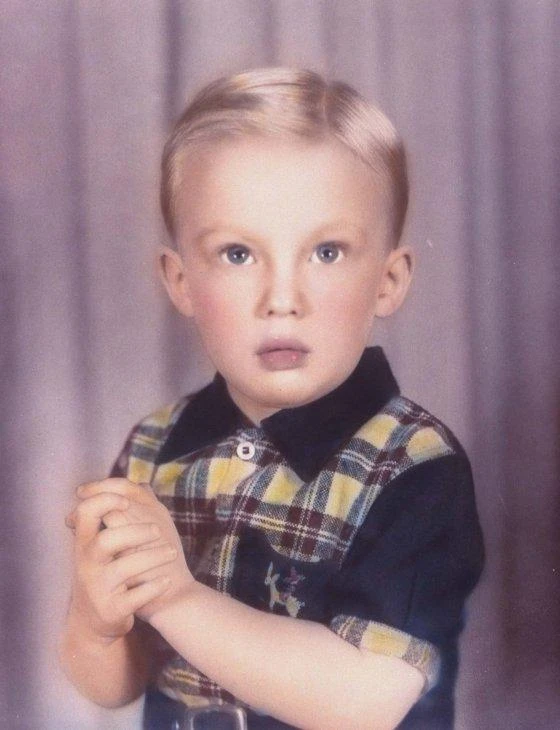
Donald Trump's childhood photo
But Fred Trump wasn't one of those parents who allowed their children to grow up in luxury and idleness. Having matured early himself, he instilled in his son from a young age that he would not live off his inheritance and should prepare for serious, responsible work. Writer and journalist Mark Fisher described the elder Trump's attitude toward his children in his book, "Secrets of Millionaires":
"Fred Trump believed the world was made up of winners and losers. He had a binary approach to life, and he instilled in his children the idea that they simply had to be winners."
Donald Trump strove to live up to his father's expectations, although he was hardly a model son. Even in elementary school, a rebellious spirit emerged. At school in Queens, he was known as a real troublemaker. One of his classmates later recounted:
"Donald and I were rowdy at school." We'd throw gum at each other, jump on chairs, pull girls' hair, and get detention for it. I called it 'Donnie Trump punishment.'" 
Military Academy Cadet Donald Trump
The school's complaints about his son's behavior repeatedly upset Fred Trump. Finally, after seventh grade, he took the plunge: sending Donald to the private boarding school New York Military Academy. For a boy raised in a luxurious mansion with servants, the harsh barracks life became a true ordeal.
Donald's commanding officer, World War II veteran Ted Dobias, had no tolerance for mischief and was strict, as befits a military man. Under his guidance, young Trump quickly changed: from a mischievous brat, he became one of the best cadets. Over time, he even began to enjoy the experience. The academy became a true school of life for him. It was there that the young heir to a construction business realized what separated successful people from those who failed.
Donald's First Tricks: Cunning Instead of Capital
In 1963, Donald Trump returned to New York. He first enrolled at Fordham University and then transferred to the Wharton School of Business at the University of Pennsylvania. During his student years, he led a reclusive life. Trump didn't go to parties, avoided noisy company, and led a healthy lifestyle. He had clear goals in life and didn't want to waste his energy on useless trifles. 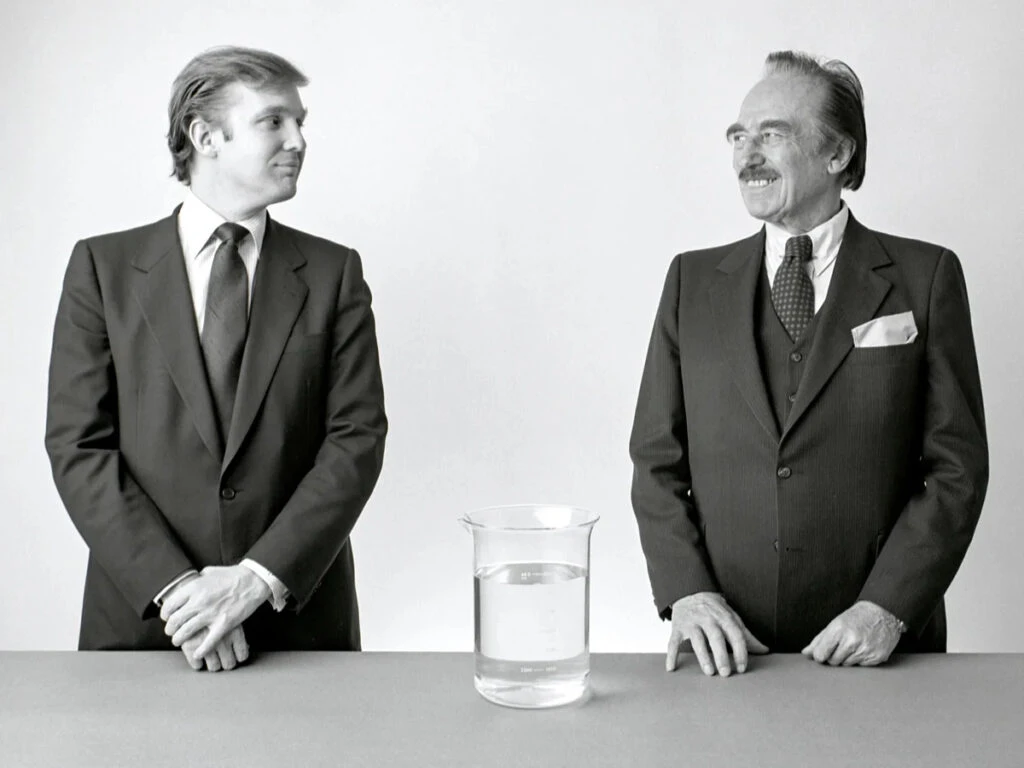
Donald Trump and Fred Trump
Donald Trump wasn't the first son in the family—the right to head the construction corporation initially belonged to his older brother, Freddie Trump Jr. However, his first business venture failed, and Freddie, disillusioned, gave up on the venture. His father, disappointed in his eldest son, turned his attention to his younger brother. Donald, with his determination and ambition, became the family's new hope.
Donald Trump's first independent project was the renovation of a building on 42nd Street in Manhattan. The young man couldn't count on his father's money, so he needed not only to secure a promising contract but also to find investors on his own. So he did what his father had once done—he decided to resort to trickery.
Donald Trump showed up at the office of Penn Central, the building's owner, and announced that he had an agreement with Hyatt Hotels Corporation to build a new hotel. Of course, he had no contract. Then Trump went to Hyatt Hotels Corporation and said he had reached an agreement with Penn Central. That's how he got the property. 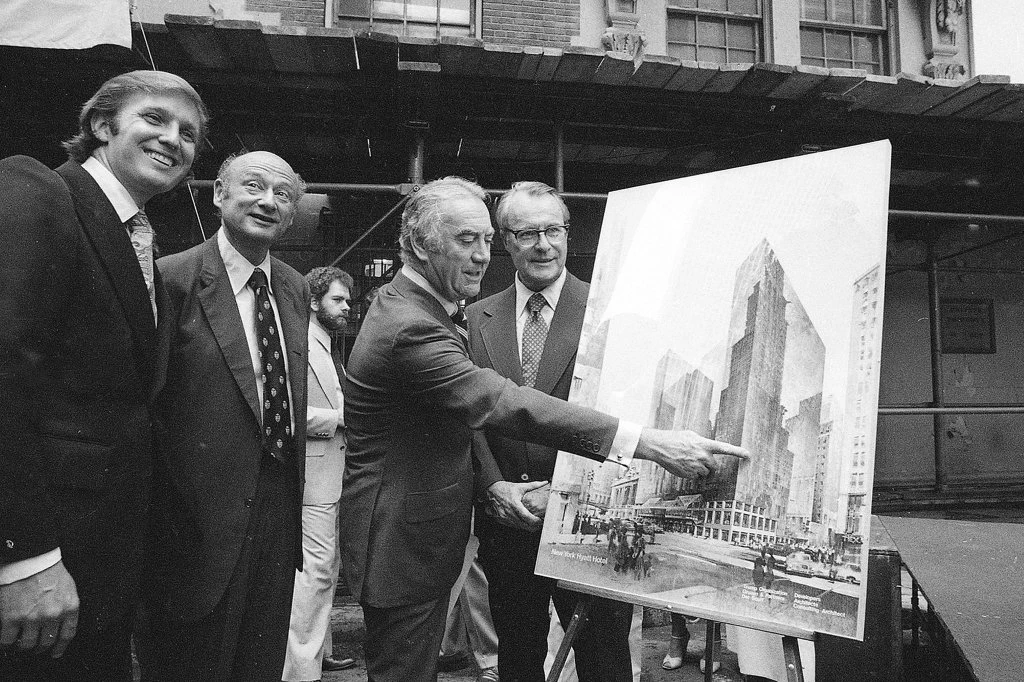
After that, Trump went to the bank for financing. He claimed he had received tax breaks from the government, but all attempts were unsuccessful. Then Donald leveraged his father's connections and actually managed to secure these benefits. He even had to falsify documents, but ultimately, he got his way. Thus, in 1980, the Grand Hyatt New York, one of New York's most famous hotels, opened on 42nd Street.
Trump and His Children: A Family Business in Politics
In 1983, Donald Trump opened perhaps his most famous project—the grand 68-story Trump Tower. Donald wasn't afraid to take risks. He built buildings, named them after himself, and turned them into symbols of success. Trump Tower, Trump Plaza, and replicas of the Taj Mahal in Atlantic City all became part of his empire. But Donald went beyond real estate: he became a reality TV star, the owner of the Miss Universe pageant, and, finally, a politician. 
Donald Trump actively cultivated his image, collaborating with leading publications. Journalists helped shape the image of a successful man and self-made billionaire. The businessman often personally called the Wall Street Journal, the New York Times, and Forbes to share stories about himself.
Later, his popularity became a source of support for Trump during difficult times. He made money from literally everything: interviews, books, television shows, film appearances, even merchandise. After becoming US president in 2016, Trump became a truly global figure, combining his grandfather's ambition, his father's business acumen, and his own talent for self-promotion.
His tenure in the White House became one of the most talked-about in the country's recent history. And yet, after a brief pause, Trump won the next presidential election. The Trump family legacy continues to evolve. Donald actively involves his eldest children: Ivanka, Donald Jr., Eric, and Tiffany. Some manage businesses, others assist their father in his political career. It is believed that the Trumps may return to the White House in the future—with a different lineup, a new face, but still with the same familiar brand. 
Donald Trump's Family
The Trump family story is a true family epic about risk, entrepreneurship, ambition, and self-creation. From a German village to the presidency, it's a journey full of dramatic twists and turns and controversial decisions. What do you think is more important in a success story: good fortune, personal qualities, or family legacy? Share your thoughts in the comments—we'd love to hear your perspective.