Unique historical footage that will transport you back in time (21 photos)
We will peer into the homes of aristocrats and the hovels of the poor, stroll the streets of European capitals and the village paths of distant colonies to see how people of different classes and countries lived, believed in, breathed, and hoped for. 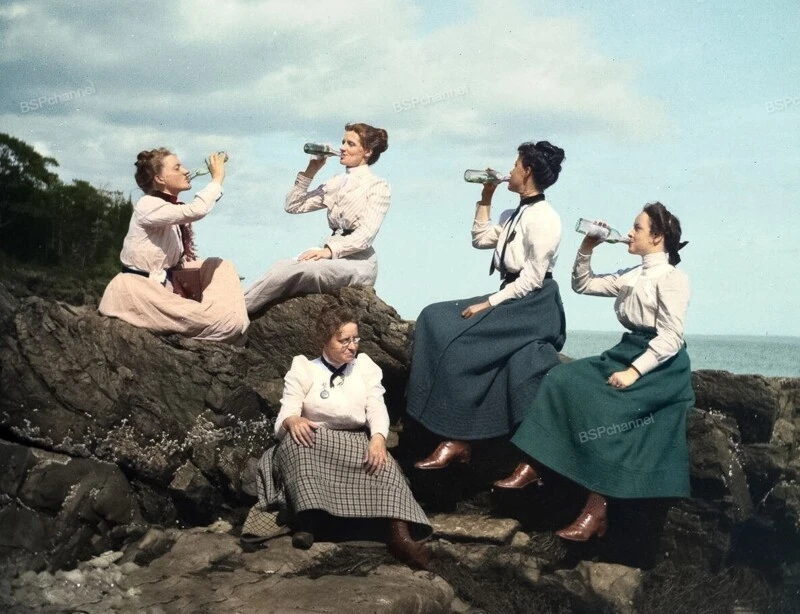
Al Paul (front) and C.S. Rolls in a 4-horsepower Bollee three-wheeler, 1895. 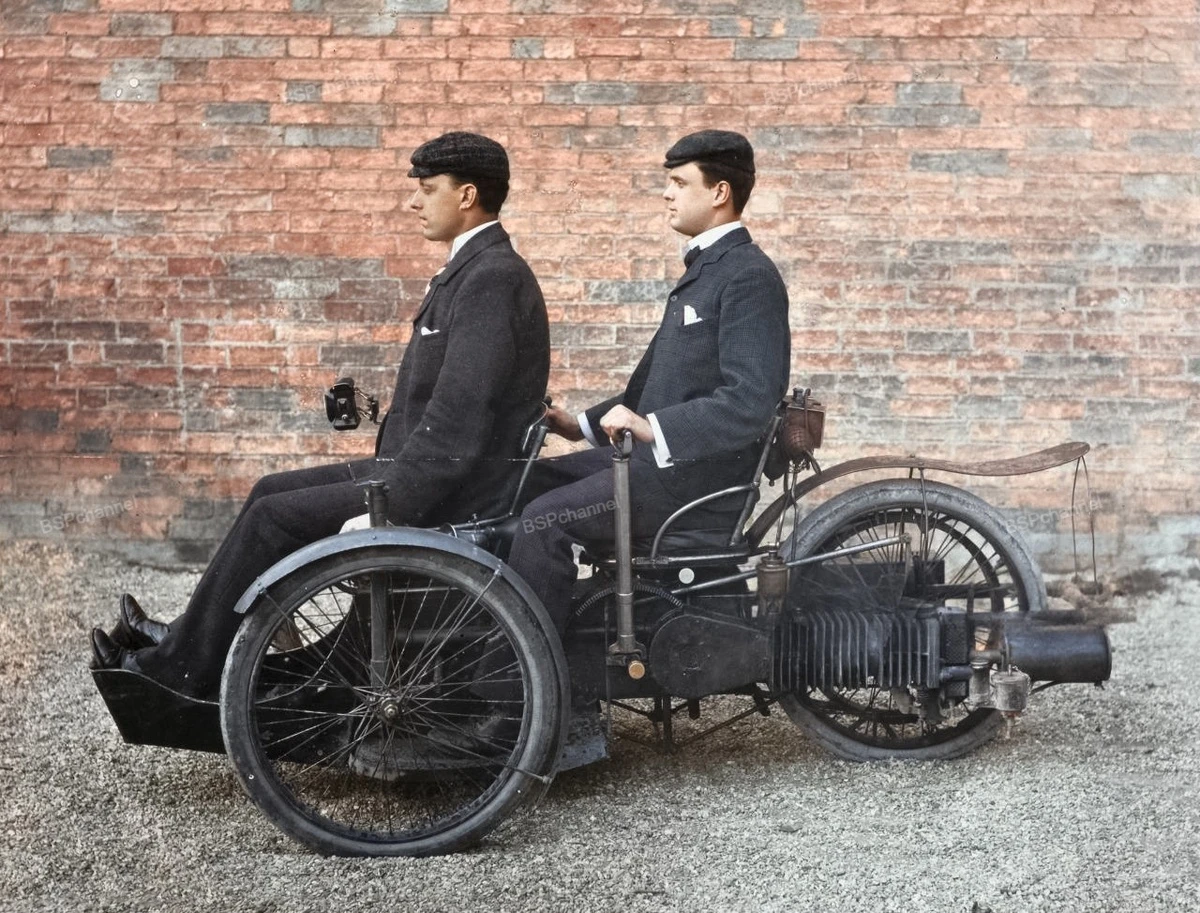
This photograph is from the personal album of Charles Stewart Rolls (1877–1910), a British automotive pioneer, passionate racing driver, and one of the country's first aviators. The image depicts an early Tri-Car, one of the first gasoline-powered automobiles built in France by Léon Bollée, who became a pioneer of the domestic automobile industry in 1895. This three-wheeled vehicle was distinguished not only by its innovative design but also by its racing success: it won several races in France in the 1890s. Before founding the legendary Rolls-Royce Ltd. with Sir Frederick Henry Royce in 1906, Rolls was actively involved in the import and sale of French automobiles through his London showrooms. He was a renowned figure in the world of motorsport and personally participated in many races of his time, combining a passion for speed with a deep understanding of technology.
Steam tram. Dublin, 1888. 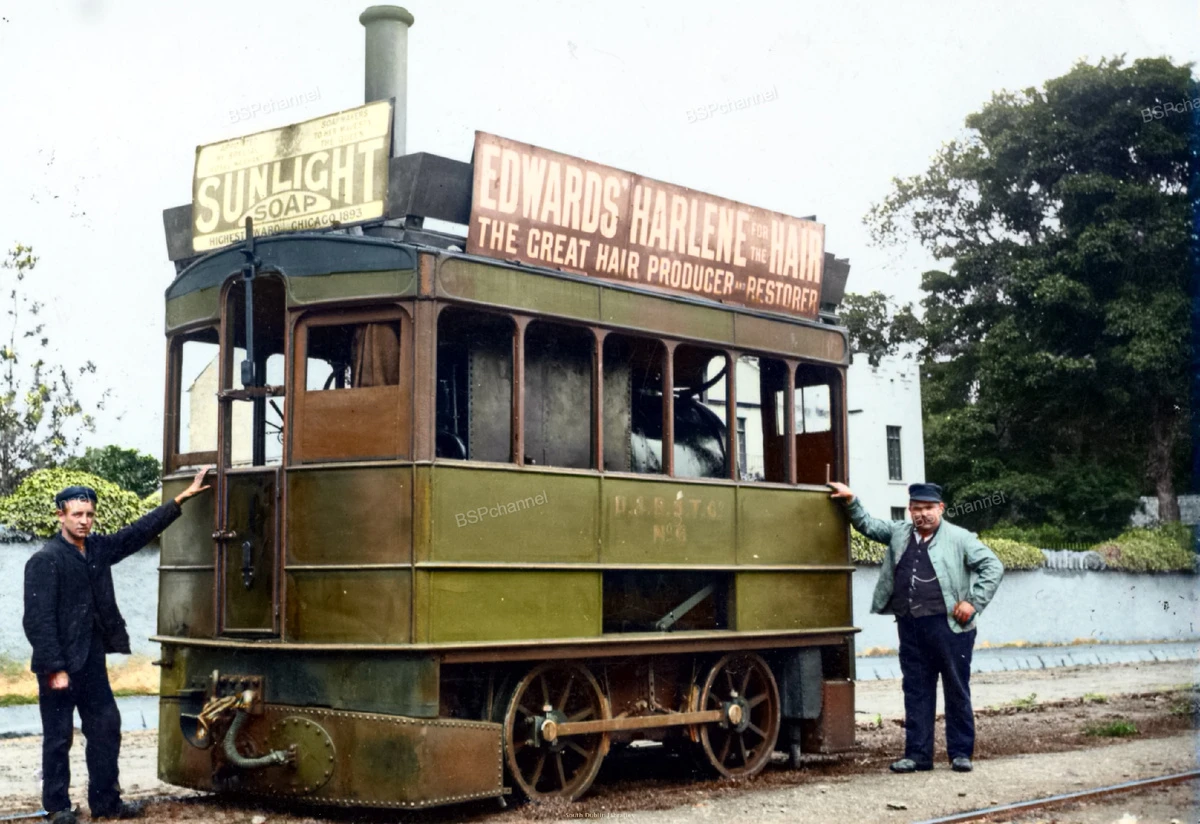
A striking example of the early development of urban public transport in Ireland. Unlike traditional horse-drawn trams, steam trams were more powerful and could carry more passengers over longer distances. In Dublin, this system began operating in the 1880s: steam locomotives, specially adapted for street travel, pulled carriages along rails, connecting the city center with the suburbs. Despite their efficiency, steam trams were noisy, produced smoke, and caused discontent among residents. By the end of the 19th century, they were gradually replaced by cleaner and more comfortable electric trams.
View of Athens from the Acropolis, with Lycabettus Hill in the background. Greece, 1865. 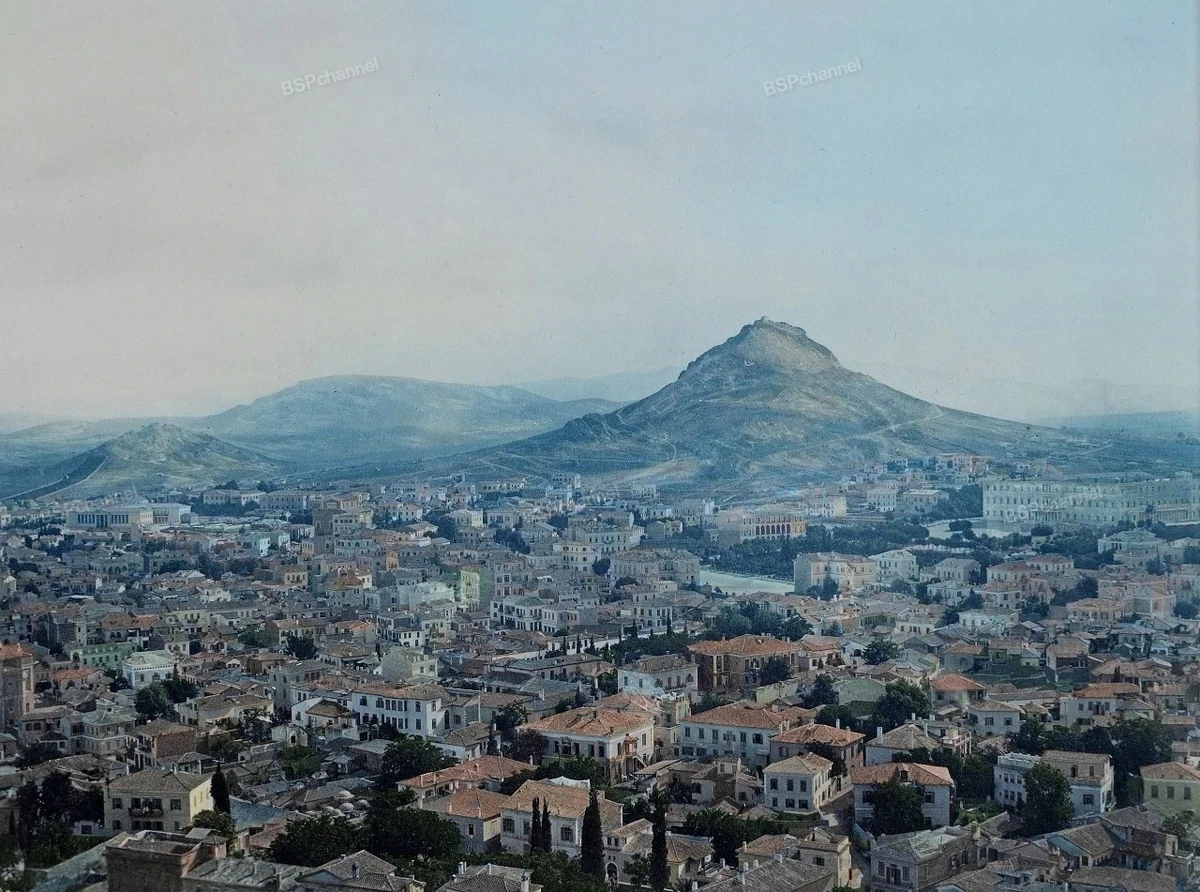
The view from this vantage point has remained virtually unchanged for 161 years.
A participant in the Indian Congress. A Maricopa girl. USA, 1898. 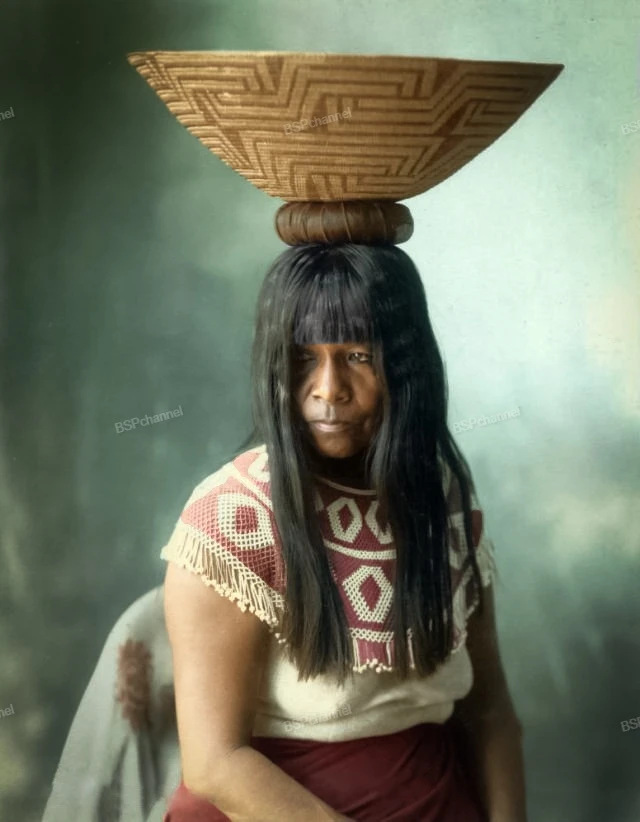
Photographer: Frank A. Rinehart
Rinehart, a commercial photographer from Omaha, Nebraska, was commissioned to photograph the 1898 Indian Congress, part of the Trans-Mississippi International Exposition. Over five hundred Native Americans from thirty-five tribes attended the conference, providing the talented photographer and artist with the opportunity to create a stunning visual document of Native American life and culture at the dawn of the 20th century. Although the portraits were executed in his studio, with picturesque poses and artful lighting, they possess a genuine intimacy that imbues his subjects with individuality and dignity lacking in most 19th-century ethnographic photographs.
Scotland, 1881. 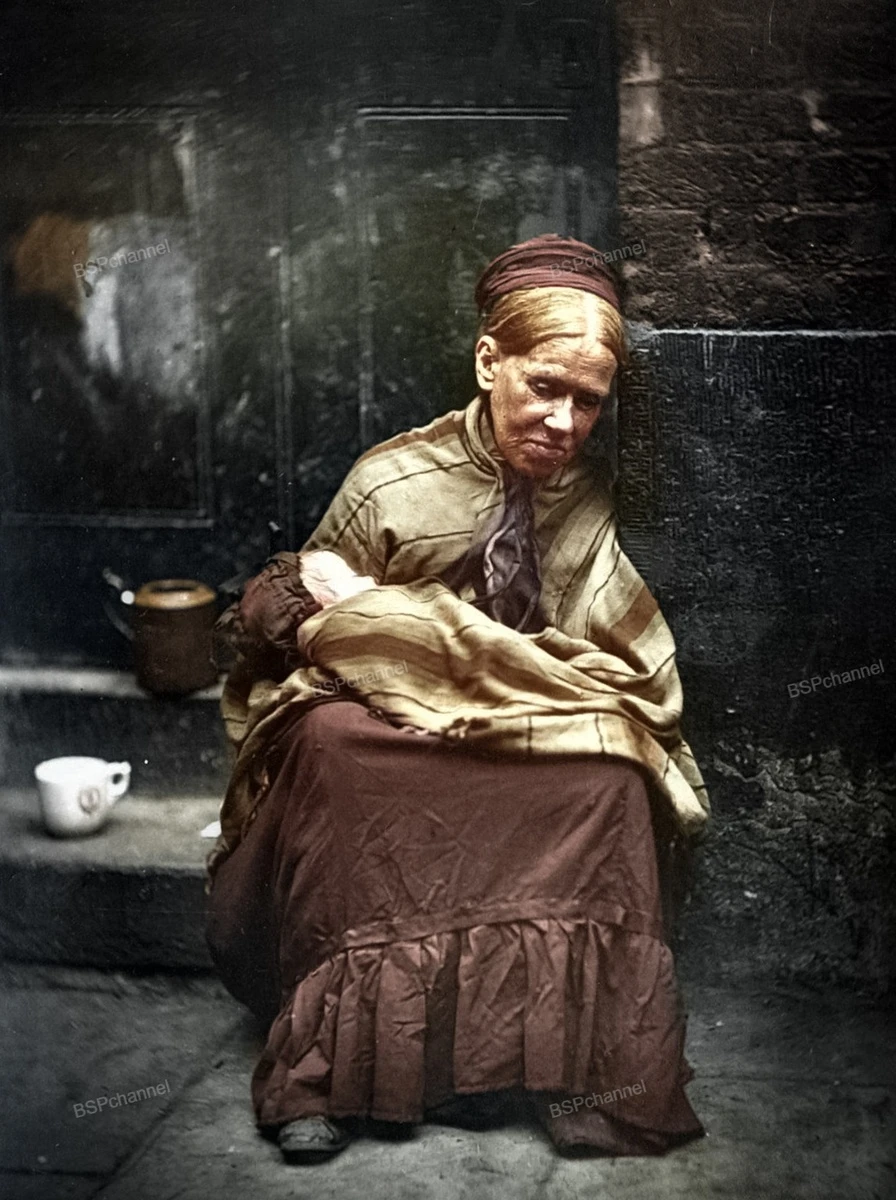
Photographer: John Thomson
Taiyu or oiran Komurasaki from the Yoshiwara region. Japan, 1880s. 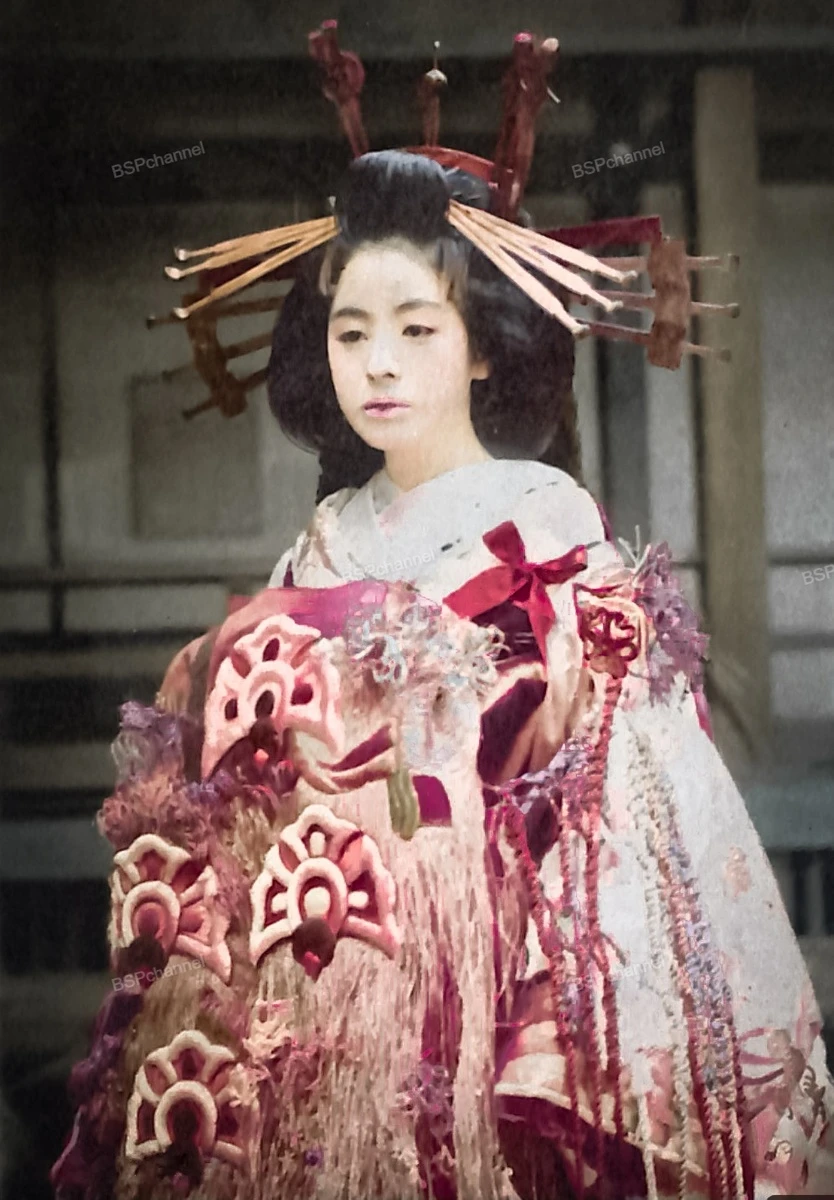
Oiran Komurasaki was one of the most famous high-ranking courtesans (oiran) of the Edo period in Japan. The word "oiran" denoted the elite of Japanese courtesans, distinguished not only by their physical beauty but also by their profound education and mastery of poetry, music, dance, and the arts of conversation. They served wealthy samurai, noble merchants, and members of the aristocracy. The name "Komurasaki" (meaning "violet" or "purple") is likely a professional name, chosen in keeping with a tradition where colors often symbolized status, aesthetics, or affiliation with a particular entertainment district (such as the famous Yoshiwara in Edo).
Beach. Sydney, Australia. Late 19th, early 20th century. 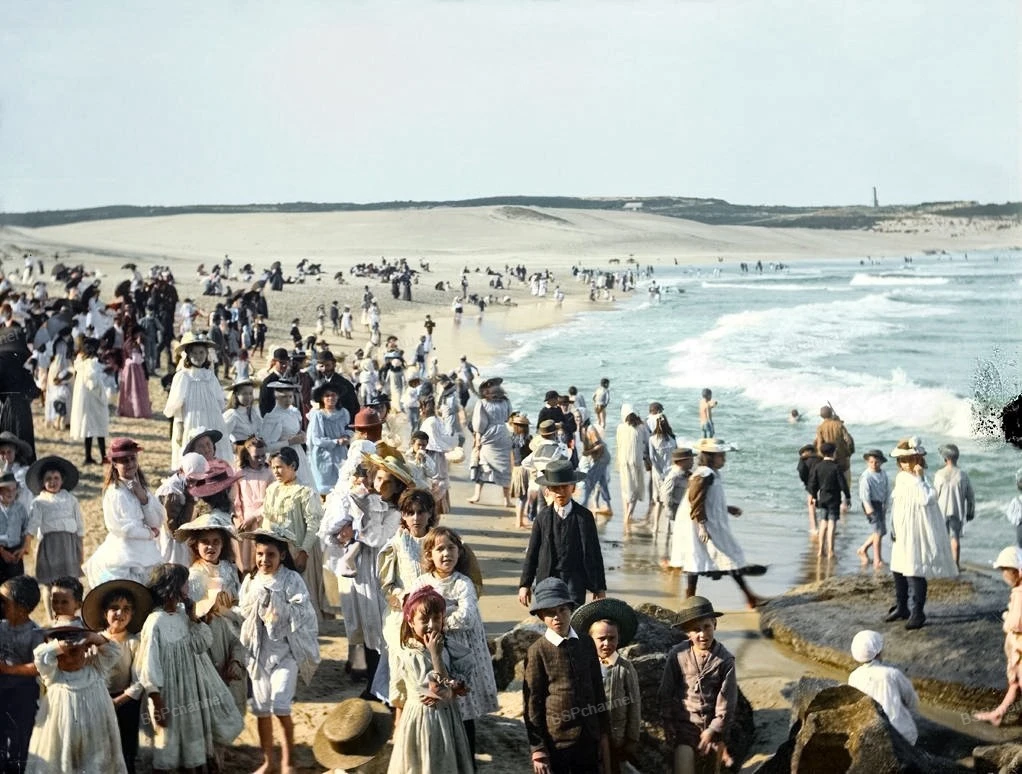
A young woman and her baby in London watch a sailboat sailing on the Thames, 1880s. 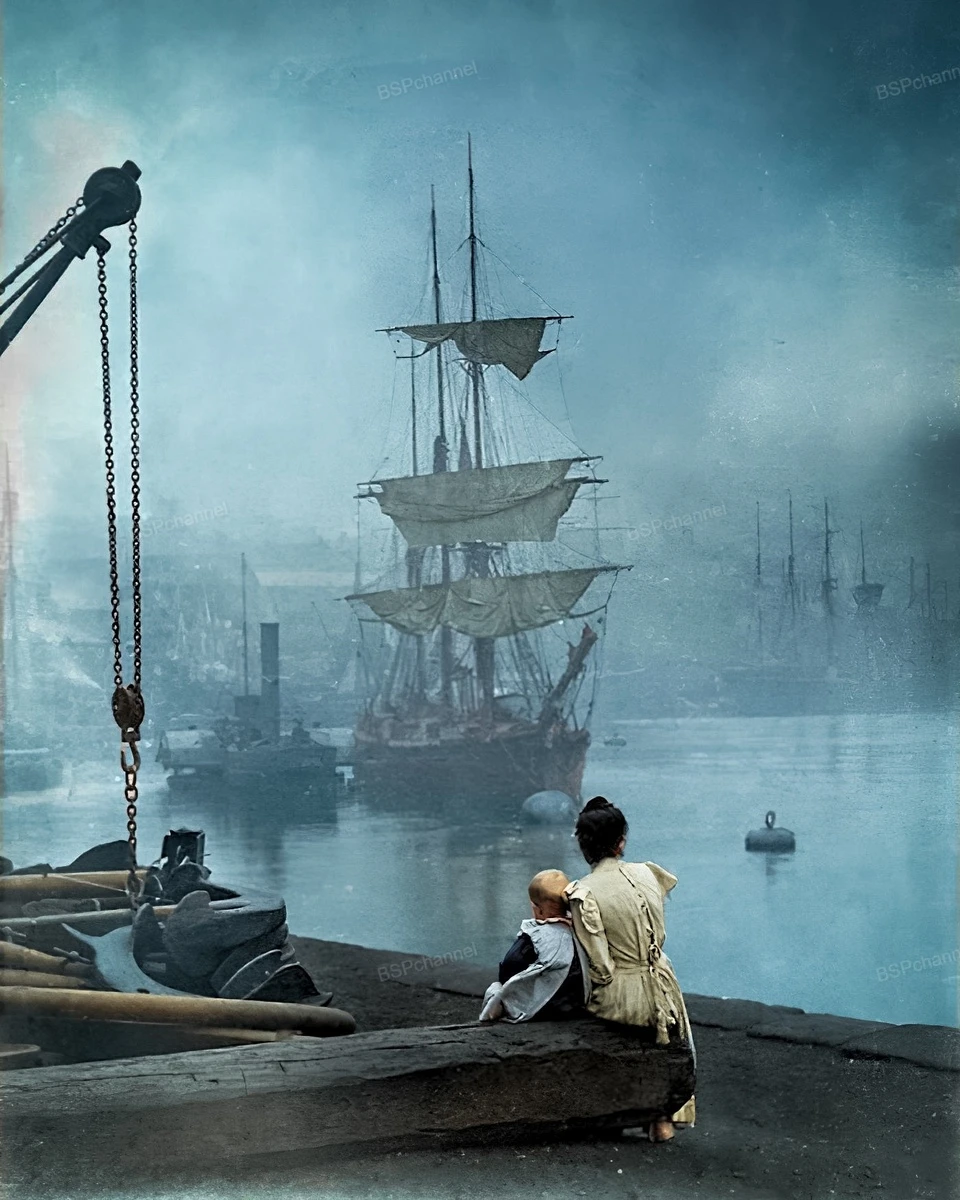
Charleston, South Carolina, after the bombardment. American Civil War, 1865. 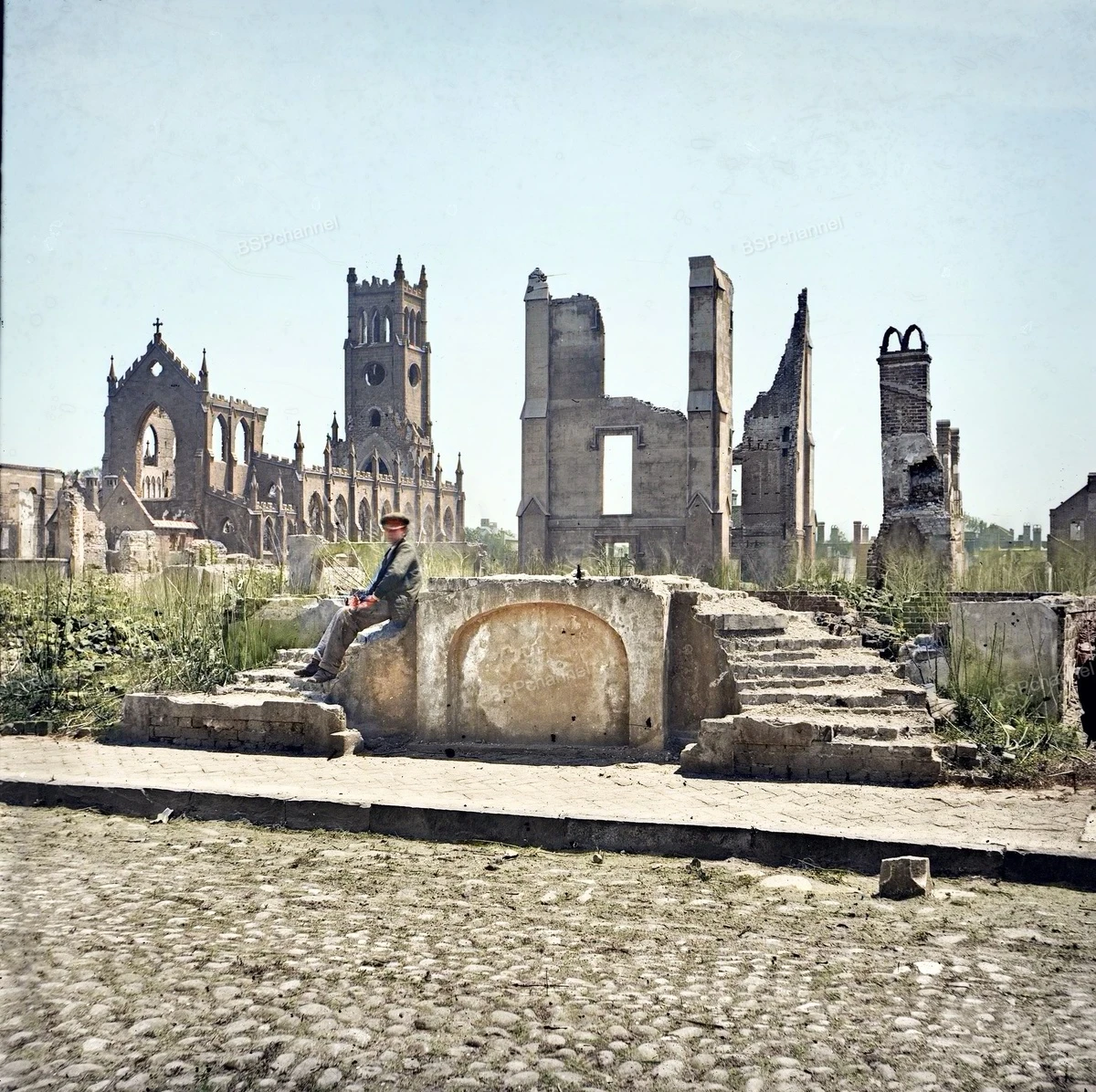
The ruins of the Cathedral of St. John and St. Finbar stand as a grim testimony to the devastation wrought by the shelling of the Union fleet and the approach of General Sherman's troops. The city lay in ruins, devastated by the fires of war and the marches of the Northern Army.
Hungarian Gypsies stop to rest. Transylvania, 1890s. 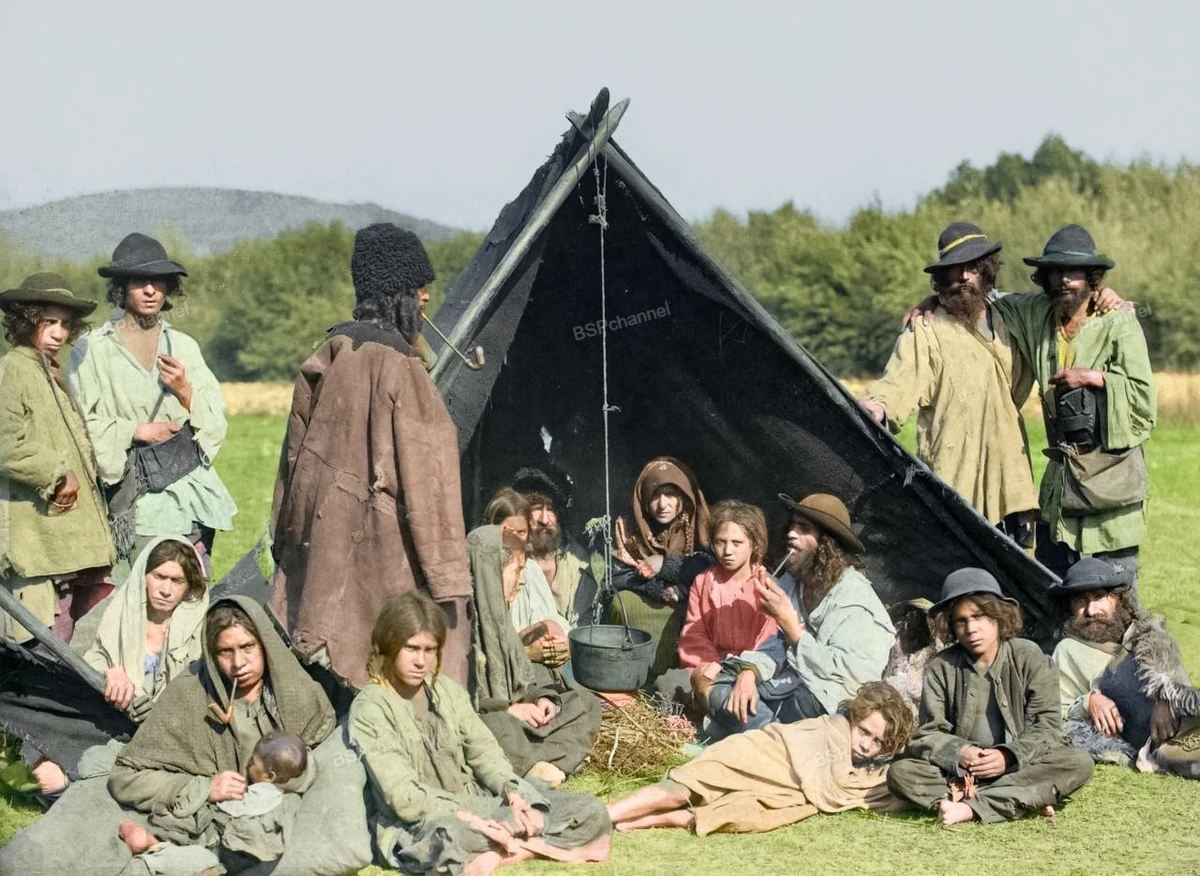
Photographer: Leopold Adler.
Donkey and carriage with passengers. Cairo, Egypt, circa 1890. 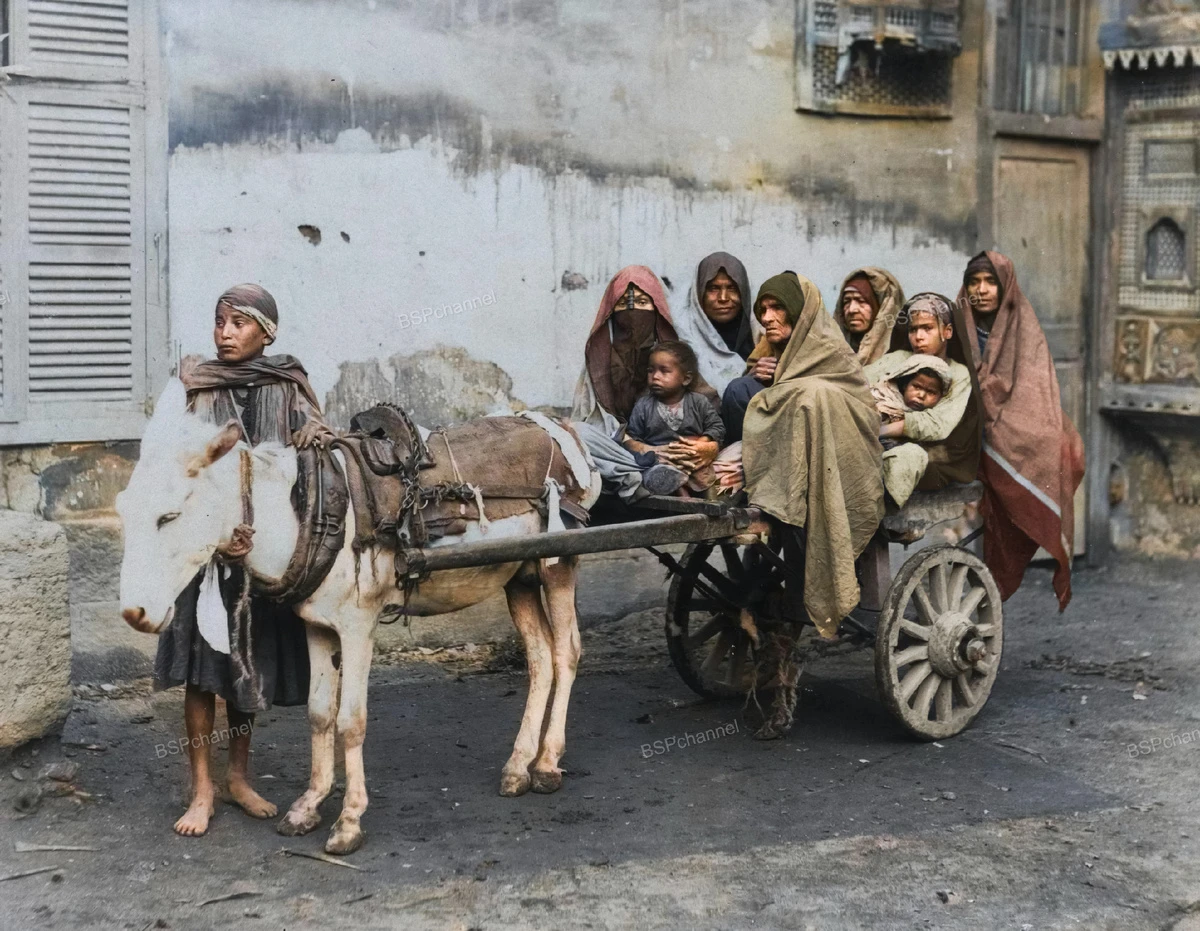
Photographer: Maison Bonfils
Beach life. Norderney, Germany, 1890s. 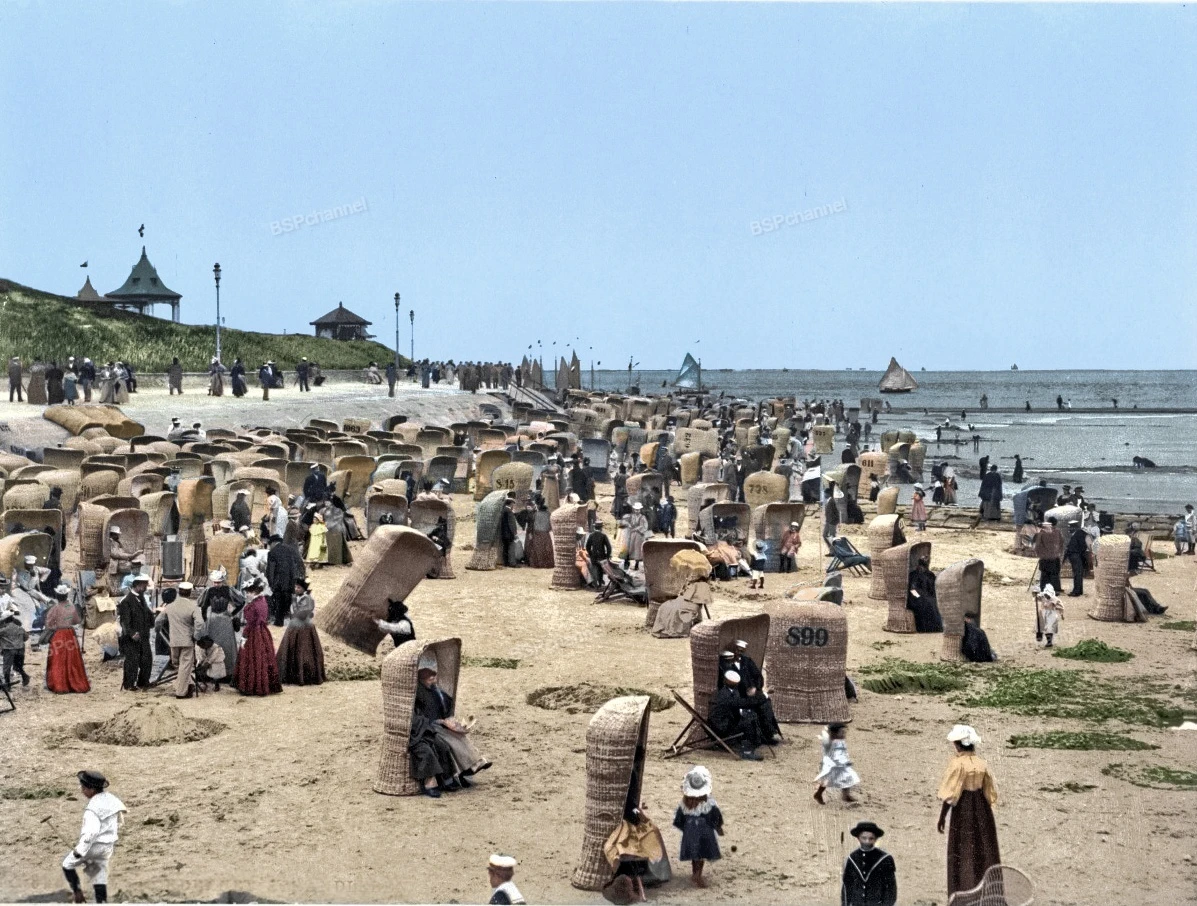
A beach basket, or "strandkorb" (from the German "Strand" meaning beach and "Korb" meaning basket), is a unique wicker chair-shelter with a canopy, designed for comfortable relaxation on the seashore. These structures were crafted entirely by hand from flexible wicker, and could weigh up to 80 kg—ensuring that even strong coastal winds couldn't tip them over. Initially, strandkorbs were single-seaters, but in 1883, German craftsman Wilhelm Baltermann designed a two-seater version for his family, ushering in the era of family beach comfort. Over time, the design of the baskets evolved, adding pull-out footrests, drawers under the seat for storing clothes, folding side shelves, and a sunshade. Initially, the canopy was simple fabric, but soon the baskets began to be decorated with striped fabric—a striking symbol of nautical aesthetics. Thus, the strandkorb became not just furniture, but an icon of European resort style, combining comfort, functionality, and elegance.
Engelberg Valley. Switzerland, 1890s. 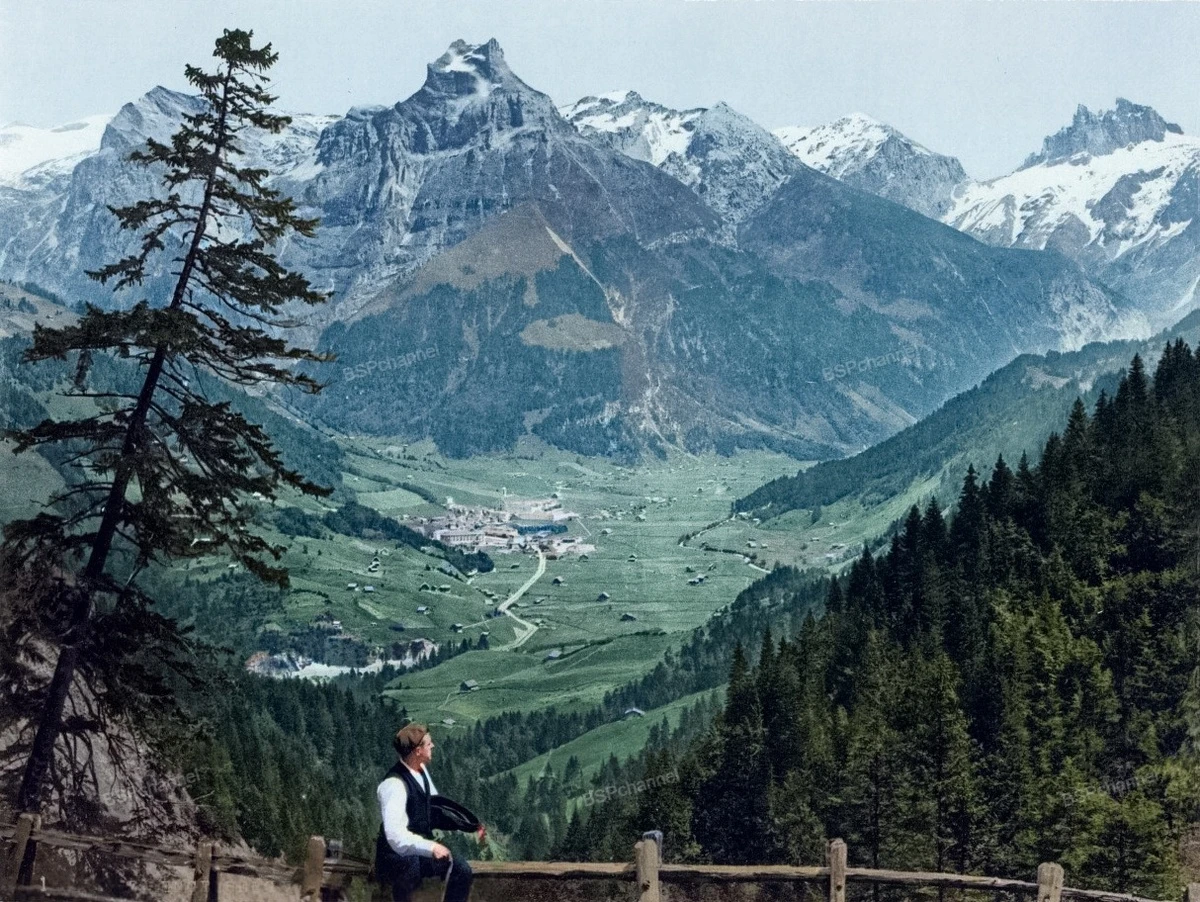
The assembled Statue of Liberty. Paris, 1885. 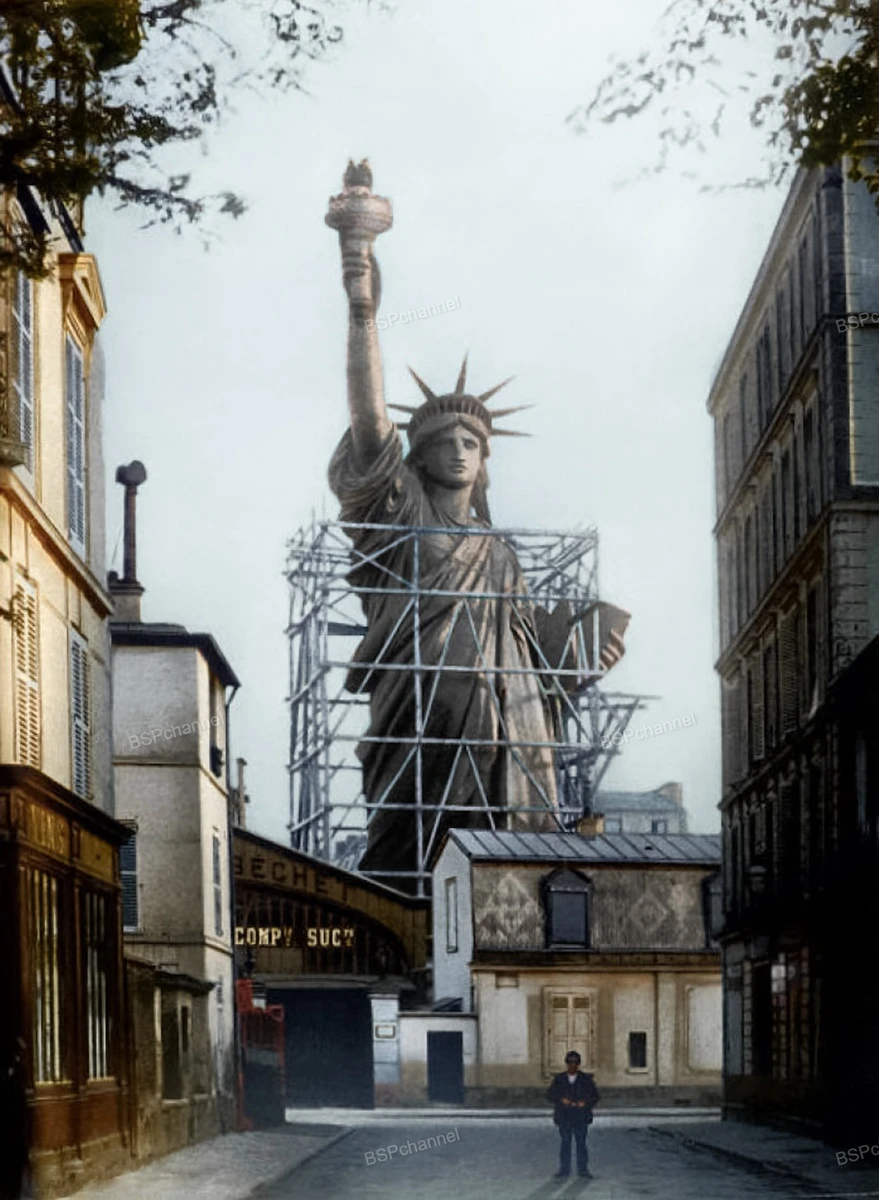
Before heading to New York, the Statue of Liberty was first fully assembled in Paris—on the square in front of what is now the Musée d'Orsay. This occurred in 1885, when French sculptor Frédéric-Auguste Bartholdi completed the monument, a gift from France to the United States to commemorate the centennial of its independence.
Swiss engineer René Thury on his steam tricycle, circa 1880. 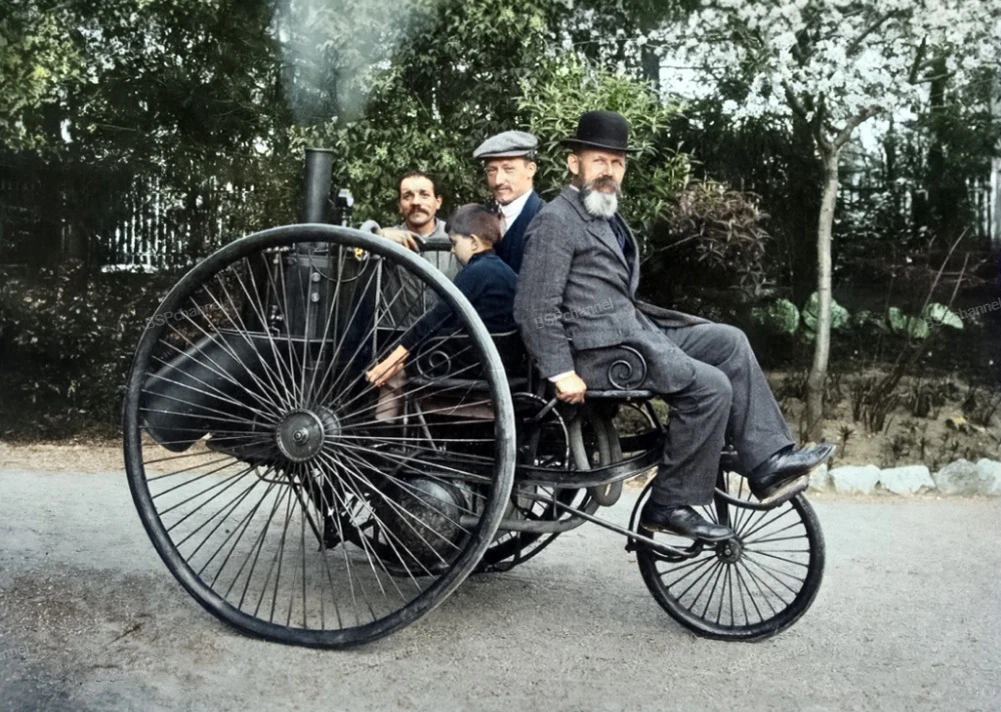
Self-portrait in the studio. Francis Benjamin Johnston in front of the fireplace with a cigarette and a glass of beer. Washington, D.C., 1896. 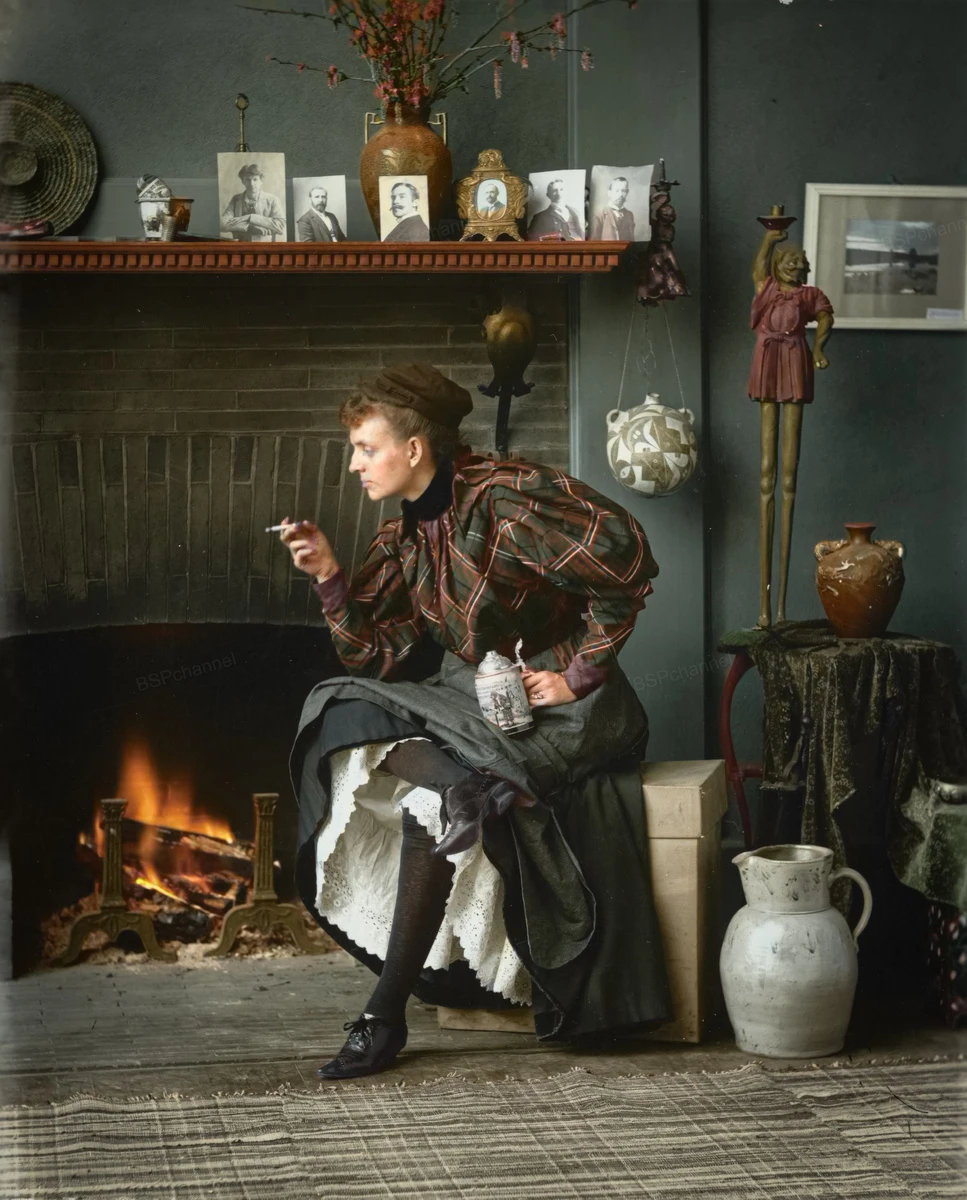
Frances Benjamin Johnston (1864–1952) was one of the first professional female photographers in the United States, a pioneer of photojournalism and portraiture, and an active social activist. She began her career in the 1890s, when photography was just becoming a recognized profession, especially for women. Johnston quickly gained a reputation for her skill, technical precision, and ability to capture both high society and the everyday lives of ordinary people. Her renowned works include portraits of US presidents (including Theodore Roosevelt and William McKinley), photographs of African-American students at the Tuskegee School (commissioned by Booker T. Washington), and extensive documentary series on Southern architecture and industrial enterprises. She placed a particular emphasis on education and opportunities for women: she studied with leading photographers of her time, taught, lectured, and openly advocated that women could succeed in any field, including technical professions.
Picnic at Sherman's Point, Maine, USA, 1900. 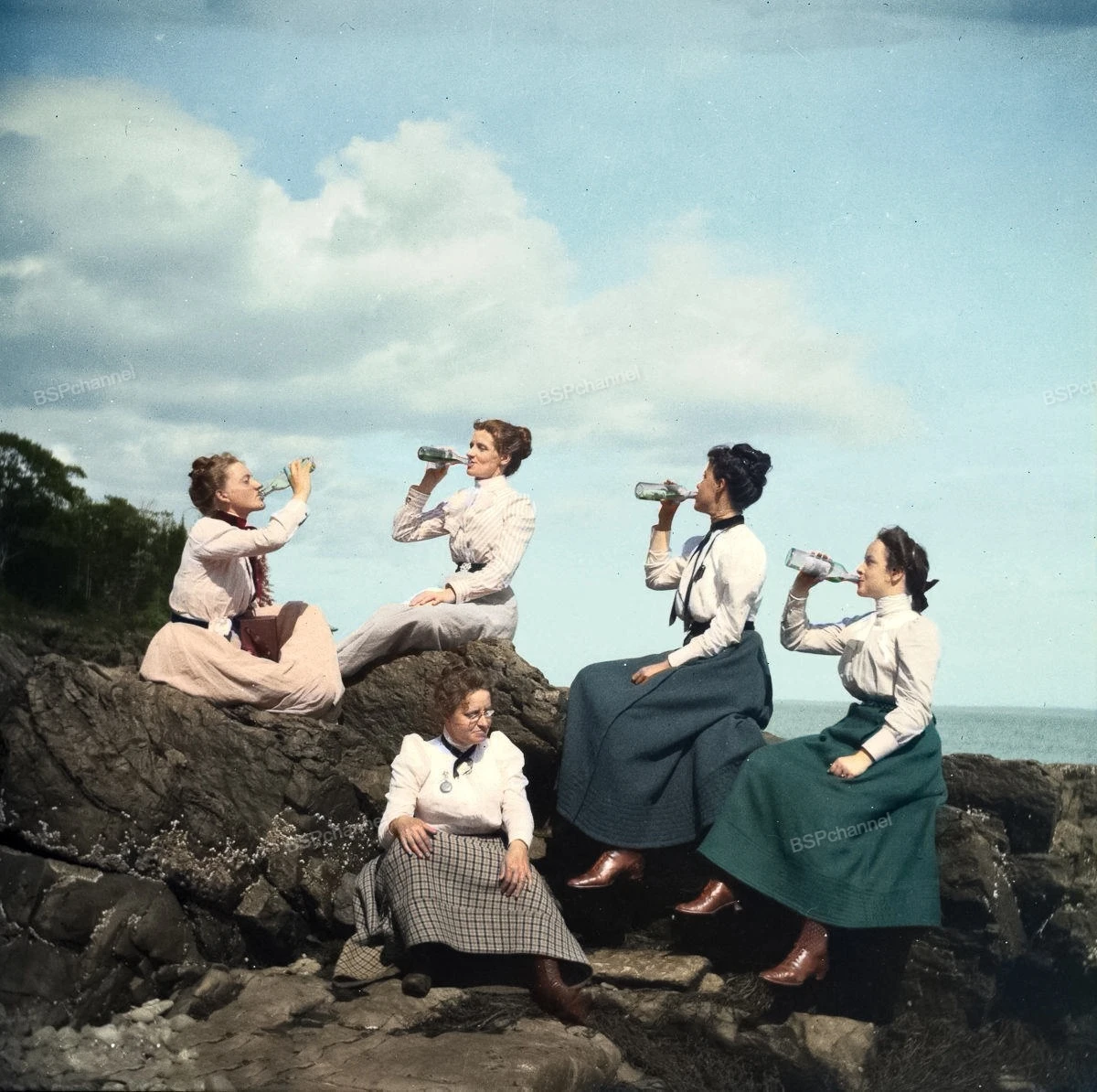
Kirkstal Abbey. England, late 19th century. 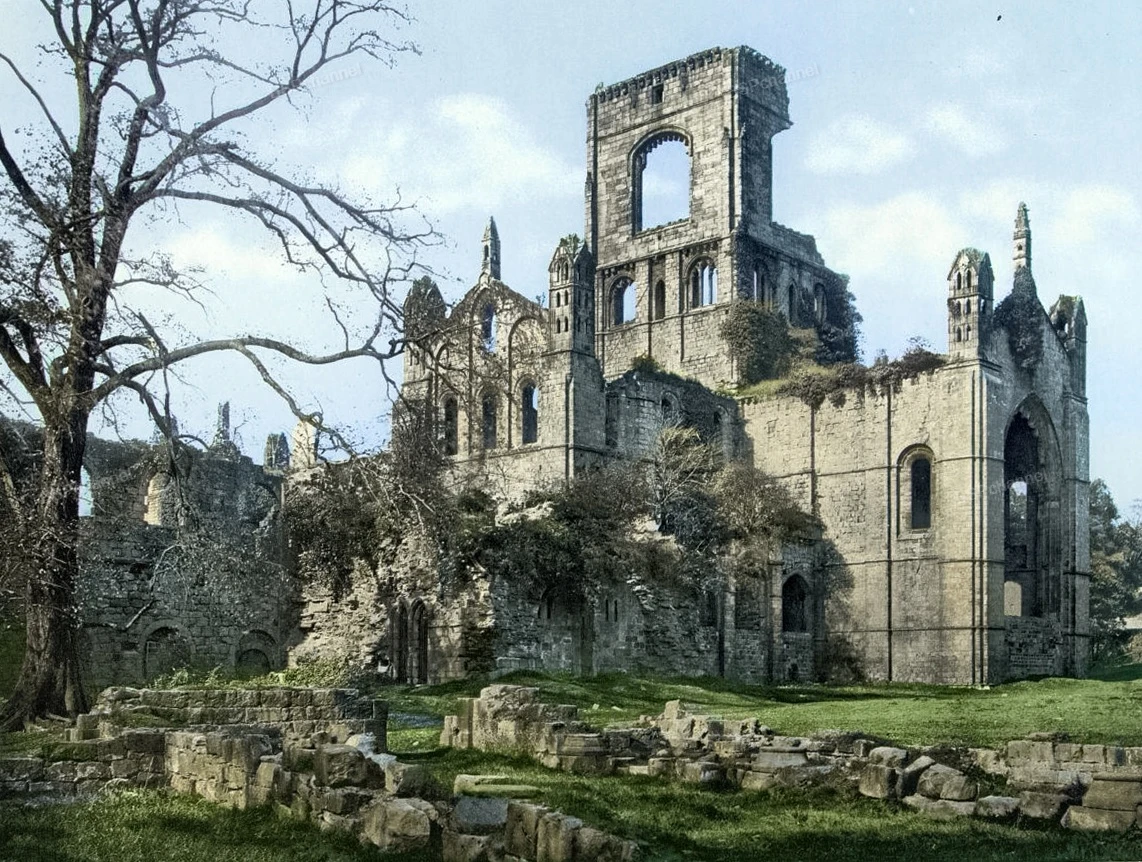
Bridge over the Conestoga River. USA, late 19th century. 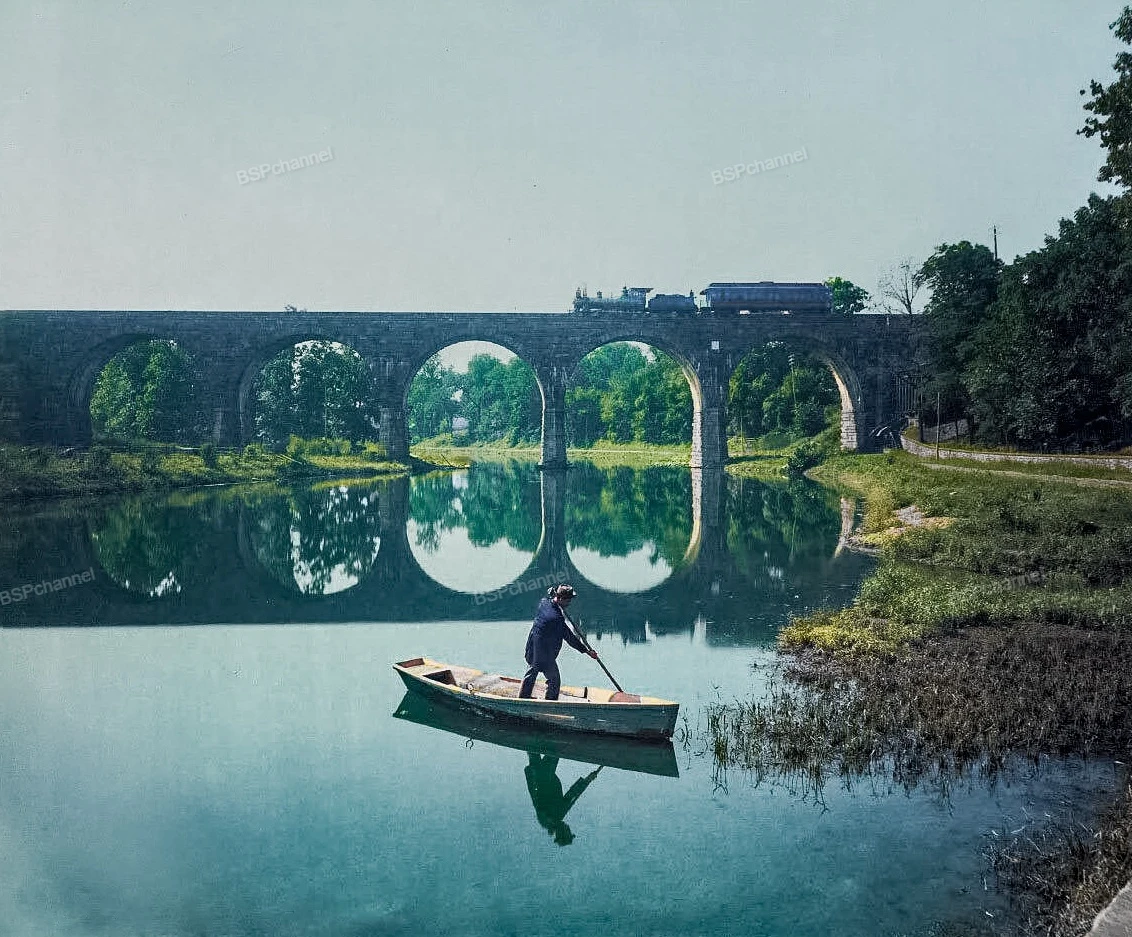
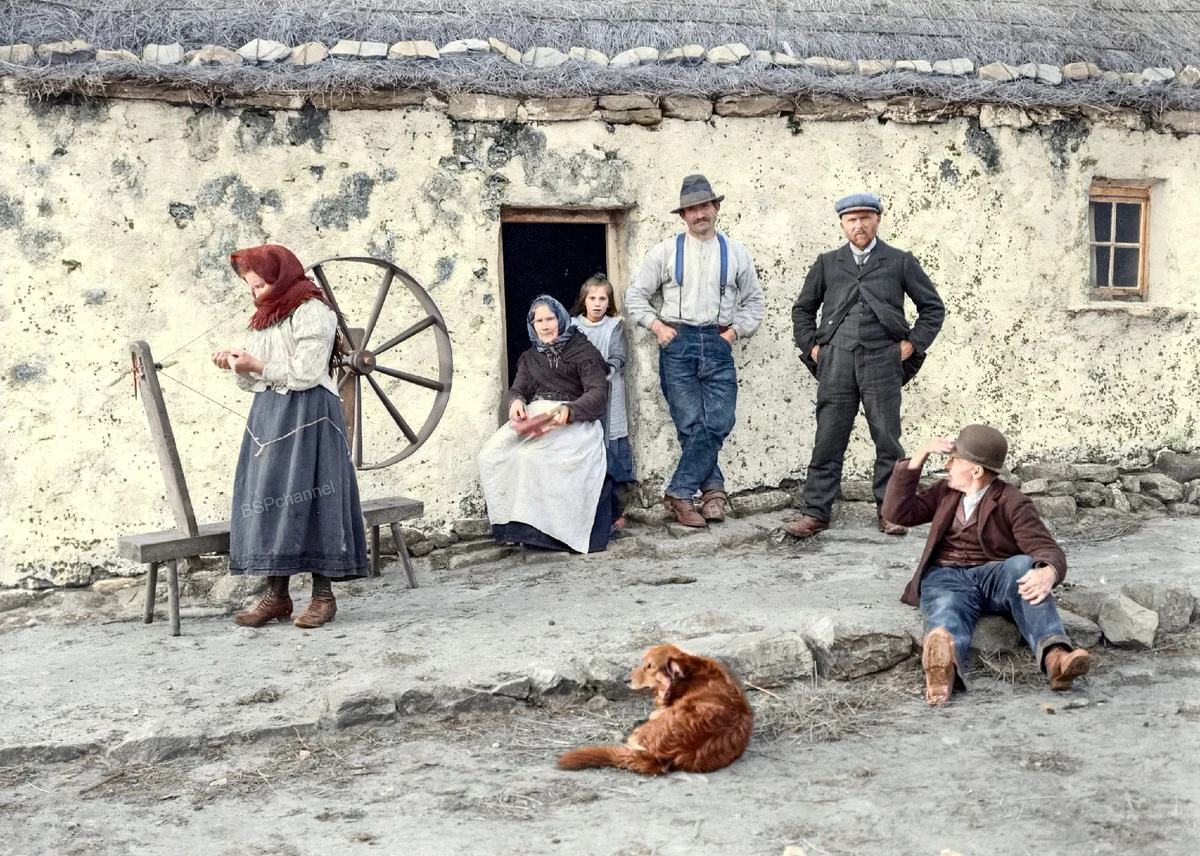
Ireland, late 19th century.