The existence of fainting goats seems like yet another affront to nature, something like "designer" dog breeds, doomed to suffer and causing their owners to suffer. After all, each goat is essentially trapped in a body that can cease to obey them at any moment. But there must be a reason for such torture, right? 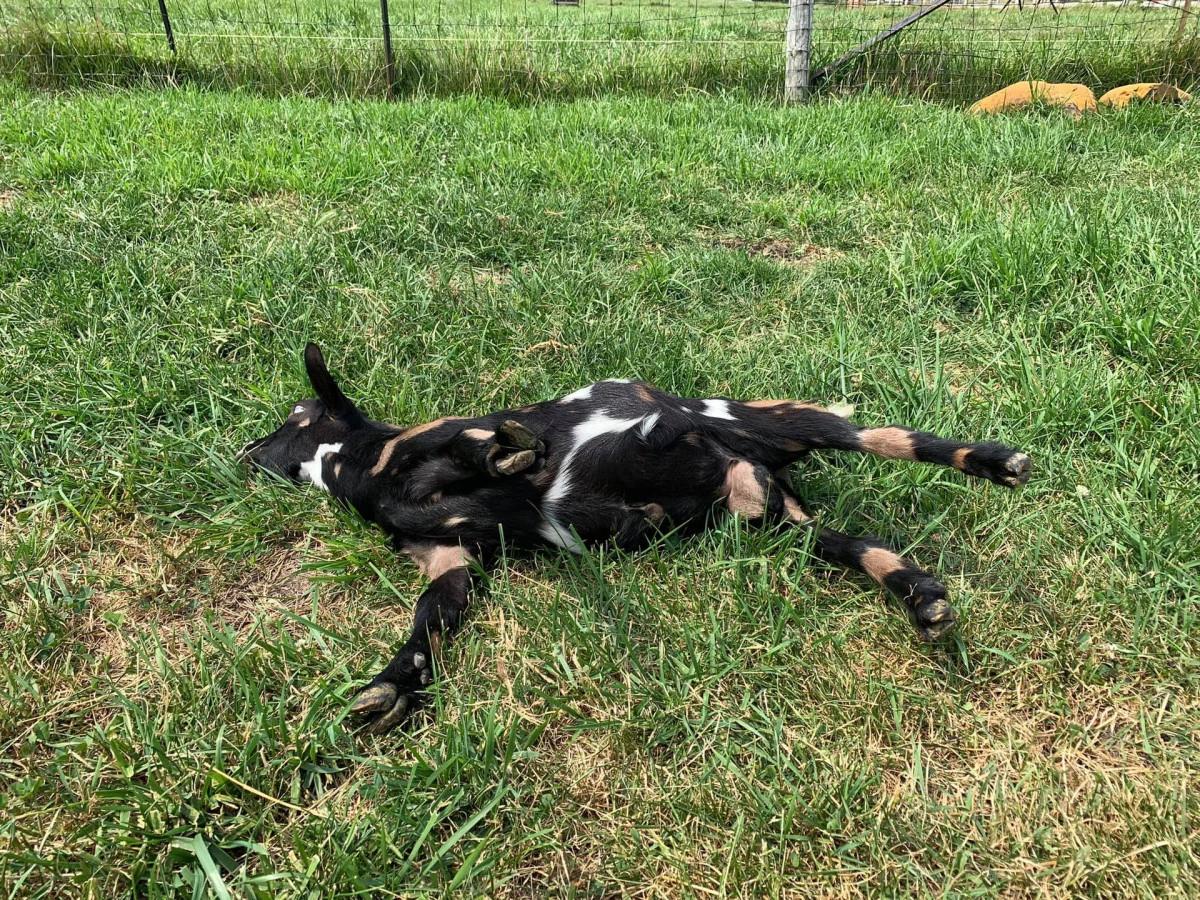
The typical posture of a fainting goat is like a stool falling over on its side.
Fainting goats are the result of a natural genetic mutation that was later reinforced through selective breeding. These goats were first documented in the 1880s in Tennessee, USA. A farmer named John Tinsley brought four goats to the region with an unusual trait: they would freeze and collapse when frightened. The mutation occurred spontaneously and is caused by a recessive gene that affects muscle channels. 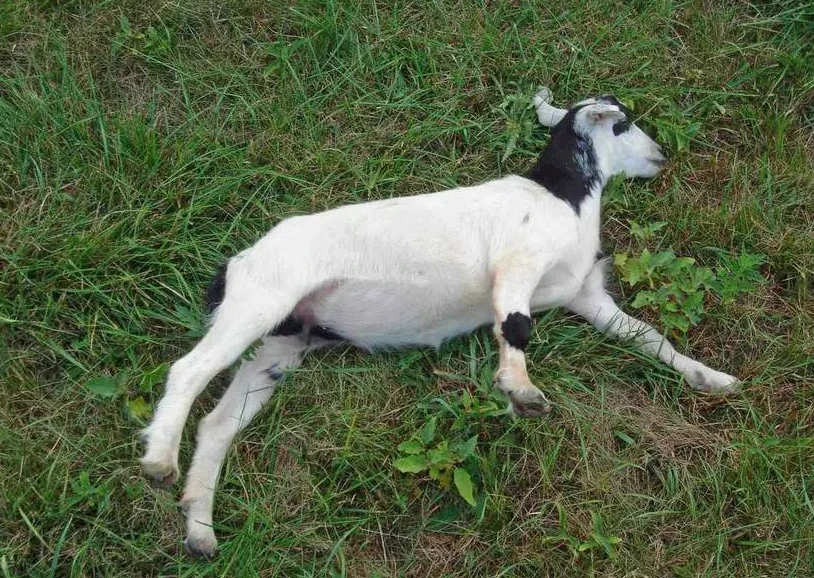
Tired, need to lie down.
A characteristic of fainting goats is their congenital myotonia. When involuntary muscle movements occur (for example, caused by stress or fear), the muscles are unable to recover and freeze in an unhealthy, spasmodic position for several tens of seconds. The goat freezes in unnatural positions, often with its legs spread apart. It looks frightening. 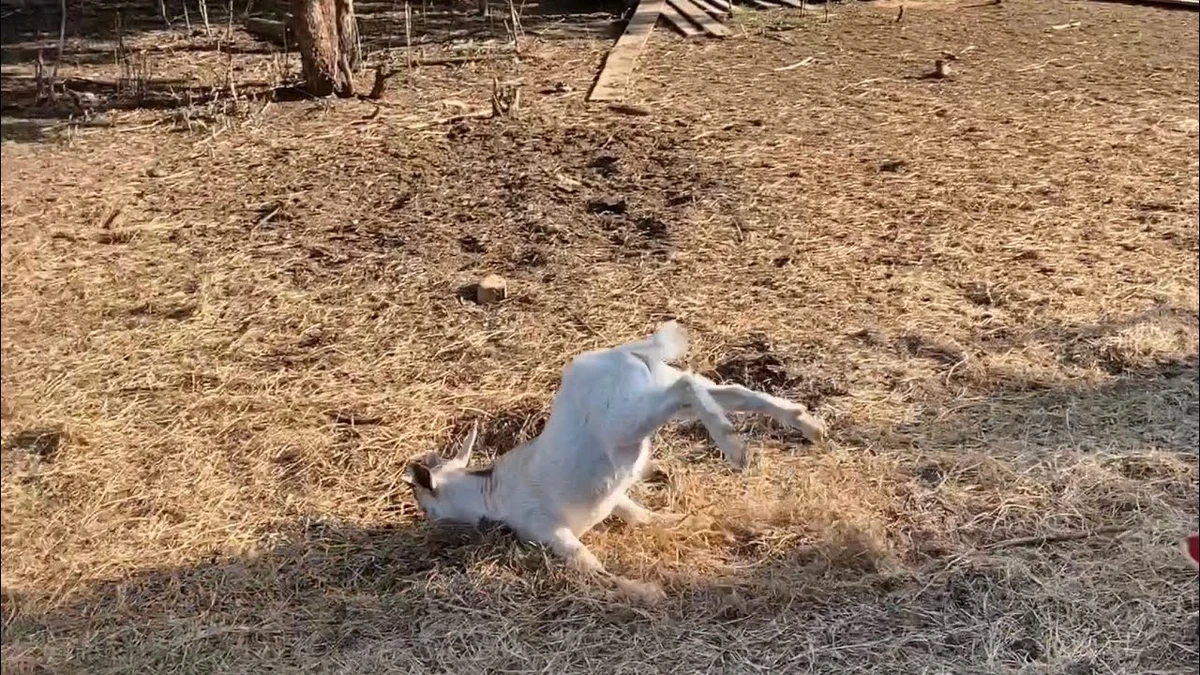
This is what happens if you suddenly startle a fainting goat. 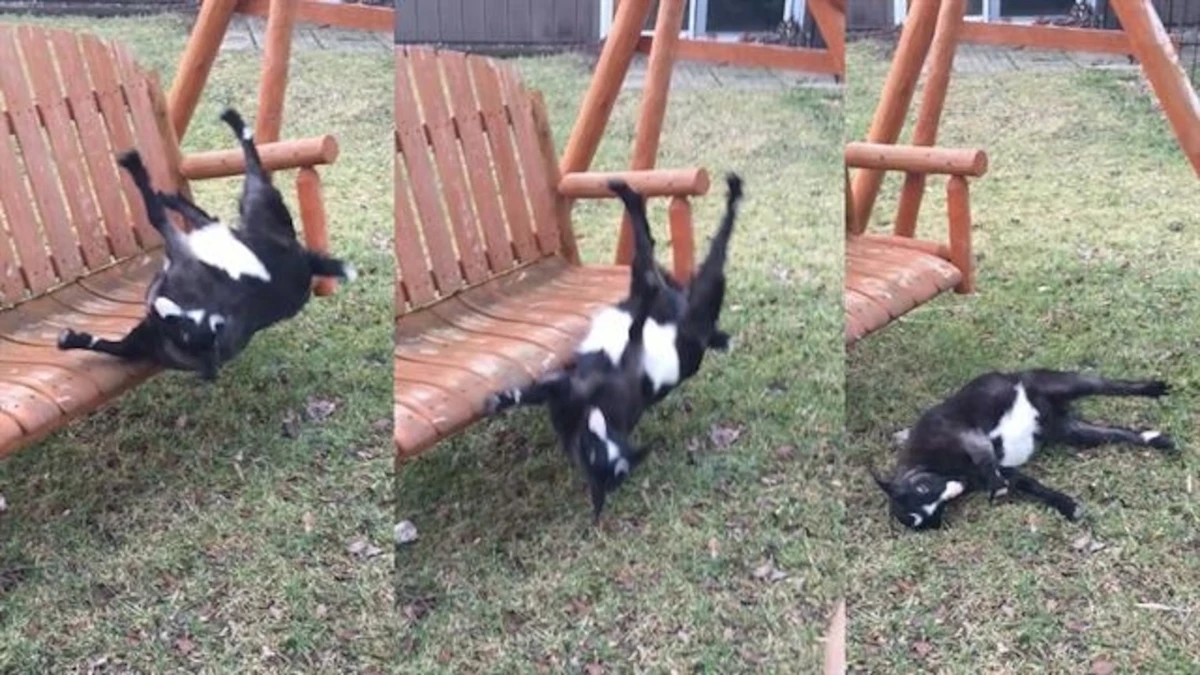
I fell.
But in reality, it's not nearly as bad. Encephalograms show that when goats spasm, they don't feel pain, and adult animals don't even worry about it—they've gotten used to it. The goat remains fully conscious—there's no actual fainting spell. Caprine myotonia is even beneficial for humans. It's not only of scientific interest, but also convenient—even a small fence can stop the goats. Regular goats are masters of escape, but in this case, their jumping ability is severely limited. 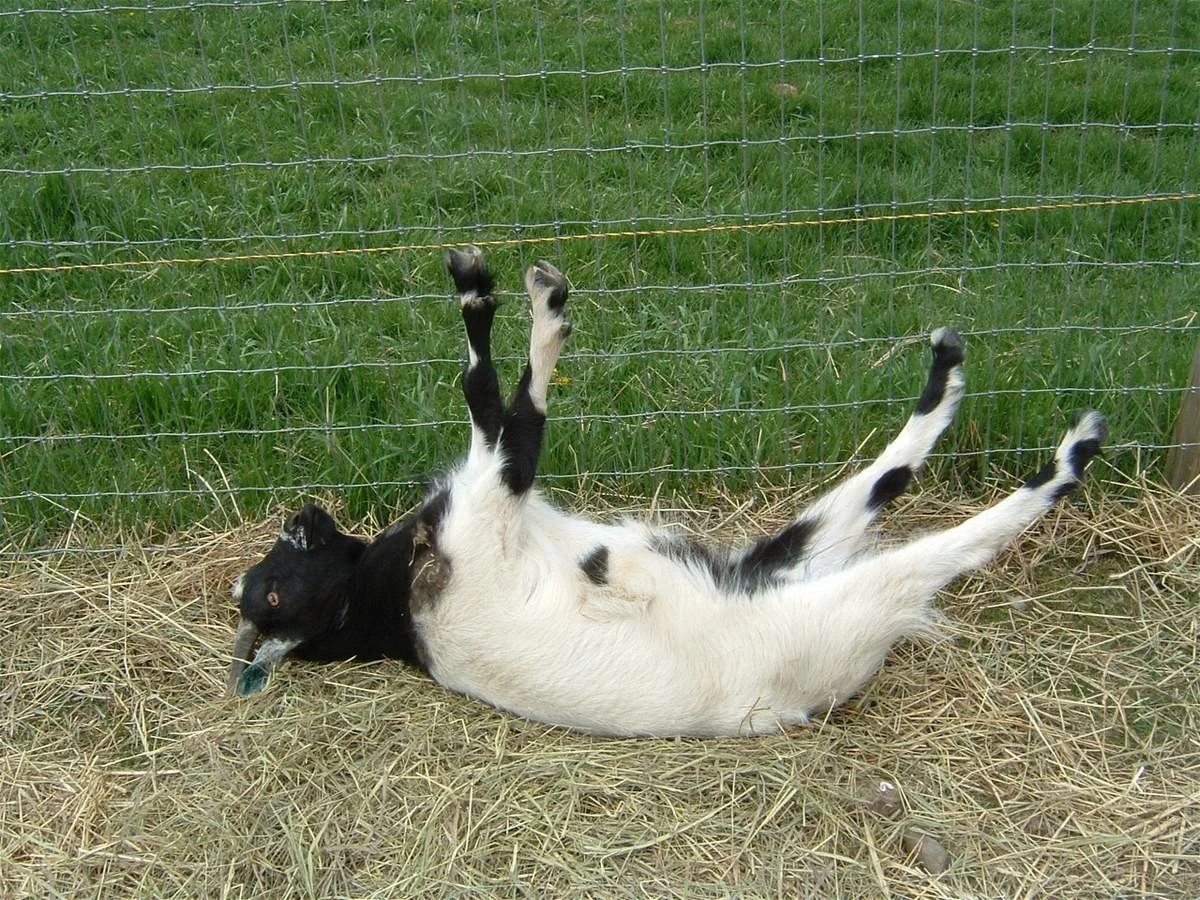
Master, not for service, but for friendship, get them back on their feet, okay?
Furthermore, these animals are distinguished by their calm and docile nature, are easygoing, quickly adapt to a poor diet, and have good innate resistance to parasites. Overall, they are ideal for private breeding and small farms located on less fertile soils. 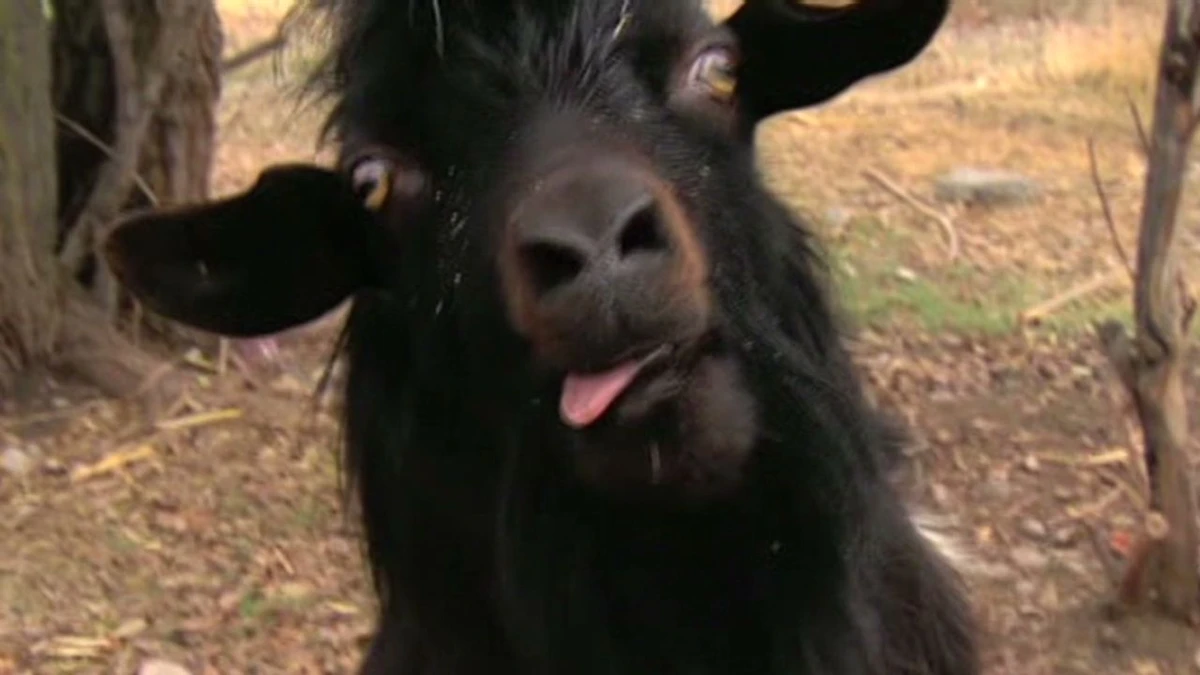
Master, I was scared of a butterfly. Have pity, please.
And yet, this breed is on the verge of extinction. This is because meat production is increasingly monopolized: thanks to established technologies and advanced logistics, corporations can afford to raise meat goat breeds that produce large quantities of high-quality meat. But we can't say whether this is a good thing or a bad thing. What do you think?
Add your comment
You might be interested in:
















Persistence in achieving a goal

A biker prevented a hit-and-run driver from escaping

Not everyone is having fun on the amusement ride

The cutest lunch delivery ever

A book titled "A Guide to Rebuilding

Young women, Dancing and George Michael: nothing superfluous

An apology delivered with a running start

A steam locomotive for "big boys"

Bollywood never ceases to amaze
