A Collection of Interesting and Unusual Photos from the USA (21 photos)
I present to you a selection of colorized photographs from the United States—a true living portal to the 20th century. Color gives these images new depth: they reveal the true nuances of everyday life, from the comfort of home interiors and the fashions of bygone eras to the bustle of city streets and the quiet of suburban backstreets. 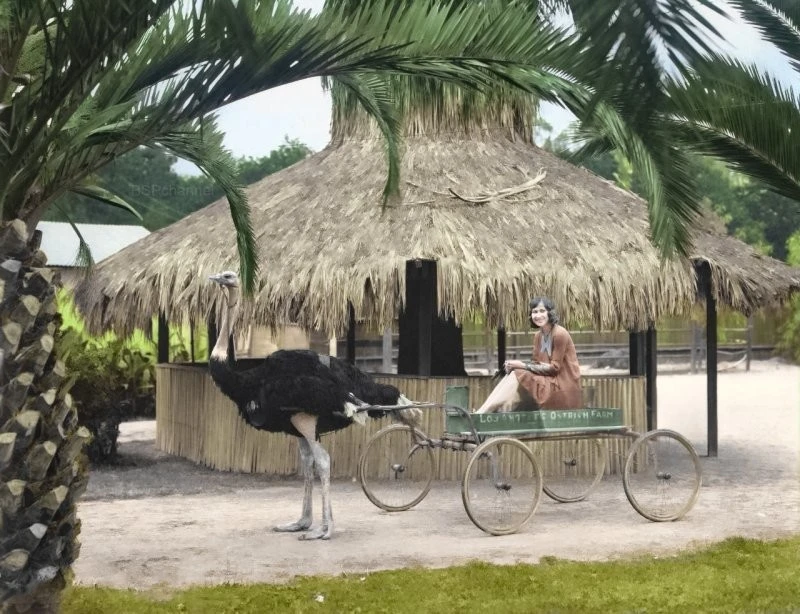
Mississippi's first interracial couple, Bertha and Roger Mills, August 3, 1970. 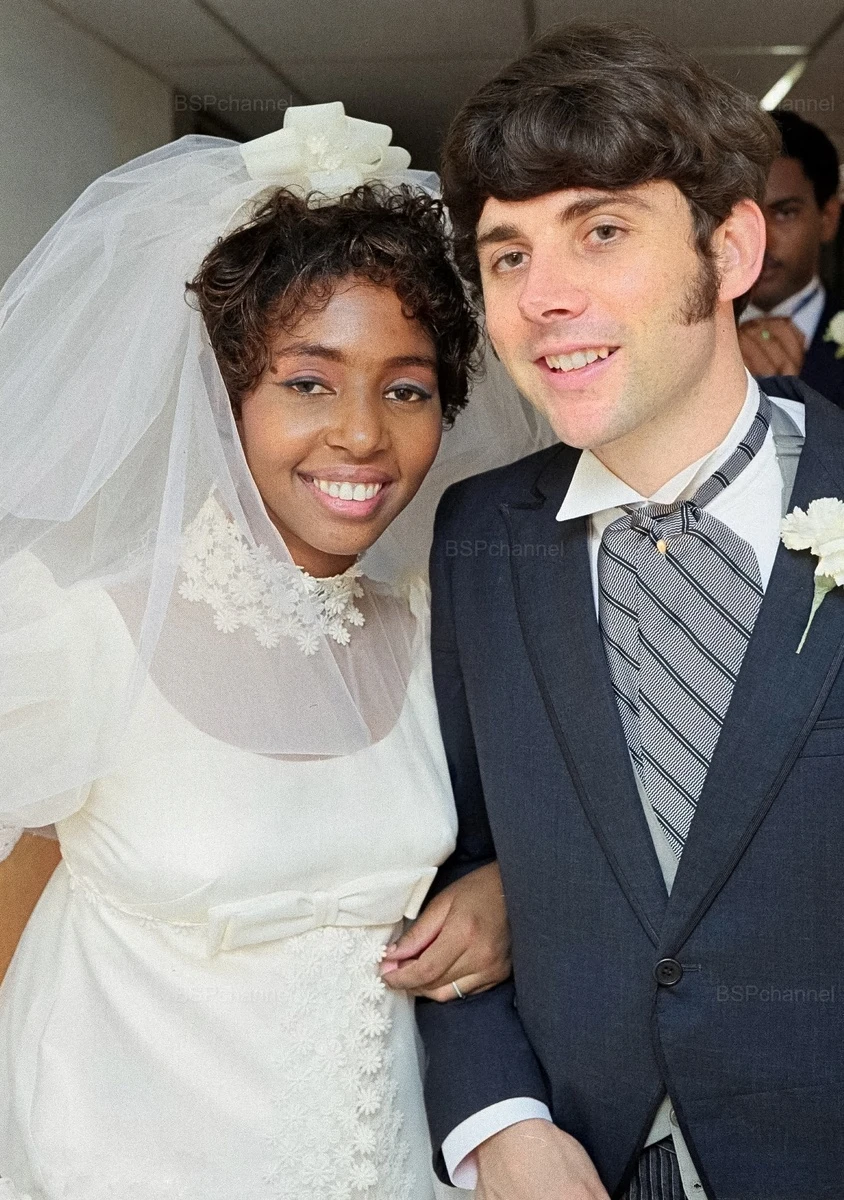
Mississippi had laws prohibiting interracial marriage, and Roger and Bertha had to go through several court battles to formalize their relationship. Only after a federal judge intervened did the state issue them a marriage license. Remarkably, all this happened just half a century ago—in 1970—when many considered such laws a relic of the past. It's a reminder of how recently racial segregation was still part of everyday legal reality in the United States. Roger and Bertha were forced to live in secrecy and constant caution. For a time, they huddled in a modest apartment, the location of which was known only to their closest friends. To avoid attention, they avoided shopping during peak hours, didn't have a home phone, and sent mail to the registered address of the company where Roger worked. But even these measures didn't protect them: threats continued to arrive by phone and mail, until the couple decided to move to the more tolerant state of Washington, seeking a quieter and safer life.
Houses of local residents near the steel mill. Ensley, Alabama, USA, 1937. 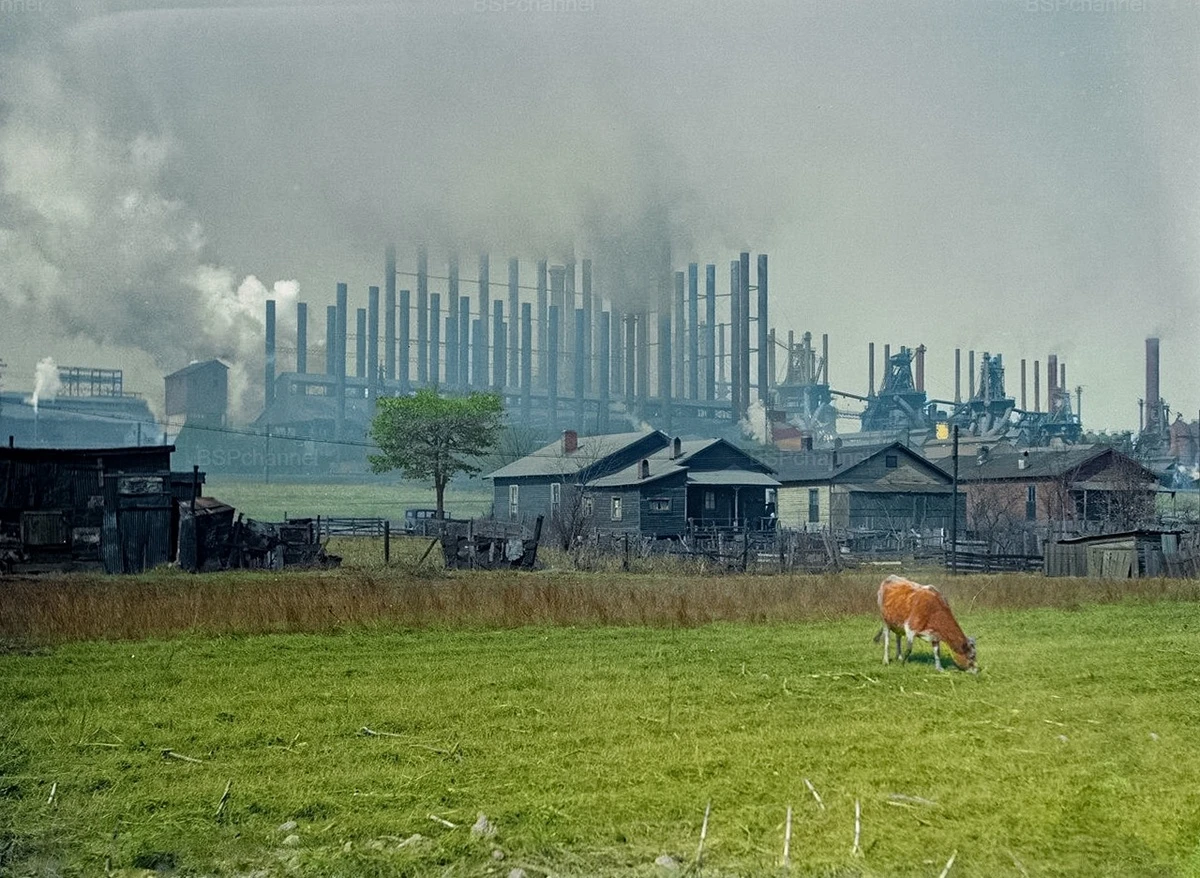
Photographer: Arthur Rothstein
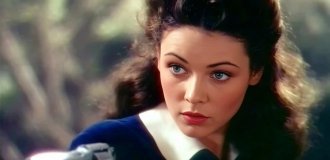
American film actress Veronica Lake illustrates what can happen to women who don't tie their hair back while working at a factory machine. USA, 1943. 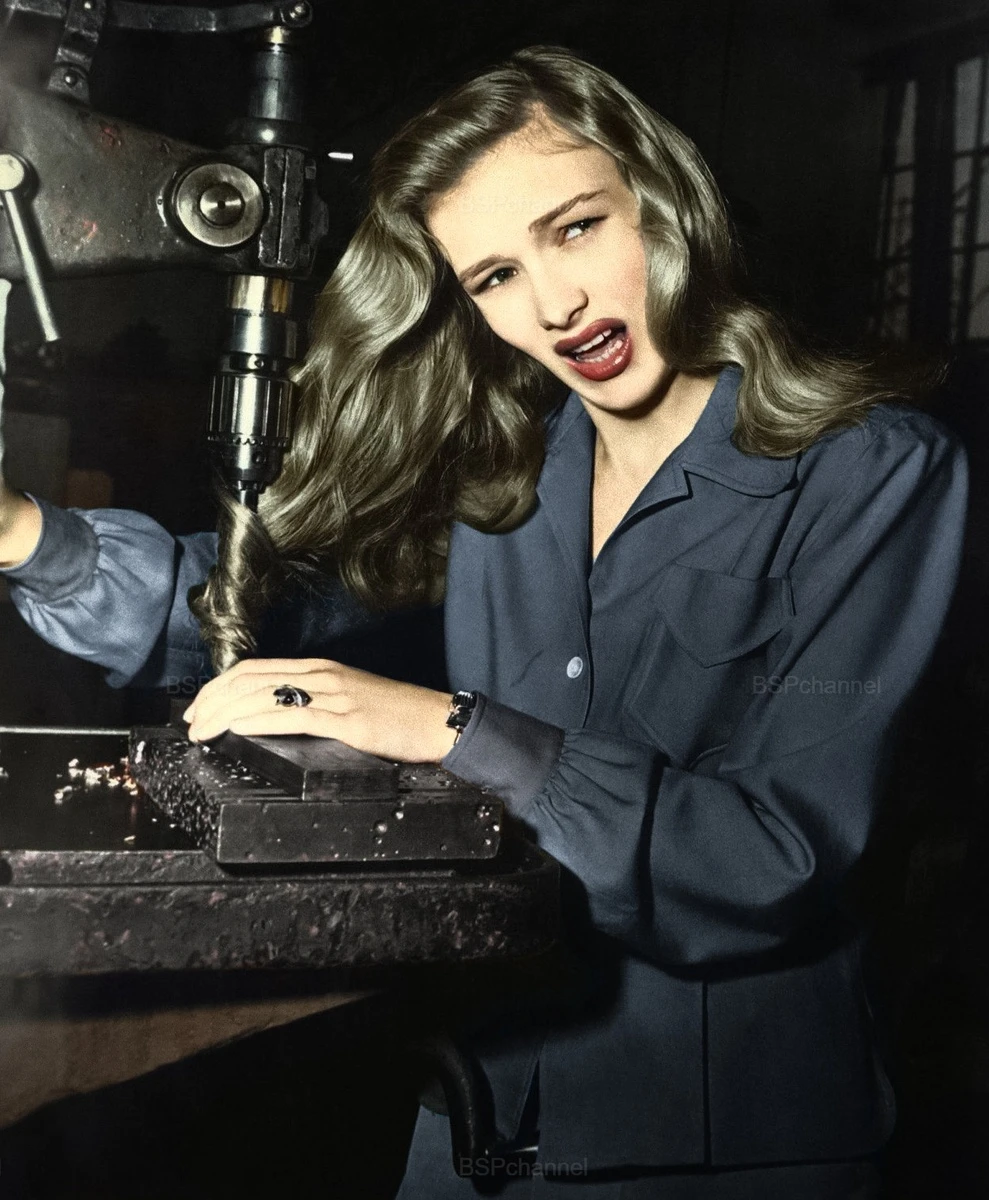
Veronica Lake has forever etched herself in cinematic history not only as a star, but also as a style icon, famous for her iconic "peek-a-boo" hairstyle—with long strands falling over her face and mysteriously covering one eye. Her look became so popular in the 1940s that millions of American women, from teenagers to adults, sought to emulate her appearance, dreaming of the same magnetic appeal. However, during World War II, this fashion faced a harsh reality: in munitions factories, long hair falling over the face posed a serious danger, as it could get caught in machines and equipment. The American government then personally approached Lake with a request to change her image. The actress responded, lifting her hair to reveal her full face and taking part in a national campaign urging working women to wear practical and safe hairstyles.
A cart pulled by ostriches. An ostrich farm in Los Angeles, California, 1930. 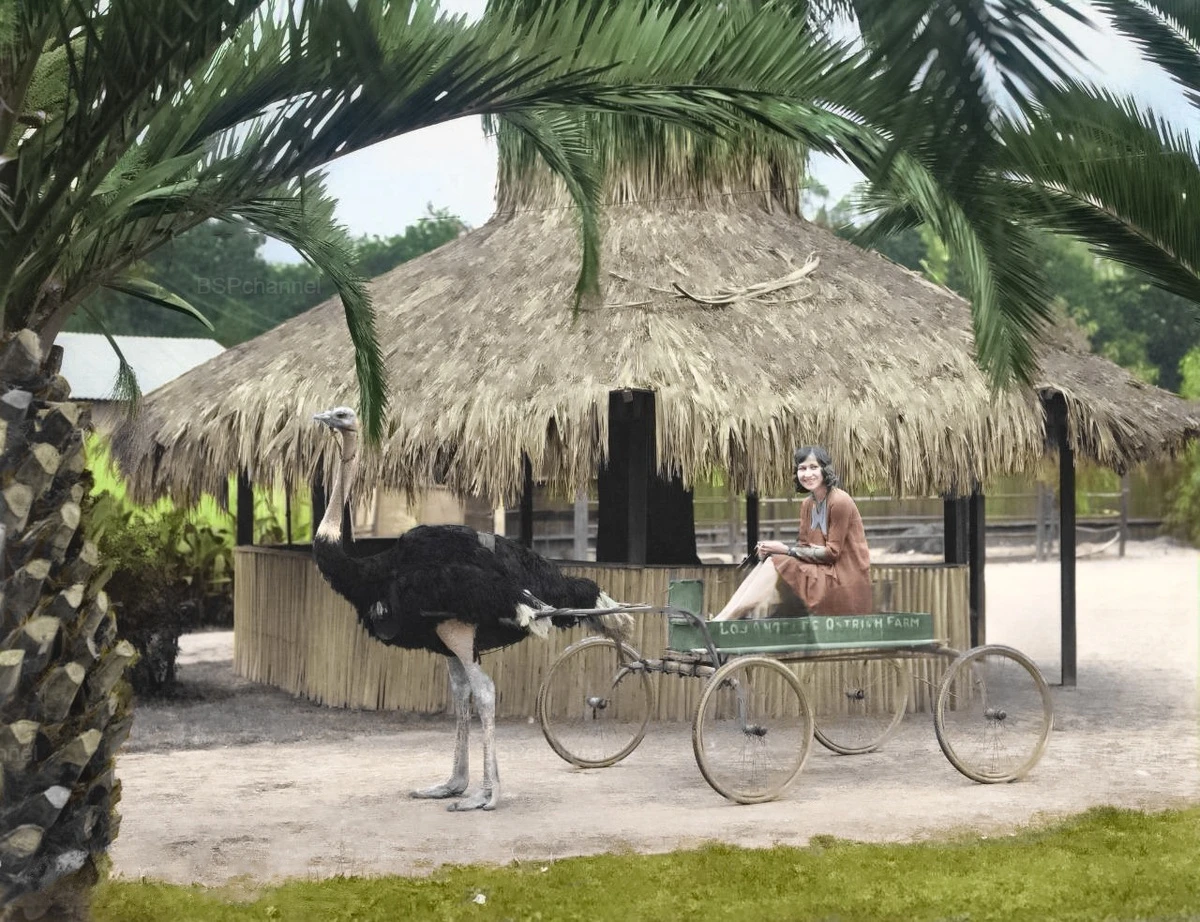
In 1886, Edward Cawston brought ostriches to California with the entirely pragmatic goal of selling their feathers as fashionable ornaments for ladies' hats. However, the business wasn't as profitable as expected, so Cawston found a much more original use for his charges: he began taking tourists on ostrich-drawn carriages. The idea proved brilliant. The farm quickly became a popular attraction, a flock of tourists eager to see these exotic birds in person. It was so popular that the Pacific Electric railroad even built a special station right at the farm gates to make it easier for tourists to get there. Visitors could not only ride ostriches and ride in an exotic harness, but also take home ostrich feathers as souvenirs. The farm operated until 1935, but is now a museum.
Hippies on the streets of New York, 1970. 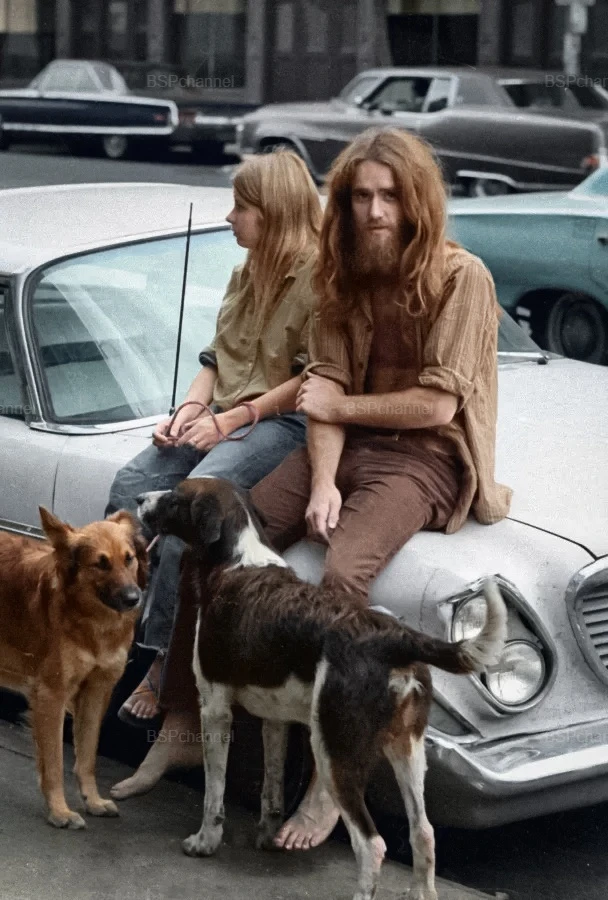
Photographer: V. Biryukov
In 1970, the hippie movement's heyday was already fading, but its spirit still lingered in Greenwich Village, the East Village, and the corners of the East Side. Young people in faded jeans, flowing shirts, beads, and long hair wandered the sidewalks, played guitars in parks, sold homemade jewelry, and discussed revolution—sometimes social, sometime spiritual. New York City at the time was both a haven and a challenge for hippies: underground culture, music, poetry, and experimental art flourished here, but the city was also becoming increasingly harsh, industrial, and unsafe. Many of those who fled the suburbs in search of freedom in the early 1960s were already facing disillusionment, poverty, or the need to "reenter the system" by 1970. Nevertheless, hippies continued to champion alternative lifestyles: they lived in communes, opposed the Vietnam War, and promoted ecology and organic food.
A worker amid a steel girder during the construction of a building on Wall Street. New York City, 1930. 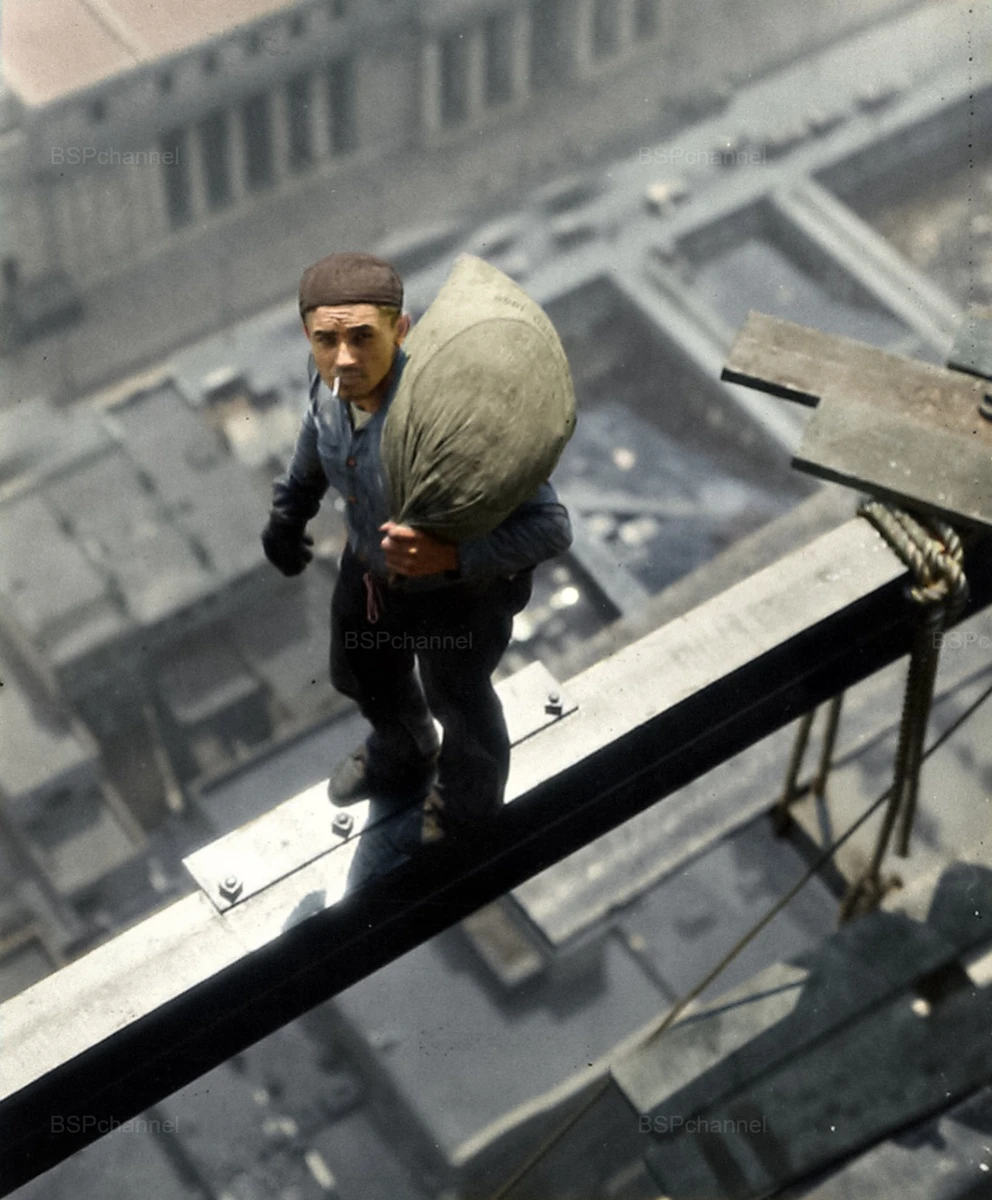
Photographer: Arthur Gerlach
The first street grain elevator in Cincinnati, USA, 1908. 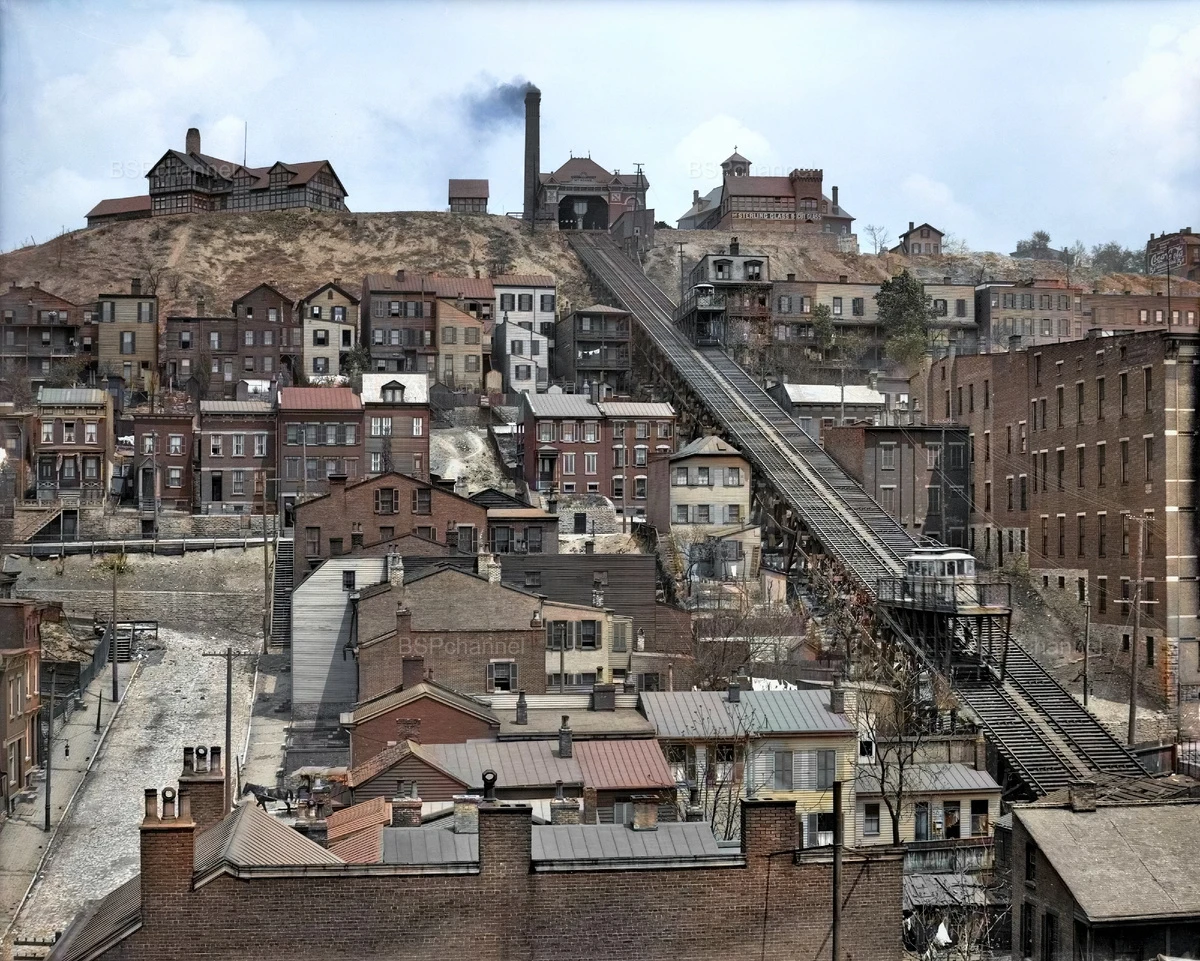
The roar was deafening—and there were five such elevators in the city. One of them was located right next to the university, and because of its operation, professors were forced to interrupt their lectures every 10-15 minutes while the elevator passed. The elevated track was 945 feet (288 meters) long and carried both trams and automobiles. Initially, starting in 1877, horse-drawn carriages ran along it, but the structure was later reinforced to support the weight of much heavier electric trams.
Princess Natalia Pavlovna Paley (known in the West as Natalie Paley). French fashion model and actress, granddaughter of Emperor Alexander II. 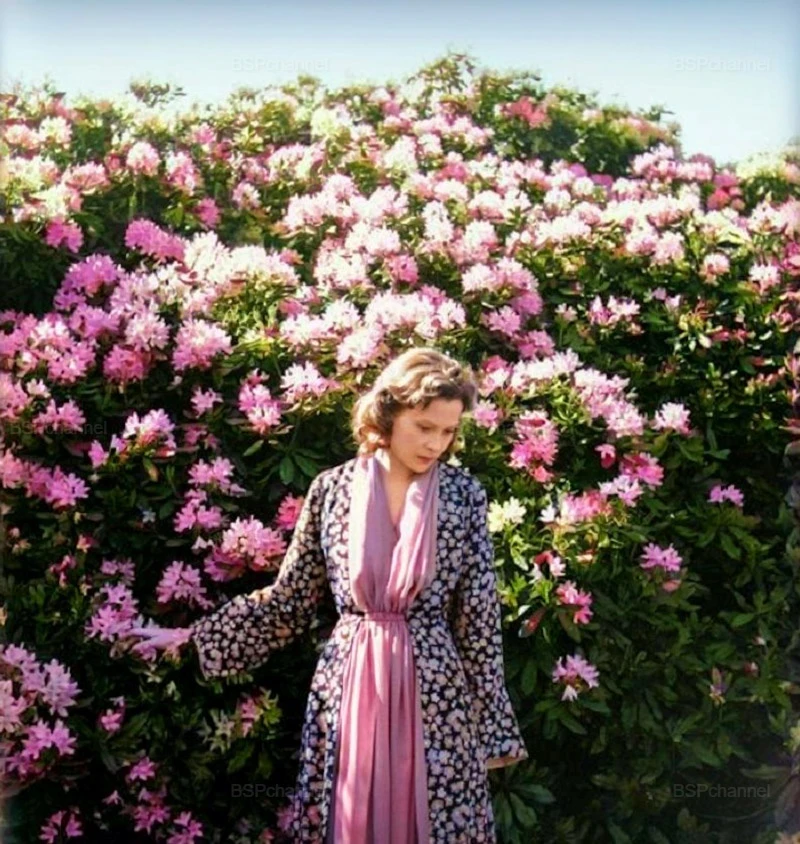
Train at Northwestern Station. Chicago, USA, 1911. 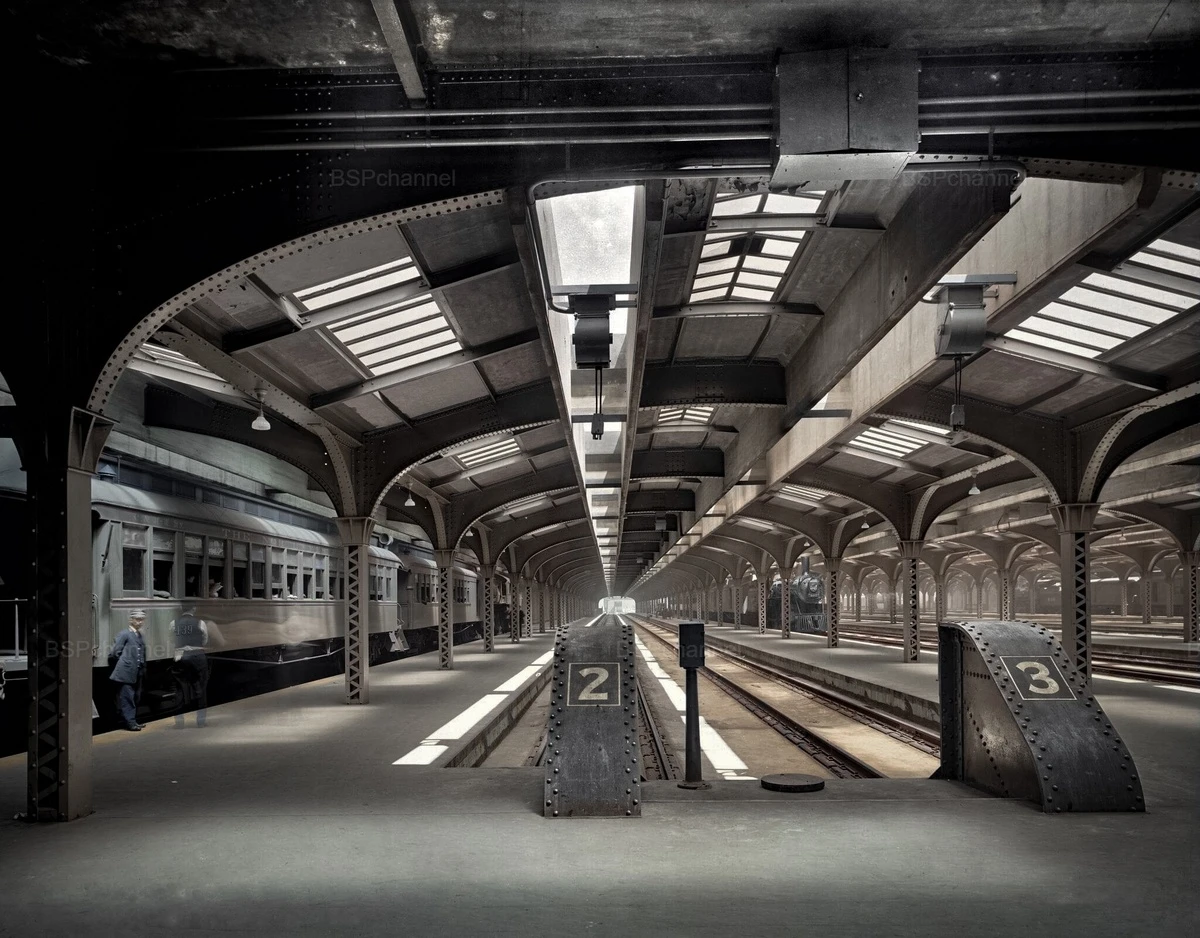
Boys' sack race, Labor Day celebration, Ridgeway, Colorado, 1940. 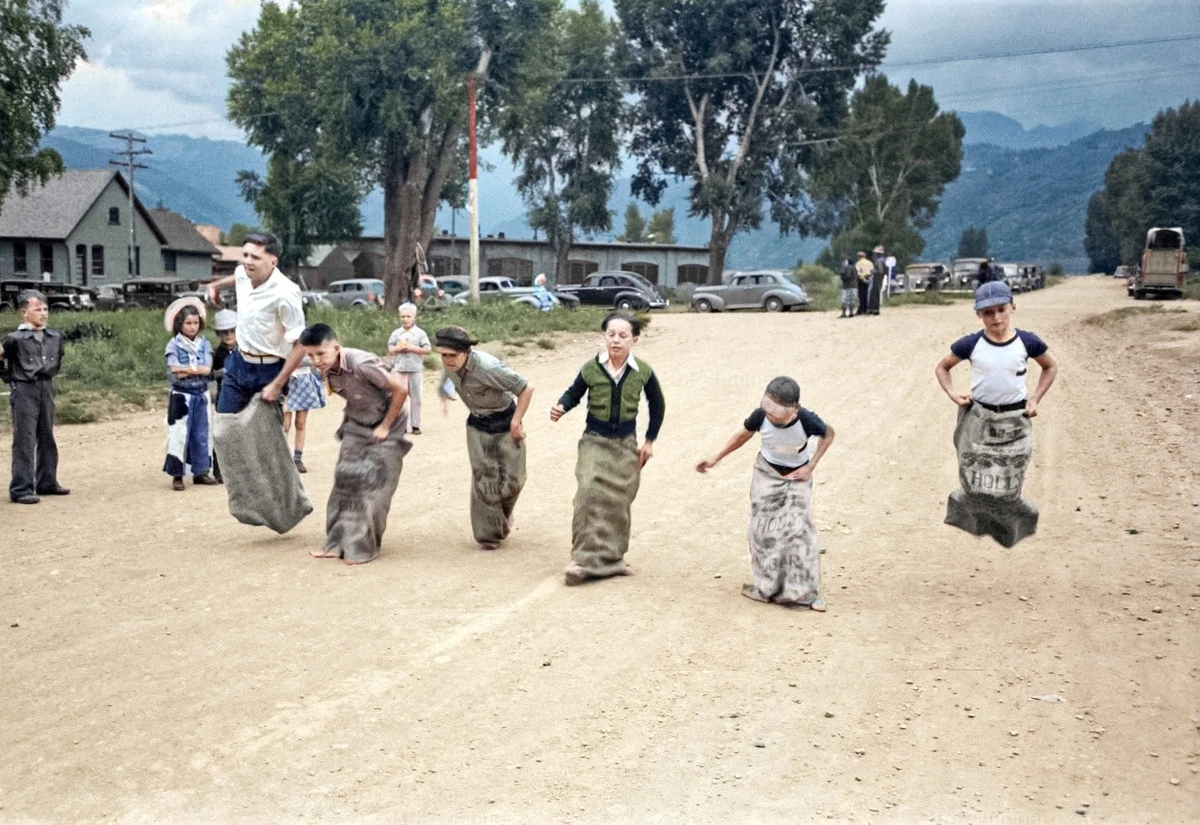
Photographer: Russell Lee
A log truck on a railroad bridge. USA, 1918. 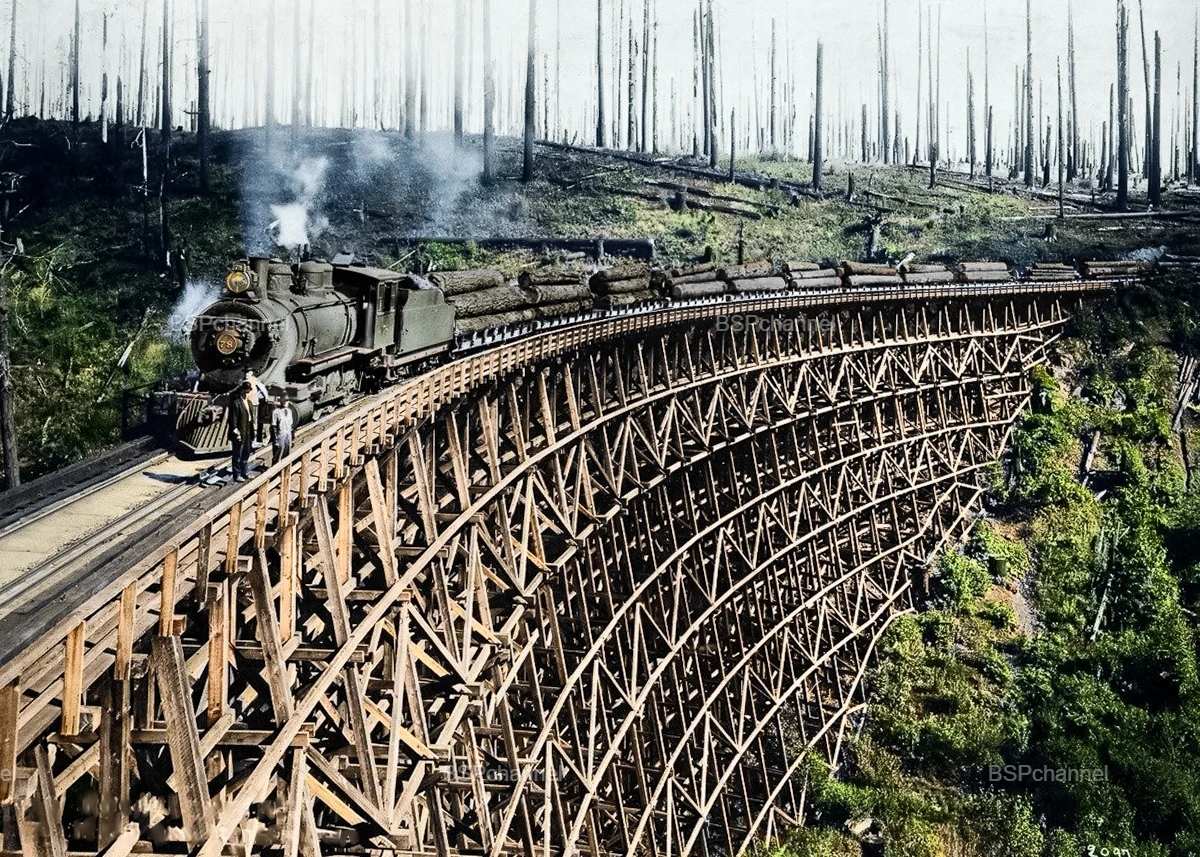
Lower Manhattan. New York City, 1941. 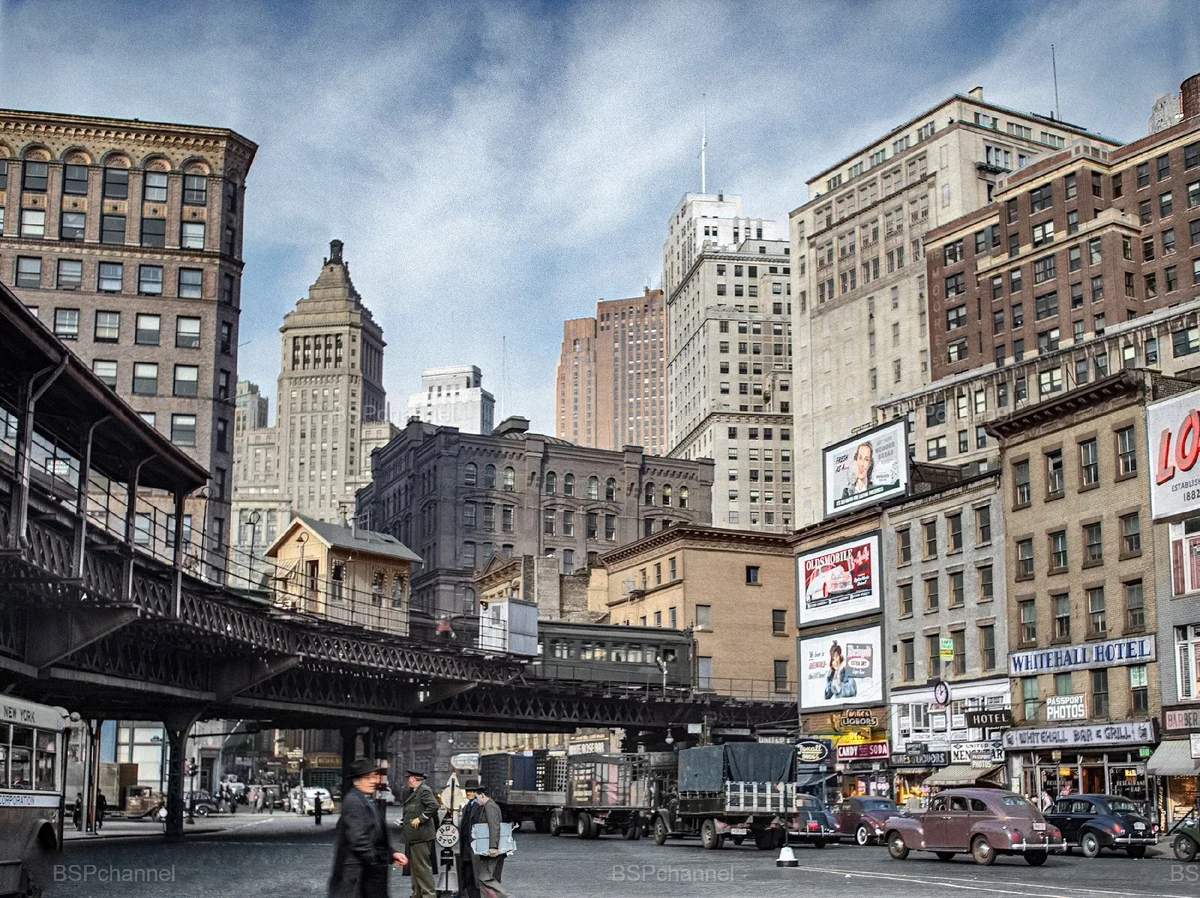
Photographer: Arthur Rothstein
A teacher shows the unusual contents of her bag to a subway conductor in New York City, 1940s. 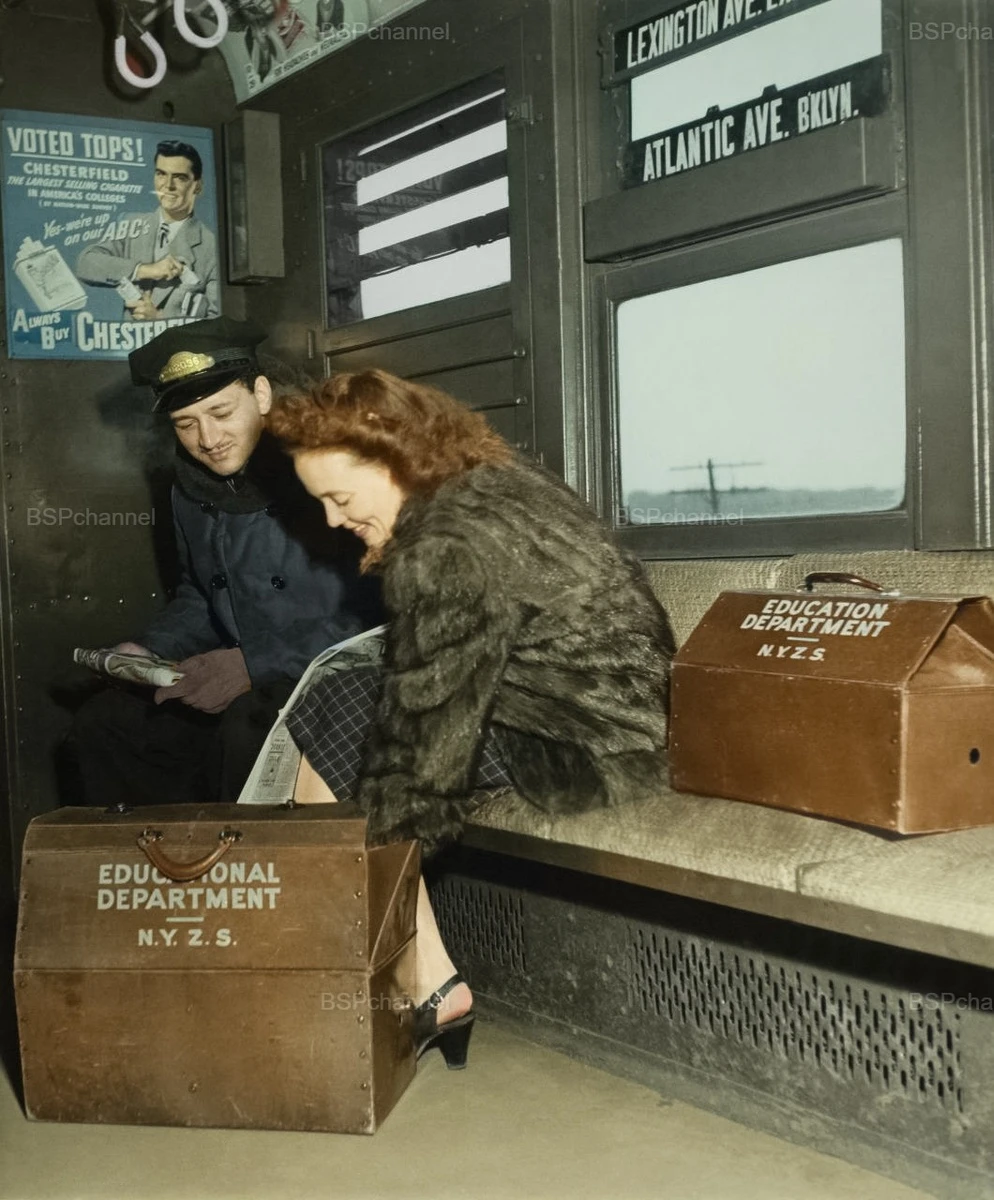
Thanksgiving Day Parade, USA, 1988. 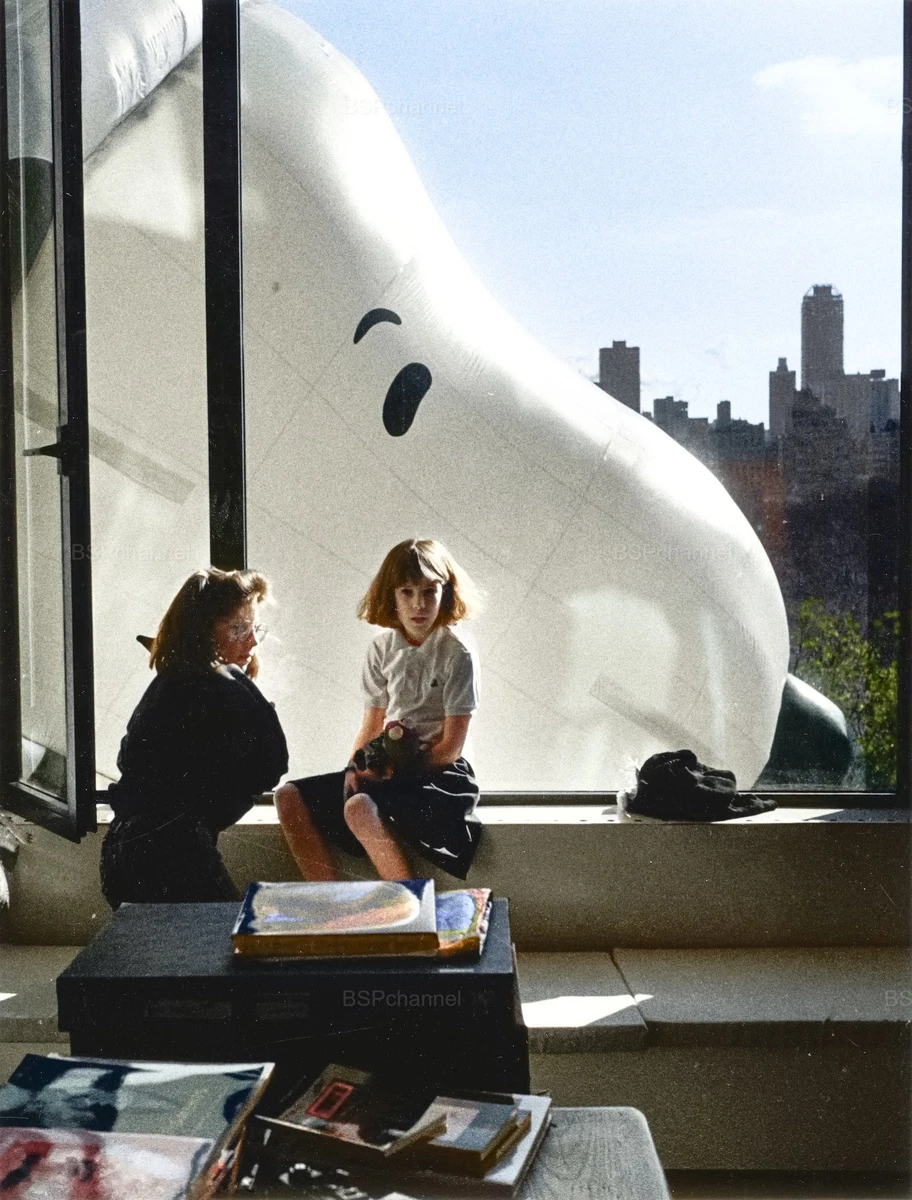
Photographer: Elliott Erwitt
Eleven-year-old Lena Lochiavo. Basket seller. Cincinnati, USA, 1908. 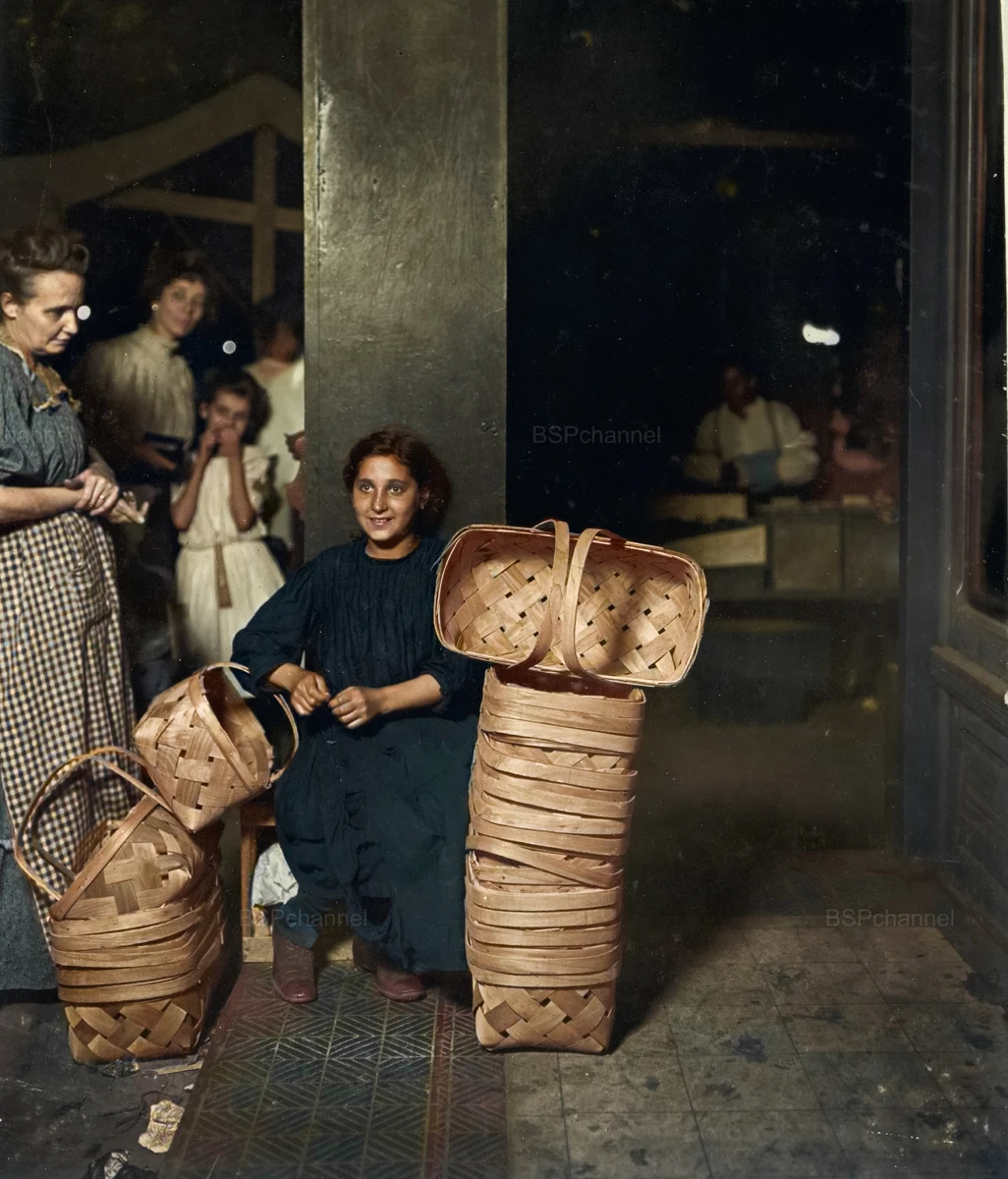
Photographer: Lewis Hine
Lena was selling goods in the marketplace just outside the saloon. She arrived at the site at 10:00 AM, and when photographer Lewis Hine took his photo at 11:00 PM, she was still at work. This was in August 1908.
Launch of the steamboat "Frank J. Hecker" from the shipyard at the Lake St. Clair dock. USA, 1905. 
Bunnies rehearsing for an Easter concert. New York, 1966. 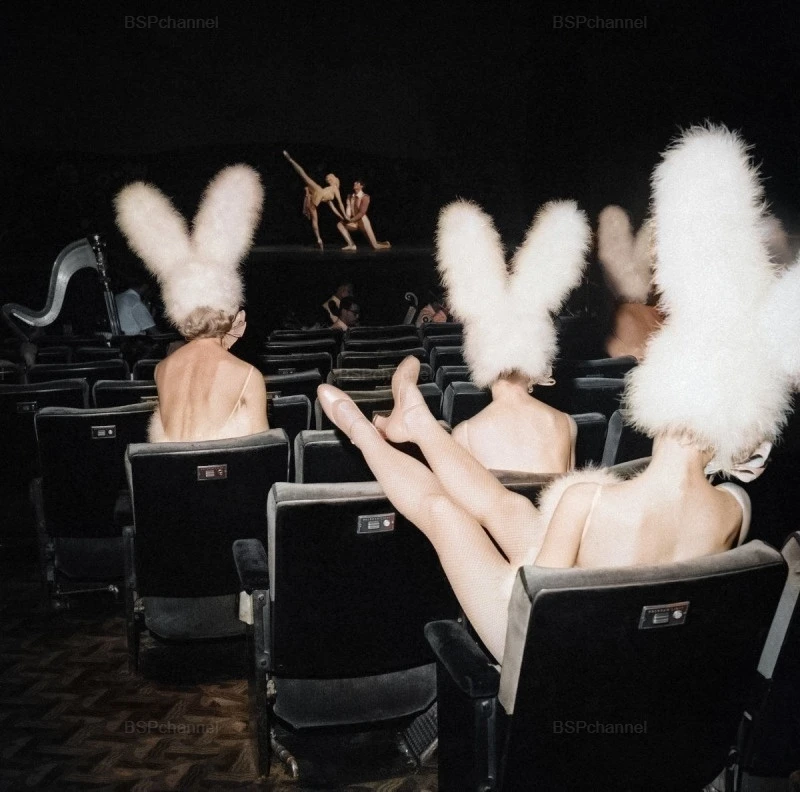
Girls relax during a rehearsal for the Easter show at New York's Radio City Music Hall on April 5, 1966. The Easter and Christmas shows are the highlights of the year at the Music Hall. Thousands line up to get into the theater for these performances.
Chorus girls read on the set of the film "You Can't Have It All," 1937. 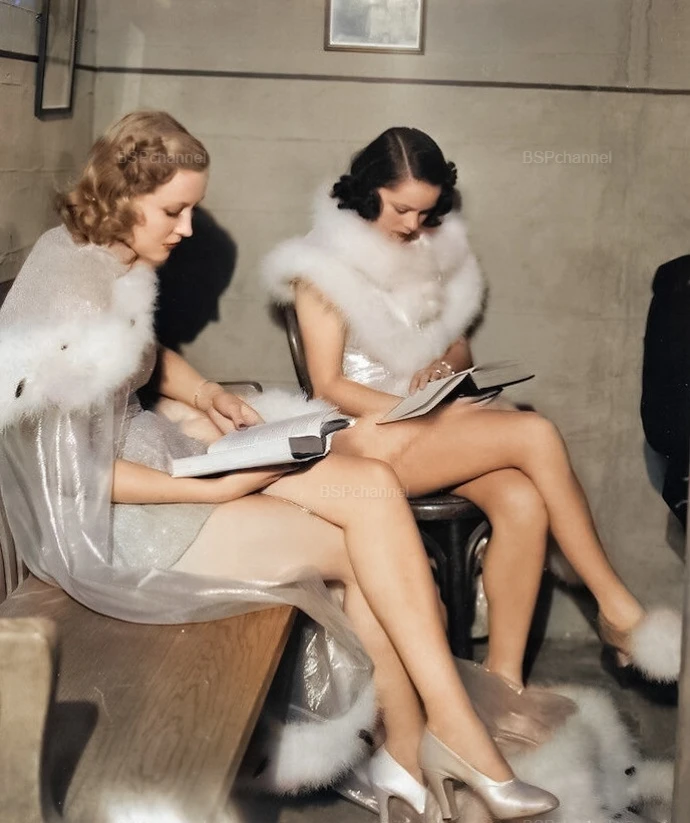
A mobile library in Cincinnati, USA, 1920s. 
A woman in a wheelchair enters a waiting vehicle via a ramp. New York City, 1933. 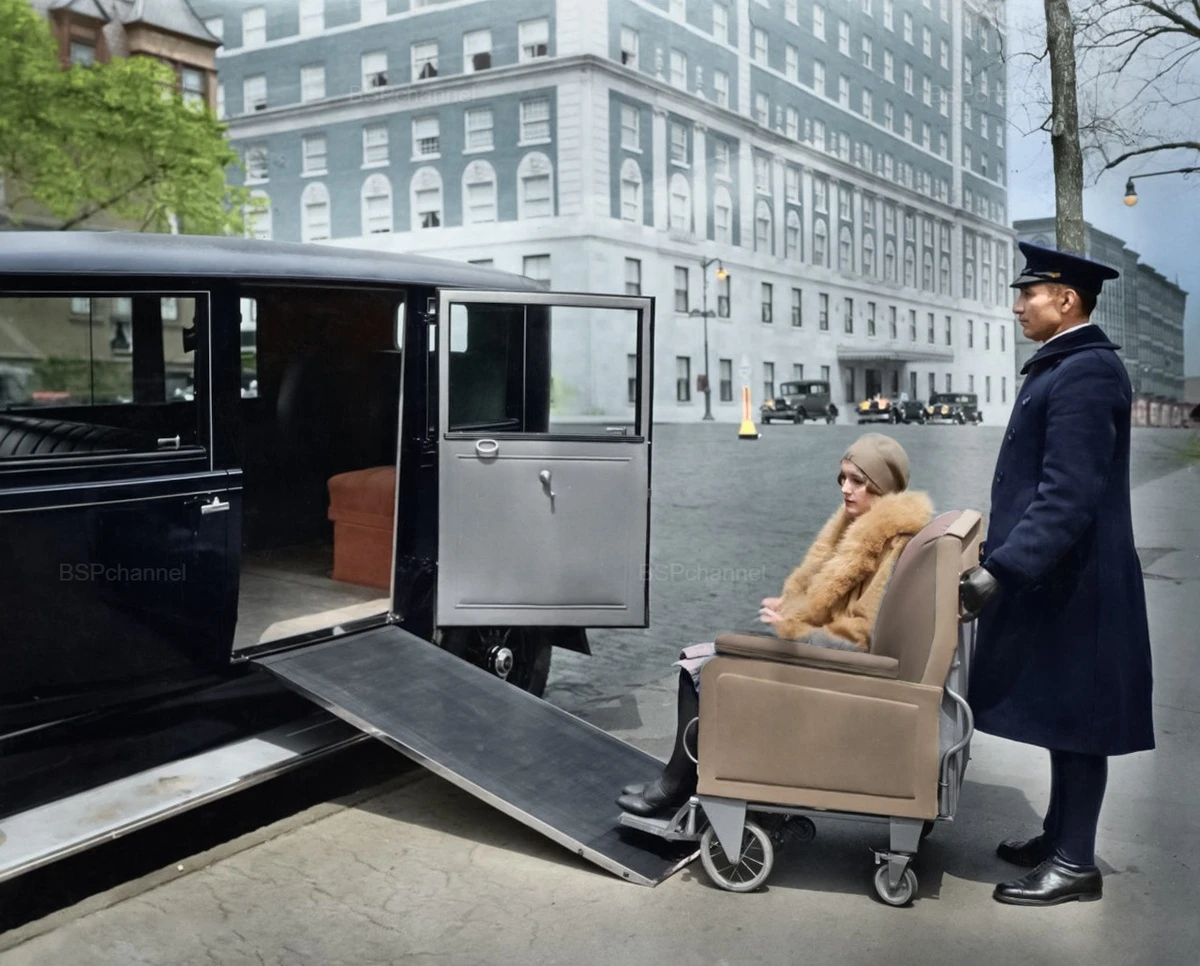
The car body, designed by Wright Barkley, featured a built-in ramp hidden under the floor. When needed, it smoothly extended from both sides of the car and lowered downward, allowing for easy entry and exit of a wheelchair. Inside the car, the wheelchair was securely locked, ensuring safety and stability while driving.