Turra Coo – a Cow That Became a Symbol of Resistance (10 photos)
More than a hundred years ago, the small farming community of Turriff in Aberdeenshire, Scotland, became the unexpected scene of one of the most bizarre anti-government riots in British history. 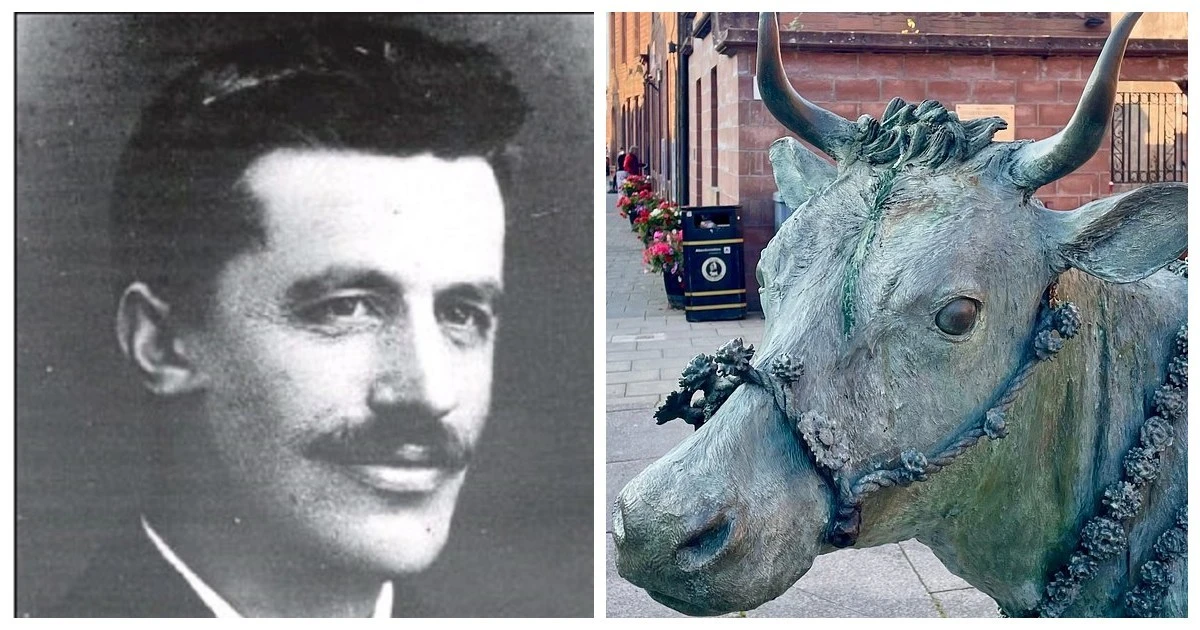
At the center of events was a white cow – a cross between an Ayrshire and Shorthorn breed, known throughout the country as Turra Coo (meaning "cow from Turriff" in Scottish dialect). 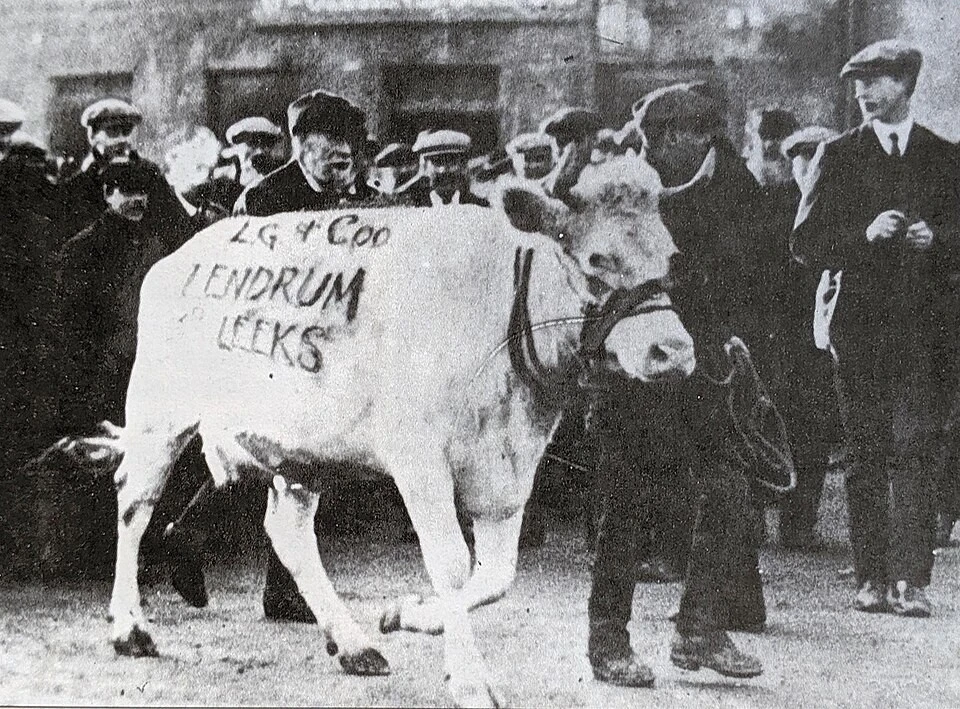
The story of the famous snow-white cow from Turriff began in 1911, when the government introduced National Insurance. Under the new scheme, both workers and employers were required to contribute to state benefits, including health and unemployment insurance. This became mandatory for all workers between the ages of 16 and 70.
Insurance is a good thing, but people were skeptical at the time. Many Scottish farmers were skeptical about the benefits of government support for those in need. Some believed the contributions required of them were too high. The Turriff farmers were particularly outraged because it increased the cost of hiring workers. They believed they were taking good care of their workers themselves and therefore had no need for government benefits. 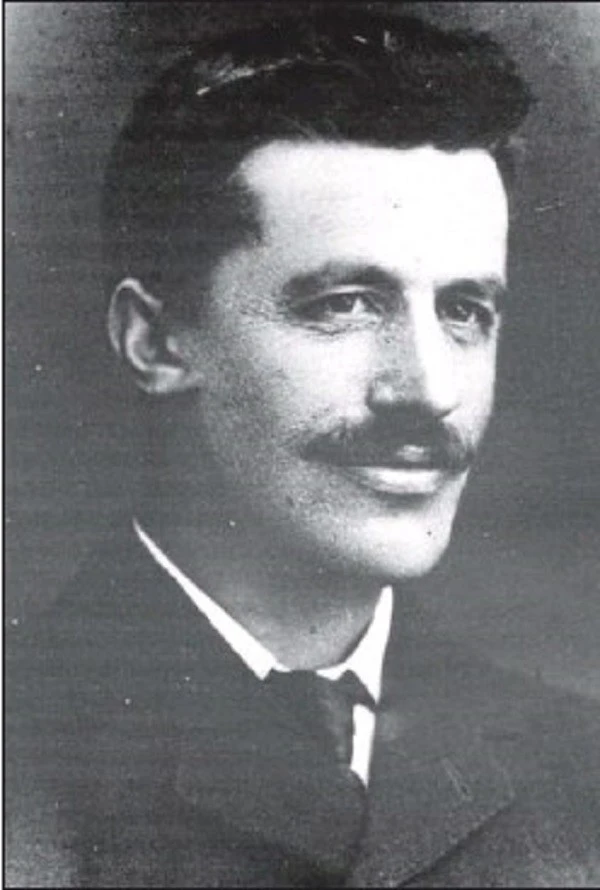
Robert Paterson
Local farmer Robert Paterson, who employed many workers on his farm in Lendrum, decided to set an example. He refused to include stamps on his workers' insurance cards. The authorities immediately pounced on him. They deemed him guilty of up to 20 violations of the National Insurance Act of 1911 and imposed a combined fine of £15 plus outstanding insurance premiums. Paterson paid the fine but refused to repay the debt. In response, the court ordered the local sheriff to seize the farm property worth 7 pounds. 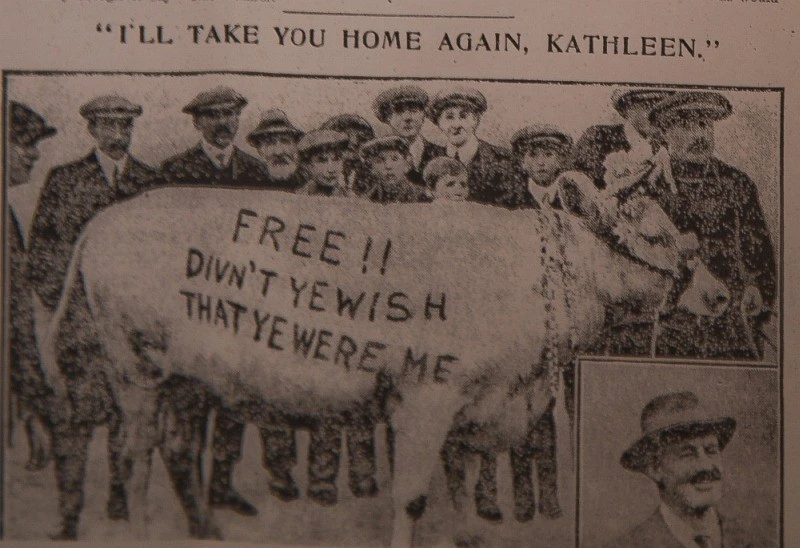
When the bailiffs came to confiscate his property, they took the only valuable item they could—a white dairy cow.
Everything might have been fine if the bailiffs had seized a tool, a plow, or something similar. But the incident turned into an emotional scandal because they took a cute white cow. 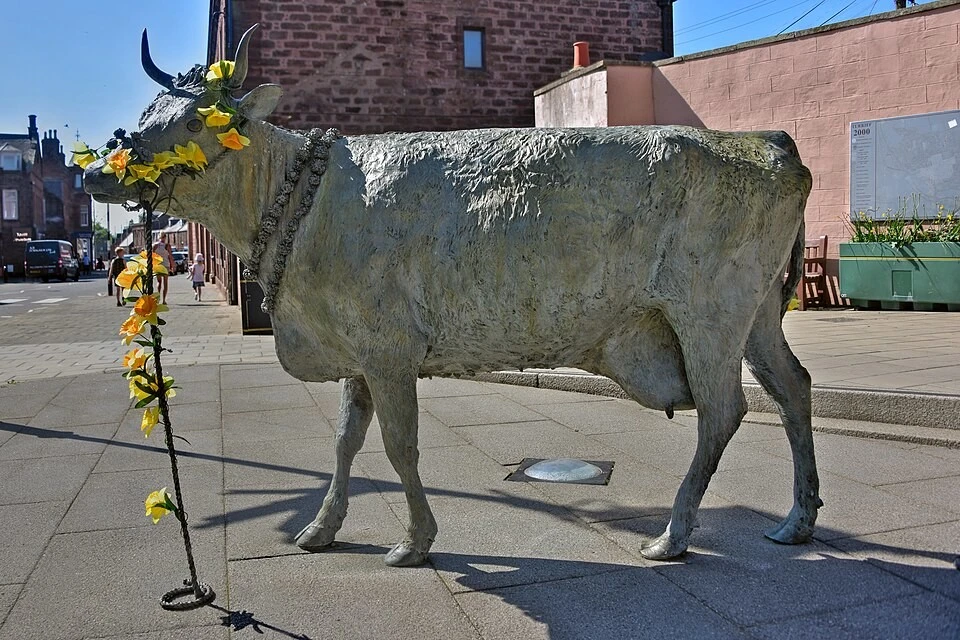
Turriff's farmers' markets refused to organize the sale, and not a single local auctioneer volunteered. The authorities persisted. They brought in an auctioneer from out of town and scheduled the auction right in the center of Turriff. On the appointed day, the cow was tethered in the main square, and residents decorated it with ribbons and painted the slogan "From Lendrum to Leek" on its flanks. This was a reference to the then Chancellor of the Exchequer, David Lloyd George, who was Welsh. Leeks are the national symbol of Wales. 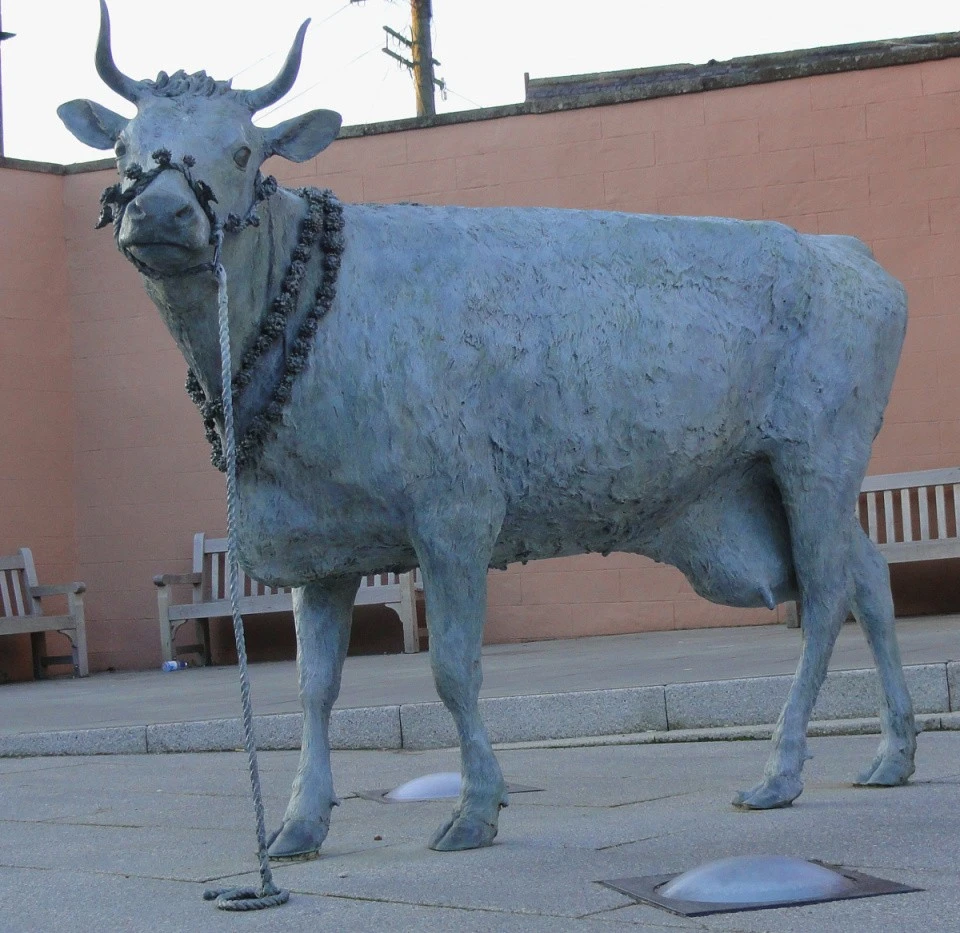
The square was packed. Farm workers had been given half a day off to come and watch the auction or disrupt it. There was a palpable tension in the air. People were nervous, and the cow was nervous. Then, some recalled, a dog barked nearby. Others said Paterson himself approached and shouted "Yoo-hoo!", frightening the cow. The frightened animal took off and raced through the streets. 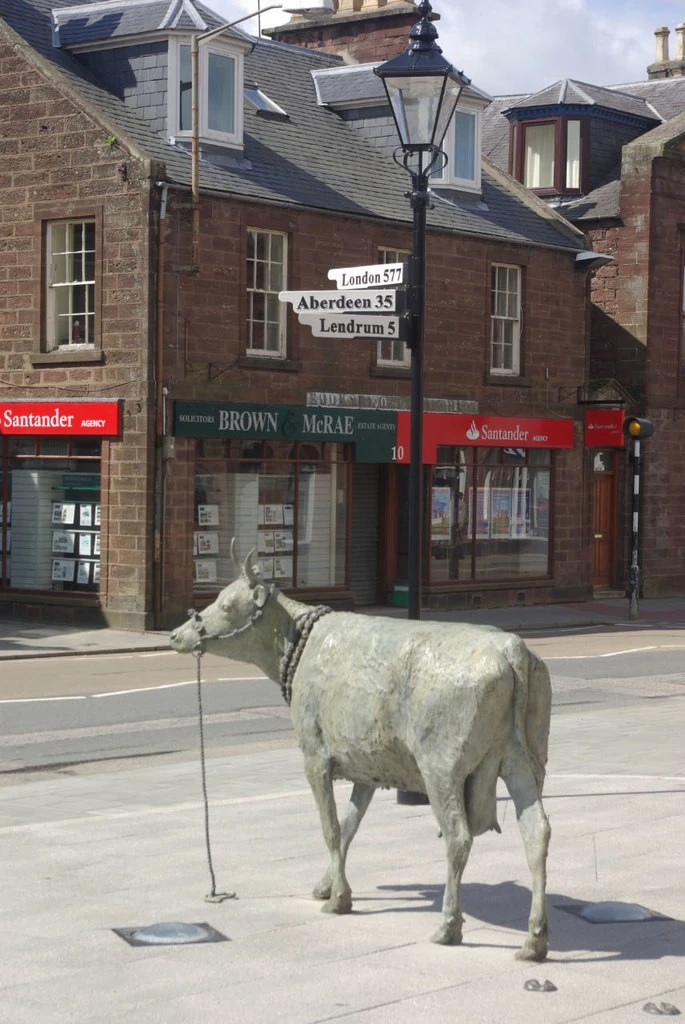
Then the riot began. A crowd of about a hundred people began pelting the bailiffs with rotten fruit, eggs, and soot. Someone set off firecrackers. By the end of the day, eight farm workers, including Paterson himself, were arrested and tried in Aberdeen for disturbing the peace. However, all were acquitted due to lack of evidence. 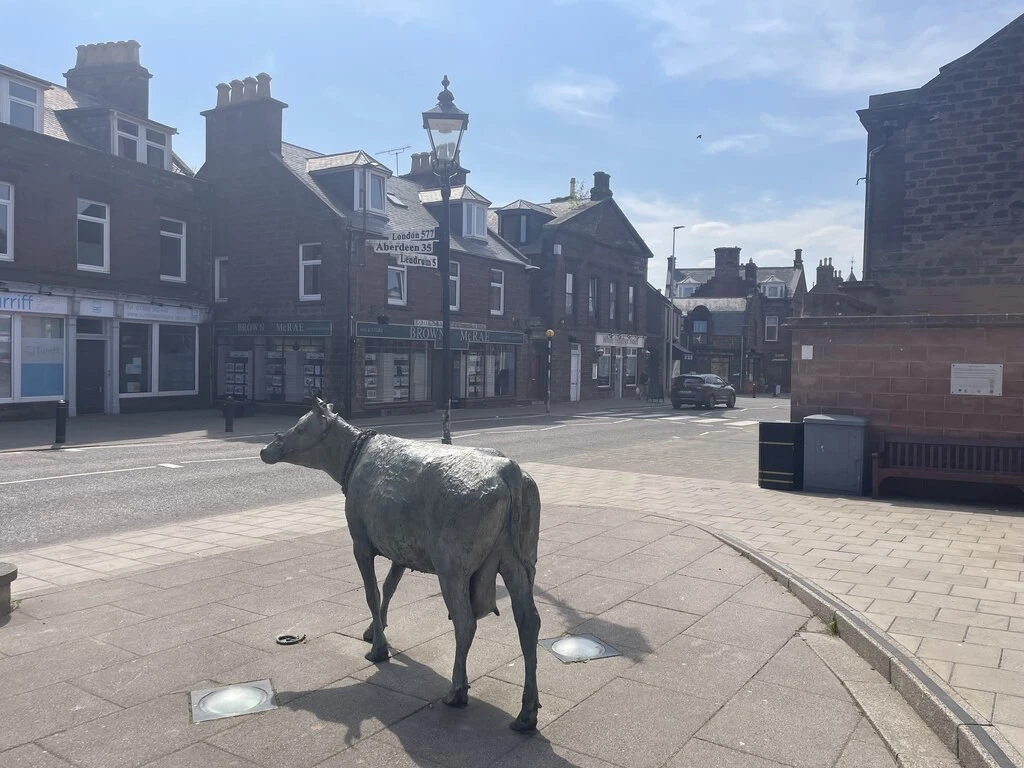
Meanwhile, the escaped cow was soon found hiding in a nearby barn and sent to Aberdeen for a more organized auction. The cow was successfully sold, but the local community rallied and purchased it from its new owner. The ceremony of returning the cow to the Paterson family on January 20, 1914, became a significant public event. Over 3,000 people came to watch the cow ceremoniously paraded through the streets of Turriff, adorned with ribbons and garlands of dried flowers, with the slogan "Free!! Don't you want to be me?" painted on its side, accompanied by a band. 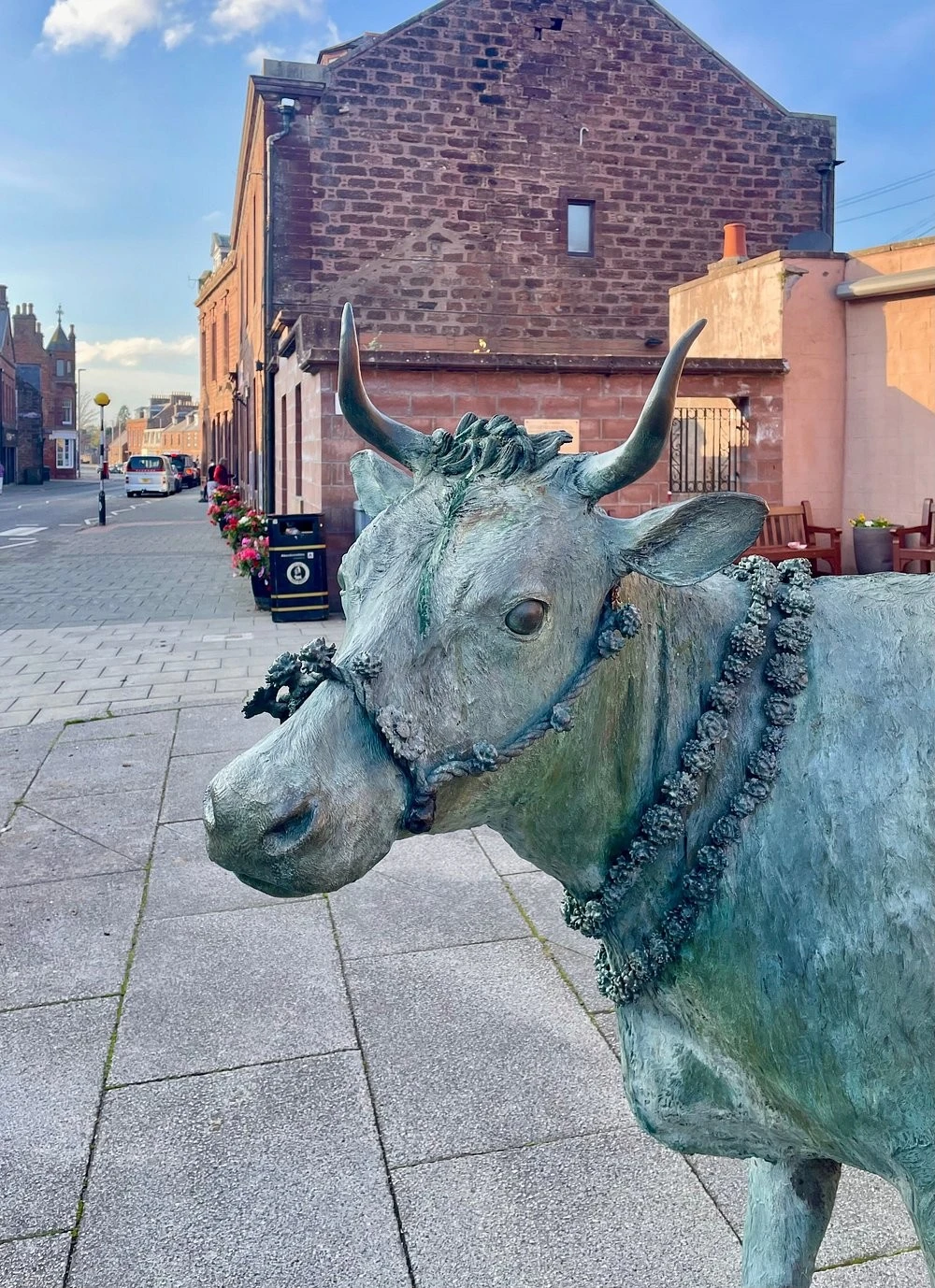
Ku died six years later and was buried in a corner of the Paterson lands in Lendrum. But she was not forgotten.
The cow has become something of a symbol of the town. A film was made about it. For many years, locals sold souvenirs featuring the cow, often adorned with the slogan "From Lendrum to Leek." In 1971, a memorial sign with a bronze plaque in the shape of a cow's head was unveiled on the road near Lendrum. 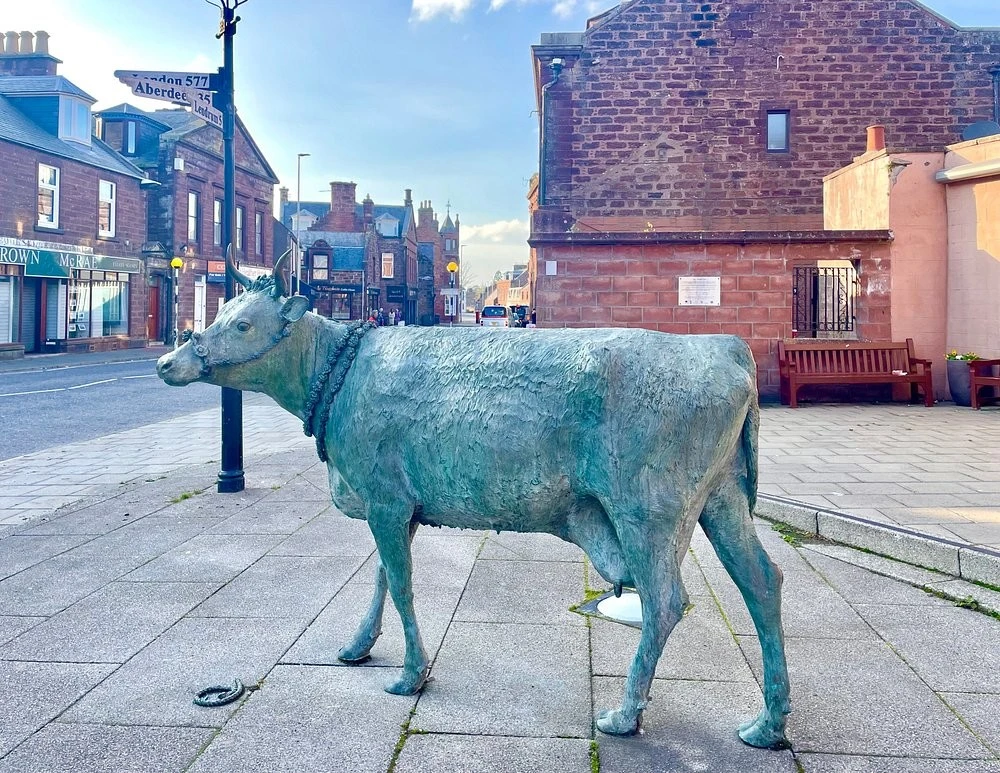
In 2010, a sculpture of Turra Coo was erected in the center of Turriff, at the intersection of two main shopping streets, a place now known locally as "Cow Corner." The sculpture was based on a taxidermied version of the famous cow named Alese. She bears a striking resemblance to her predecessor, the very same cow preserved in old photographs. Alese's stuffed form can still be seen today, occupying a place of honor in the Aberdeenshire Agricultural Museum in Mintlaw.