10 Captivating Microphotographs: Nature's Hidden Beauty (11 photos)
What appears mundane to the naked eye transforms into fantastical landscapes and bizarre structures under a microscope. 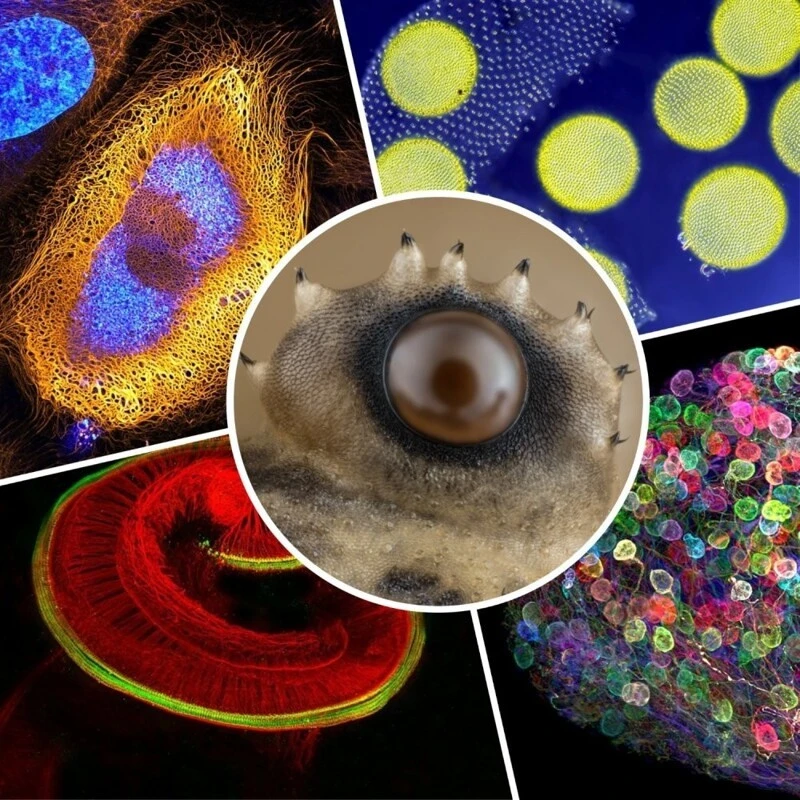
If not for scientific and technological progress, we would never have become acquainted with these microworlds, where their own laws of beauty reign, and where every element can tell a fascinating story of evolution and functional improvement.
I present to you a selection of ten stunning microphotographs that open the door to the amazing universe of the small and unknown.
Keratin Structures in Skin Cells
This image shows the complex architecture of keratin protein fibers within human skin cells. Keratin is a major structural protein that plays a key role in maintaining the strength, elasticity, and health of skin, hair, and nails. 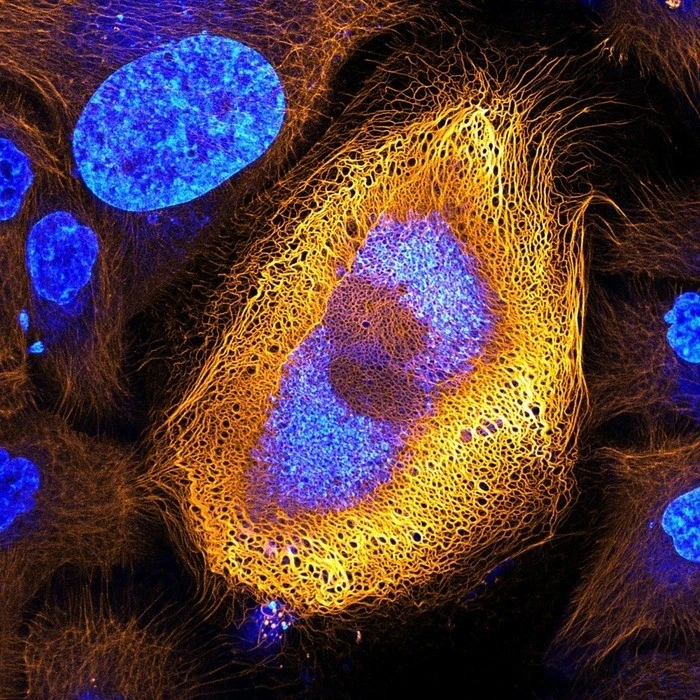
Keratin-containing cells (keratinocytes) are used in medical research to study the aging process and develop new anti-aging therapies.
Seed head of a ragwort flower
The graceful structure of a ragwort flower, filled with tiny seeds. Each seed has a fluffy tuft of hair that will help it travel through the air and, if lucky, find favorable conditions for germination and reproduction. 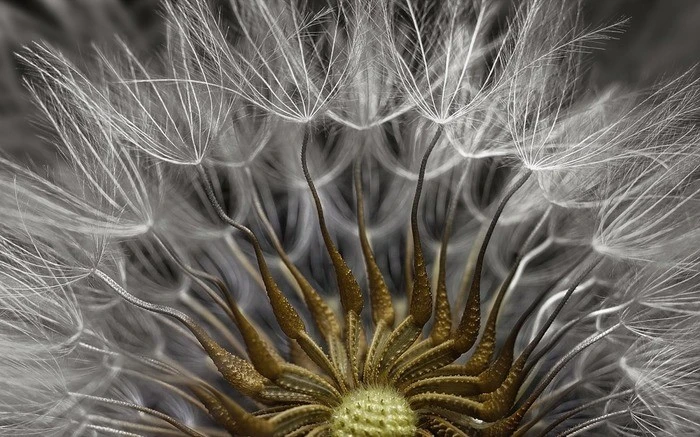
This is a wonderful example of how sophisticated and efficient reproduction mechanisms can be in nature.
Volvox Algae Colony
What resembles the famous Pac-Man ball from the video game of the same name is a spherical colony of single-celled green Volvox algae at the moment the mother colony "ruptures," releasing daughter organisms. 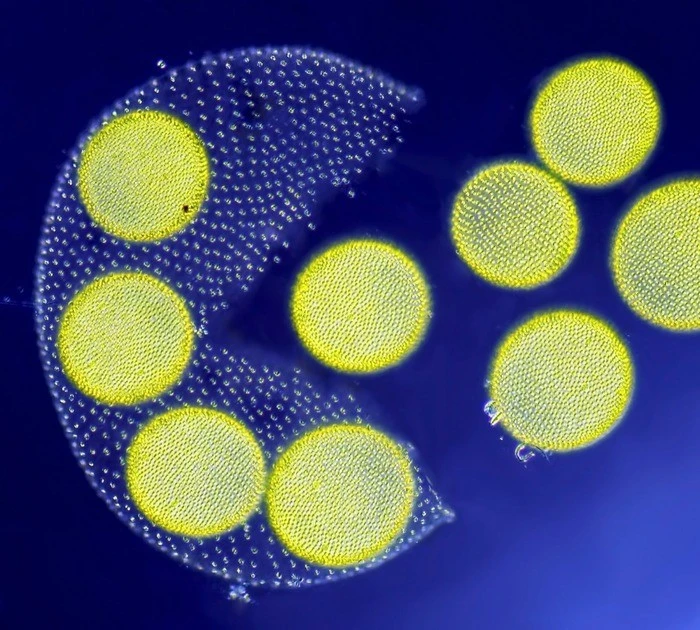
Volvox is a brilliant example of collective behavior in protozoa. Thousands of cells work together as a single organism.
Tapeworm Head
This is a detailed image of the scolex, the head of tapeworms, which contains the attachment organs, represented by hooks (bottom) and suckers (two on top). These organs allow the parasite to securely attach itself to the intestinal wall of the host and live out the best years of its life in this position, leaving behind countless offspring. 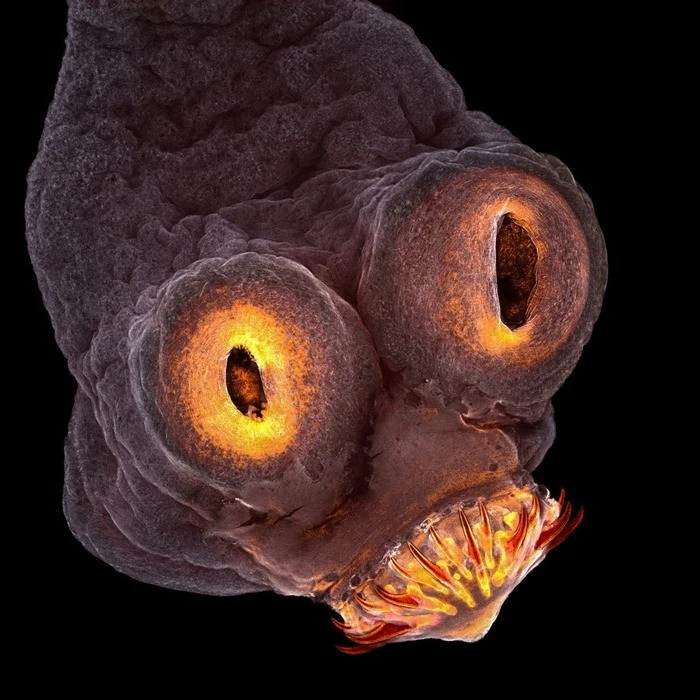
The scolex is an example of astonishing evolutionary adaptation; millions of years of searching for the perfect solution.
Fungal Colony in Soil
This is a fungal colony in soil. If I saw this image out of context, I'd think it was a Japanese landscape artist capturing the setting sun over a field of flowers. 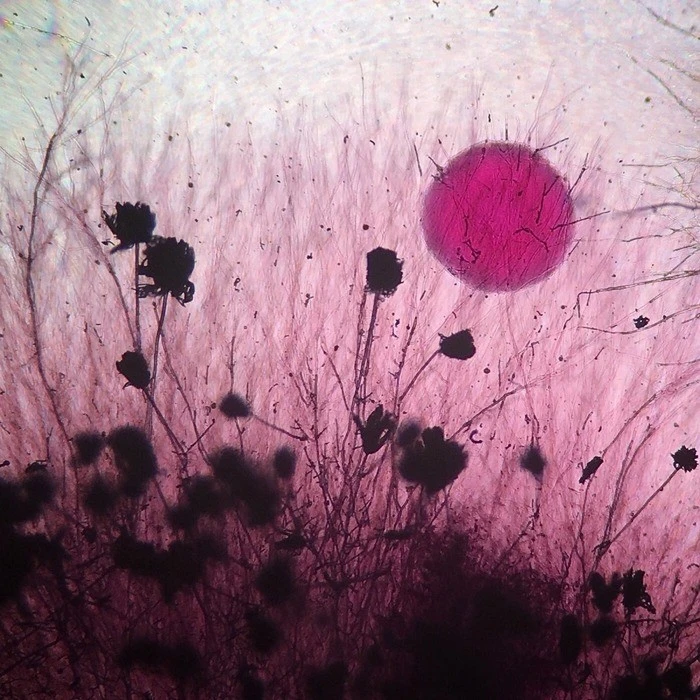
Fungi play a vital role in ecosystems, decomposing organic matter to return nutrients to the soil. Fungal mycelium forms complex underground networks, some of which can extend for tens of kilometers. These networks are used by plants (including trees) to exchange nutrients and even information.
Lily Spores
Each pollen grain, with its complexly sculpted surface, represents the plant's male gamete, enclosed in a protective shell with a unique relief. 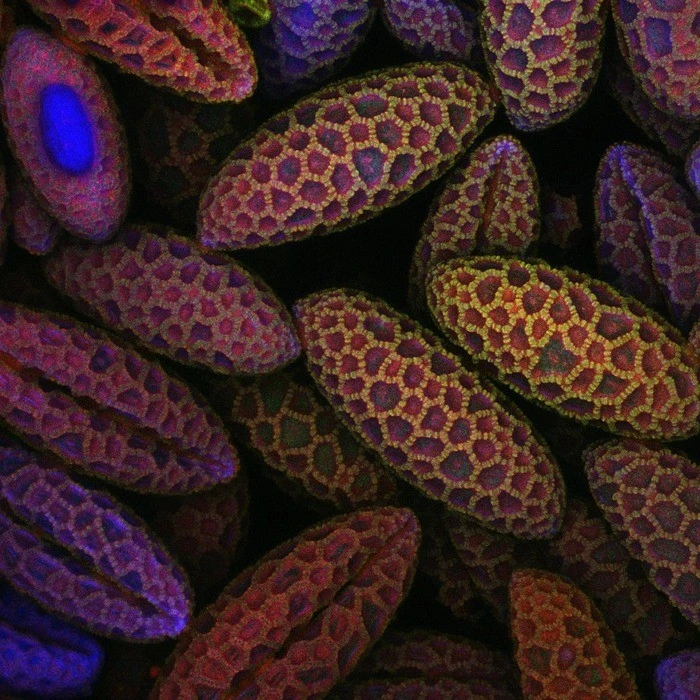
Studying pollen shapes and comparing patterns helps botanists identify different lily species.
Part of a chick embryo's brain
This is a section of a developing chicken embryo's brain, which has been dyed brightly using the "brainbow" genetic technique. 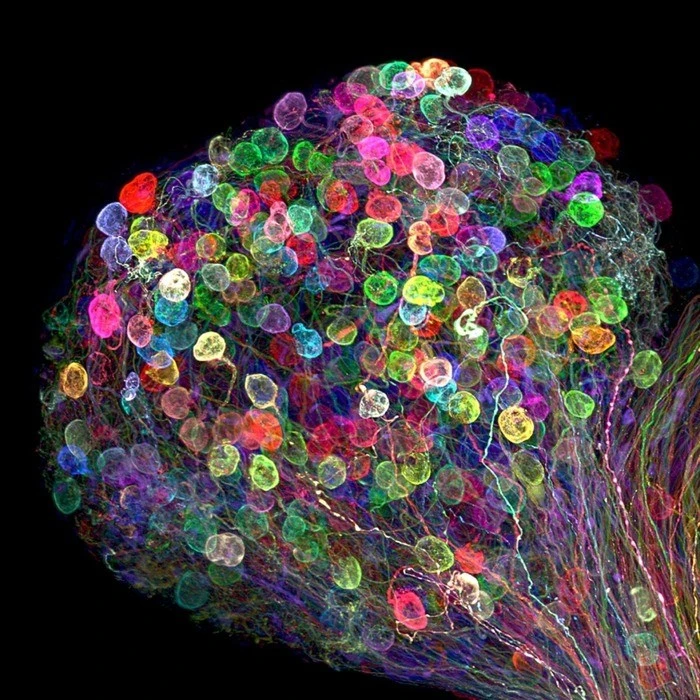
This approach makes it possible to identify different types of nerve cells and the specific connections between them, helping scientists understand the formation of the nervous system.
Rat's inner ear
Structure of the cochlea of a rodent's inner ear, showing sensory hair cells (red) and neurons (green). 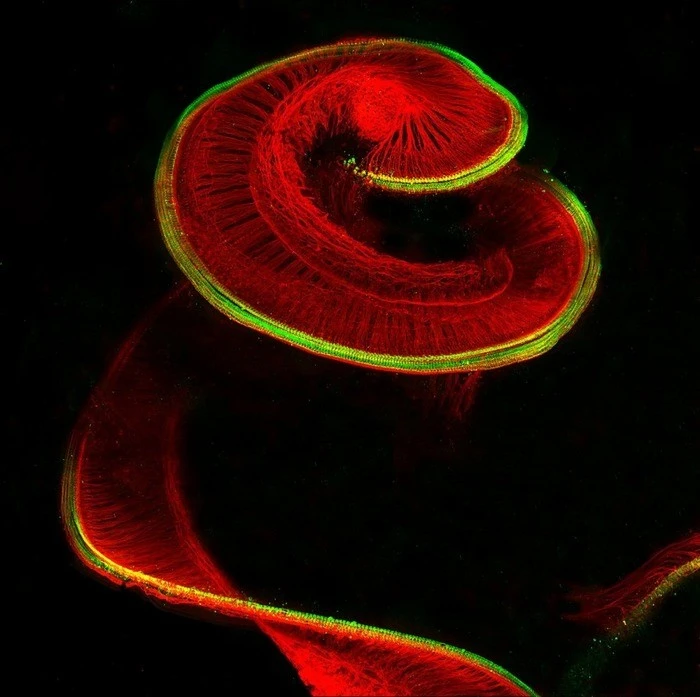
This extremely complex instrument converts sound waves into electrical signals, which, upon reaching the brain, are interpreted as sound.
Dateman's Spider Eye
This is one of the eight eyes of a harvestman spider, composed of multiple lenses. While these arthropods may appear primitive, their visual system is a true marvel of natural engineering. 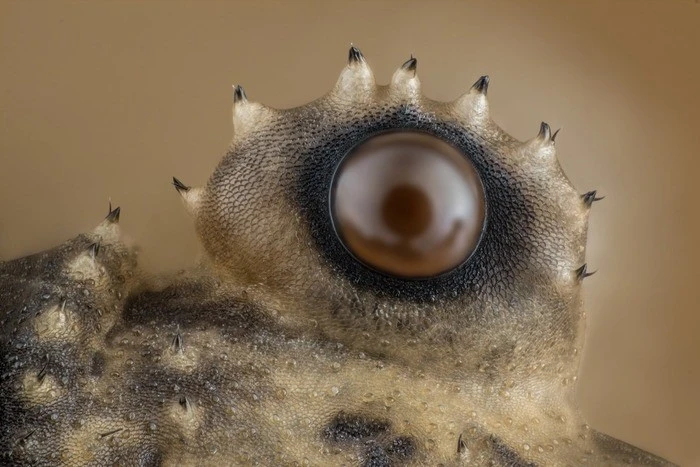
These tiny creatures see farther and more clearly than even the most perfect human vision.
Great Tit Down Feathers
Great tit down feathers are composed of fibers that act as a natural diffraction grating, producing a rainbow of colors. 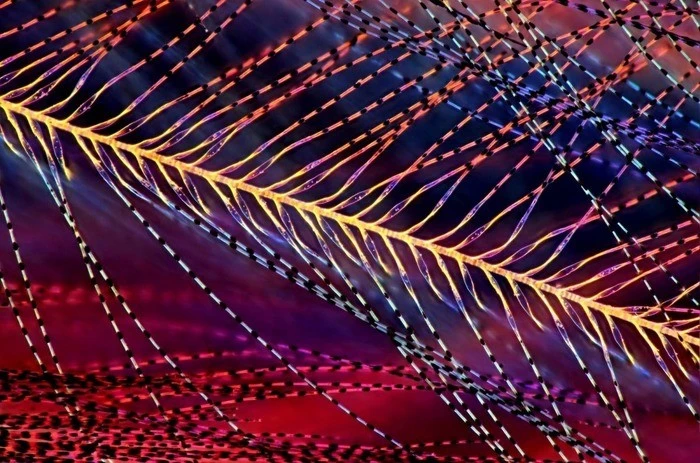
Each tit feather consists of thousands upon thousands of microscopic elements, creating a unique optical effect that aids the birds in thermoregulation and camouflage.