The giraffe is one of the most recognizable animals on the planet. Yet, there are still gaps in our knowledge about it. Some facts turn our understanding of these long-necked giants upside down. 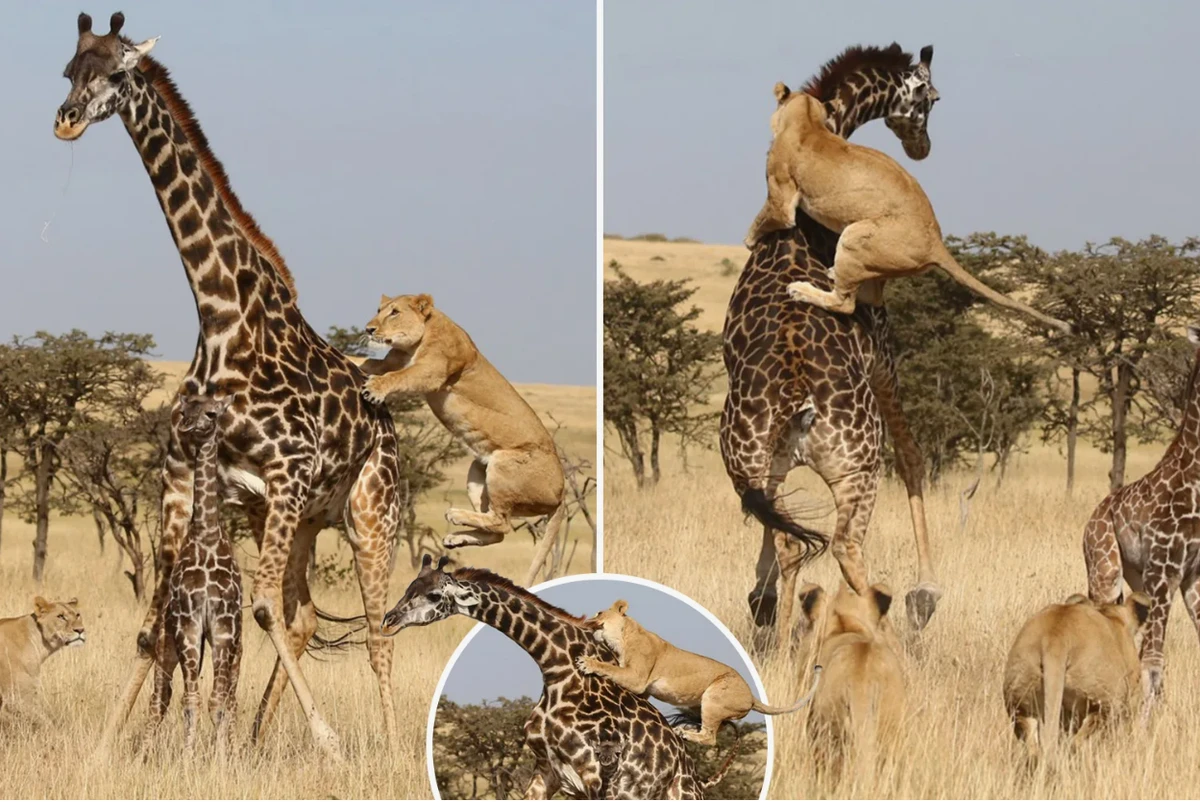
Fact 1. Giraffes gnaw bones—and not out of boredom.
Giraffes are herbivores. But they also purposefully gnaw bones. This behavior is called osteophagy and has been well documented in giraffes throughout Africa. Bones are most often gnawed by females, including pregnant and lactating ones, as well as young individuals in the active growth phase. This isn't just a matter of curiosity: giraffes can return to the same bones repeatedly, chewing them for long periods, sometimes completely smoothing the surface. 
"Dude, you've got a bone stuck in your teeth." "Yeah, I know, that's how it's supposed to be."
But why would a purely herbivorous animal gnaw on bones? Because they're an important source of calcium, phosphorus, and trace elements. Plant-based diets often lack these nutrients, especially during dry periods and on poor soils. 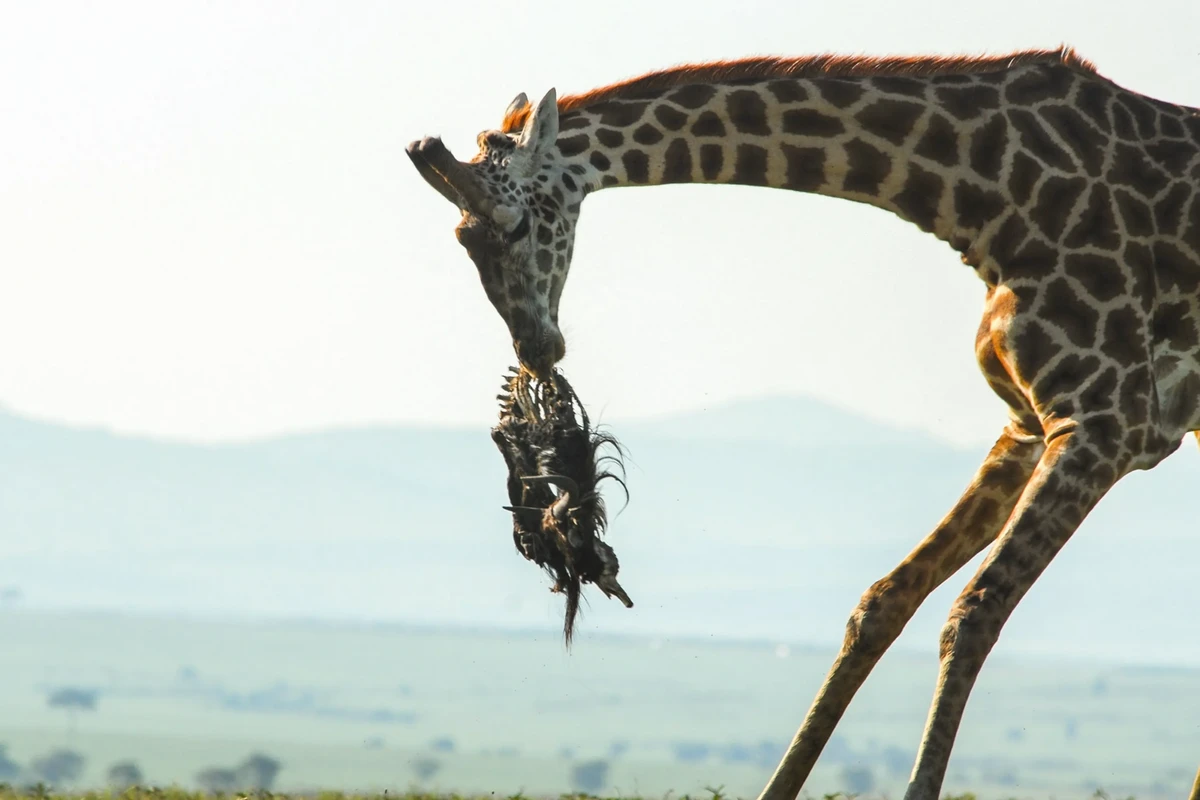
When a dog won't eat lamb/chicken/rabbit food, but happily devours some street pig.
Ostophagy is also found in other herbivores: deer, cows, goats – but in giraffes it looks especially impressive. A tall, graceful animal that carefully munches on acacia leaves suddenly starts digging through the remains of others, melancholically washing the bones in the most literal sense of the word. 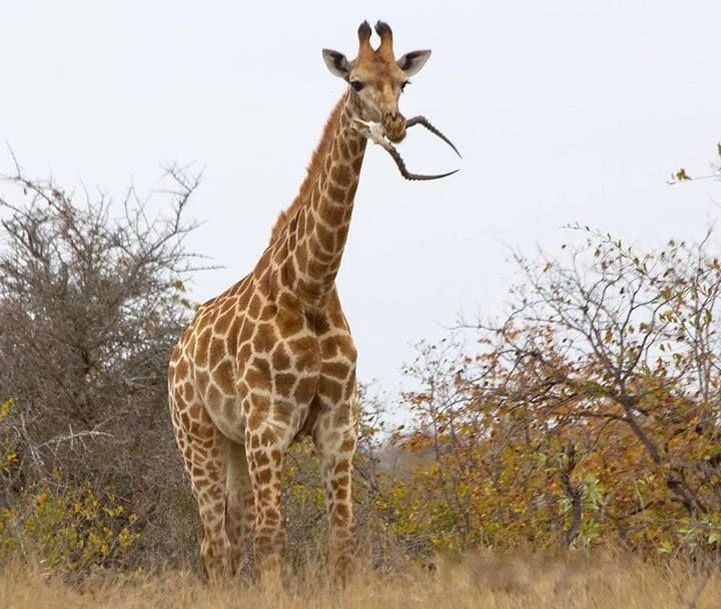
Not a "graveyard ghoul," but an animal with a balanced diet!
Fact 2. Giraffes hardly sleep
On average, giraffes sleep less than two hours a day, and deep sleep can last only a few minutes at a time—sometimes 5–10 minutes. The reason is simple: a giraffe can only sleep lying down, with its neck thrown back and its head resting on its hip. This is an extremely vulnerable position for an animal that, despite its size, remains a potential prey for predators. Therefore, giraffes sleep in short bursts, often never entering a full deep sleep phase. 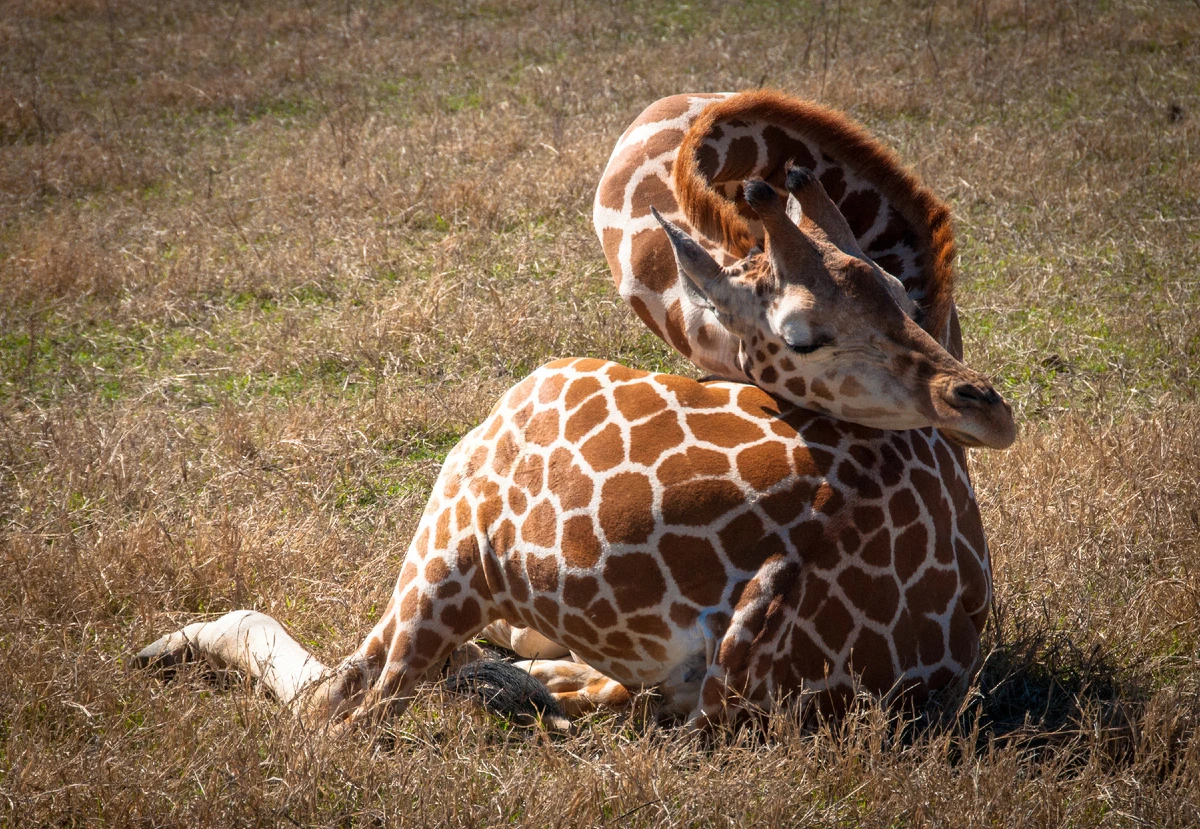
One of the few places where a giraffe can actually sleep is a zoo. In captivity, animals feel safe and sleep for 4-5 hours!
Sleeping standing isn't rest for them, but rather a standby mode in which the animal instantly reacts to any signal of danger. This isn't insomnia or an oddity. It's a survival strategy in a world where relaxation is expensive. A pride of lions, a pack of hungry hyenas, or a nimble leopard—danger lurks in every bush. Therefore, even adults prefer to relax and sleep in company, with at least one person standing guard for at least ten minutes. Office-goers looking to unplug for just 10 minutes should take note! 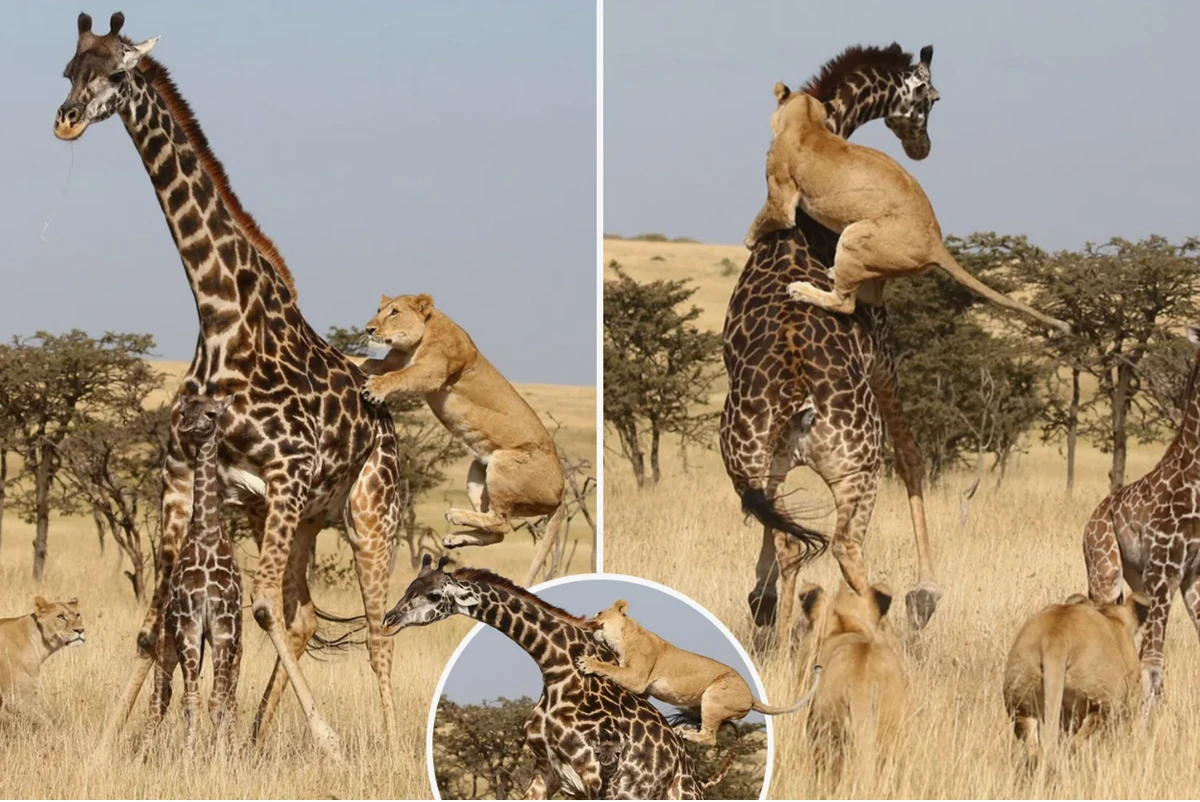
Only lions are capable of hunting adult lions. However, younger animals and cubs can fall prey to many African predators.
Fact 3. Giraffes begin their lives with a two-meter fall
Giraffes give birth standing up. When a calf is born, it falls about two meters, hitting the ground. It looks harsh, but it is this impact that helps break the umbilical cord and stimulate the first breath. Like a slap on a baby's bottom. 
Instead of "welcome, baby," a head slam on the ground. Anyone would be slow-witted at that!
A few minutes after this "greeting," the newborn is already trying to stand up. And an hour later, he's capable of running. The baby has no time to wait. Evolution has chosen a harsh but effective scenario: fall—get up—run. No "gentle starts." From day one, it's all about survival. 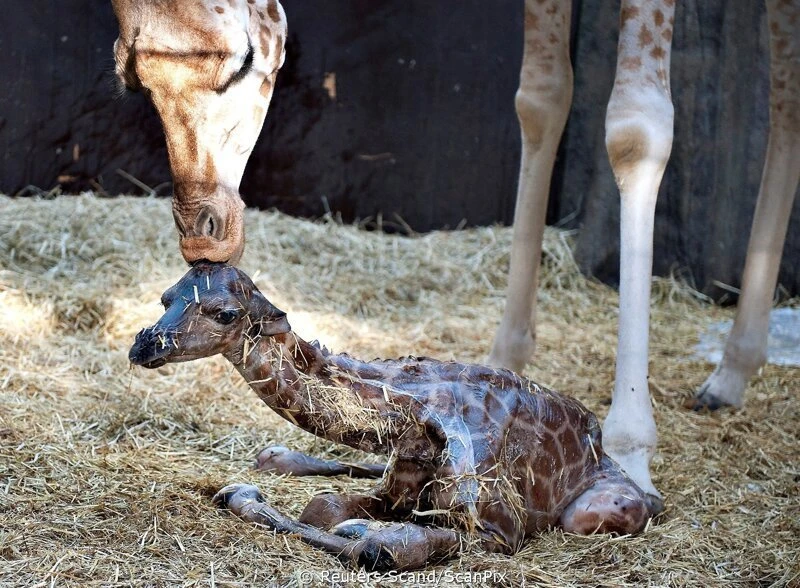
— Show Mommy where the wawa is? — Everywhere!
For predators, a calf is an easy but nutritious prey. A newborn calf is born almost fully formed: 1.8 meters tall and weighing up to 50 kilograms. A substantial meal for a leopard or lion, and it's easy to obtain. 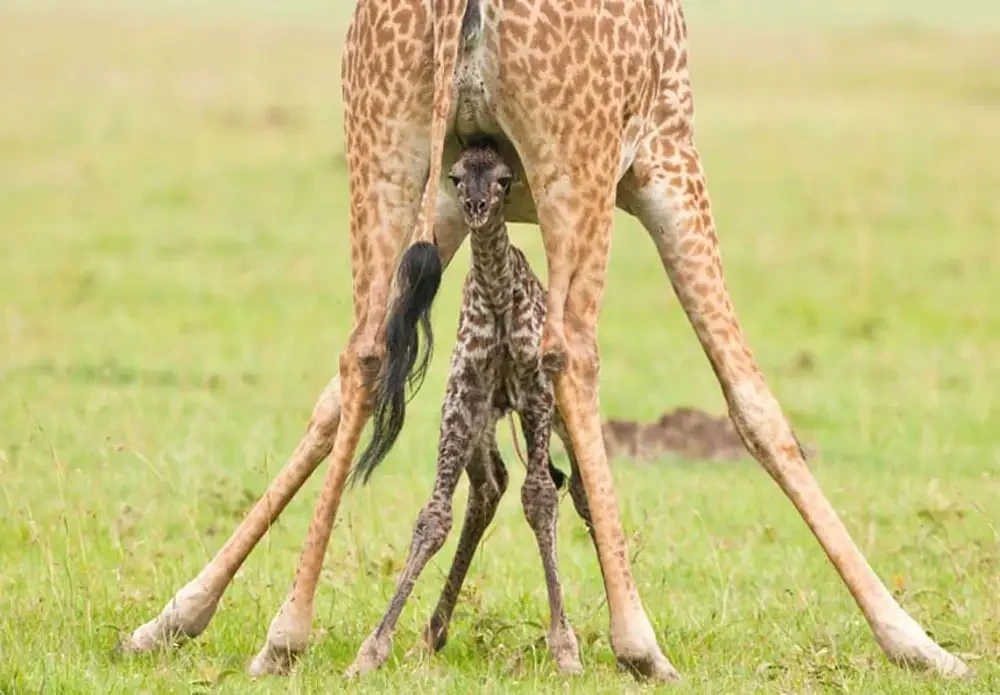
The most secure lodge in all of Africa.
The calf's only support and protection at this point is the mother. She will protect her calf for up to 1.5 years. However, sometimes, when fending off predators, the mother overdoes it. A case has been documented where a mother killed her own newborn with a kick from her hoof. So, the horror begins from the first minutes of life.
Fact 4. A giraffe's long neck isn't entirely for foraging
For a long time, it was believed that the giraffe's long neck evolved solely for reaching leaves from trees. Today, more and more scientists believe this explanation is incomplete. Observations show that giraffes spend most of their time feeding at heights accessible to other herbivores. Moreover, during dry periods, individuals with particularly long necks sometimes find themselves at a disadvantage: maintaining such a massive structure is energetically expensive. 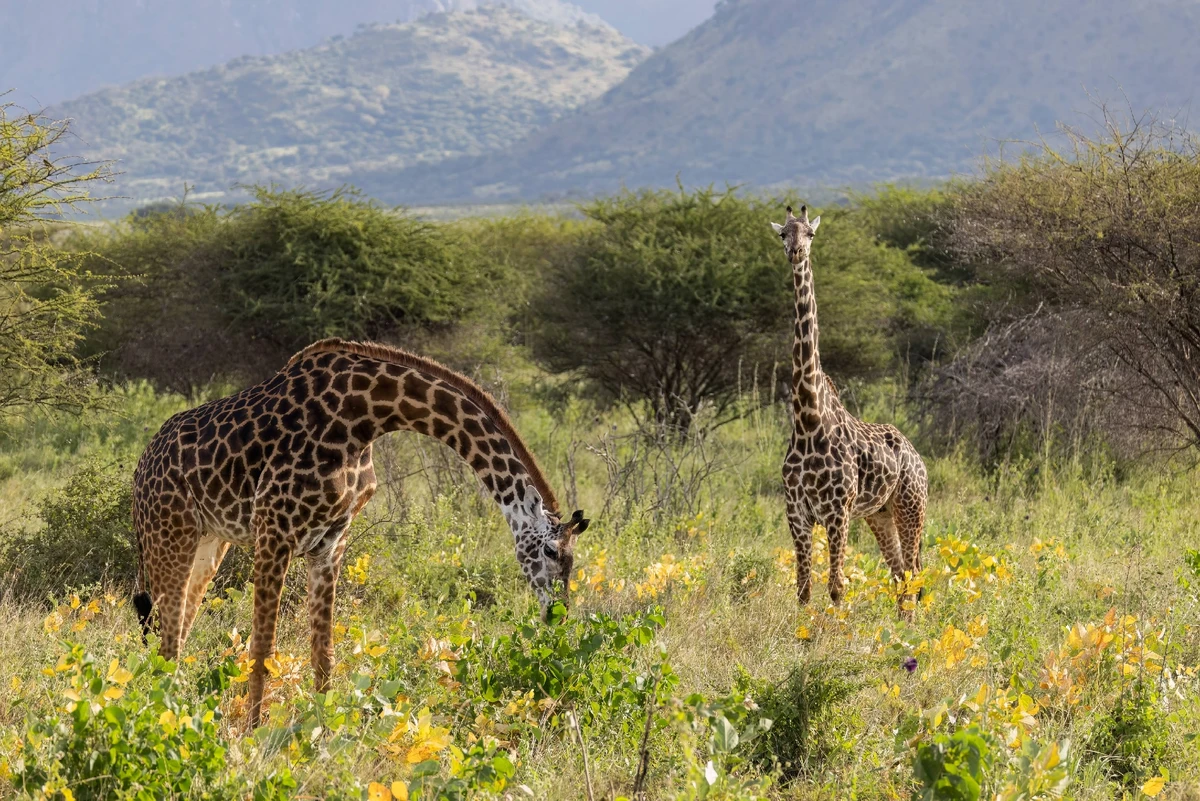
When your neck is two meters long, but the lettuce is still at the bottom. Mkomazi National Park, Tanzania, 2025. Author: Varvara Dronova.
However, growing evidence indicates that a long neck is very sexy! At least for female giraffes. Apparently, their long necks have evolved, in part, as a result of sexual selection. 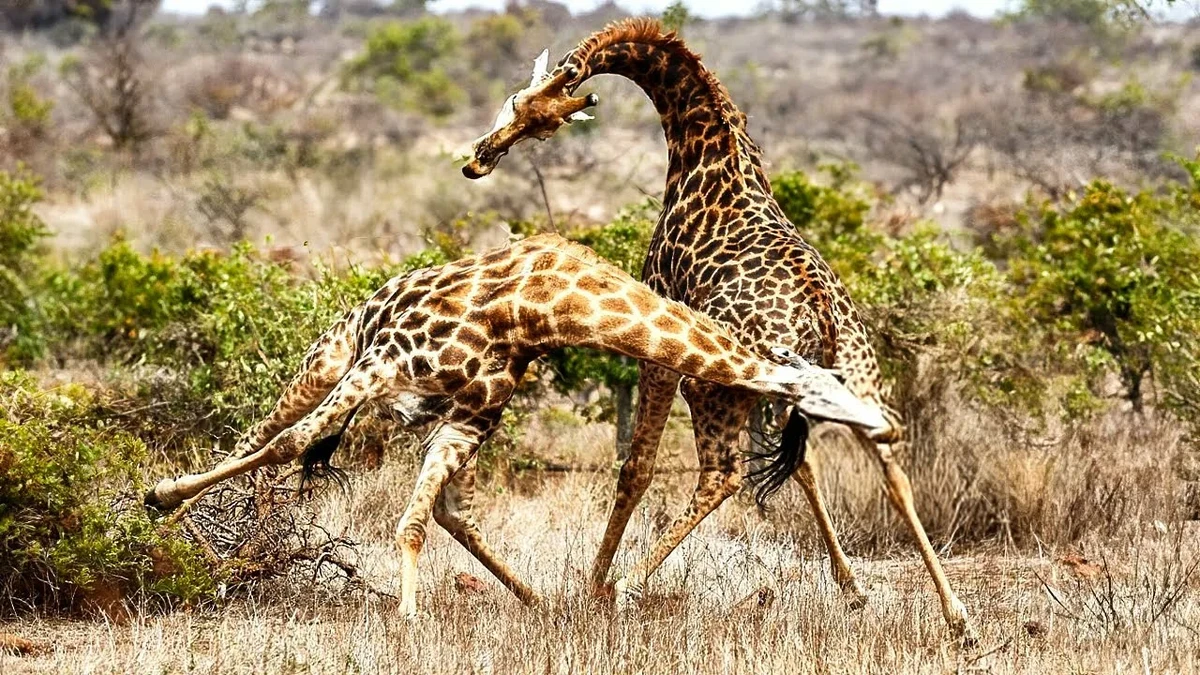
Open confrontations are rare. This is dangerous. Therefore, giraffes try to resolve conflicts without contact.
Males' necks are weapons. They are larger and heavier, giving them an advantage in ritual sparring matches. This epic display involves males pinning and squeezing each other, like in arm wrestling. Females have proportionally longer and thinner necks. And it likely helps them forage for food. Thanks to their lanky build, females are able to penetrate deep into the tree canopies, eating out the very flesh. 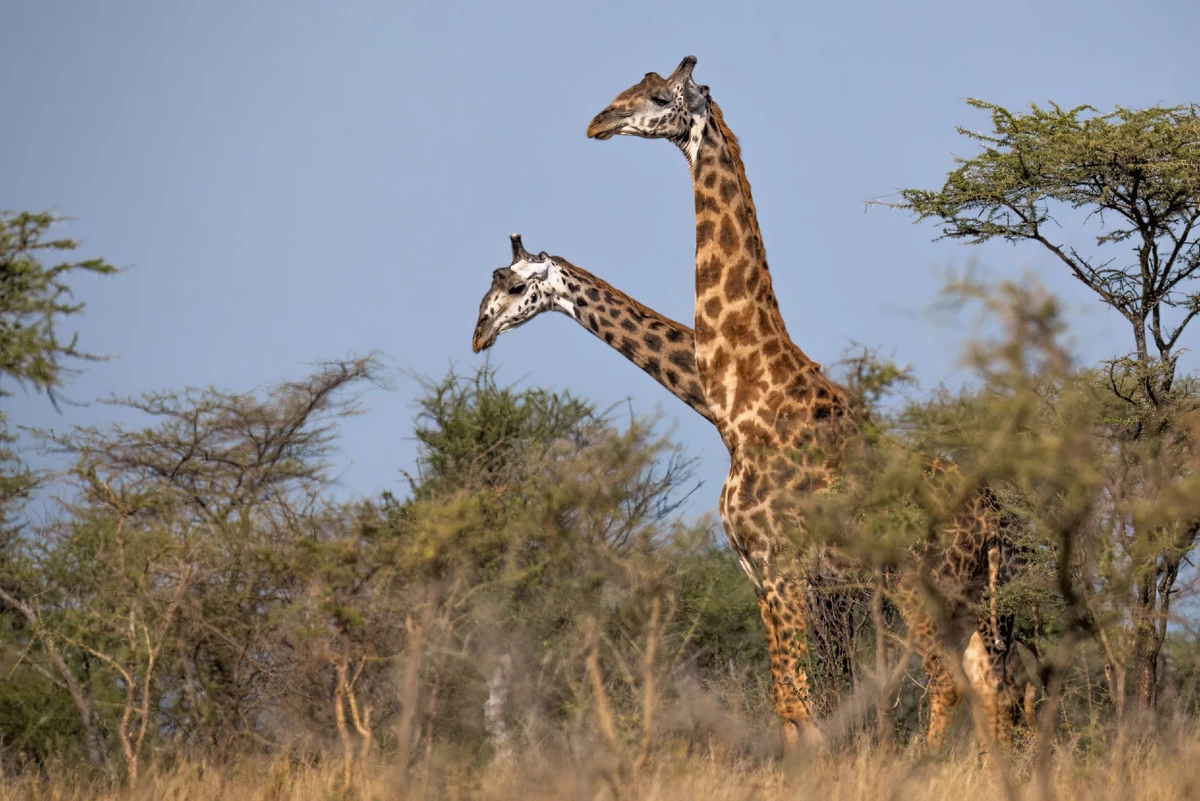
— Sir, I must challenge you. — Sir, I must accept. (10 minutes later) — Sir, you were quite convincing. A No-Hit Duel. Serengeti, Tanzania, 2025. Author: Varvara Dronova.
The giraffe's neck is a remarkably resilient structure. There are known cases of giraffes surviving severe injuries—blows, falls, broken vertebrae—and continuing to live with a noticeably crooked neck, adapting to new conditions. Poor hypochondriac Melman from "Madagascar" couldn't have imagined such a thing. 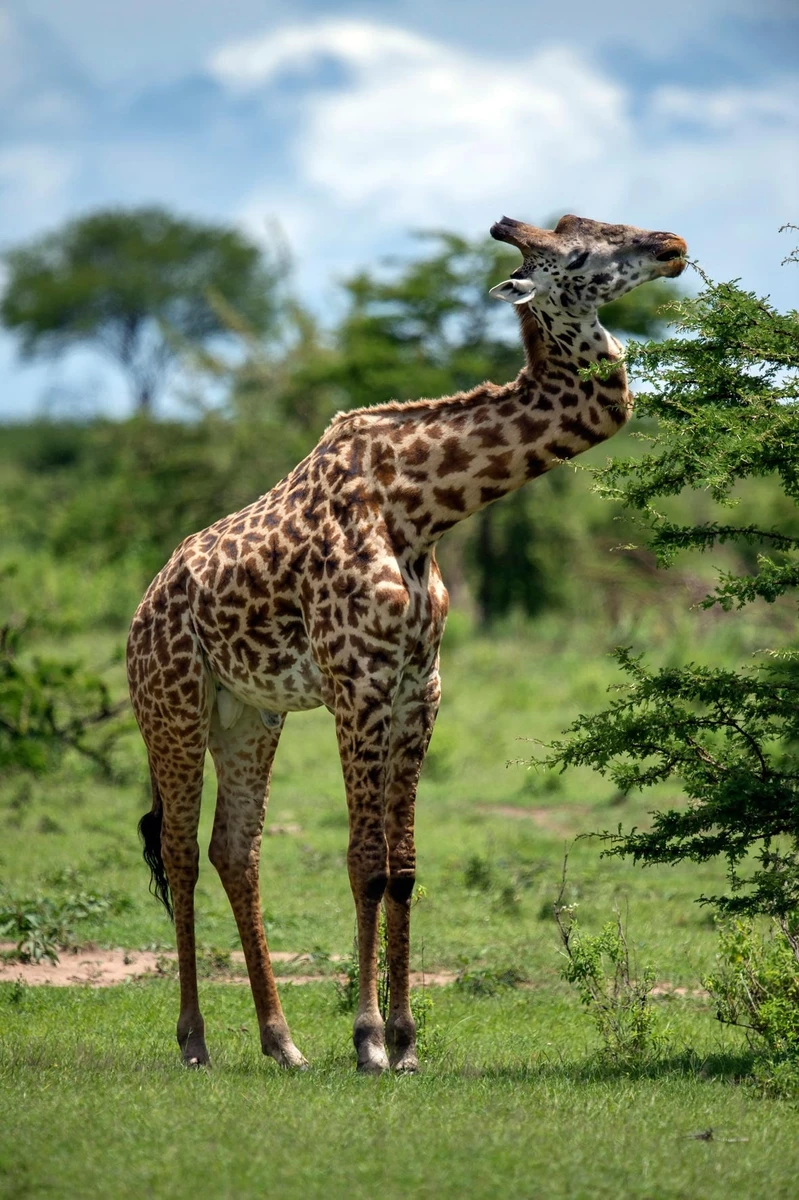
Avant-garde theory. In fact, giraffes only appear fragile. They can survive even complex neck injuries.
Fact 5. Giraffes are smarter, more social, and more flexible than commonly thought.
The myth that giraffes are "silent pillars" is as old as time. In fact, these animals are sociable. We just don't know how to listen to them and can't hear them. These lanky creatures lack vocal cords. Therefore, they don't produce the sounds we're accustomed to. Instead, they hum at a frequency of 20 Hz. This is low-frequency infrasound, which our ears cannot hear. 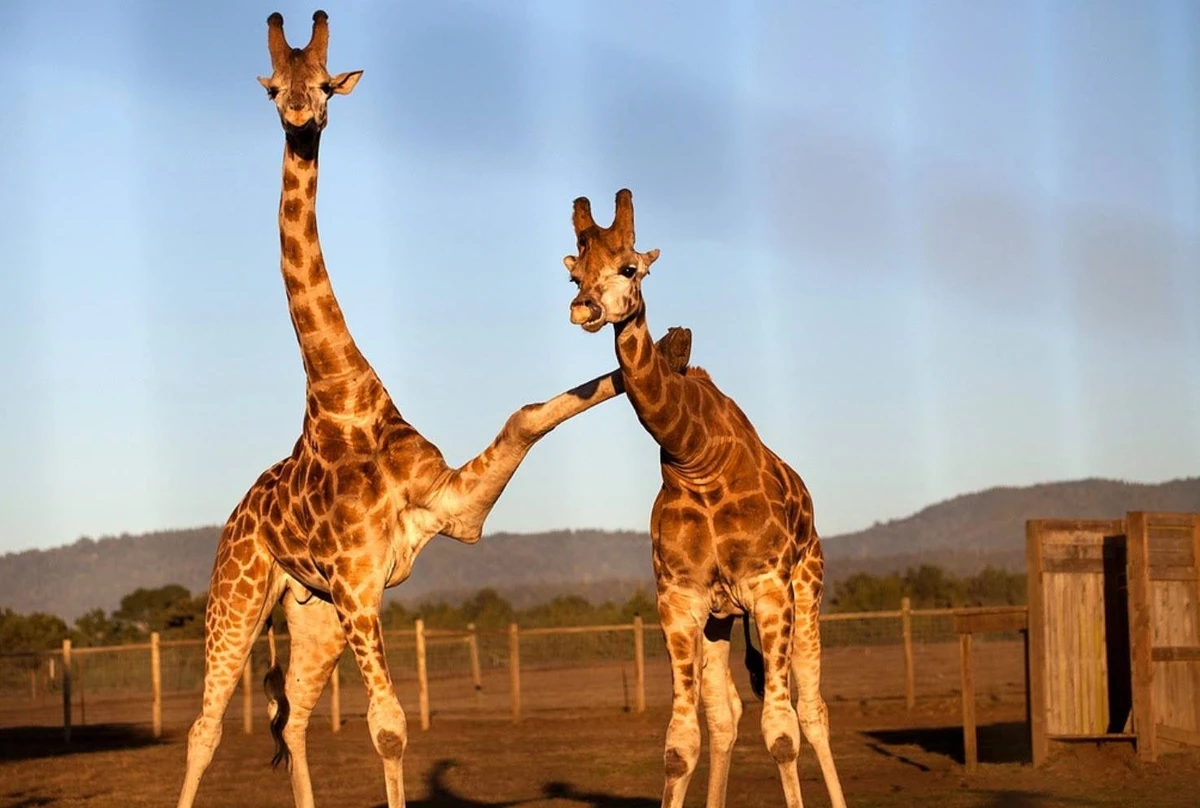
— No, well, did you hear what Lyokha did? — Nope...
If there's communication, then there's a social life! It's also much more complex than previously thought. Females band together, organizing crèches for their young. Adolescents form separate groups where they learn social behavior and hierarchy. Adult males don't always remain aloof—they can guard the herd and even teach the young a lesson. For example, in non-contact training matches. 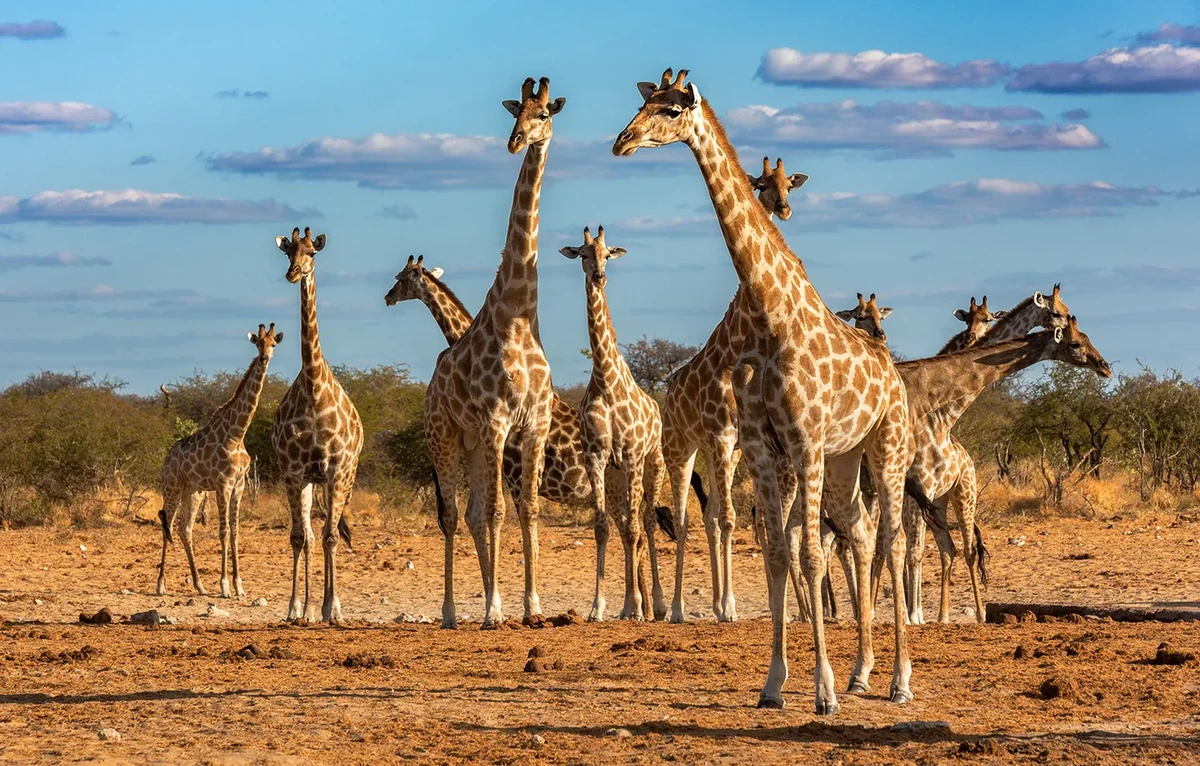
Giraffes live in groups of 5 to 20 individuals. Most often, these are females, calves, and a protective bull.
I was fortunate to witness a stunning scene with my own eyes. A herd of giraffes was moving toward the mountains, as if intending to climb higher. But something kept holding them back. They stopped, looked back, waited. A large dark bull patiently herded the young. The females stayed close to the young mother. And soon it became clear why. The smallest, tiny calf could barely walk. It seemed the predators had already gotten to her. Her lower legs were covered in wounds, swollen and inflamed. It was excruciatingly painful for her to move, yet she tried to hobble along with the herd. But something else struck me: how the herd clung to her, not letting her fall behind. The larger animals covered the calf from various sides, and the mother stopped constantly, allowing the calf to cuddle against her side or drink milk. I'm not sure the calf survived. Such is life in the wild. But their behavior, this obvious concern for the injured calf, was one of the most powerful observations in Mkomazi. 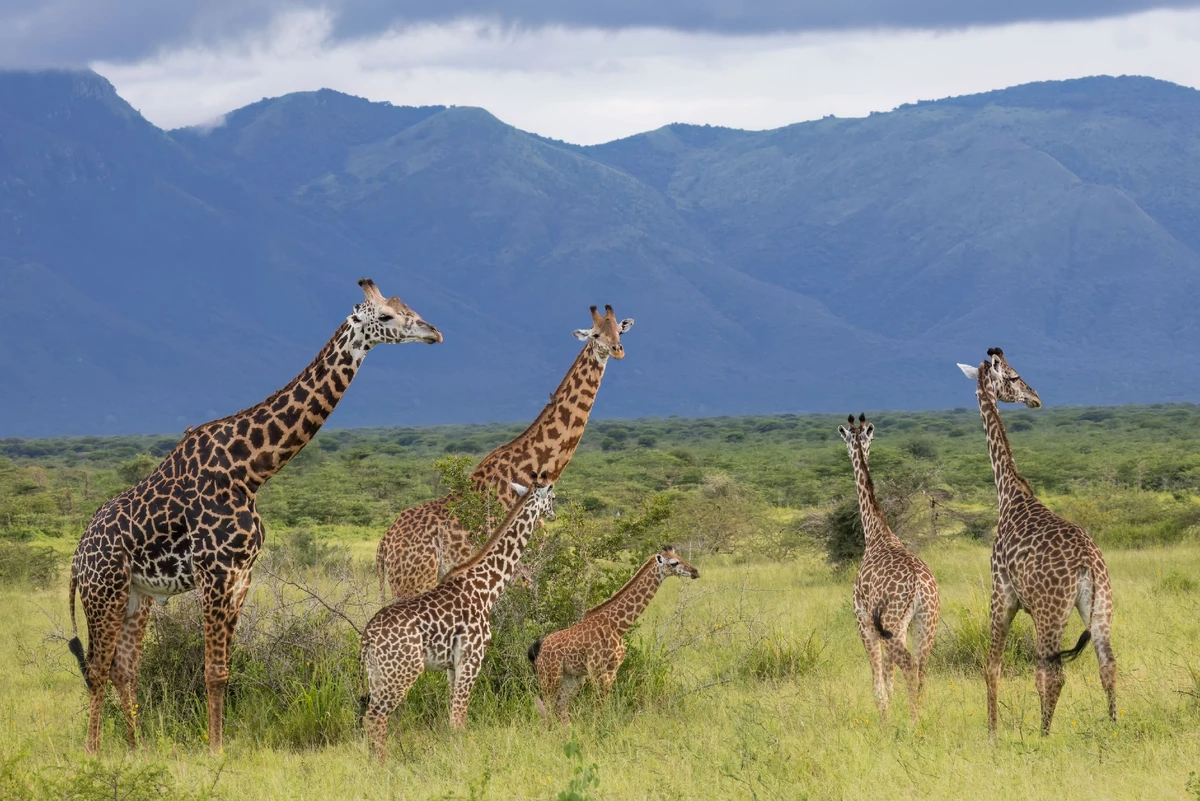
Giraffes don't just live in open savannas. They easily climb slopes and travel across mountains and hills, despite their apparent clumsiness. Author: Varvara Dronova.
A giraffe isn't a postcard or a backdrop. It's an animal that thinks, evaluates, remembers, chooses, and adapts. And the more you observe them, the more obvious it becomes: we're not looking at a static "icon of Africa," but at a living, complex world we're only just beginning to truly see.
Add your comment
You might be interested in:














Protective film Removing it with a power screwdriver

When a child plays hide-and-seek at a professional level

Super dads who swoop in to save the day

Precision carpentry

Looks like it's time to buy WinRAR

How to hang wallpaper neatly

Man sets up bedroom camera and discovers the reason for his

Athlete in Bavarian dress flies over a lake on a hydrofoil

First meeting with Mom's twin sister
