Barnacles: These Parasites Have Ravaged the Entire Ocean! (8 photos)
The ocean is actually a pretty bleak place: there's always a fish bigger, meaner, or more toxic than you, and the currents are always eager to drag you into the anoxic zone. But it's also rife with far less obvious dangers. 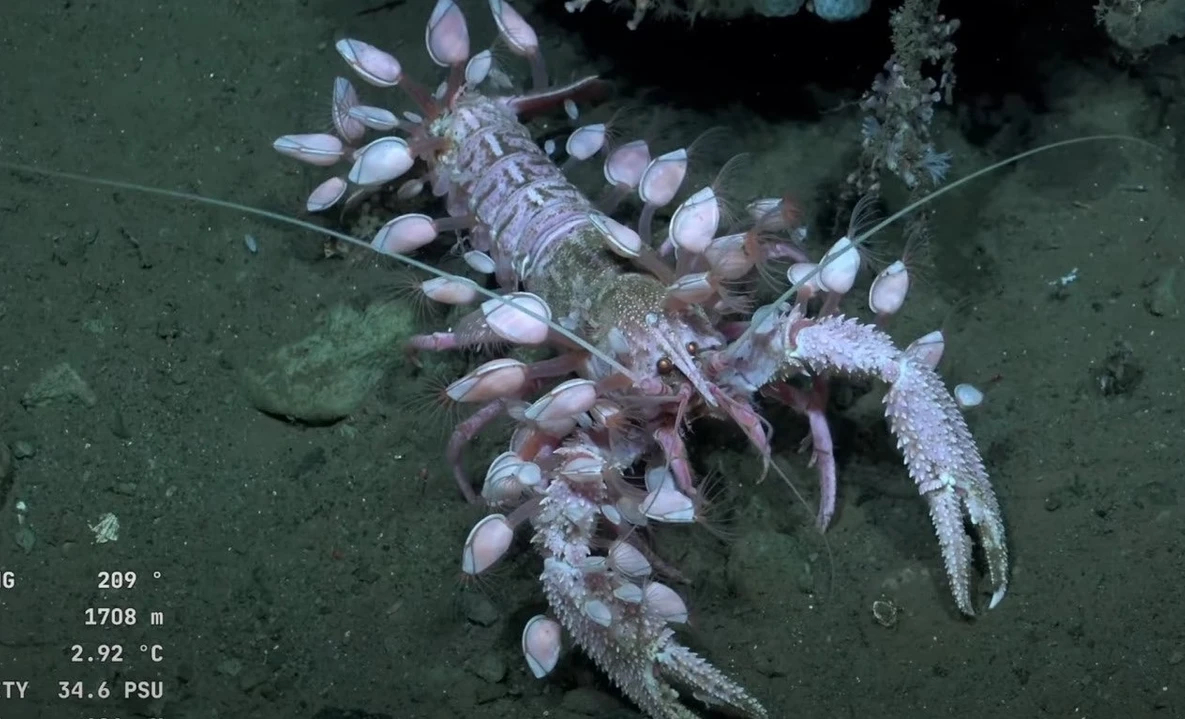
If you look closely, you can read "Help" in the crayfish's eyes.
For example, here you can pick up barnacles that will slowly wear you down, leaving you unable to move. But what's surprising is that barnacles themselves don't wish anyone harm; to them, other animals are just trash. 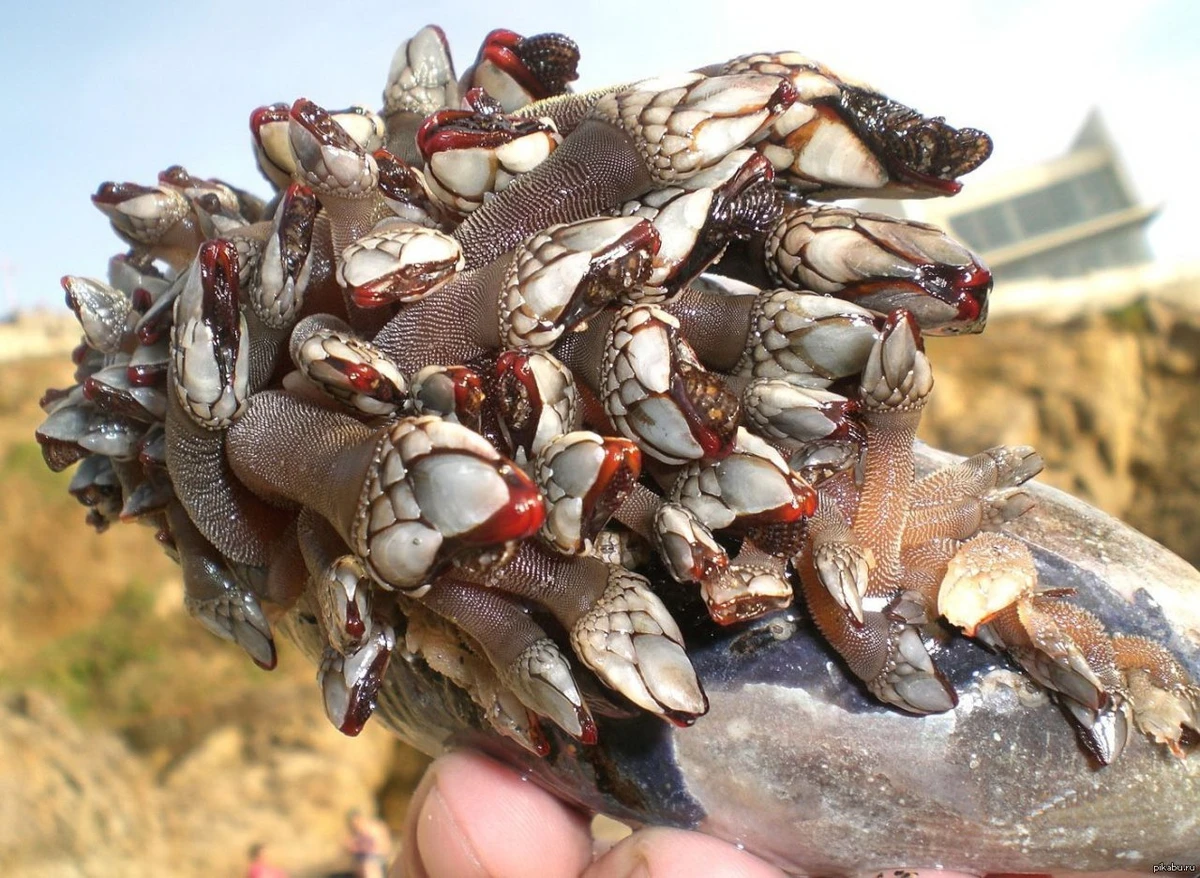
Are you sure this isn't an alien creature coming to destroy humanity?
Humans became acquainted with barnacles as soon as they began conquering the seas. And they instantly hated them. After all, barnacles are nomadic filter feeders that move through the ocean along with any trash, from fallen tree trunks and coconuts to the bodies of dead animals. And to them, our rafts and boats are just as much trash, just much larger and more reliable. So they began attaching themselves to the bottoms of ships, slowing them down by 20-30% and increasing fuel consumption by 50%. 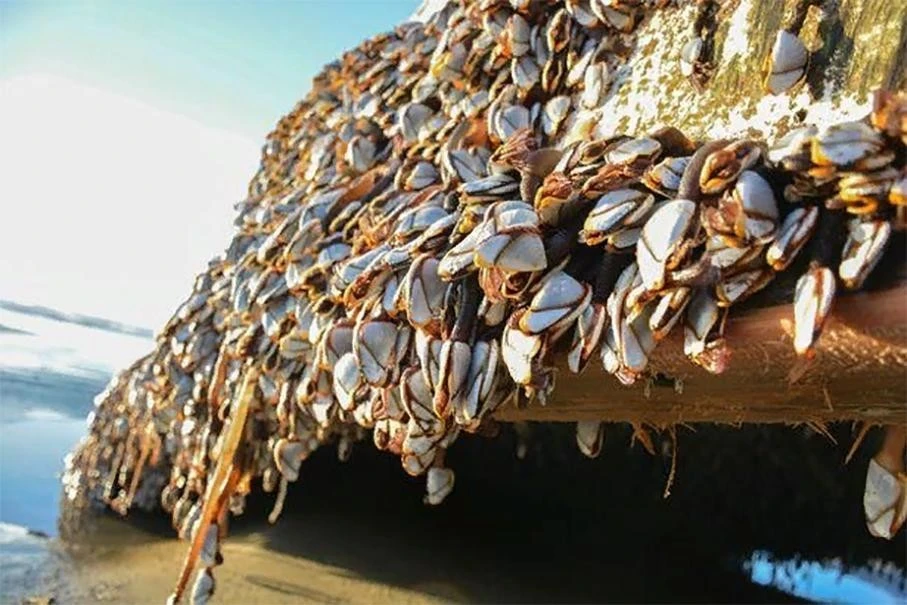
How did that boat even stay afloat??? 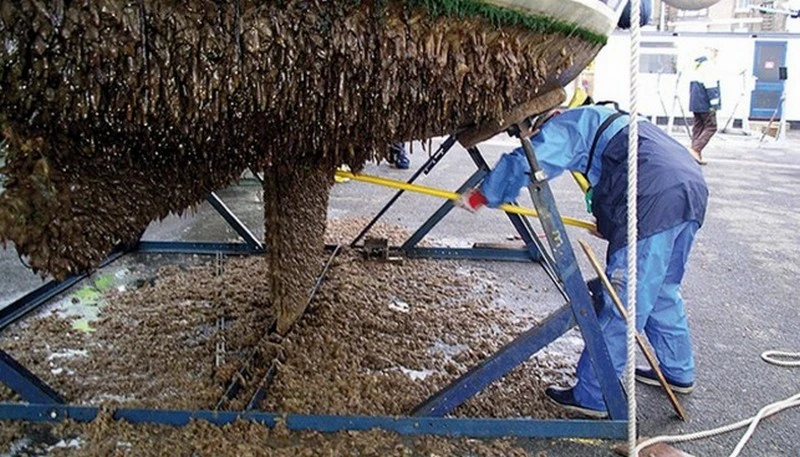
The bottom scraper must be hardened and broad-shouldered.
And since these creatures are widespread throughout the world, they have equally irritated Polynesian explorers, ancient Greek navigators, and modern sailors. The US Navy alone spends up to $260 million a year on marine biofouling. And yet, compared to the global merchant fleet, its numbers are a mere drop in the bucket. 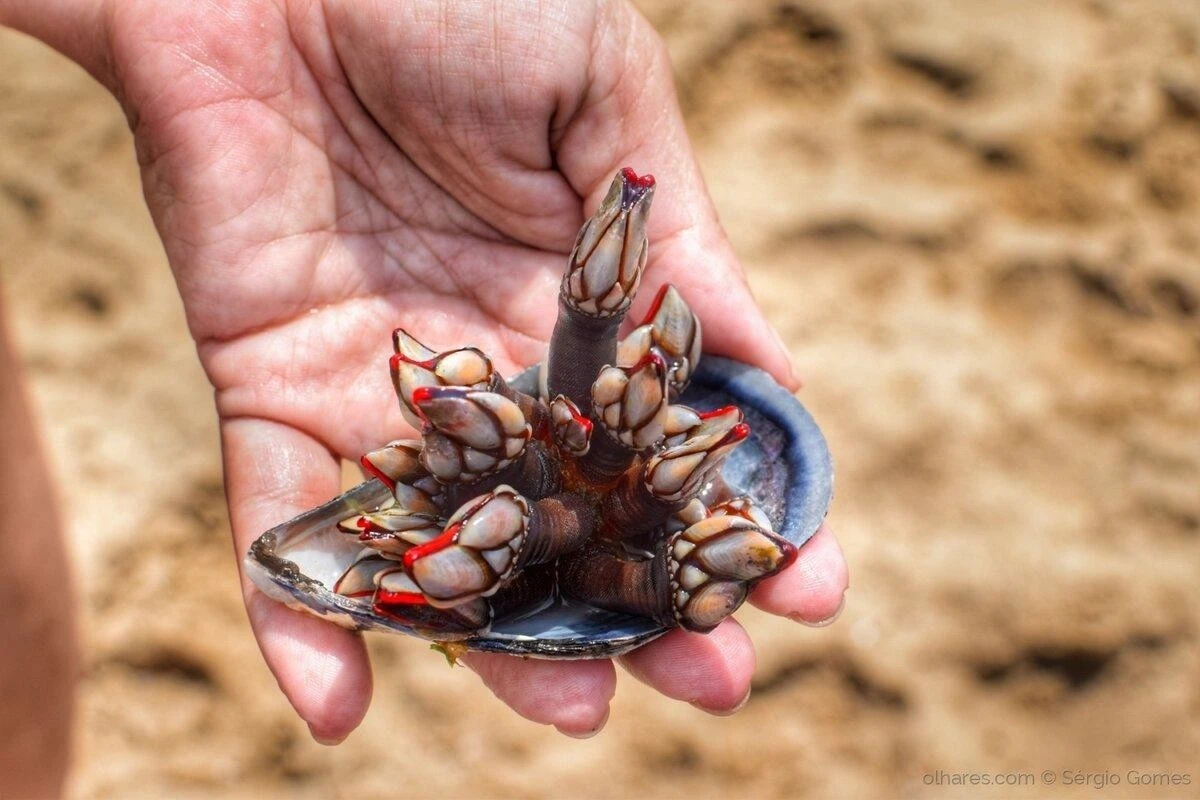
A colony of barnacles on a clam shell.
However, despite millennia of hatred, we only relatively recently discovered what these creatures are that are interfering with our lives. For most of history, humanity considered barnacles to be mollusks, and for good reason. All barnacles have calcareous bivalve shells, clinging to the bottom with a powerful, long, muscular foot, reminiscent of the foot of a gastropod. It wasn't until the 1830s that the first scientific papers appeared noting the similarities between barnacles (which include barnacles) and other crustaceans. Darwin himself put an end to this discussion by publishing a massive monograph devoted to the anatomy of barnacles. Incidentally, he spent eight years of his life on it. 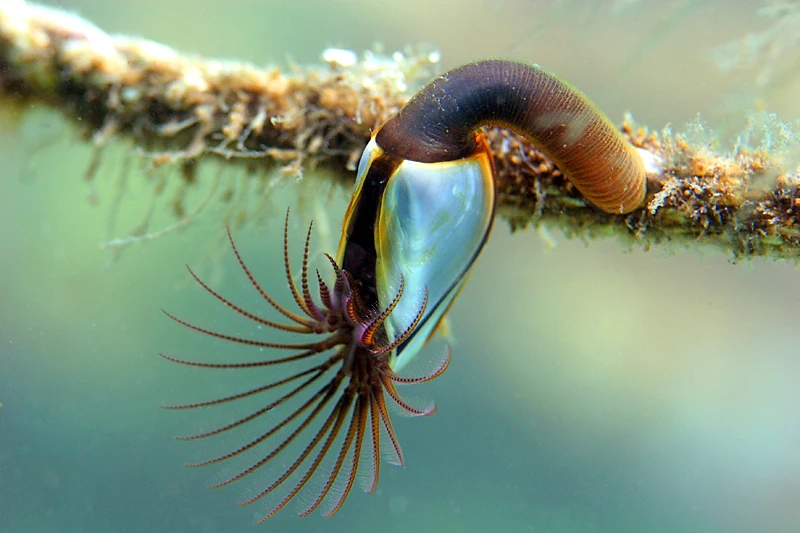
It takes a remarkable imagination and experience to see THIS as a relative of the crayfish.
But clinging to our ships is only half the problem, as barnacles readily settle on animals, making their lives considerably more difficult. While disrupting a ship's streamlined bottom only leads to delayed delivery times and increased fuel consumption, the growth of barnacles on shells, scales, and skin can lead to the death of their owners. The extra weight disrupts streamlining, slowing animals down and making it difficult to escape predators or catch prey. Even giants like whales and whale sharks suffer from barnacles clinging to their skin, forcing the animals to expend significantly more energy on movement. 
Do whales get annoyed by alien skin growths? Absolutely. Incidentally, this is why they leap out of the water and slam hard into the sea, knocking off some of the parasites.
And herein lies the ducks' most important feature: they can attach themselves to absolutely anything. These animals are excellent at adhering not only to wood, chitin, or leather, with which they've been interacting for millions of years. Ducks also have no problem with human inventions: treated wood, plastic, metal, and even glass. After all, their biological glue is superior to any synthetic adhesive devised by humanity. 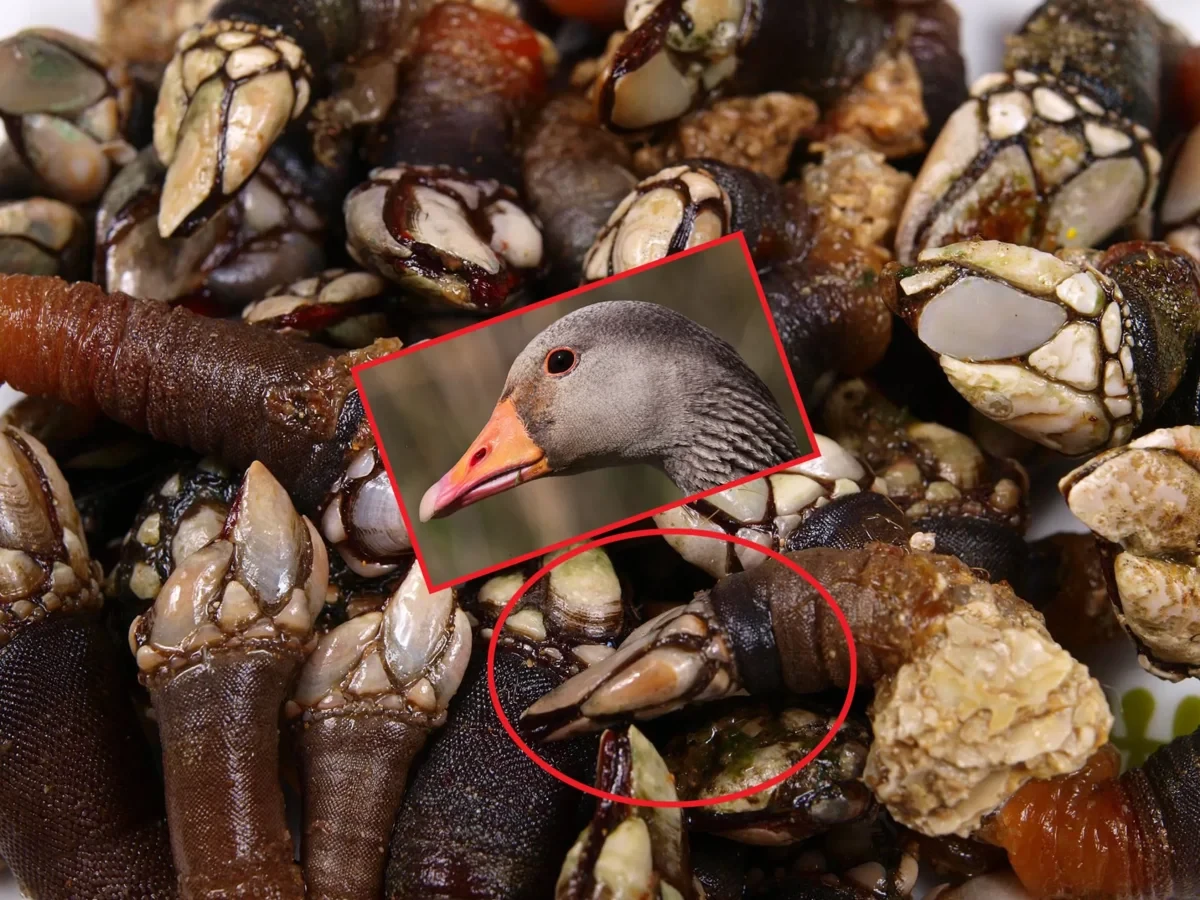
In case you're not sure why they're called ducks.
We still don't know its exact composition. All we can say for sure is that the glue consists of two components produced by different glands at the base of the foot. The first, a fatty substance, displaces water from the attachment site and improves adhesion to the surface. The second, a protein substance, consists of a complex mixture of substances mixed in the cement glands immediately before bonding to the surface. The glue completely hardens within a couple of minutes and adheres so well that it can only be removed by physical destruction. All the chemical industry in the world has been unable to develop a substance capable of breaking down the glue without destroying what it's stuck to. What's more, even nature, after hundreds of millions of years of evolution, hasn't been able to devise an effective way to combat barnacles!