People have been caring for their clothes since ancient times to look neat and presentable. As strange as it might sound, even our distant ancestors cared about their appearance—though you might wonder what they could possibly have needed to press. Yet the earliest forerunner of the clothes iron dates back to a time when wild animal pelts were the height of fashion. Right alongside humanity, the iron has evolved dramatically over the centuries. 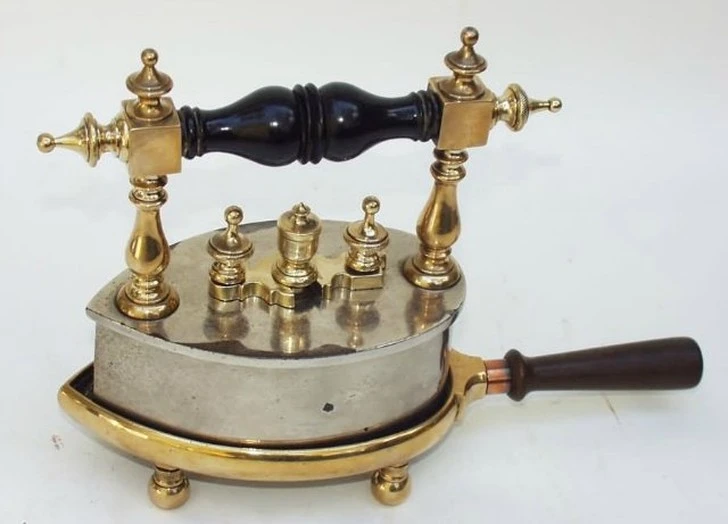
Four hundred years lie between a roughly shaped cobble and today's high-tech electric appliances. We’ve even invented flat irons for hair! But let's take things one step at a time. The evolution of the iron is a long, fascinating story, and the sheer ingenuity of inventors trying to perfect it is truly impressive. Here is a look back at how it all began. 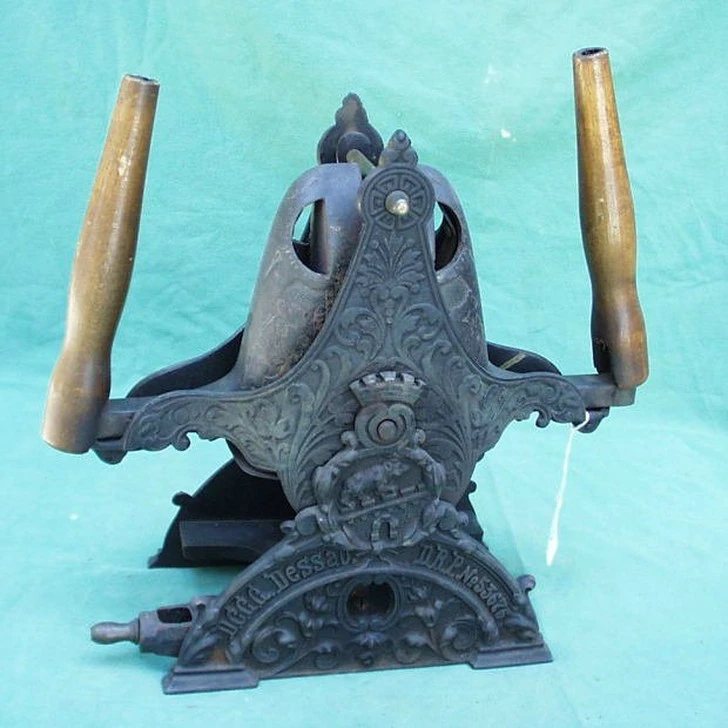
In the early days, people pressed clothes using flat stones: damp fabric was weighted down so that as it dried, many of the wrinkles smoothed out. By the 4th century BCE, the ancient Greeks had devised a method for pleating their flowing linen robes using a heated metal rod reminiscent of a rolling pin. 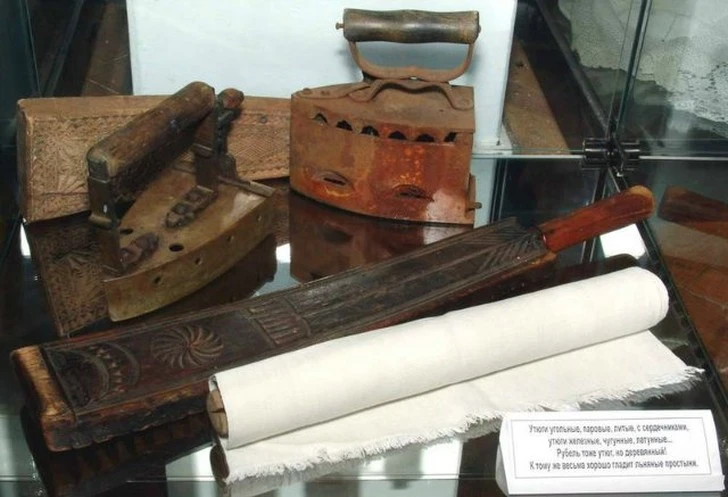
In ancient Russia, clothes were pressed for centuries using a smooth cylindrical wooden pin (known as a
valek
or
skalka
) paired with a ribbed wooden board called a
rubel
,
rebrak
, or
pralnik
. 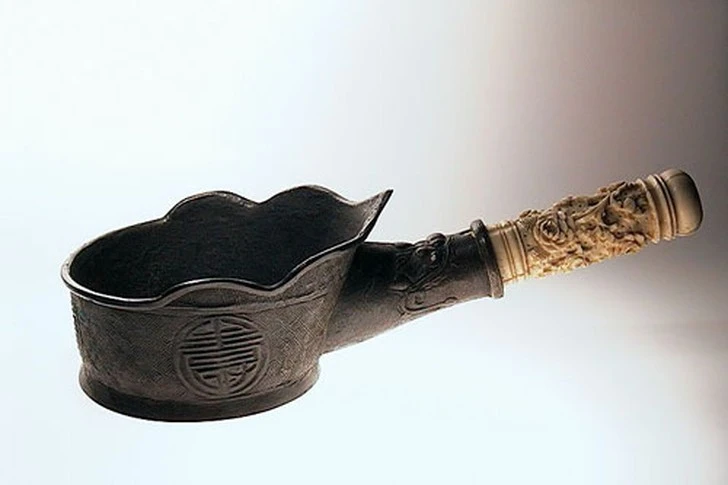
The charcoal iron—filled with glowing embers—didn't appear until the mid-18th century. Before that, clothes were pressed with an instrument resembling a large skillet: a cast-iron pan with a handle, filled with burning charcoal, which was glided across the fabric. It was neither comfortable nor safe. The contraption was awkward to handle, and stray sparks and hot embers constantly flew out, leaving scorch marks and burn holes on clothes. 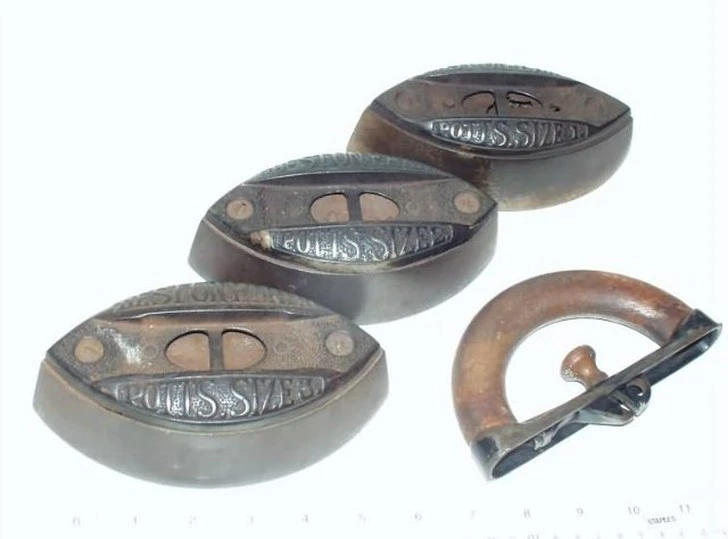
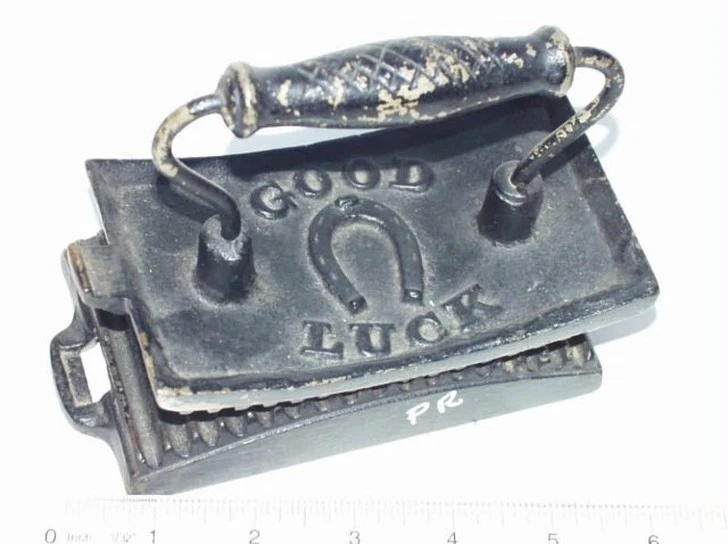
Over time, people began using pairs of flatirons: while one heated up on the stove, the other was used for pressing. The simplest were solid cast-iron irons, which had to be preheated in a stove or oven before use. Depending on the task, these heavy metal slabs weighed anywhere from 2 to 22 pounds (1 to 10 kg). 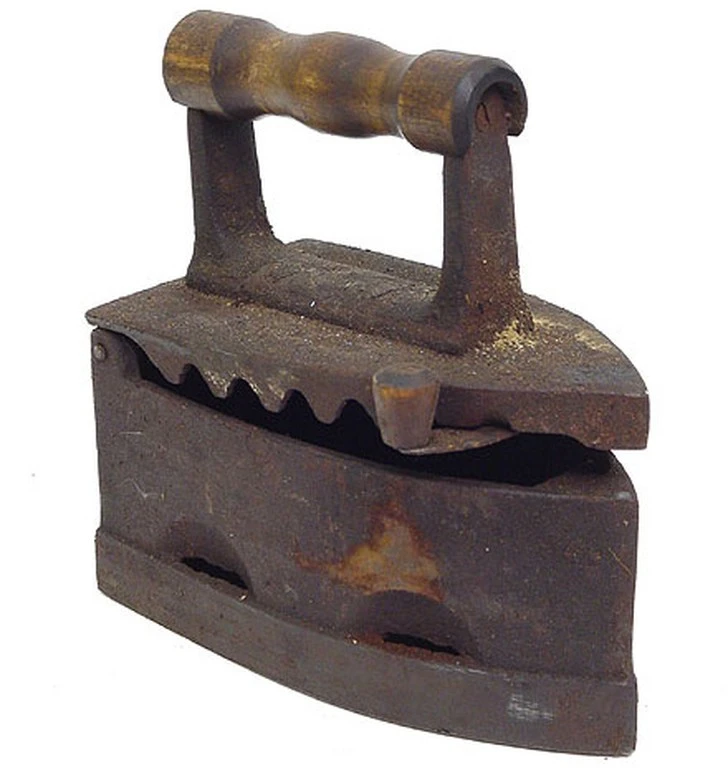
Charcoal irons eventually replaced them. Resembling miniature stoves, their hollow bodies were filled with red-hot birch coals. Vent holes were cut into the sides to create a draft—some even had tiny chimneys. To rekindle cooling coals, people blew into the vents or vigorously swung the iron back and forth. Later, heated iron inserts replaced loose charcoal altogether. 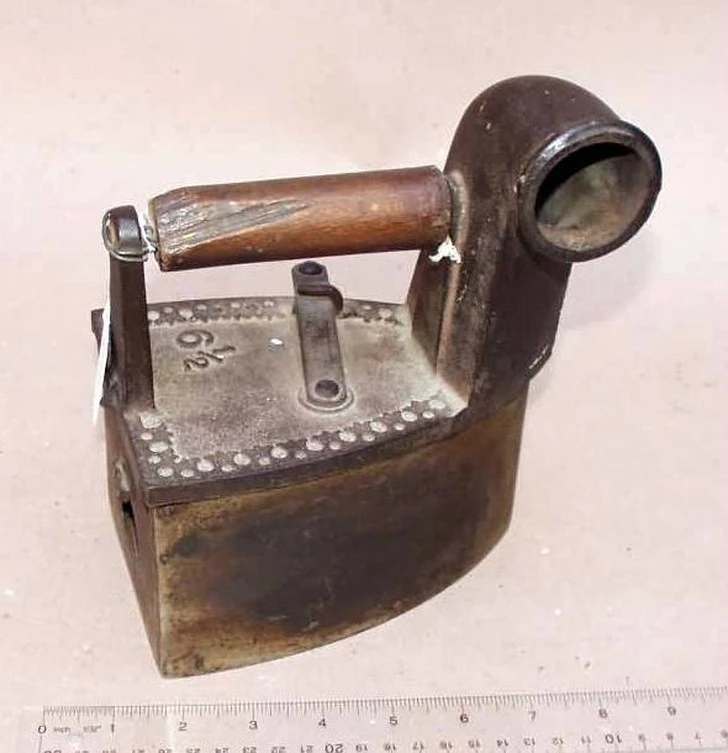
Amusingly, these heavy irons were sometimes even repurposed as mousetraps. Overall, an incredible variety of designs existed. 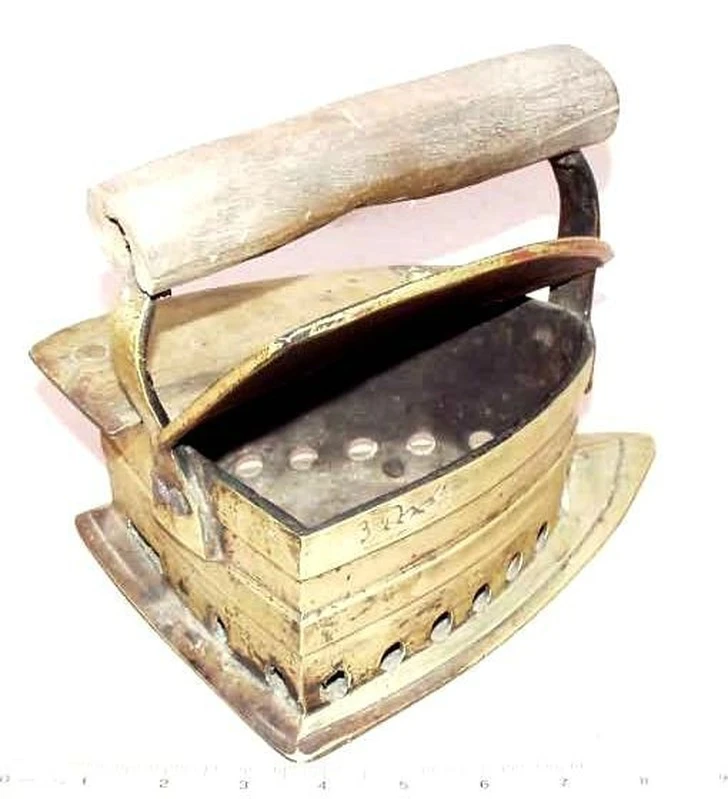
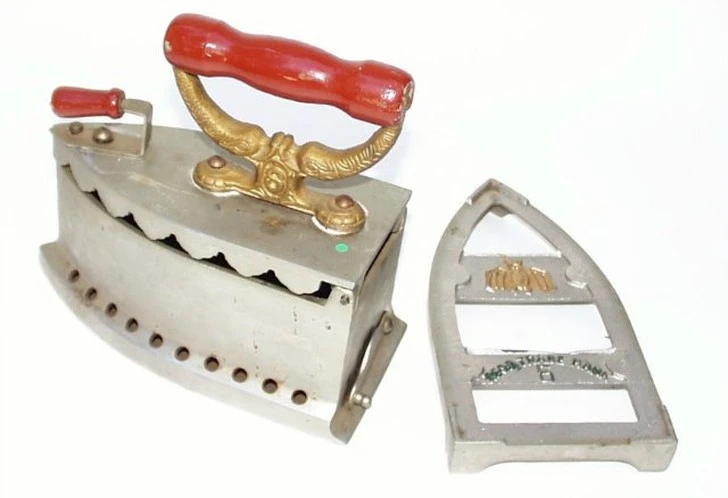
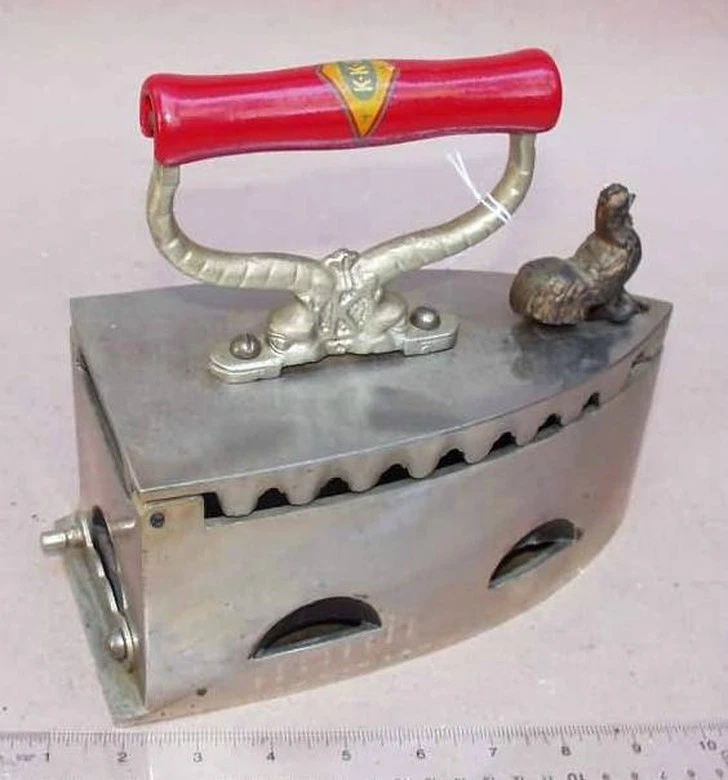
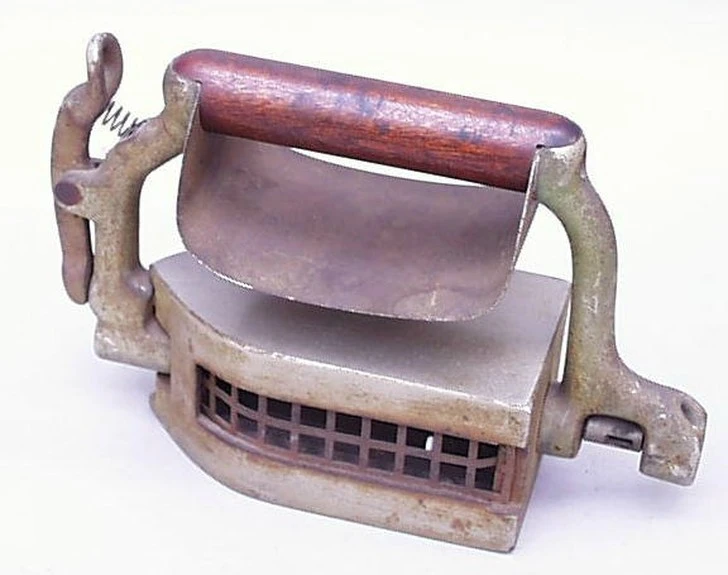
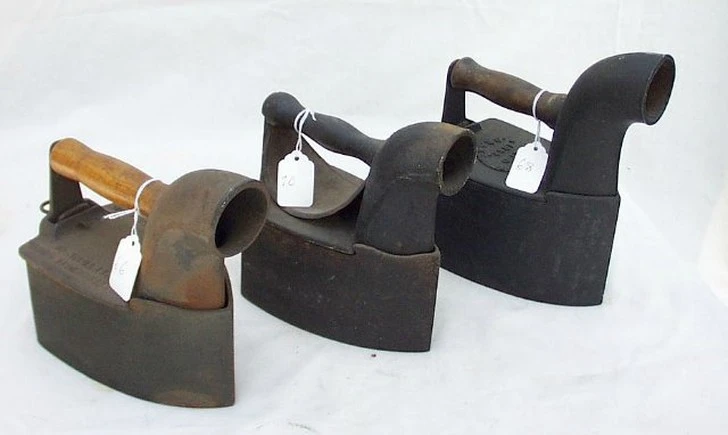
Heavy cast-iron irons, weighing up to 10 kilograms, were used for coarse, heavy fabrics. For delicate textiles and small details like cuffs, collars, and lace, mini-irons no larger than the palm of a hand were used. 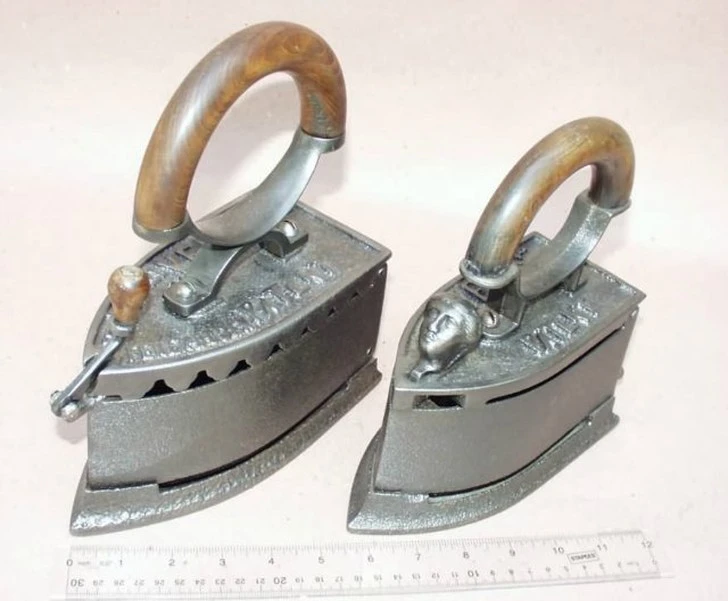
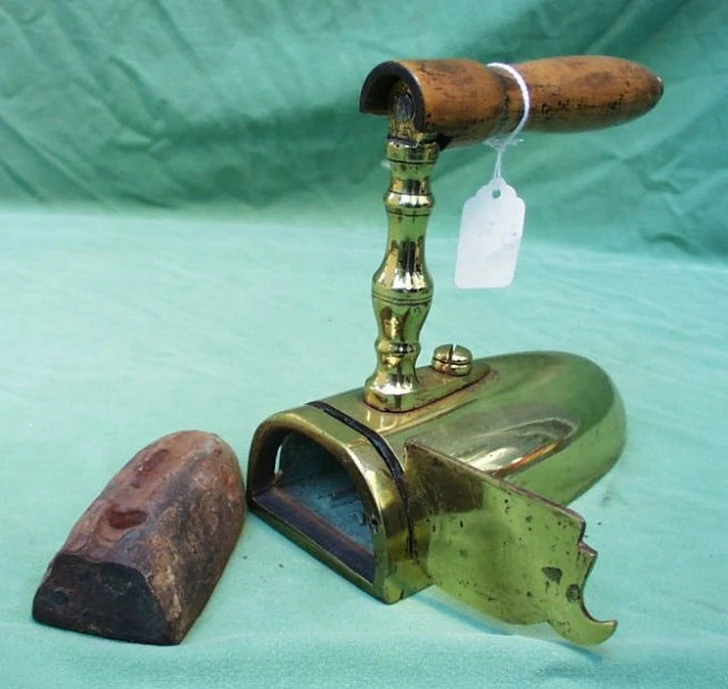
A variation of the charcoal iron—the box iron or slug iron—was also immensely popular. It featured a rear hatch where a red-hot iron slug was inserted. 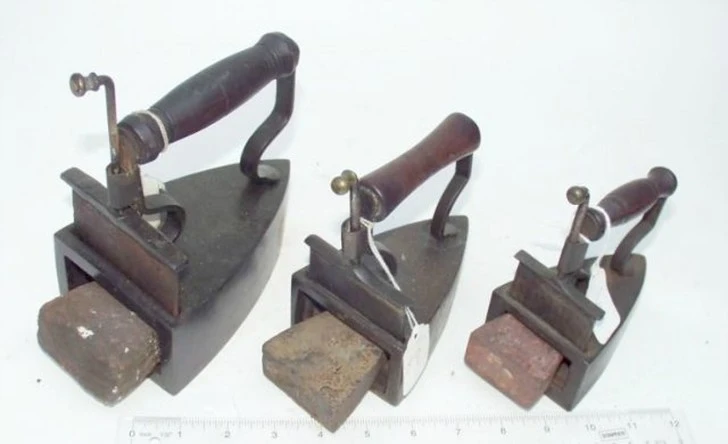
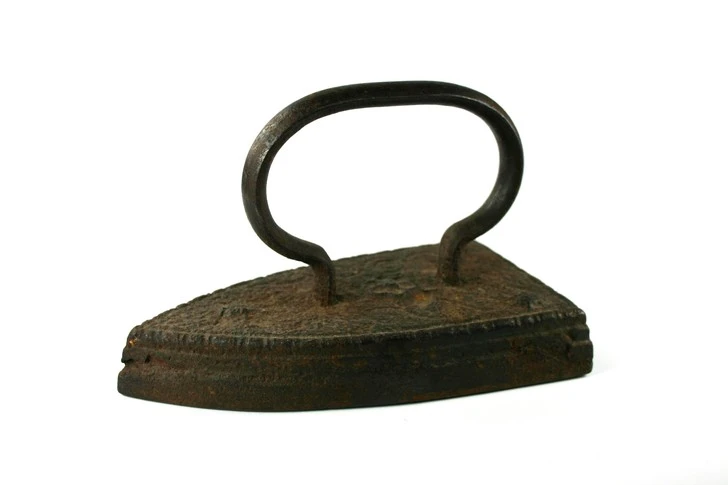
Another classic type was the solid cast-iron flatiron, heated over an open flame or in a hot oven. Introduced in the 18th century, they were manufactured in Russia well into the 1960s—because despite the invention of the electric iron, many homes still lacked electrical outlets. 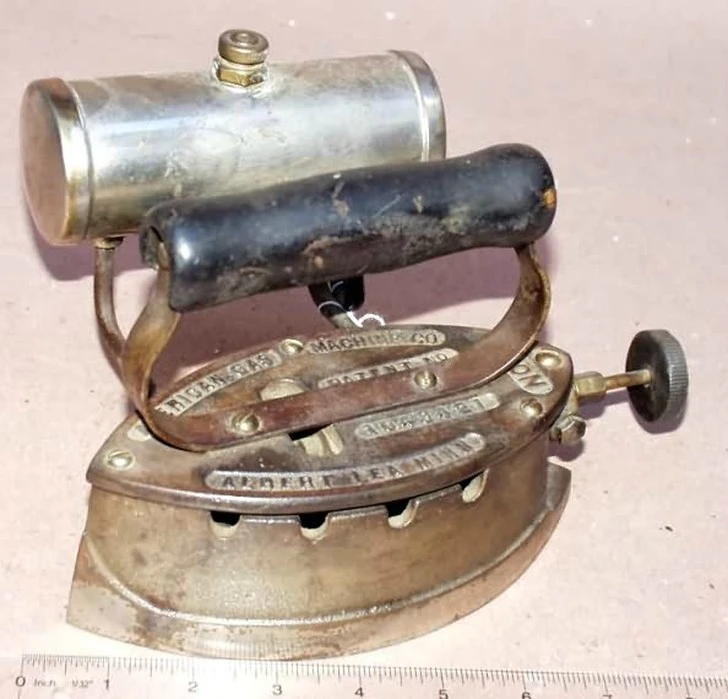
In the late 19th century, gas irons made their debut. Operating on the same principle as a gas stove, they were heated by burning gas. A metal tube connected the iron's body to a gas cylinder, with a pump mounted on the lid. The pump forced gas inside the iron where it burned to heat the soleplate. Unsurprisingly, these devices were notoriously dangerous: gas leaks were common, often leading to explosions, fires, and casualties. 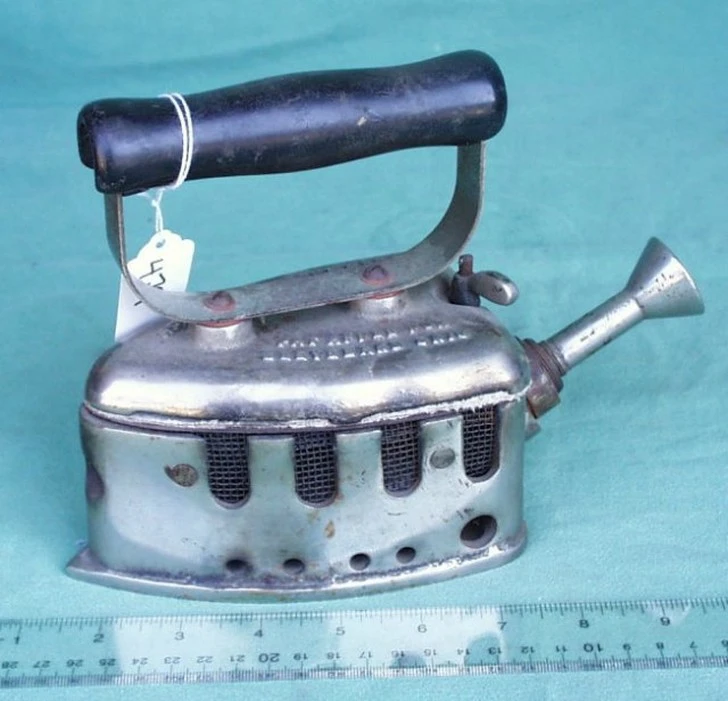
By the early 20th century, alcohol-burning irons gained popularity. Functioning much like a kerosene lamp, alcohol was poured inside and ignited to heat the soleplate. Lightweight and portable, it was ideal for travel. However, it came at a steep price—costing as much as a small flock of sheep or a good milk cow. 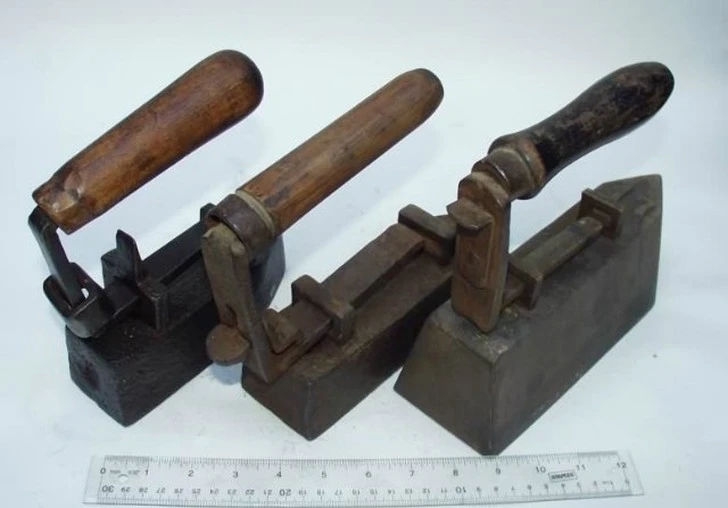
Tailors typically owned several irons of varying sizes and weights. Pressing was essential to fine tailoring—especially back when fabrics were far coarser than today. 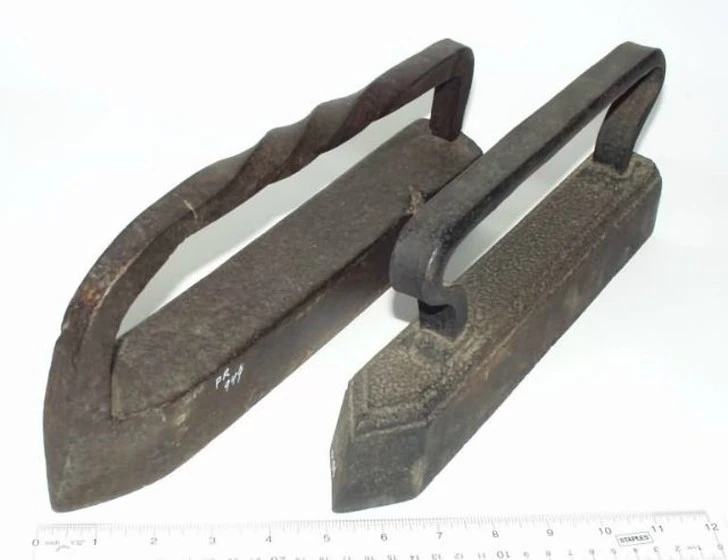
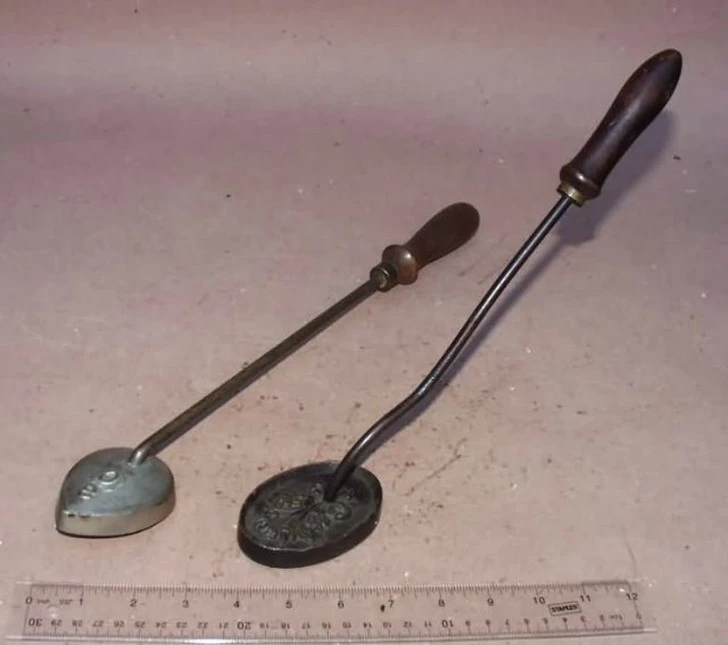
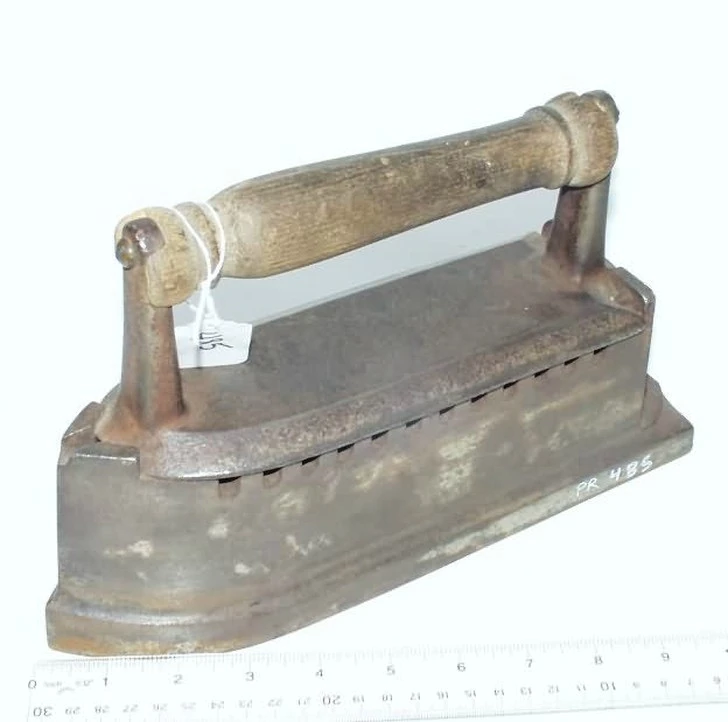
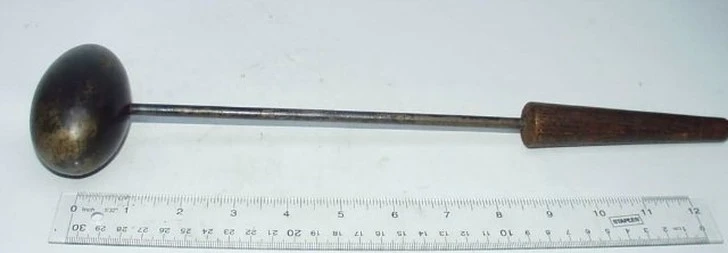
Puff sleeves, gathers, and drapery on dresses and curtains were pressed using specialized tools. 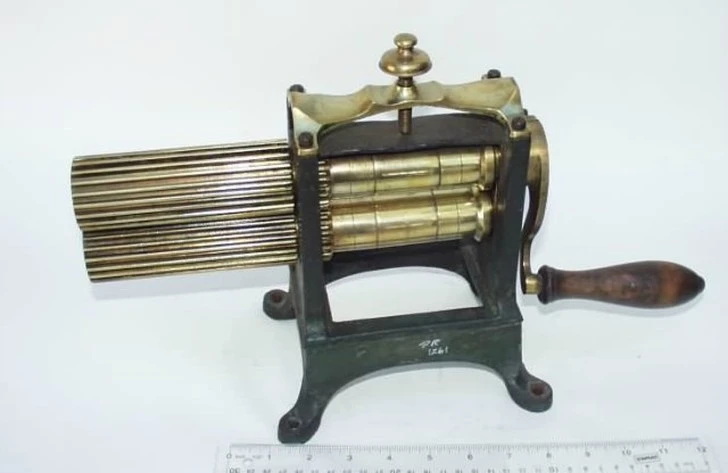
Intricate details like ruffles, scalloped edges, and pleats called for these fascinating cast-iron devices. 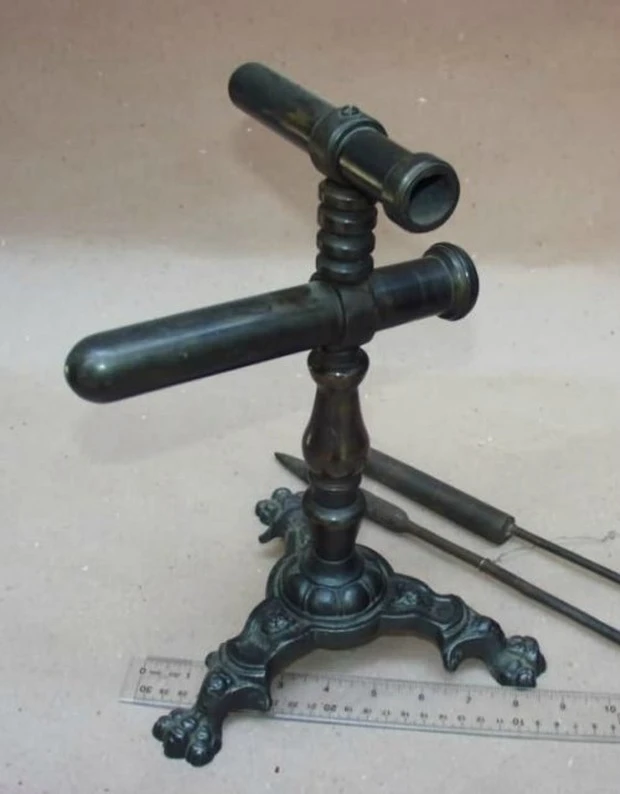
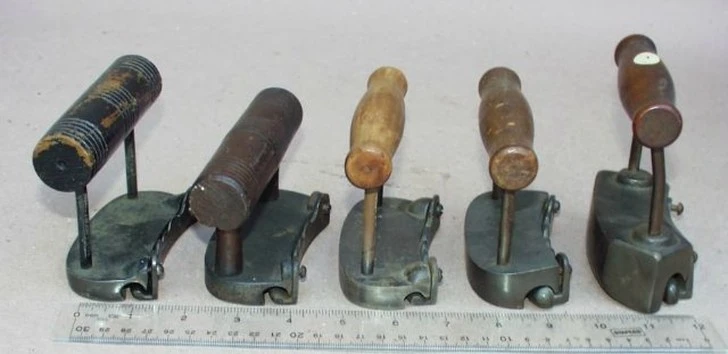
These were used to shape and press hats… 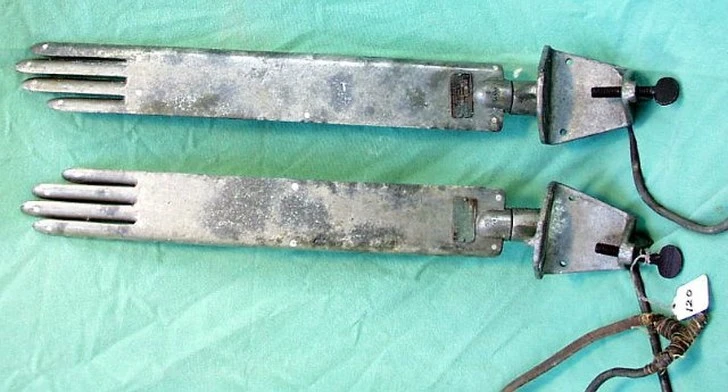
…and gloves (yes, people even ironed gloves!). 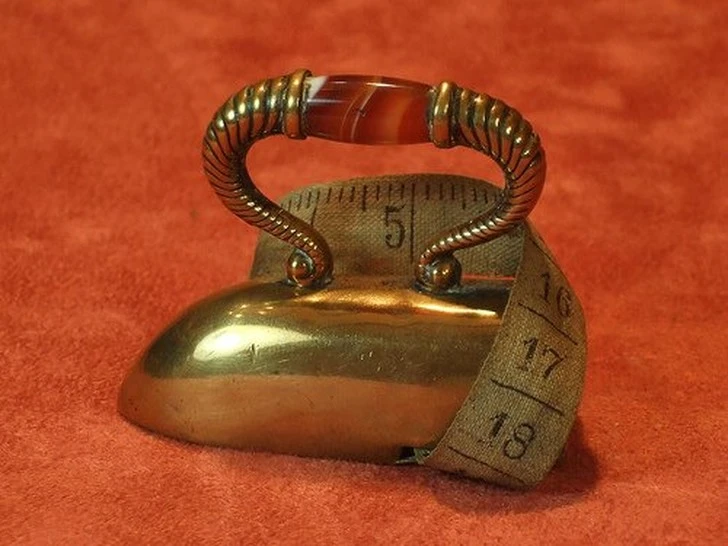
Children, by the way, were taught to iron from an early age. 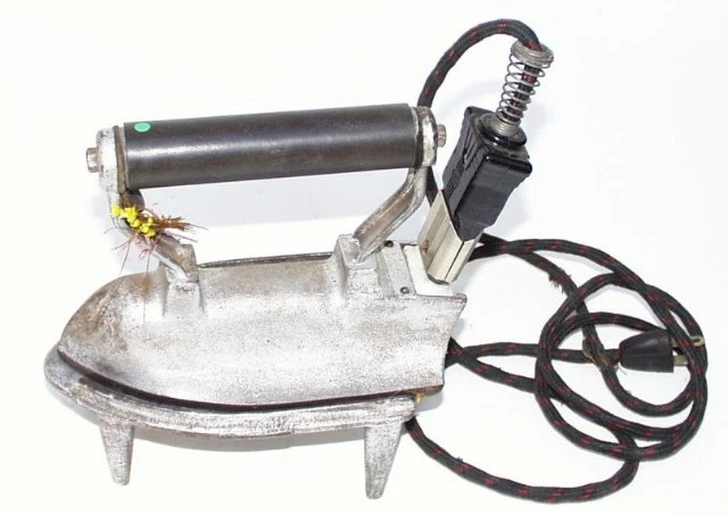
The electric iron officially debuted on June 6, 1882, when American inventor Henry W. Seely patented his creation. His design used an electric arc between carbon electrodes powered by direct current to generate heat. 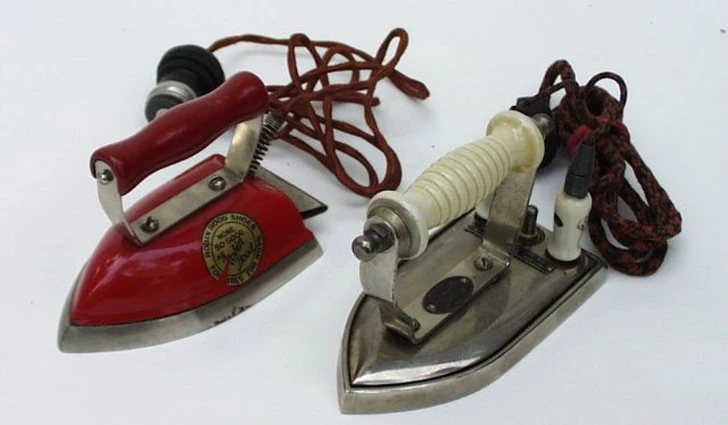
Early electric irons were notorious safety hazards—flaws in their design often resulted in severe electric shocks. But by 1892, General Electric and Crompton & Co. overhauled the design by introducing enclosed heating coils. Safely insulated within the housing above the soleplate, the coil eliminated the shock hazard, making electric irons far safer for everyday use. 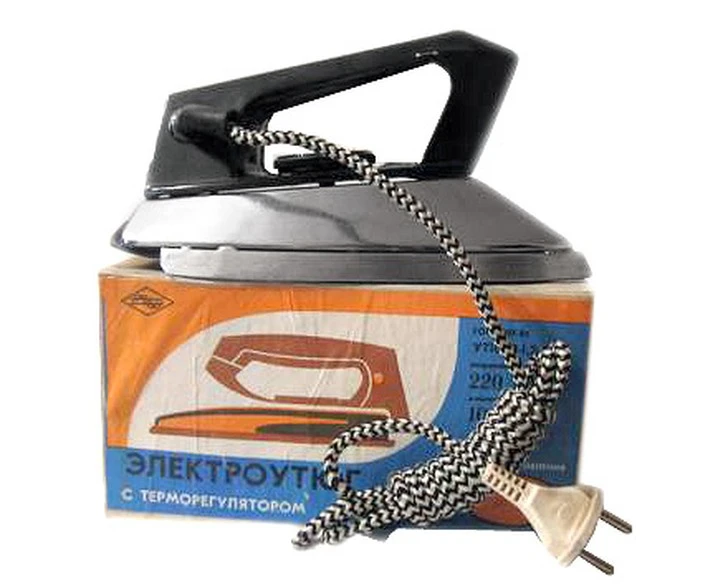
By the 1930s, electric irons gained a crucial feature: the thermostat, which regulated temperature and automatically shut off the heating element once the soleplate reached the desired heat. Then, in the late 1970s, soleplates underwent a revolution of their own, transitioning from traditional metal to smooth ceramic coatings. This innovation dramatically reduced friction, allowing modern irons to glide effortlessly across fabric and making ironing easier than ever.
Add your comment
You might be interested in:

















How Rowan Atkinson transforms into Mr. Bean

A single gesture that made someone’s day: a man gives a

A display of skill: masterful nunchaku handling

A clear demonstration of the difference between a $1, $5,

An orchestra plays a prank on their conductor during his

A dad made a realistic WALL-E costume for his daughter

An American man reveals a bunker he spent 3 years preparing

Pete the donkey calls out Taking Luna, who is blind, for a

Witches on roller skates—brooms included
