This Is What Thailand Looked Like Before the Tourists Arrived (31 Photos)
These photographs were taken by American traveler Edward Eugene Masters, who journeyed across Thailand from north to south between 1972 and 1976. Captured on film is a complete portrait of the country: remote hill-tribe villages, floating markets, the ancient temples of Ayutthaya and Sukhothai, children playing by the river, and women smoking pipes. Thailand was undergoing rapid modernization at the time—opening up to tourism, expanding its road network, and upgrading infrastructure. Yet these photos capture a world still untouched by that transformation: unhurried, candid, and authentic. 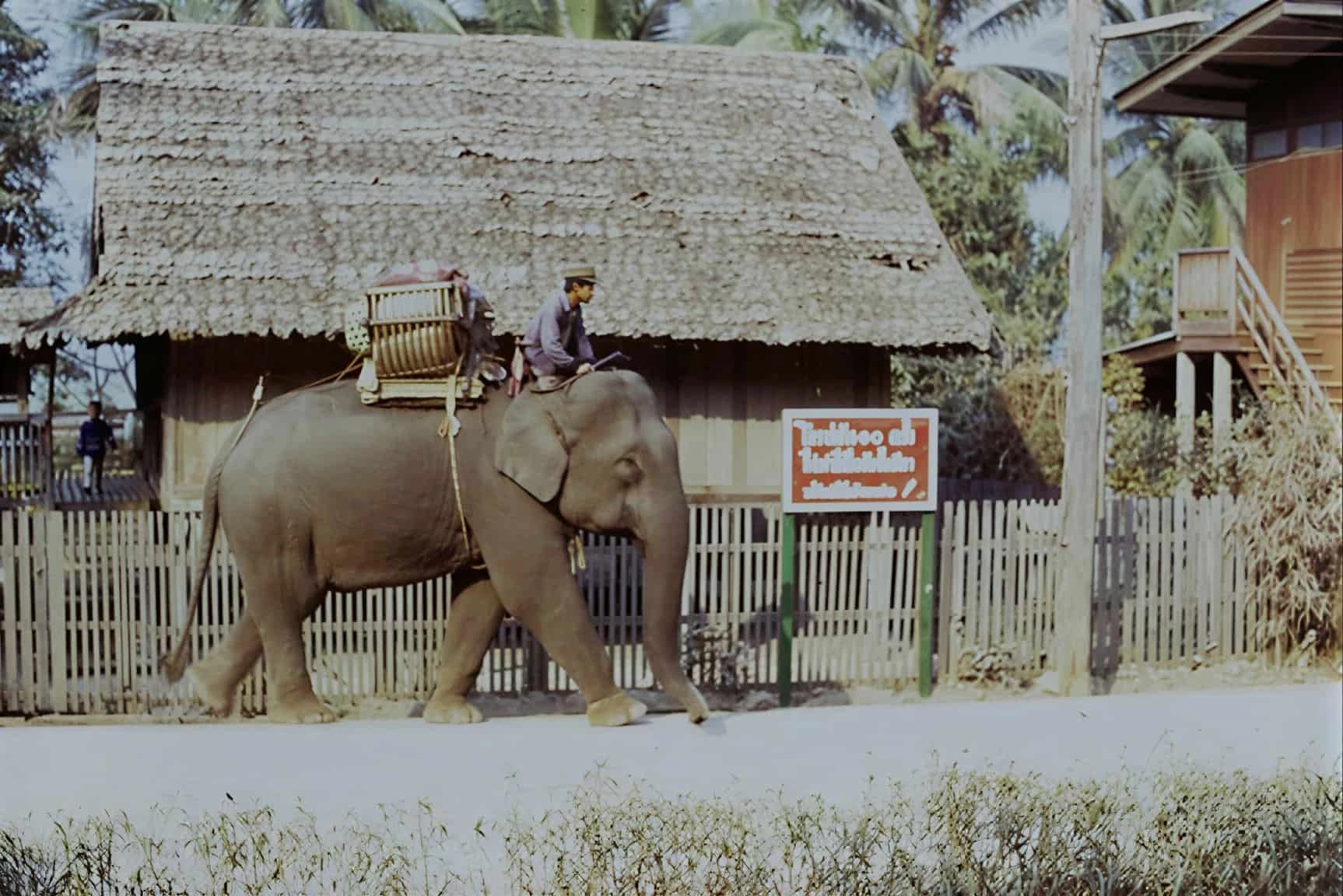
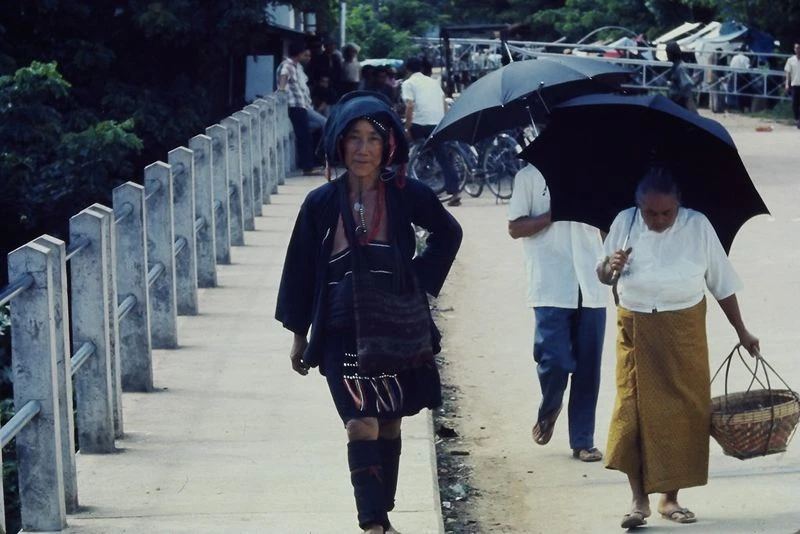
Mae Sai, Thailand’s northernmost town on the border with Myanmar. In the 1970s, it was home to tens of thousands of hill-tribe members, including the Akha, Lahu, and Shan.
The hill tribes of northern Thailand lived in a world of their own, each with distinct languages, customs, and traditional dress. In 1972, the Thai government was only just beginning integration initiatives; before then, officials rarely ventured into these remote high-altitude villages. Many residents lacked formal citizenship and state IDs. 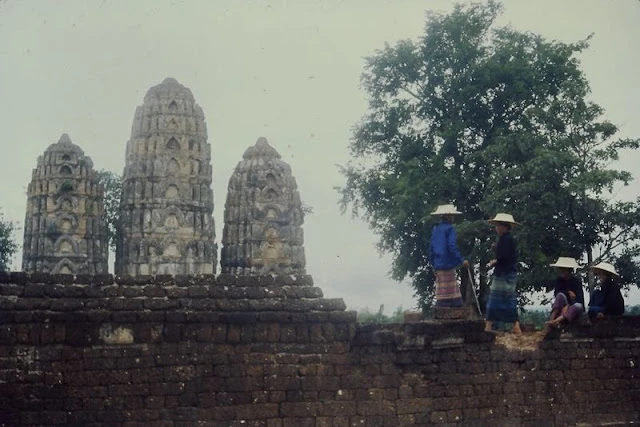
Ayutthaya, capital of the Kingdom of Siam from 1350 to 1767, when it was burned down by invading Burmese forces. Today, it is a UNESCO World Heritage site.
In the early 1970s, Ayutthaya was a quiet provincial town where ancient ruins lay scattered right among residential neighborhoods. Large-scale restoration work did not begin until the 1980s, which also brought the first formal tourist routes. 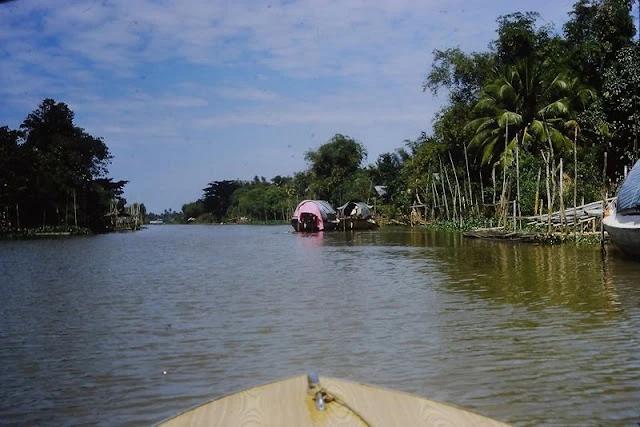
The Chao Phraya River connected Ayutthaya with Bangkok long before paved roads existed. In 1972, boats remained the primary mode of transportation for hundreds of riverside villages. 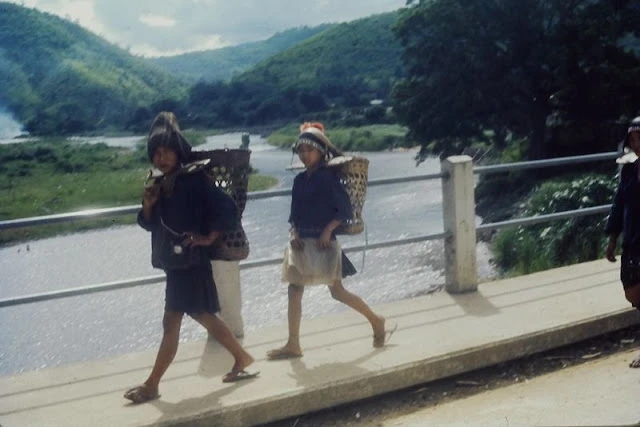
Mae Sai, 1972. A border area near the Golden Triangle—where Thailand, Myanmar, and Laos meet. Key inland trade routes originated right here. 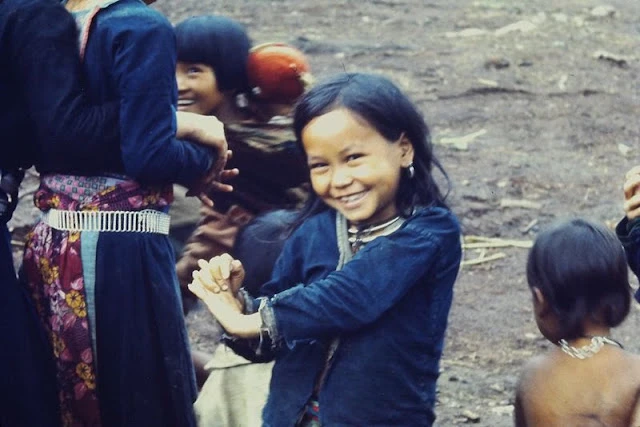
Chiang Mai, the cultural heart of northern Thailand. In 1972, the surrounding countryside was home to dozens of hill-tribe villages that had virtually no contact with the outside world.
The mountains of Chiang Mai Province were mainly inhabited by the Akha and Lahu peoples. Having migrated from Yunnan, China, during the 19th and 20th centuries—first into Burma, then into Thailand—they preserved their distinct heritage. Women wore heavy silver jewelry and elaborate headdresses that instantly signaled their tribal affiliation. 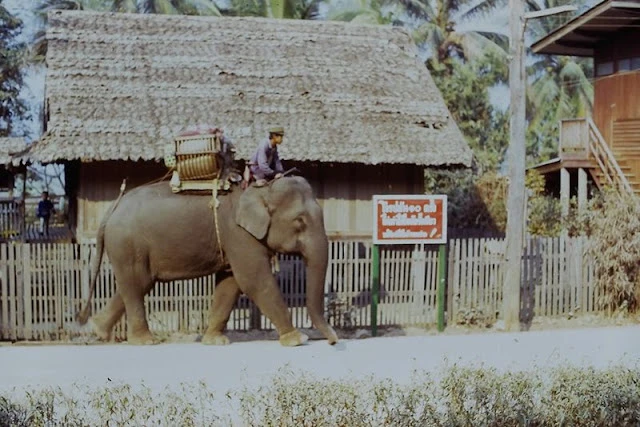
Elephants in local villages weren't a tourist attraction, but essential working animals. In the northern forests of the 1970s, they were widely used to haul timber and heavy cargo. 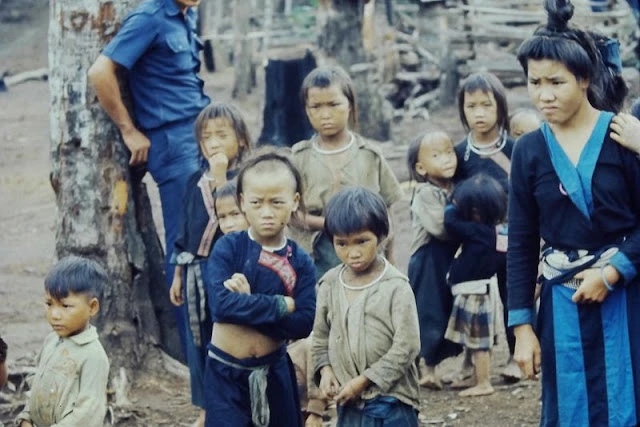
A typical hill-tribe village in northern Thailand: stilt houses, vegetable patches, and near-total isolation from urban life. 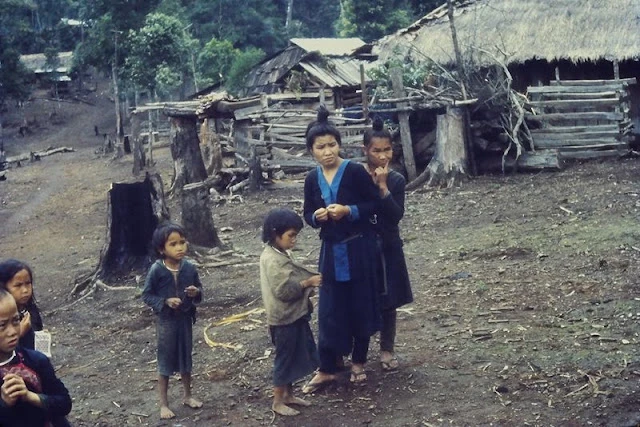
Village life revolved around the agricultural cycle. In 1972, many tribes still practiced traditional slash-and-burn farming. 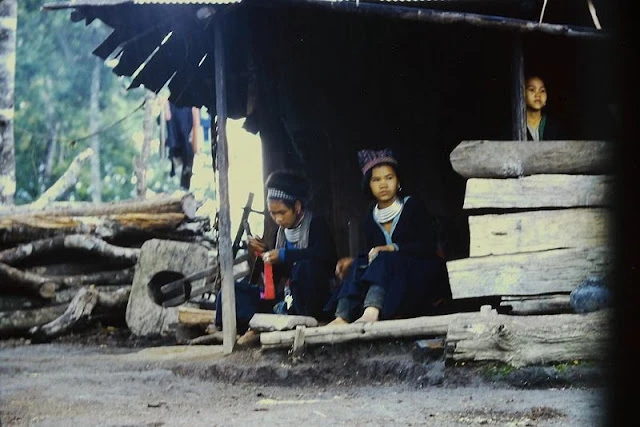
Chiang Mai, 1972. The traditional way of life among the hill tribes remained largely intact; mass tourism would not reach northern Thailand until the 1980s. 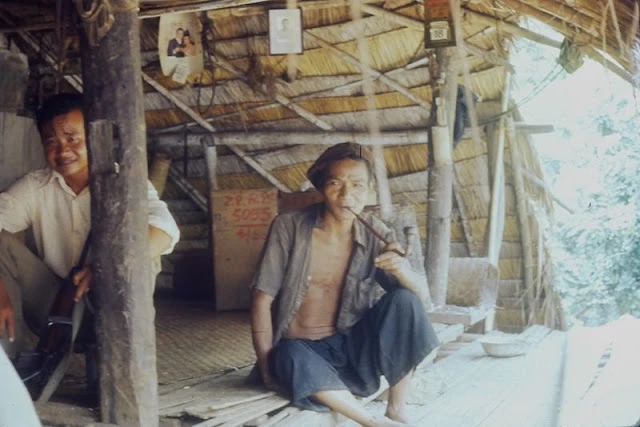
Pipe smoking was a commonplace part of daily life in northern villages. Locals grew their own tobacco, as store-bought alternatives were virtually non-existent. 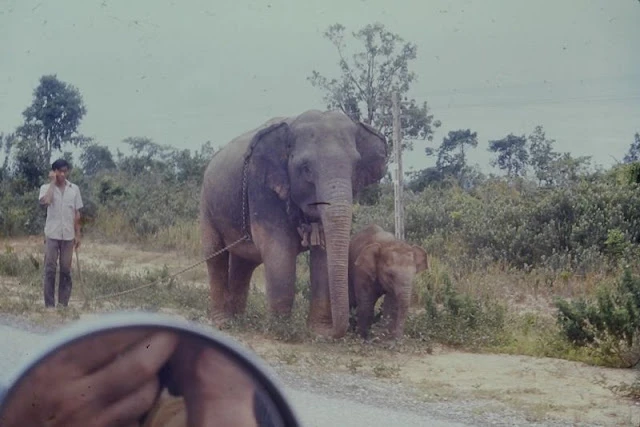
Khao Yai, one of Thailand’s oldest national parks, established in 1962. In the early 1970s, wild elephants could still be spotted right along the roadside.
In 1970, Thailand was home to roughly 10,000 domesticated elephants—double today's population. They worked mainly in logging, and only retired en masse after commercial timber harvesting was banned in 1989. 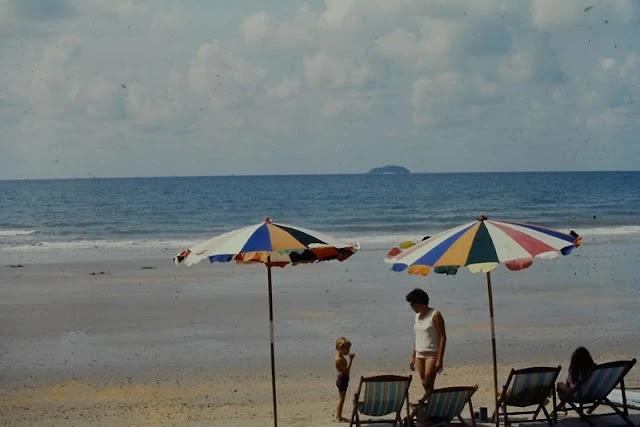
Hua Hin, a royal resort town on the Gulf of Thailand. Favored by the Thai royal family since the 1920s, it was only beginning to see a trickle of foreign visitors by 1973. 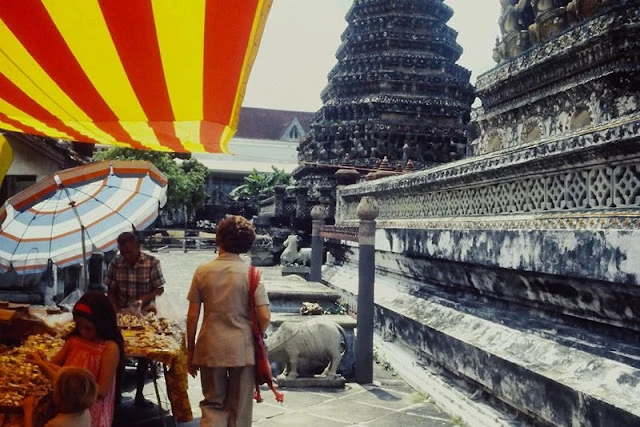
Wat Arun, the Temple of Dawn, on the banks of the Chao Phraya River. A bustling morning market ran along its walls until noon, selling food, fresh flowers, and incense for temple offerings. 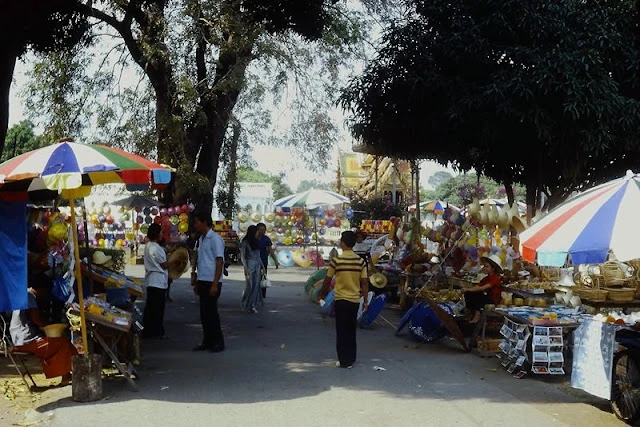
Street vendors outside Buddhist temples are an integral part of Bangkok life. Devotees bought lotus flowers and floral garlands here for religious offerings. 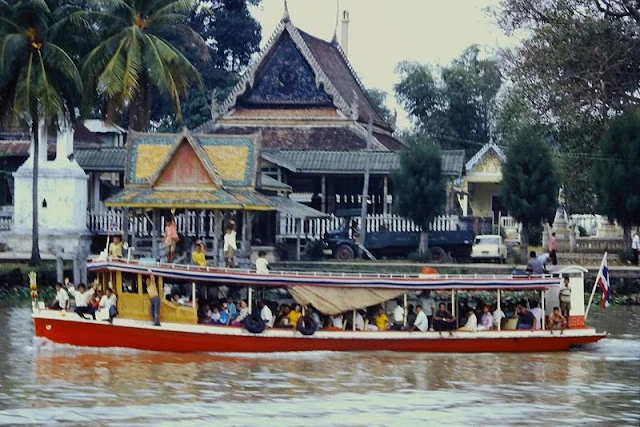
River buses on the Chao Phraya were the main mode of transit for hundreds of thousands of Bangkok residents in the 1970s. Traffic jams were rare back then, as few families owned cars.
In 1973, Bangkok’s population stood at around three million—less than half of what it is today. Its famous
khlong
canals were still vital trade arteries rather than drainage channels; filling them in to build roads only began in earnest in the late 1970s. 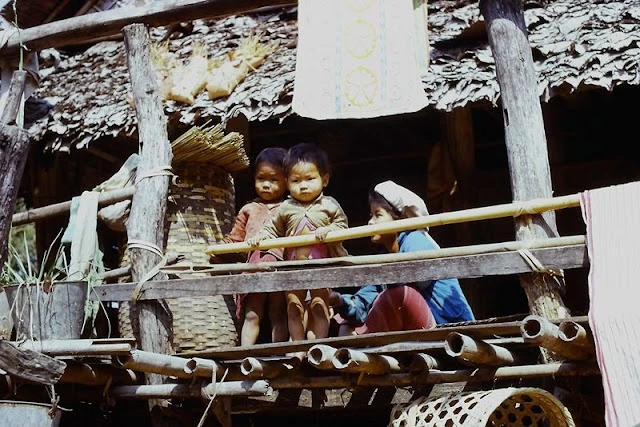
Ban Chiang, Udon Thani Province, 1974—captured during the site’s first major archaeological excavations. The village turned out to be the cradle of one of Southeast Asia’s oldest civilizations.
Joint Thai-American excavations took place in Ban Chiang from 1974 to 1975, unearthing 4,000-year-old bronze artifacts. While archaeologists were uncovering prehistoric treasures, local village life went on as usual. 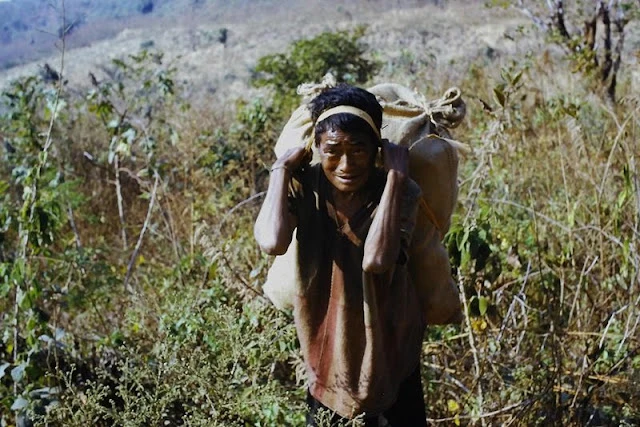
Ban Chiang, 1974. In 1992, the village was designated a UNESCO World Heritage site, recognized as one of Southeast Asia's most significant prehistoric settlements. 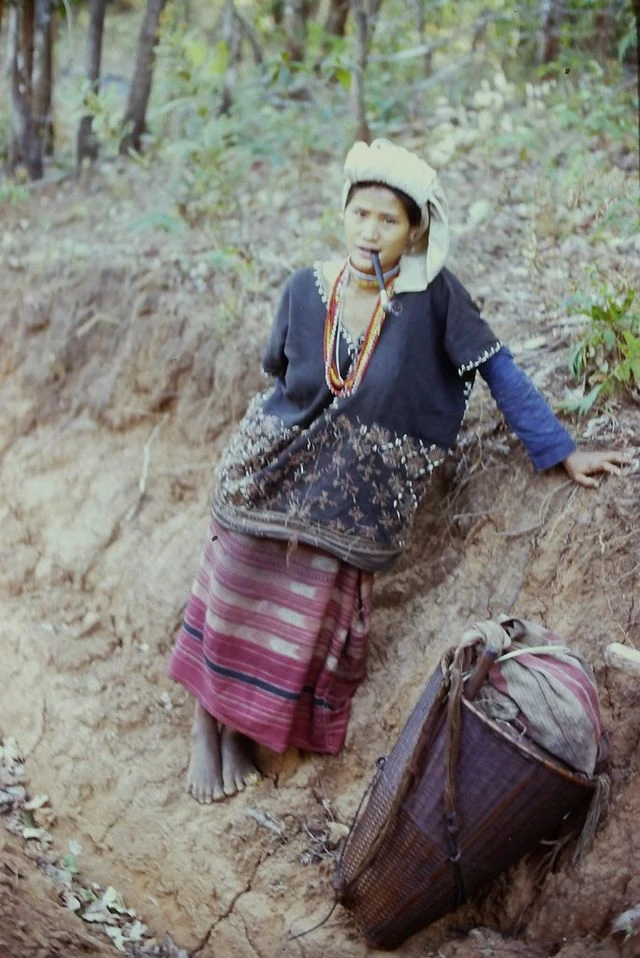
Resting in the shade during the midday heat is an essential routine in Thailand. Summer temperatures in Udon Thani regularly reach 37–38°C (nearly 100°F). 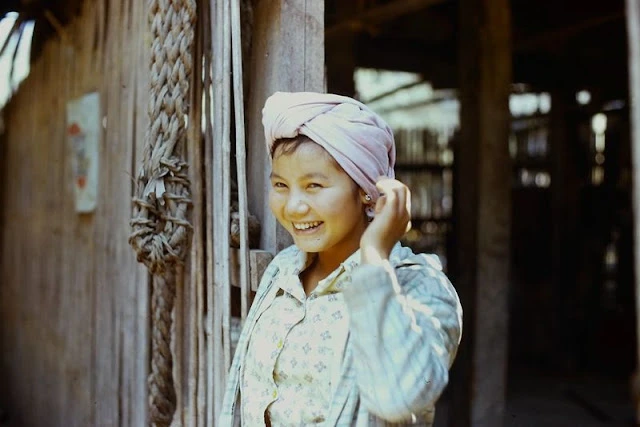
Thailand's moniker, "Land of Smiles," wasn't just a marketing slogan. Warmth toward strangers was a genuine way of life, long before it became part of the hospitality industry. 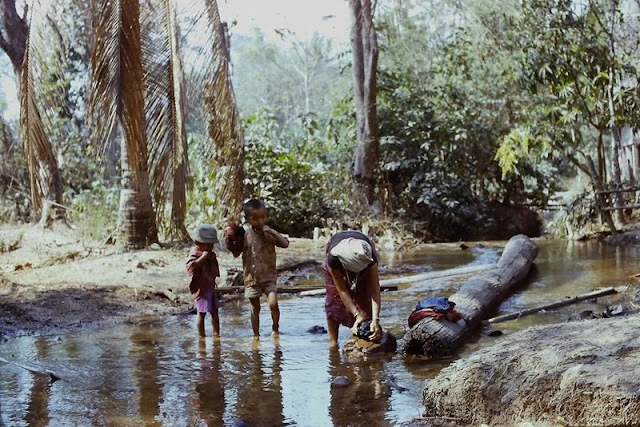
In 1974, Ban Chiang was a typical farming village reliant on agriculture, livestock, and local crafts—even as everyone realized they were walking on thousands of years of history. 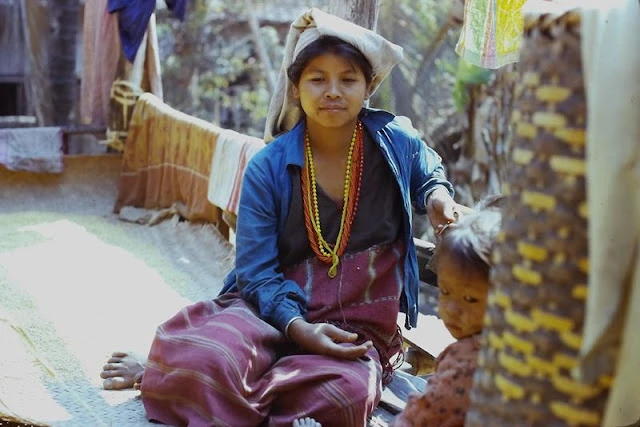
In northeastern Thailand, locals speak an Isan (Lao) dialect, reflecting the region's historical ties to Laos. By 1974, the local way of life had remained virtually unchanged for over a century. 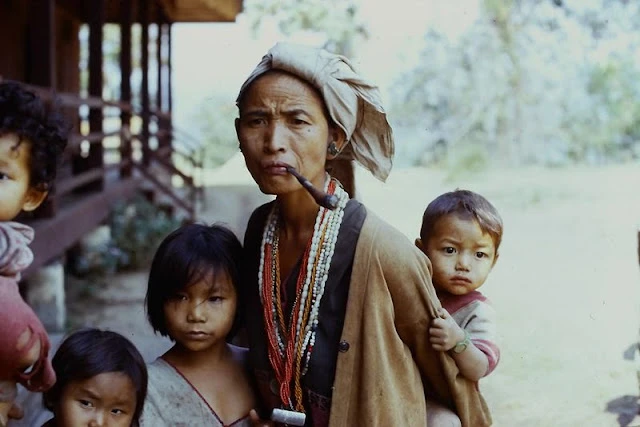
Pipe-smoking among elderly women was a common sight in rural areas of the northeast. Tobacco was smoked by men and women alike, across generations. 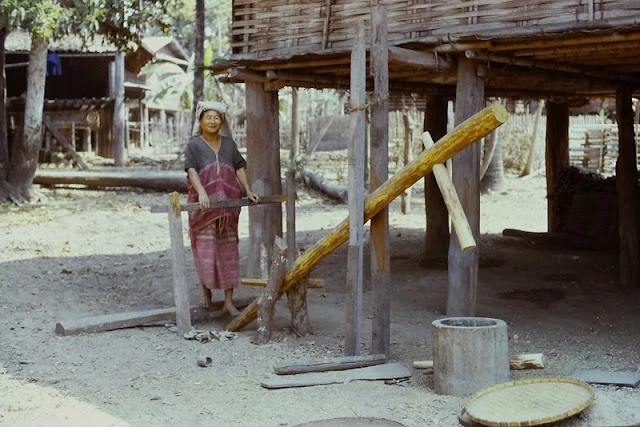
Weaving and basketry were the main crafts practiced by women in northeastern villages. Everything was made by hand, as sewing machines were rare until the late 1970s. 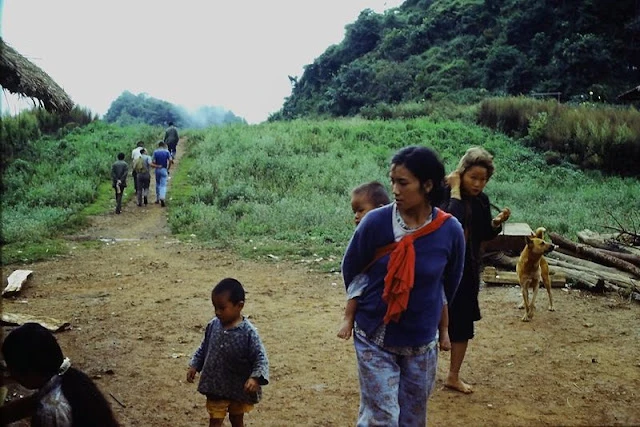
Ang Khang, a mountain valley situated at 1,400 meters near the Myanmar border. In 1975, it housed a military outpost, and tourists were virtually unheard of. 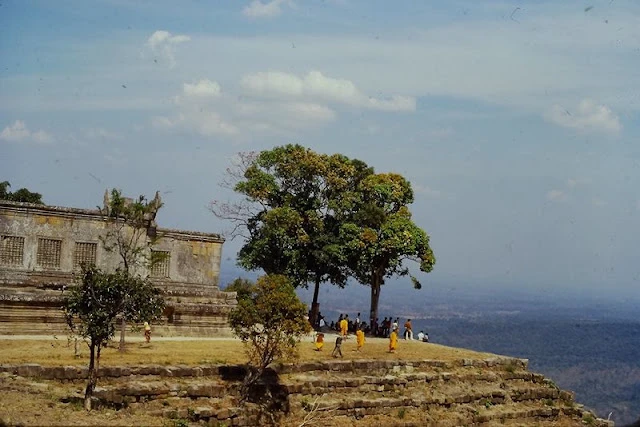
Prasat Preah Vihear (Khao Phra Wihan), a 10th to 12th-century Khmer temple perched on a cliff edge near the Cambodian border. In 1975, the temple was accessible only from the Thai side.
Although Preah Vihear sits on Cambodian territory, access was historically from the Thai side. Border disputes dragged on for decades: while the International Court of Justice awarded the temple to Cambodia in 1962, Thailand continued to contest the decision well into the mid-1970s. 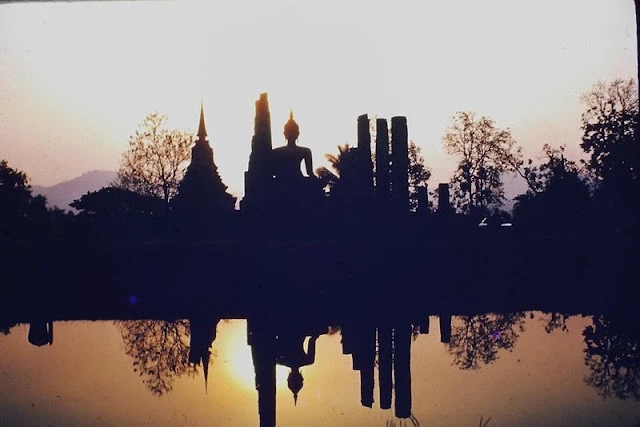
Sukhothai, the first capital of independent Thailand from the 13th to 15th centuries. In 1975, restoration efforts were only just getting underway; the park achieved UNESCO World Heritage status in 1991. 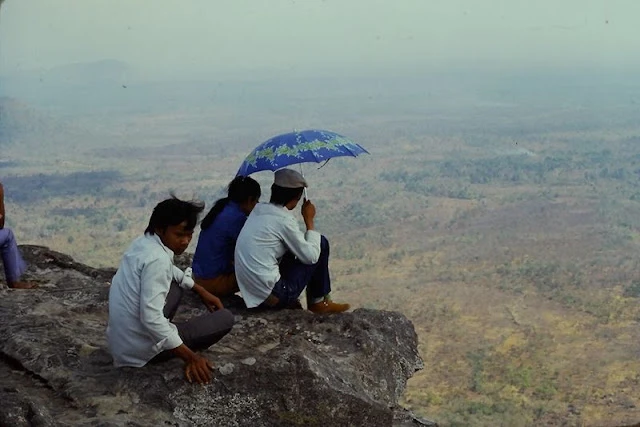
Preah Vihear, 1975. The cliff below drops hundreds of meters straight into the Cambodian jungle. At the time, there was no border fencing whatsoever. 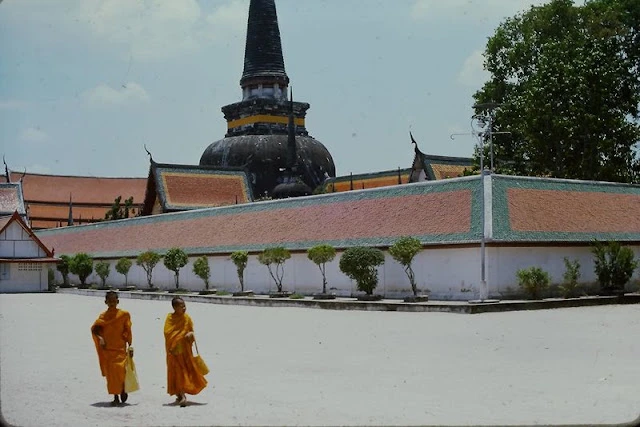
Nakhon Si Thammarat, one of southern Thailand’s oldest cities and a center of Buddhist culture since the first millennium AD. In 1976, it remained a quiet provincial town, largely untouched by tourism. 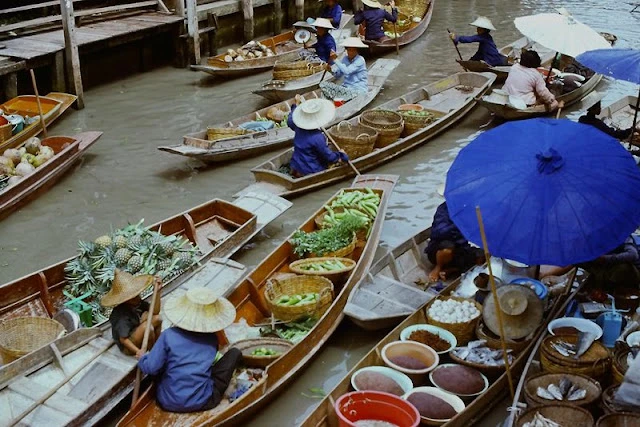
Floating market in Ratchaburi, 1976. Trading from boats is a centuries-old tradition: vendors lived on the water, stored their goods there, and cooked meals right on board.
Ratchaburi, a province west of Bangkok, is famed for its network of canals. The floating market at Damnoen Saduak would eventually become Thailand's most famous, but back in 1976, it was still an ordinary local market catering strictly to residents. 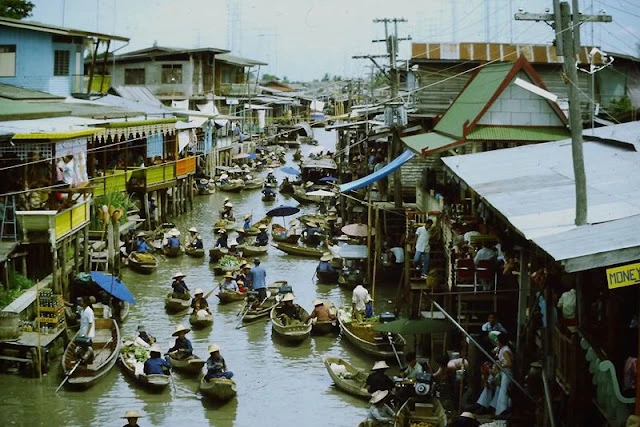
Floating market in Ratchaburi, 1976. Within a decade, these markets would turn into major tourist attractions, transforming from everyday community hubs into commercial spectacles.
Masters’ photographs span four years and the entire length of the country—from northern hill tribes near the Burmese border to the shores of the Gulf of Thailand. There isn't a single staged shot: people go about their daily routines, looking past the lens or straight into it with complete unselfconsciousness. It is a portrait of a Thailand that no longer exists, but was very much real.
Have you ever visited Thailand? What stood out to you the most—the mountainous north with its hill-tribe villages, or the south with its pristine beaches and vibrant markets?