How Big Wigs Took Over Europe—And What Syphilis and Lice Had to Do With It (8 photos)
We are all familiar with the classic image of a 17th- or 18th-century aristocrat: silk stockings, a voluminous jabot collar, buckled shoes, an embroidered gold waistcoat, and... a towering powdered wig. That final detail often raises eyebrows—after all, it hardly seems practical. So how did men's wigs become such a massive trend, and what did this dramatic headpiece say about noble status? 
The full-bottomed wig, or *allonge*, remained an indispensable part of every high-born gentleman’s wardrobe for nearly two centuries. Worn exclusively by the aristocracy, it served as the ultimate symbol of high social standing. Yet this trend was born not out of an eye for elegance, but out of primitive medicine and royal insecurities. 
An 18th-century gentleman wearing a full-bottomed wig
The trend was first set in motion during the 17th century by King Louis XIII of France. Embarrassed by his early hair loss, the monarch commissioned dozens of elaborate wigs, mostly crafted from dark hair. However, the phenomenon truly exploded during the reign of his son, Louis XIV—the Sun King.
The younger Louis began going bald at just 19. Deeply self-conscious, he hired 48 of the nation's top wigmakers and ordered them to craft massive hairpieces mimicking a lion's mane. To understand his panic, one must realize that baldness was viewed far differently back then: ever since the days of the Frankish tribes, a full head of hair was seen as a symbol of virility and royal power. 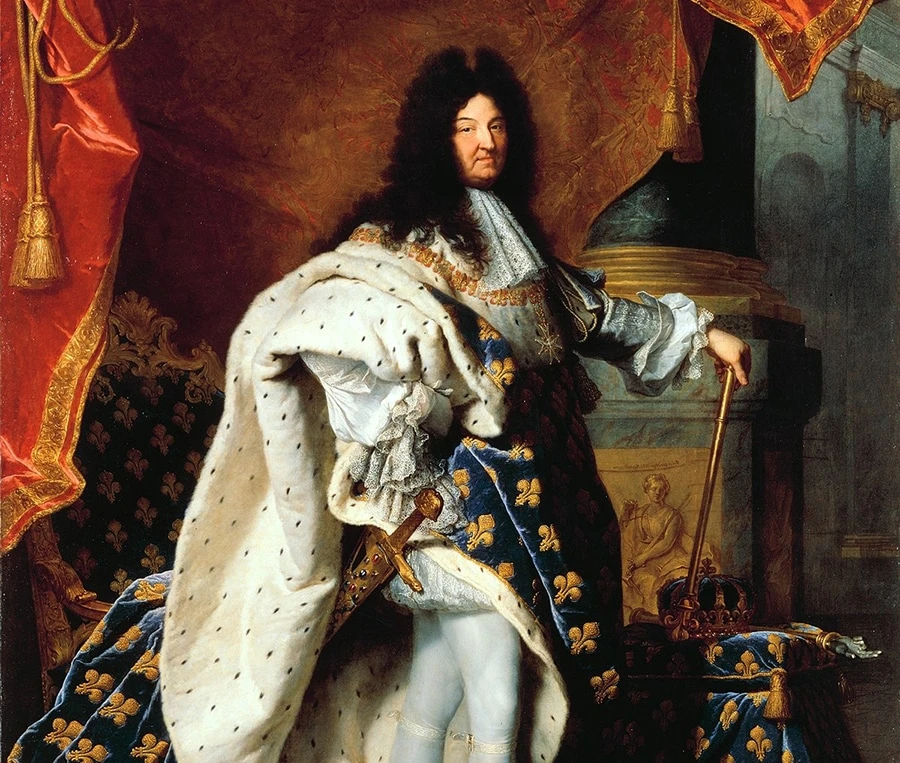
King Louis XIV of France
A bald King of France was practically unthinkable in a nation where long locks were revered and rulers historically kept their hair uncut. A similar reverence for hair existed in neighboring Britain and Germany. Paradoxically, it was precisely during the 17th and 18th centuries that Europe faced a rampant epidemic of hair loss—fueled by several distinct causes.
Lead, Smallpox, and Syphilis
First and foremost, both men and women suffered severe hair loss due to heavy exposure to lead and mercury, which were prevalent in medicines and cosmetics. Face powders and white lead cosmetics were essential items: recurring smallpox epidemics left survivors with deep facial scarring, which they concealed beneath thick layers of toxic lead-based foundation. 
Smallpox left permanent scars on its survivors
A second major plague was venereal disease. As medieval moral constraints gave way to aristocratic indulgence, sexually transmitted infections spread rapidly through noble circles. Syphilis itself triggered patchy hair loss, but its "cure"—mercury treatment—proved even more destructive. Whatever hair escaped the disease was promptly ruined by mercury poisoning, making bald nobles a common sight across Europe.
Naval administrator Samuel Pepys documented the societal horror of syphilis in his famous 17th-century diary. When Pepys's brother contracted the disease, Samuel was less concerned about his sibling's health than about his own reputation:
"If my brother lives, he will not be able to show his head, which will be a great shame to me."
As this reveals, hair was so tightly bound to honor that having a bald brother could tarnish one's social standing. 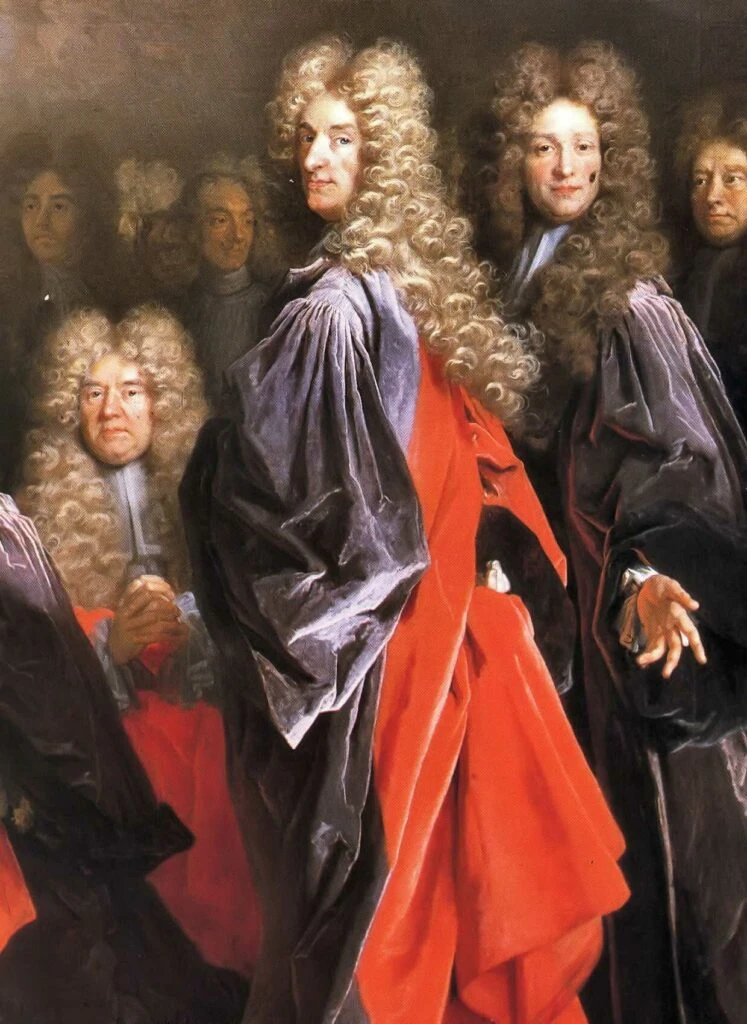
Baldness spared no crowned head. King Charles II of England, a cousin of Louis XIV, lost his hair as well and promptly ordered an extensive collection of oversized wigs. Kings were the ultimate tastemakers; once Europe’s two most powerful rulers adopted the look, the rest of high society scrambled to follow suit.
Wigs and Personal Hygiene
By the mid-17th century, virtually every European aristocrat owned at least one wig—while the wealthiest maintained dozens for every occasion. They were extraordinarily expensive, but beauty demanded sacrifice. Moreover, wigs actually made daily life much easier for the nobility. 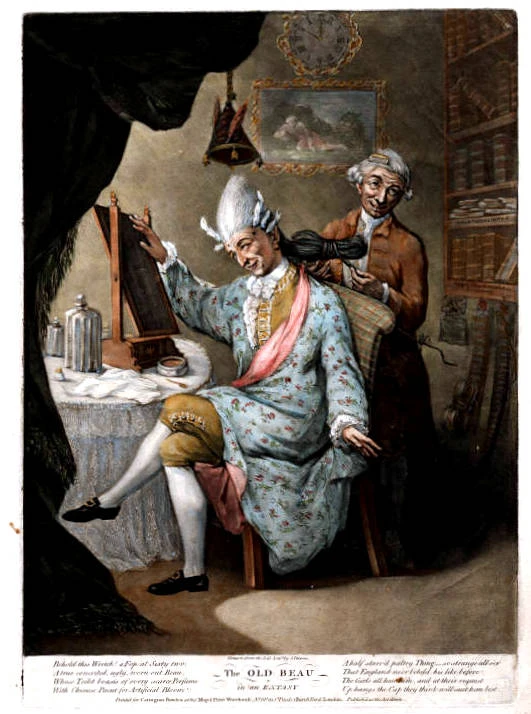
A barber and his wig-wearing client
Europe was plagued not only by smallpox and syphilis, but also by rampant head lice. What we often envision as the Age of Enlightenment was, in reality, a period of dreadful hygiene. Bathing was dismissed as a practice for commoners, clothing was aired out rather than washed, and heavy perfumes were used to mask body odor. Medical knowledge was rudimentary at best—by many accounts, inferior even to ancient standards.
Lice infested kings, barons, and innkeepers alike. While a commoner could simply shave their head and wear a kerchief, aristocrats could not afford such informal attire. Instead, nobles shaved off whatever hair survived disease and mercury treatments, placing majestic wigs atop their bare scalps. 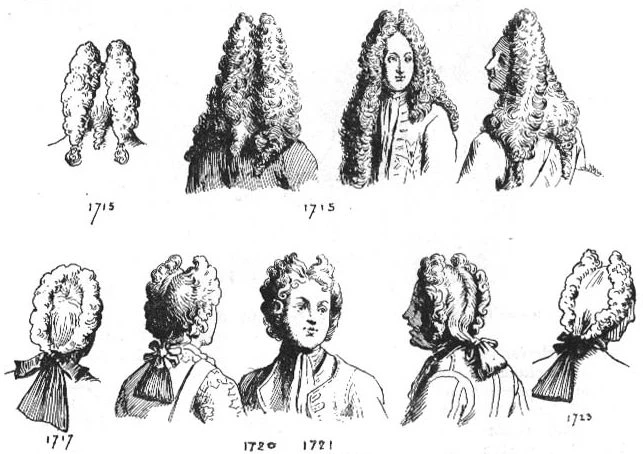
Wig fashions were constantly evolving
Wigs were crafted from natural materials. Horsehair and goat hair yielded cheaper models, while human hair fetched astronomical prices. Maintaining an *allonge* was a full-time job; kings and nobles employed dedicated servants whose sole responsibility was caring for their wigs.
Wigs required constant combing, airing out, and dusting with scented powders. When a wig lost its shape, it was sent back to wigmakers for reshaping. To rid them of lice, servants boiled the hairpieces or treated them with harsh chemicals. 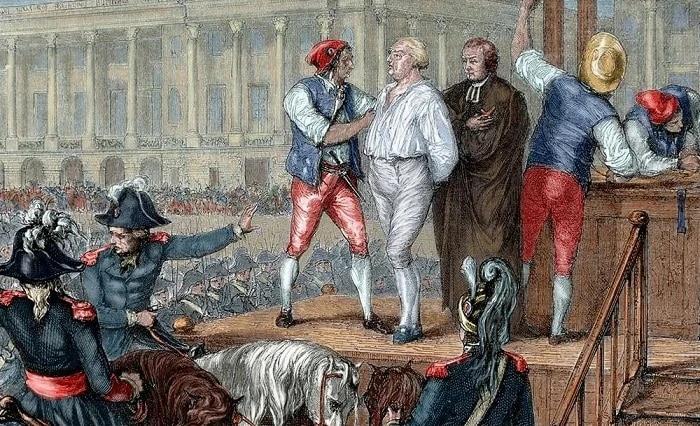
Revolutionaries had little sympathy for wig-wearers
The craze lasted until the late 18th century before finally fading. In France, the French Revolution dealt the fatal blow: many wig-wearers quite literally lost their heads, and those who survived were far too terrified to advertise their aristocratic ties.