The 1962 Tanganyika Laughter Epidemic: It Was No Laughing Matter (10 photos)
In 1962, a small village in Tanganyika (now Tanzania) became ground zero for one of the most bizarre medical anomalies in history. What began as innocent giggling among a few schoolgirls rapidly spiraled into mass hysteria, affecting thousands of people and paralyzing entire regions for months. To this day, scientists are still trying to unravel the mystery behind this strange phenomenon. 
When Laughter Is No Longer Joyful
On January 30, 1962, in the village of Kashasha on the western coast of Lake Victoria, three girls at a mission boarding school started laughing uncontrollably for no apparent reason. At first, teachers dismissed it as ordinary childhood mischief. But the laughter didn't stop. The girls laughed for hours on end, collapsing onto the floor, unable to eat or sleep. 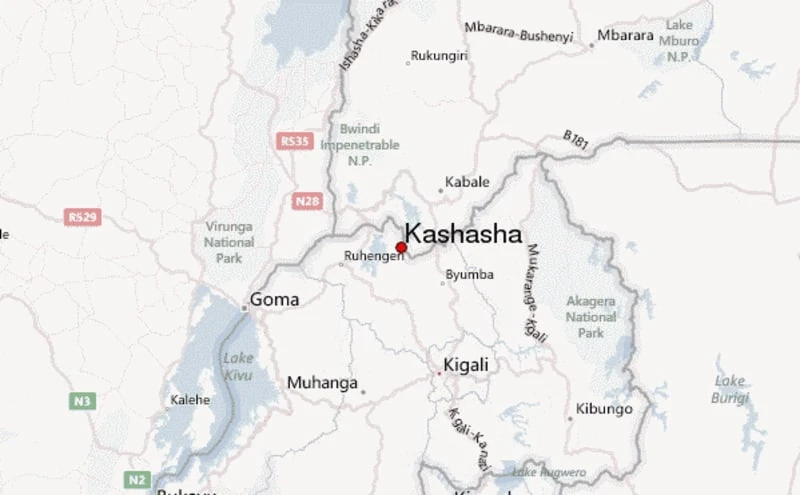
Within days, fitful outbursts of uncontrollable laughter gripped 95 of the school's 159 students. The girls laughed to the point of exhaustion, gasping for breath; some fainted, while others burst into tears. When adults tried to restrain them, the children fought back. Teaching became impossible, forcing the school to shut down on March 18. Officials sent the affected girls back to their home villages.
Laughter Sweeps the Country
Closing the school, however, did nothing to halt the epidemic. As the students returned home, the mysterious affliction spread to surrounding villages. Within weeks, fitful laughter broke out among residents of Nshamba village, before rolling through the settlements of Bukoba and Kangeshe. 
By June 1962, the outbreak had affected nearly a thousand people, forcing authorities to close 14 schools across the region. Medical officers documented cases of laughter lasting anywhere from a few minutes to 16 consecutive days. Episodes were often accompanied by weeping, anxiety, abdominal pain, and fainting spells. One by one, people broke into laughter, but there was no joy in their eyes—it was laughter as a curse. Fifty years later, a local Muslim cleric told an American journalist that it was the ancestral spirits asserting their power. 
People of modern-day Tanzania
The laughter continued to spread—to the neighboring village of Nshamba, the town of Bukoba, and eventually across the border into Uganda. The first formal report on the phenomenon was published in 1963 by P. H. Rankin and A. M. Rankin, a medical officer and a professor at Makerere University College, respectively. They concluded the epidemic lasted six months, though other sources suggest it persisted for a year, two years, or even longer. Around a thousand people fell victim to the outbreak, the vast majority of them young women and girls.
What the Doctors Found
Colonial medical authorities were baffled. Physical examinations revealed no underlying illnesses, and blood tests came back completely normal. An infectious cause was quickly ruled out, as the outbreak didn't spread like a typical disease—instead, it traveled through social networks and interpersonal connections. 
Psychology professor Robert Provine spent years studying the phenomenon. He and his team documented over 1,000 real-world "laughing episodes" and analyzed the surrounding circumstances. Provine confirmed that, in most cases, people were not laughing because something was funny; rather, laughter served as a social signal and a bonding mechanism. "Laughter was social," Provine concluded. And it was contagious.
"The Tanganyika laughter epidemic is a dramatic example of the contagious power of laughter," he wrote in a research paper.
Dr. A. M. Rankin of Ndolage Hospital, who observed the patients firsthand, described the symptoms as sudden bouts of laughter and crying lasting from several hours to several days, accompanied by anxiety, screaming, and occasional aggressive behavior. Patients experienced extreme exhaustion after these episodes, though they remained conscious throughout. 
Silvia Cardoso, a neuroscientist and ethologist at the State University of Campinas, studies laughter in both humans and animals. Unlike most of her colleagues, she rejects a purely sociogenic explanation, suspecting that a viral infection may have triggered the epidemic instead. In an interview, she stated:
"I find it hard to believe that a purely psychological mass reaction could last so long and spread so widely."
Mass Psychogenic Illness
Modern researchers classify the events in Tanganyika as a mass psychogenic illness—a form of mass hysteria in which psychological stress manifests as physical symptoms. Similar outbreaks have occurred before and since in various parts of the world. 
The social backdrop played a key role: Tanganyika had just gained independence from Britain in December 1961, and society was navigating a turbulent period of uncertainty and heightened strain.
Why Laughter?
Psychologists explain that laughter became an outlet for suppressed emotions in a society where expressing stress or disagreement directly was discouraged. The mission schoolgirls lived under strict supervision and rigid colonial discipline. Uncontrollable laughter served as an unconscious release mechanism and a form of protest. 
American neuroscientists Hanna and Antonio Damasio suggest that pathological laughter occurs when key brainstem structures are impaired. Based on this model, they hypothesize that the 1962 epidemic may have been triggered by a viral infection—likely a form of encephalitis affecting the brainstem.
Notably, the outbreak primarily affected young people aged 12 to 18, with girls far more susceptible than boys. Adult men were virtually untouched—perhaps because, within their culture, men had more freedom to express their emotions directly.
How the Epidemic Ended
Gradually, toward the end of 1962, the wave of the mysterious illness began to subside. The last cases were documented in June 1964—two and a half years after the initial outbreak. Over that period, roughly 1,000 people across more than 20 communities experienced these laughing fits.
No medical treatment was required. As societal stress ebbed and life in the newly independent nation stabilized, the symptoms vanished on their own. No fatalities were recorded, though many sufferers lost weight and faced a long recovery. 
Much of the truth behind the 1962 epidemic remains shrouded in history. The names of the three girls at the center of the initial outbreak were never recorded, and scholarly accounts differ. Researcher Peter McGraw and journalist Joel Warner traveled to Tanzania to track down eyewitnesses, detailing their journey in their 2014 book
The Humor Code
.
Warner and McGraw visited the school where the epidemic began and spoke with local residents about their memories of the event. They even located a woman who may have been one of the original victims, though she refused to talk about the experience.
Ultimately, McGraw and Warner drew on academic literature, particularly the work of Christian Hempelmann. Mass psychogenic illness (often referred to by psychologists as mass hysteria) is essentially a reaction to a prolonged buildup of psychological tension within a group of people who feel powerless.
A Lesson from History
The Tanganyika laughter epidemic remains a landmark case study in mass psychogenic illness. It demonstrated how social tension and psychological stress can manifest as unexpected physical symptoms, spreading rapidly through close-knit communities.
Similar phenomena have been documented elsewhere: in 2007, dozens of students at a Philippine school suffered simultaneous outbursts of hysteria, while in 2012, a group of teenage girls in upstate New York developed uncontrollable Tourette-like tics. 
The outbreak in Tanganyika serves as a powerful reminder that a society's mental health is just as vital as its physical well-being. When people lack healthy outlets for their fears and anxieties, the body finds its own—sometimes extraordinary—ways to cope.
Do you think a similar epidemic could happen in today's world, where people have far more avenues to express their emotions and relieve stress?