Glossy Photos and the Dark Truth: What Gaddafi’s Female Bodyguards Revealed (13 Photos)
They wore high heels, lipstick, and carried Kalashnikov assault rifles. They were known as the "Amazons" of Libyan dictator Muammar Gaddafi. These female bodyguards accompanied him from the early 1980s until the fall of his regime in 2011. Estimates suggest between 30 and 400 women served in the unit. While some took pride in their service, others spoke out after 2011 about coercion and sexual violence. Here is the full story of his security detail—from the women's military academy in Tripoli to the harrowing testimony that emerged after the dictator's death. 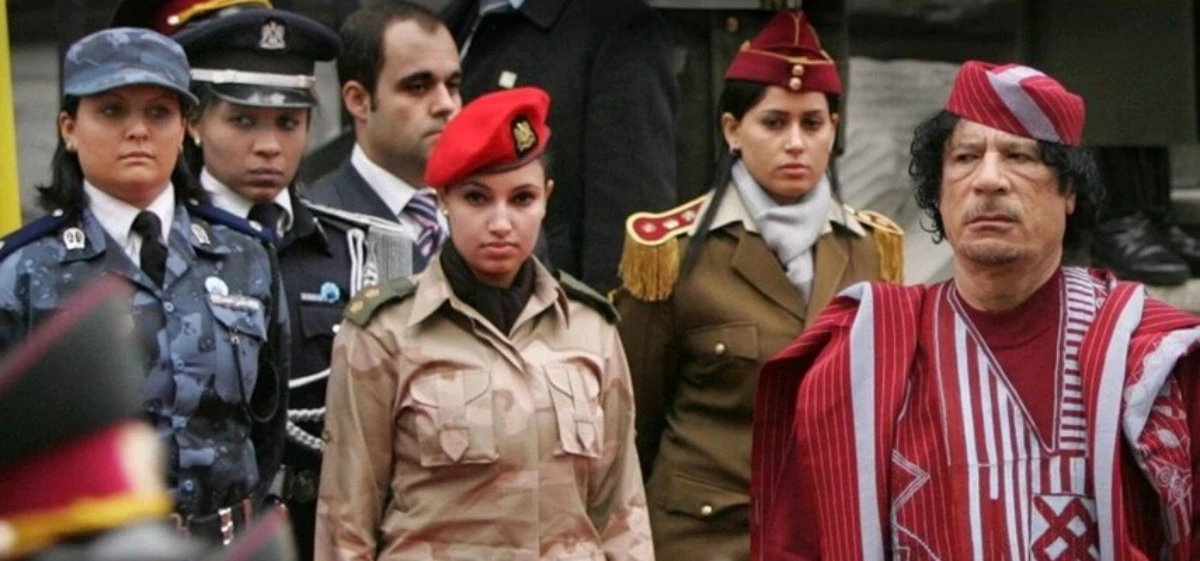
Tripoli’s Women’s Academy: How It All Began
In 1969, a 27-year-old Colonel Muammar Gaddafi led a military coup that overthrew King Idris and abolished the Libyan monarchy. He would remain in power for 42 years, throughout which he frequently made grand public pronouncements about women's rights. 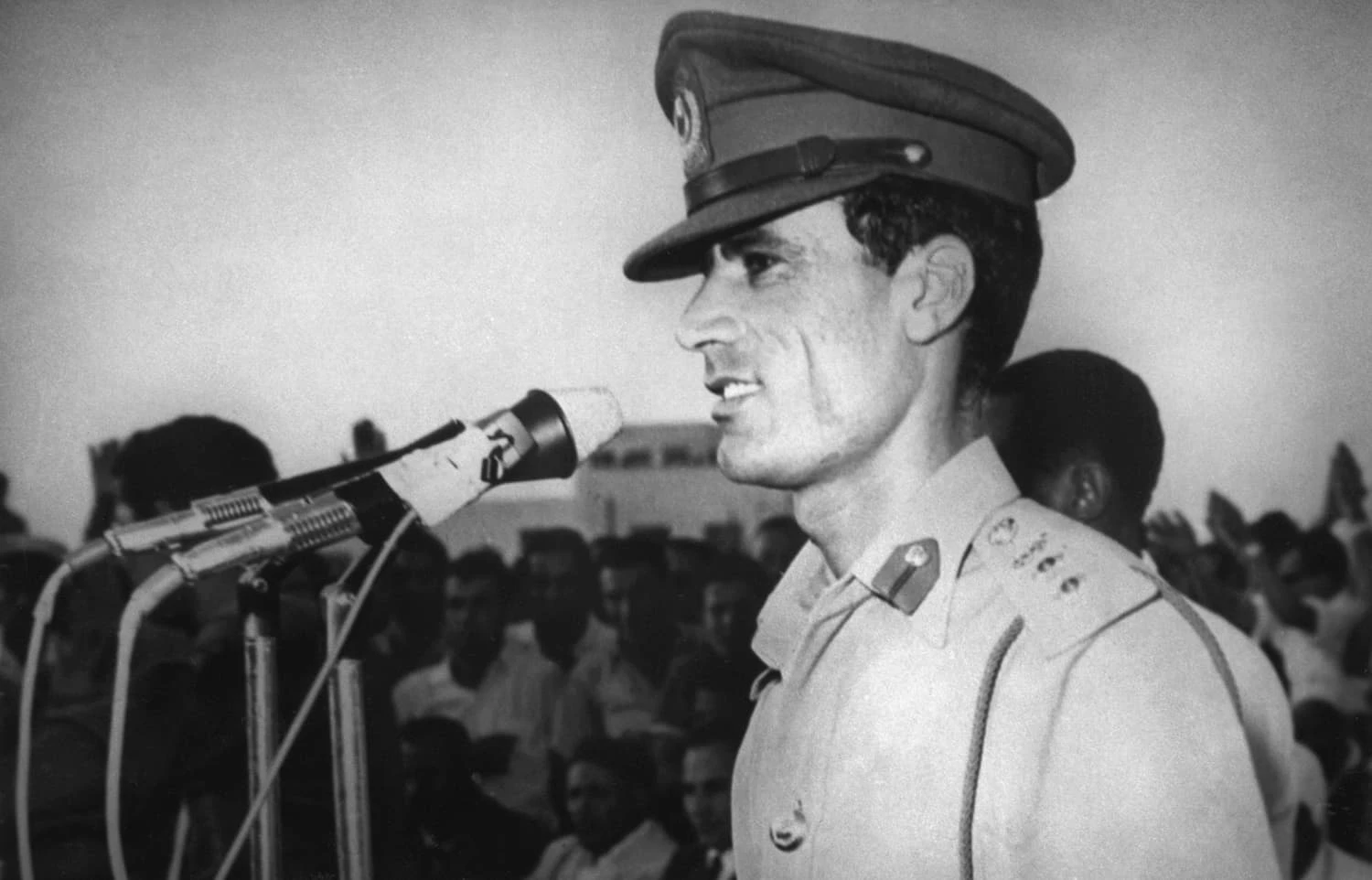
The Colonel came to power at age 27. Ten years later, he opened a military academy for women in Tripoli.
At a 1978 rally in Tripoli, for instance, Gaddafi proclaimed that the entire population—both men and women—should be armed, claiming that military training for women was entirely compatible with religion and marriage.
Rhetoric soon turned into reality. The academy opened in 1979 to train young women in weapons handling and military fundamentals. By 1983, roughly 7,000 women had passed through its doors. Western observers, however, suspected that many had been enrolled under duress. 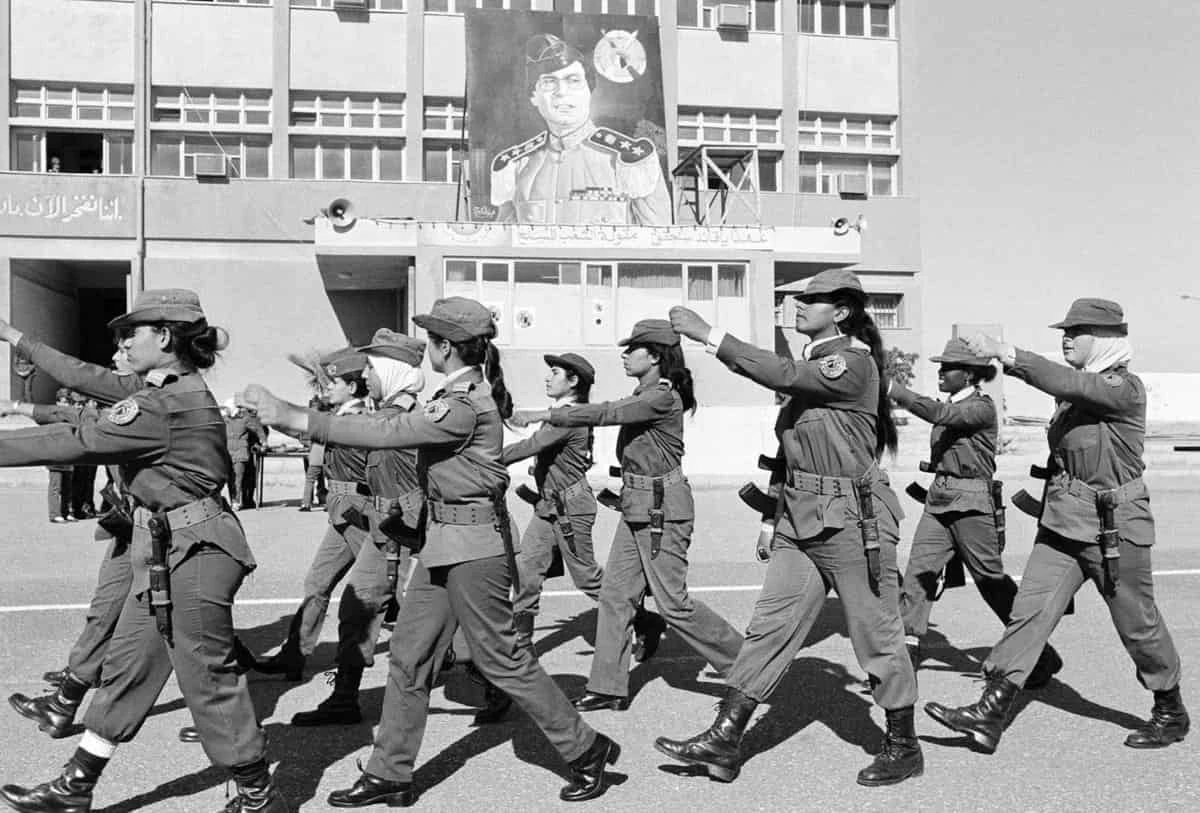
The Women's Military Academy opened in Tripoli in 1979, accepting recruits between the ages of 13 and 17.
Gaddafi drew his personal security detail from the academy's graduates. The unit was formed in the early 1980s, after the dictator had formally stepped down from official government posts to assume the title of "Brotherly Leader and Guide of the Revolution." Consequently, these bodyguards were viewed not as a regular military unit, but as the dictator's personal entourage.
Three Names for One Unit
Officially, the detail was called the "Revolutionary Nuns"—*Al-Rahibat al-Thawriyyat* in Arabic (الراهبات الثوريات). In Libya, they were more commonly referred to as *Haris al-Khas* (الحرس الخاص), meaning "special guard." European journalists coined their own moniker: the "Amazons," after the legendary female warriors of Greek mythology. Thus, the same unit became known by three distinct names: the official title, the local Libyan term, and the media nickname. 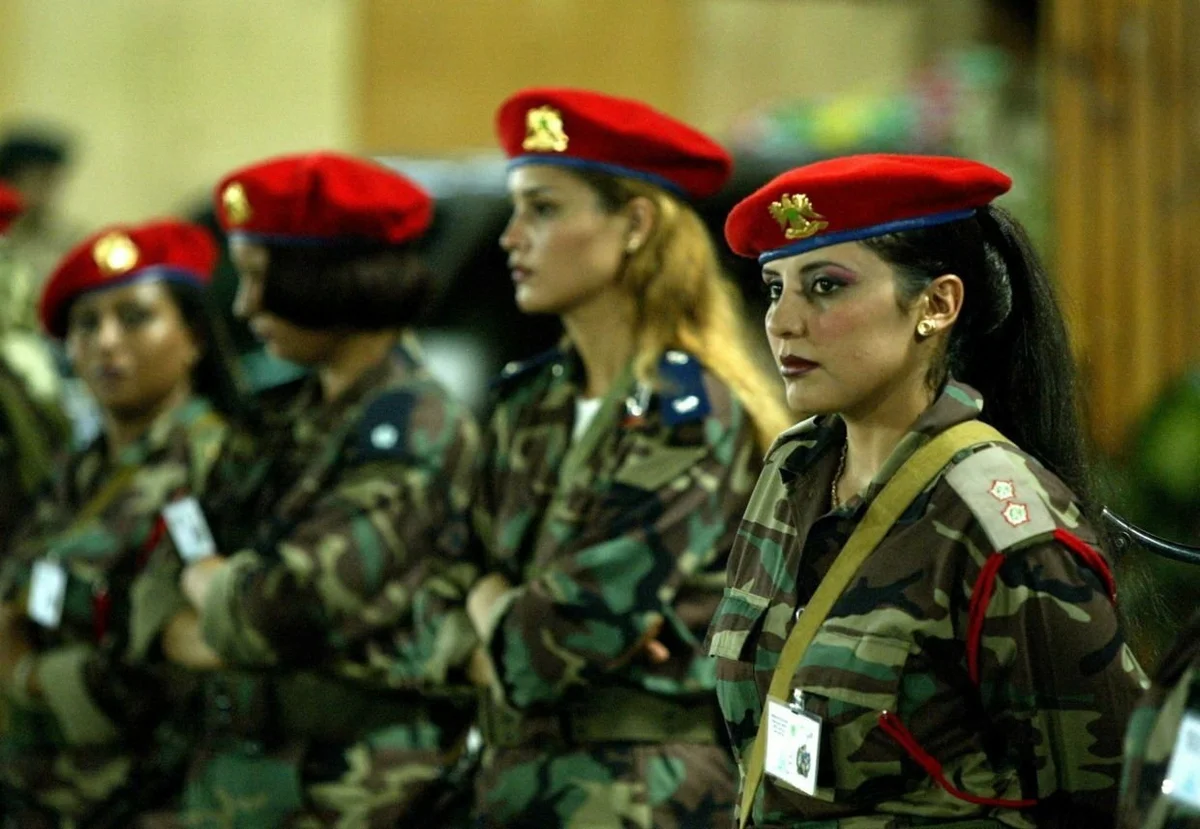
In Libya, the unit was known as "Haris al-Khas," meaning "special guard." The term "Amazons" was coined by European journalists.
No one knows exactly how many women served in the unit. Western newspapers often reported seeing 30 to 40 bodyguards at Gaddafi's side. However, in 2011, a former regime insider told *The Guardian* that as many as 400 women had passed through the unit over a decade—though this remains an individual estimate rather than an official record. 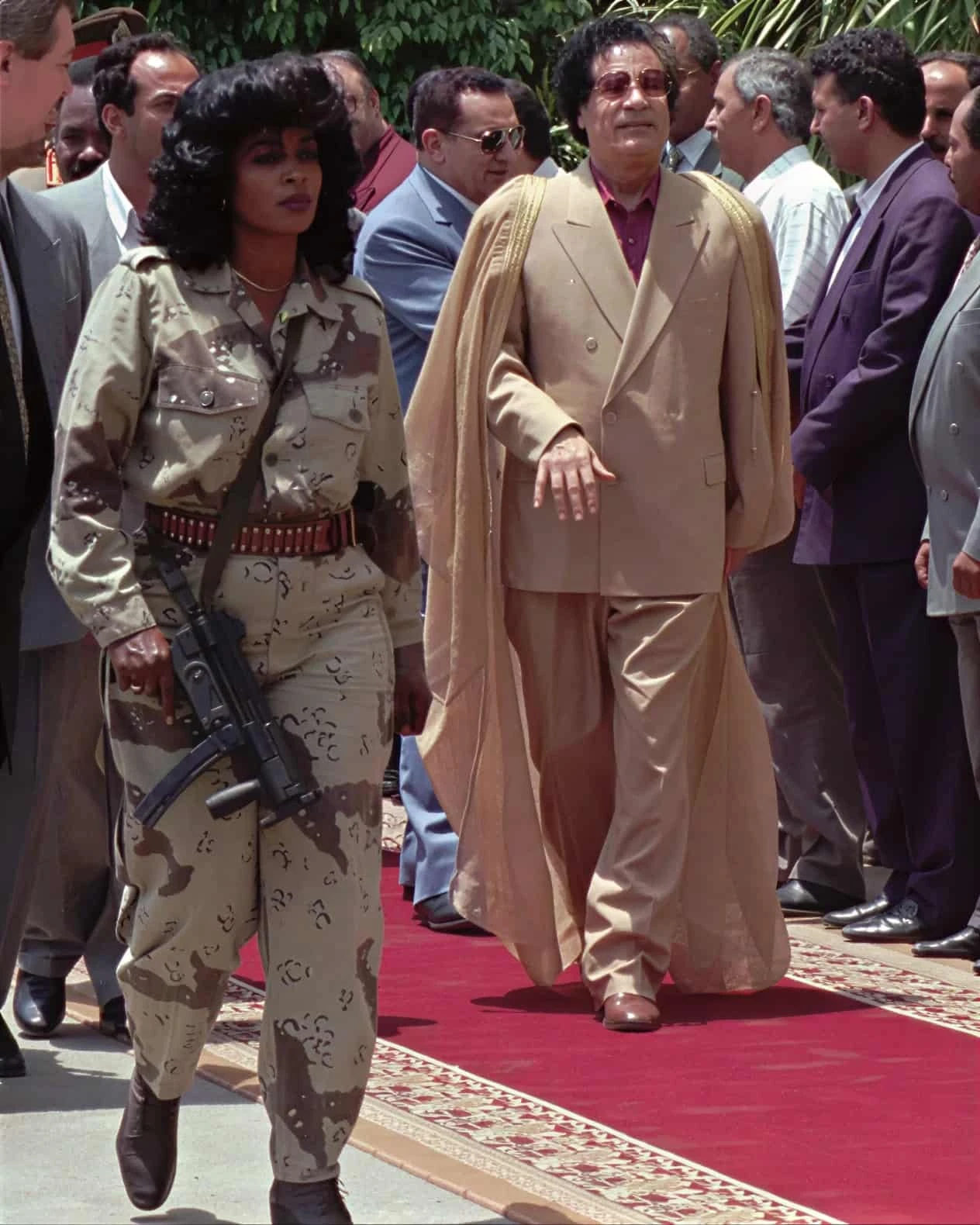
Muammar Gaddafi accompanied by a member of his elite female personal security detail during a visit to Cairo in 1994.
Gaddafi typically traveled with about 15 women who were responsible for his security and, at times, domestic duties. Why did he choose women? American analyst Joseph Stanik noted that the dictator believed an Arab gunman would hesitate to open fire on a woman. 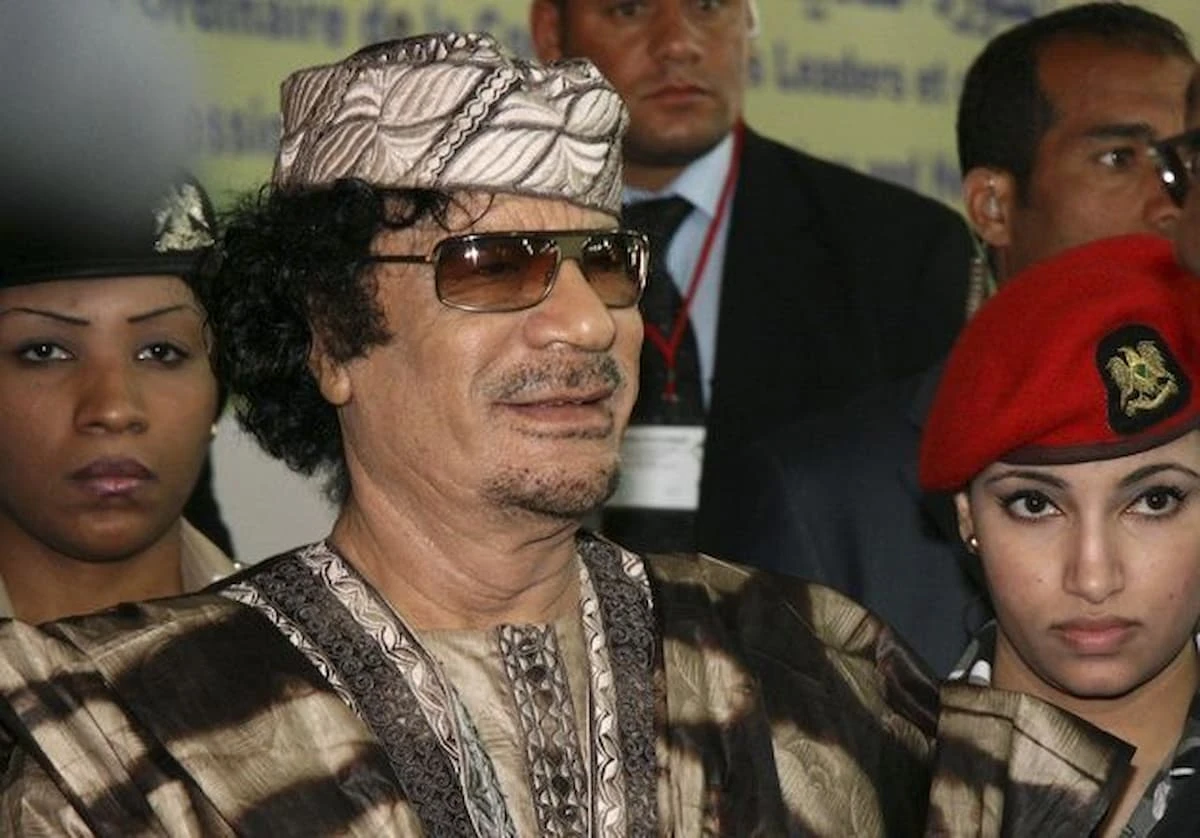
Saharan summit, May 2010. Gaddafi was rarely seen in public without his female bodyguards.
His inner circle offered a simpler explanation: the Colonel simply enjoyed the company of young women. Gaddafi himself framed the female unit as a step toward liberating Libyan women. Yet in his 1975 *Green Book*, he had written that employment should never compromise a woman's femininity or beauty.
High Heels, Lipstick, and Assault Rifles
Gaddafi's bodyguards stood out immediately. While most Libyan women wore headscarves in public, the female guards wore their hair down, wore makeup, and adorned themselves with jewelry. They accompanied the dictator in high heels.
Photos show them in blue or green military uniforms, wearing berets or garrison caps. According to former guards, the selection criteria were simple: tall stature, attractive appearance, and long hair. 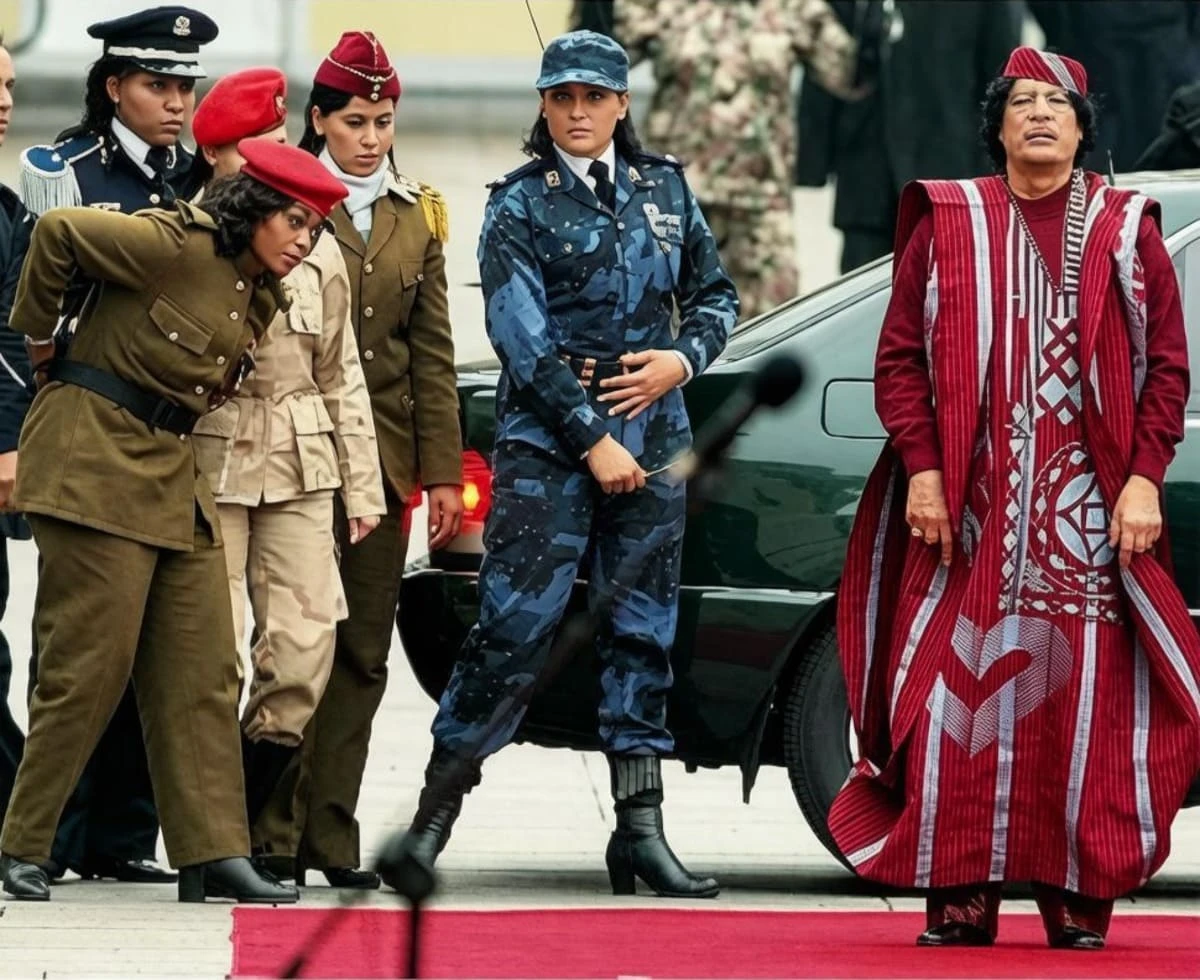
The guards accompanied Gaddafi both in Libya and abroad. High heels were part of the unit's unwritten dress code.
But their role was not purely ornamental. As *The Huffington Post* reported in 2011, the women underwent rigorous training, learning marksmanship and martial arts, with some reports citing instruction in karate and judo. According to analysts, Gaddafi justified this by claiming that women needed combat training to avoid becoming easy targets for enemies. 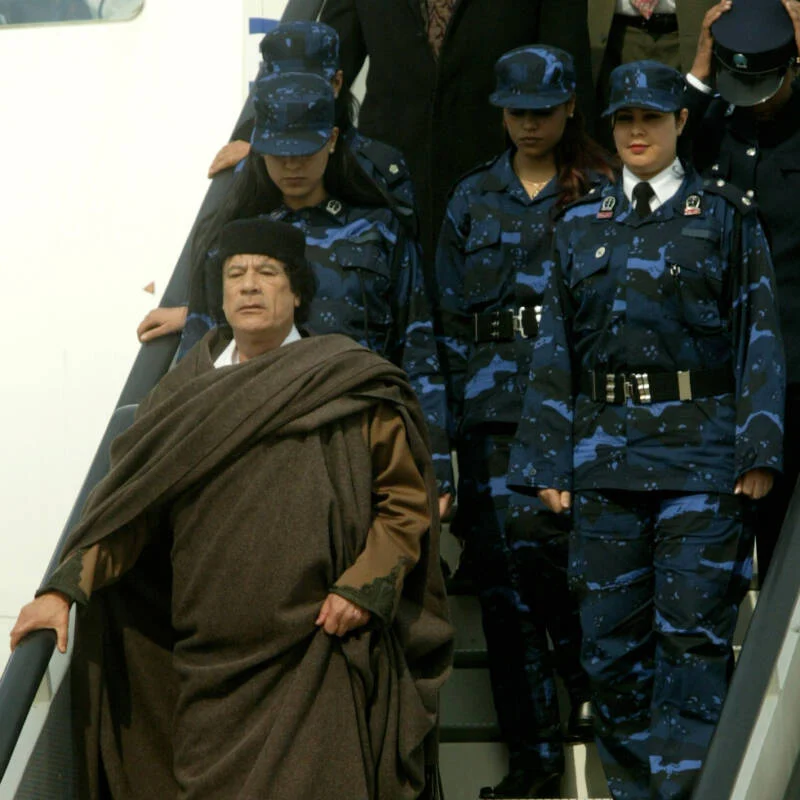
Muammar Gaddafi disembarks an aircraft with his personal female security detail during a visit to Brussels in April 2004.
Rumors persisted that the guards took a vow of chastity and were required to be virgins. However, with very few firsthand accounts available, these claims remain impossible to verify independently.
1998: Gunfire Near Derna
Gaddafi lived in constant fear of assassination. Following the 1986 U.S. bombings of Libya, Russian newspaper *Kommersant* reported that he never spent two consecutive nights in the same location. His security detail was on high alert round the clock.
In 1998, Islamist militants ambushed Gaddafi's motorcade near the eastern city of Derna. According to British press reports, a female bodyguard named Aisha was killed. Reports on the number of injured varied, ranging from two to seven. 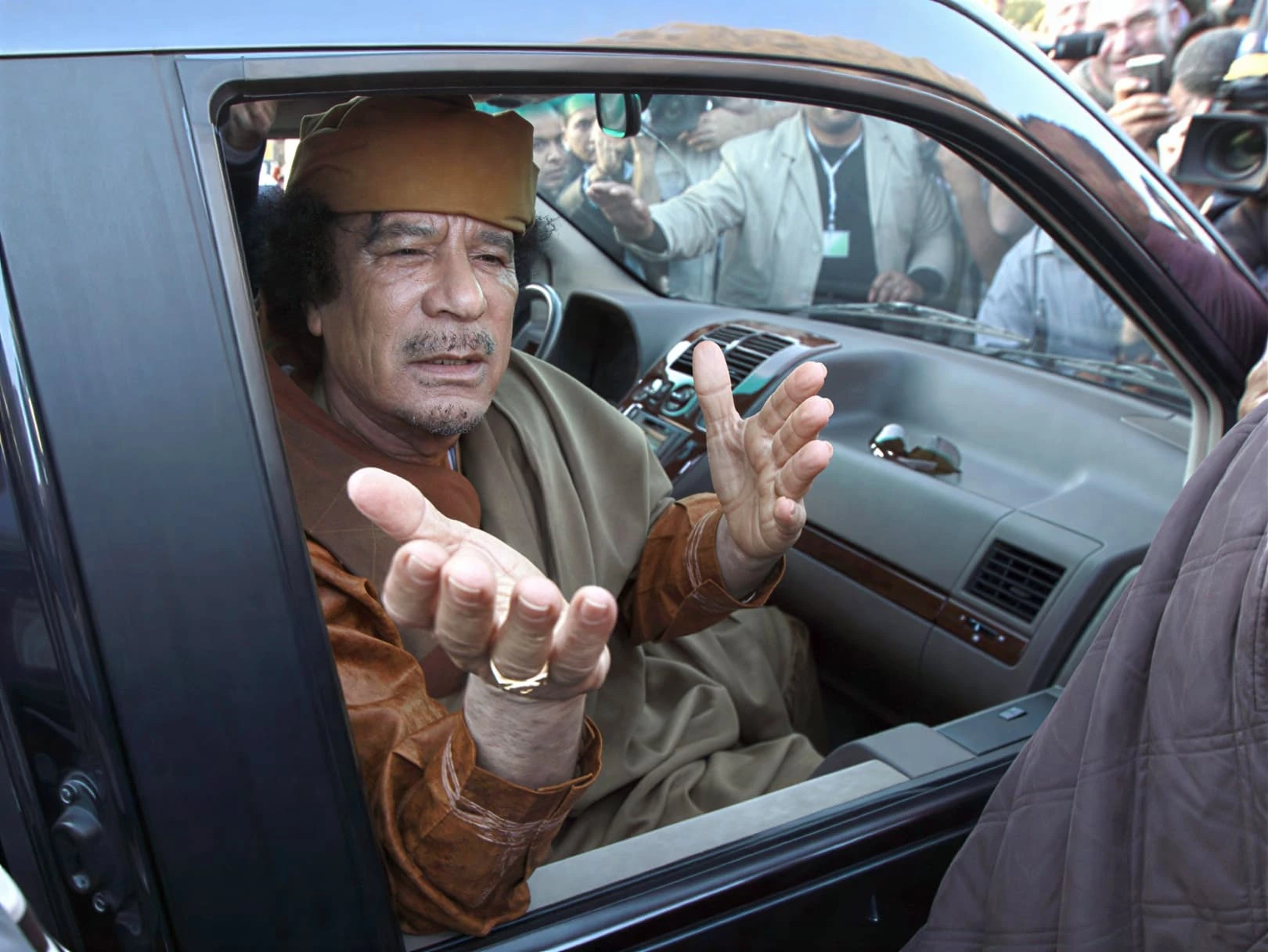
The 1998 attack was reported by British media, though details were second-hand and casualty numbers conflicted.
A Libyan source told reporters that Gaddafi took Aisha's death hard. Later stories claimed she had shielded him with her body, though this detail was never independently confirmed.
Regardless of the exact details, the incident cemented the legend of the "Amazons." It was recounted for years, serving for many as the definitive explanation for why the dictator kept an all-female security force.
Inside the Bab al-Azizia Barracks
The women were housed in barracks inside Bab al-Azizia, Gaddafi's heavily fortified compound in Tripoli. Their duties extended beyond standing guard—they were expected to listen and remember everything.
Former guard Nisrine Abdul Hadi told *The Guardian* about her instructions: report anything unusual directly to the Gaddafi family and keep silent. They were strictly forbidden from discussing their service with anyone. 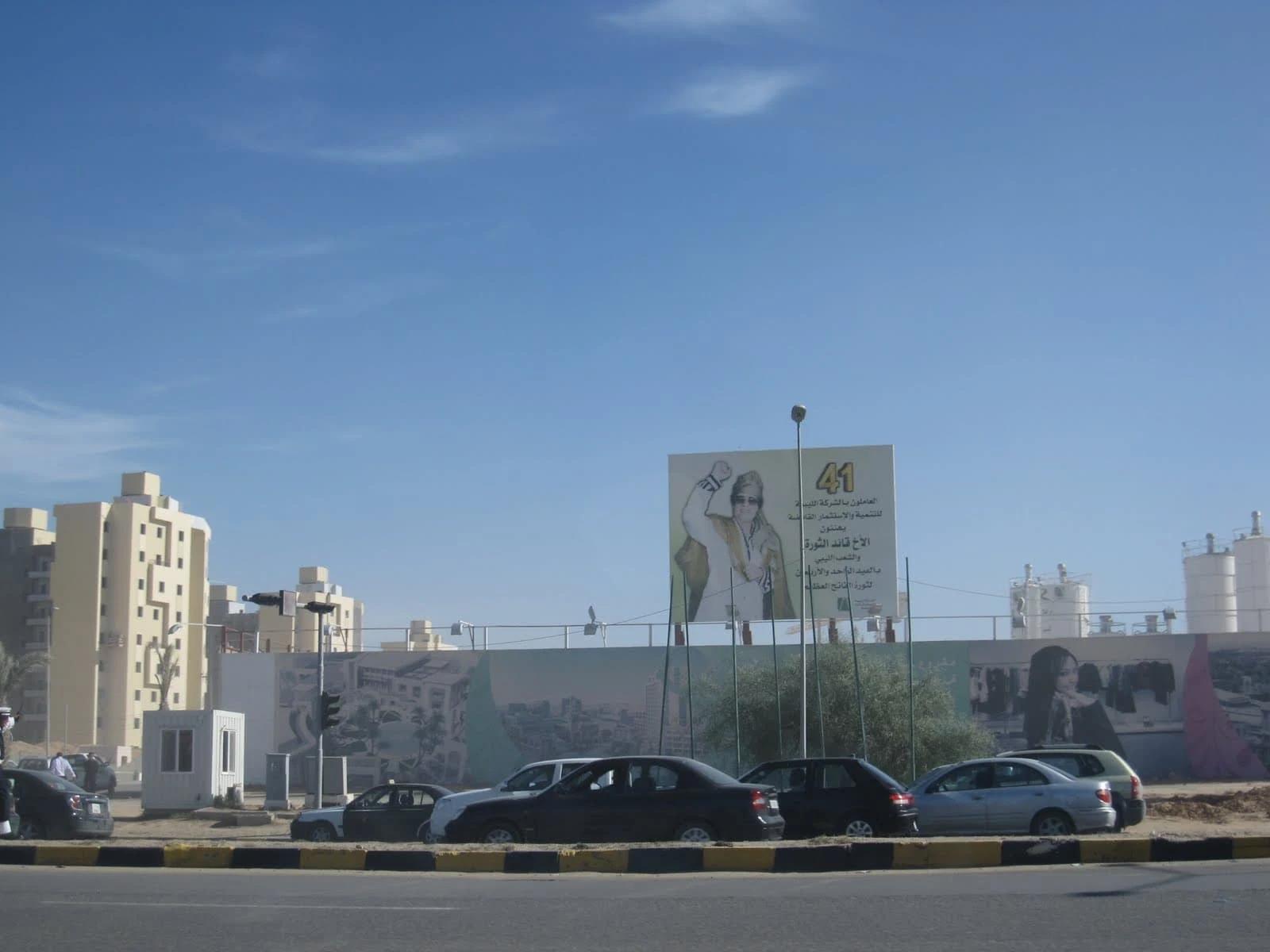
The Bab al-Azizia compound in Tripoli served as Gaddafi's main residence. According to media reports, the guards lived nearby.
"Maybe he trusted us more. Or maybe he just liked girls," Nisrine Abdul Hadi remarked.
Not all the women resented their service. Aisha Abd el-Salam Ali (not to be confused with the bodyguard killed in 1998) joined the army in 1984 and rose to the rank of lieutenant colonel. In 2011, she told *The Express Tribune* that she had commanded Gaddafi's security detail. 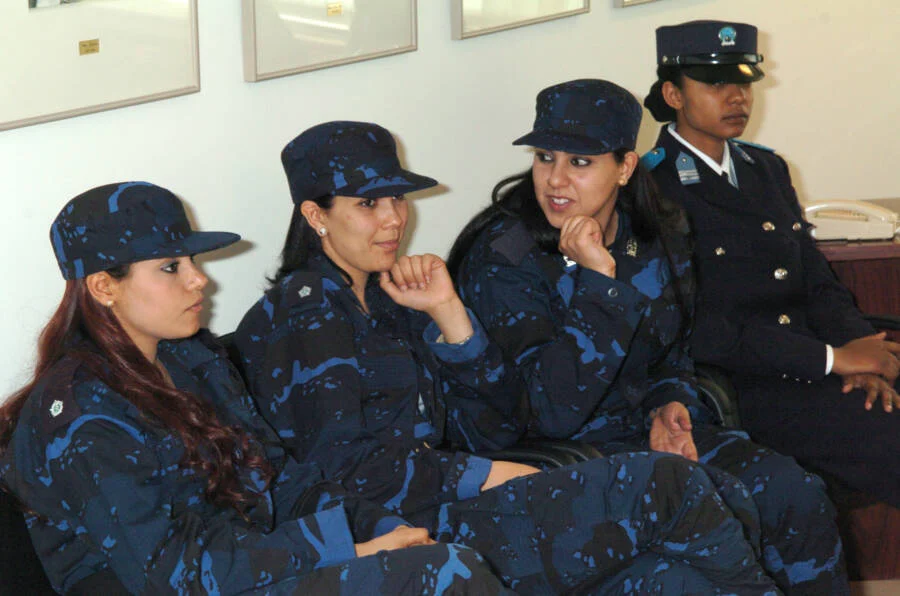
According to former guards, Gaddafi's unit recruited tall, attractive women with long hair.
She claimed the dictator chose female bodyguards to demonstrate that Libyan women enjoyed equal rights with men. Other former guards remembered it differently, noting that the "elite girls" were subject to a different set of rules.
In March 2011, as the uprising gathered momentum, the Italian newspaper *Corriere della Sera* noted that the "Amazons" were conspicuously absent from Gaddafi's public appearances. Libyan media reported that the women were confined to their barracks at Bab al-Azizia, while only a single female guard was spotted alongside the dictator at the Rixos Hotel in Tripoli.
2011: The Women Speak Out
In 2011, an uprising swept across Libya. On October 20, Gaddafi was killed in his hometown of Sirte, bringing an end to his 42-year rule. In the aftermath, the world heard directly from the women for the first time.
Five former bodyguards told Seham Sergewa, a psychologist from Benghazi gathering evidence for the International Criminal Court, that they had been sexually assaulted. They accused Gaddafi, his sons, and senior officers of abuse. One woman revealed she had been coerced into joining the unit after authorities fabricated drug smuggling charges against her brother. 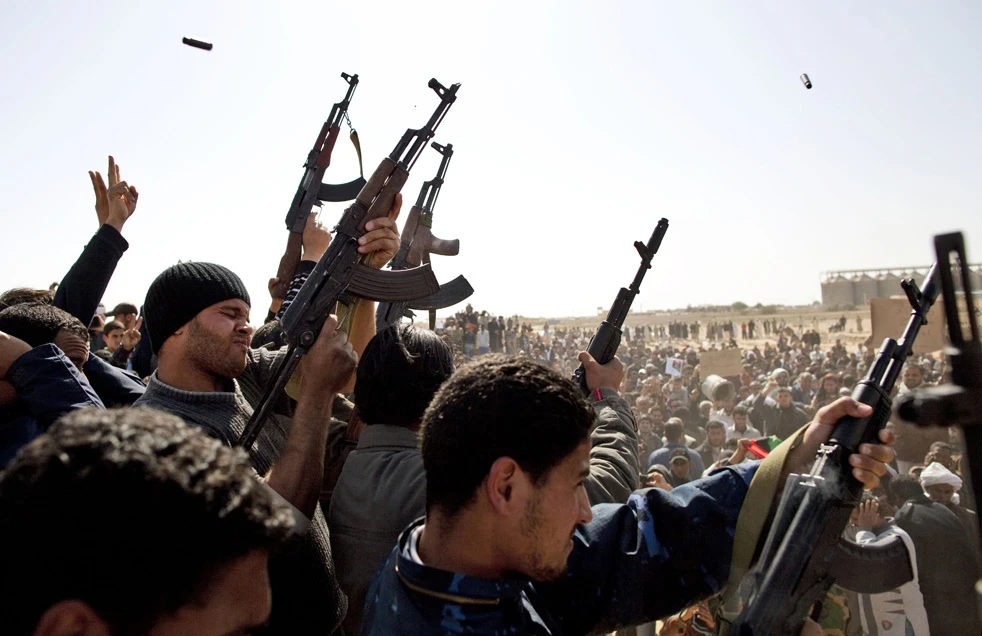
The 2011 uprising ended the regime, bringing a close to Gaddafi's 42 years in power.
Another woman told CNN she had been forcibly taken from her mother. Her family tried to secure her release, but her brother was turned away. She stated that the guards were forced to execute rebels and that sexual violence was rampant within her unit.
In June 2011, the regime held a graduation ceremony in Tripoli, staged as a women's firearms training course. *The Guardian* reported around 500 participants ranging from young girls to elderly women, but journalists noted sparse crowds and obvious staging. Government spokesman Moussa Ibrahim insisted the women were being trained to defend their homes rather than serve on the front lines. The event had no connection to Gaddafi's personal security force. After the fall of the regime, many former guards chose to stay silent about their service.
Others denied ever serving as bodyguards at all. One woman told *Der Spiegel* she had worked merely as a typist, while another said she was simply paid to stand at the residence gates holding a Kalashnikov. 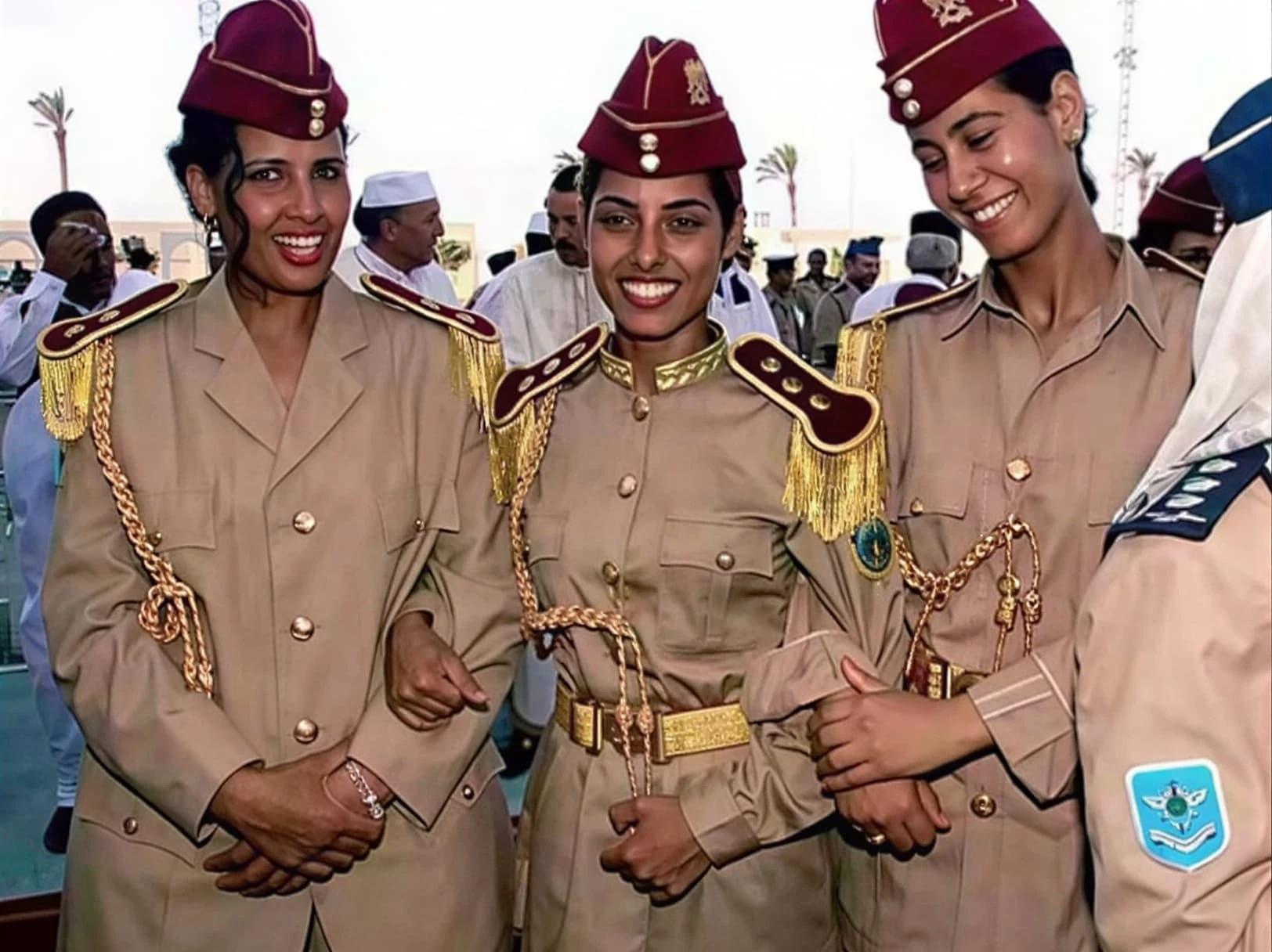
Behind the polished smiles for the cameras lay vastly different fates: while some women joined voluntarily, others were forced under pressure.
Some served willingly and took pride in their role, while others were forced into the unit against their will. How many belonged to each group remains unknown, leaving our picture of the "Amazons" incomplete—and likely to remain so. One thing is certain: behind the glamorous photos with high heels and assault rifles lay starkly contrasting lives.
What do you think prompted the dictator to rely on female bodyguards: calculated strategy, vanity, or a desire to project a "modern Libya" to the world?