How Much Gold Is on Earth? (4 Photos)
The question in the headline seems simple enough, doesn't it? But the deeper you dig—quite literally, straight down to the planet's core—the more mind-boggling the numbers become. Brace yourself: the gold humanity has used to measure wealth for thousands of years is virtually nothing compared to what lies hidden right beneath our feet. 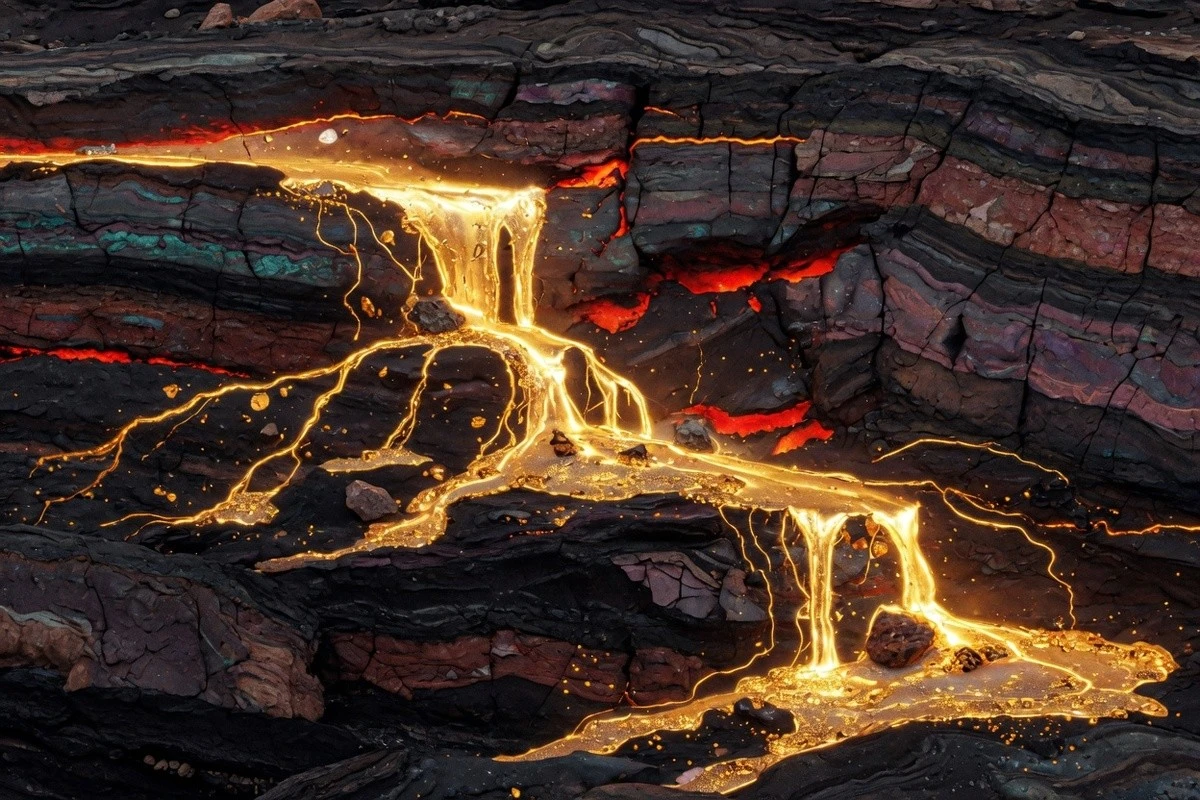
How Much Gold Has Been Mined in Human History?
Throughout thousands of years of recorded history—from ancient Egyptian mines to modern deep-level shafts in South Africa and Australia—geologists estimate that humans have extracted roughly 200,000 metric tons of gold.
Impressive, right? Now let’s try to picture what that actually looks like. If you took every bit of gold ever mined—every wedding ring, every bullion bar sitting in Fort Knox or the Shanghai Gold Exchange, all the treasure of the Pharaohs and Incas, and everything conquistadors looted and shipped across the ocean to Europe—and melted it down into a single solid cube, it would measure just over 21 meters (about 69 feet) on each side.
That’s smaller than a football field. It would fit comfortably under the Eiffel Tower. Think about that for a moment: all the gold in human history—every bit of insatiable greed and every bloody war fought over it—would fit inside a single, modest building.
Yet that is only the tip of the iceberg. But first, let’s take a step back.
Where Did Earth’s Gold Come From in the First Place?
Gold atoms are forged only in the most extreme environments in the cosmos: a fraction comes from core-collapse supernovae, while the lion's share is spawned in collisions between neutron stars. These violent cosmic events hurl massive debris clouds rich in heavy elements, including gold and platinum, out into space.
Over time, these elemental clouds merge with other gas and dust, eventually coalescing into new planetary systems. Our solar system was no exception—gold was mixed into the cosmic building blocks that formed all celestial bodies, including Earth. 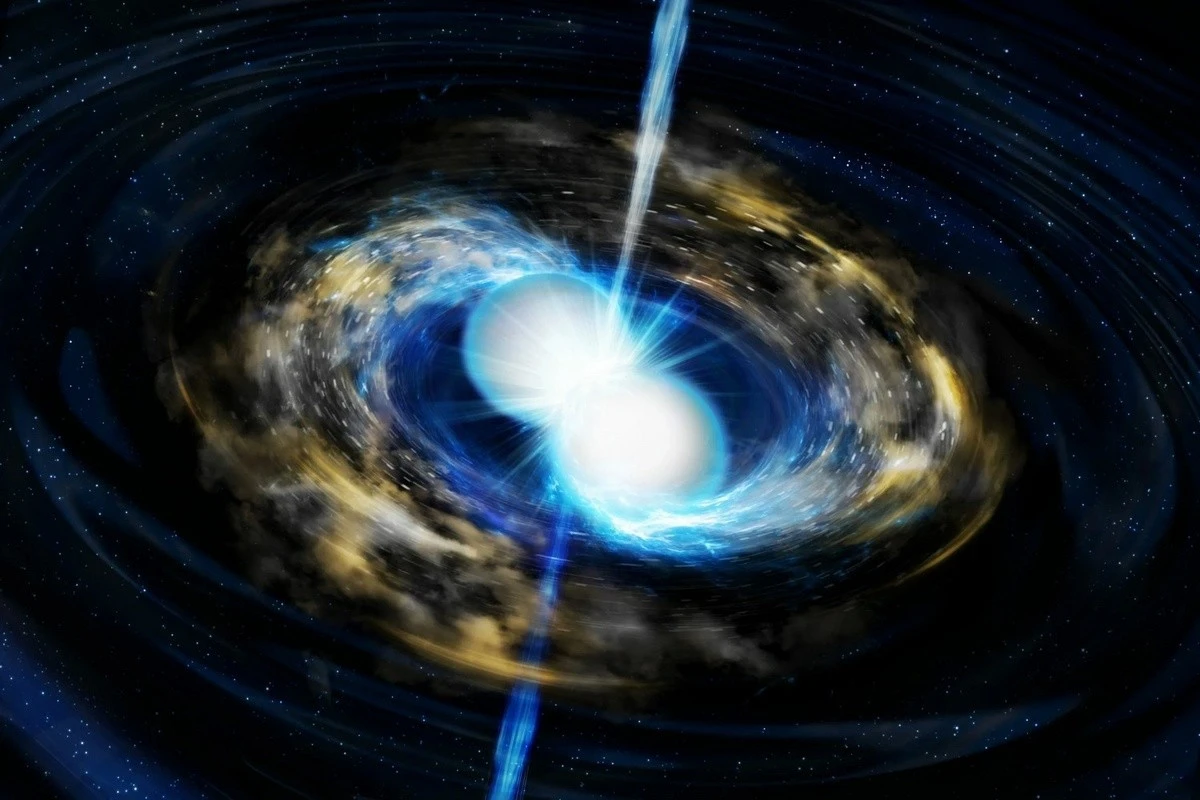
An artist's impression of colliding neutron stars
Here’s the catch, though: in its infancy, our planet was a glowing sphere of molten rock and metal. Gold is a siderophile, or "iron-loving," element. Because of this chemical affinity, virtually all the gold present during Earth's formation sank alongside molten iron straight into the core.
That means all the gold humanity has ever extracted—or will ever mine—from the Earth’s crust isn't leftover primordial gold at all. It was delivered much later, after the core had formed and the planet cooled, during the Late Heavy Bombardment, when a barrage of metal-rich asteroids pelted the young Earth.
Which raises a natural question: how much gold is actually locked away in Earth’s core?
The Golden Core
According to geochemical estimates, Earth’s core holds up to 2.5 quadrillion metric tons of gold. That amount is so staggeringly vast that if you could magically extract it and spread it evenly across the planet’s entire surface—land and oceans alike—it would cover the globe in a layer of solid gold roughly half a meter (about 1.6 feet) deep.
"Where do these numbers even come from? The Kola Superdeep Borehole is as far as we've ever drilled, and nobody has come close to the core!" a skeptical reader might protest.
The explanation is straightforward: estimates of the core's composition rely on indirect scientific methods. Geophysicists synthesize data from seismic waves, gravitational measurements, high-pressure laboratory experiments simulating core conditions, computer modeling, and the analysis of meteorites—the leftover primordial building blocks of our solar system. In short, these figures represent decades of interdisciplinary scientific research. 
An important reminder
That means the 200,000 tons mined in all of human history is little more than a speck of dust dusted onto the surface, while the planet's true stash remains locked away in a fiery metallic heart nearly 3,000 kilometers (1,800 miles) beneath our feet. For context, South Africa's Mponeng mine—the deepest on Earth—reaches down just 4.3 kilometers (2.7 miles). Operating at even that depth pushes human technology and engineering to its absolute limits.
Gold in the World’s Oceans
There is another intriguing twist to the story: gold is also dissolved in seawater across the global ocean. Scientists estimate there are roughly 15,000 to 20,000 metric tons of it—equal to nearly ten percent of all the gold ever mined!
In the 1920s, Nobel Prize-winning chemist Fritz Haber—famous for developing the process to synthesize ammonia—launched a serious project to extract gold from seawater. Haber secured state funding because the German government hoped to pay off its staggering World War I reparations using gold harvested from the sea. 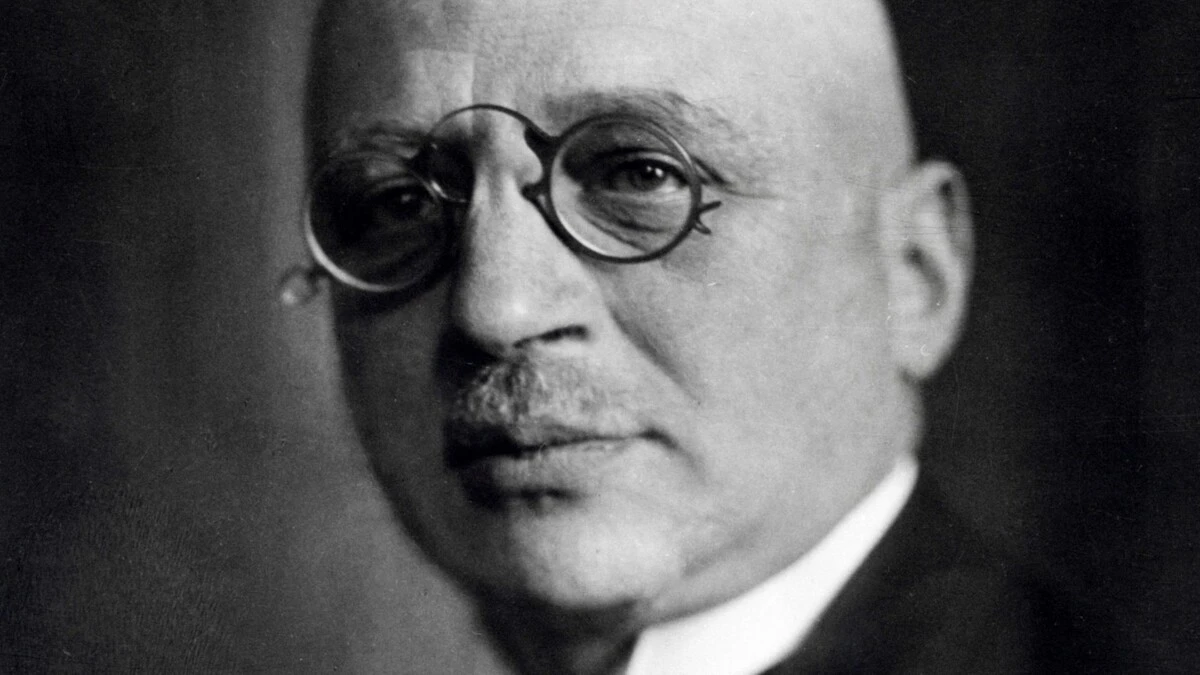
Fritz Haber
Haber spent years aboard ships sampling seawater around the globe, only to end up with a complete failure. The actual concentration of gold turned out to be thousands of times lower than initial, flawed measurements suggested—just fractions of a gram per million metric tons of water. Simply put, filtering gold from seawater was economically impossible.
The project was eventually scrapped, and Haber considered the venture a devastating personal failure for the rest of his life.
How Much Gold Is Left to Mine?
According to the U.S. Geological Survey, known subterranean gold reserves in Earth's crust stand at approximately 57,000 metric tons. At current mining rates—about 3,000 tons per year—those reserves would last roughly 19 to 20 years, though exploration will undoubtedly uncover new deposits in the future.
Read More:
How Scientists Determined the Age of Earth
Breaking Down Science: Earth's Gravity Anomalies
Study: Supernovae Triggered Two Mass Extinctions on Earth