For centuries, people protected their bodies with armor. Particular attention was paid to the head. Medieval helmets were bulky and heavy, but they could protect against the blows of very dangerous weapons. But with the advent of firearms, and especially artillery, armor and helmets began to lose their importance. By the mid-19th century, almost all armies in the world had abandoned armor. But during World War I, this decision proved reckless. So, some things had to be reinvented. 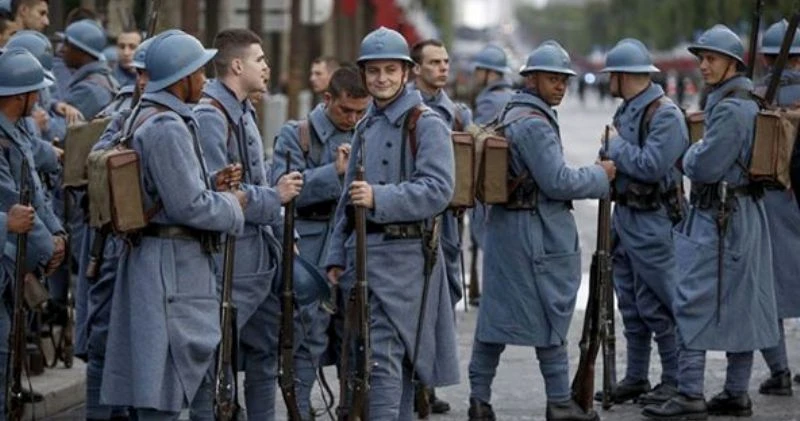
The Life-Saving Bowl
World War I saw the use of the most advanced weapons and ammunition. Shrapnel and fragmentation shells inflicted heavy losses on combatants. The French army was completely unprepared for this turn of events. Soldiers of the Republic wore caps that couldn't even protect against a punch. 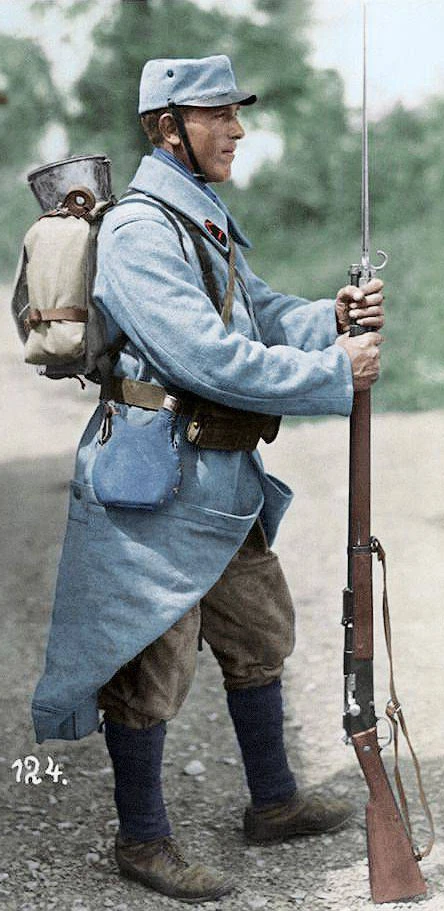
French soldier in a kepi. 1914
Trenches and dugouts didn't always protect against powerful ammunition, and the most vulnerable part of the body, as usual, was the head. Everyone tried to protect themselves as best they could, and this didn't go unnoticed. French Quartermaster General Louis Adrien, visiting a hospital, spoke with a wounded soldier and learned something important.
He survived a shell fragment to the head, but it wasn't just luck. The soldier admitted that it wasn't fortune that saved him from death, but the soup bowl he'd placed on his head under his cap. The general was amazed at the soldier's resourcefulness and wondered. What if all the French soldiers covered their heads with soup bowls? How much would that help reduce casualties?
General Adrian's Helmet
General Louis Adrian personally addressed this issue, and soon, French soldiers on the front lines were using helmet liners. They were worn under caps and were quite effective. But this measure was temporary, and soon the full-fledged metal protective helmet, familiar to many from films, appeared. It had two visors, one protecting the face and the other the neck. 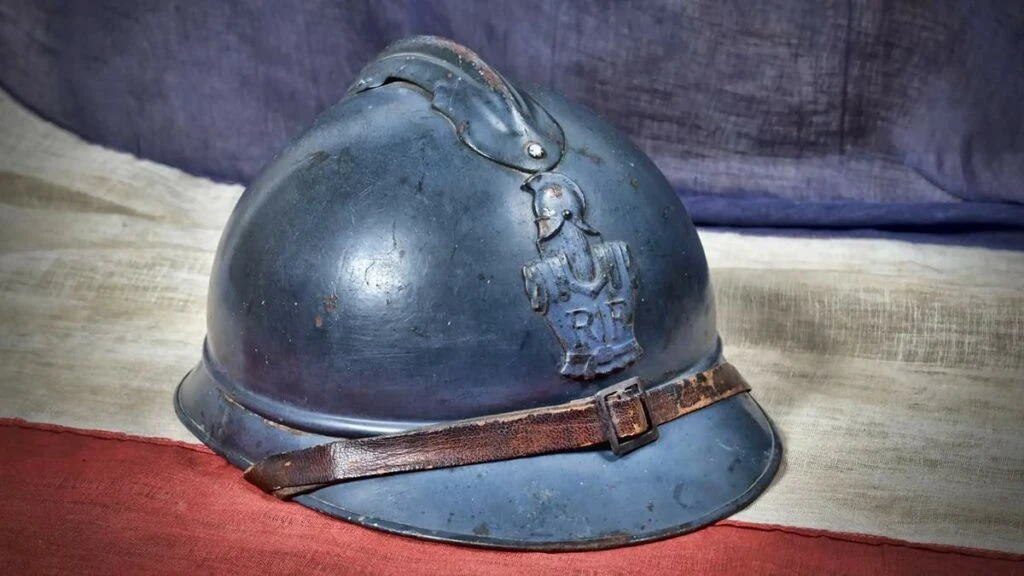
"Hadrian's Helmet"
In the center of the helmet was a ridge, which served several functions. Firstly, the protrusion served as a stiffening rib, making the helmet more resistant to impacts. Secondly, this element concealed ventilation holes. Thirdly, the helmet with its ridge was reminiscent of French helmets from the Napoleonic Wars. This factor was significant in raising the soldiers' morale.
Weighing 700 grams, "Hadrian's Helmet" quickly proved its effectiveness. It couldn't protect against a direct bullet hit, as no modern helmet can. But the number of casualties and serious injuries from shrapnel was significantly reduced. The helmet was quite inexpensive for the War Department. Mass production began in 1915. It is believed that around 20 million helmets were produced by the end of the war. 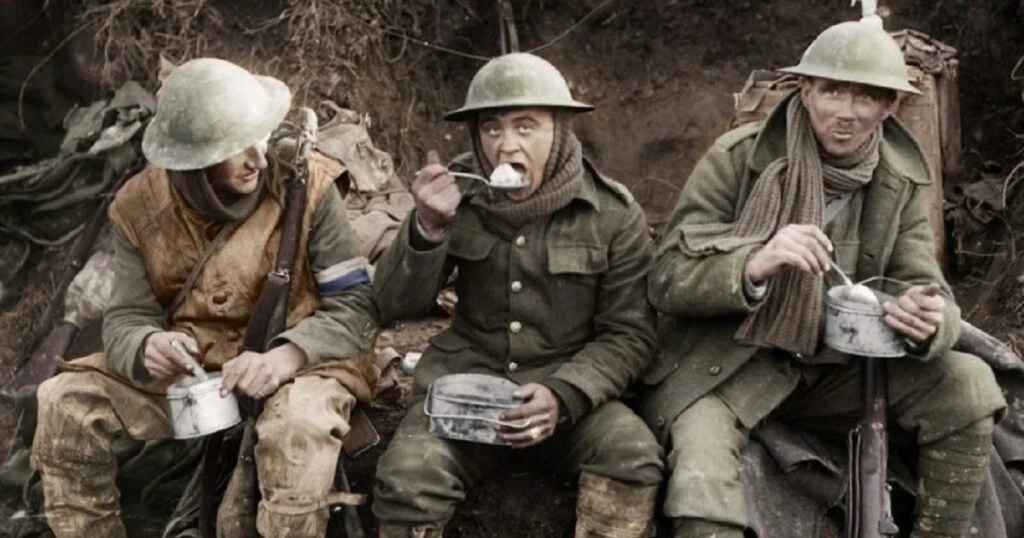
The British in flat Brodie helmets
Soon, following the example of the French, the Allies began to introduce helmets as well. The British developed the Brodie helmet. The Germans were not far behind, quickly beginning mass production of the famous "Stahlhelm." Thus, the history of combat helmets and helmets was resumed at the beginning of the 20th century and continues to this day. Modern tactical helmets bear no resemblance to the "Adrian helmet," but these two pieces of protective equipment share a common ancestor: the soup bowl.
Add your comment
You might be interested in:













Protective film Removing it with a power screwdriver

When a child plays hide-and-seek at a professional level

Super dads who swoop in to save the day

Precision carpentry

Looks like it's time to buy WinRAR

How to hang wallpaper neatly

How to start a 102-liter engine

Man sets up bedroom camera and discovers the reason for his

Athlete in Bavarian dress flies over a lake on a hydrofoil
