9 Most Interesting Castles in Scotland (19 photos)
Today, there are 3,000 castles in Scotland. They are not as ornate as their German counterparts, but are no less significant culturally and historically. 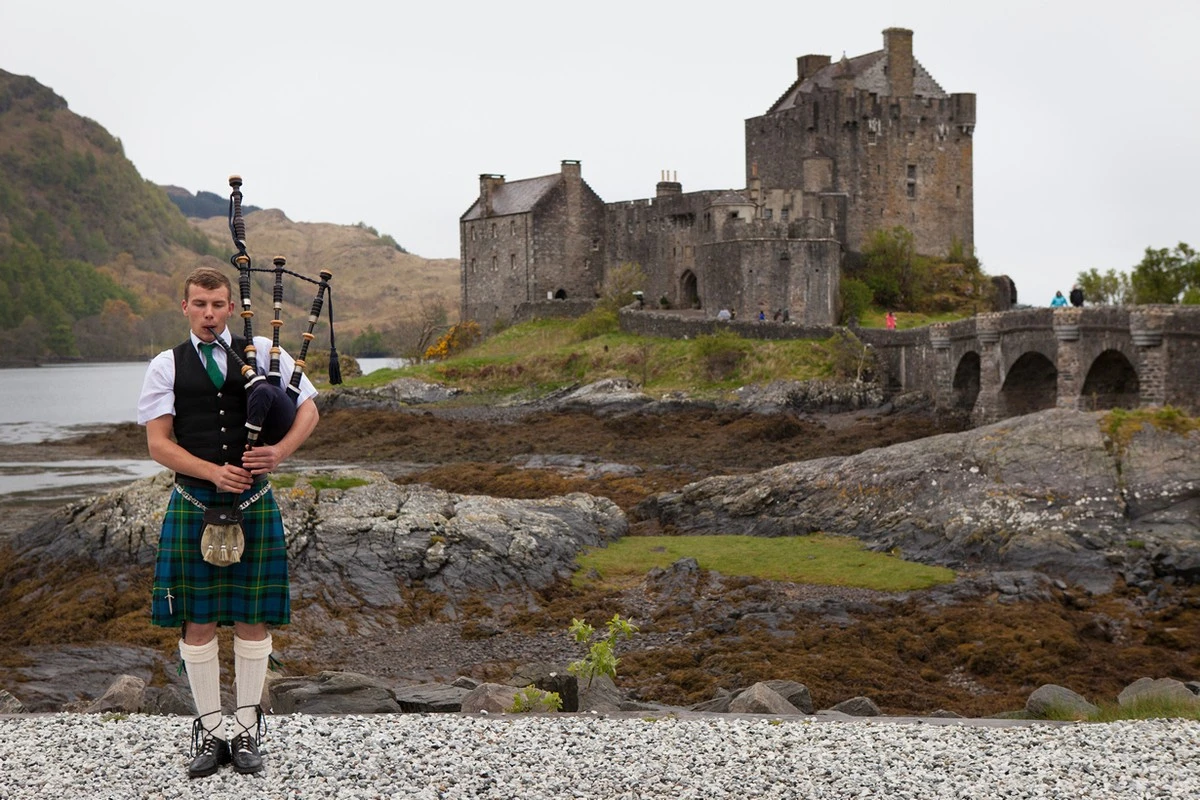
The grim Scottish castles with their impenetrable ramparts served primarily to defend their owners. It's also worth noting that most medieval structures have lost their former might and are now ruins. Traveling the country, you constantly come across one castle or another that brings to mind chapters from romance novels about knights.
9th place. Urquhart Castle, Loch Ness.
The castle ruins date back to the 13th-16th centuries, although this castle was built on the site of an early medieval fortification. Founded in the 13th century, Urquhart Castle played a major role in the Wars of Scottish Independence in the 14th century. The castle subsequently became a royal castle and was captured several times by the Earls of Ross from Clan MacDonald. 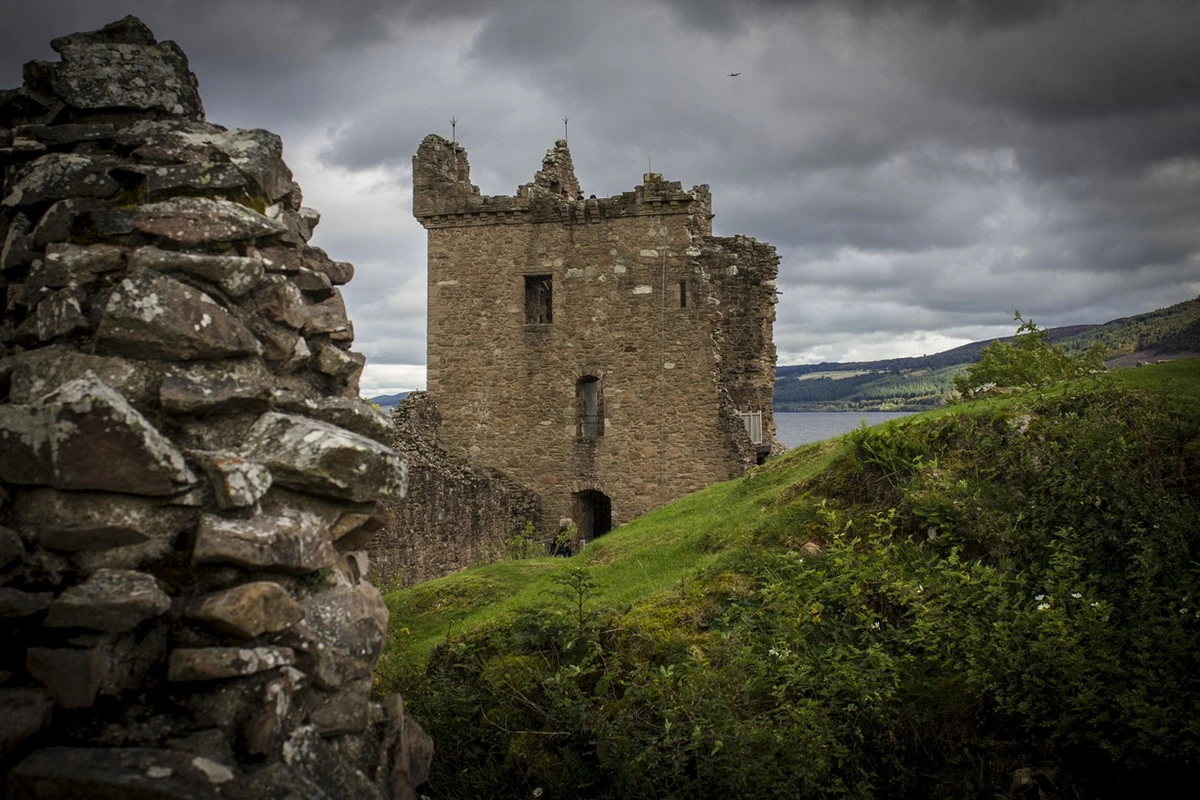
In 1509, the castle was granted to Clan Grant, although Clan MacDonald continued to claim ownership. Despite subsequent raids, the castle was fortified and fell into disrepair only in the mid-17th century. In 1692, during a Jacobite siege, it was partially blown up and subsequently destroyed. In the 20th century, the castle was transferred to state care and opened to the public: Urquhart is one of the most visited castles in Scotland. 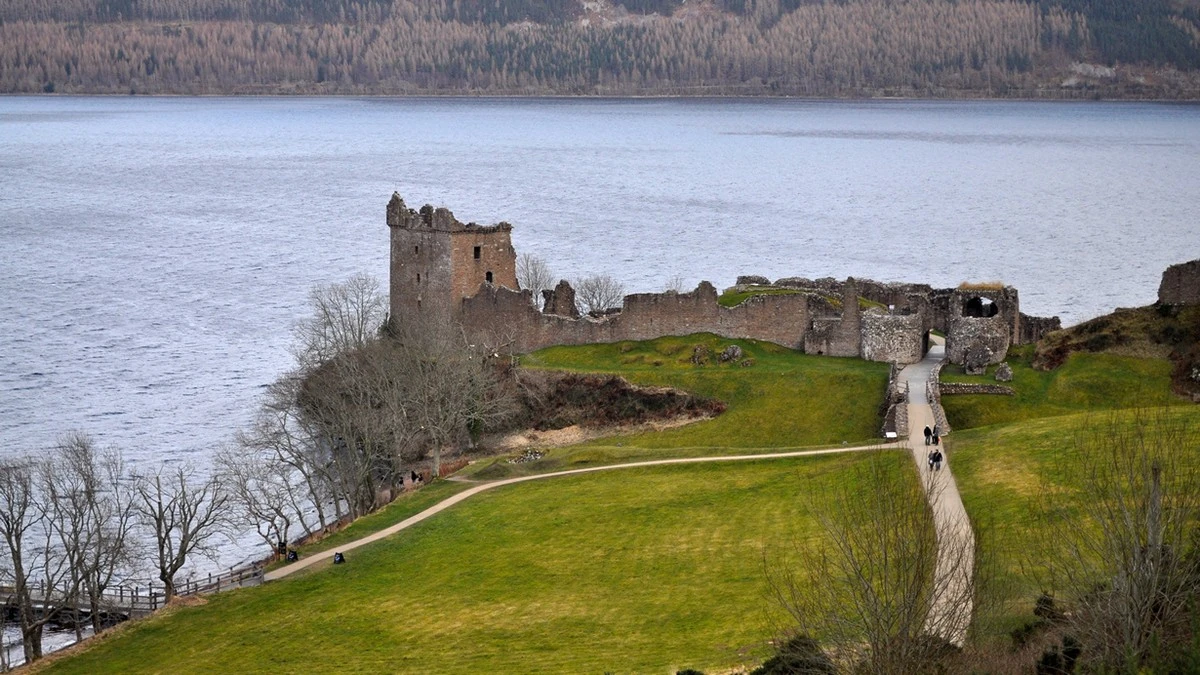
The castle, located on a promontory overlooking Loch Ness, is one of the largest in Scotland. The entrance to the castle, located on the western side, was protected by a moat and a drawbridge. In addition, on the shore side, the castle was surrounded by a double stone wall. In the North Wall, or Lower Bight, many buildings remain virtually intact, including the gatehouse and the five-story Grant's Tower in the northern part of the castle. In the area of the South Ward, or Upper Bailey, located on a hill, only the ruins of earlier buildings remain.
More than half of the travelers who visit Urquhart Castle are drawn by the world-famous legend of a mythical creature inhabiting the waters of Loch Ness.
8th place. Slains Castle, Aberdeenshire.
Slains Castle is located on the shores of the North Sea. From its construction in the late 16th century until 1913, it served as the residence of the Earls of Erroll. 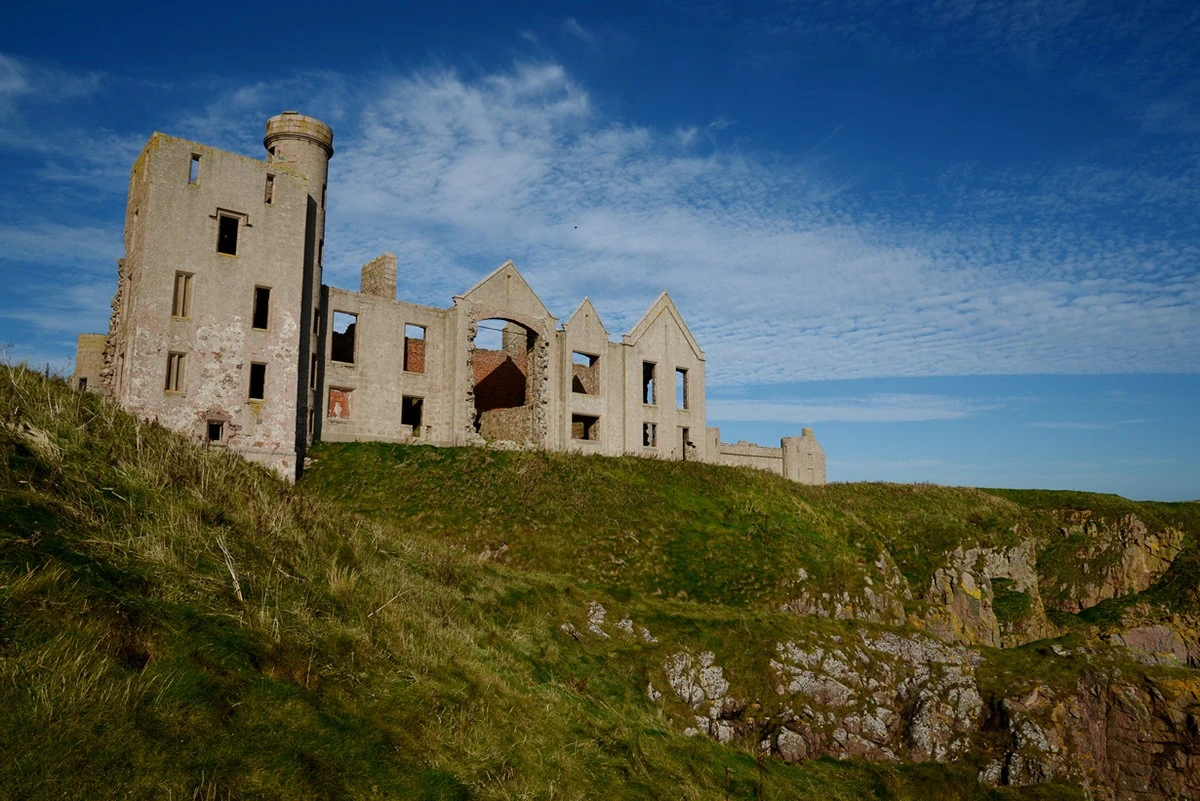
In the Middle Ages, the Earls of Erroll settled in the "old castle" of Slains, which stood near the current site. The haughty 9th Earl came into conflict with King James VI, who in 1594 ordered the ancient structure destroyed by cannon fire. The earls subsequently rebuilt the current residence near the ruins of the old castle.
The marriage of the 18th Earl of Erroll to Elizabeth Fitzclarence, William IV's illegitimate daughter from his affair with Dorothy Jordan, required him to restore the dilapidated family residence to its proper appearance. In 1837, Aberdeen architect John Smith rebuilt Slains in accordance with the romantic notions of ancient Scottish castles of the time. 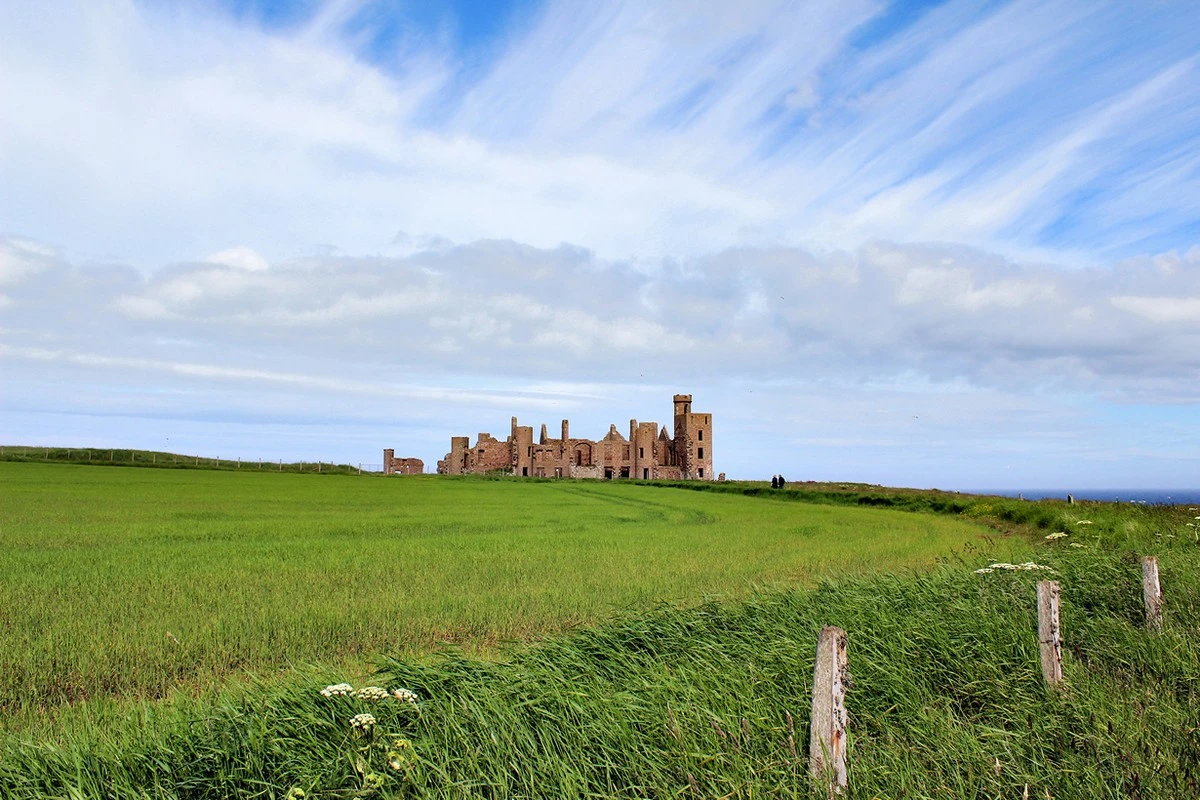
Many famous people visited the Earls of Erroll, including Samuel Johnson and his friend Boswell (1773) and the Irish writer Bram Stoker (1895), who was working on his Gothic novel Dracula at the time.
In 1913, the bankrupt 20th Earl of Erroll sold the castle to the owner of the transport company Ellerman Lines, who, to avoid paying property taxes, had the roof removed. Since then, the structure has fallen into ruin. None of the restoration projects (the last of which was approved by the government in 2007) have yet been completed.
7th place. Dunnottar Castle, Stonehaven.
Dunnottar Castle stands on a high rocky crag overlooking the North Sea coast, south of the Scottish city of Aberdeen. Dunnottar Castle is remembered in Scottish history as an impregnable fortress, which repeatedly repelled enemy attacks. No one could enter the castle undetected, as the surrounding slopes and coastline were clearly visible from the castle walls. The only way up was along a winding path through a gate cut into the rock. 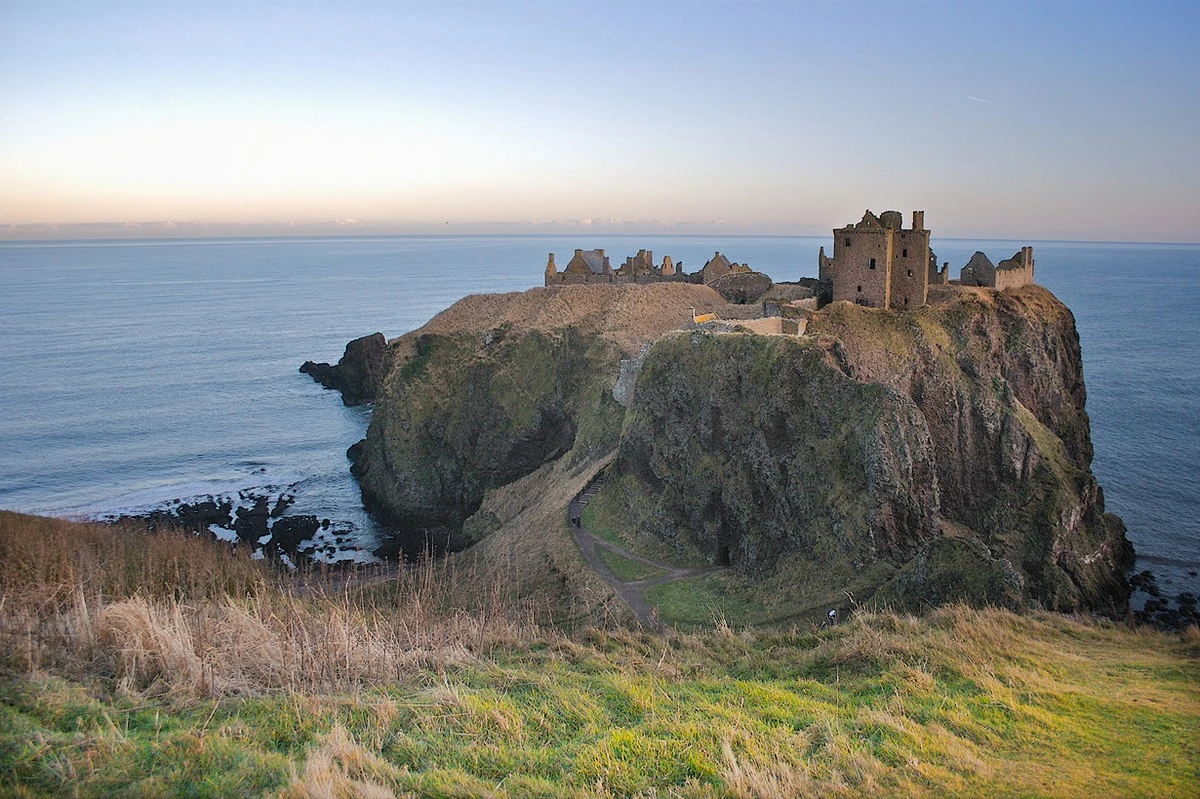
It is believed that the castle's name comes from the ancient Pictish language. The Picts had a word, "dun," meaning "fortress" or "fortification." It's worth noting that the stone walls and picturesque coastal landscapes have been featured in numerous feature films. 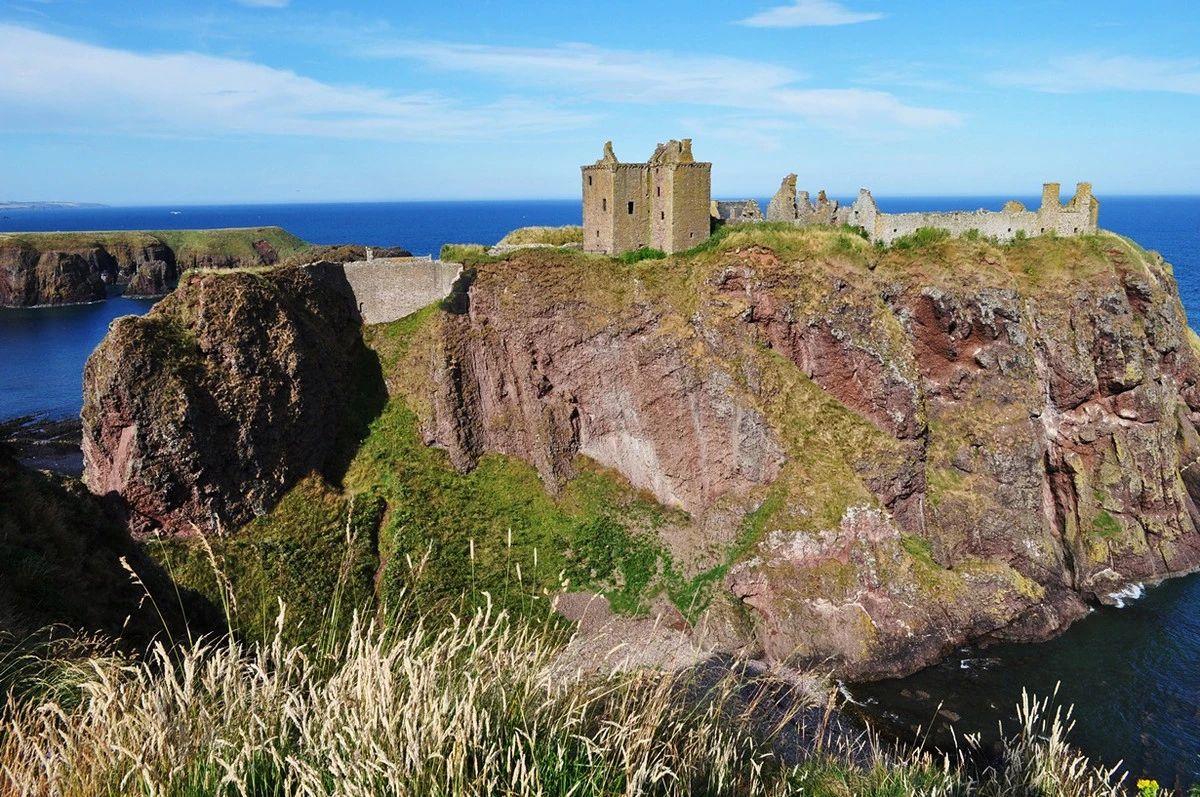
Dunnottar played a prominent role in Scottish history until the Jacobite rebellion of the 18th century due to its strategic location and defensive strength. Dunnottar is best known as the site where the Honours of Scotland, the Scottish Crown Jewels, were hidden from Oliver Cromwell's invading army in the 17th century. A Keith property since the 14th century and the seat of the Earl Marischal, Dunnottar fell into disrepair after the last earl forfeited his titles while participating in the Jacobite rebellion of 1715.
Today, Dunnottar Castle lies in a dilapidated state and is owned by the Cowdray family. It is open to visitors, very popular with tourists, and considered one of the most visited attractions in Scotland.
6th Place. Craiths Castle
This small and cozy castle is surrounded by a beautiful botanical garden. Built in the sixteenth century, it was the Barnett family estate until the middle of the last century. According to local legend, one of the castle's rooms is haunted by a ghost, which is why it attracts so many tourists. 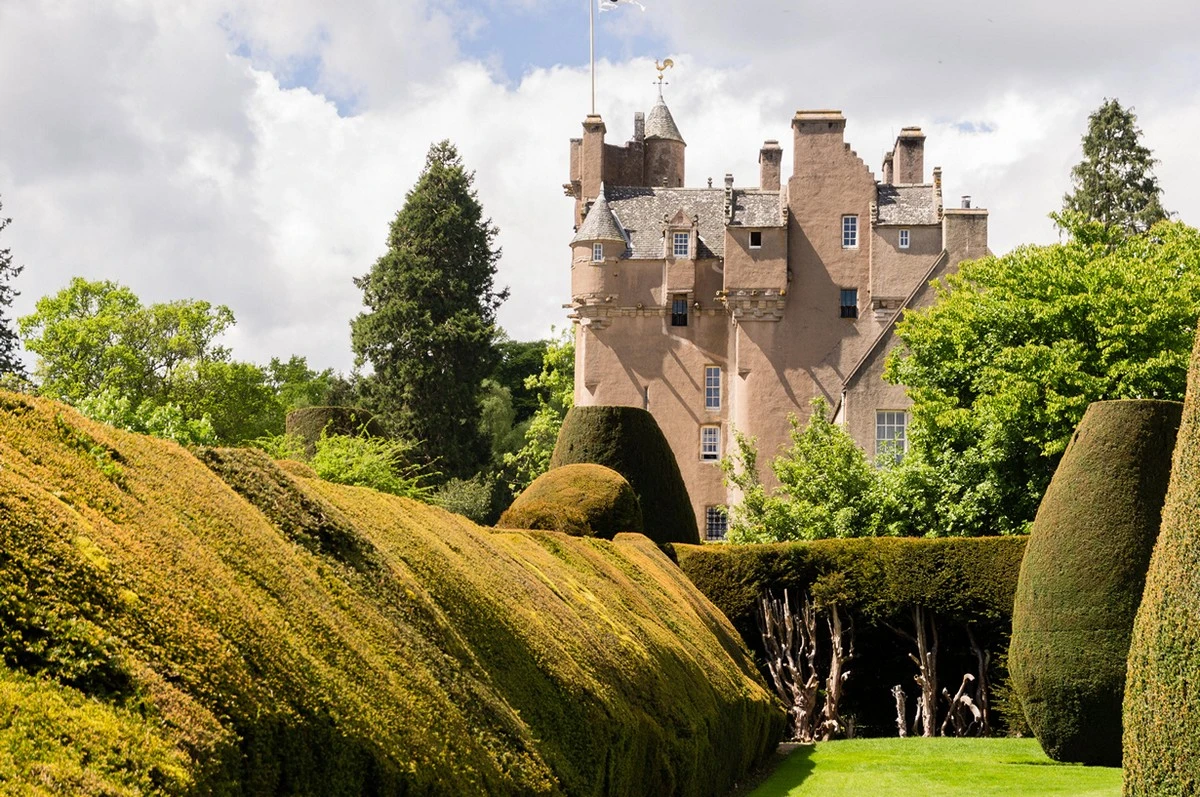
The land on which the castle stands was granted to the Barnett family by King Robert the Bruce in 1323. The current castle was founded in 1553. Crates remained the Barnett family estate until 1951, when it was converted into a museum. 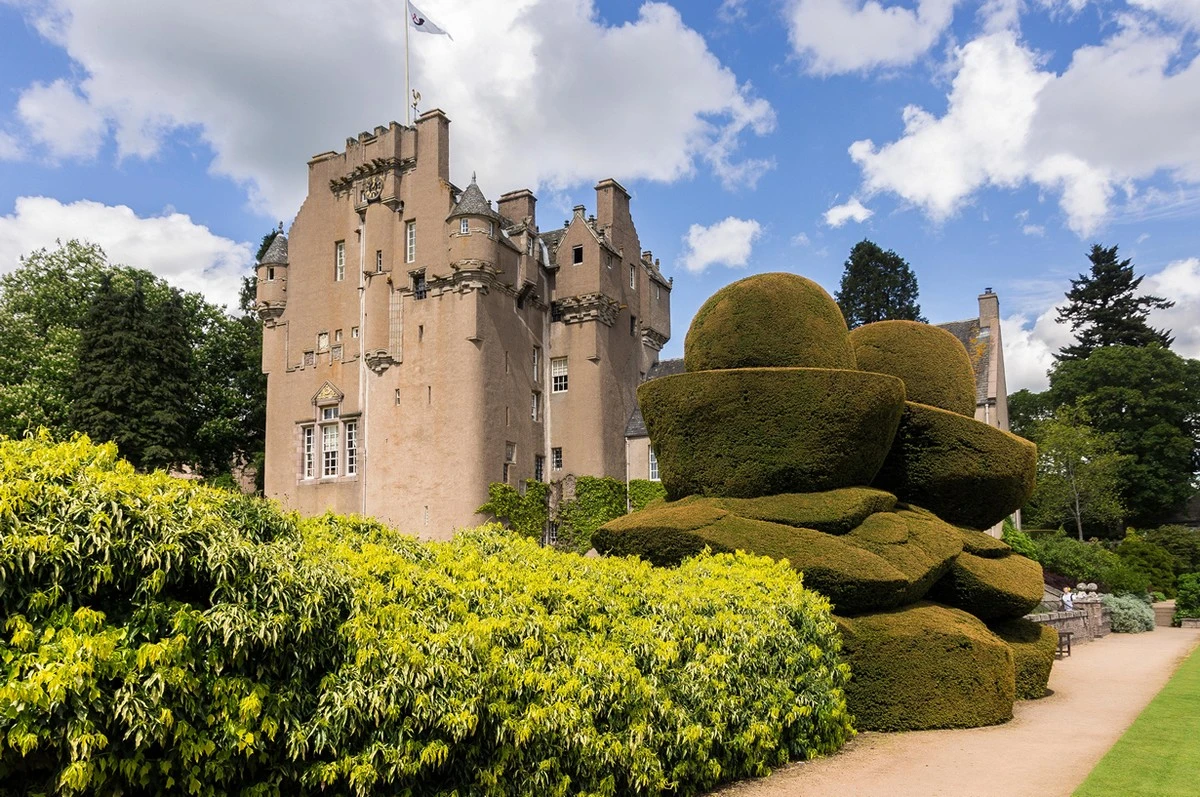
The Crates estate covers 530 acres, 4 acres of which are a botanical garden with gravel paths bordered by flower beds and well-trimmed shrubs and trees.
5th Place. Glams Castle, Angus
This Scottish castle is located near the village of Glams, in Angus, Scotland. It was formerly a royal hunting lodge. It is now the residence of the Bowes-Lyon family, the Earls of Strathmore and Kinghorne. 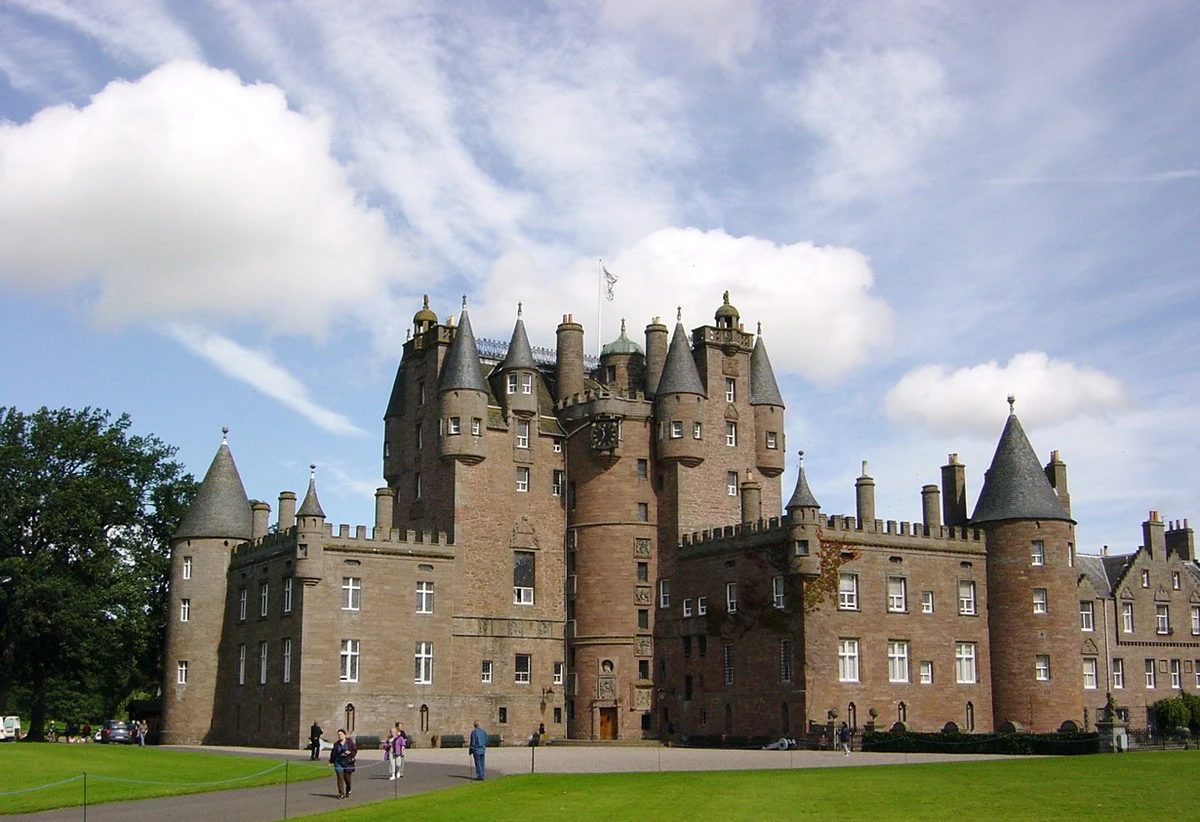
The castle was built in 1376. In the 15th century, the building was significantly rebuilt, with towers added, but the most significant changes occurred in the 17th and 18th centuries, when the castle ceased to be used as a defensive structure. 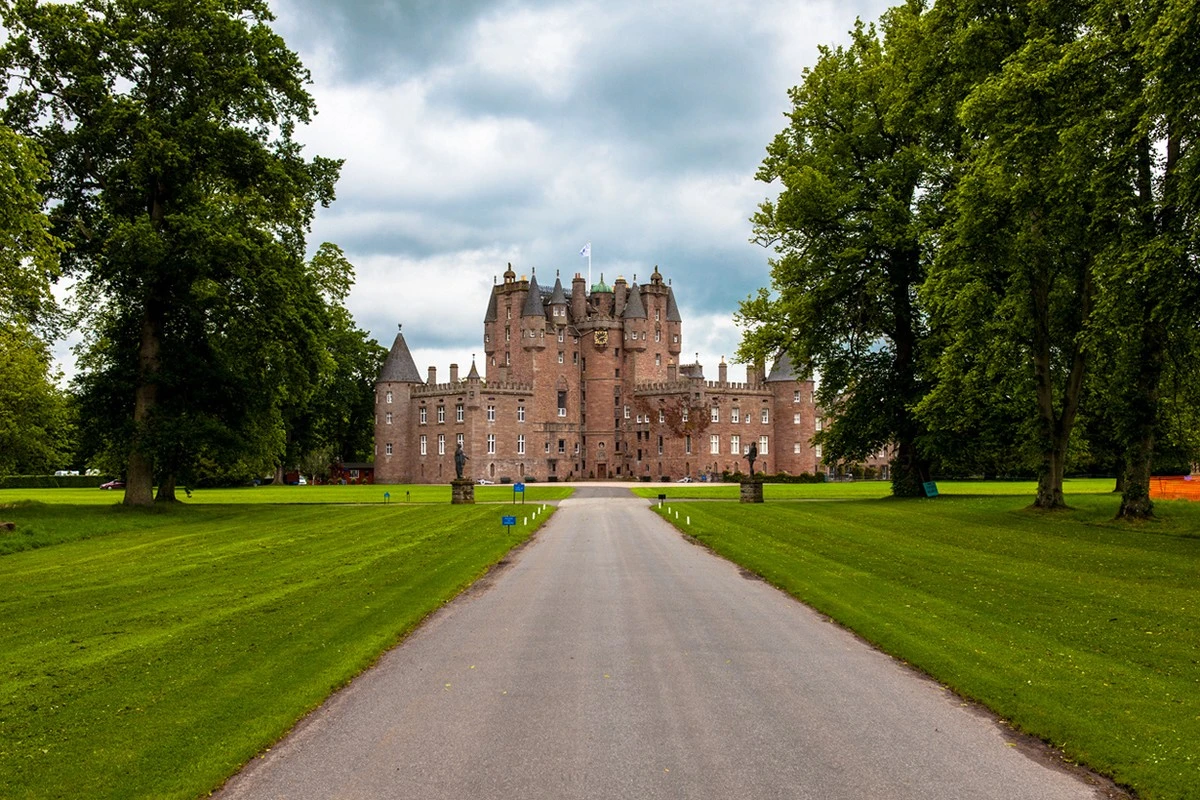
Glamis Castle was the childhood home of Queen Elizabeth II's mother, Elizabeth Bowes-Lyon; the Queen's younger sister, Princess Margaret, was also born here. The castle is now owned by the Queen's great-nephew, the Earl of Strathmore, and is partially open to the public. One wing of the castle houses a museum, while the other wing serves as the residence of the castle's owners.
4th place. Drum Castle, Aberdeenshire.
Drum Castle, located in Aberdeenshire, is considered the oldest inhabited castle in Scotland. Its tower, dating from the 13th century, is one of the three oldest Scottish towers that have survived to this day without any significant modifications. The remaining parts of the castle were built in the 17th century and later. 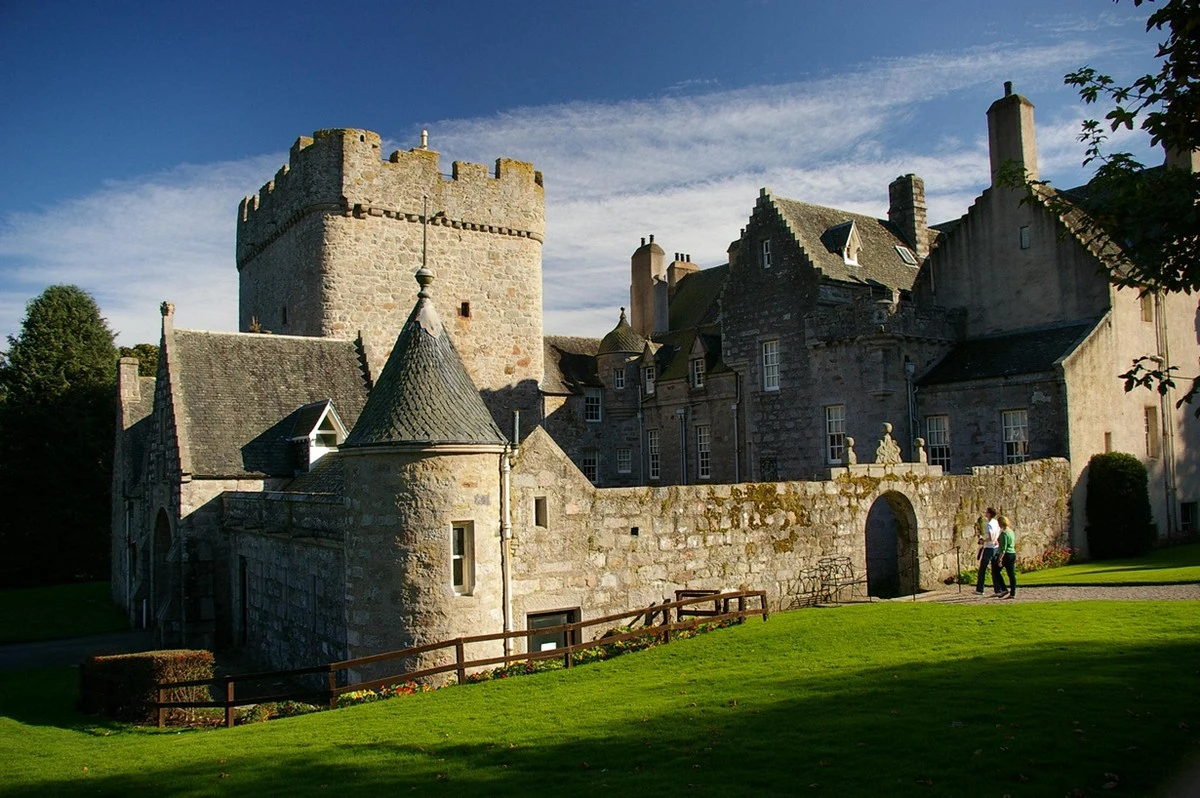
The history of this castle is inextricably linked with that of Clan Irvine, who were friendly with Clan Bruce. One of the Irvines, William, was a squire to Robert de Bruce, the Scottish king, who granted Drum and its surrounding territories to his loyal subject. 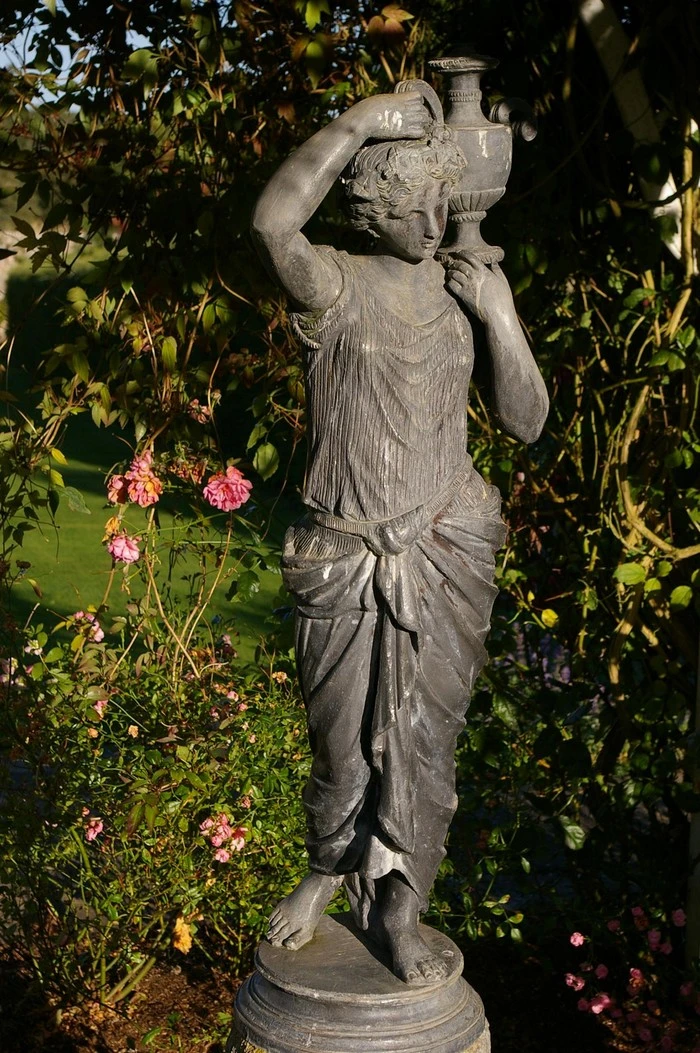
In 1975, the last and 24th Laird of Drum, Henry Quentin Forbes Irvine, died, and in his will, the castle was transferred to the care of the National Trust for Scotland, a trust dedicated to preserving historic monuments.
During the summer months, Drum is open to tourists. They can explore the castle's classical interiors and stroll through its lush gardens. The rose garden, home to a beautiful collection of roses planted throughout history, is particularly noteworthy.
3rd place. Eilean Donan Castle, Loch Duich.
Eilean Donan Castle is one of Scotland's most romantic castles. Situated on a rocky island in Loch Duich, it is famous for its heather honey and fascinating history. The castle's name comes from the hermit monk Donan, who lived on the island in the 7th century. 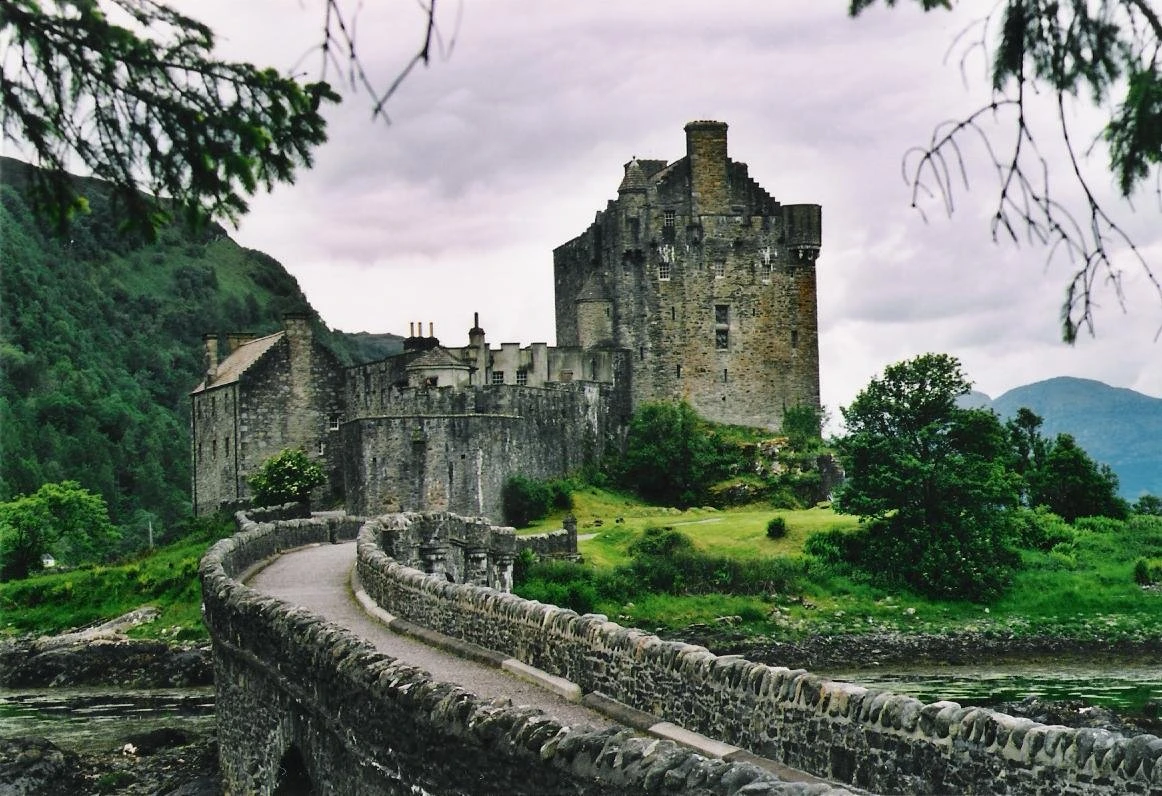
In the 13th century, during the reign of King Alexander II, the first fortress was built on the island. In 1263, Alexander III granted the castle to Colin Fitzgerald (whom the Mackenzie clan considers their ancestor) as a reward for his valor during the Battle of Largs. This battle saw the defeat of the Norwegian King Haakon IV, resulting in the annexation of the Hebrides and the Isle of Man to Scotland. From then on, Eilean Donan remained a key Mackenzie stronghold until 1719, when the castle was destroyed. 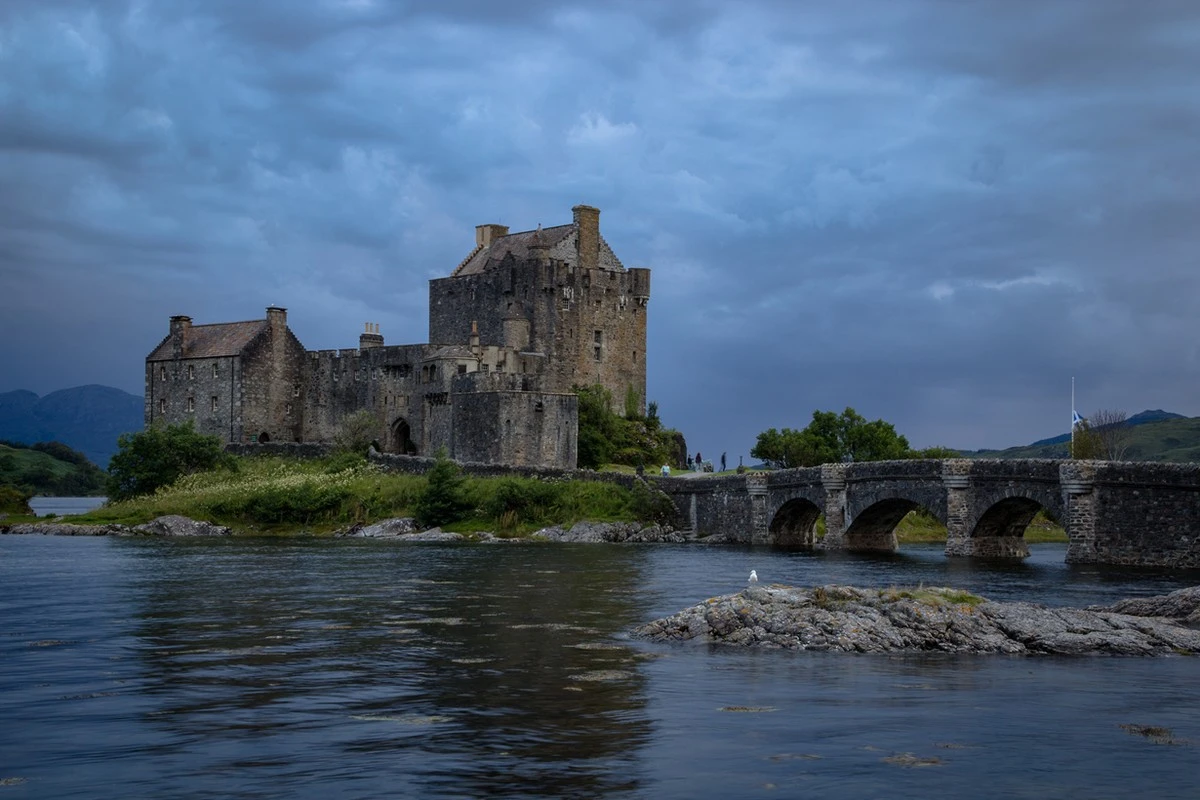
In 1911, John McCrea-Gilstrap purchased the castle and began a restoration project. The project was completed 20 years later. In 1983, the McCrea clan began a charity. To this day, the McCrea clan lives in six rooms reserved for them in the castle.
2nd place. Balmoral Castle, Aberdeenshire.
Balmoral Castle is located on the banks of the River Dee in Aberdeenshire. Built in 1852 by the architect William Smith, commissioned by Prince Albert, in the Scottish Gothic style, it is made of granite. Balmoral has been the Scottish private residence of the British royal family since it was purchased for Queen Victoria by Prince Albert in 1852. The castle is privately owned by the British Royal Family, meaning that no income from the property goes to the treasury. 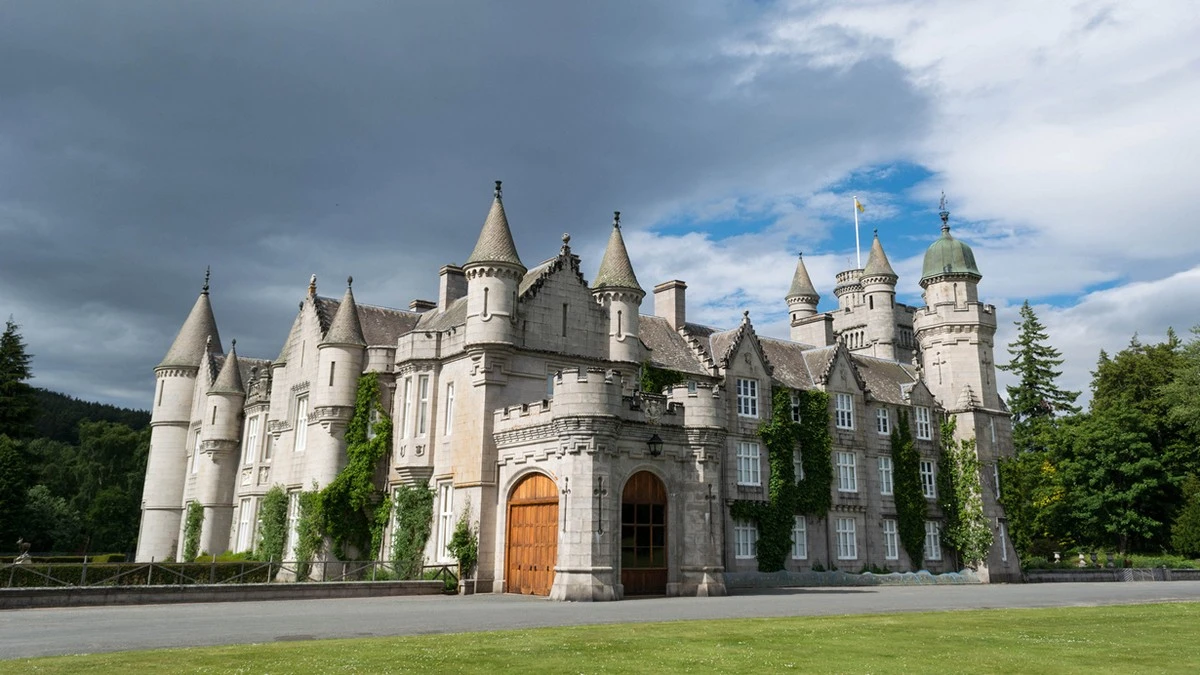
The British royal family began visiting Aberdeenshire regularly in 1852. They now spend approximately three months each year at Balmoral, arriving in August. Queen Elizabeth II died at the castle on September 8, 2022. 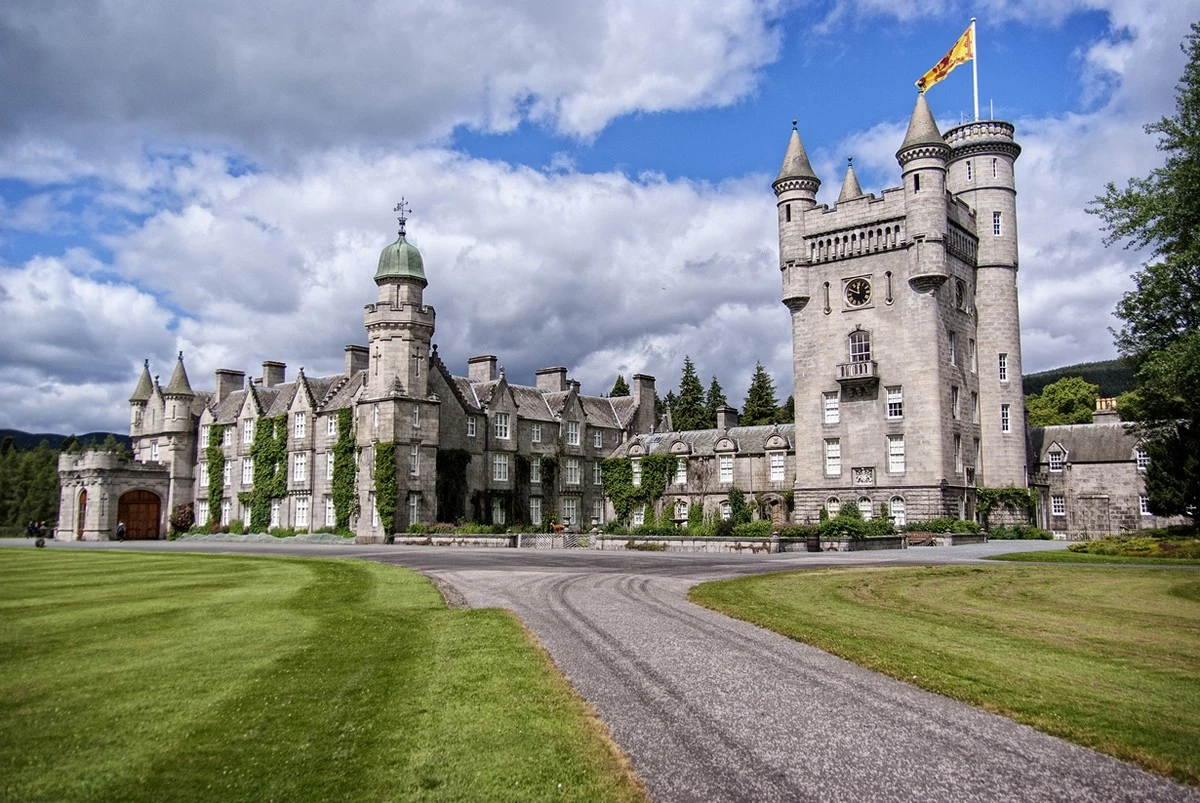
The Balmoral estate has been expanded by successive members of the royal family and currently covers approximately 50,000 acres (20,000 hectares). This working estate encompasses moorland, forestry, and farmland, as well as managed herds of deer, highland cattle, sheep, and ponies.
The gardens and ballroom are open to visitors from April to the end of July. The ballroom, for example, hosts exhibitions of paintings, royal clothing, silverware, and porcelain. Additionally, restaurants and a cafe are located within the castle walls. They serve English tea from Victorian-style porcelain cups.
1st Place. Edinburgh Castle, Edinburgh.
Edinburgh Castle is Scotland's most important fortress, located atop Castle Hill in the heart of the capital, Old Edinburgh. It dominates the surrounding area, rising organically from an 80-meter-high mound formed by an extinct volcano. 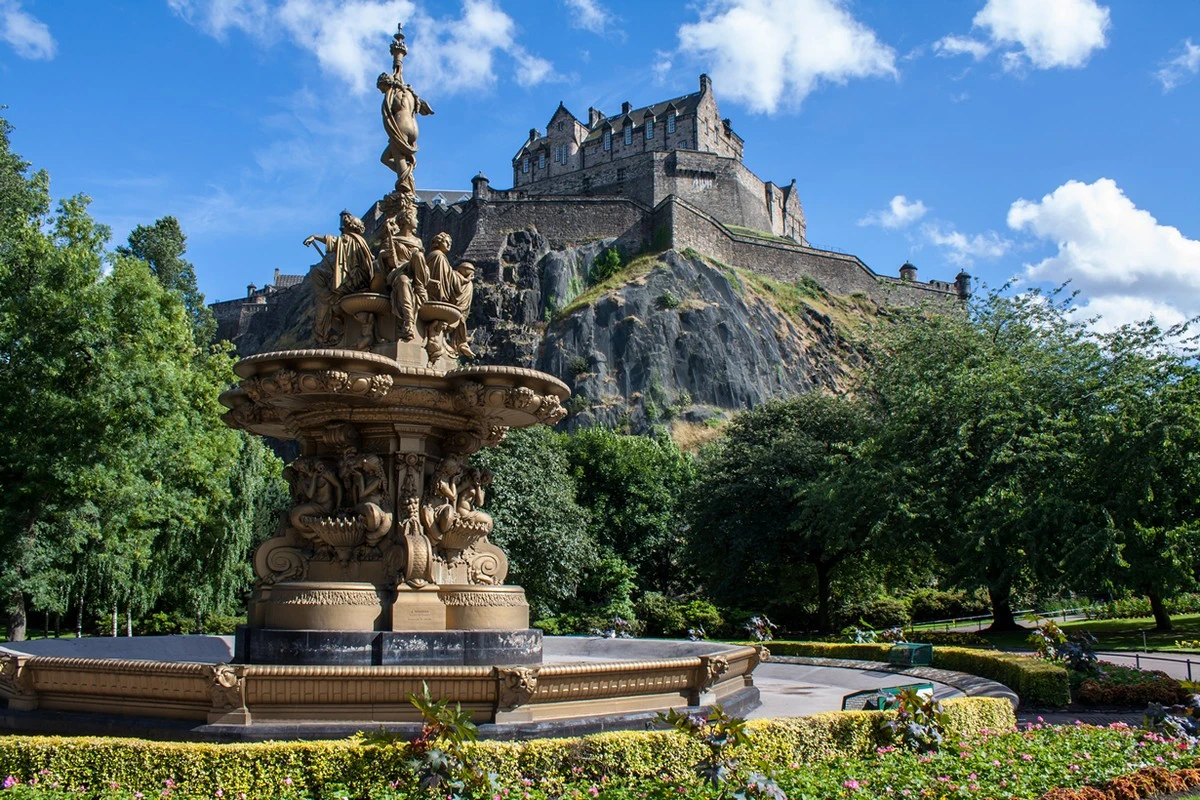
The exact date of Edinburgh Castle's founding remains unknown. Its history dates back centuries, to as early as 600 AD, when the fortress of Din Eidyn existed on the summit of Castle Rock, around which Edinburgh later grew.
The castle's founder is believed to be the Northumbrian King Edwin, who lived in the 7th century. The castle was named in his honor – Edwinburgh, later renamed Edinburgh. According to historical records, the castle changed hands four times during the struggle for Scottish independence, but it was never taken by storm; victory was achieved only through cunning. 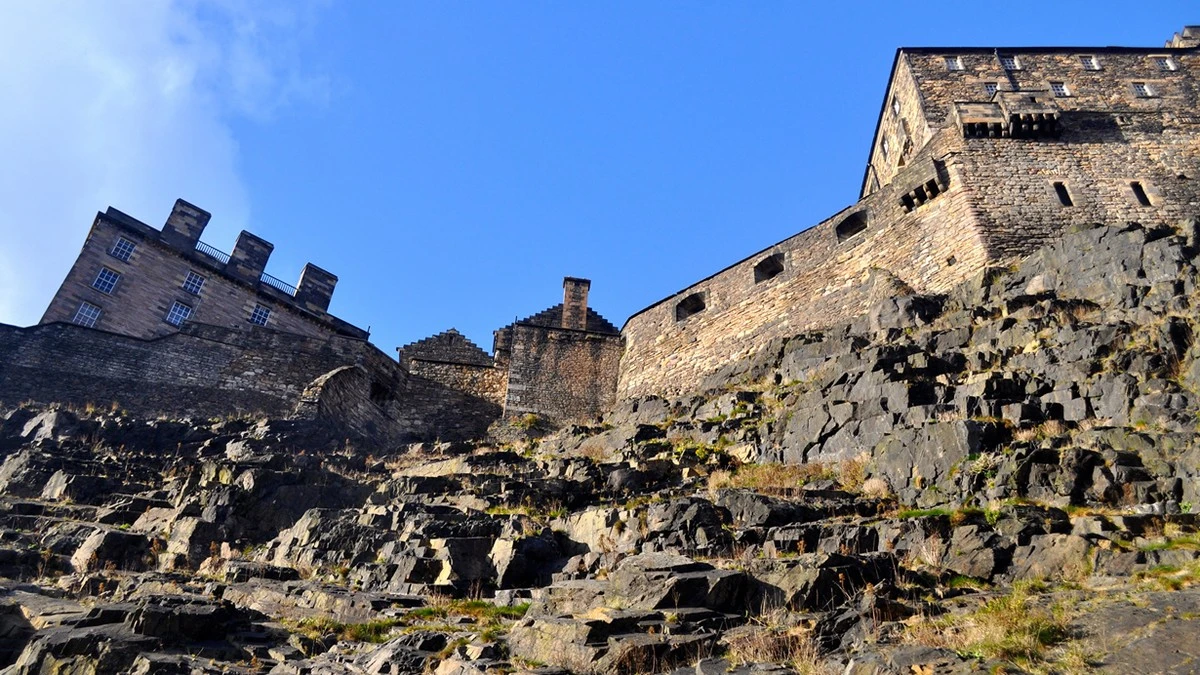
The current castle building dates back to the 12th century and was built by King David I in honor of his mother, known as Saint Margaret of Scotland. She died in 1093 and was later canonized. King David, who made Edinburgh his capital, ruled over much of the Kingdom of Scotland, expanding his holdings through marriage.