A warrior girl with darts like these on (and for) her chest in plate armor—a familiar image, isn't it? Fantasy artists have long accustomed us to female knights wearing armor tailored to the female figure, and emphasizing that figure. But what was the reality of such armor? Let's find out! 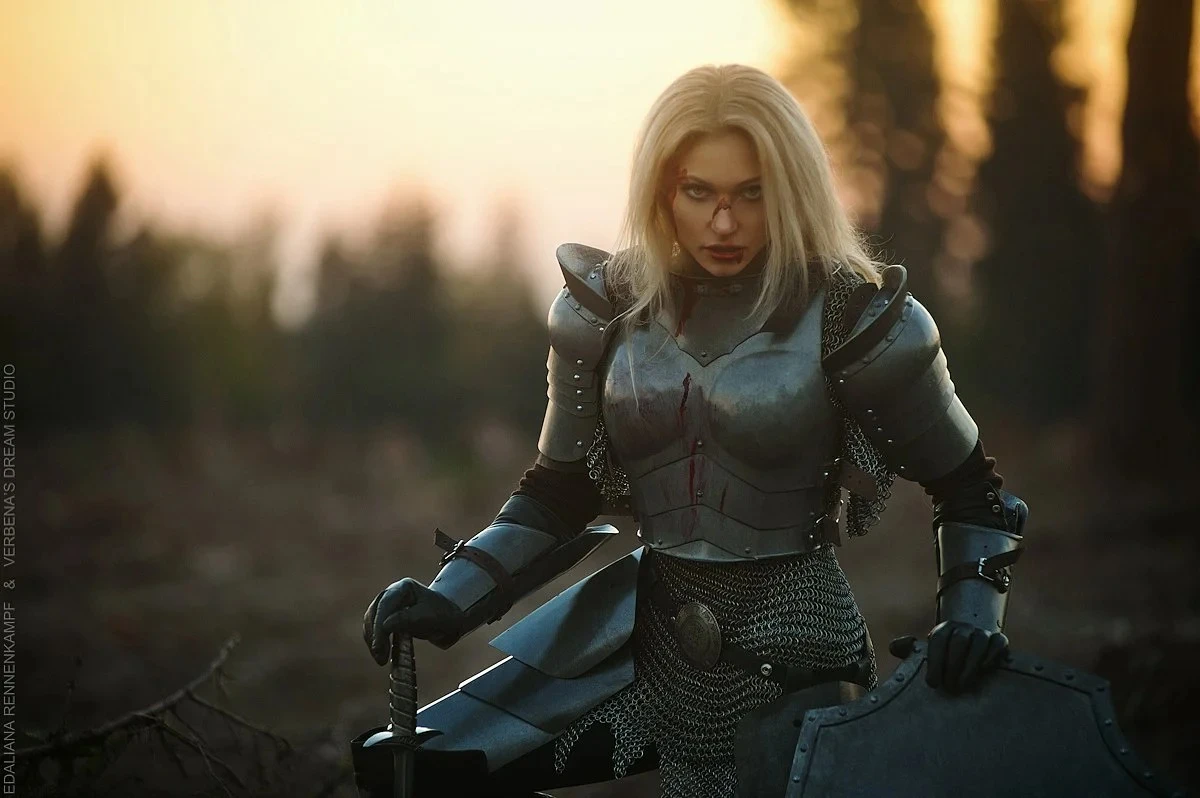
A Brief Introduction to the Armored Bra
In this article, we won't discuss the classic fantasy armored bra. You know, when a fantasy female character's "armor" covers only a tiny fraction of her most intimate body parts. Why? Because this image is a product of artists.
No warrior of any era went into battle dressed like this. Simply for her own safety. And chainmail hurts her nipples, rubbing them raw while running... 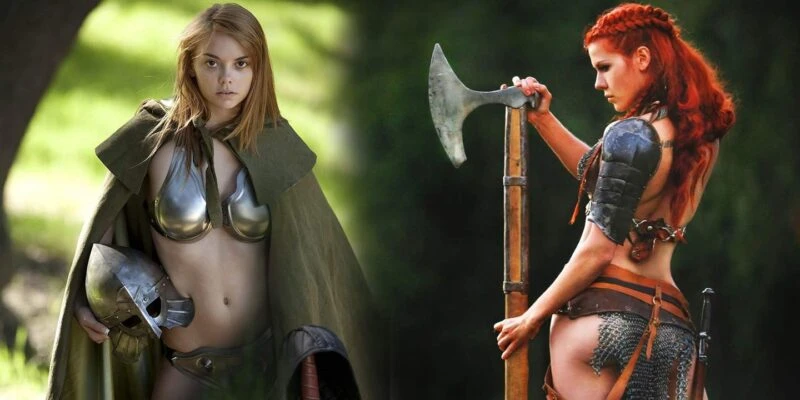
Sorry for the graphic nature, but no one has ever escaped the technical aspects of the equipment, and chainmail is what it is, requiring underarmor or bloody sacrifices on the wearer's body. So, minus the armored bras; we'll leave them to Luis Royo, Boris Vallejo, and the other Fred Fields.
Let's move on to realistic armor, which actually served to protect the mortal body from the numerous threats of the medieval battlefield—from nettles to arrows, swords, and halberds.
On the functions of armor—protective and decorative
Armor—surprisingly!—had not only protective but also aesthetic and decorative functions. It was intended not only to protect the wearer but also to adorn him, making him look emphatically masculine, and therefore, terrifying to the enemy.
Therefore, normal armor necessarily emphasized certain parts of the human body—and the canons of masculinity and male beauty throughout the Middle Ages, no matter which specific period we're considering, were very different from today's. 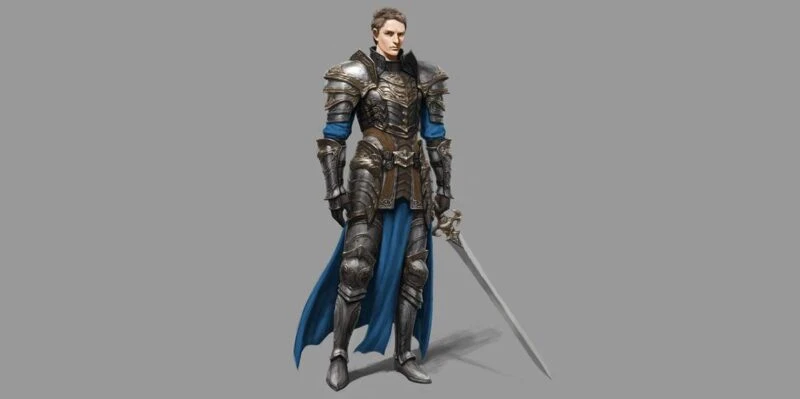
Let's remember a point that's often forgotten and marginalized: the Middle Ages are a very, very long period of history, spanning over a thousand years. Therefore, when discussing them, it's logical to also raise an additional question: which specific part of the Middle Ages are we talking about?
After all, the norms, customs, and preferences of, for example, the High Middle Ages and the Late Middle Ages are, as they say in Odessa, two very different things. So, let's clarify right away: we'll be talking about the Late Middle Ages—a time when plate armor was generally used and was the norm on the battlefield.
While today, in white culture (and this isn't racist, it's an important clarification: other cultures have different norms!), broad shoulders, a boxy chin, and large muscles are quite universal symbols. In the days of plate armor, in most European countries, what was considered attractive in men was... a thin waist and, so to speak, the main attribute of masculinity. It's with the latter that we'll begin.
In those days (and later), there was a remarkable device called a "codpiece." In case you weren't aware, it was an armored "cover" for a man's penis. A truly essential item in medieval combat, otherwise, a stray arrow could easily ruin a knight's chances of having children. 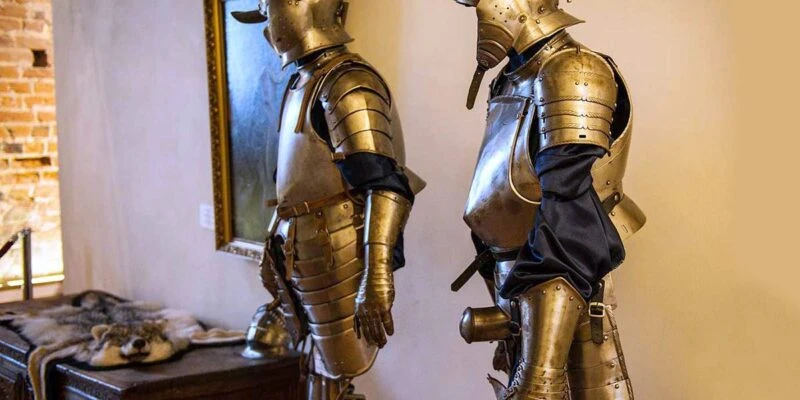
Furthermore, being removable, the codpiece allowed an armored feudal lord to urinate without removing his armor. You can't have enough squires for every "business" expedition! From purely protective elements of armor, codpieces quickly evolved into protective, decorative, and intimidating ones, simultaneously increasing in size and acquiring all sorts of embellishments.
The joke about spiked strap-ons in the Late Middle Ages was more than just a joke! Take a look at the illustration, imagine a metal-clad figure rushing towards you in battle with some sort of "gadget" at the ready, and you'll understand everything. 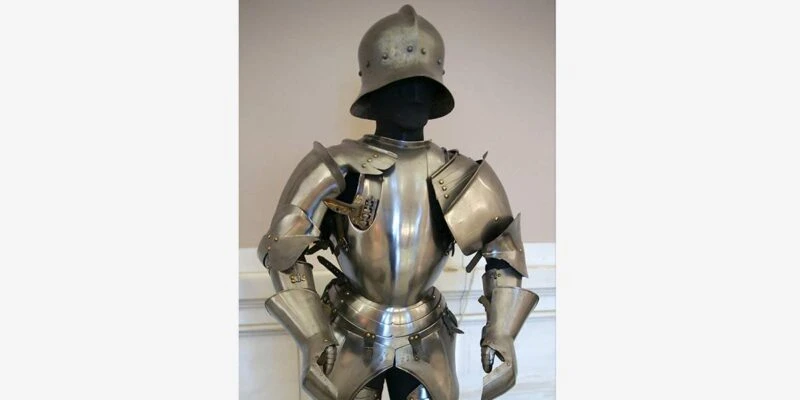
Another sign of male (yes, male—unlike modern notions) attractiveness in the Middle Ages was, as we've already mentioned, a thin waist. And what do we see on the armor? Waists so thin and defined that any wasp or modern model would be envious!
And in addition to the slender waist, there's a cuirass with a bulge in the chest area, designed to deflect and soften incoming blows.
So the idea of emphasizing the wearer's physical attractiveness isn't a fantasy invention; it's something people have done throughout history. It's just that beauty standards were different, and so armor emphasized different aspects of the figure than modern fantasy illustrations, created for modern people with their own notions of beauty—male or female.
And here we finally come to the main topic of this article—women's armor.
About steel breasts
Fantasy generally allows itself various liberties in the appearance of armor and other clothing. We've already mentioned the classic armored bra, and it wouldn't hurt to mention sorceresses dressed like prostitutes... Remember? Great, now forget it.
Speaking about the liberties allowed in fantasy, we note that we're not against them; in this case, we simply try to keep them within the bounds of practicality and realism. And, reflecting on them, one might come to the conclusion that... Armor with darts for the breasts, a thin feminine waist, and a round girlish bottom could really exist. 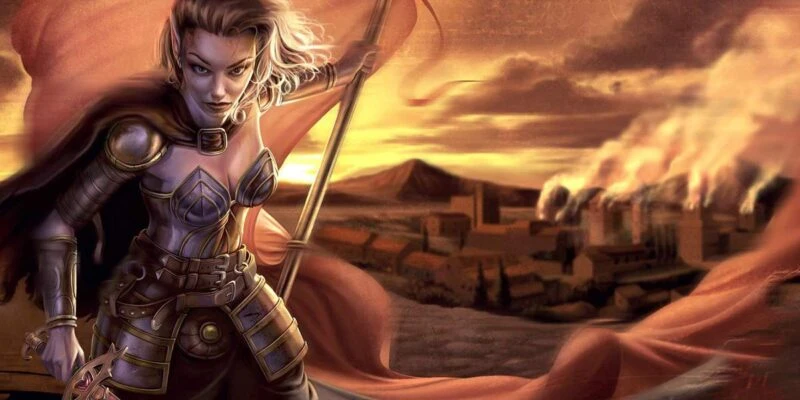
Ultimately, how is emphasizing the attributes of femininity fundamentally different from the attributes of masculinity described above? Hell, nothing! And here a logical question arises: if medieval people were so sophisticated in their understanding of aesthetics and human attractiveness, why don't we find many women's armors in excavations, museums, and so on? 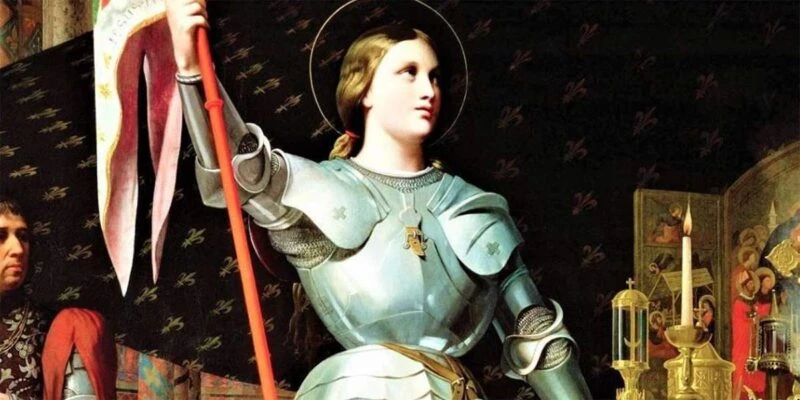
And the answer, unfortunately, is very simple. Women in the Middle Ages simply didn't wear armor. War was a strictly male pursuit, so armor was made to fit men's figures. Of course, there were exceptions to this rule—for example, Joan of Arc—but it's important to understand that these exceptions weren't just rare; they were isolated occurrences throughout the entire period of history under consideration.
Overall, women in the military are a very new phenomenon from a historical perspective. And a lack of demand naturally leads to a lack of supply. Joan, for example, is usually depicted in men's armor.
If you look at any plate armor, be it classic Milanese or any tournament armor, you'll notice that they are all... not so much masculine as what today would be called "unisex." That is, they suit both men and women equally well. 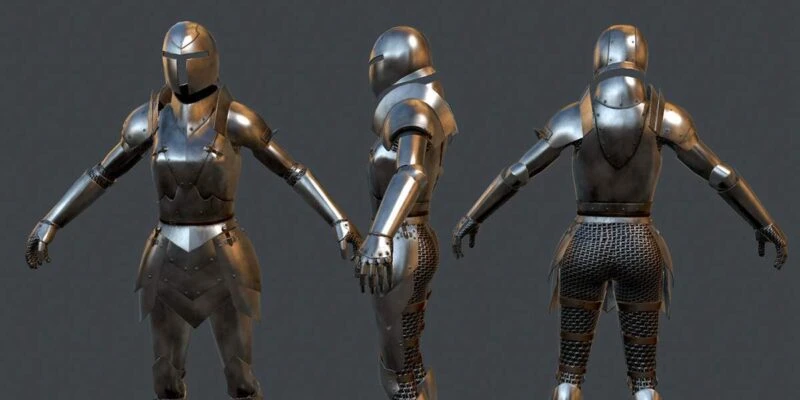
This is roughly what women's armor would have looked like, if it had existed.
With men, everything is clear; armor was made for them—no surprises. As for women and armor, note that very protrusion on the chest—the cuirass doesn't fit tightly to the body—in fact, it's positioned as far away from it as possible. As already mentioned, this is done for entirely rational reasons—a rounded or conical shape of armor better deflects blows, and in extreme cases, dampens them.
And this very protrusion on the chest can easily conceal a woman's breasts of any size, right down to... well, just imagine that, okay? And squeezing a woman's waist into the wasp-sized proportions of armor is quite simple. The rest of the female anatomy is no different from a male's from a armor perspective—arms, legs, head... Just adjust the size—and that's it.
So, in principle, if there had been a period in history when women went into battle en masse, on equal terms with men, the creation of women's armor would have been a very realistic prospect.
Logically, the differences between women's and men's armor wouldn't have been too great. Of course, the protrusion on the cuirass would have been positioned higher to emphasize the attributes of femininity, but it would have remained essentially the same. The waist would most likely have remained as thin as on regular armor. Alas (or "Hurray!"), history has not preserved a single piece of women's armor.
On the danger
However, fantasy lives by its own rules, and it does contain many women in armor made "to women's patterns" and including breastplates with darts for the breasts. And the question arises: aren't these darts dangerous? Don't they make it more likely that a blow from one of them will be deflected into the center of the breastplate?
It's logical to assume that if a blow from a metal "tit" is deflected into the center of the cuirass, all the energy of the blow will be directed at that very center, which will quickly split the woman inside the armor in half, scattering her across the battlefield like a drop of nicotine scatters a hamster across the walls. 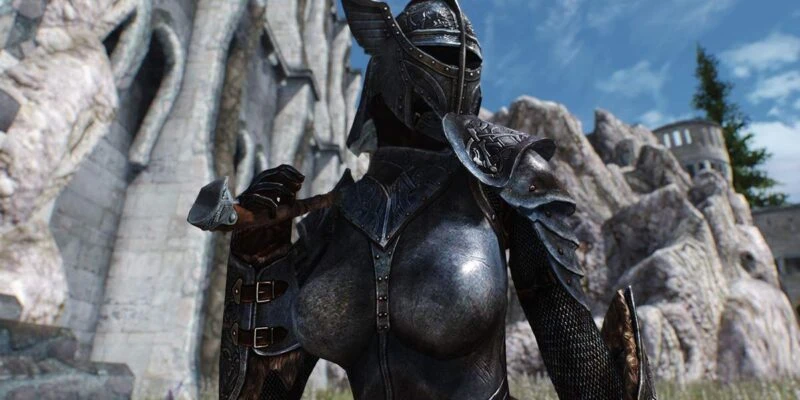
Yes, that's logical... up to a point. But beyond that point, a slightly different, true reality begins. We'll deviate from it only by assuming the existence of such female armor as a fact.
So, armor with "breasts." It would be made of hardened steel and therefore would be virtually impossible to penetrate. Of course, if your particular armor were made using the dendrofecal method, the rounded elements wouldn't be a problem.
But hardened steel provides good protection against penetration by any weapon except specially designed picks. Therefore, armor was typically pierced not in the chest area, which was an impenetrable sheet of steel, but at the joints or in the visor gaps.
Difficult? Of course, but the choice was limited—either you hammer away at the steel like a woodpecker, or you find a spot where there's no steel, or where it's significantly thinner. Meanwhile, an armored enemy doesn't stand still, watching you try to find a weak spot in his armor; he's even wielding a weapon! Or he'd already galloped away long ago...
Does this allow us to say that the protective qualities of a cuirass with "tits" were absolutely no different from those of a regular cuirass? Probably not. There would still be a small chance of a woman wearing such armor being struck in the center of the sternum. But was this chance so great as to say such armor wouldn't have been manufactured?
Let's be honest, hardly. Especially considering that real historical armor also had a place where blows to the chest would slide off: that very wasp waist. Look at the armor and turn your head. What do you see? Exactly! "Tits" positioned sideways. Yet, in theory, this indentation in the cuirass would have cut warriors in half—not lengthwise, but crosswise.
However, this is precisely the kind of armor that was produced in the real Middle Ages. In our humble opinion, this fact alone allows us to confidently assert that breast darts in armor would not have made the armor significantly more or less dangerous.
See you on the virtual battlefields!
Add your comment
You might be interested in:













How to start a 102-liter engine

Protective film Removing it with a power screwdriver

When a child plays hide-and-seek at a professional level

Man sets up bedroom camera and discovers the reason for his

Super dads who swoop in to save the day

Precision carpentry

Looks like it's time to buy WinRAR

How to hang wallpaper neatly

How metal buckets are made in Pakistan
