8 Facts That Will Make You Rethink Your Views of Truly Strange Things (9 photos)
Imagine a chemical that, just one drop, forces an entire city to evacuate because its stench spreads for miles. A woman forced to create masks from the heads of her executed friends. And a disaster movie featuring a survivor in the same dress she wore when she drowned… just 29 days after the tragedy. 
There are no boring platitudes in this collection. Only stories that make you want to double-check yourself and ask authoritative sources: "Is this even true?"
1. Sylvester Stallone as an Artist 
Stallone painted for 35 years. In 2011, his exhibition "Sylvester Stallone: 35 Years of Painting" was held in Switzerland. It featured 30 paintings completed during this period. Some works have sold for $50,000–$150,000.
2. The Odorless Sweat Gene 
Millions of people (especially East Asians) may not use deodorant because of the ABCC11 gene. It turns off the production of "odorous" sweat. If a person has dry earwax, they have this gene. A mutation in the ABCC11 gene prevents the secretion of certain proteins and lipids into sweat, which feed the odor-producing bacteria. About 2% of Europeans have this mutation, while among Koreans and Japanese, the percentage reaches 95-100%.
3. Closest relatives of hippos 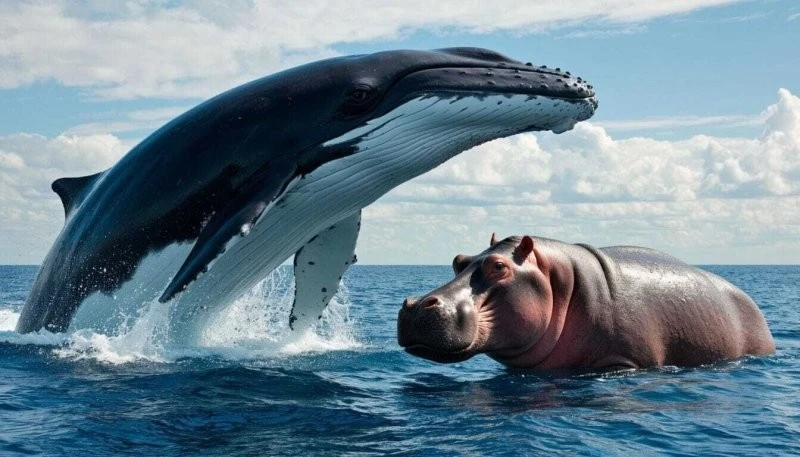
Hippos are the closest relatives of whales. Modern molecular and genetic studies, unlike older classifications, clearly place cetaceans (whales, dolphins) and artiodactyls (including hippos) in a single group, Whippomorpha. Hippos are the closest living relatives of whales. Their common ancestor lived approximately 50-60 million years ago.
4. Mexican Jumping Beans 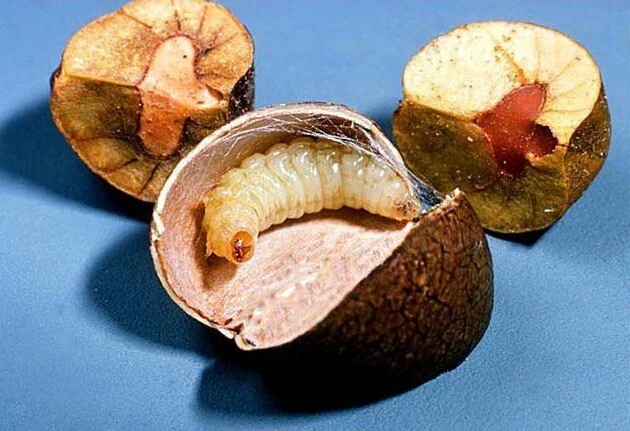
The larvae of a small moth live inside Mexican jumping beans. When the bean heats up, the larvae twitch and try to move the bean to a cooler location to prevent it from drying out and dying. The larvae of the Cydia saltitans moth live inside the seeds of the bush. Direct sunlight can kill them, so they "jump" to move the bean into the shade. A recent study from 2024 showed that the larvae even respond to the color of light—they are most active under red light.
5. The Judas Goat 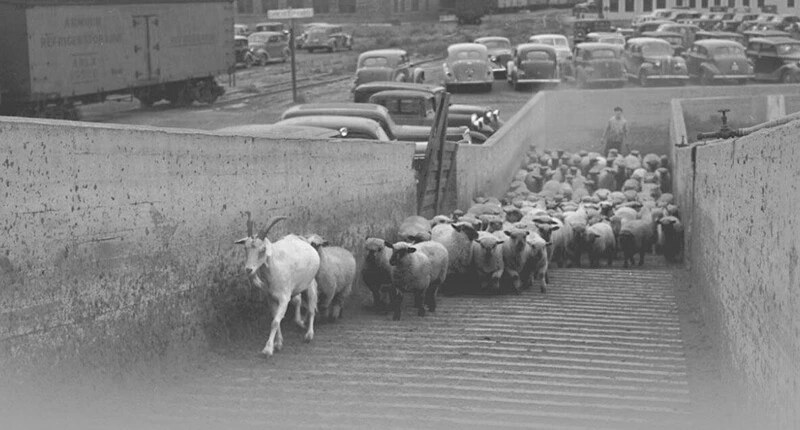
The Judas goat was a male goat that helped herd frightened cattle to the slaughterhouse. It always survived, so it remained calm. These goats were used in slaughterhouses to lead sheep. The sheep follow their leader, and the goat would lead them directly to the slaughterhouse floor, after which it would return for the next batch.
In some places, goats were even hooked on nicotine—given a cigarette or tobacco as a reward. The name alludes to the biblical Judas. Today, the term "Judas goat" is also used in conservation programs. Marked goats are released to search for wild populations and are then captured.
6. The first film about the Titanic, released 29 days after the disaster 
The first feature film about the sinking of the Titanic was released just 29 days after the tragedy, in 1912. The screenplay was written and the lead role was played by Dorothy Gibson, a real-life survivor. For filming, she wore the same clothes she was wearing on the night of the sinking.
7. Madame Tussauds and the Guillotine 
The French government forced Madame Tussauds to make death masks from the severed heads of her friends. During the French Revolution, Marie Grosholtz (the future Madame Tussauds) worked in the wax workshop of Philippe Curtius. After his death, she inherited the collection.
In her memoirs, she claimed that she had to search for the bodies of the executed to make death masks from their severed heads. Her works included masks of Louis XVI, Marie Antoinette, Robespierre, and other victims of the Revolution. Later, the famous "Chamber of Horrors" containing these exhibits appeared in her London museum.
8. The Most Stinking Substance in the World 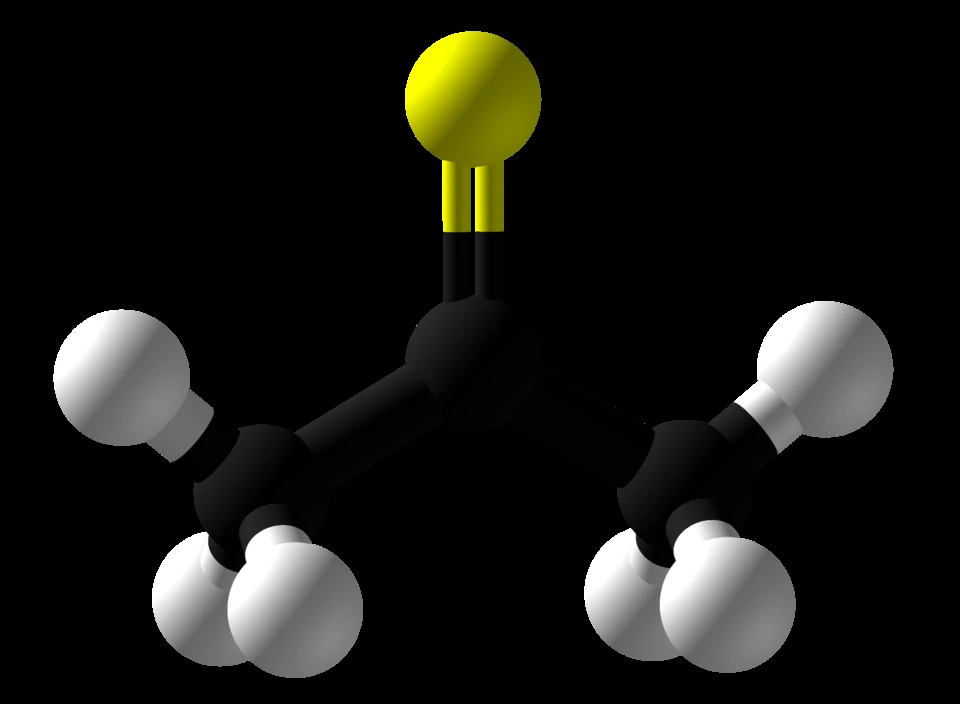
Thioacetone is so foul-smelling that opening a container of it causes nausea in people hundreds of meters away. In 1889, an incident involving this chemical forced authorities to evacuate an entire city.
The incident occurred in Freiburg, Germany. The smell caused "fainting, vomiting, and panicked evacuations." In 1967, employees at an Esso laboratory in Oxford reported that "the cork popped out of a bottle containing residue, causing complaints of nausea from colleagues working in a building 180 meters away." A single drop of the substance could be smelled up to 400 meters away for several seconds.