Who invented the very first concentration camps and what did they look like? 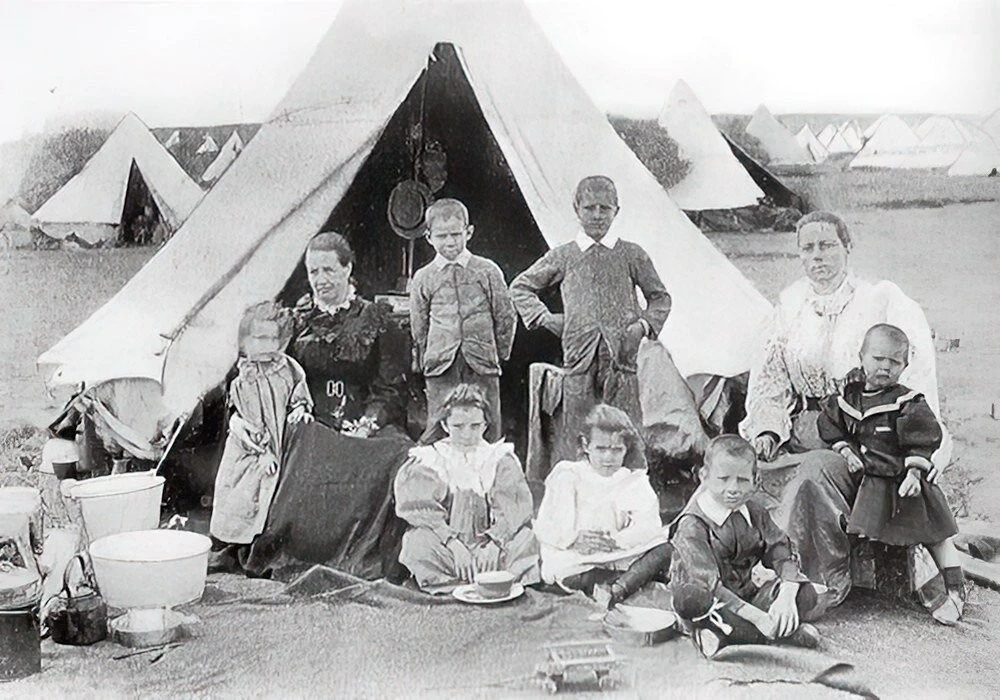
We've become somewhat accustomed to the fact that the word "concentration camp" is always associated with Germans. We often even read "German concentration camps," although we're talking about Finnish or Polish ones, for example, which the Germans had virtually no connection to. But few people know that concentration camps, in fact, weren't first invented by Germans. The Germans simply adopted this experience from the conservative and peace-loving British, who were the first to devise concentration camps, long before World War II, during the Boer War of 1899-1902. Although it's hard to call it a war, as it was simply a superiority of armed men over unarmed civilians.
These same Boers, realizing that they couldn't fight the British openly, began organizing a kind of guerrilla force, which, incidentally, proved quite effective. These units would appear out of nowhere, engage in brief combat, inflict losses on the British, and then vanish into thin air. And it was precisely to combat these guerrilla forces that the British took a rather original step.
The originator of this idea was Lord Kitchener, the British Commander-in-Chief. Remember this name, because if anyone ever asks you who invented concentration camps, you can confidently name him. The fact is, he decided to create special camps to house Boer families, relatives of suspected partisans. In fact, these same families were used simply as hostages. Their treatment was no better than that later accorded to prisoners in Auschwitz or Buchenwald, except there were no gas chambers or crematoria. Kitchener thus hoped that the partisans would surrender in order to free their families. In fact, this is what Kitchener promised the partisans. But, as expected, these promises were never kept.
Interestingly, the Boers weren't some uneducated aborigines with nose rings who walked around naked 24/7. Not at all. The Boers were ordinary Dutchmen who had long ago migrated from Europe to South Africa, established settlements there, and also used the slave labor of the local aborigines for their own purposes. In other words, the British were fighting against their fellow Europeans, who shared the same white skin.
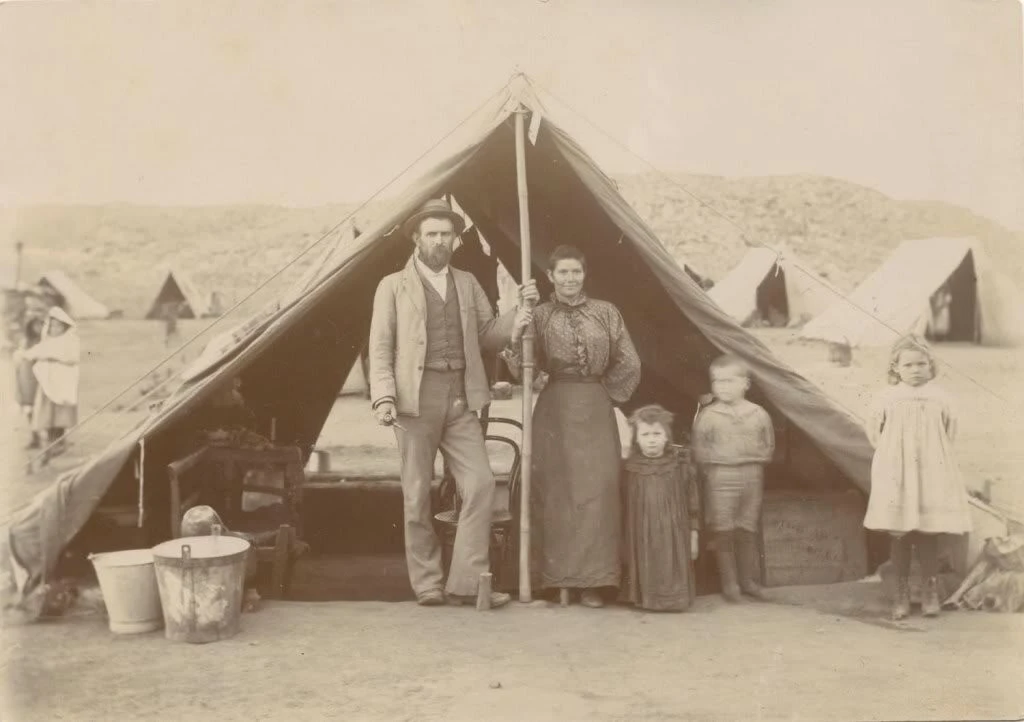
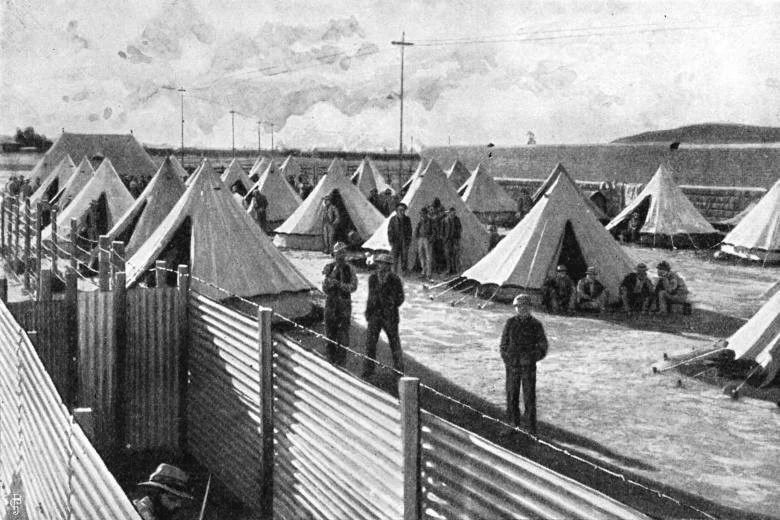
The British immediately encountered a particular difficulty: where would they find enough prisons to house the population of an entire country? And technically, they were fighting an entire country. That's when Kitchener proposed concentrating them in specific locations, in barracks and tents, surrounded by barbed wire and guarded. This is where the name "concentration camp" comes from.
Compared to the German concentration camps that would emerge during World War II, everything would be virtually identical. The British confined exclusively women, children, and the elderly in their concentration camps. Those men who agreed to collaborate with the British were retained as a sort of assistant, given extra food, and allowed to leave the camp. In German concentration camps, these men were later called "kapos." The rest of the men were sent to hard labor in colonies in India. And what happened to the women and children held in the concentration camp? Their food rations were gradually cut, for reasons you can imagine. Ultimately, out of 200,000 prisoners, about 30,000 never left. Let me remind you that these were exclusively women, the elderly, and children.
Slightly later, similar concentration camps appeared in Namibia. But what adds the most cynicism to the whole situation is the way the British presented the concentration camps to the international community. They even had an official name: "Places of Salvation." Salvation, naturally, from the partisans, who allegedly gave no one life. Commissions, similar to today's Red Cross, were even brought into the camps to personally verify that people were simply living in tents. They were fenced off with barbed wire to prevent partisan attacks. Incidentally, the Nazis later used similar tactics during the war. Moreover, they even built fake concentration camps for this purpose, where everything was quiet, peaceful, and wonderful.
In 1902, when the war against the Boers had already become widespread and uncontrollable, there was no point in concealing the true purpose of the concentration camps, and they were renamed from "Places of Salvation" to regular prisoner-of-war camps. However, women and children continued to be held there. Thus, officially, the Boer army consisted of women and children. Even the registration logs of "prisoners of war" from these concentration camps have survived, and they often contain phrases like "prisoner of war such-and-such, aged seven." Ultimately, observing such "scorched earth" tactics, the partisans decided to surrender and sign a peace agreement. The Boer republics were forever destroyed, and the idea of concentration camps was later successfully adopted by the Germans.
(In fairness, I should note that some sources write that the first concentration camps were invented by the Northerners (Yankees) during the Civil War for prisoners of war. Southerners (Dixie). 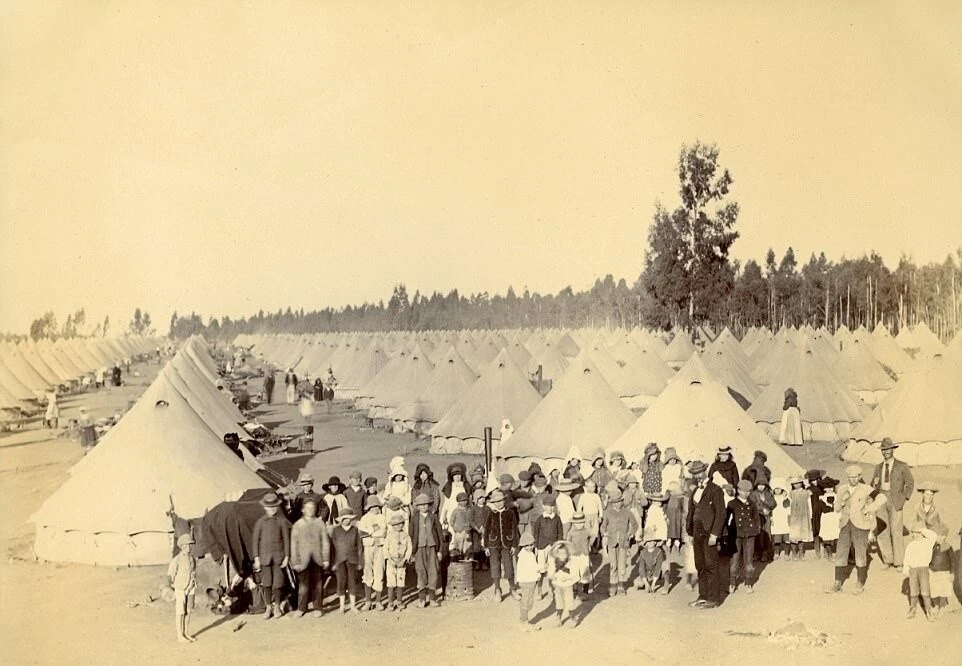
Add your comment
You might be interested in:











35 Epic Toy Design Fails (36 photos)

An obese air passenger was extracted from a chair for three

A plane's wheel fell off during takeoff

Rare recording of Modern Talking

An unusual love story in the game Read Dead Redemption

When you move a picture in Microsoft Word

Nike showed new shoes for those who can't imagine life

An actor from "Stranger Things" directed a music

The head of Bugatti explained why he sees no point in

Protective film Removing it with a power screwdriver

Precision carpentry

When a child plays hide-and-seek at a professional level

Athlete in Bavarian dress flies over a lake on a hydrofoil

Looks like it's time to buy WinRAR

How to hang wallpaper neatly

Man sets up bedroom camera and discovers the reason for his

Super dads who swoop in to save the day

The Terminator's tears: Figure decides to scrap its old
