Chastity Belt: How a Medieval Joke Became a Museum Exhibit and Fooled the World (16 photos)
The average person imagines the Middle Ages as an era of darkness, the fires of the Inquisition, and sophisticated torture. One of the main symbols of that era is the chastity belt: an iron device that knights supposedly wore on their wives when they went on crusade. The problem is that this is a historical hoax, and no chastity belt existed in the Middle Ages. However, in the 19th century, they were readily manufactured for sale, and doctors prescribed them to children. 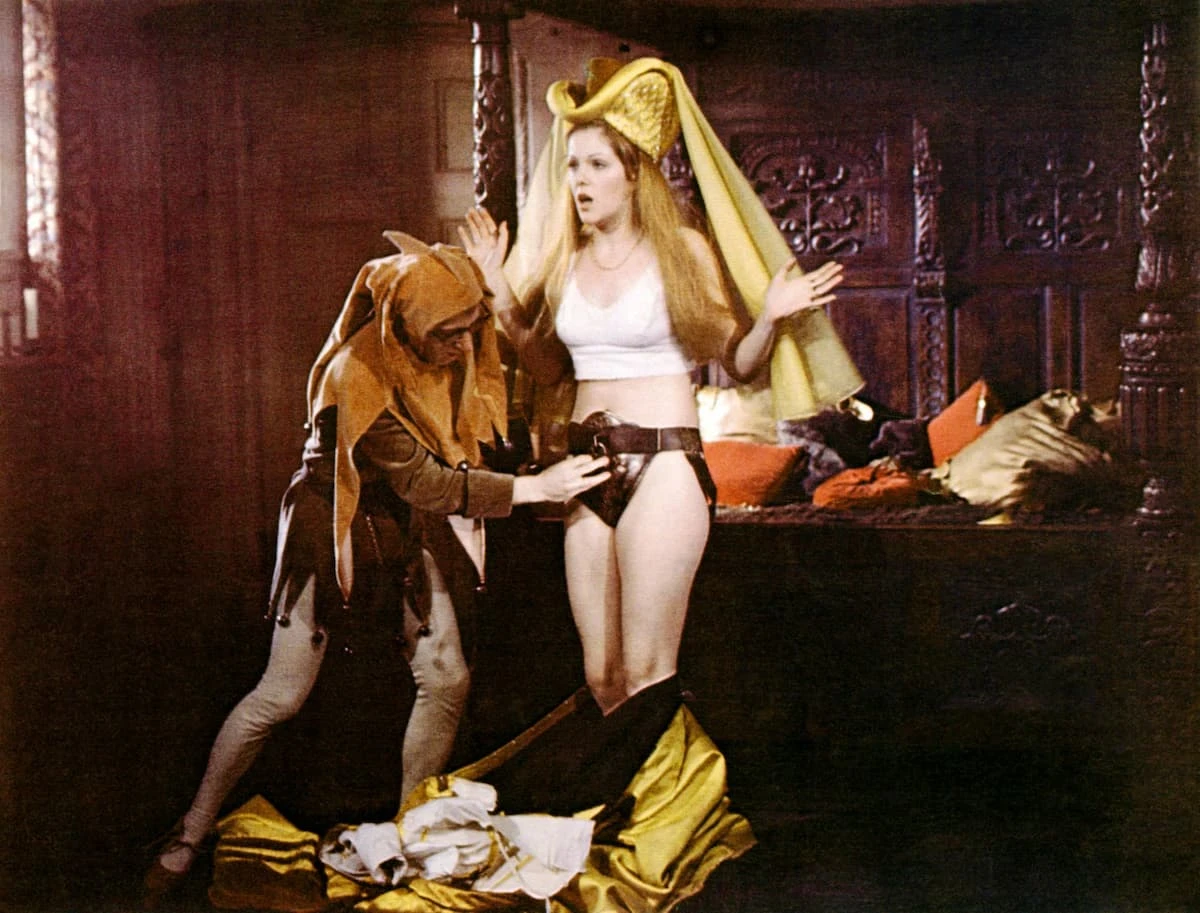
The Birth of a Legend: Siege Weapons and Soldiers' Humor
The history of the chastity belt begins not in the alcoves of noblewomen, but on the pages of a military treatise. From 1402 to 1405, the German engineer Conrad Kaiser von Eichstädt, while in exile in Bohemia, created "Bellifortis"—the first-ever illustrated catalog of military machines. Nearly 180 illustrations include catapults, battering rams, cannons, and rockets. And suddenly, among the drawings of siege weapons, a drawing of iron "trousers for Florentine ladies." 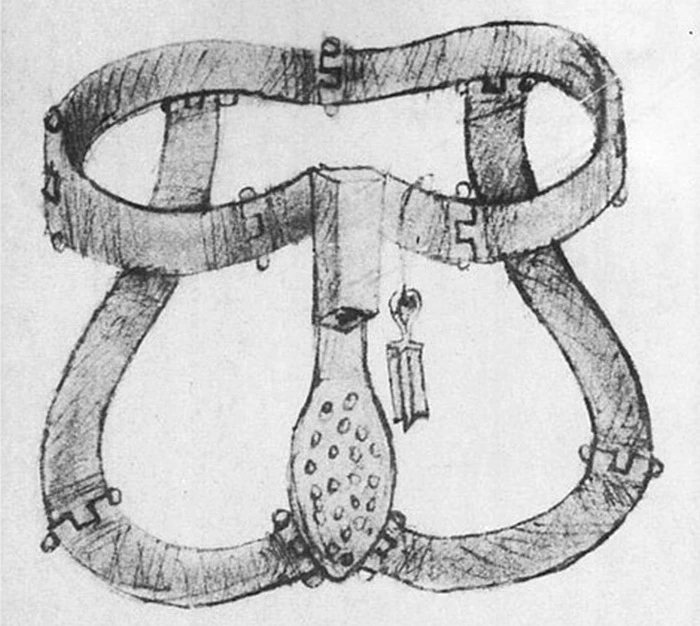
Konrad Kaiser von Eichstädt – military engineer and author of "Bellifortis," circa 1405
The context of the book suggests that Kaiser simply diluted the dry technical text with crude soldierly humor. Jokes about feminine treachery and ways to curb it were extremely popular in literature at the time. By comparison, "Bellifortis" also contains instructions for making an invisibility cloak and a couple of scatological jokes – clearly not a how-to guide. 
Not a single medical text, church chronicle, or legal document from the Middle Ages mentions the chastity belt. If such devices had truly existed, the church would inevitably have assessed them. Physicians would have described the consequences of wearing them. But history is silent.
Renaissance Satire: The Lover Already Holds the Key
After the Kaiser, the chastity belt appears in engravings and literature—but always in a comic context. A typical example: a German engraving from the late 16th century, now housed in the British Museum. It depicts an elderly husband saying goodbye to his wife, who hands him the key to her chastity belt. A young lover, holding an identical key, is already waiting in the shadows. The husband is depicted with donkey ears, a symbol of cuckoldry. 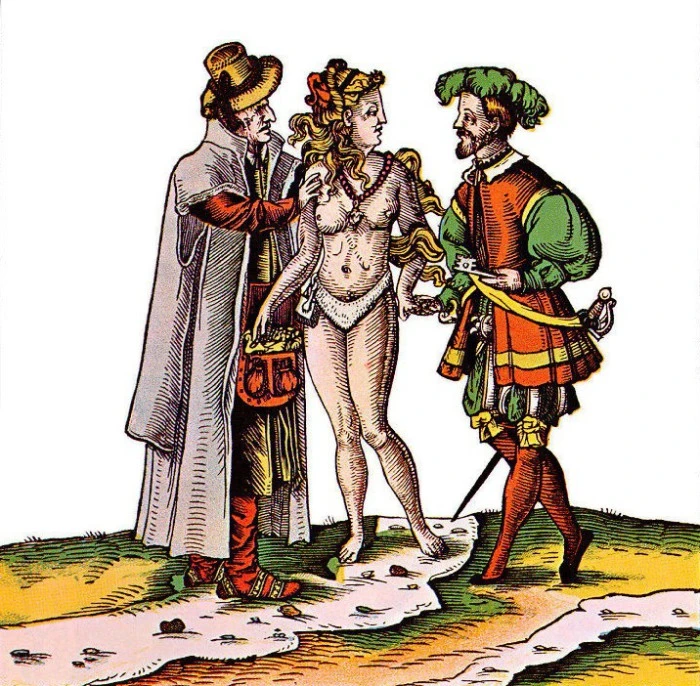
A satirical drawing from the 16th century: an elderly husband, his wife wearing a chastity belt, and a young lover with a key
Medieval scholar Albrecht Classen of the University of Arizona, after studying all similar sources, formulated a clear conclusion: even in the 16th century, no one took the idea of an iron lock seriously. The whole point of the joke hinged on the fact that the lover already had a duplicate key. The chastity belt was not a tool of control, but a target for ridicule.
Victorian Demand and Industrial Counterfeiting
If no one knew about the chastity belt as a real object in the Middle Ages, where did the hundreds of "authentic" exhibits in 19th- and 20th-century museums come from? The answer is Victorian England. This era was obsessed with its own progress and the "barbarism" of its ancestors. This gave rise to a flourishing market for counterfeit antiquities. Around the same time, the "iron maiden" appeared—another "medieval" instrument of torture, unheard of in the Middle Ages. 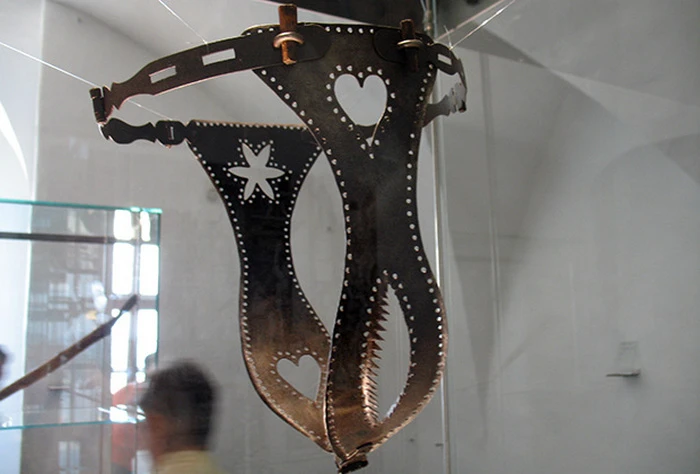
Chastity belt on display at the Hohensalzburg Fortress Museum in Salzburg, Austria
The public craved spectacles that confirmed the cruelty of their ancestors. Enterprising craftsmen quickly began producing "authentic" exhibits. The chastity belt, a rather racy item, became a real hit. Most museum specimens from that era look suspiciously decorative: the openings are adorned with embossed hearts, flowers, and graceful curls. For an object that was supposedly meant to be worn for months, these are extremely impractical. 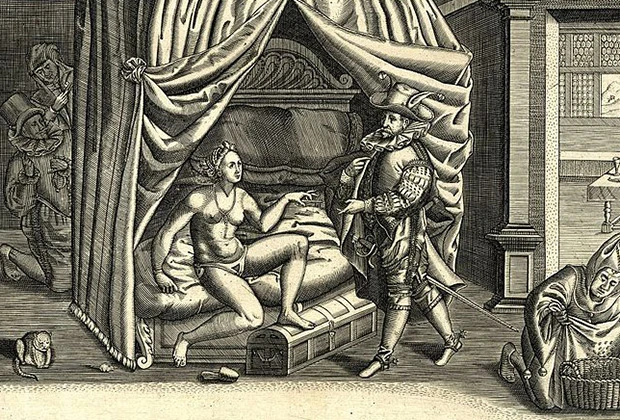
Lady in a chastity belt. Late 16th-century engraving
Fakes in the world's best museums
The famous "Catherine de Medici belt" from the Musée de Cluny in Paris was long considered a benchmark exhibit. In the 1990s, metallurgical analysis revealed the truth: the iron from which it was forged dates back to the early 19th century—more than 200 years after the queen's death in 1589. The Cluny Museum holds another "historical" belt, supposedly belonging to Anne of Austria, engraved with Adam and Eve. Its authenticity is also seriously questioned by historians. 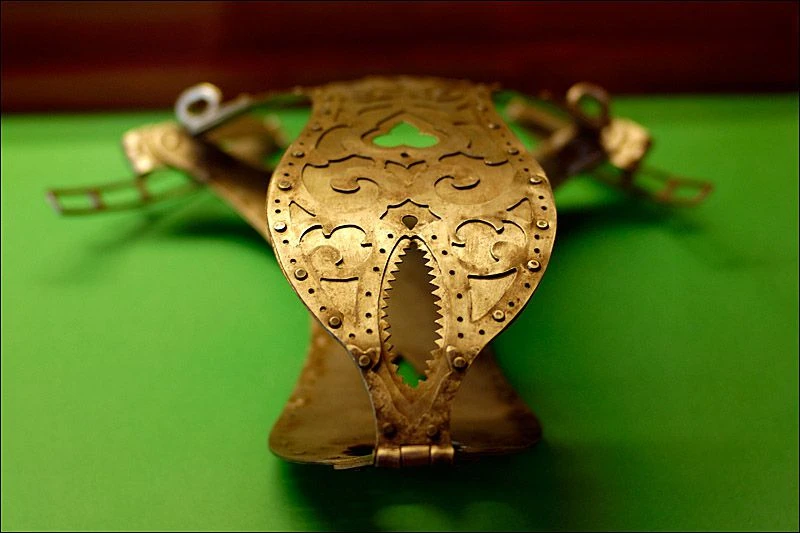
A chastity belt from the collection of the Cluny Museum of the Middle Ages in Paris
Following a series of revelations, most major museums—including the British Museum and the Germanisches Nationalmuseum in Nuremberg—removed similar items from their main displays. Those that retained the items provided them with straightforward labels: "Victorian replica." 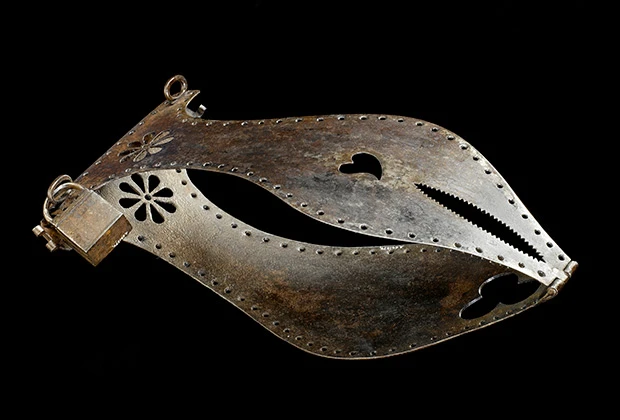
A chastity belt from the Science Museum in London. Made in the 19th century
True story: medicine against masturbation
Ironically, chastity belts did exist—but their real history is far darker than the chivalric clichés. In the same Victorian era, when fakes were being forged for museums, doctors began prescribing such devices to children and adolescents. In the 19th century, masturbation was officially considered the cause of dozens of illnesses: from blindness and epilepsy to consumption and insanity. Between 1856 and 1918, the US Patent Office approved no fewer than 36 applications for anti-masturbation devices. 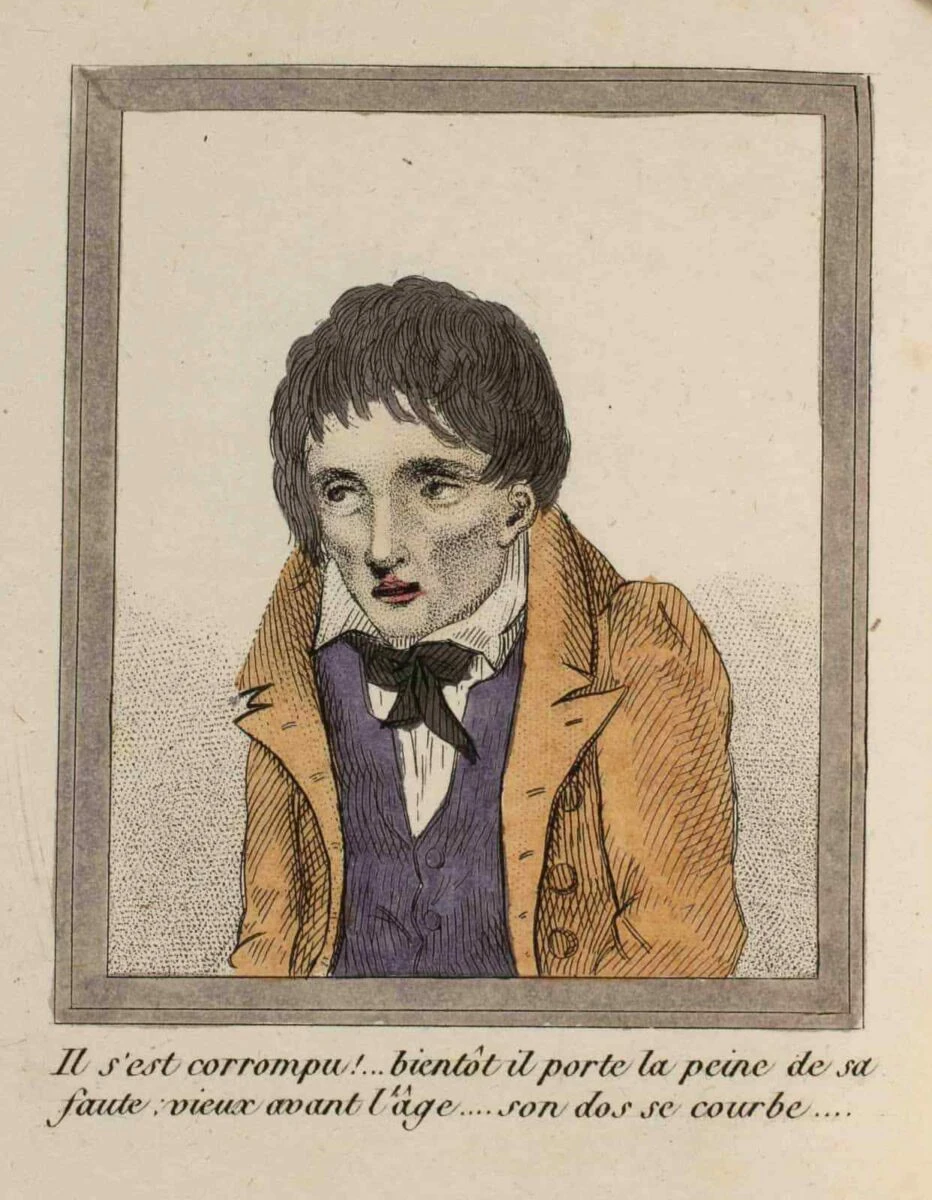
A typical "onanist" according to 19th-century French physicians
To prevent "self-defilement," doctors recommended that parents place leather and metal devices on their children at night. These devices were quite real and were documented in medical catalogs of the time. They crippled the psyches and bodies of the younger generation. 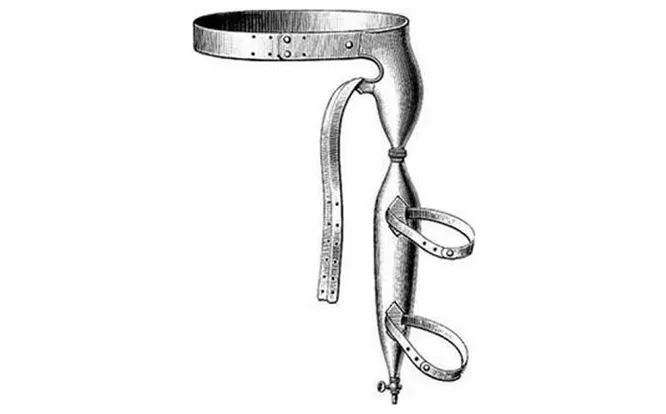
Stevenson's sperm bandage, 1876. It secured the penis to the thigh, preventing erections.
One of the most famous "devices" was the Stevenson sperm bandage of 1876: a system of straps firmly secured the penis to the thigh, pulling it downward. In 1903, Colorado-based Albert W. Todd received two patents for electrical devices against "self-defeat." The first sent a weak electric shock to the testicles during arousal, while the second used spikes. In Todd's patent, he explicitly stated that the device was intended for the treatment of "feeble-minded boys and young men prone to masturbation." 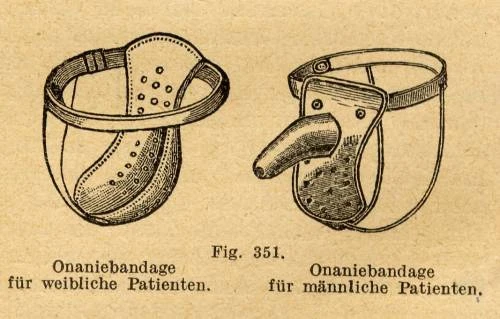
Anti-masturbation belts for women and men. Germany, 1890s 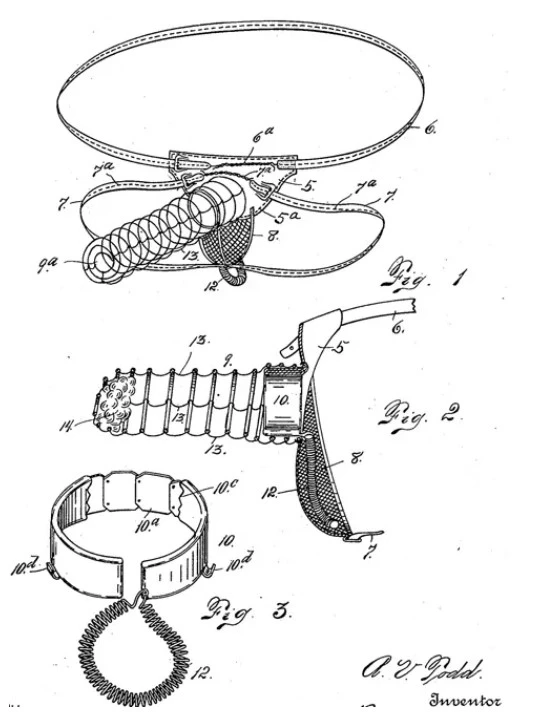
Todd's Electric Cage. Patent No. 742814, issued October 27, 1903
This page of history is far more terrifying than the fictitious stories of jealous knights. It was based on a scientific error, not a folkloric joke. And it's especially eerie to realize that all these devices were used even in the era of the first automobiles and aviation.
Historian Classen's Exposure
Medieval scholar Albrecht Classen of the University of Arizona has settled this centuries-old debate. In 2007, his book, "The Medieval Chastity Belt: A Myth-Making Process" (Palgrave Macmillan), was published. Klassen reviewed all available primary sources: medieval literature, legal documents, and iconography. The conclusion is clear: not a single credible piece of evidence of the actual use of a chastity belt exists. 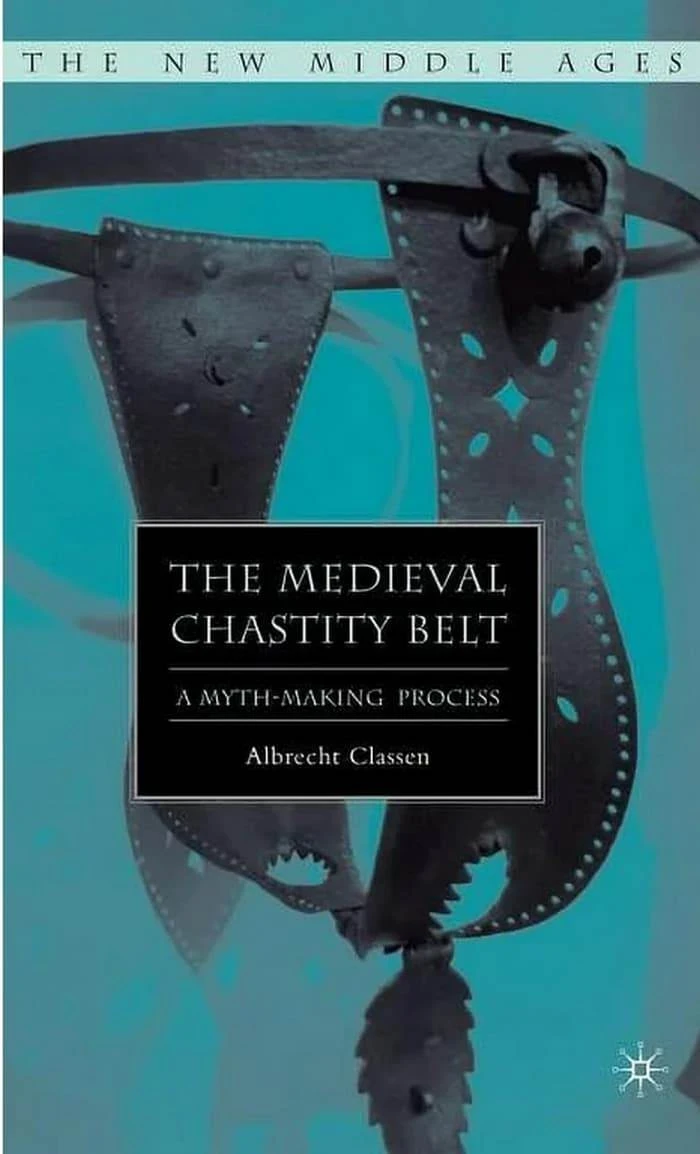
Albrecht Klassen's book, "The Medieval Chastity Belt: A Myth-Making Process," 2007
According to the scholar, the myth was created intentionally—to emphasize one's own civilization against the backdrop of their "savage" ancestors. Medieval women, however, enjoyed far more independence than is commonly believed. Medieval men were also quite practical: they understood that iron structures would lead to sepsis and the death of their wives within days. Klassen also points to another argument against the belt's reality: once the idea found its way into 19th-century encyclopedias and dictionaries, it was reproduced from edition to edition without any source verification.
Mirror of the Era
The chastity belt turned out not to be a physical object, but a mirror of the fears and fantasies of the eras that "rediscovered" it. Writers and filmmakers had yet another opportunity to poke fun at the "Dark Ages." In Mel Brooks's film "Robin Hood: Men in Tights" (1993), the belt became a central comedic element. It appears in dozens of other films, almost always in a comical vein. 
Still from the film "Robin Hood: Men in Tights" (1993) by Mel Brooks
A sexual fetish has emerged in parallel. Among BDSM culture accessories, women's and men's chastity belts are among the most popular. This device has inspired many famous couturiers to create extravagant designs: for example, at New York Fashion Week 2019, the brand Vaquera showed a belt with a huge crystal. 
Chastity belt with a huge crystal from the Vaquera brand. New York Fashion Week, 2019
Today, when we see this object in films or at curiosities exhibitions, it's worth remembering: we are not looking at a monument to fifteenth-century male jealousy, but to human gullibility and the marketing acumen of nineteenth-century antiquarians. History once again reminds us: "obvious" facts often turn out to be nothing more than a clever joke that humanity has decided to believe. 
A modern interpretation of a chastity belt: a swimsuit on the beach (and yes, it's Photoshopped)
Why do you think we're so eager to believe in the cruelty and savagery of past centuries, ignoring historical facts? Isn't this a way to justify the problems of our own time?