Drop Deadly Beautiful: Elizabeth I's Controversial Beauty Secrets (10 photos)
Elizabeth I, the legendary Queen of England, went down in history not only as a talented politician but also as a beauty icon of her time. Her image—pale skin, fiery red hair, and majestic posture—still inspires artists and designers. But behind this stunning beauty lay secrets that today seem strange, and sometimes even frightening. Let's explore how Elizabeth I created her ideal look and what she was willing to endure to achieve it. 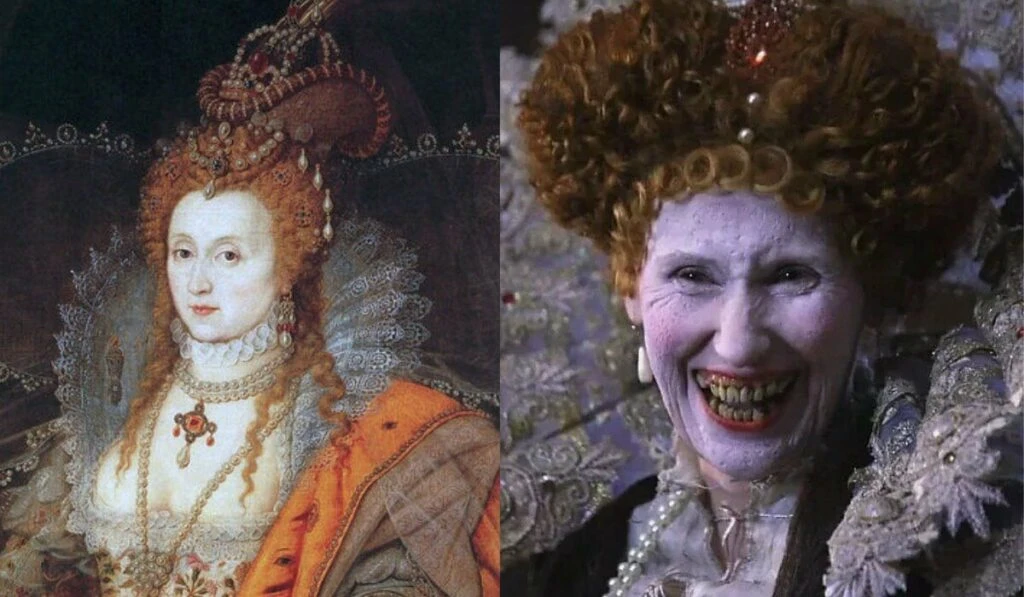
Smallpox Traces
British Queen Elizabeth I Tudor, daughter of Henry VIII and Anne Boleyn, ascended the throne at the age of 25 and ruled the country for almost 45 years. In 1562, this vibrant and attractive woman unexpectedly contracted smallpox. She was not yet 30 years old at the time, but despite the best doctors' care, her chances of survival were slim. At that time, one in three people who contracted smallpox died. 
Young Elizabeth. Portrait by an unknown artist
Fortunately, fate spared the queen's life, but illness robbed her of her luxurious red hair and left deep scars—pockmarks—on her face. Elizabeth had to struggle with these consequences her entire life. It is said that because of the scars, she began to avoid bright light and preferred the subdued lighting in the palace.
A pale complexion: fashion or obsession?
In the 16th century, pale skin was a symbol of high status. A tanned face was associated with peasant toil in the sun, and aristocrats sought to emphasize their aversion to physical labor. Elizabeth I took this fashion to the extreme. She used a mixture called "Venetian cerate"—a thick paste of lead and vinegar. This concealed wrinkles, smallpox scars, and any imperfections, giving her skin a marbled whiteness. 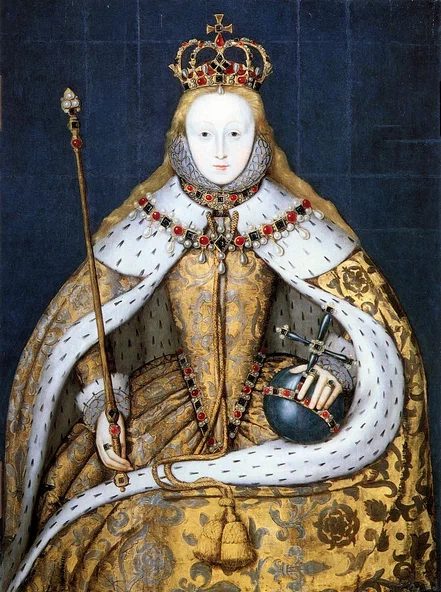
Coronation Portrait of Elizabeth I
On top of the thick layer of white lead, the queen added rouge made from natural pigments to restore her complexion's vibrant hue. The process was long and tedious, but the result was worth it—she looked flawless in portraits and at court.
The Terrible Price of Beauty
But such beauty came at a price. White lead contained lead and vinegar, and the final touch was the icing on the cake—red lipstick and blush, which were also generously loaded with mercury. The toxic ingredients in these cosmetics slowly poisoned the skin, causing irritation and even hair loss. 
"The Pelican Portrait" of Elizabeth I by Nicholas Hilliard
As she aged, the queen had to apply increasingly thick layers of white lead to conceal the effects of smallpox and maintain her majestic appearance. The aging process of her skin was exacerbated by slow but constant poisoning—dangerous substances penetrated the body through the skin. 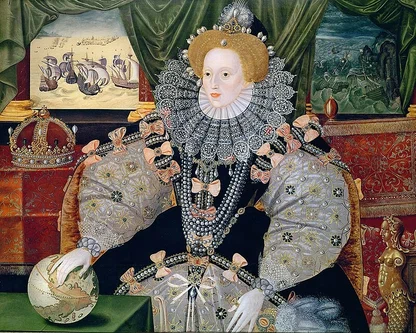
"Armada Portrait" by George Gower
By the end of her life, the mask of white lead on her face reached a thickness of almost two centimeters. But the most frightening thing was that she removed this layer not every evening, but only every few days. To do this, she used a horrific mixture of mercury, alum, and crushed eggshells, which further damaged the skin. To distract attention from her face and hands, Elizabeth dressed in luxurious outfits, accessorizing them with ornate collars and elegant gloves.
Red Hair: A Gift of Nature or a Clever Trick?
Elizabeth I was famous for her luxurious red hair, inherited from her mother, Anne Boleyn. This color became her signature and a symbol of strength. Due to illness, she was left almost bald at the age of 29. However, the queen was not content with this. She resorted to wigs—artfully crafted, vibrant, and always perfectly styled. Craftsmen created them from natural hair, often dyeing them the desired shade with plant-based dyes. 
Margot Robbie as Elizabeth I
It's estimated that Queen Elizabeth I Tudor owned at least two hundred wigs. She commissioned them from the finest English wigmakers, and her requirements were as follows: complete secrecy from the wigmaker, and a fiery red color with luxurious curls from the wigmaker. Interestingly, the red color wasn't just a whim. It referenced the Tudor dynasty, emphasizing its rightful claim to the throne. Beauty thus became a political tool. Elizabeth knew how to use her image to captivate the court and the people.
Eyes as Weapons: The Magic of the Gaze
Contemporaries often remarked on Elizabeth's expressive eyes. To emphasize their depth, she used natural remedies, such as belladonna drops. This plant dilated the pupils, creating a mysterious and captivating gaze. While it may sound romantic, belladonna is a poison, and its use could cause vision problems. The queen took risks for the effect she had on others. 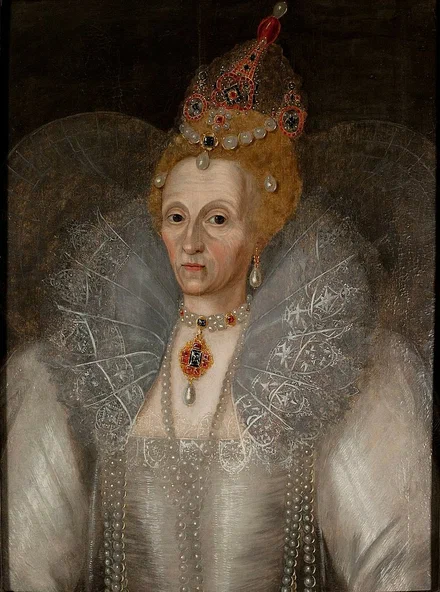
Portrait of Elizabeth by Marcus Gerards the Younger
She knew how to "speak" with her eyes, captivating ambassadors and courtiers. Elizabeth I's beauty lay not only in her makeup but also in her ability to present herself. Her gaze remained etched in the memory of those who ever met her.
The Secret of the Royal Smile
Elizabeth I adored sweets, and her particular weakness was marzipan—a delicacy made of almonds and sugar, considered a true luxury at the time. But this love had consequences: her teeth began to turn black and decay. Oral hygiene in the 16th century left much to be desired, and Elizabeth brushed her teeth with sugar paste, which only exacerbated the problem.
After forty, Elizabeth's teeth became blackened and decayed. When the pain became unbearable, the queen had to have her teeth extracted. This was excruciating—dental science at the time had no anesthesia. The queen rarely smiled in public, hiding this defect. Some historians write that Elizabeth stuffed her mouth with cloth during conversations to prevent her cheeks from becoming hollow and to make her face appear younger. 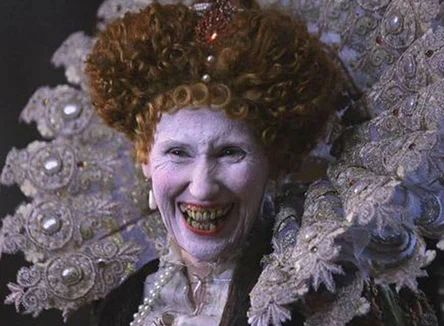
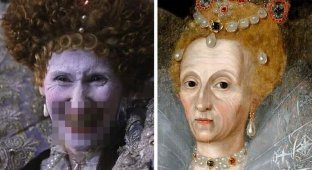
Anita Dobson as Elizabeth in the film "Armada"
Interestingly, Elizabeth unwittingly introduced the fashion for tooth decay. Blackened teeth became a sign of status and wealth, as only aristocrats could afford sugar. Courtiers even began artificially blackening their teeth in imitation of the queen. Elizabeth's beauty, even with its flaws, became a trend that emphasized her influence. Such an unexpected twist: what she hid became a symbol of luxury.
Beauty as Power
Elizabeth I made her beauty an instrument of power, instilling in her subjects a belief in her divine power. The image of the "Virgin Queen" was carefully cultivated: courtiers staged performances of her eternal life thanks to her purity. As the myth became popular, artists depicted the elderly Elizabeth with a "mask of youth"—the face of a young woman, concealing her age. 
Helen Mirren as Elizabeth
In an era when women rarely ruled the country, Elizabeth used her femininity as a weapon. Her perfect appearance, reinforced by myth and art, helped to captivate the court and the people. Beauty became part of her power, proving that appearance could be no less influential than politics.
But behind this perfect image lay serious health problems: the effects of smallpox, bad teeth, and toxic cosmetics sapped her strength. Nevertheless, the queen died at 69—a respectable age for the 16th century. Some researchers believe that constant exposure to microdoses of poisons, in fact, contributed to her longevity. Elizabeth's body was so saturated with toxic substances that no pathogen—be it bacteria, virus, or microbe—could survive in such conditions. 
Cate Blanchett as Elizabeth
Today we admire her portraits, but behind each one lies a story of courage, sacrifice, and the desire to be the best. Elizabeth I was devastatingly beautiful, and this beauty helped her enter into eternity. What do you think? If you had to choose between health and perfect looks, which would you choose? Share your thoughts in the comments!