The end of the 19th century... Bismarck, having frightened enlightened Europe with the steel of Krupp cannons, decided to wipe their noses in the exploration field. The Reich Chancellor's ambitions are now forgotten, but great archaeological discoveries in Asia Minor, the lands of Hellas and Egypt took place and became part of the treasury of humanity. 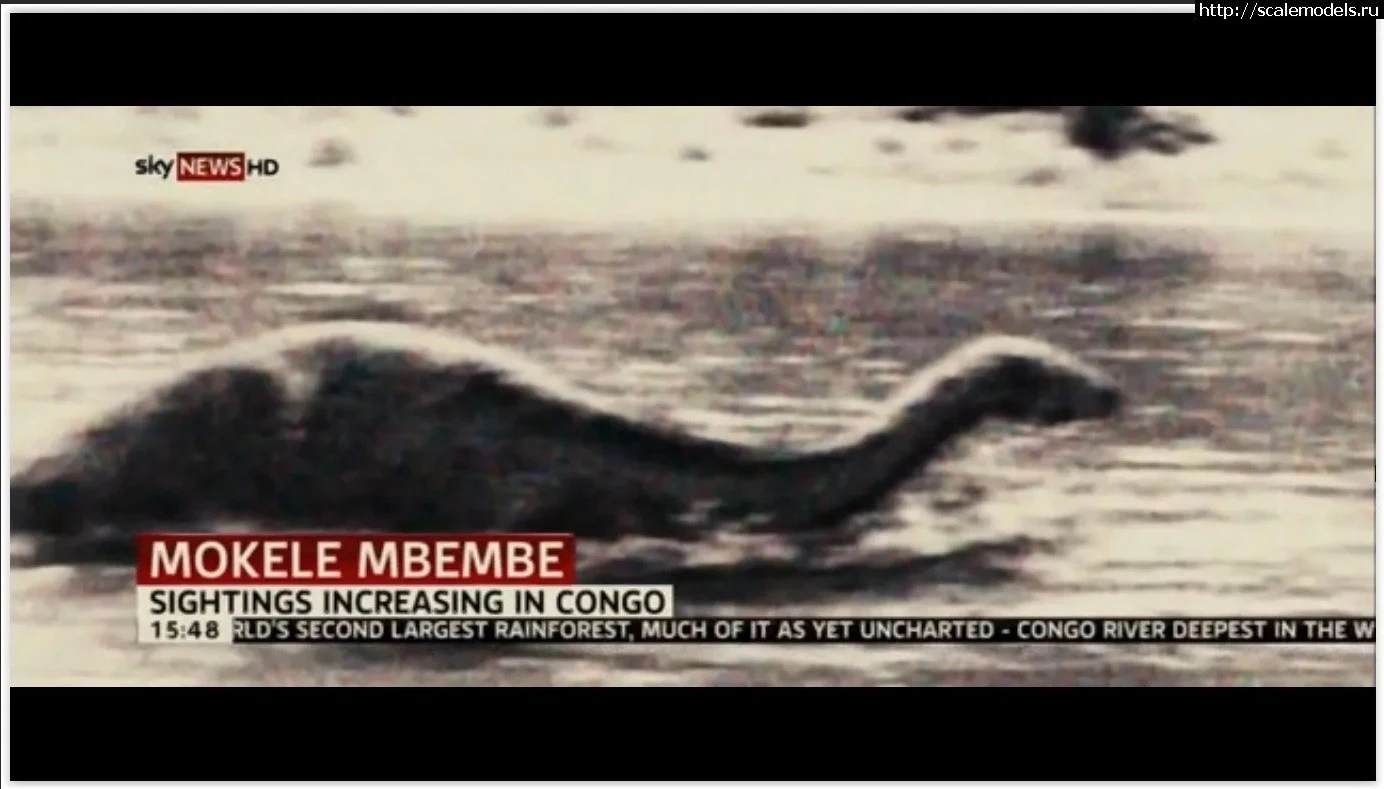
In my youth, I came across a book on cryptozoology with a plesiosaur on the cover. The book did not claim that cryptozoology was a fully-fledged scientific discipline; rather, it offered it an opportunity to prove its significance. Among other things, the book included interesting stories related to the subject of my narrative.
One of the projects suggested to the Reich Chancellor for the glorification of the German Empire was never realized in his lifetime. The plan was too unusual, and it was mulled over for too long by his clerks. The gist of the idea was this: papers were placed on Bismarck's desk indicating that in 1776, the French Abbé Proyard had visited the Congo jungle. From the Native Americans of the Lingala tribe, he had heard and recorded in his travel diary an exotic legend about a local monster—a hybrid between an elephant, a hippopotamus, and a lion. The creature, which also had the neck of a giraffe and the tail of a large snake, lived in the water and rarely appeared on land. The missionary believed the legend was based on some accidentally preserved prehistoric creature. The blacks showed him with outstretched hands the size of the monster's tracks in the marshy soil—more than a meter across...
The abbot also brought to Paris the Congolese name for the monster—mokele-mbembe ("that which blocks the river"). He was referring to a very specific river connecting the large swamp with Lake Tele. Its name is Sanga.
A positive decision was made, but the organization of the expedition into the remote tropical forests was long delayed. It departed only in 1913. It was led by a passionate admirer of Bismarck's policies, a true Prussian with a dashing mustache, dragoon captain Stein von Lausnitz. Under his command were cartographers and sappers, as well as three Berlin zoologists, one of whom served as a preparator. However, they never managed to make a stuffed dinosaur.
The expedition members brought nothing back from the Congo, except for the tropical fever they contracted. They didn't see the mysterious "hybrid," but they recorded the same strange legend about a fearsome creature occasionally crossing the river. Having recovered somewhat, the scientists began to reflect and came to a clear conclusion: "A large reptile, most likely a dwarf brontosaurus, inhabits the Congo." Von Lausnitz also endorsed this verdict...
Subsequently, the Sanga River and Lake Tele region was repeatedly visited by colonial officials, ivory hunters, and simply adventurers, hoping to capture the "brontosaurus" and deliver it to the London Zoo. But they were unsuccessful. 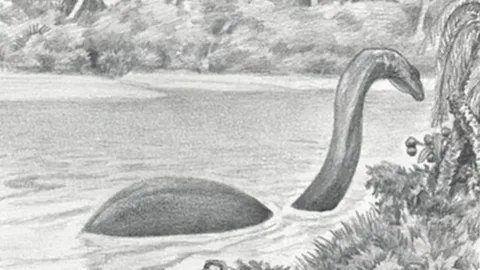
In 1959, Bernard Heuvelmans published the book "On the Trail of Unidentified Animals." In this important work, he first used the term "cryptozoology"—the science that studies animals hidden from scientists. He described the search for them and their successes. The author's credo for cryptozoologists is to follow legends and myths, but trust only concrete research. In short, Heuvelmans called for the privilege of searching to be taken away from random people and transferred to specialists. The first cryptozoologist expressed concern that an unscrupulous poacher might, say, shoot a mokele-mbembe with a sniper rifle...
As for the "brontosaurus" itself, a 1959 book cautiously described the African monster as a 10-meter-long swamp creature, occasionally spotted from fishing boats. It was quite agile, but did not attack people. The author was wary of classifying it as a dinosaur. He envisioned a giant snake with horny plates on its back—a living fossil of an as-yet-unknown species.
Among the adherents of the new science, many were enthusiastic in favor of the "living brontosaurus." Others passionately compared the mokele-mbembe to the "plesiosaur" from Loch Ness, Scotland. One way or another, cryptozoology gained many adherents, including in our country.
Roy McCall of the University of Chicago decided to travel to the Congo fully armed with modern tools. He was determined to find the legendary mokele-mbembe at any cost. But for a long time, he was distracted by another "long-necked" creature. 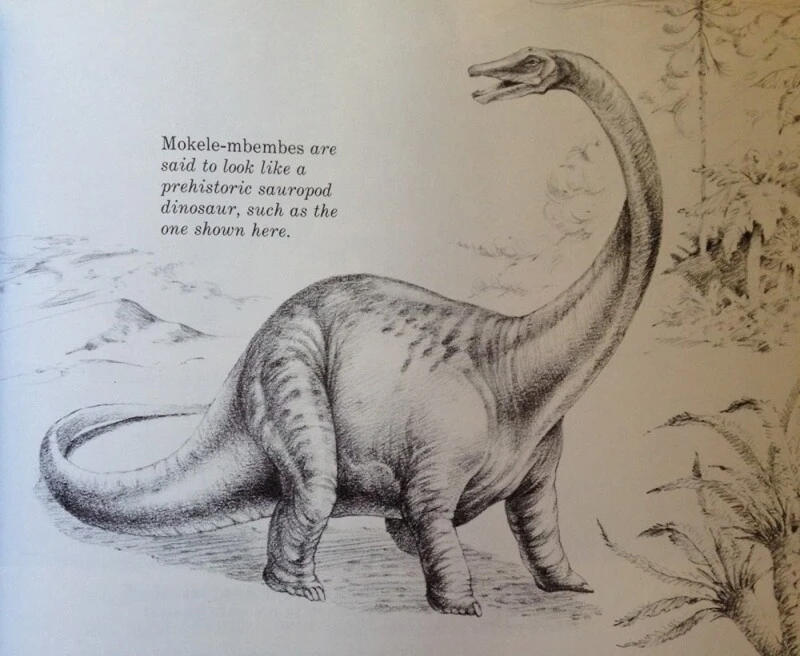
And so, in the early spring of 1986, Roy McCall sets out for the swampy marshes of the Congo. A daunting trek through thorny thickets and swamps. Wearing special clothing, sometimes wearing masks, the enthusiasts finally assemble the boat they'd brought in pieces in backpacks, mount the motor, and begin to plow the Sanga River and Lake Tele. The dinosaur hunters' cameras are always at the ready. They desperately want to return victorious, to take revenge on the skeptics' ridicule! After all, Hollywood even made a cartoon parodying their search for a hybrid of elephant, giraffe, and python...
"Mokele-mbembe!" McCall whispered during another cruise across Lake Tele. Camera lenses instantly focused on the foamy wake crossing the narrow bay. The water churned with the swift movement of the long, unknown creature. The men in the boat rose. Their cameras rattled in long bursts, like machine guns. The long-awaited moment! The elusive monster finally appeared before the expedition members. The surface of the bay was ripped open by the ridged fins of a living fossil...
Then the foamy trail disappeared. Mokele-mbembe disappeared beneath the water. The boat circled nearby until evening, lowering an underwater camera with a powerful flash into the lake, but nothing more was recorded. The mysterious serpentine beast seemed to vanish.
The scientists' impatience was so great that the films were developed on site, in an African city. And the mystery of the event, which had lasted less than a minute, was revealed. Analysis of the enlarged images revealed... a female crocodile, followed by a multitude of male crocodiles in single file. A common African wedding ritual...
However, cryptozoologists are far from disappointed. They believe they have obtained an excellent result—a real explanation for the mysterious phenomenon. At the same time, Roy McCall's book about the first expeditions to the Congo, "Looking for Mokele-mbembe," was published. While there's a general belief that some species of dwarf dinosaur could well have survived in this land of impenetrable, low-growing jungle and swamps, the book also contains an element of doubt. It describes the following amusing episode. McCall showed local fishermen the latest edition of "The Life of Animals." The African-Americans delighted in examining the pictures and excitedly shouted, "Mokele-mbembe!"—pointing first to a hippopotamus, then to an elephant. Pythons also evoked similar enthusiasm. Images of grizzlies puzzled them, but the long-necked diplodocus didn't evoke any noticeable emotion...
Currently, the International Union of Cryptozoologists unites 800 scientists from 20 countries. Drawing on legends and myths, they are engaged in a targeted search for mysterious animals and incomprehensible phenomena in wildlife. This isn't stubbornness or a pursuit of sensation, but painstaking scientific work to understand the planet's biosphere. While there may be setbacks along the way, there will also be victories. 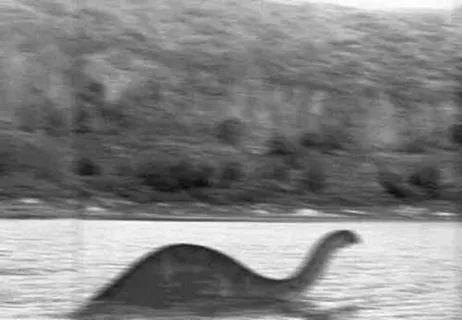
Add your comment
You might be interested in:














20 Personal Photos of Celebrities That Ooze Vintage
Animal Paws and Claws: 50 Photos That Will Surprise Even

America's Cheese Caves: How and Why the US Government

Fascinating Facts to Blow Your Mind (10 Photos)
Global Sex Symbol: Rare Photos of Monica Bellucci (26

How an Airline Pilot Was Sucked Out of the Cockpit

Thieves Stole NVIDIA Rigs Hunting for Scarce GPUs, But Got

This Korean Photo Studio Might Just Take the Best Family

22 Reasons to Stock Up on Stress Relievers If You Have Kids
