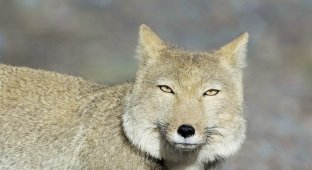
How square-headed foxes terrorize the Tibetan people Fauna (5 photos)
The Tibetan fox appears to be a completely enlightened creature, but it doesn't feed on prana; like other foxes, it enjoys eating meat with meat. Therefore, all the local animals that can fit in its mouth see it in their nightmares, but most often right behind them, because the Tibetan fox is a master of disguise. It knows exactly which side to sneak up on to catch you off guard. 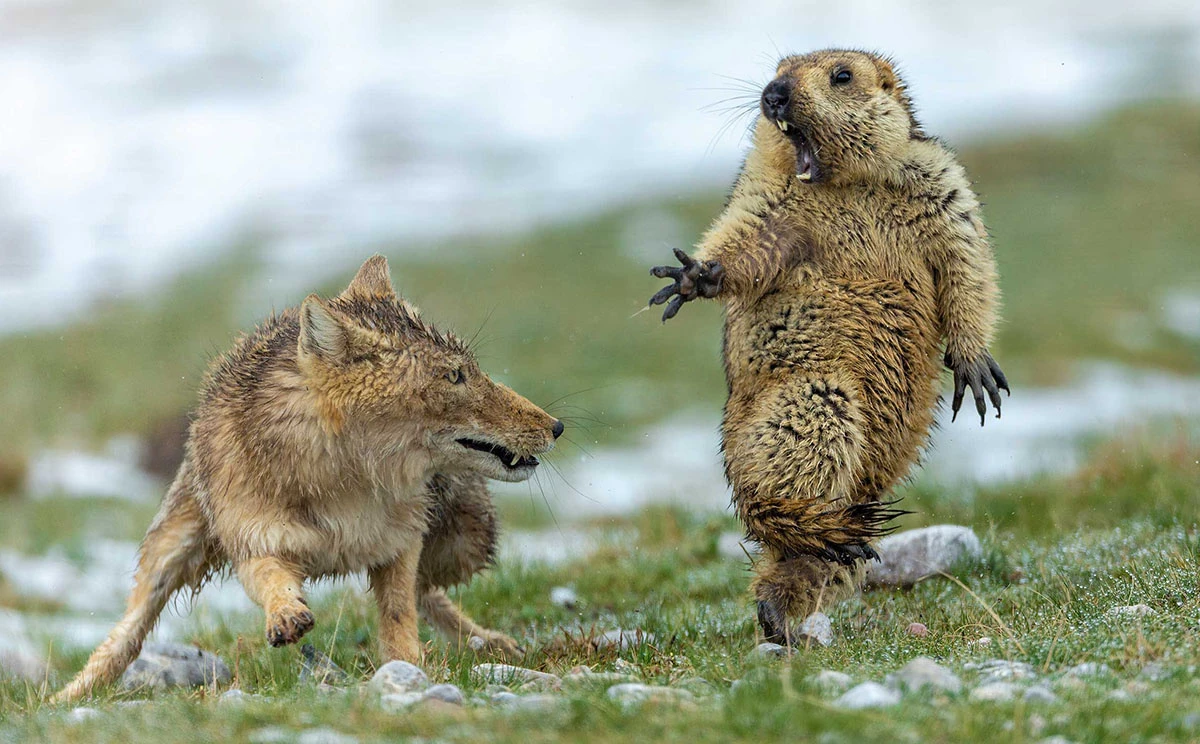
Absolutely everyone who has seen Tibetan foxes in person or in photos notes their very strange appearance: their broad face appears square due to the unusual growth of fur on their cheeks, their head is large, their ears are short, and their gaze is completely intelligent, mischievous, piercing, and human. It seems as if they are about to greet you and ask, "What are you doing here, traveler?" 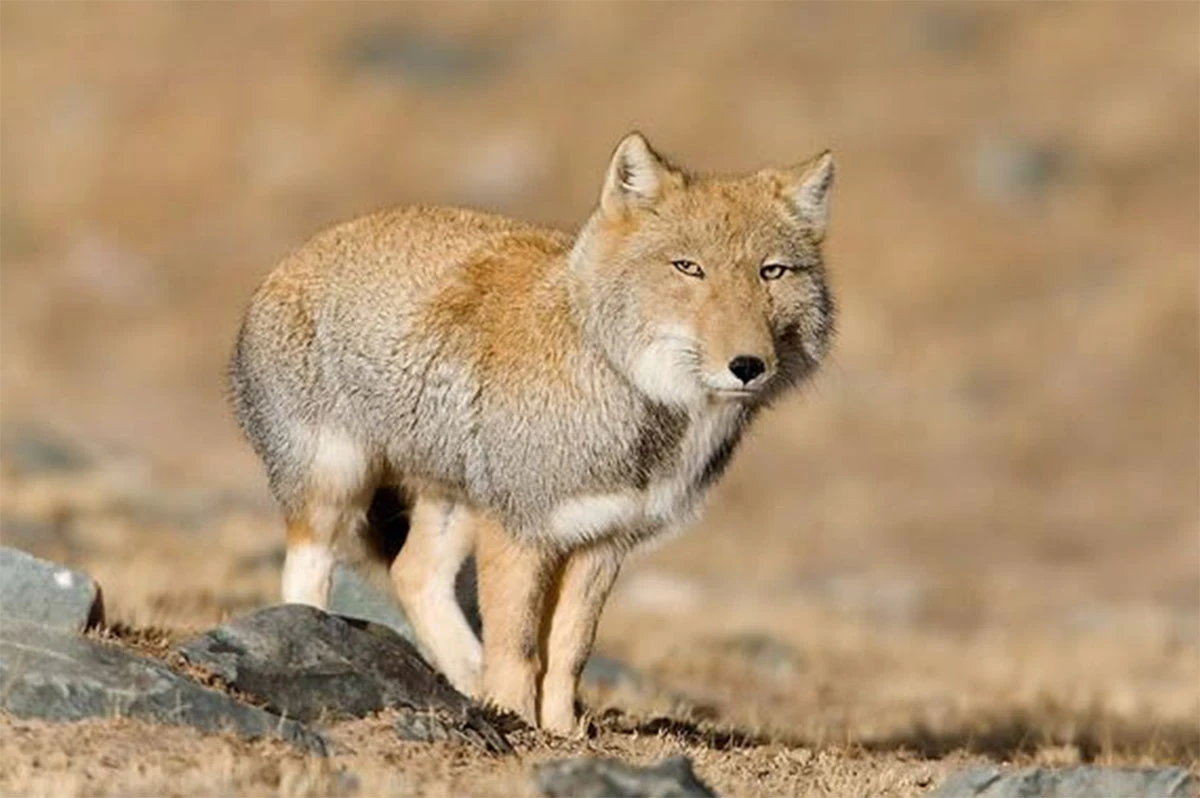
Tibetan foxes have very expressive facial expressions, but a serious, focused, background expression is always maintained, no matter what the fox is doing at the moment. 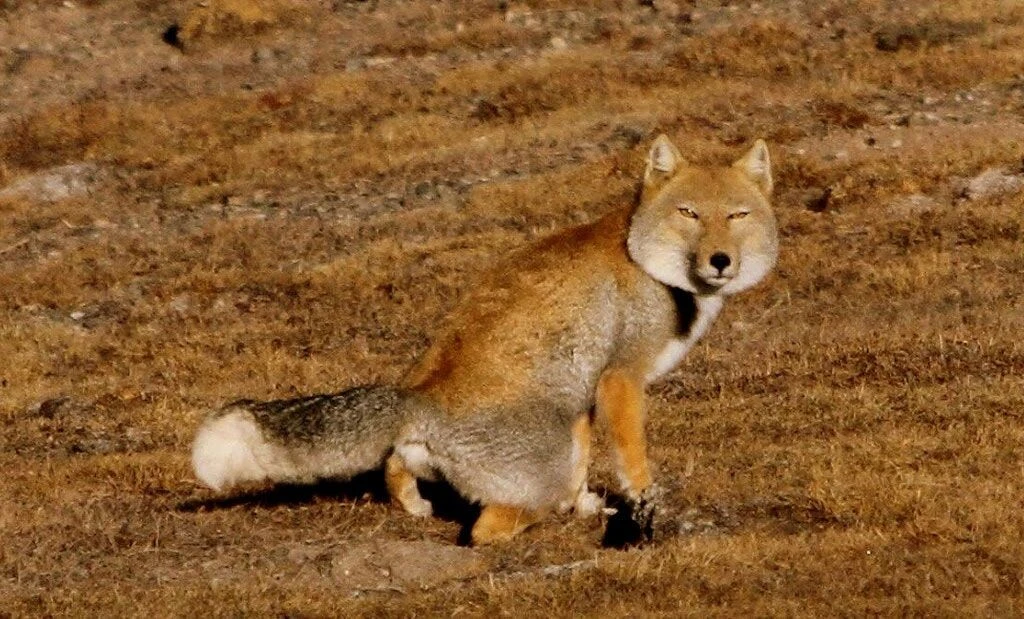
The body of Tibetan foxes also differs greatly from typical fox proportions. The Tibetan fox is stocky, with an elongated body and a shortened tail.
Why does it look so strange? Because it needs to:
The wide and large face allows the fox to better warm the air entering its nostrils to prevent hypothermia, while the shortened ears conserve heat by reducing heat loss.
The massive body accommodates large lungs, which allow it to breathe normally in the thin air of high altitudes and retain heat better.
And the shortened paws provide a more secure, strong connection to the ground, which is important for
the predator's daily survival meditations in the cold and windy highlands. The Tibetan fox's habitat begins at 2,500 meters above sea level, reaching an upper limit of 5,000 meters.
So everything has been thought out. 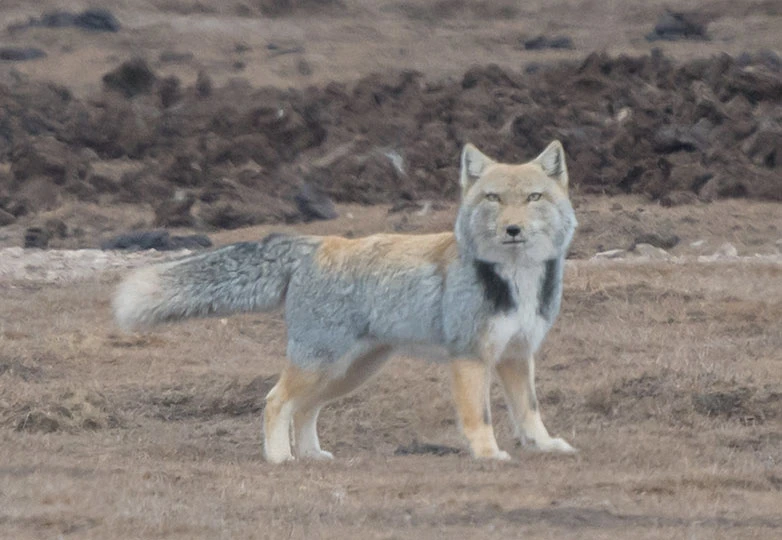
And the fact that the fox itself looks like a piece of ancient fossil—well, excuse me. It lives well, hunts skillfully, eats its fill, and is happily married: foxes live in pairs, are strictly monogamous, spending their entire lives with the same partner. 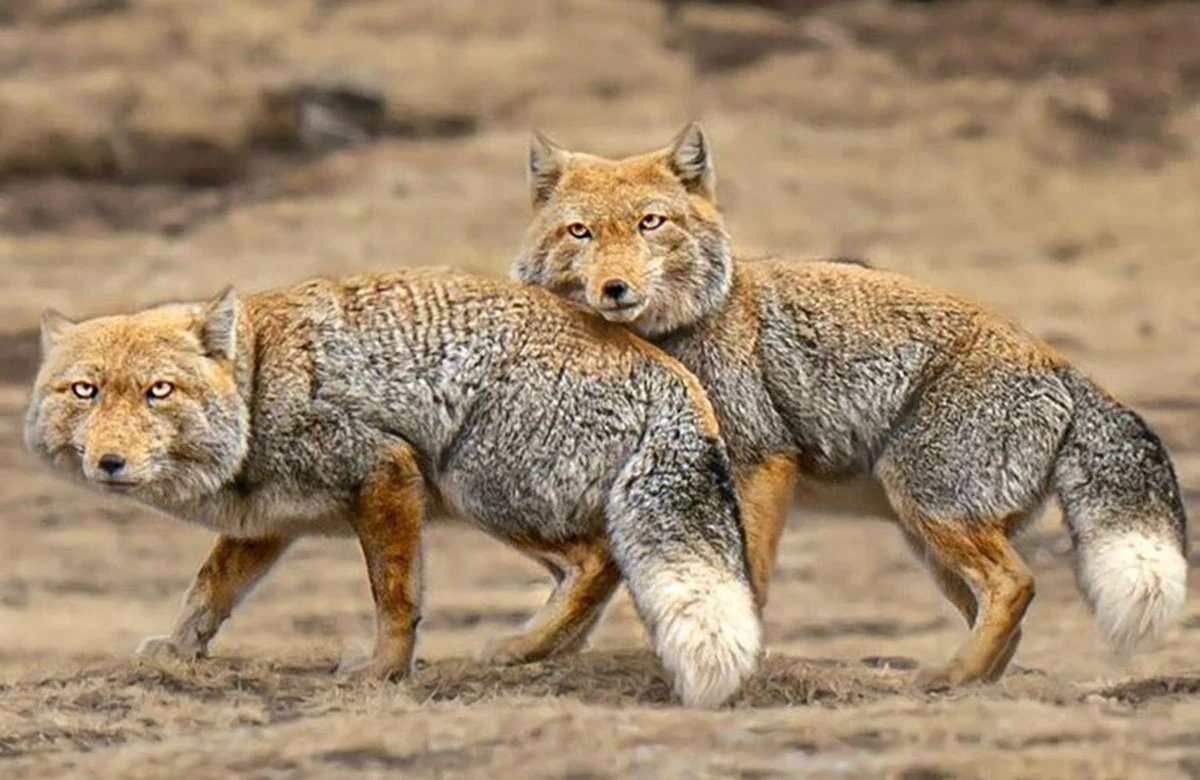
And they do everything together, including hunting and causing frantic camera clicking among the rare bipeds who dare to intrude on their domain. Would you want such foxes living in our forests? Their fur has no commercial value, so hunters wouldn't bother them. Lucky them. Tibetan foxes have a somewhat wiry fur, and their coloring seems faded—a grayish-reddish, like that of wolves or semi-wild dogs.