Interesting facts about a first-class avian hunter and master of camouflage. 
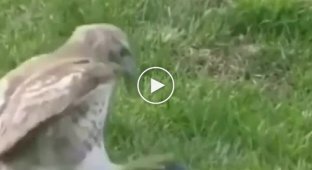
The sparrowhawk is a bird that has hacked the system. Instead of flying farther to warmer climes in winter, it migrates closer to the city. Why? Because its avian brain has figured out this: 20% of the effort yields 80% of the results. So the hawk perches near bird feeders and snatches those that come to peck at the seeds. What a sly one, he's got himself a buffet! 
The Eurasian sparrowhawk, or lesser sparrowhawk, is one of the most compact members of the accipitridae family. Females grow to only 40 centimeters in length, weighing around 350 grams, about the same as a small pigeon. Males are even smaller—an adult male can weigh almost half as much as his chosen mate. But this toy-like size doesn't detract from their hunting reputation. 
This tiny hawk kills over 1,000 birds a year! Just think about it: that's almost three victims a day! And not just any birds: sparrowhawks can bring down birds almost twice their size. Their diet includes a wide variety of small and large birds, from sparrows to crows. Few predators can compete with them in the number of lives they claim. This is because sparrowhawks have learned to exploit their strengths. 
Due to their small size, these birds are ideal for hunting in the most inconvenient places for other birds of prey. Treetops, dense undergrowth, branches, bushes, and thickets—here, size is not the deciding factor, but agility, intelligence, and reaction speed. For these qualities, sparrowhawks have always been prized by hunters. They are easily tamed and trained to work alongside humans. Plus, their small size means they are easier to care for than golden eagles and falcons. These birds were previously kept for quail hunting, hence the name—sparrowhawk. But in the wild, they prefer a different kind of prey, focusing more on small forest birds. 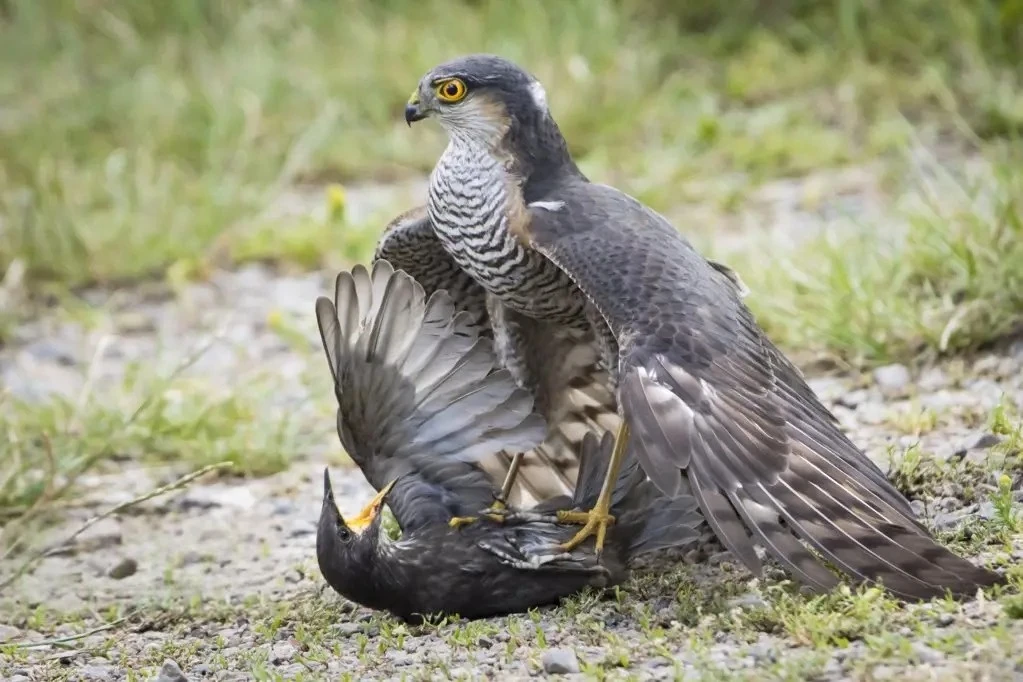
Hawks can be found throughout almost all of Eurasia, with the exception of desert and steppe regions. During the warmer months, hawks hunt, nest, and raise their young here, migrating to South Asia for the winter. However, not all birds do this. Nowadays, more and more individuals are staying put. Why bother flying to the other end of the world? You just need to know the area and use your head, and then the prey will fly right into your clutches. From the forest, birds are moving closer to people: to nearby parks, groves, and some even venture into the city. After all, the prey here is plentiful! Flocks of pigeons in parks, crows from garbage dumps, small birds at the bird feeder. All this—a light breakfast, lunch, and dinner! 
Sparrowhawks are especially fond of feeding sites. It's practically a buffet: take your pick! The predator dartingly and boldly flies into a flock of startled birds, snatches its prey, and disappears between the trees in a split second. So, if things suddenly become suspiciously quiet at the bird feeder, it might not be the frost, but someone's carefully planned hunting route. 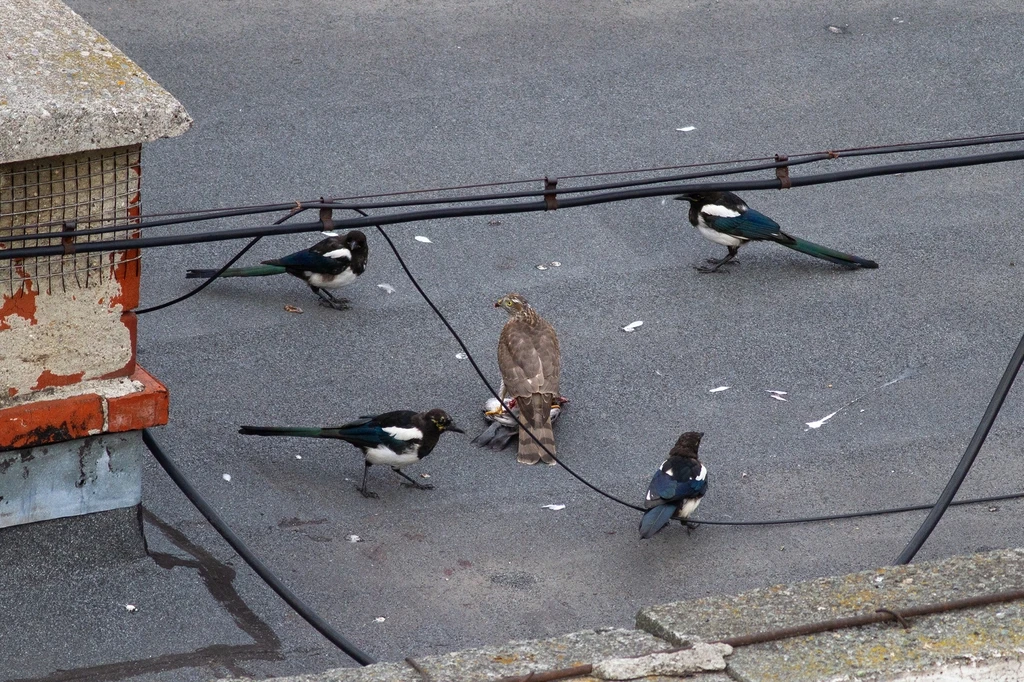
Now you, as witnesses, don't have long to live...
Despite this alarmingly massive hunting, hawks do not cause significant damage to small bird populations. Predators primarily target the weak, sick, and inattentive birds, maintaining a natural balance. The mass disappearance of birds from feeders is a temporary effect of the predator's visit, and after the hawk leaves, everything quickly returns to normal. 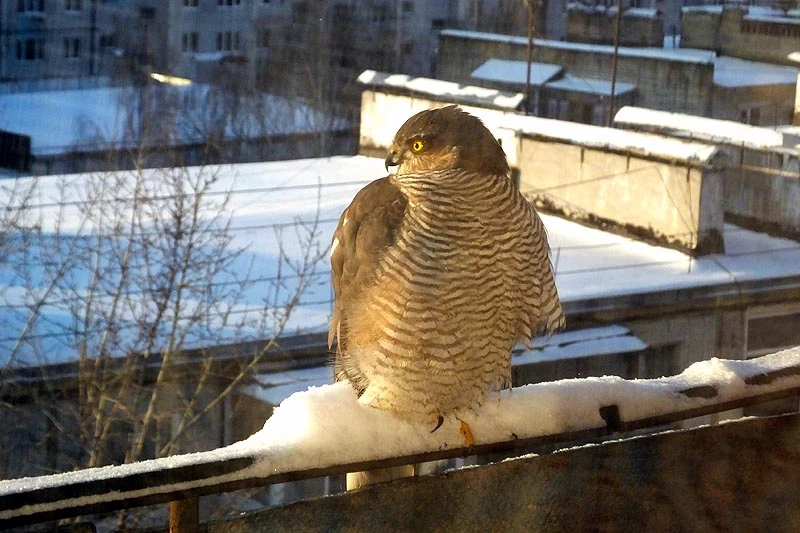
The energy saved from migration can be used for reproduction. Sparrowhawks form strong, monogamous families and remain faithful to their partners. In the spring, the male proves his love by hunting for bird carcasses, requiring even more frequent flying and killing. This ensures that his chosen mate eats properly and gains weight before the upcoming egg-laying season. 
The newlywed is also responsible for choosing a nesting site and building it. This is a crucial task, as the pair will spend subsequent breeding seasons in the same spot. However, males sometimes cheat – instead of building from scratch, they use nests of wood pigeons or crows. After settling in, the female lays 4-5 medium-sized, speckled eggs and incubates them vigorously for just over a month. The chicks emerge covered in soft white down and are completely helpless. After hatching, the parents have to hunt even harder. 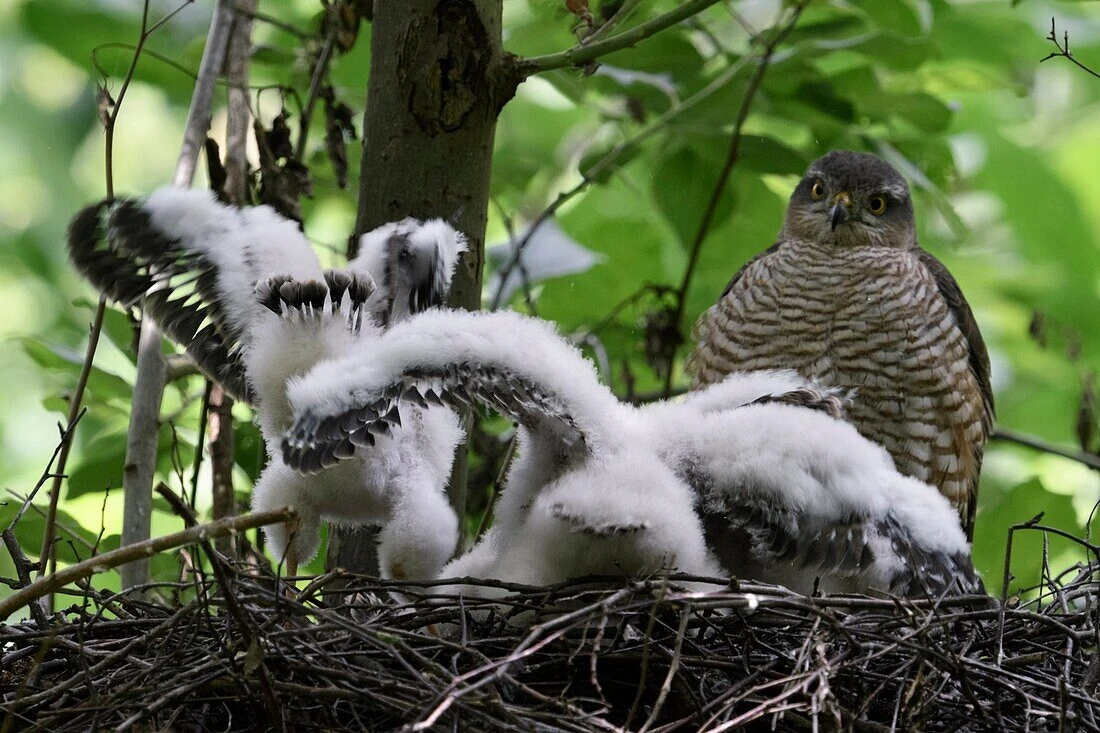
Sparrowhawks grow quickly: within a month, they emerge from the nest and settle on nearby branches. A month later, their parents stop feeding them, and the chicks must learn to find food on their own. 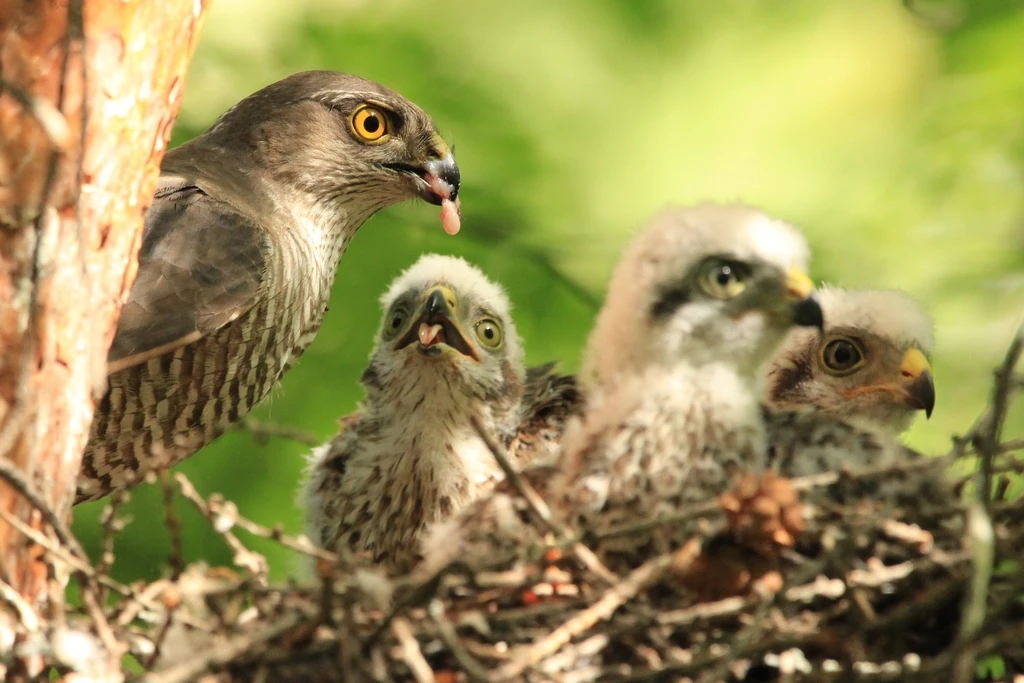
This is no easy task: the hawks must constantly watch to avoid becoming prey to larger predators—owls, peregrine falcons, and martens. As a result, only a third of the young survive the first year. If a young bird is lucky, the following year it will become a parent itself and continue to terrorize smaller birds in forests, parks, and cities.
Add your comment
You might be interested in:














Margaret Hamilton Dies at 90: The Story of the Moon

25 Incredibly Beautiful and Rare Stones (26 Photos)

16 Fascinating and Surprising Facts About Life in Sweden
30 Everyday Details That Will Change How You See the World

Hypnotic and Oddly Satisfying GIFs That Show How Food Is

"What Is This Thing?": 20+ Bizarre Objects That

13 "Healthy" Habits You Should Actually Quit (14

Cassini Spacecraft Reveals Saturn’s Rings (10 Photos)

How Germany Got a Mountain Made of Salt (6 photos)
