13 years in a locked room: the horrific story of Jeanie Wylie (6 photos + 1 video)
Straitjacketed and tied to a potty chair, Genie Wiley saw nothing but the darkness of her poor bedroom until she was 13. She lived with her parents and siblings, but knew no love or joy. Her only toys were empty margarine jars, magazines with torn-out bright pictures, and spools of thread. 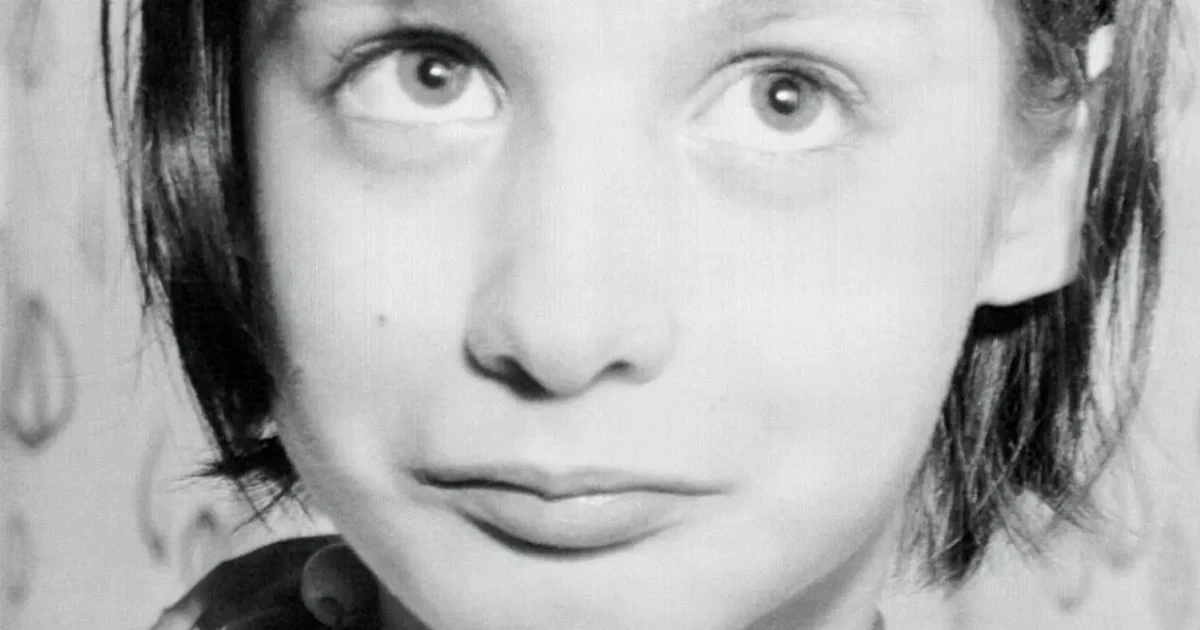
When Genie was about two years old, a pediatrician told her parents she showed signs of mental retardation.
Her father, Clark, completely isolated his daughter. He forbade her mother, Irene, who was visually impaired and mentally ill, from seeing the little girl. Every day, he locked her in a damp bedroom, and at night, she slept with her hands bound in a "cage crib" made of wire and wood.
Silence reigned in the Wiley house. Her mother and older brother were forced to speak softly, almost in whispers. Not a sound came from the television or radio.
The girl could not speak. From childhood, whenever she made a sound, her father barked at her like a vicious dog or beat her, ordering her to be quiet.
Clark fed his daughter a porridge of milk and rice cereal, sometimes adding a boiled egg. The girl was malnourished and never learned to feed herself. 
Nutrient deficiencies slowed her physical development and exacerbated her mental problems. She was so tightly bound to the potty that she could only move her arms and feet. By adolescence, she understood only twenty words.
Her limited vocabulary consisted mostly of negative or aggressive words, including "stop," "stop," and "no."
Genie's story captured the public's attention after her rescue in November 1970. It shocked Americans but inspired psychiatrists and linguists. The girl grew up isolated, far from society and normal development, which categorized her as a "feral child."
A nonverbal teenage girl gave scientists a rare opportunity to study what happens to the human brain when it's not exposed to external stimulation.
Gini could help test the critical period hypothesis. This theory suggests that there's a specific stage in human development—from childhood to adolescence—when the brain most effectively acquires its native language. The scientific community wanted to see if a child could learn a language after this hypothetical window closed.
The girl attracted the attention of more than just scientists, who saw her as a research subject. Well-meaning people, eager to give her love and care, wanted to take her under their wing. A real struggle unfolded around her. 
Genie's new life began in November 1970, when her mother took her to the Department of Social Services in Temple City, California. But it wasn't guilt that brought her there—she was seeking help not for her daughter, but for herself. Irene suffered from cataracts in both eyes and wanted to apply for social assistance, but due to her near-total blindness, she went into the wrong office and entered the general services department.
Genie's strange behavior and unusual gait immediately attracted the attention of social workers. They believed Genie was no more than six or seven years old and possibly had severe autism.
The girl drooled, spat, and held her hands in front of her like a rabbit. An examination revealed that her language skills were on par with a one-year-old.
Juvenile Services began their work. They visited the Wiley family home and took Jean away. Her brother, John, five years older, had an opportunity to escape their domineering father, who slept by the front door with a shotgun in his lap.
His father likely locked Genie away, trying to protect her from the nightmares of the outside world.
Clark's true motives remained unknown. He shot himself with a shotgun on the day he was scheduled to appear in court on child abuse charges. The suicide note read, "The world will never understand." 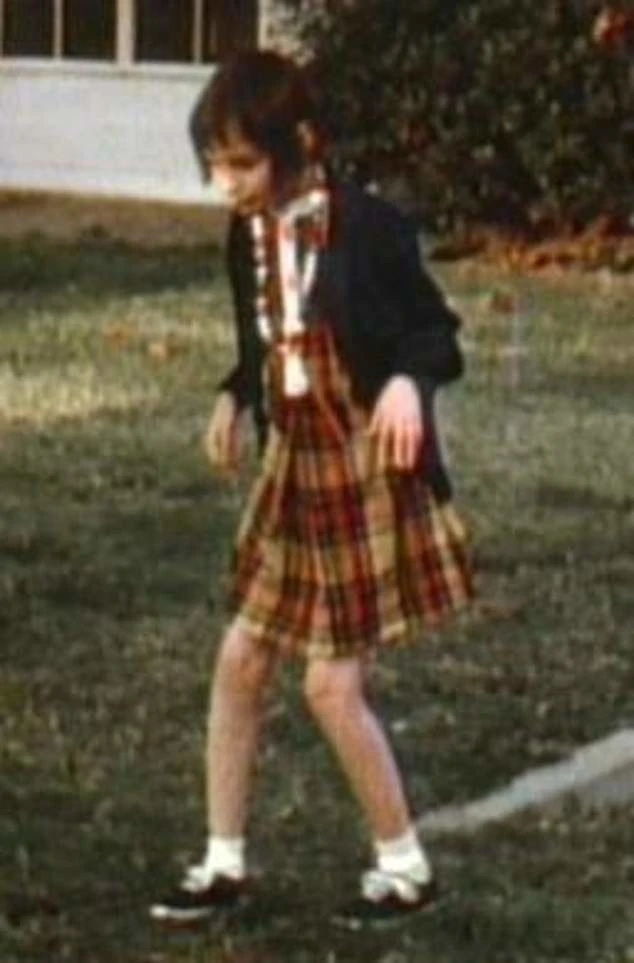
Irene did not avoid trial, but pleaded not guilty, citing her husband's coercion. She was acquitted, and agreed to place her daughter into state care.
For five years, Genie was under the care of specialists at UCLA Children's Hospital. She spent time both in the hospital wards and at the staff's home.
Linguist Dr. Susan Curtiss, who worked with the girl, explained that Genie was a pseudonym chosen to protect her identity. In the 1997 documentary "Secrets of the Feral Child," she described the girl as being like a genie in a bottle, having bypassed childhood and found herself in society.
Curtiss remained by Genie's side throughout her recovery. In 1977, she wrote the book "Genie: A Psycholinguistic Study of a Modern Feral Child," sharing her observations and experiences.
In an interview with ABC News, the expert admitted: "I was a very young woman who had a unique opportunity. Genie wasn't socialized, and her behavior could have seemed terrible. But she simply captivated us with her beauty."
By the end of treatment, Genie had learned to use words and expanded her vocabulary. However, she was never able to understand grammatical rules or use them in speech. This supported the hypothesis of a critical period in the development of language skills.
For example, when talking about her abusive childhood, she would say, "Dad hits with his hand. Big stick. Genie cries." 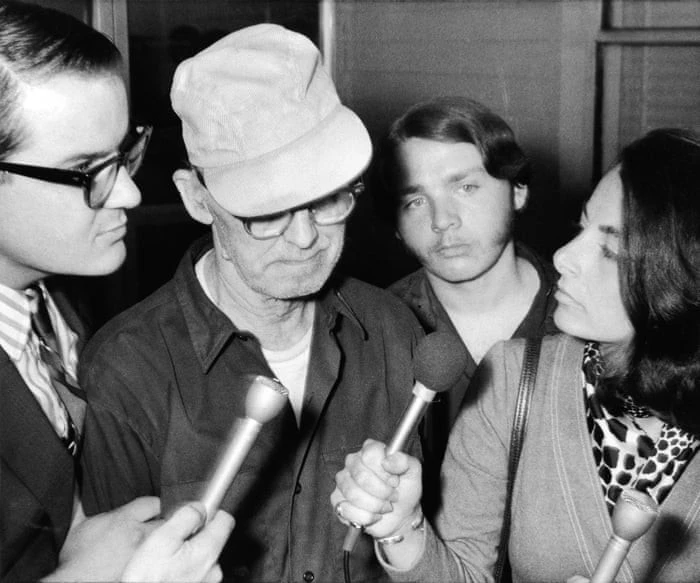
Genie's father, 70-year-old Clark Wiley, shot himself on the day he was scheduled to appear in court.
To avoid contracting measles in the hospital, the girl was transferred to the home of Jean Butler, one of the rehabilitation therapists. The new environment had a beneficial effect on her skills.
Genie quickly mastered basic skills, learning to use the toilet and dress herself. She enjoyed excursions and delighted in new sights and sounds.
However, when Butler asked to become her foster mother, the Department of Social Services refused due to the living conditions.
Genie was placed in the care of Dr. David Rigler and his wife, Marilyn.
Butler claimed that the girl was taken from her because she wanted to give her a happy family, which distanced her from the unscrupulous researchers. Her colleague Rigler, in turn, accused the woman of seeking to exploit Genie for her own gain and fame.
The girl was not very sociable, but everyone who worked with her noticed her magnetism.
Dr. Rigler noted, "Everyone liked her. She had the ability to connect easily with people. This trait became more noticeable, but it was essentially there from the beginning." 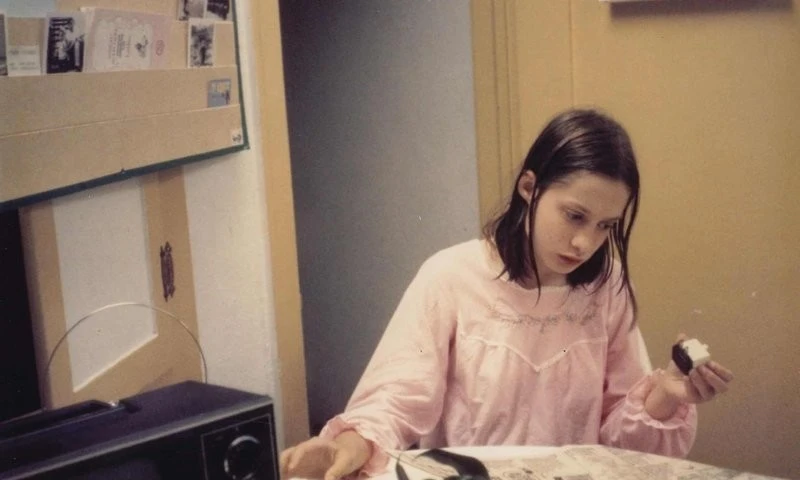
In 1975, Genie experienced further upheaval. The National Institute of Mental Health stopped funding Dr. Rigler's project, and the 18-year-old returned to her biological mother. After cataract surgery, Irene partially regained her vision, but she was unable to cope with her daughter's needs.
Genie moved from one foster home to another, but none of them could provide the care and stability she felt in the Riglers and Butlers. She allegedly suffered abuse at the hands of her new caregivers.
When she was returned to Children's Hospital, she had lost all communication and was completely mute. Her whereabouts were later kept secret.
It is unknown whether Genie is still alive, but if so, she is likely still a ward of the State of California and will spend the rest of her days in a nursing home. She would have turned 68 on April 18th of this year.