Imagine an underwater snake as thick as a grown man's thigh. It doesn't spit venom, but it's toxic from the inside. Its mouth is full of sharp, curved fangs. And it doesn't have one mouth, but two! Can you imagine it? Tropical fishermen don't even need to imagine it. They encounter this monster regularly. This monster fish from a horror story is a giant moray eel. 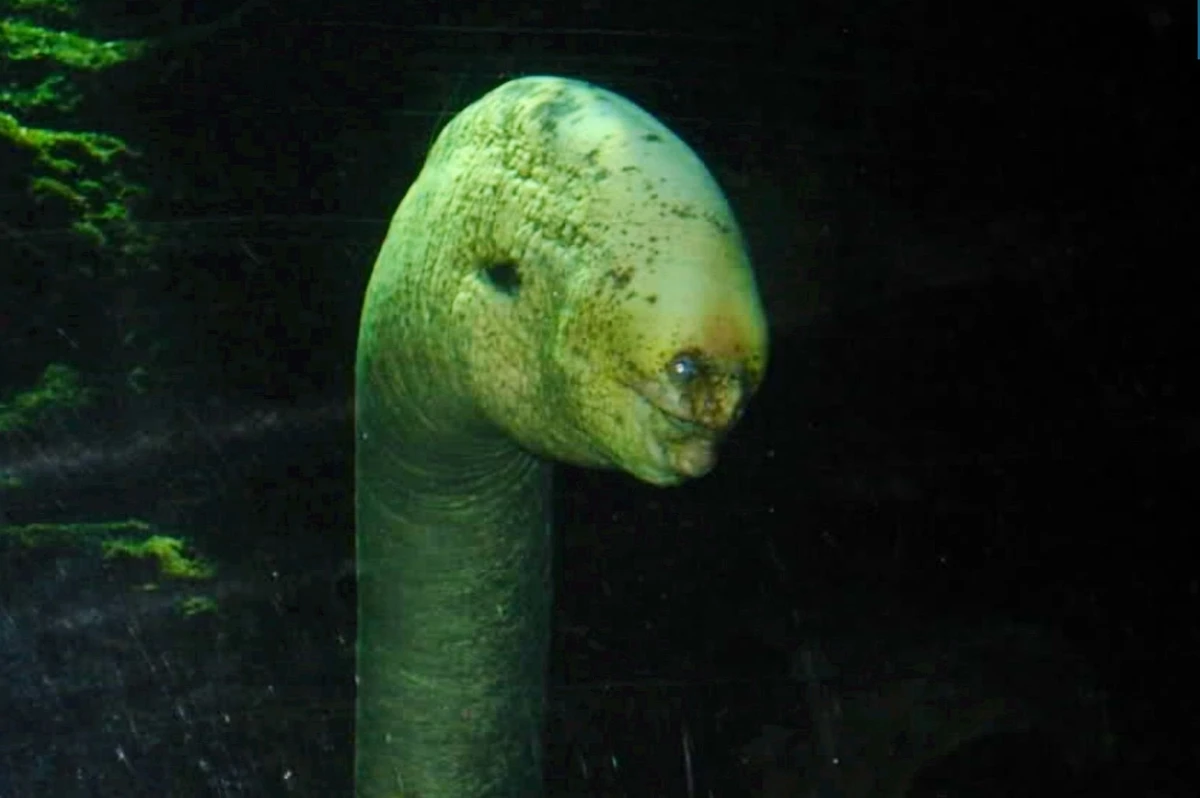
Welcome to the ocean. You are not welcome here.
The moray eel lives in equatorial seas and oceans: its range extends from the east coast of Africa to northern Australia and the western Pacific Ocean. Its range is vast, but this predator prefers to live in densely populated coral reefs. 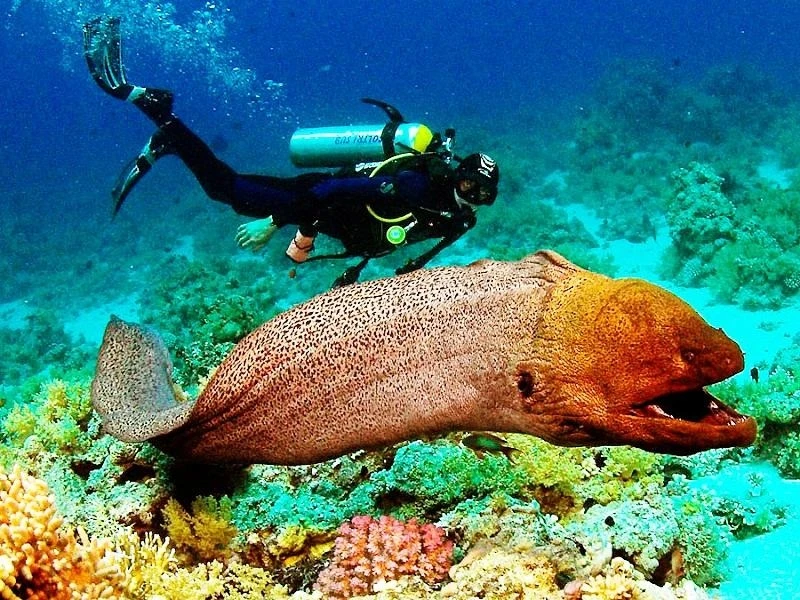
All sorts of people have come to my ocean, damn tourists.
The moray eel is 3 meters long and weighs 30-50 kilos of hatred for everything around it. This giant fish snake is the plumpest of all moray eels. But don't be fooled by its bulky size. This colossus is lightning fast in its relentless fury, and its agility rivals that of a cat. 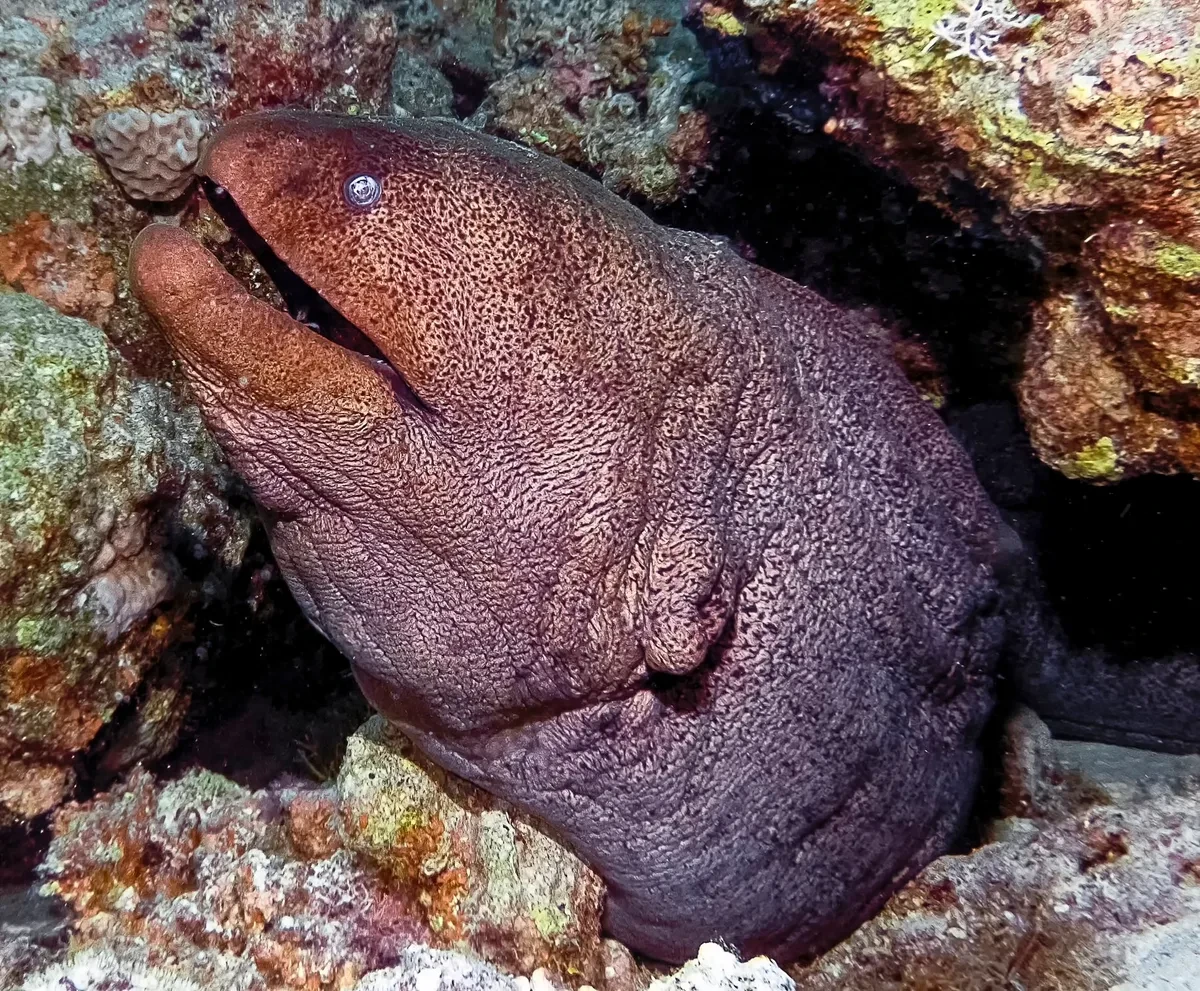
The grace of a cat, the gaze of a potato.
The moray eel is devoid of any superfluous features. It lacks pectoral and pelvic fins, and instead of scales, it has smooth, slippery skin. All this is necessary to move through the water with minimal resistance. The moray eel can't afford any extra growths on its body for another reason: it lives in the winding corridors of coral reefs, caves, and cliffs. But as if all this weren't enough, nature thought. "I need to come up with something else, add the icing on the cake, so to speak," she thought, and—ta-da! She gave the moray eel a second pair of jaws! 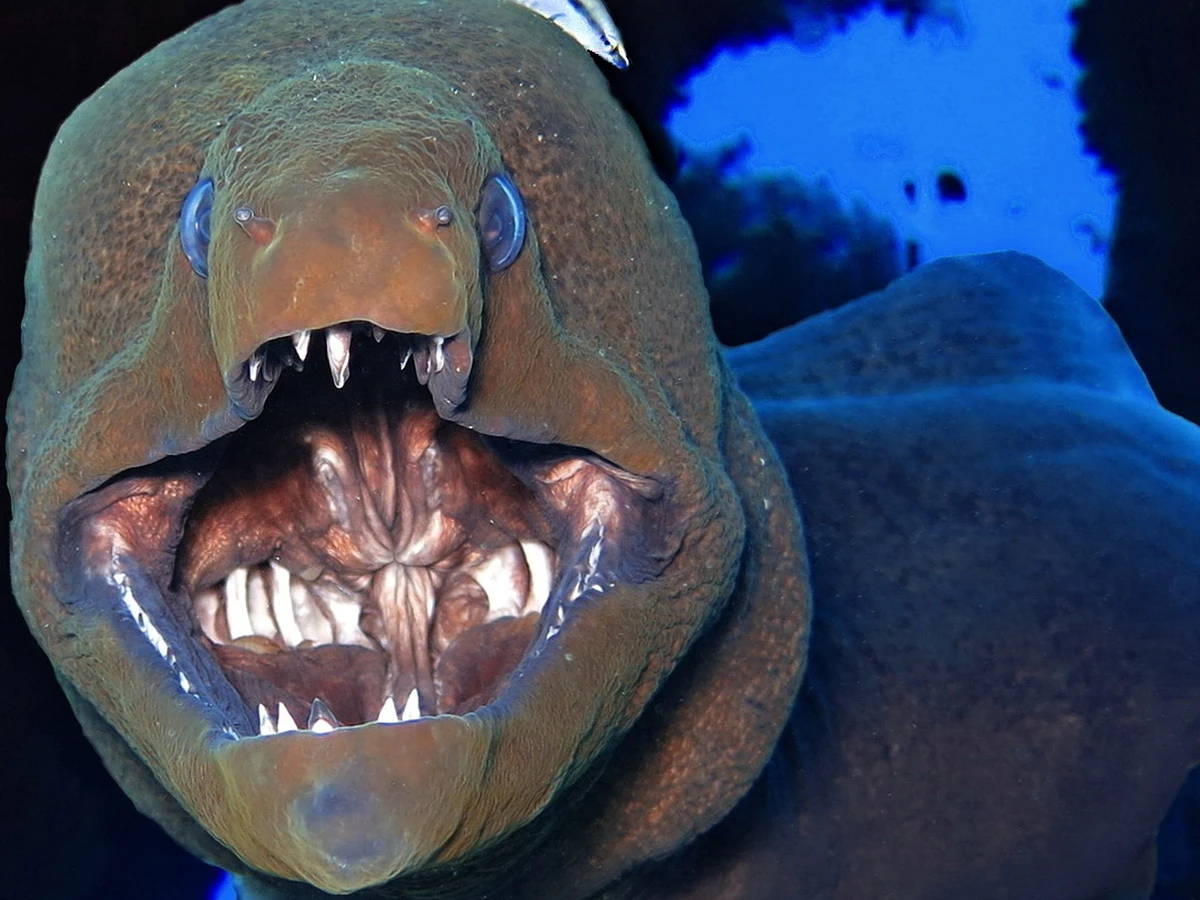
Mucus not only helps streamline the fish's body, but also protects the skin from damage in narrow, winding passages.
Ray-finned fish (which includes the moray eel) typically suck in their prey. To vacuum the ocean, they open their mouths sharply. The volume increases, the pressure decreases, and the hapless victim, along with the water, rushes straight into their mouth. But moray eels don't take the easy way out. These predators lie in wait among rocks and corals, so the expansion of their mouths necessary to create the deadly display described above is limited to a narrow space. And they're hungry! So moray eels have chosen a more efficient and spectacular method. They've developed second jaws. 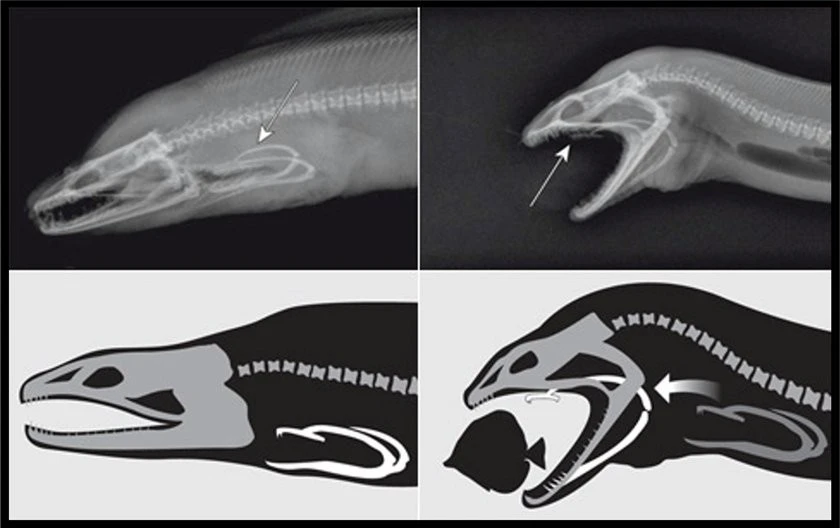
These jaws are quite difficult to see, as they retract deep into the fish's throat when at rest. 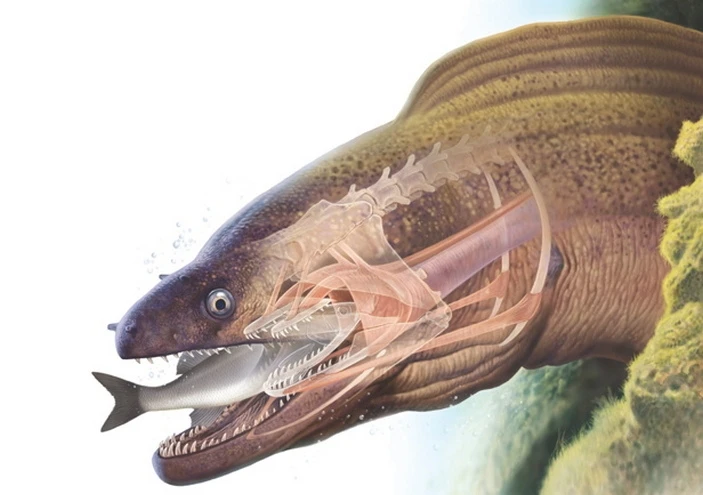
How I swallow a pie in the school cafeteria.
You won't be able to see the second mouth even if you really wanted to. And thank goodness! It's located right in the pharynx. It's believed to have developed from modified gill arches. This deadly trap works on the following principle: first, the moray eel leaps out from ambush and seizes its prey with its regular jaws. Then, in a split second, it extends its pharyngeal jaws, latches onto the doubly doomed victim, and pulls it into its pharynx. 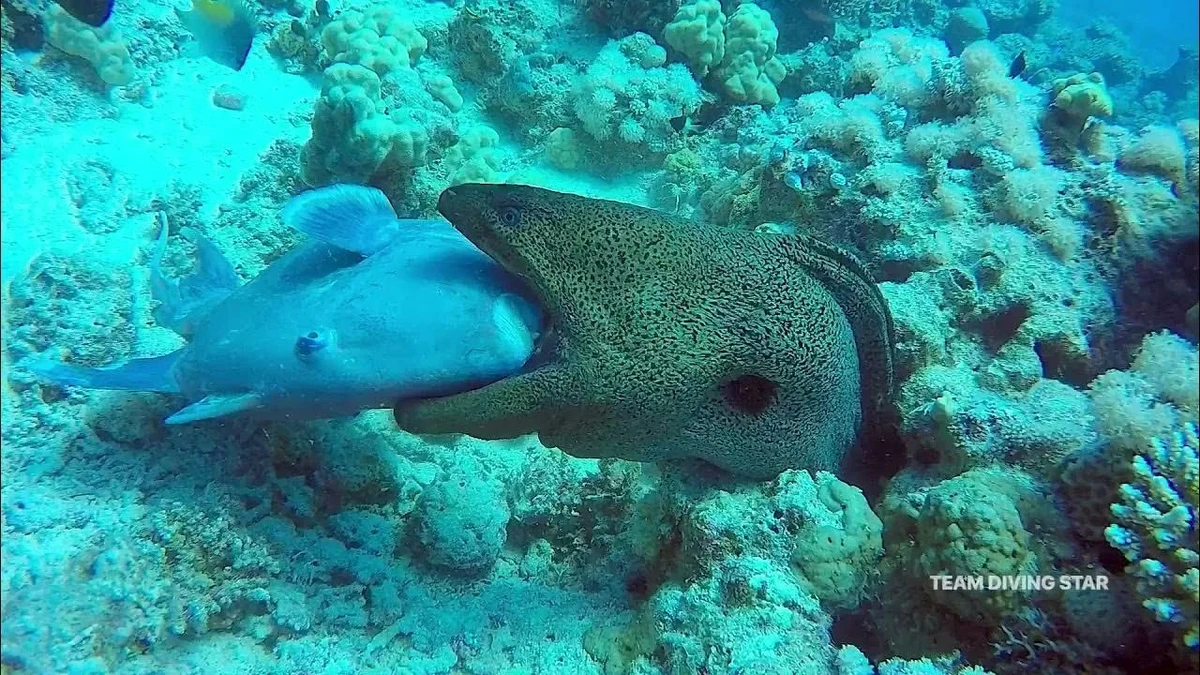
Hop-stop, we came from around the corner.
This feeding method turned out to be so productive that the moray eel's muscles responsible for sucking food atrophied over the course of evolution. In fact, the second jaws are a brutal method of swallowing! So successful, in fact, that the fish hunts prey larger than itself. For example, young sharks and old octopuses! The moray eel swallows small fish, crabs, lobsters, mussels, and oysters almost without chewing (I wish I could live like that!). 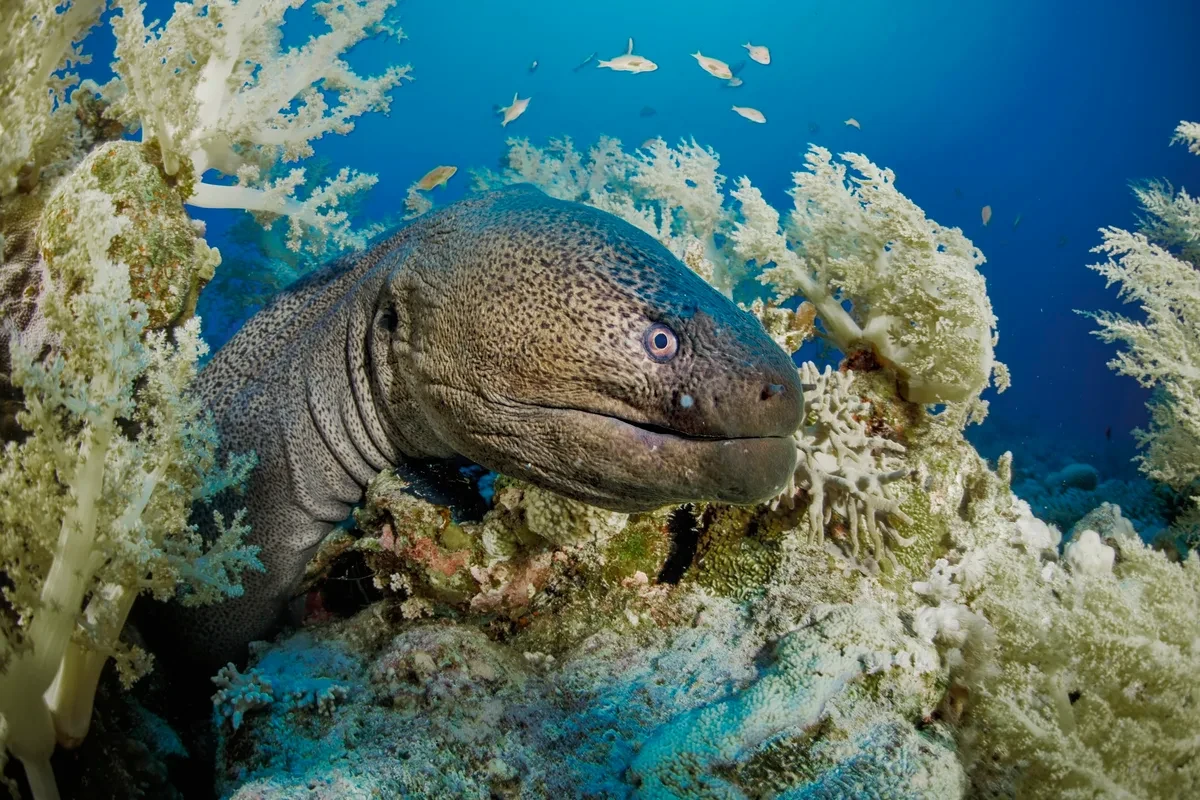
A perpetually dissatisfied man who subsists solely on delicacies.
Despite his violent temper and the glassy gaze of a ruthless killer, even such a character managed to make friends! I present to you the Mediterranean shrimp! This friendship, however, is of convenience. The shrimp lives on the fish's body, cleaning it of parasites and food scraps. In exchange, the little fellow receives shelter and reliable protection in the form of one of the ocean's most fearsome predators. Now that's a treat! 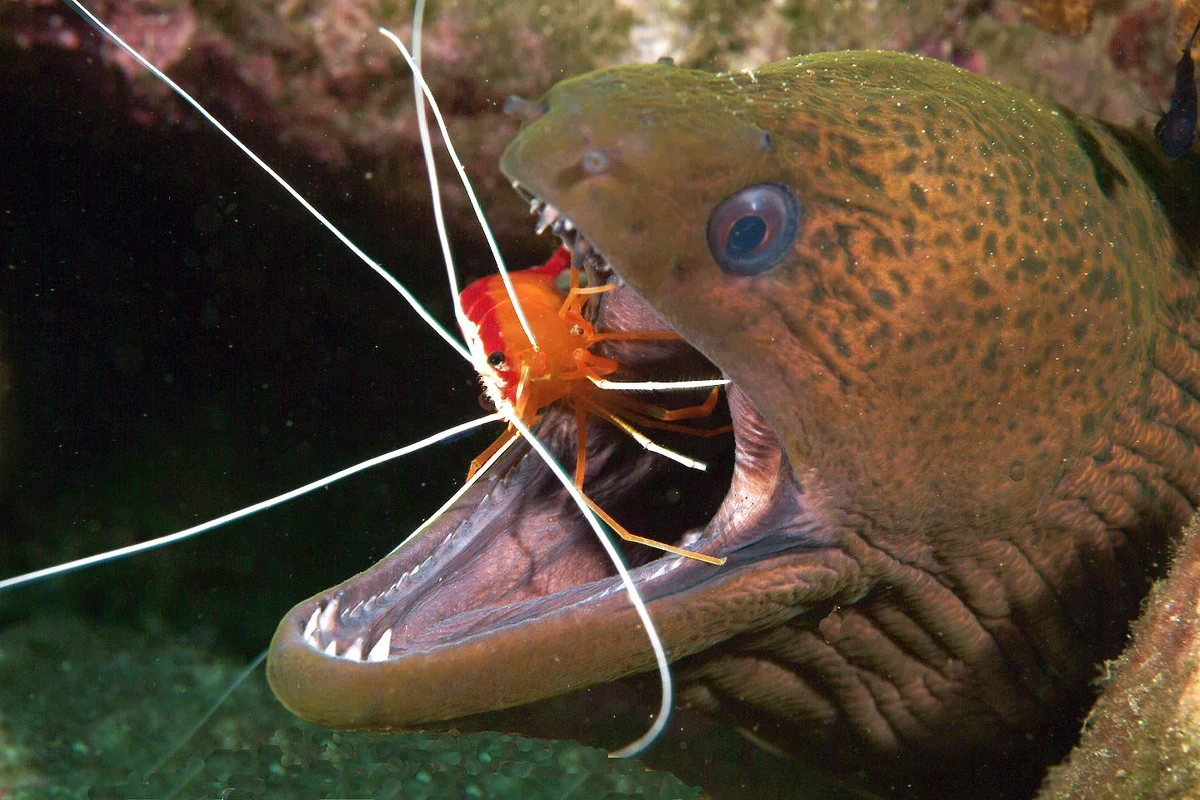
Okay, we'll remove the sixth tooth, fix the seventh, but we'll have to put braces on the other jaws. By the way, that'll be 50,000.
Moray eels haunt all their enemies at night, as befits any evil spirit. Incidentally, humans can also be struck. The wound will ache for months. And if you're really unlucky, blood poisoning can occur. Scientists used to think the fish injected venom. Then they thought again. Now they suspect the discomfort from the bite is linked to pathogens that have taken up residence in the moray eel's mouth. During an attack, they enter the open wound and cause a commotion that lingers for months. 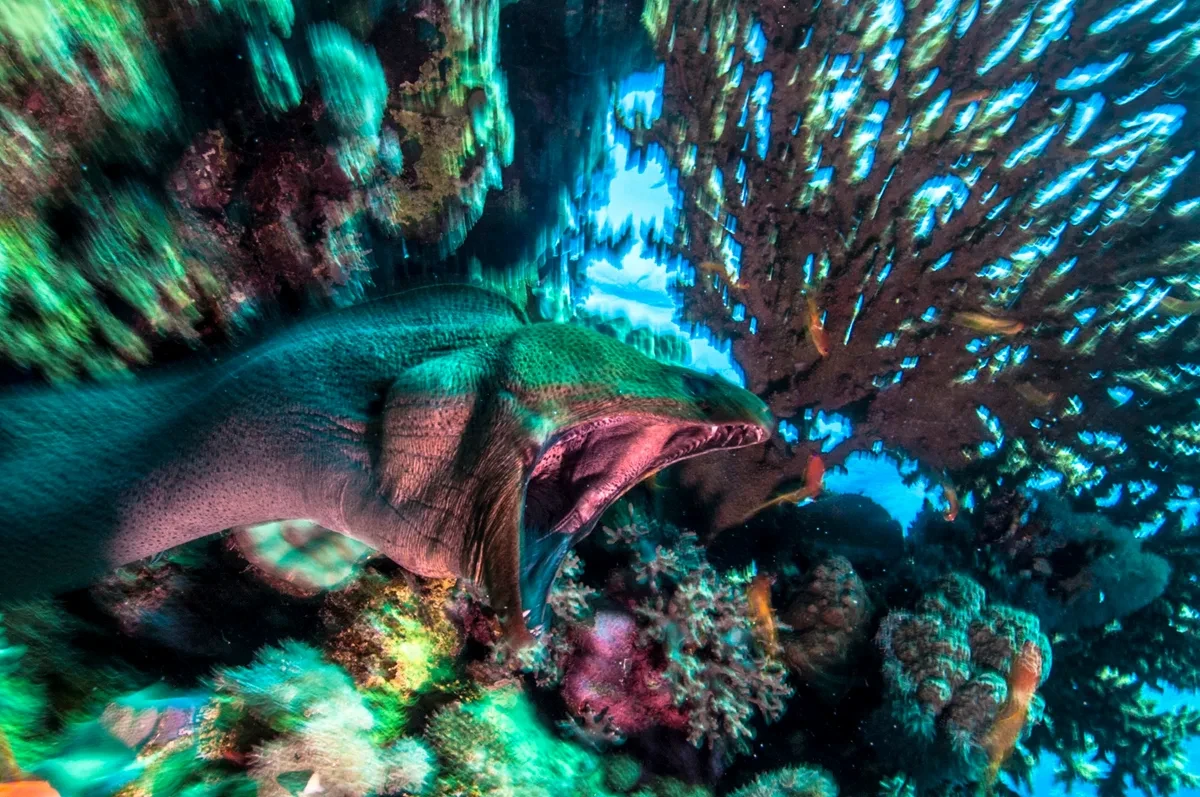
That very moment when Dad decided to yawn and destroy the entire apartment with a sonic wave.
Even if you pulled a moray eel out of the water, don't rush to celebrate your victory with a boiled fish soup. Because not only the moray eel's mouth is toxic, but also its meat. Ciguatoxin accumulates in the liver of most fish living in coral reefs. This poison is not destroyed even by high temperatures, and it causes, it must be said, a very unpleasant disease – ciguatera. The name is so-so, but the symptoms are even worse. Facial numbness, burning skin, vomiting, and joint pain are just a few of the possible symptoms. The worst part is that the disease can recur within a year. The toxin is eliminated from the body very slowly. 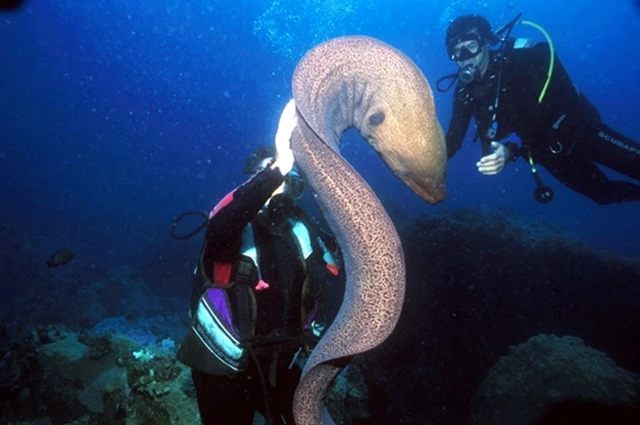
You can't be caught, and you can't be eaten. Can I at least pet it?! 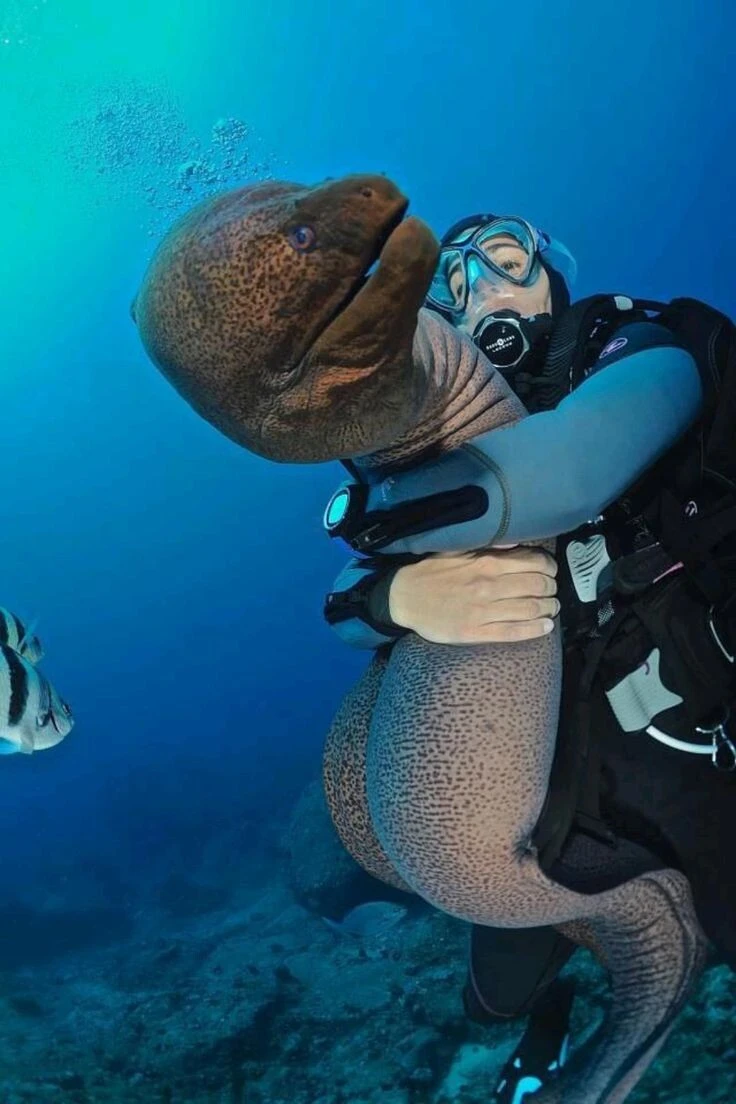
Why would I need a shark from Ikea when I have such a cute moray eel!
It seems obvious that humans and moray eels, like dolphins and mermaids, are not a match. Enemies forever? Surprisingly, despite their aggressiveness toward their prey, moray eels are practically indifferent to humans. They avoid us at all costs. They attack only in extreme cases, defending their lair. Or they attack blindly. Despite their perfect sense of smell, moray eels have poor eyesight. They can easily mistake a hand offering food for that very food. 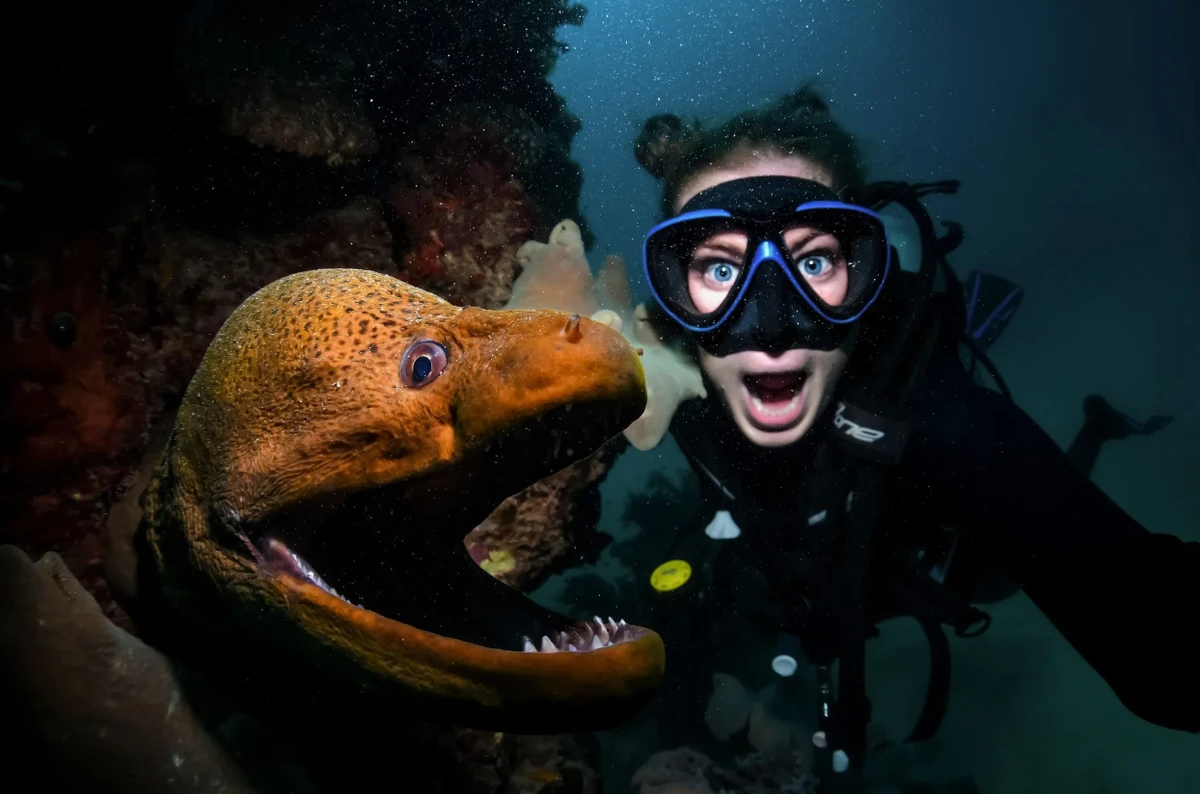
Smile, you're being filmed by a camera.
The main victims of moray eel attacks are overly restless and curious divers. They'd love to take a photo. But for moray eels, it's like an octopus tentacle or an underwater photographer's limb—it moves, so what? Bite! Moray eels also occasionally gnaw on fishermen. And why are they waving their fishing rods so seductively? Provoking! 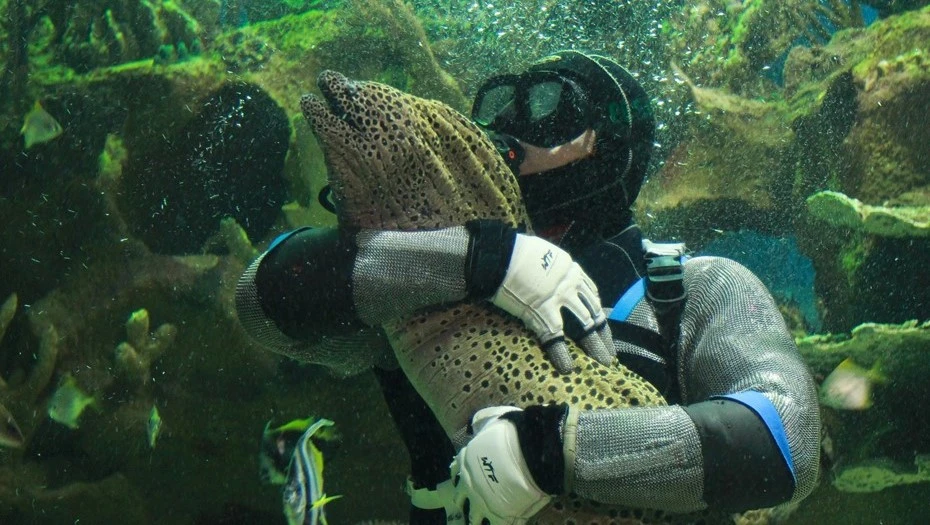
Dude, have you even heard of personal space?
If, like me, you've developed a fondness for this funny little fish, know that it's currently listed as a species of least concern in the Red Book of Threatened Species. The moray eel has no natural predators, and it's not commercially caught due to ciguatoxin. So there's a chance you might spot this beauty in its natural habitat somewhere in the Red Sea or Bali. Just keep your hands out of the way!
Add your comment
You might be interested in:













17 Photos That Will Stop You in Your Tracks (18 Photos)

Behind the Camera on 'Back to the Future' (45 Photos)

What Would Happen to a Human on Every Planet in the Solar

Stunning Views of the Martian Horizon from 400 Kilometers

20+ Fascinating Photos of Rare and Unusual Sightings (40

50 Incredible Treasures People Rescued From the Trash (51

22 Examples of Pure Design Genius That Deserve a Huge

Hard to Believe Your Eyes: 20 Unreal Photos With

The Sexual Customs of the Vikings: Why an Older Partner Was
