12 stunning dwellings that weren't an invasion, but an extension of nature (13 photos)
It would be wonderful to live in the bosom of nature, yet still enjoy all the benefits of civilization. But is that even possible? 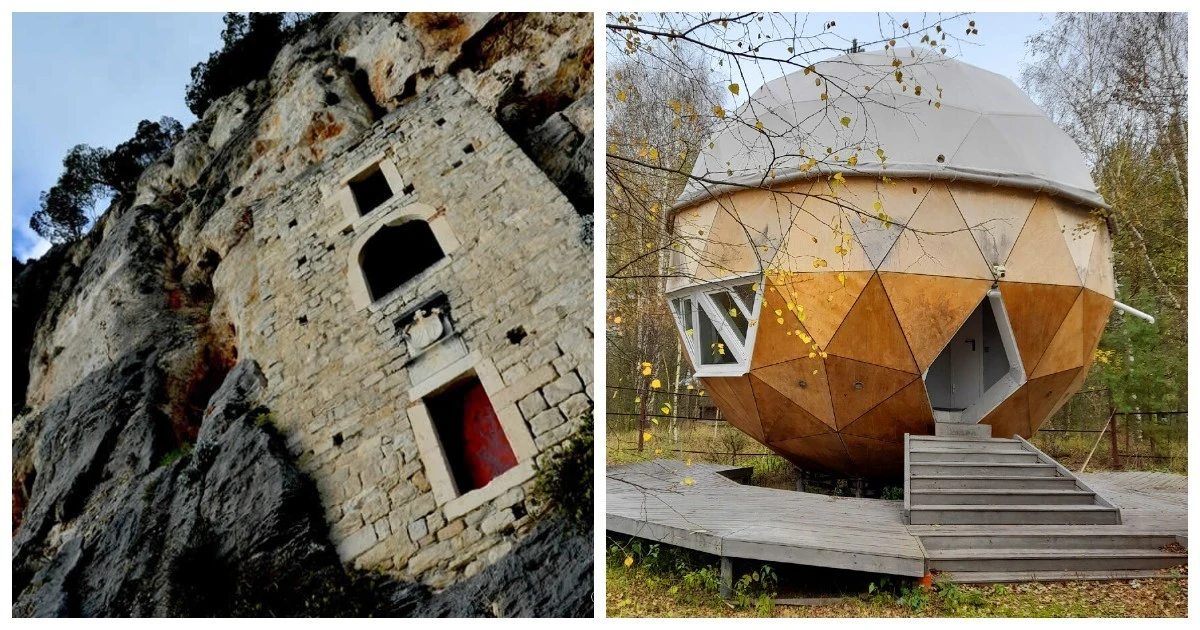
In today's reality, it's entirely possible. There are people who don't seek the shelter of the concrete jungle for comfort and proximity to work, and who don't build their homes on the ground, but rather embrace the very heart of nature. The result of this daring union is mesmerizing. After all, it's not an architecture of invasion, but an architecture of harmonious unification, whereby the hills become walls and the sky becomes a roof.
1. Casa Monte na Comporta in Grândola, Portugal 
The house wasn't built on existing dunes. Luis Pereira Miguel and his team from the Lisbon-based architecture firm Pereira Miguel Arquitectos created the dunes so that the house could be located beneath them. The home exudes a profound natural tranquility.
2. Beckham Creek Cave Lodge 
Beckham Creek Cave Lodge is a cozy cave resort located in the Ozark Mountains of Arkansas, USA. Built in a natural cave, its high, steep cliff face overlooks a beautiful valley.
3. Restaurant with an Incredible View, St. Gallen, Switzerland 
This restaurant with arguably the best view in St. Gallen is located in Falkenburg, near the Dreilinden ponds. Situated on one of the hills surrounding St. Gallen, the restaurant is easily accessible from the city center.
4. Underground House Gross 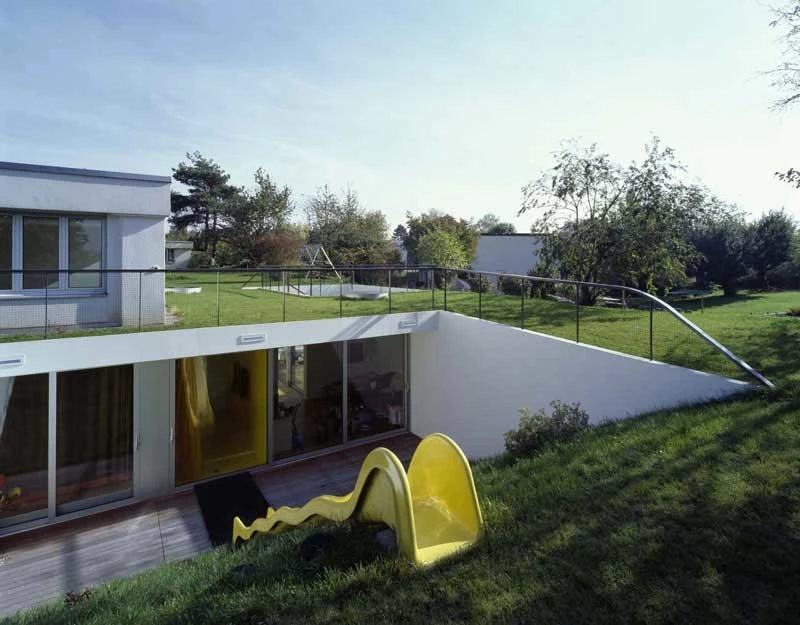
The house is located in Greifensee, Switzerland. The project is a renovation and expansion of an existing 1960s house.
To circumvent building regulations and avoid the need to obtain permission from all neighbors for the expansion, the architects placed the new space underground. The house blends seamlessly into the surrounding landscape, and the roof features a lawn and a playground.
5. An eco-friendly home has emerged from a dilapidated building in the wetlands of Long Island, USA. 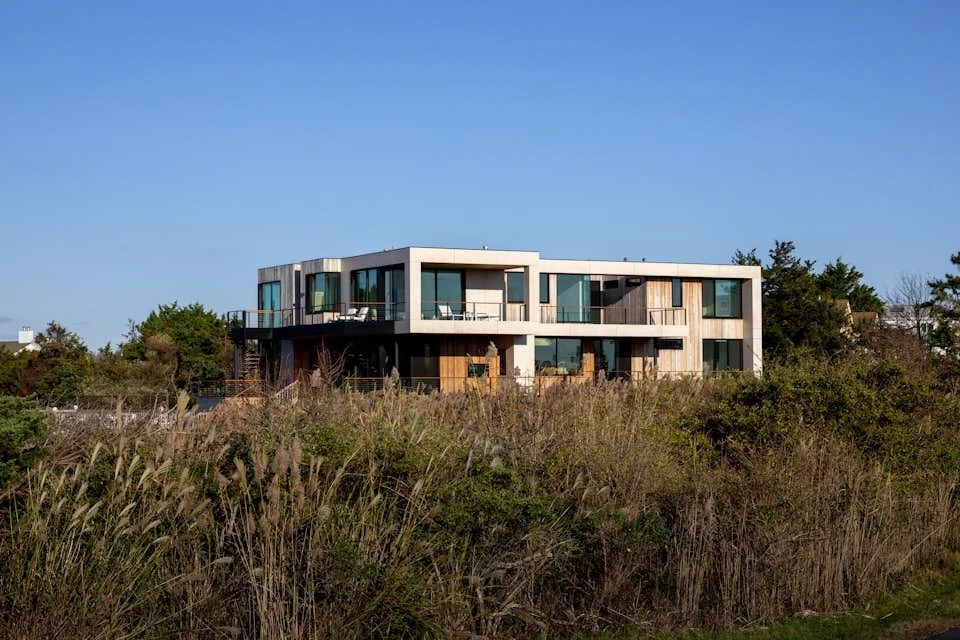
The project involves minimal intervention in nature.
6. Seaside home design nestled within a hillside 
The home is nestled on a hillside overlooking the ocean, showcasing an architectural style that blends with its surroundings.
The round portion of the house is made of concrete, and the roof is covered with vegetation. A porthole-shaped skylight protruding from the roof opens, letting in natural light and air. Natural materials such as wood and stone are used in the design. Rana Creek Design is known for its "living architecture" projects.
7. Fallingwater House (also known as Fallingwater House) is a house museum in Stewart Township in the Laurel Highlands of southwestern Pennsylvania, USA. 
It was designed by architect Frank Lloyd Wright and partially built over a waterfall on Bear Run Creek. The three-story house was built as a country residence for Lillian and Edgar J. Kaufmann, Sr., owner of Kaufmann's department store in Pittsburgh. It is known as a masterpiece of organic architecture.
8. Church Built into a Mountain, Marjan Hill, Croatia 
The Church of St. Nicholas is a charming 13th-century Romanesque chapel nestled in the woods, offering spiritual solitude, historic charm, and panoramic sea views. Although often closed, it is a key stop on Marjan hiking trails, along with other smaller churches such as the Church of St. Jerome.
9. Cave Dwellings of Cappadocia, Turkey 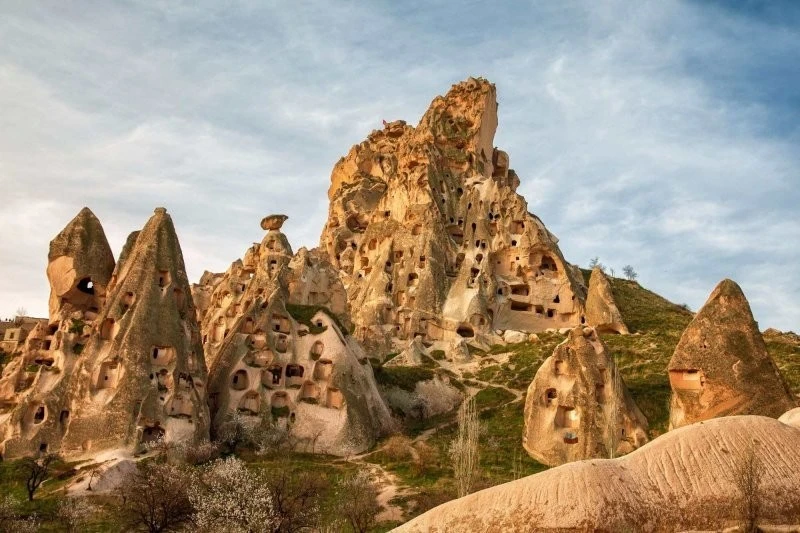
Rock-cut houses (cave dwellings). This is a settlement complex that was developed over many centuries, beginning in the 1st millennium BC.
10. The Earth House project was designed with integration into nature in mind, Tirana, Albania 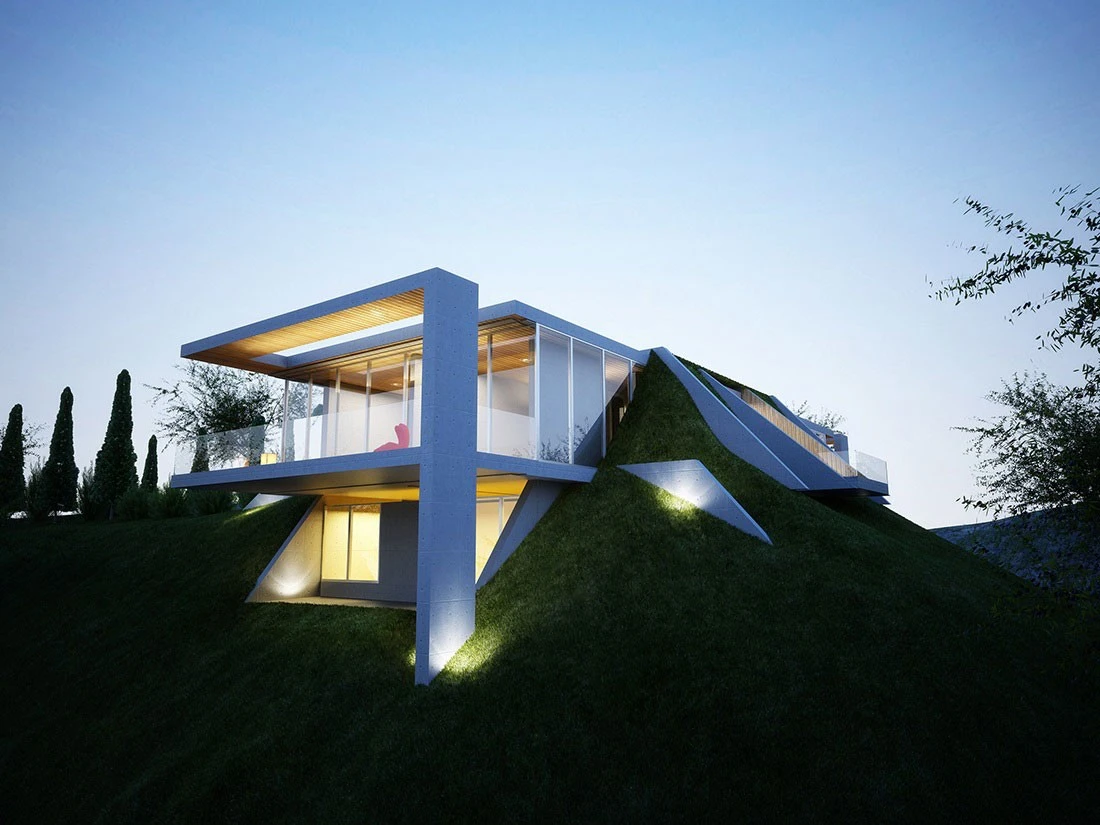
The structure resembles a hill, blending seamlessly into the surrounding landscape.
11. House Built into a Hill, Ecuador 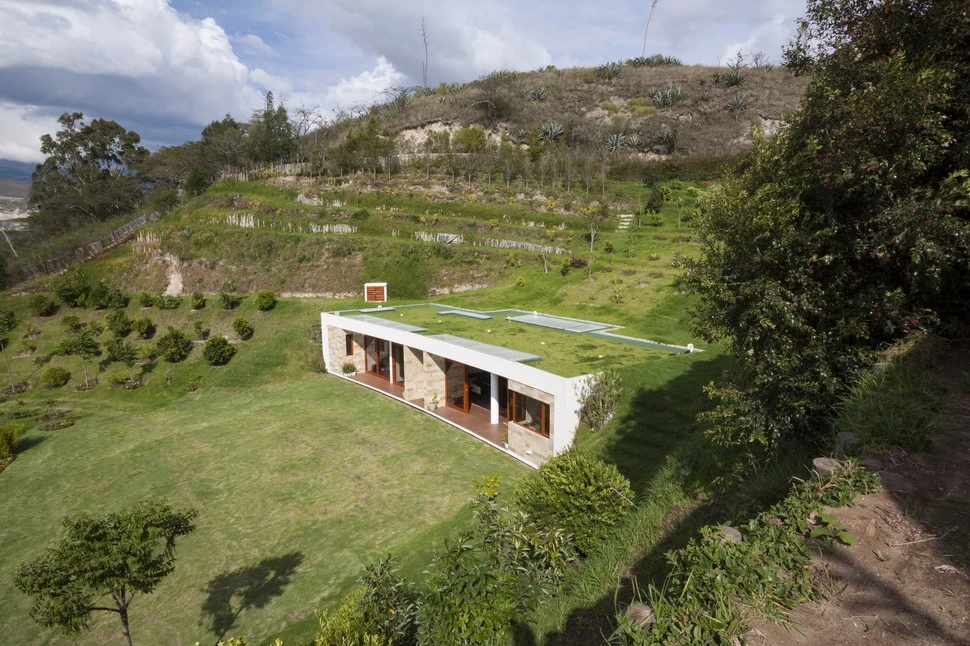
Casa Mirador is located on a slope in the small town of Guayllabamba, Ecuador. It feels as if the house is an extension of the hill. Only natural materials were used in its construction.
12. "Sphere" House in the Moscow Region 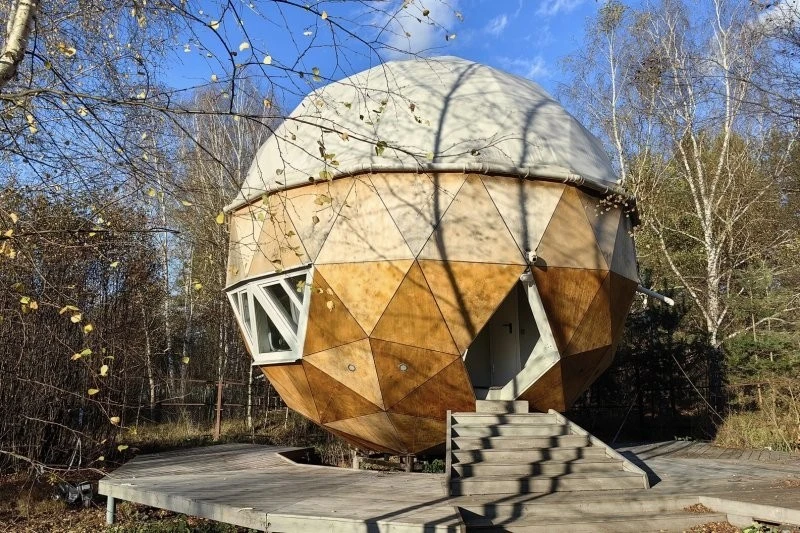
This designer spherical house is located on the grounds of the Guslitsa creative estate in the village of Ilyinsky Pogost, Moscow Region. The design was inspired by Fuller's domed houses. The structure is habitable yet seamlessly blends into the natural landscape.