Today we'll meet one of the most ancient ungulates, one that has changed virtually nothing over the past 50 million years—the tapir! 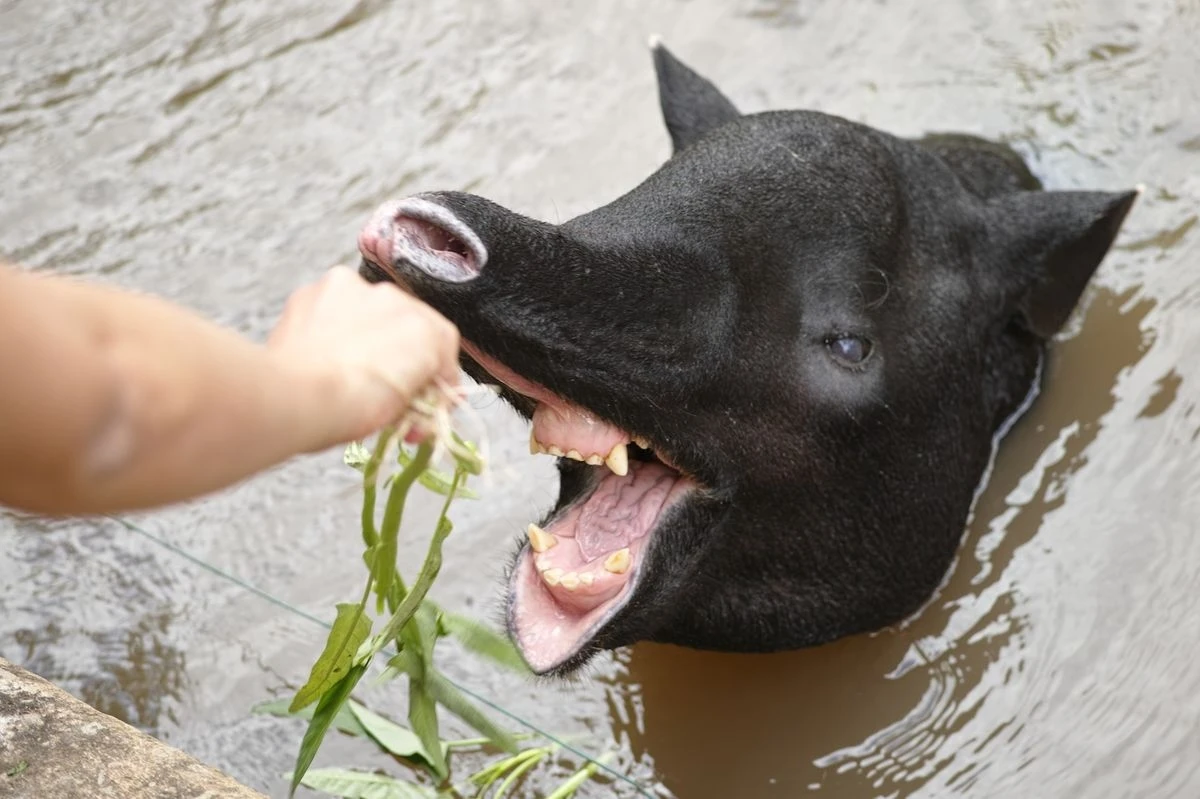
Hands up! Don't move! Either you give up the grass yourself, or I'll shoot you with my double-barreled shotgun!
The tapir family consists of four species: the mountain tapir, the plains tapir, the Malayan tapir, and the Kabomani tapir. How they all survived is a complete mystery. These animals are essentially helpless! And yet, these charming, long-nosed creatures live in places where peace is only a dream. Three species live in the jungles of South America, and one species lives in the tropics of Southeast Asia. 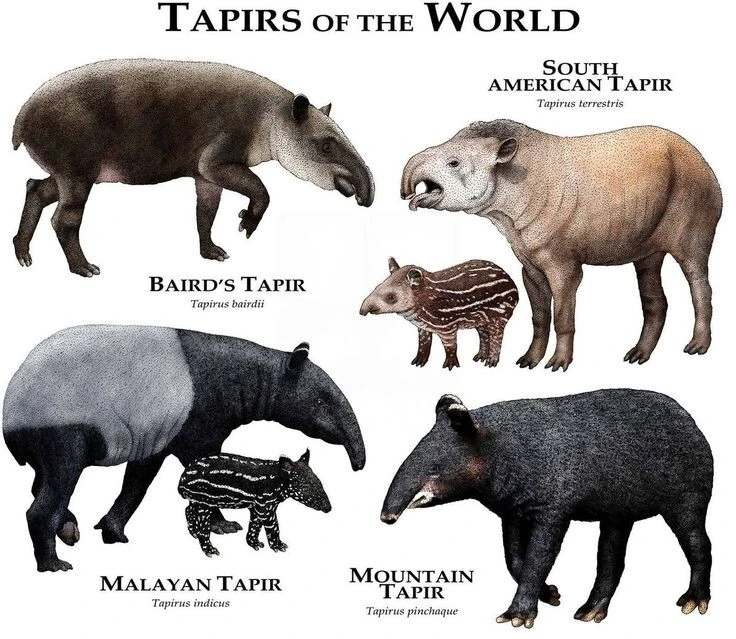
All four tapir species. The only Asian species is shown below on the left.
Tapirs don't have formidable horns, sharp tusks, or even powerful hooves! Size is practically the only thing that protects adult animals from predators. The Malayan tapir, the largest species, grows up to a meter at the shoulder and weighs nearly 500 kilograms. Such a giant is too big for even jaguars and tigers! 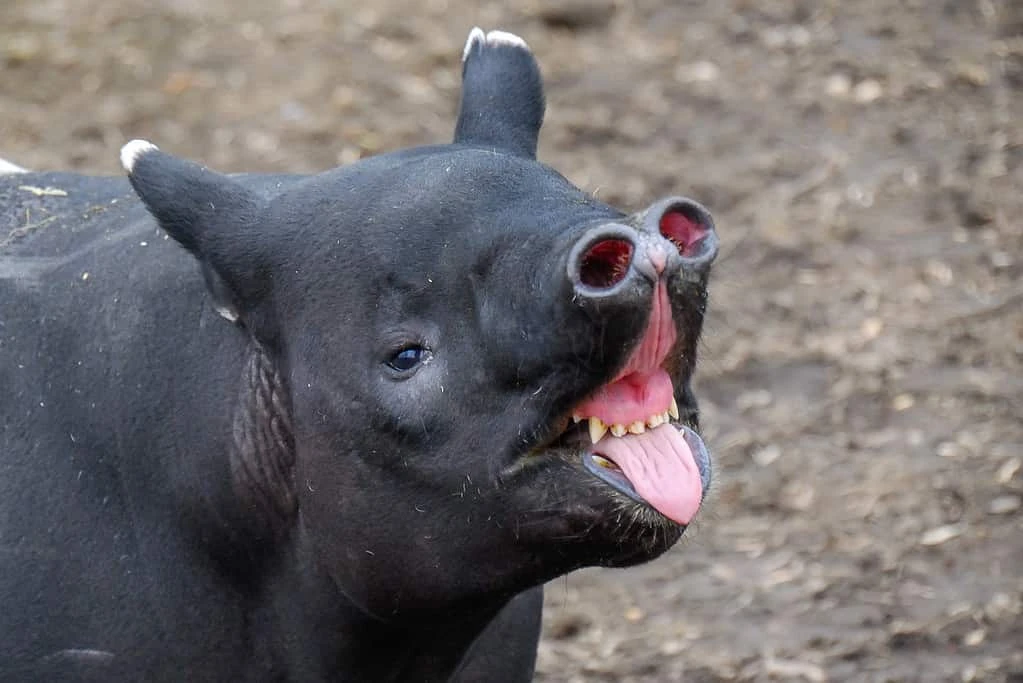
Hmm...that's not how I imagined rosettes in southern countries...
Despite everything, tapirs successfully survived the Eocene-Oligocene mass extinction event 33.9 million years ago. Meanwhile, a host of other, more adaptable species of predators and herbivores went extinct. What's their secret? Instead of frantically pursuing new survival mechanisms, tapirs chose the path of doing nothing. Research shows that tapirs have changed little since their appearance. And that's tens of millions of years! During this time, whales went from being mere rats to titans of the oceans! 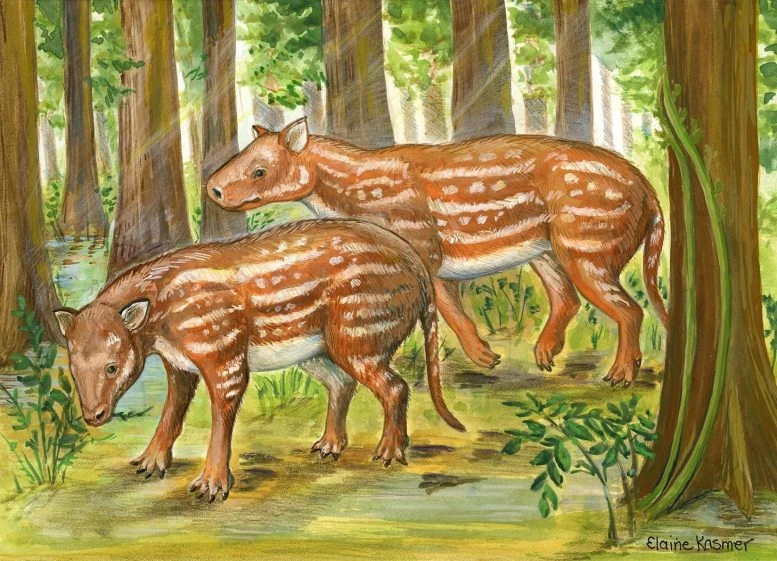
This is what Cambaytherium looked like—one of the most ancient representatives of the order Perissodactyla. It is the ancestor and distant relative of horses, rhinoceroses, and tapirs. Which of the three does it remind you of most?
Judging by the remains discovered, the first perissodactyls were very similar to the snouted ones. And those that didn't vanish into oblivion entered the race for survival and are almost unrecognizable today. Horses and rhinoceroses are the modern relatives of tapirs. Some have maximized their speed, others their defense, but tapirs remain what they were. They provide a glimpse into the origins of their related species. 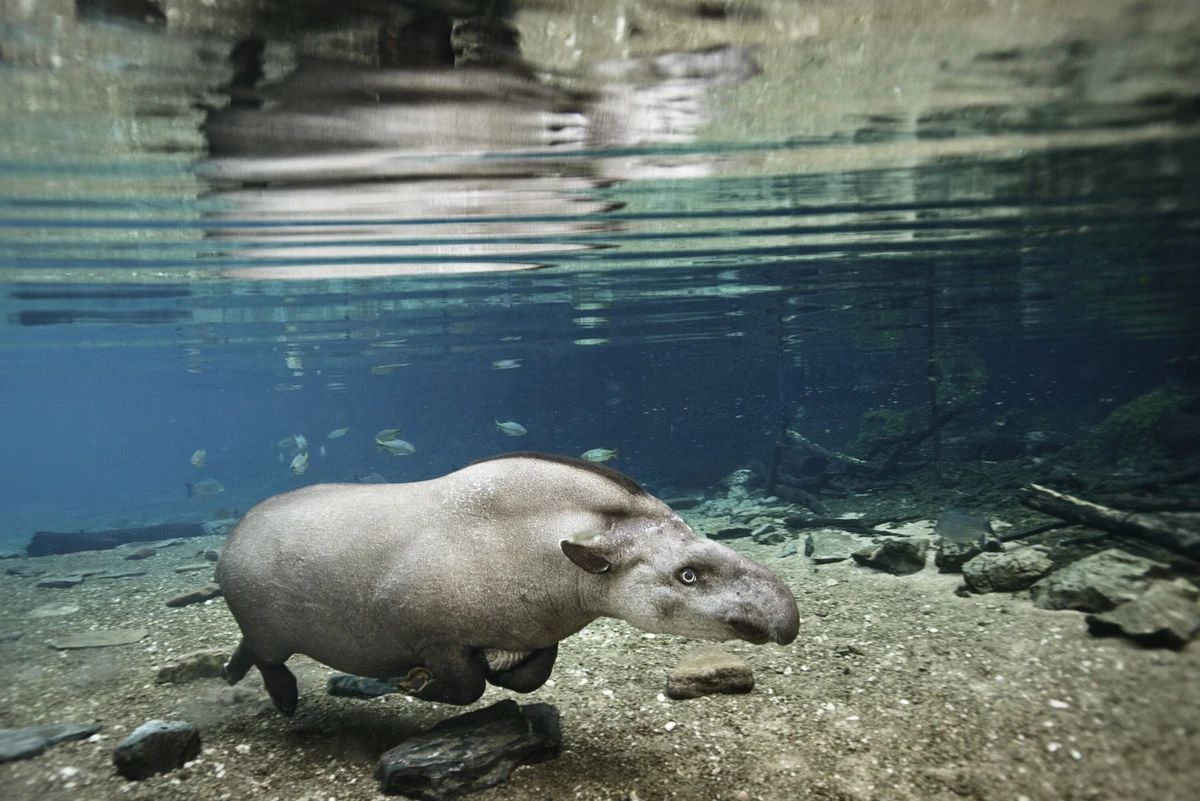
Tapirs can stay underwater for several minutes. And if they run out of air, they use their trunks as breathing tubes!
Just like millions of years ago, tapirs today roam tropical forests and live their best lives. Despite their size, these long-nosed creatures remain the ghosts of the jungle. Their broad, four-toed feet help them navigate soft, marshy ground. An animal weighing several hundred kilograms can easily navigate where a tiger or jaguar would drown! 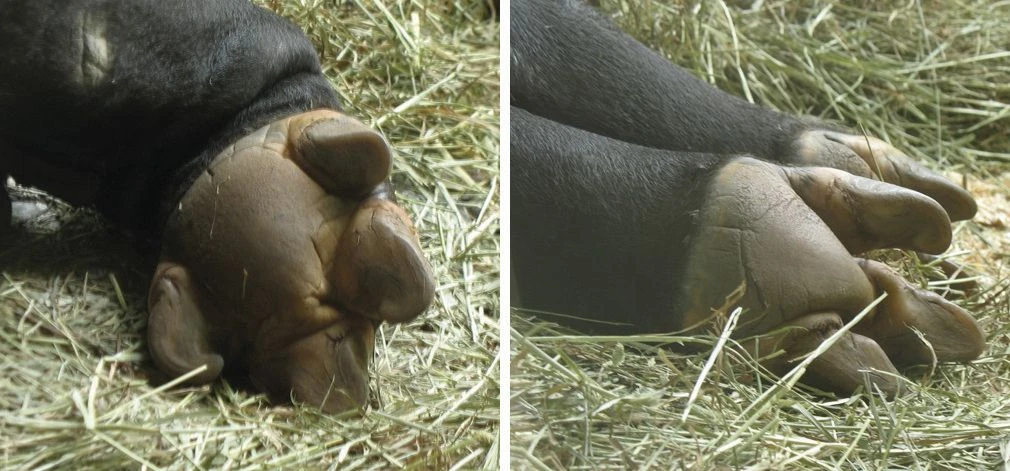
The tapir has four hooves on its front feet and three on its hind feet.
These tapirs aren't picky eaters: they'll snack on seaweed, pick fruit, and graze on grass. This is understandable: they need between 40 and 50 kg of vegetation per day! Incidentally, their proboscis helps diversify their diet. Using a long appendage on their snout, the tapir reaches the most delicious leaves and shoots. The animal not only adapts to its surroundings but also adjusts the landscape to suit itself. The tapir is an effective seed disperser. Wherever it eats, there will be a forest. Or at least bushes. 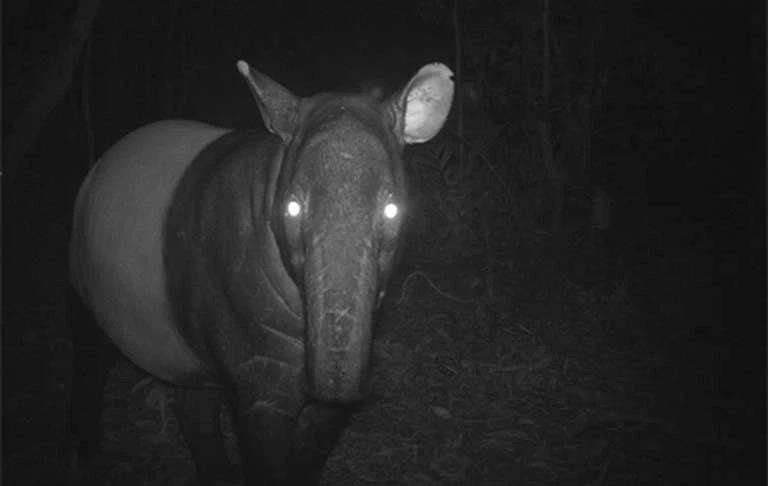
I wouldn't want to meet such a fellow in the middle of the night. However, tapirs usually come ashore after sunset.
When tapirs aren't eating, they swim. Water is their natural habitat. Tapirs spend most of their time in lakes, rivers, and swamps. Here they escape the heat, predators, and parasites. They've been observed deliberately offering their bodies to fish to scrape off pesky bloodsuckers. And there are a lot of them in tropical jungles! 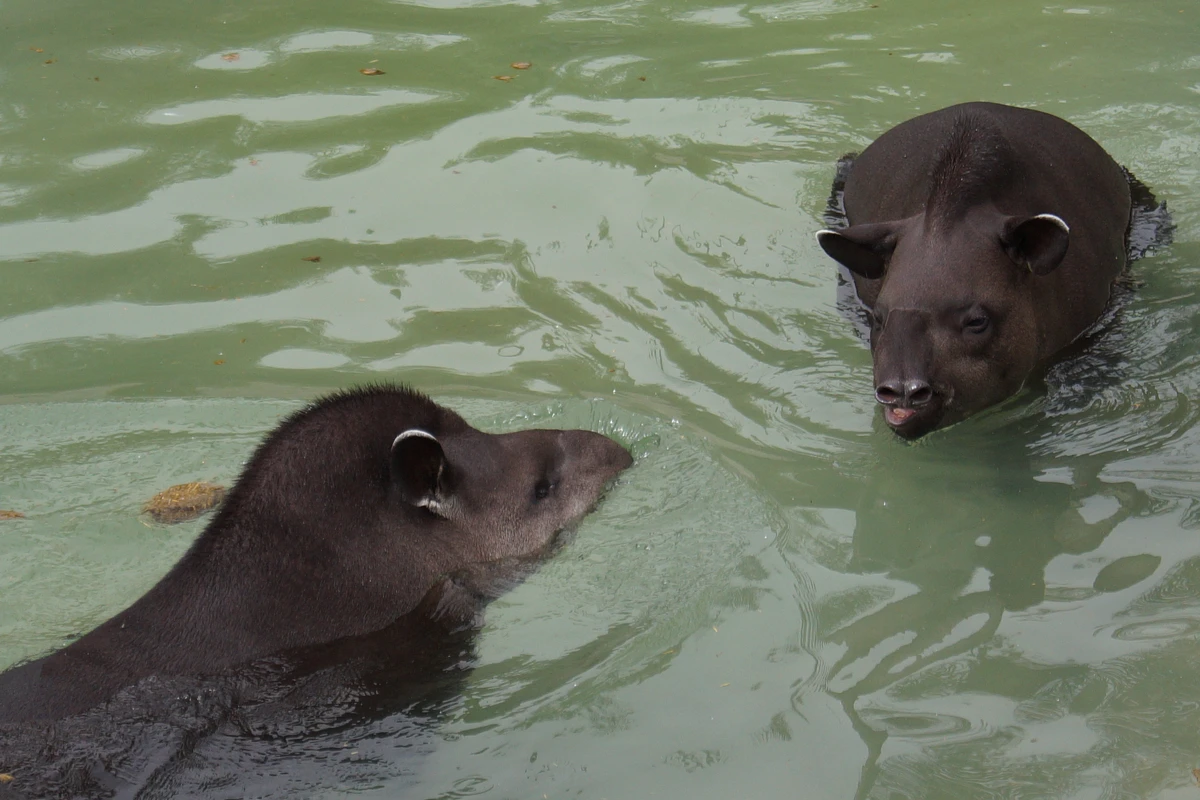
— Darling, don't get so worked up! Why are you so upset? — I saw you looking at Svetka from the next puddle. You should be ashamed!
Tapirs usually live alone, marking their territory with scent. However, they don't claim complete sovereignty over their territory. Apparently, the boundaries of several individuals can overlap, and this even plays a certain social role—tapirs are quite sociable. 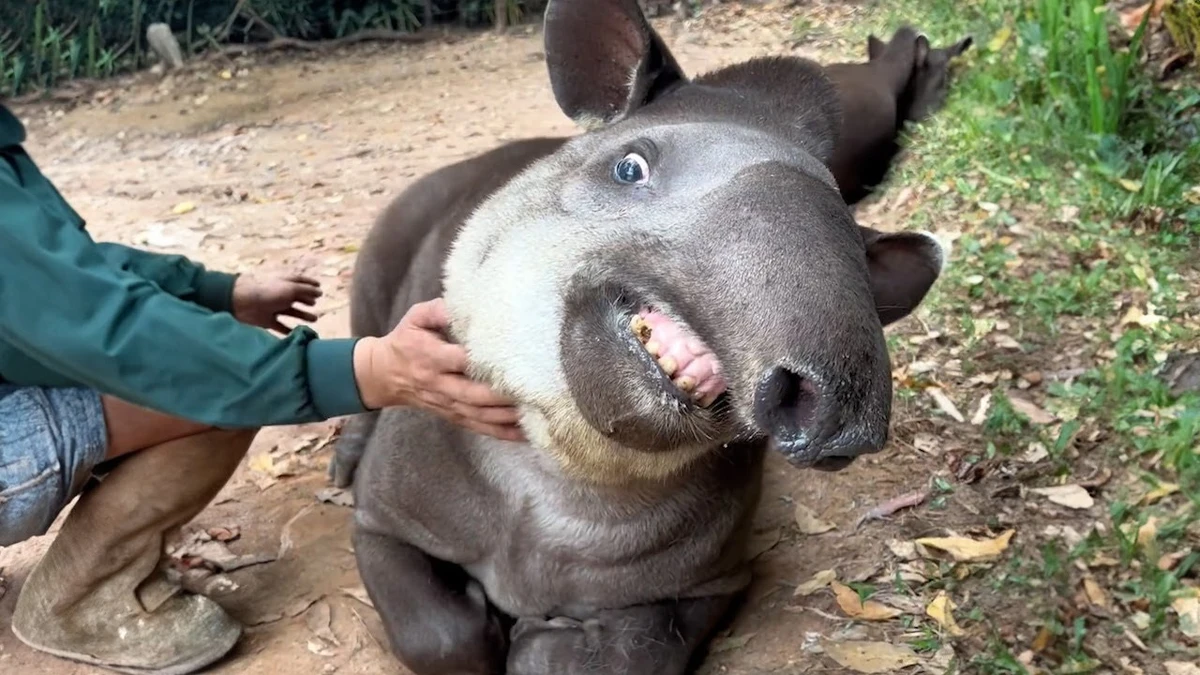
Tapirs also enjoy interacting with people, especially if they were raised in captivity.
They regularly call out to neighbors, exchange news, and also choose a mate for reproduction. This is done by females: they wander through the forest, sniffing markings, and stalking the most daring suitor in the area. Tapir gestation is unusually long for animals of their size—a full 12 months. But the result is a fully formed tapir calf weighing up to 10 kilograms, ready to follow its mother anywhere. 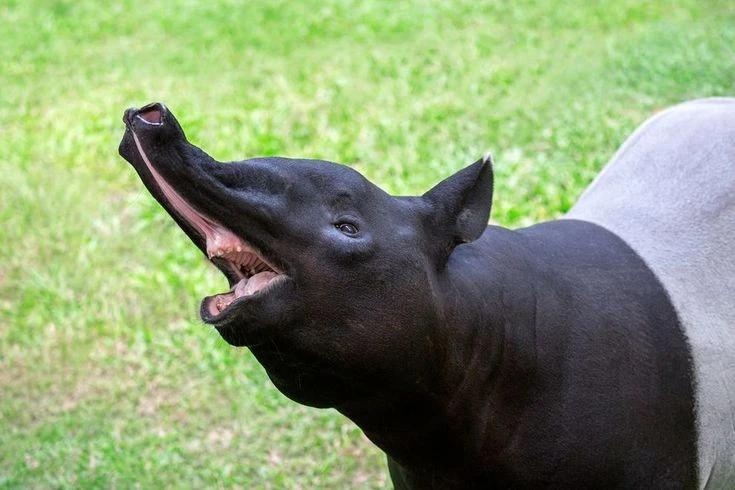
The tapir doesn't stick its nose up. The tapir is undergoing the Flehmen reaction! This behavior involves animals lifting their upper lip to expose the vomeronasal organ. This is how they detect the subtlest pheromones from their fellows.
The mother doesn't spend much time raising her offspring. She shows them where the tastiest grass, the coziest puddle, and the warmest river are in the forest—that's all. The mother teaches her offspring a few things until they're six months old. After that, the baby acquires its adult coloring and sets out on its own to navigate the wild waves of adulthood. 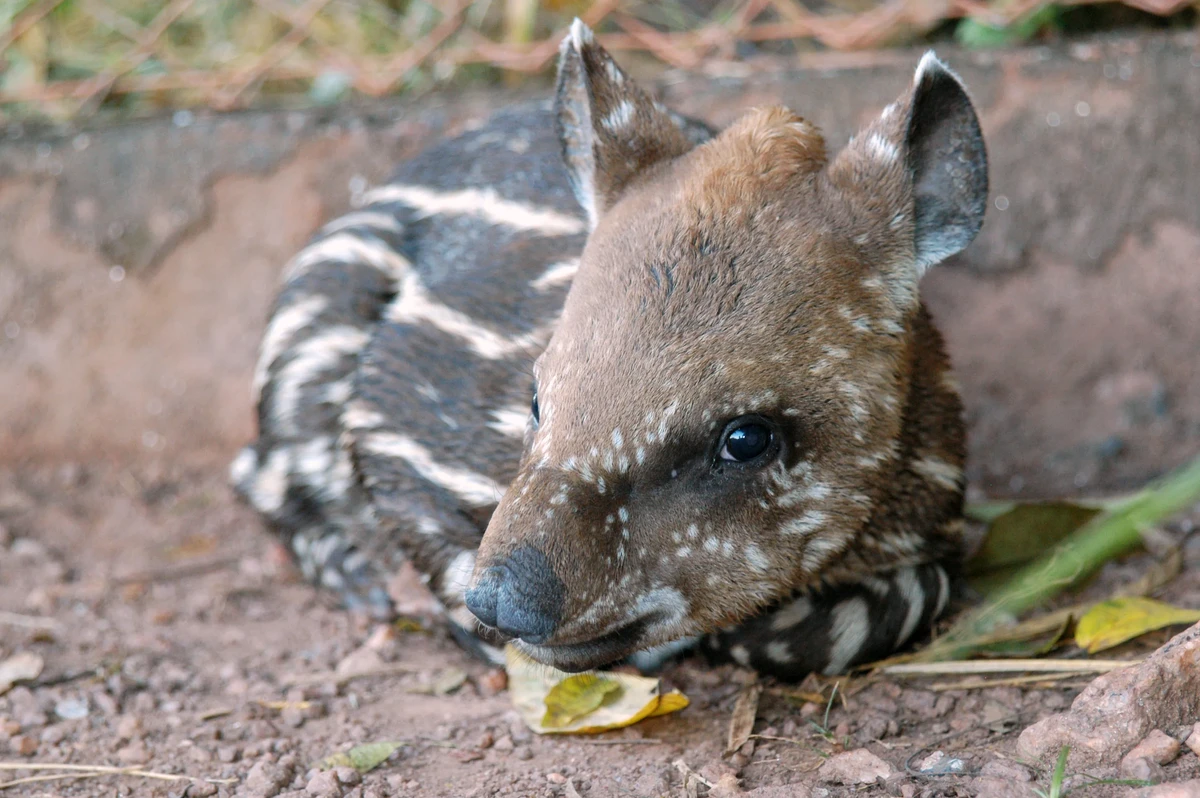
Until the cub grows up, its coloring camouflages it from predators, blending it into the lush jungle vegetation.
Humans make tapirs' lives especially turbulent. People hunt these defenseless creatures for food, kill them to protect crops, cut down forests, and build roads through them. The latter is especially tragic: tapirs have poor eyesight, so they can't spot a car speeding toward them. Drivers, in turn, often fail to notice the tapir, as its coloring blends perfectly with the surrounding vegetation. Today, all tapir species are critically endangered. However, they successfully reproduce in captivity and live in zoos around the world.
Add your comment
You might be interested in:













Margaret Hamilton Dies at 90: The Story of the Moon

25 Incredibly Beautiful and Rare Stones (26 Photos)

16 Fascinating and Surprising Facts About Life in Sweden

30 Everyday Details That Will Change How You See the World

Hypnotic and Oddly Satisfying GIFs That Show How Food Is

Who Is the Woman Standing Next to Trump — and What's Going

"What Is This Thing?": 20+ Bizarre Objects That

13 "Healthy" Habits You Should Actually Quit (14

Queen of Thailand completes first solo flight in Gripen
