How do encounters between bears and wolves end? (11 photos)
When a wolf and a bear clash in the forest, people expect a Godzilla-versus-King Kong-like spectacle: splashes of blood, animal roars, flying fur, teeth, and claws! But the real forest doesn't operate according to the rules of movies. In reality, even the most fearsome predators sometimes behave much more intelligently than humans. 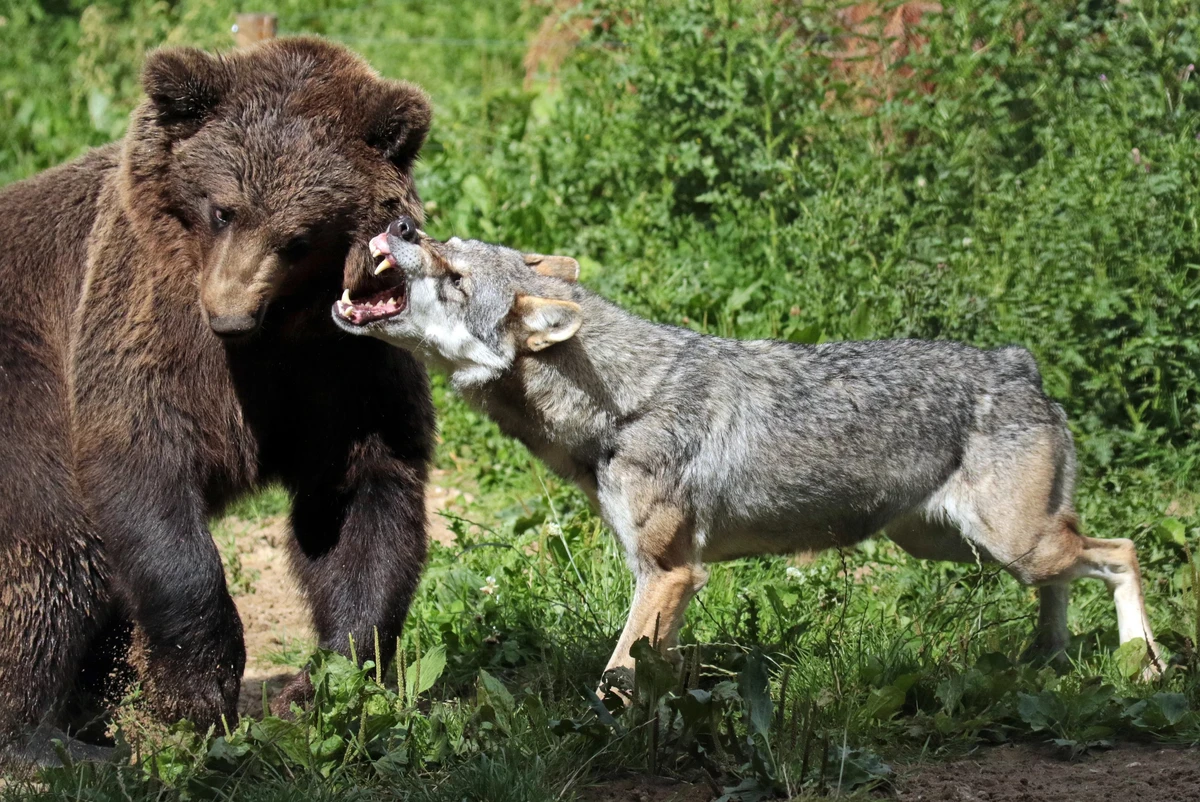
A gentle nip on the ear.
Yes, wolves and bears share the same forest, but in reality, they rarely cross paths. After all, bears choose the most inaccessible parts of the forest: old windfalls, swamps, undergrowth overgrown with bushes, and other clearings where they can forage for berries, seeds, and other free gifts of nature. Despite their ferocious appearance and sharp claws, forest bears are almost vegetarian: 80% to 97% of their diet consists of plant foods. 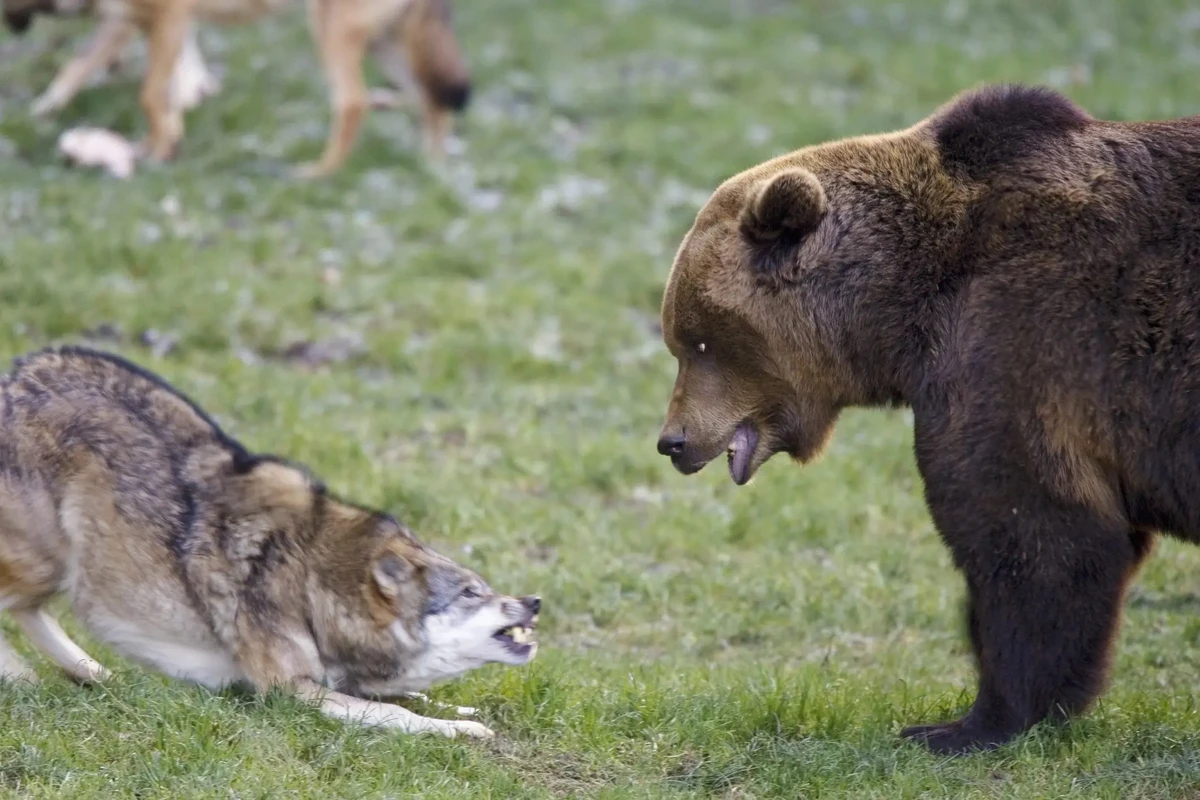
What's wrong, gray bear? Are you lost? I came here for blueberries!
Wolves consume much more meat, and for successful hunting they require different terrain: sparse forests without undergrowth, large open fields, as well as ravines and hills, which are ideal for driving game. Furthermore, bears hibernate for 4-6 months, and during this time, you can hardly find them! 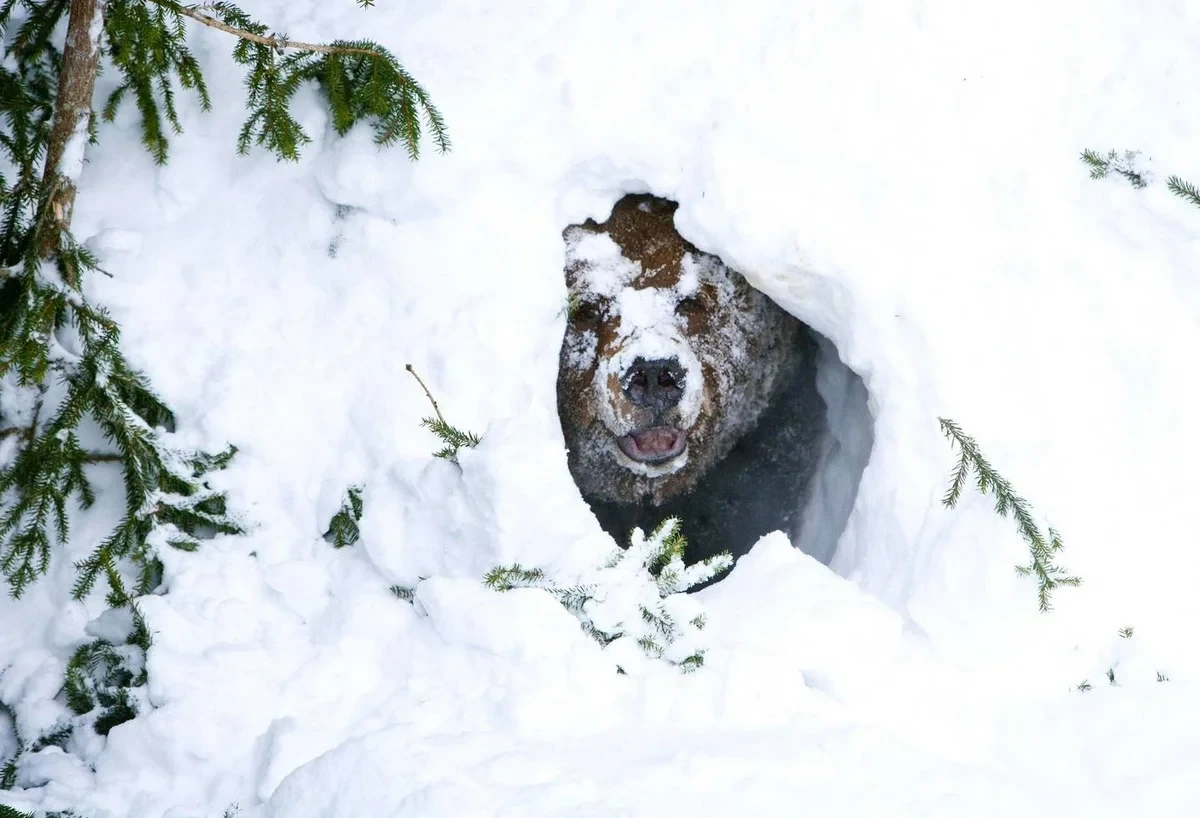
Congratulations, you've earned the achievement: awakening a hibernating bear. Now all that's left is to make sure this isn't your last.
But if an encounter does occur, it's usually the bears who initiate it. They'll come for the scent of a fresh kill or even watch the hunt from afar, waiting for the right moment. Then they simply show up to claim their share of the spoils. But even then, there won't be a bloodbath. Wolves aren't fools, and they're not willing to spill their blood over a piece of meat. So, usually, no one fights: the animals simply establish a "who gets to eat first" order. If the wolf pack is small, between 4 and 8 individuals, they're usually second in line. 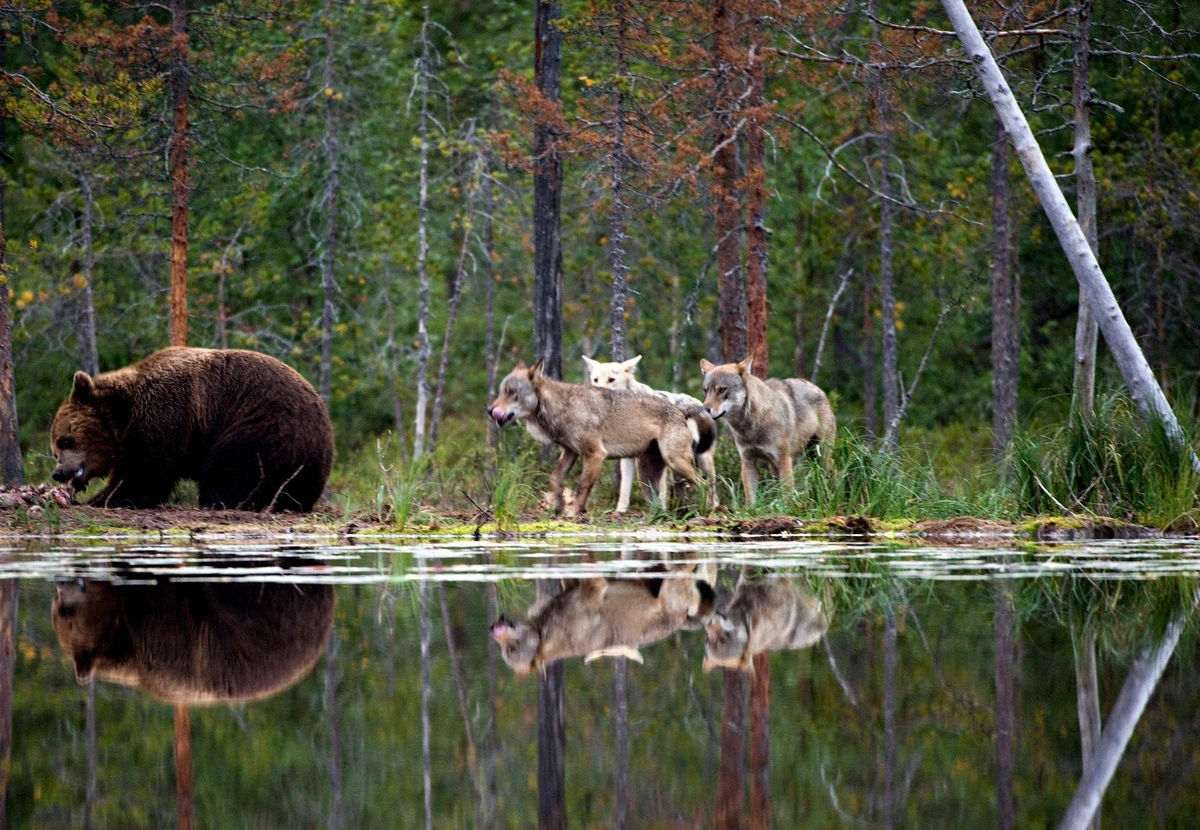
— "He'll eat everything right now!" "Shut up, just don't let it bother you!"
Yes, they don't like it. Yes, they had to work hard to get food. But it's much easier to give up a few kilograms of meat to a bear than to risk the gray pelts of an already small pack. Because even a seasoned Arctic wolf weighs a maximum of 80 kilograms, while a bear weighs a full 400. They can't compete with such a colossus. 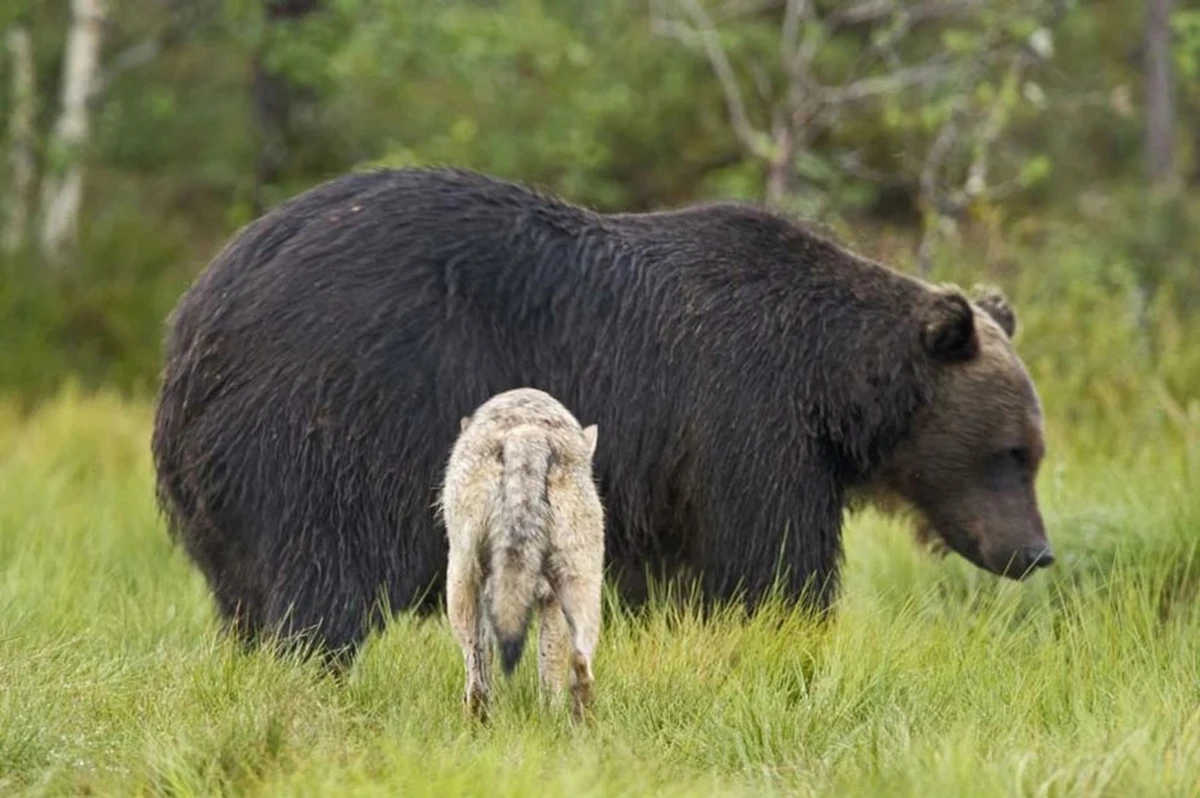
A visual comparison of a large adult bear and a medium-sized wolf.
But what if there are more wolves? Then Potapych won't be able to feast on the achievements of others. The wolves are well aware of their numerical superiority and won't give up their food easily. However, even in this scenario, they still won't attack the bear head-on and fight him, regardless of losses. It will be a sparring match of endurance. The gray ones will surround the bear and jump from all sides, feinting, biting, and then immediately retreating, exhausting the clumsy beast. Their goal is not to kill, but to force him to leave. And if the wolves persist, he will retreat. The bear is no fool either; he won't defend another's kill, risking a bite on the flank. It's better to wait until the pack has eaten its fill and then come back to gnaw on the bones. 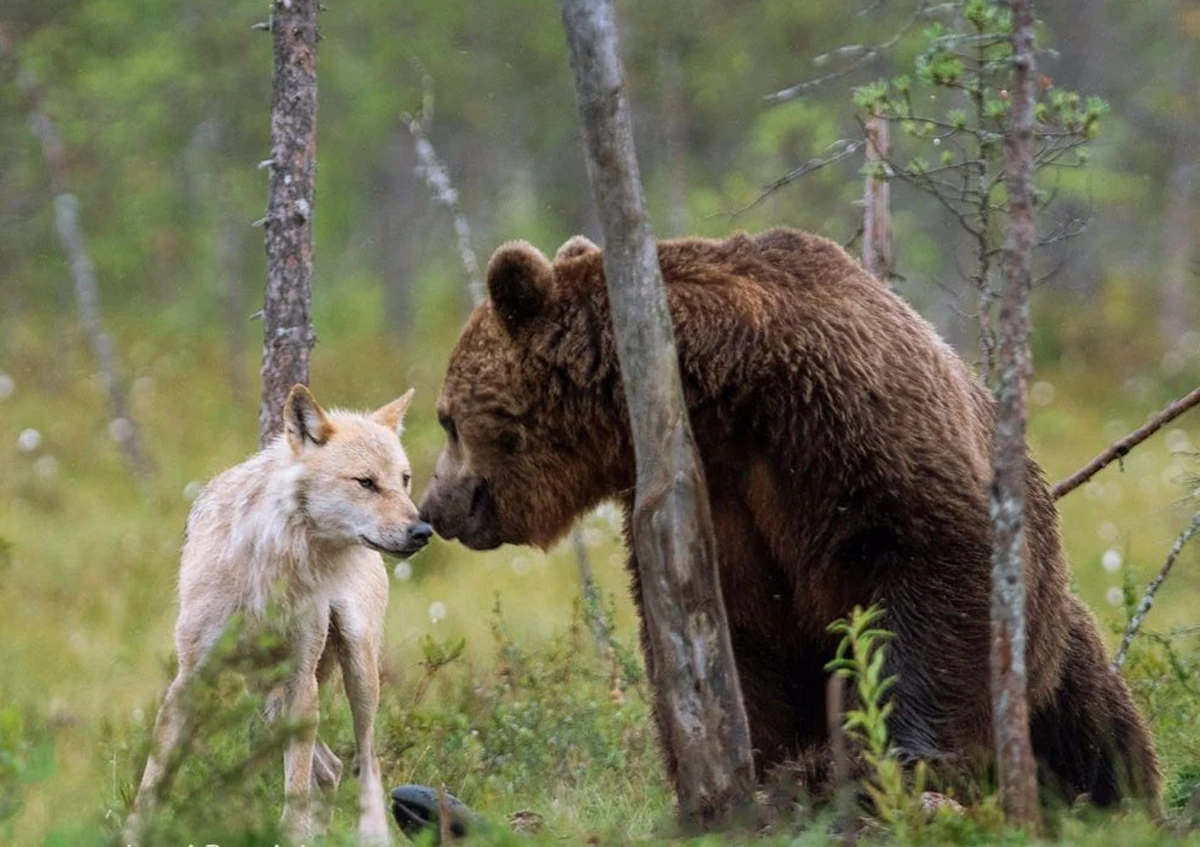
According to research, in Scandinavia, more than 50% of wolf prey is first sampled by bears. But this isn't because bears are so vicious or carnivorous. It's just that the peninsula is home to approximately 600-800 wolves and over 3,000 bears. So, there's always some hungry and brazen bear around!
This complex relationship between wolves and bears leads to unexpected consequences: the more bears there are in the area, the fewer successful hunts the wolves will have. It would seem that the opposite would be true. If predators are constantly deprived of food, they'll hunt more—they're hungry, after all. Yes, wolves do go hunting more often. But that doesn't mean their hunt will be successful. Quite the opposite: half-starved and tired from their previous pursuit of deer, the animals catch their prey much less often. 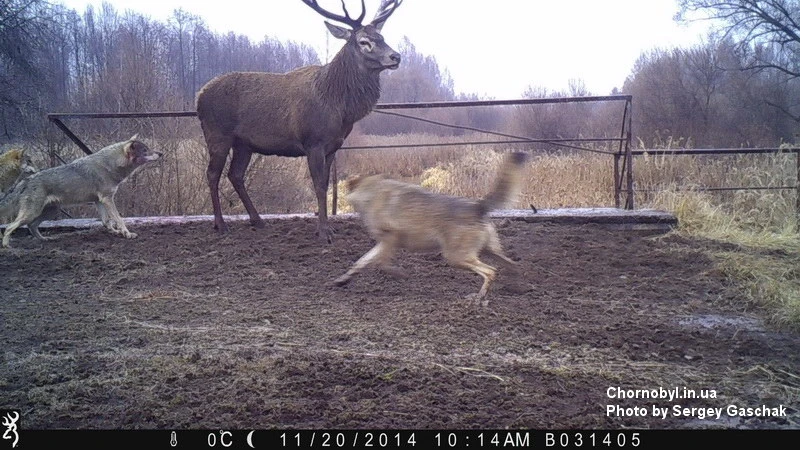
And the deer goes: poo-poo-poo...
Hungry wolves, surprisingly, can pose a danger to bears. Starvation, close to death, can overwhelm their self-preservation instincts and force wolves to attack bears. In this case, they prefer to hunt females with cubs. Their tactics are simple on paper but difficult to execute: the predators need to separate the mother from her cubs and dispatch the cubs. If the wolves manage to seriously injure the cub or frighten the mother, she will retreat, leaving them with the prey, which won't stand a chance. Furthermore, there is at least one known case of a wolf pack finding a den of a female with cubs in the middle of winter and driving them outside. A serious fight ensued, resulting in the mother bear being seriously injured and dying. Ultimately, both she and her cubs were eaten. 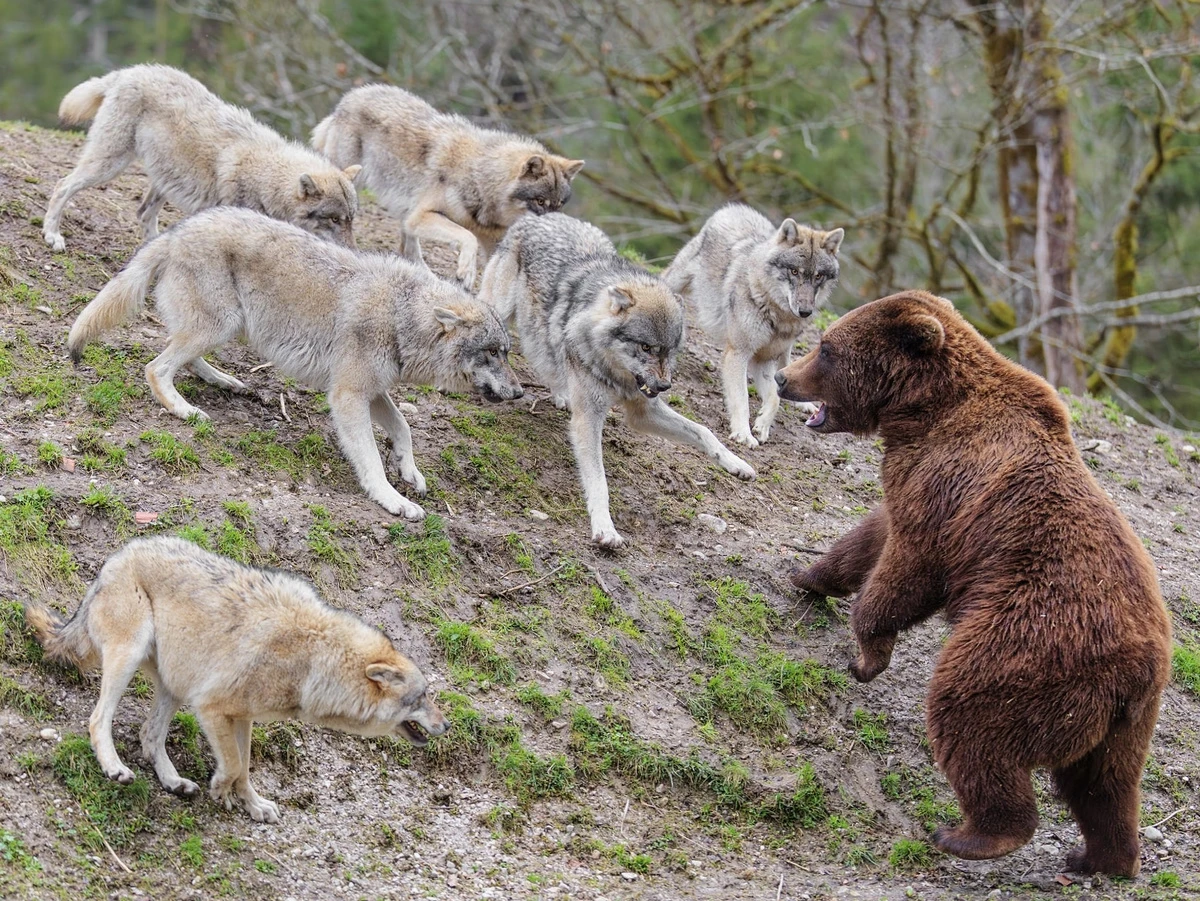
Six against one, also unfair!
And out of sheer desperation or stupidity, wolves can attack an adult bear, but such encounters usually don't end well. For example, in 2021, in western Belarus, an attack by five adult, large wolves on a bear was recorded. During the fight, the bear retreated repeatedly, traveling more than three kilometers until it reached a young, dense spruce forest, where the wolves' numerical advantage diminished. There, it seriously wounded one of its pursuers, forcing the pack to retreat. 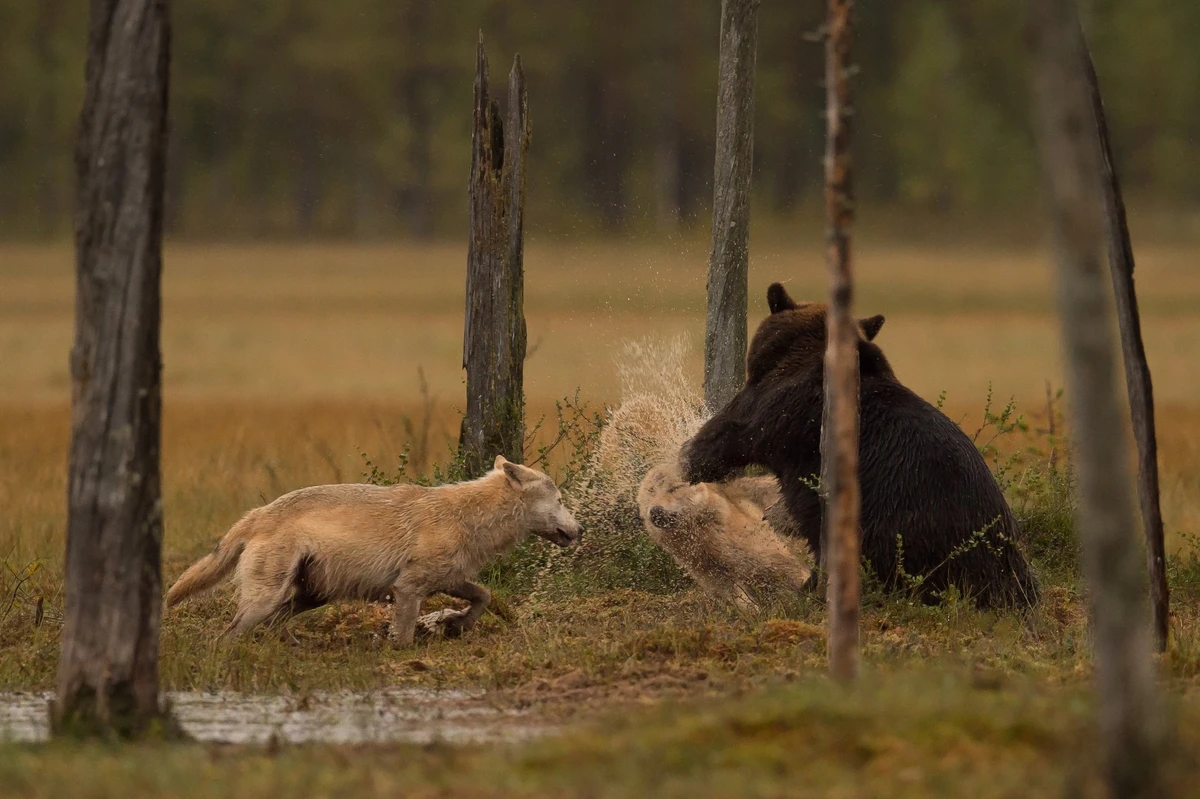
Are you attacking me? I'll take you apart!
Sometimes bears deliberately attack wolves, but calling it a fight would be wrong. More likely, it's simply eliminating competitors. A bear won't attack a pack, but can easily deal with a lone wolf. And not even for food, but simply to remove another mouth from its territory. Bears usually target young or old individuals, who are easiest to eliminate—they lack the strength or experience to outrun an animal 5-10 times their size. The same thing would happen if a female bear with cubs encountered a wolf. The gray ones won't have to do anything; the enraged mother will see them as a potential threat and rush to eliminate them. 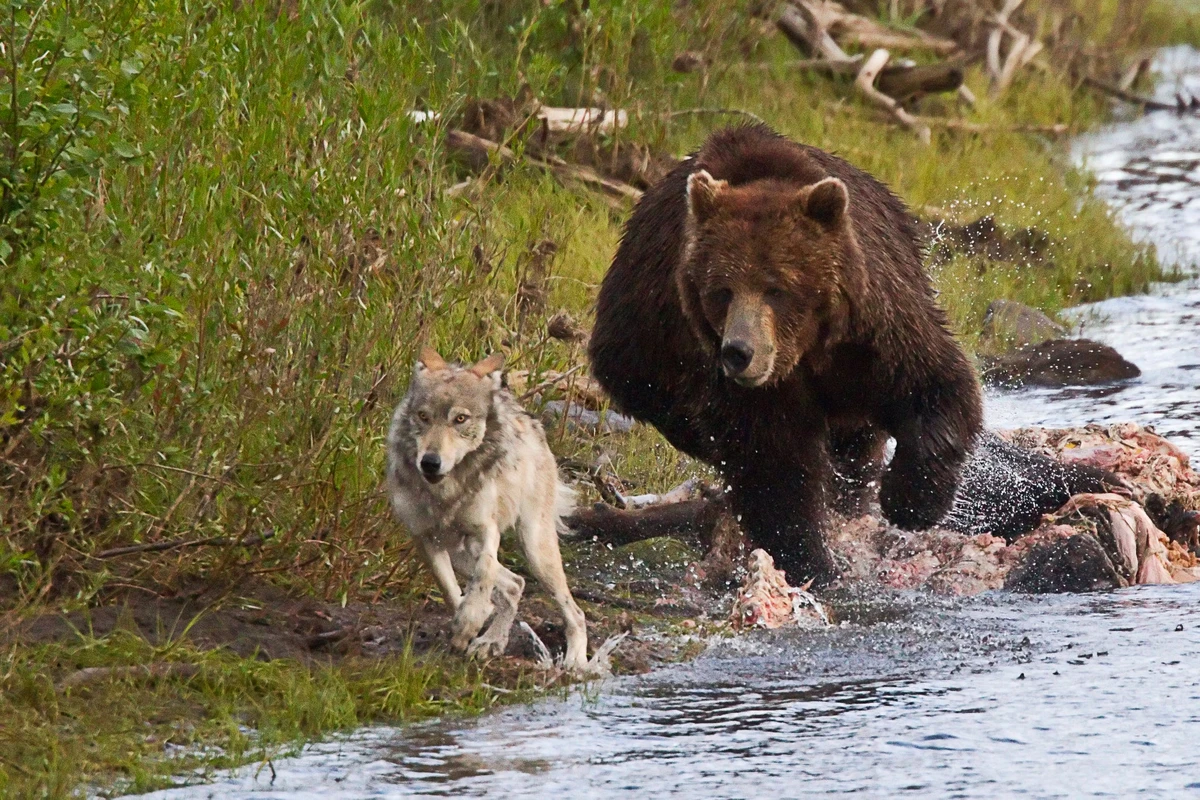
Of course, a wolf is much more resilient and agile than a bear. But over short distances, their speeds are roughly equal...
However, such cases, although known, are exceptions to the rule. As long as food is plentiful and the ecosystem is stable, predators not only live close to one another, they studiously avoid encounters, preferring not to provoke their fanged neighbors. After all, in the forest, even a single small bite can result in a fatal infection. 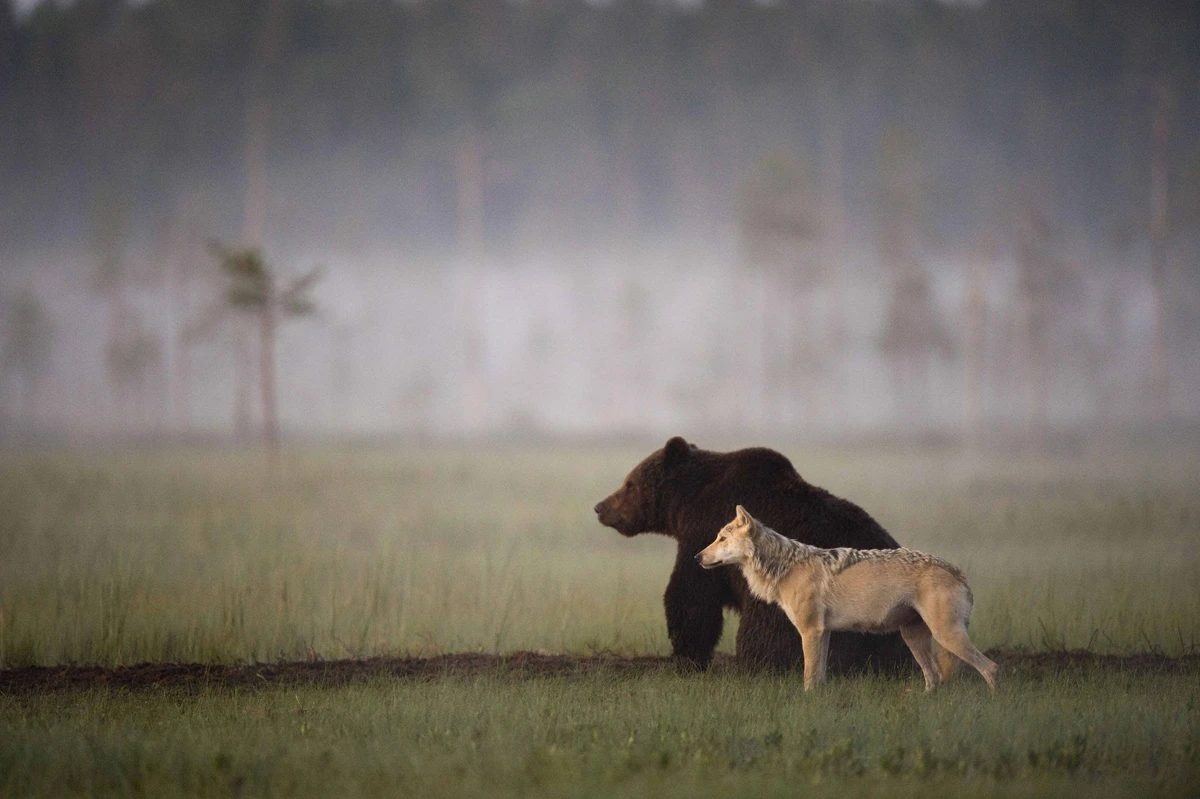
Why do we need fights and all that? Let's just kill a deer together!