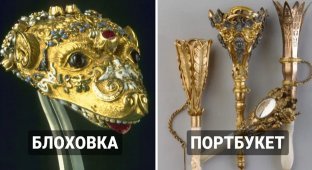
Flea Furs, Pomanders, and Other Bizarre Accessories of the Past (11 photos)
Humans have strived to enhance their appearance since time immemorial. The ancient Egyptians were the first to wear makeup, while the ancient Romans mastered fabric dyeing to add variety to their wardrobes. Even our relatively recent ancestors used beet juice for rouge and charcoal to darken their eyebrows. And, of course, accessories were indispensable—whether bracelets, rings, tiaras, or simple brooches and hairpins. 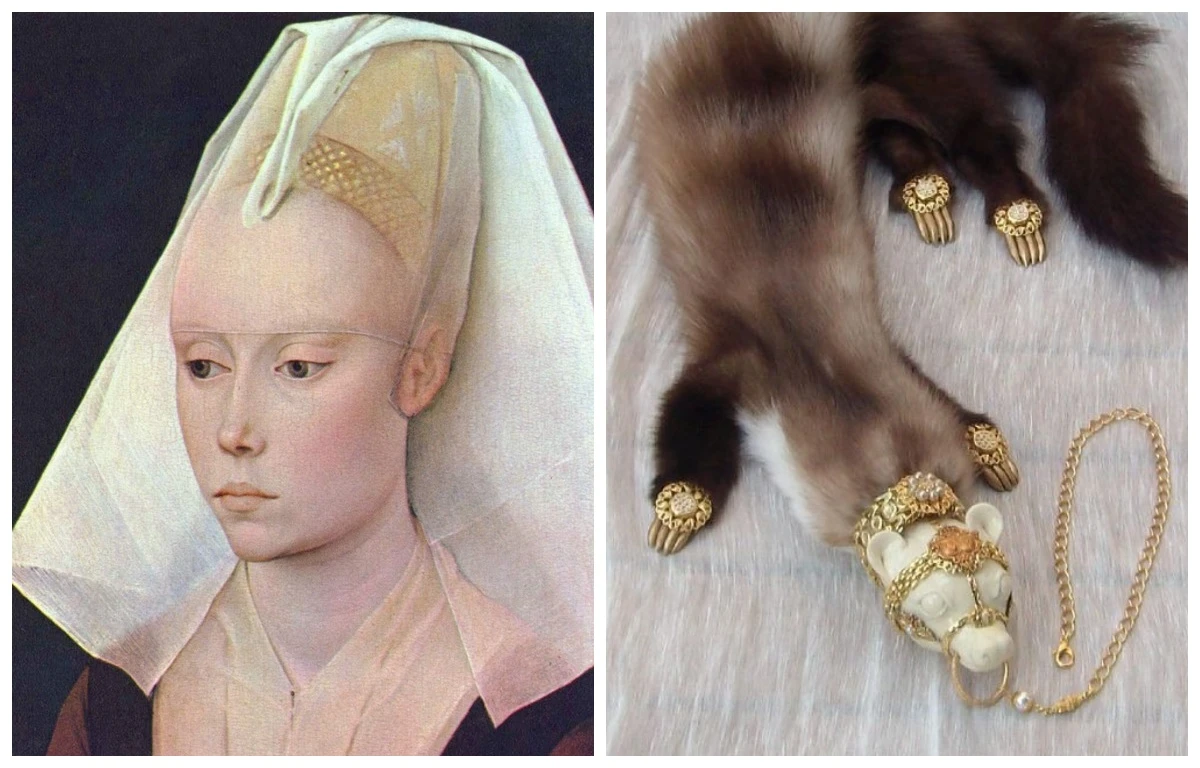
Most of these items remain familiar today, having evolved over the centuries into modern pieces. But certain accessories have faded entirely into history, leaving us to puzzle over their original purpose. Here are a few of the most intriguing examples.
The Fibula
This piece served a dual purpose: it was decorative, but also highly practical. Beginning in the late Bronze Age, fibulae were widely worn by both men and women as a substitute for buttons, fastening garments together. 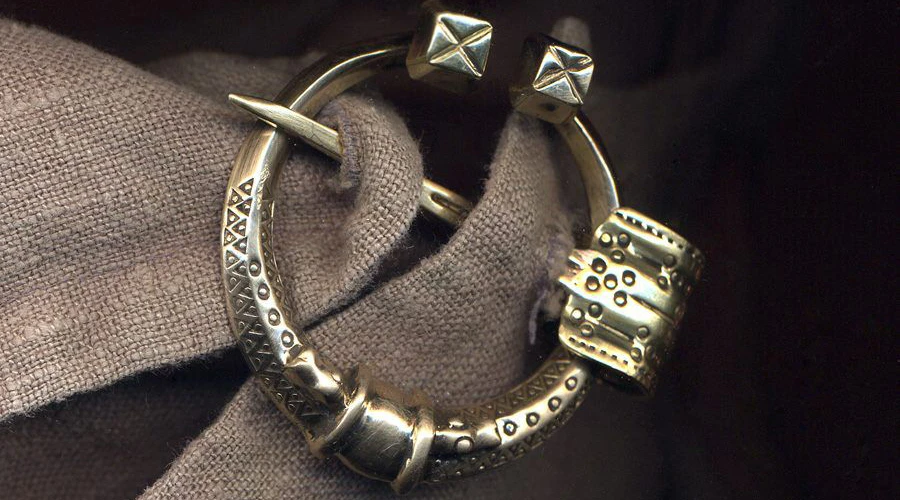
Fibulae came in various shapes and sizes, often serving as status symbols or identifiers for specific professions and noble families. By the Middle Ages, buttons began to replace them. Over time, the fibula morphed into a decorative brooch before eventually evolving into the modern safety pin.
Flea Furs
Once a staple of aristocratic fashion, this accessory consisted of a pelt from a fur-bearing animal fitted with an ornate head and paws crafted from gold and encrusted with gemstones like rubies and diamonds. Worn draped over a shoulder or tied to a belt, flea furs were pure status symbols meant to show off immense wealth. Although the trend faded in the early 17th century, it saw a brief revival in modified form during the 19th century. 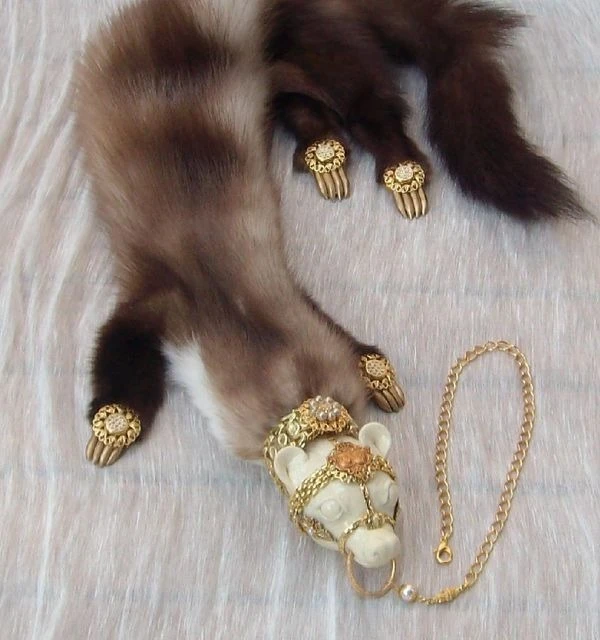
The term "flea fur" wasn't coined until 1894, when Austrian art historian Wendelin Boeheim theorized that the pelts were meant to attract fleas away from the wearer’s skin. Modern historians doubt this theory. In medieval lore, animals like martens were associated with purity and immaculate conception, suggesting these pieces were actually fertility talismans worn by women hoping to conceive.
The Chatelaine
Popular since medieval times, the chatelaine reached its peak of fame in the 19th and early 20th centuries as both a stylish ornament and a practical tool belt. It originally consisted of a decorative hook or chain belt worn at the waist, equipped with clasps to hold everyday essentials: keys, wax seals, scissors, and coin purses. 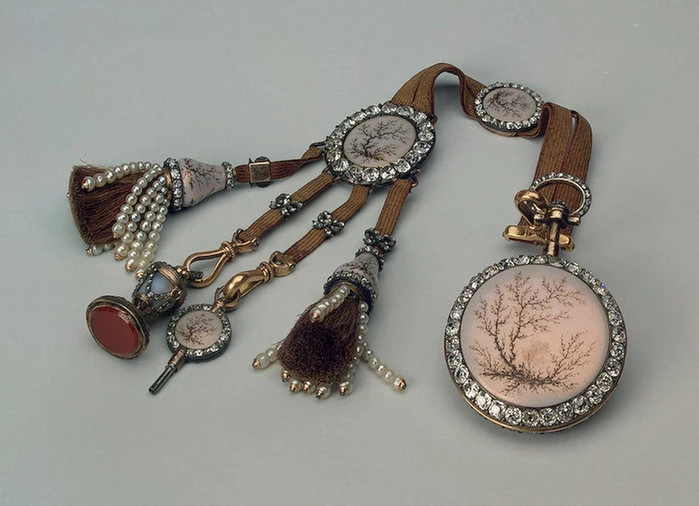
Crafted from gold and studded with jewels, chatelaines were worn by both men and women. Men typically used them to suspend pocket watches, while women attached perfume flasks, sewing kits, and small purses. For a lady, a chatelaine signaled authority—she was the mistress of the household, holding the keys to every lock. In Victorian England, chatelaines evolved into skirt lifters, allowing women to elegantly hoist their heavy skirts clear of muddy streets in the 1870s and 1880s.
Gimmel Rings
The gimmel ring was a type of puzzle ring that gained popularity in the early 15th century. Used primarily for betrothals and weddings, the interlocking bands were separated so the bride and groom could each wear one. Occasionally, a third band was given to a witness. 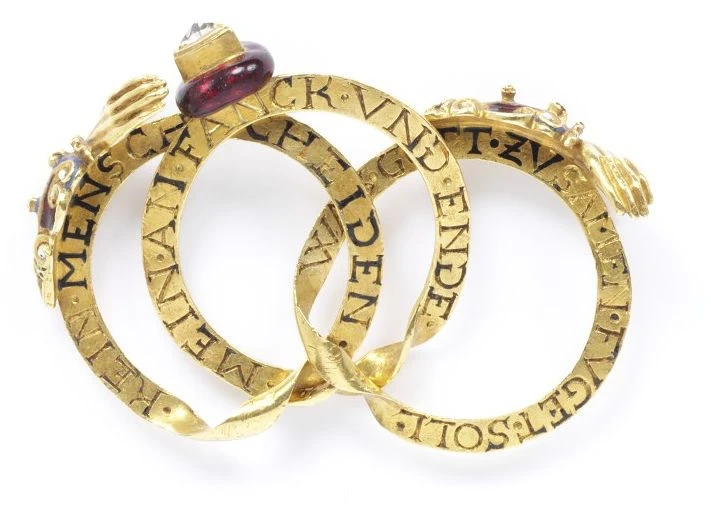
The defining feature of the gimmel ring was that its separate hoops could be locked together to form a single band. When joined, they often revealed two clasped hands—a variation of the fede ring, a classic symbol of faith and devotion.
Lover's Eye Miniatures
"Lover's eye" miniatures are perhaps among the most intimate pieces of jewelry ever created. Their popularity stems from King George IV of the United Kingdom. Deeply enamored with the widowed Maria Fitzherbert, the prince sent her an unconventional token of affection: a tiny painted portrait depicting only his own eye. 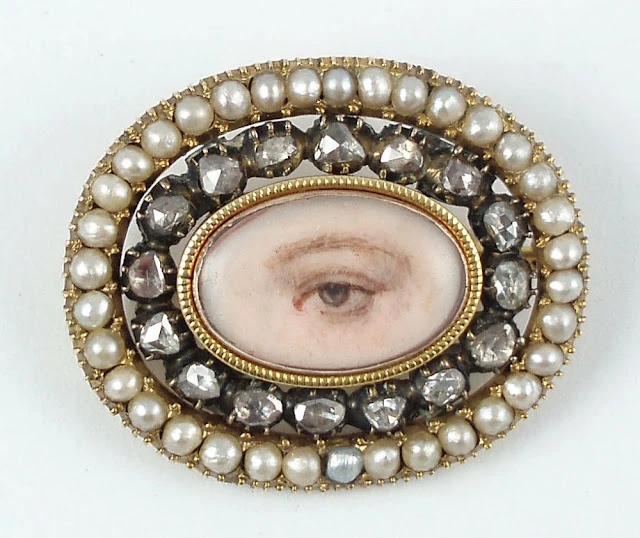
In doing so, the prince managed to kill two birds with one stone—he declared his devotion while concealing his identity from the public, as a royal romance with a widowed commoner was strictly taboo.
The Pomander
The word pomander derives from the French pomme d'ambre, meaning "amber apple"—a fitting description for this once-ubiquitous accessory. Usually crafted as a hollow metal sphere (or occasionally shaped like a skull), it held aromatic herbs, spices, and perfumes. 
Worn over clothing or suspended from a chain, pomanders helped mask foul odors in an era of questionable sanitation. Moreover, people believed the fragrant scents possessed medicinal qualities capable of warding off infections and disease.
The Hennin
The hennin (or atour) is an ornate conical headpiece worn by medieval noblewomen, frequently depicted in period portraits. This towering, cone-shaped cap was typically draped in fine silk or extravagant fabrics. 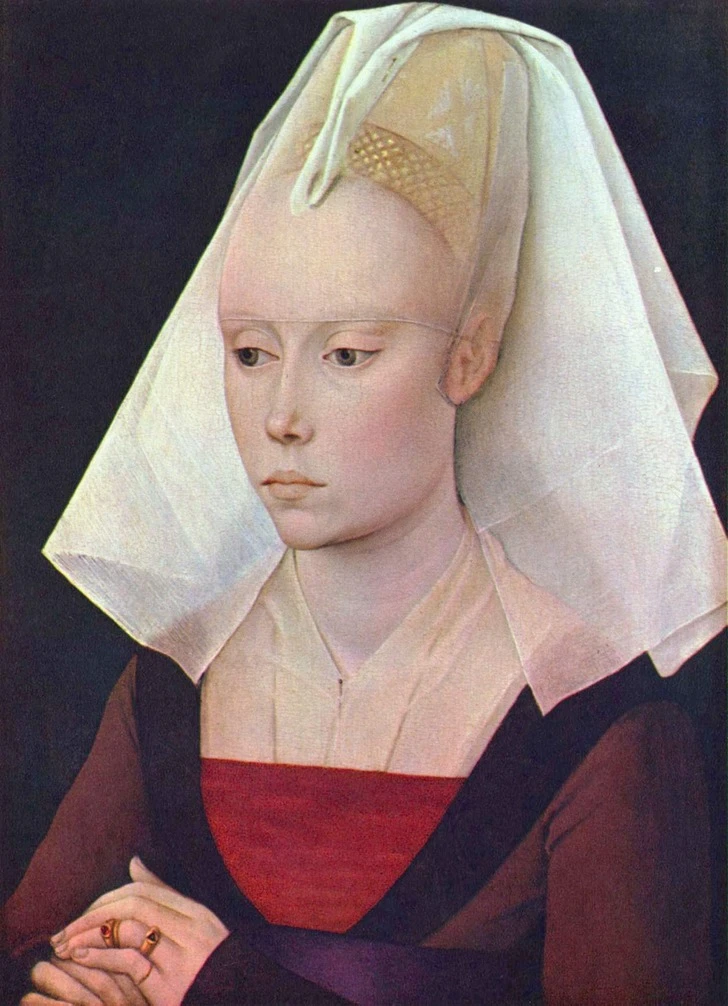
Constructed over a rigid frame of stiffened paper, starched linen, wire, or whalebone, the hennin served no practical purpose whatsoever. Yet it was wildly popular among elite women as a bold symbol of social standing. Height equaled prestige: while court ladies wore hennins around 20 inches tall, princesses donned towering structures measuring three feet or more.
The Posy Holder
Two centuries ago, no high-society lady would be seen without a porte-bouquet (or posy holder)—a delicate vase-like clip designed to hold small floral arrangements, either held in the hand or pinned to a gown. 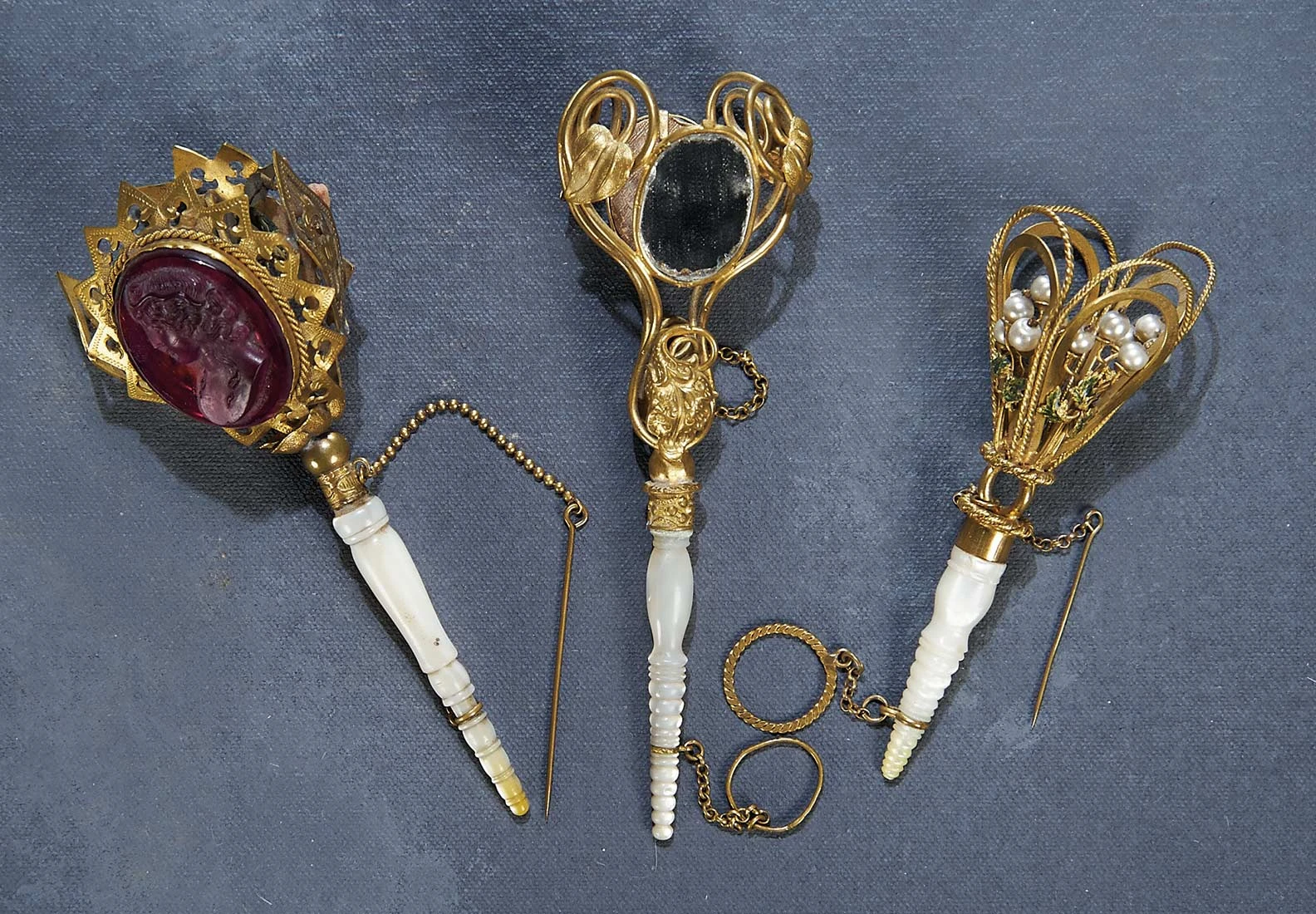
Originating during the reign of King Louis XIV, when fresh flowers became a fashionable adornment alongside gold and gems, these holders contained tiny reservoirs of water to keep blossoms fresh throughout long evening balls.
The Ruff
Another staple of historic portraiture is the millstone ruff. This extravagant pleated collar made of fine lace or starched linen emerged among the aristocracy in the early 16th century. Initially modest and open at the front, it rapidly expanded into a voluminous disk encircling the entire neck. 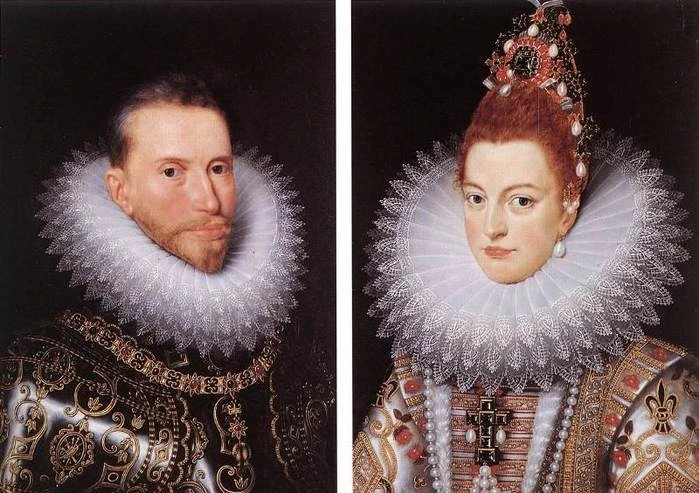
By the mid-17th century, ruffs gave way to flatter, turn-down collars. Remarkably, though, the ruff left a lasting mark on history: because eating was nearly impossible while wearing such a massive collar, it accelerated the widespread adoption of long-handled forks and cutlery.
Ships in the Hair
Another bizarre trend of the era was the à la Belle Poule coiffure—a towering hairstyle featuring a literal model ship perched atop a woman's head. Popularized by Queen Marie Antoinette and her royal hairdresser Léonard Autié, the style was created to commemorate a victory by the French frigate Belle Poule. 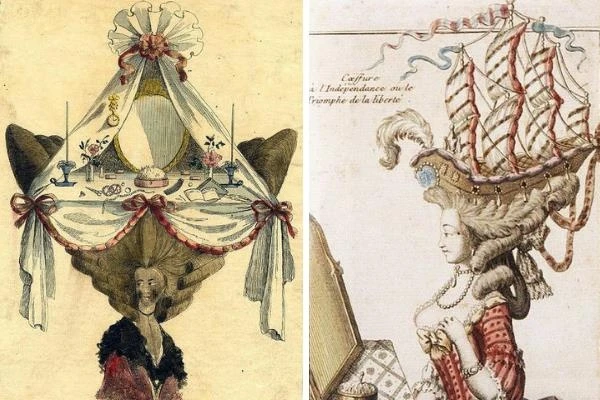
While not strictly an accessory, calling it a simple hairstyle would be an understatement. Since natural hair alone couldn't support such elaborate structures, hairdressers used wire frames, wool padding, tulle, and hair extensions to build the towering monuments. Ships were far from the only theme: high-society women also sported miniature flower vases, windmills, birdcages, and whatever else their imagination—and money—could buy.